2 beds 1 baths 1,000 sqft
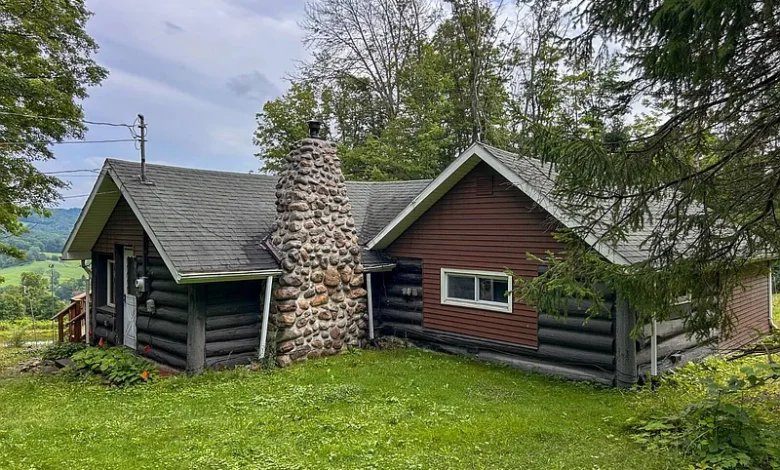
Auction Opportunity in Attica, New York: 2-Bedroom Log Home on 3.25 Acres With Pond, Garage and Scenic Valley Views
For buyers searching for a log home in Western New York, an acreage property with a private pond, a country retreat, or a distinctive real estate auction opportunity, the property at 2585 Cotton Hill Rd, Attica, NY 14011 offers an appealing combination of rural character, privacy, recent infrastructure improvements, and manageable living space.
The property is being offered through a public online auction, with bidding scheduled for Thursday, October 8 at 7:00 p.m. According to the listing, the displayed $50,000 figure is a starting bid and has no direct bearing on the final sale price. The property will sell to the highest bidder under the auction terms.
That distinction is extremely important. This should not be viewed as a conventional home listed for $50,000. Competitive bidding could result in a final purchase price that is significantly different from the opening amount.
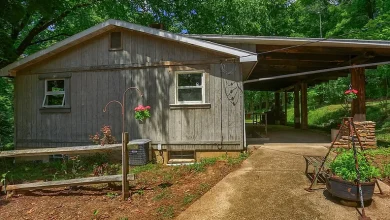
The property itself consists of a two-bedroom, one-bathroom log-style cottage containing approximately 1,000 square feet, situated on approximately 3.25 acres. Built in 1945, the single-story residence features a large living room, stone fireplace with a wood-burning insert, galley kitchen, large deck, scenic views, and a pond.
Additional features include a detached one-car garage, drilled well, private septic system, propane and wood heating, 100-amp electrical service, and a quiet location on a dead-end road.
The listing states that the septic system was newly installed in July, while the drilled well received a new pump in 2020. Those improvements are particularly relevant for a rural property because well and septic systems can represent substantial ownership expenses.
The home has also generated significant online attention, with more than 2,000 Zillow views and over 200 saves within its first several days on the platform.
For prospective bidders, however, the property should be evaluated based on the home, land, systems, auction contract, financing requirements, inspection opportunities, and total bidding cost—not simply the attractive $50,000 starting figure.
Property Overview: 2585 Cotton Hill Rd, Attica, NY 14011
This property is a single-family cottage/log home constructed in 1945.
It contains approximately 1,000 square feet of finished above-ground living space, two bedrooms, one full bathroom, a galley kitchen, and a large living room.
The house sits on approximately 3.25 acres with trees, scenic views, and a pond.
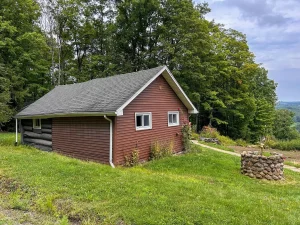
There is a large outdoor deck and a detached one-car garage.
The property has no basement and instead uses a slab foundation.
Heating is provided through propane and wood, with a stone fireplace and wood-burning insert serving as one of the home’s defining interior features.
The property uses a private septic system and drilled well rather than municipal water and sewer.
No HOA is reported.
The listing identifies the property as both an auction and estate sale.
Understanding the $50,000 Auction Figure
The most important financial detail is that $50,000 is not necessarily the property’s sale price.
The listing explicitly states that the displayed amount is the starting bid by default and “has no bearing on sale price.”
This means buyers should not approach the opportunity as though the seller has agreed to accept $50,000.
The public auction process allows qualified bidders to compete, and the highest bid will determine the purchase price according to the published auction terms.
Anyone interested should obtain and read the complete bidder information package before participating.
How an Online Real Estate Auction Differs From a Traditional Sale
A conventional real estate transaction often allows a buyer to submit an offer containing inspection, financing, appraisal, attorney-review, or other contingencies.
This auction is described as a contingency-free purchase.
That changes the risk profile.
A winning bidder may be contractually committed to completing the purchase even if circumstances change afterward, subject to the exact auction contract.
The listing states that financing is allowed, but buyers should not assume that financing creates a financing contingency.
Those are different concepts.
A bidder who plans to use a mortgage should understand the lender’s requirements and auction deadlines before bidding.
Financing Is Allowed, but Preparation Is Essential
The listing specifically states that financing is allowed.
That can make the property accessible to buyers who do not intend to purchase entirely with cash.
However, auction financing requires careful planning.
A lender may need sufficient time for underwriting, appraisal, title review, insurance, and other requirements.
The auction may also impose deadlines for deposits and final closing.
Potential bidders should therefore obtain financing guidance before the auction rather than waiting until after they win.
Clear Title and Current Taxes
The seller states that clear title is guaranteed and all taxes are current.
Those are valuable representations in an auction transaction.
Nevertheless, buyers should review the title provisions contained in the bidder package and purchase agreement.
A title professional or attorney can help a buyer understand exactly what is being guaranteed, which exceptions may remain, and how title insurance will be handled.
3.25 Acres of Land
One of the property’s strongest features is its 3.25-acre lot.
This amount of land can provide substantially more privacy and outdoor flexibility than a conventional suburban parcel without creating the scale of maintenance associated with a very large farm.
The property is described as containing trees and scenic views.
For buyers seeking room between themselves and neighboring properties, the acreage may be a major attraction.
Land also creates opportunities for gardening, outdoor recreation, nature observation, and other uses permitted under local regulations.
Beautiful Pond
The pond is arguably one of the property’s signature features.
The listing identifies both pond views and waterfront characteristics.
A private pond can dramatically influence the atmosphere of a rural property, creating a visual focal point and enhancing the sense of separation from conventional residential development.
The pond’s actual condition should still be investigated.
Buyers may want to understand depth, drainage, water source, maintenance requirements, shoreline condition, and any applicable local regulations.
A pond can be an asset, but it also becomes part of the property’s ongoing land-management responsibilities.
Scenic Valley Views
The listing emphasizes fantastic views of the valley.
Combined with trees and the pond, this gives the property a strong rural-retreat character.
The elevated or open views may be particularly enjoyable from the large deck.
Scenic surroundings can be difficult to quantify financially because their value depends heavily on buyer preferences.
Nevertheless, location-specific features such as views, mature trees, and water can distinguish one acreage property from another.
Quiet Dead-End Road
Another notable feature is the location on a quiet dead-end street.
For buyers specifically seeking a country lifestyle, reduced through-traffic may be attractive.
It could make the property appealing as either a primary residence or a second home.
Buyers should personally visit the location to evaluate road conditions, winter access, traffic, neighboring land uses, and travel times to services important to them.
1,000 Square Feet of Living Space
The home contains approximately 1,000 square feet of finished living area.
That makes it relatively compact compared with many modern houses.
However, efficient smaller homes can be easier to heat, maintain, clean, and furnish.
The two-bedroom layout may work particularly well for a couple, smaller household, downsizer, or buyer looking for a weekend property.
The relatively modest interior footprint also allows much of the property’s appeal to come from the acreage, deck, views, pond, and outdoor environment.
Two Bedrooms
The house provides two bedrooms.
For a primary residence, the second bedroom could serve as sleeping space, guest accommodation, an office, or hobby room.
For someone considering the property as a second home, two bedrooms may provide enough space for family members or occasional guests without requiring the maintenance associated with a much larger residence.
Bedroom dimensions are not included in the supplied listing information, so prospective buyers should evaluate them during a preview.
One Full Bathroom
The home has one full bathroom, described as having a shower rather than a bathtub.
For a 1,000-square-foot, two-bedroom cottage, a single bathroom is consistent with the home’s compact layout.
Buyers should inspect plumbing fixtures, drainage, ventilation, water pressure, flooring, and the shower area.
Because the house relies on a private well and septic system, bathroom performance is connected to the condition of those systems.
Single-Story Living
The property has one story, which may appeal to buyers who prefer to avoid stairs in everyday living.
The listing identifies the bathroom, kitchen, living room, and primary bedroom as first-floor spaces.
A single-story floor plan can also simplify heating and maintenance.
However, buyers with specific accessibility requirements should inspect the home personally rather than assuming that a one-story house automatically meets accessibility standards.
Log-Home Character
The property is described as a log home, while the structured listing information identifies both log siding and vinyl siding.
This exterior appearance contributes significantly to the home’s country character.
Log or log-style properties require appropriate maintenance.
Buyers should inspect exterior wood for moisture exposure, deterioration, insects, staining, sealing needs, and previous repairs.
The condition of the exterior can influence both near-term maintenance costs and long-term preservation.
Built in 1945
The residence was constructed in 1945.
A house of this age may have been updated numerous times throughout its life.
The listing already identifies major infrastructure improvements involving the well pump and septic system.
Still, buyers should investigate the age and condition of the roof, electrical system, plumbing, heating equipment, windows, insulation, and structural components.
The year built alone does not reveal which systems remain original.
Large Living Room
The listing specifically highlights a large living room.
In a 1,000-square-foot house, a generous central living area can make the interior feel substantially more spacious.
The room’s defining feature is its stone fireplace with a wood-burning insert.
For a rural cottage, that creates both architectural character and a practical supplemental heat source.
The living room may become the natural center of the home, particularly during colder Western New York months.
Stone Fireplace
The stone fireplace is one of the property’s most distinctive interior features.
Natural stone complements the log-home aesthetic and connects visually with the wooded surroundings.
A large stone fireplace can also provide a strong focal point without requiring decorative additions.
However, buyers should have the fireplace, chimney, flue, and insert inspected before regular use.
Creosote buildup, liner condition, masonry, clearances, and venting all matter for safe wood burning.
Wood-Burning Insert
The listing identifies a wood-burning insert.
An insert can improve the heating performance of a traditional fireplace by allowing more controlled combustion and heat distribution.
For buyers who have access to firewood and enjoy wood heat, this may be particularly attractive.
The condition and installation should nevertheless be professionally evaluated.
Buyers should also understand their homeowners insurance provider’s requirements concerning wood-burning appliances.
Propane and Wood Heating
Heating is listed as propane and wood.
This dual-source arrangement can provide flexibility.
A propane system can offer convenient primary heating, while the wood-burning insert may provide supplemental heat and ambiance.
Buyers should determine the exact type and age of the propane equipment, tank ownership or lease arrangement, fuel consumption, maintenance history, and distribution system.
Understanding heating costs is particularly important in Western New York.
Galley Kitchen
The property includes a galley-style kitchen.
Galley kitchens can be highly efficient because appliances, countertops, and storage are concentrated within a compact footprint.
For a 1,000-square-foot cottage, this style can preserve more square footage for living and bedroom areas.
The listing indicates that an oven is included.
Buyers should inspect cabinetry, counters, plumbing, electrical outlets, appliances, flooring, and ventilation.
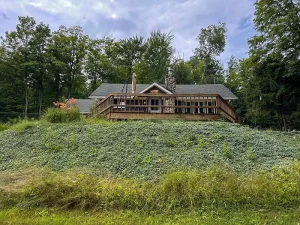
Large Deck
A large deck extends the property’s usable living environment outdoors.
On a property with pond and valley views, this can be particularly valuable.
The deck may provide space for outdoor dining, seating, entertaining, or simply enjoying the surrounding landscape.
Because exterior decks are exposed to weather, buyers should inspect framing, footings, railings, stairs, fasteners, surface boards, and connections to the house.
Any repairs should be included in the ownership budget.
Detached One-Car Garage
The property includes a detached garage with one parking space.
For a rural home, a garage can provide more than vehicle storage.
It may also hold lawn equipment, tools, firewood, recreational gear, or maintenance supplies.
The garage should be inspected separately for roof condition, foundation, framing, electrical service if present, doors, and general structural condition.
Brand-New Septic System
One of the most important infrastructure improvements described in the listing is the new septic system installed in July by Macken.
A recently installed septic system can be a meaningful benefit because septic replacement can be expensive.
Buyers should request documentation regarding installation, permits, system type, capacity, location, inspection, and maintenance requirements.
They should also verify that the system is properly sized and approved for the existing residence.
Even a new septic system requires responsible use and periodic maintenance.
Why Septic Documentation Matters
A private septic system handles wastewater on-site rather than sending it to a municipal sewer.
The owner is responsible for maintenance.
Knowing where the tank and absorption area are located can help prevent accidental damage from vehicles, construction, landscaping, or tree planting.
Buyers should keep installation and pumping records.
A new system can reduce immediate replacement concerns, but it should still be treated as an important long-term property asset requiring care.
Drilled Well
The property uses a drilled well for water.
The listing states that the well received a new pump in 2020.
That is another useful infrastructure update.
Buyers should still consider testing water quality and evaluating well performance.
A well professional can provide information about flow rate, pressure system, equipment, and other components.
Private well ownership differs from municipal water because the homeowner is responsible for the entire system.
New Well Pump From 2020
The reported 2020 well pump replacement provides useful maintenance history.
However, the pump is only one component of a well system.
Pressure tanks, electrical controls, piping, well casing, and water quality should also be considered.
A professional well inspection can help a buyer understand the condition of the complete system.
For a rural home, dependable water supply is fundamental.
100-Amp Electrical Service
The listing identifies 100-amp electrical service.
That capacity may be sufficient for the home’s current configuration, but buyers should evaluate it in relation to future plans.
Adding electric vehicle charging, electric heating, central air conditioning, a large workshop, or other high-demand equipment could change electrical requirements.
A licensed electrician can inspect the panel, wiring, grounding, safety devices, and overall system.
Because the home dates to 1945, confirming previous electrical upgrades is particularly useful.
Asphalt Roof
The property has an asphalt roof.
No roof installation date is supplied.
Buyers should therefore evaluate shingle condition, flashing, roof decking, drainage, and any evidence of leaks.
Roof replacement can represent a substantial expense, so determining approximate remaining service life before bidding can improve financial planning.
A roof inspection is particularly valuable because an auction purchase is described as contingency-free.
Slab Foundation and No Basement
The house is built on a slab foundation and does not have a basement.
Some buyers may prefer this because there is no basement to maintain or monitor for water intrusion.
However, slab construction changes access to certain plumbing and mechanical components.
The slab should be inspected for significant cracking, settlement, or movement.
Drainage around the home also remains important regardless of foundation type.
No HOA
The property has no homeowners association listed.
That means there is no reported recurring HOA payment.
For a rural acreage property, this can provide greater independence from private association rules.
However, municipal regulations, zoning, environmental rules, building codes, and other legal requirements still apply.
Any future additions or alternative uses should be independently verified.
$115,000 Tax Assessed Value
The listing reports a tax assessed value of approximately $115,000.
This is substantially higher than the $50,000 auction starting bid.
However, that difference should not be interpreted as automatic equity.
The starting bid is specifically stated not to represent the expected sale price.
Competitive bidding could move the final price significantly higher.
Furthermore, tax assessment and market value are different concepts.
Zillow Zestimate of Approximately $129,200
The property also carries a Zestimate of approximately $129,200.
Again, this provides one automated point of reference but should not determine a bidding strategy.
A Zestimate is not a professional appraisal and cannot fully account for every property-specific condition.
The eventual auction price will be determined by actual bidders.
A disciplined buyer should establish a maximum bid based on comparable sales, condition, land value, financing, and personal financial goals before the auction begins.
Why Setting a Maximum Bid Matters
Auction excitement can encourage bidders to exceed their original budgets.
A better strategy is to calculate a maximum acceptable purchase price in advance.
That calculation should incorporate the house’s condition, inspection findings, closing expenses, any buyer’s premium or auction fees specified in the bidder package, immediate repairs, financing costs, taxes, insurance, and desired financial margin.
Once that maximum is established, discipline becomes important.
Winning the auction is not necessarily a success if the buyer pays more than the property is worth to them.
Potential Primary Residence
For someone seeking a primary residence, this property offers several attractive characteristics.
Two bedrooms and approximately 1,000 square feet provide a manageable interior.
The 3.25 acres create privacy and outdoor space.
The pond, deck, valley views, detached garage, wood-burning fireplace, and quiet road contribute to a country lifestyle.
The recently installed septic system and newer well pump may also reduce concern about two major rural infrastructure components.
Potential Second Home or Country Retreat
The property could also be appealing as a weekend retreat or second home.
Its relatively compact house size may make occasional use easier to manage than a large residence.
The wooded acreage, pond, deck, fireplace, and scenic setting create features often associated with recreational country properties.
Buyers considering occasional occupancy should investigate insurance requirements, winterization, snow access, security, and maintenance while the property is vacant.
Potential Long-Term Rental
An investor might investigate the property as a long-term rental.
Two bedrooms, acreage, garage space, and a scenic rural setting could appeal to certain tenants.
However, rental demand and achievable rent should be researched specifically for the Attica area.
A landlord also needs to budget for septic maintenance, well equipment, propane, property maintenance, insurance, snow management, and repairs.
No verified rental estimate is supplied in the listing.
Short-Term Rental Considerations
The pond, acreage, log-home appearance, deck, fireplace, and rural atmosphere may lead some buyers to consider short-term rental use.
That possibility should not be assumed.
Local zoning, licensing, occupancy rules, insurance requirements, taxes, septic capacity, and other regulations should be verified before purchasing based on a vacation-rental strategy.
Potential income should also be based on local market evidence rather than optimistic assumptions.
Insurance Considerations
A rural property with a wood-burning appliance, private well, septic system, detached garage, pond, and log-style exterior can have different insurance considerations from a standard suburban house.
Buyers should obtain insurance quotes before bidding.
The insurer may ask about roof age, heating systems, fireplace and chimney condition, electrical service, distance from emergency services, occupancy, and other factors.
Insurance costs belong in the total ownership calculation.
Inspection Priorities Before the Auction
Because the transaction is described as contingency-free, the preview period becomes particularly important.
Prospective bidders should investigate the roof, exterior, foundation, deck, electrical system, plumbing, propane heating equipment, wood-burning system, chimney, well, septic documentation, garage, windows, and overall structural condition.
Water quality and well performance may also deserve testing where practical.
Buyers should review the bidder information package carefully and understand all contractual obligations before placing a bid.
Building a Complete Ownership Budget
The winning bid is only one component of the total investment.
A buyer should consider:
Winning Bid + Auction Fees/Buyer’s Premium if Applicable + Deposit Requirements + Closing Costs + Financing Costs + Appraisal + Inspection + Insurance + Property Taxes + Immediate Repairs + Roof/Mechanical Reserves + Well Maintenance + Septic Maintenance + Propane + Wood + Electricity + Garage/Deck Maintenance + Land and Pond Maintenance = Total Ownership Cost
The exact auction fees and terms should be taken directly from the official bidder package.
Strong Zillow Interest
According to the supplied listing information, the property generated approximately 2,139 Zillow views and 235 saves in only five days.
That indicates substantial online interest.
However, online engagement should not be interpreted as a prediction of the auction result.
The final price depends on who actually registers, qualifies, and bids.
Views and saves can provide context, but they should never cause a buyer to abandon a predetermined maximum bid.
Final Thoughts on 2585 Cotton Hill Rd, Attica, New York
2585 Cotton Hill Rd, Attica, NY 14011 combines many of the features buyers often seek in a rural property: 3.25 acres, a beautiful pond, scenic valley views, trees, a quiet dead-end location, a log-style cottage, a large deck, a detached garage, and a stone fireplace with a wood-burning insert.
The approximately 1,000-square-foot residence offers two bedrooms and one full bathroom in a manageable single-story layout.
Infrastructure improvements add another important dimension.
According to the listing, a brand-new septic system was installed in July, while the drilled well received a new pump in 2020. These are important details because private water and wastewater systems can represent significant costs for rural homeowners.
The home also offers propane and wood heating, 100-amp electrical service, an asphalt roof, slab foundation, galley kitchen, and no reported HOA.
For someone looking for a permanent country residence, the property provides a combination of manageable indoor space and considerably more outdoor space.
For a second-home buyer, the pond, deck, fireplace, wooded setting, and views could make it an appealing retreat.
For an investor, rental possibilities may be worth researching, although local demand, regulations, operating costs, and realistic rental rates should be independently established.
Most importantly, prospective buyers need to understand the auction structure.
The advertised $50,000 figure is a starting bid—not a conventional asking price and not a prediction of the final sale price. According to the listing, the property will sell to the highest bidder through a public online offering on Thursday, October 8 at 7 p.m.
The listing also describes the purchase as contingency-free, while noting that financing is allowed, clear title is guaranteed, and taxes are current.
Those terms make preparation essential.
Potential bidders should obtain the official bidder information package, review the purchase contract, attend available previews, investigate the physical property, arrange financing if necessary, confirm insurance availability, and understand all deposits, deadlines, fees, and closing requirements.
The smartest approach is to establish a maximum bid before the auction.
That figure should be based on the property’s condition, comparable sales, acreage, improvements, financing costs, auction expenses, anticipated repairs, and the buyer’s own financial objectives—not on the desire to win.
With its pond, 3.25-acre setting, log-home character, stone fireplace, large deck, detached garage, recent septic installation, newer well pump, and scenic Western New York surroundings, this is certainly a distinctive property.
For a prepared buyer who understands auction rules and rural property ownership, 2585 Cotton Hill Rd represents an uncommon opportunity to compete for a cared-for country home where the land and natural setting are just as important as the house itself.

Listed on Zillow