The home sits on 1.5 acres of prime land with a septic system, public water, and endless opportunities.
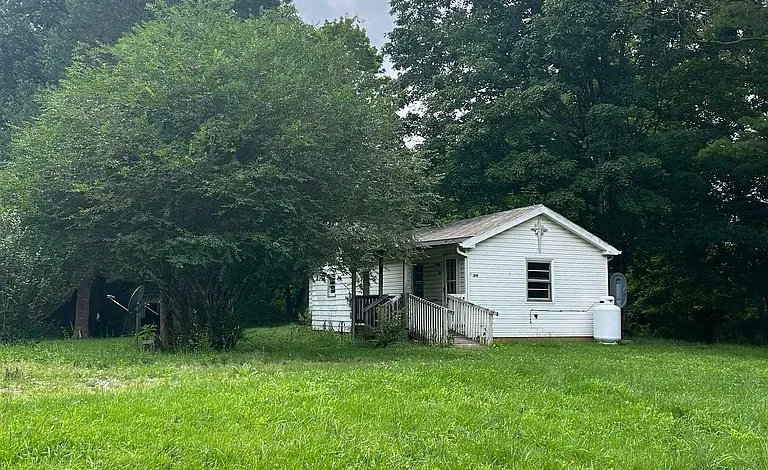
$50,000 Fixer-Upper on 1.5 Acres in Pembroke, Virginia: 2-Bedroom Ranch With Public Water and Major Renovation Potential
For buyers searching for an affordable Virginia fixer-upper, a renovation property with acreage, a potential investment project, or a rural home site near Pembroke, Pearisburg, Blacksburg, and Christiansburg, the property at 210 Maybrook Rd, Pembroke, VA 24136 presents an interesting combination of land, location, and redevelopment potential.
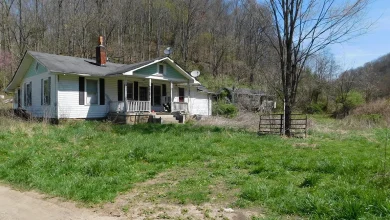
Currently listed for $50,000, this detached single-family residence offers approximately 956 square feet of living space, two bedrooms, one full bathroom, and approximately 1.5 acres of land. The ranch-style house was built in 1940 and is specifically described as needing major repairs, making this a property that should be evaluated as a significant renovation project rather than a move-in-ready home.
The existing residence has no heating system listed, no cooling system, no water heater, no included appliances, no basement, and no garage or other parking features listed. Those facts immediately indicate that substantial work may be required before normal residential occupancy.
At the same time, the property includes two important utility features: public water and an existing septic system. The 1.5-acre parcel also gives a buyer considerably more outdoor space than a conventional residential lot.
The seller’s marketing emphasizes the land and its location near U.S. Route 460, providing access toward Pembroke, Pearisburg, Blacksburg, and Christiansburg. For buyers considering a renovation, replacement, or other permitted future use, the combination of acreage and existing residential infrastructure deserves investigation.
The key word, however, is investigation. The listing specifically instructs buyers and their agents to verify all remarks. A professional inspection, septic evaluation, title review, contractor estimates, insurance research, and confirmation of local building and zoning requirements should therefore form the foundation of any purchase decision.
Property Overview: 210 Maybrook Rd, Pembroke, VA 24136
The property is listed at $50,000 and is classified as a detached single-family residence.
Its principal features include approximately 956 square feet of finished above-ground living area, two bedrooms, one full bathroom, one-story ranch architecture, and approximately 1.5 acres.
The house was constructed in 1940.
Both bedrooms and the bathroom are located on the main level, making this essentially a single-level floor plan.
The home has vinyl siding and no basement or attic listed. There is no fireplace.
The listing reports no heating and no cooling, and it specifically states that there is no water heater. No appliances are included.
The property uses a septic tank for wastewater while receiving water from a public water system.
No HOA is listed.
The tax assessed value is reported at $33,800, while annual property taxes are approximately $327.
At $50,000 for 956 square feet, the asking price is approximately $52 per square foot.
The 1.5-Acre Lot May Be the Property’s Defining Feature
Although there is an existing two-bedroom house, the listing places significant emphasis on the 1.5-acre lot.
That distinction matters.
When a residence needs major repairs, buyers should evaluate both the structure and the underlying land rather than assuming that restoring the existing house is automatically the best strategy.
Approximately 1.5 acres provides substantially more room than a standard urban or suburban parcel.
Depending on local regulations and the physical characteristics of the site, the land may provide space for gardens, outdoor recreation, privacy, landscaping, storage, or other permitted improvements.
Any plans for additions, accessory buildings, subdivision, redevelopment, or replacement construction would need independent verification.
$50,000 Asking Price: Look Beyond the Acquisition Cost
A $50,000 property can appear inexpensive, particularly when it includes 1.5 acres.
However, the existing home requires major repairs.
The relevant financial question is therefore not simply whether $50,000 is an attractive purchase price.
A more complete calculation is:
$50,000 Purchase Price + Closing Costs + Inspections + Structural Repairs + Roof + Heating + Cooling + Water Heater + Electrical + Plumbing + Septic Work + Kitchen + Bathroom + Windows + Flooring + Insurance + Permits + Taxes + Holding Costs + Contingency = Total Project Investment
This total should then be compared with the property’s realistic value after renovation.
Approximately $52 Per Square Foot
The property is offered at approximately $52 per square foot based on the existing 956-square-foot house.
Price per square foot can be useful as a quick comparison tool, but it has limitations for distressed real estate.
A renovated property includes working mechanical systems, finished interiors, functioning kitchens and bathrooms, and other improvements.
This house is explicitly described as needing major repairs and currently has no heating, cooling, water heater, or included appliances listed.
Therefore, the $52-per-square-foot figure should not be compared directly with renovated homes without accounting for rehabilitation costs.
A Compact 956-Square-Foot Floor Plan
The existing residence contains approximately 956 square feet.
For renovation purposes, a smaller home can have certain advantages.
There is less interior flooring, fewer walls to finish, a smaller roof footprint than many larger houses, and fewer rooms to renovate.
Cleaning, painting, and ongoing maintenance may also be easier.
However, major systems can still be expensive regardless of square footage.
Installing an HVAC system, replacing an electrical panel, repairing a septic system, or completing major structural work can represent a substantial investment even in a small house.
Two Main-Level Bedrooms
The property contains two bedrooms, both located on the main level.
For an owner-occupant, the second bedroom could potentially function as a guest room, office, child’s room, or traditional bedroom.
For a rental investor, a two-bedroom detached house on acreage could potentially appeal to tenants looking for more outdoor space than an apartment provides.
Actual rental demand should be researched using comparable Pembroke-area properties.
No reliable rent figure should be assumed from the listing alone.
One Full Bathroom
There is one full bathroom, also located on the main level.
Because the property requires major repairs and has no water heater listed, the bathroom should be evaluated as part of the overall plumbing system rather than only cosmetically.
A buyer should investigate water supply, drains, fixtures, flooring, subflooring, ventilation, electrical outlets, waterproof areas, and evidence of leaks.
If substantial plumbing replacement is necessary, bathroom reconstruction may be most efficient while walls and floors are already open.
Single-Level Ranch Design
The house is described as a one-story ranch.
Single-level living can appeal to buyers who prefer to avoid stairs.
It can also simplify certain aspects of renovation because all primary living areas are located on one level.
For a small house, an efficient ranch floor plan can make the interior feel more practical than the square-footage number might initially suggest.
However, the actual layout and room dimensions should be inspected before planning a renovation.
Built in 1940
The house was constructed in 1940, meaning buyers are dealing with an older structure.
Age itself does not establish condition.
A 1940 house may have undergone numerous improvements during its lifetime, while another may retain many older systems.
The buyer should determine the actual age and condition of the roof, electrical system, plumbing, windows, foundation, siding, insulation, and other components.
A professional inspection is especially valuable when a listing already acknowledges that major repairs are required.
Structural Condition Should Be the First Priority
Before designing a kitchen or selecting flooring, a buyer should determine whether the existing structure is fundamentally sound.
Foundation components, framing, floors, exterior walls, roof structure, drainage, and moisture should all be evaluated.
If structural concerns are discovered, a qualified professional may be needed to determine repair requirements.
For a distressed property, structural repairs can dramatically change the economics of renovation.
A $50,000 acquisition with manageable cosmetic and mechanical work is very different from a $50,000 acquisition requiring major structural reconstruction.
No Heating System Listed
One of the most important facts is that the property has no heating system listed.
That makes HVAC planning a central part of the rehabilitation.
A buyer should determine whether old heating equipment has been removed, whether any reusable ductwork exists, and what energy sources are available.
A licensed HVAC contractor can recommend an appropriate system based on the house’s size, insulation, electrical service, and layout.
Heating is not simply a comfort upgrade. It is a fundamental component of year-round residential occupancy.
No Cooling System
The home also has no cooling system listed.
A buyer completing a major renovation may decide to address heating and cooling together.
The appropriate system could depend on installation cost, available utilities, energy efficiency, and future resale or rental expectations.
Because the house contains only 956 square feet, buyers may have several potential mechanical approaches to investigate.
Contractor estimates are preferable to assuming a generic HVAC cost.
No Water Heater
The listing specifically states “No Water Heater.”
That is another essential system that needs to be incorporated into the rehabilitation budget.
A new water heater needs an appropriate energy source, plumbing connections, safe installation, and adequate location.
Its installation may interact with other planned electrical, gas, or plumbing upgrades.
For this reason, mechanical systems should be planned together rather than independently.
No Appliances Included
No appliances are included with the property.
A buyer planning to make the house habitable should therefore account for basic kitchen appliances and any other equipment required for the intended use.
For a rental renovation, durable and serviceable appliances may be more financially appropriate than premium models.
For an owner-occupied renovation, the buyer may choose equipment based on personal preference.
Either way, appliance expenses belong in the total project budget.
Public Water Is an Important Existing Utility
The property has public water, which can be advantageous for a rural or semi-rural parcel.
A public connection eliminates the need to maintain a private well.
However, buyers should still verify that water service is active and inspect the service line and interior plumbing.
If the house has been vacant or unheated, plumbing should receive particular attention.
Freezing, leaks, corrosion, and previous repairs can all affect renovation cost.
Existing Septic System
Wastewater is handled through a septic tank.
An existing septic system can be valuable infrastructure, but its condition should be independently evaluated.
Buyers should determine the location of the tank and drain field, system capacity, maintenance history if available, and whether repairs are necessary.
A septic problem can represent a significant expense.
The septic area may also affect where future additions or accessory structures can legally be placed.
Public Water Plus Septic Creates a Mixed Utility Setup
The combination of public water and private septic is worth understanding.
The buyer does not need to maintain a well, but remains responsible for the property’s wastewater system.
For a long-term owner, septic pumping and maintenance should become part of the regular property budget.
For an investor, the system should be inspected before calculating project profitability.
A functioning septic system and a failing one can create very different investment outcomes.
Vinyl Siding
The exterior is described as vinyl siding.
Vinyl can provide relatively straightforward exterior maintenance when it remains in serviceable condition.
Buyers should inspect for cracking, loose or missing sections, warping, impact damage, and moisture problems behind the siding.
Windows, doors, trim, flashing, and transitions around the roof and foundation should also be examined.
If the siding is fundamentally usable, cleaning and selective repair may improve exterior appearance without requiring complete replacement.
No Basement
The property has no basement.
This means all 956 square feet are above ground.
While the absence of a basement eliminates certain basement-specific moisture issues, buyers still need to understand the foundation.
Accessible areas should be checked for structural movement, moisture, pest damage, deteriorated supports, and drainage problems.
The exact foundation configuration should be confirmed during inspection.
No Attic Listed
The property facts also state no attic.
That may limit storage and can affect access to insulation, electrical wiring, and roof framing.
A buyer should verify the actual construction during inspection.
If energy efficiency improvements are planned, understanding where and how insulation can be installed will be important.
A contractor can help determine appropriate methods for the existing structure.
No Fireplace
There is no fireplace.
For a major renovation, this means there is no existing fireplace or chimney system that needs to be incorporated into the heating strategy based on the listing facts.
The new owner can instead focus on a modern primary heating solution.
The absence of a fireplace also removes one maintenance item that can be expensive in older houses when chimneys require restoration.
No Parking Features Listed
The property does not list dedicated parking features.
A buyer should inspect the site to determine how vehicles currently access and park on the property.
With 1.5 acres, there may appear to be substantial physical room, but driveway access, grading, drainage, setbacks, and permitting can influence where parking can be created.
Any planned garage or carport should be verified with local authorities before being included in future-value calculations.
Garden and Private Yard Features
The listing identifies both a garden and private yard among the exterior features.
These characteristics fit naturally with a 1.5-acre parcel.
A future owner could potentially create attractive outdoor living areas, gardens, landscaping, or recreational space.
For a renovation intended for resale, improving the yard may help buyers better understand the benefits of the acreage.
However, structural and mechanical repairs should take priority over landscaping during the early phases of rehabilitation.
Location Near Route 460
The listing emphasizes access to Route 460 and connections toward Pearisburg/Pembroke, Blacksburg, and Christiansburg.
Transportation access can be an important consideration for a rural or semi-rural home.
A buyer who works, studies, shops, or regularly travels in surrounding communities may value convenient road access.
Travel times should be independently checked for the buyer’s actual destinations and schedule.
Location can also influence future rental and resale demand, making it worthwhile to study comparable properties within the same general area.
No HOA
There is no homeowners association listed.
That means no recurring HOA fee is shown in the supplied property information.
For a buyer acquiring acreage, the absence of HOA dues may be attractive.
However, county zoning, deed restrictions, building codes, septic regulations, easements, and permitting requirements can still apply.
A lack of HOA does not automatically permit unrestricted development.
$33,800 Tax Assessed Value
The property’s tax assessed value is reported at $33,800.
That is below the $50,000 asking price.
Tax assessment and market value are not interchangeable.
An assessed value is used for taxation and should not be treated as an independent appraisal of what a buyer should pay.
The current condition of the residence, value of the 1.5 acres, utility infrastructure, comparable sales, and renovation requirements are more relevant when evaluating the acquisition.
Approximately $327 in Annual Property Taxes
The reported annual property tax is approximately $327.
That is relatively modest in absolute terms, but buyers should independently verify the current tax bill and determine whether any exemptions, delinquent amounts, or other factors affect it.
Investors should include taxes when calculating annual carrying costs.
For a renovation project, property taxes continue to accrue even while the house is vacant and construction is underway.
Zillow’s Estimated $45 Monthly Payment
The listing displays an estimated monthly payment of approximately $45.
This should not be interpreted as the total monthly cost of owning the property.
Actual mortgage payments depend on financing terms, interest rates, down payment, borrower qualifications, and lender requirements.
Property taxes, insurance, septic maintenance, utilities, renovation expenses, and ongoing maintenance are separate.
Furthermore, a house requiring major repairs and lacking heating, cooling, and a water heater may face financing limitations.
Financing a Major Fixer-Upper
Traditional mortgage financing can be challenging when a property requires extensive rehabilitation.
Lenders may have minimum property-condition requirements.
An appraiser may also identify issues that need correction before certain financing can close.
Buyers can investigate cash purchases, renovation-oriented financing, construction financing, or other appropriate options depending on their qualifications.
The key is to confirm financing before assuming that the property’s $50,000 price makes the transaction automatically easy to fund.
Insurance Is Another Critical Question
A distressed house can also present insurance challenges.
Insurance companies may evaluate roof condition, electrical wiring, plumbing, heating, vacancy, construction activity, and overall structural condition.
A property undergoing substantial renovation may require different coverage from a completed owner-occupied home.
Obtaining insurance quotes before closing can help prevent unexpected expenses or coverage problems.
The 1.5-acre lot does not reduce the importance of insuring the existing structure appropriately.
Potential Fix-and-Flip Strategy
An investor may consider the property for a fix-and-flip project.
The concept would involve acquiring the property, completing necessary structural and mechanical work, renovating the interior and exterior, and eventually selling the finished home.
But no reliable after-repair value can be determined from the supplied listing information.
Investors should research recently sold renovated homes in the Pembroke area with similar square footage, bedroom count, acreage, and location.
The value of the land should also be considered through appropriate comparable sales.
Calculating a Potential Flip
A useful formula is:
Expected After-Repair Value – $50,000 Purchase Price – Closing Costs – Renovation – Financing – Insurance – Taxes – Utilities – Holding Costs – Selling Expenses – Contingency = Potential Project Result
This calculation demonstrates why acquisition price alone does not determine whether a flip will be profitable.
A major rehabilitation can involve many categories of expenses.
Conservative budgeting is particularly important when the listing openly acknowledges substantial repairs.
Long-Term Rental Potential
The house could also be evaluated as a potential long-term rental after rehabilitation.
A detached two-bedroom home with 1.5 acres may appeal to renters who value privacy and outdoor space.
Public water can be a useful feature, while the septic system creates an additional maintenance responsibility for the owner.
Investors should research comparable local rents before making assumptions about monthly revenue.
The listing does not provide a verified rental estimate.
Rental Cash Flow Analysis
A landlord should calculate:
Gross Rental Income – Vacancy – Property Taxes – Insurance – Maintenance – Repairs – Management – Owner-Paid Utilities – Septic Reserves – Capital Expenditures = Net Operating Income
If financing is used, debt service can then be considered.
A property can have a relatively low purchase price and still produce weak cash flow if renovation or maintenance expenses are excessive.
The quality and durability of the rehabilitation matter significantly for long-term rental performance.
Owner-Occupant Renovation Potential
The property may also appeal to a buyer who wants to renovate for personal use.
A compact two-bedroom ranch on 1.5 acres could provide an attractive combination of manageable interior space and generous outdoor land.
Single-level living can also be convenient.
An owner-occupant may be willing to invest in personalized finishes or energy-efficiency improvements that a short-term investor would not choose.
Still, the essential mechanical and structural work must come first.
Renovation Priorities
The correct renovation sequence should begin with professional evaluation of the structure.
Roof and exterior weather protection should follow if problems are present.
The septic system and public water connection should be verified.
Electrical and plumbing infrastructure should then be evaluated, followed by installation of heating, cooling if desired, and a water heater.
Only after those essential systems are addressed should substantial money be invested in kitchen cabinets, bathroom finishes, flooring, paint, lighting, appliances, and landscaping.
Kitchen Rehabilitation
No appliances are included, and detailed kitchen condition is not provided.
A buyer should inspect the cabinets, countertops, plumbing, electrical service, flooring, walls, lighting, and ventilation.
If the existing kitchen layout works, retaining plumbing and appliance locations may help control costs.
For an investment property, durable and functional finishes may provide better economics than luxury materials.
For an owner-occupied renovation, the buyer can customize according to personal needs and budget.
Bathroom Rehabilitation
The single full bathroom will also be a central part of the project.
The plumbing system should be evaluated before new fixtures or finishes are installed.
If water damage is present, the subfloor and surrounding framing should be checked.
Ventilation, waterproofing, electrical safety, drainage, and water pressure are more important initially than decorative finishes.
A properly completed bathroom can improve both usability and resale appeal.
Potential Older Building Materials
Because the house was built in 1940, renovation may encounter older materials.
Depending on past improvements, lead-based paint or asbestos-containing materials could potentially exist.
Their presence should not be assumed without appropriate evaluation.
Buyers planning extensive demolition should discuss older-material risks with qualified professionals and incorporate any necessary testing or remediation into the budget.
Build a Complete Project Budget
A comprehensive renovation budget could include:
$50,000 Acquisition + Closing Costs + Inspections + Structural Work + Roof + Heating + Cooling + Water Heater + Electrical + Plumbing + Septic + Public Water Connection Repairs + Windows + Insulation + Kitchen + Bathroom + Flooring + Drywall + Paint + Appliances + Exterior Work + Driveway/Parking + Landscaping + Permits + Insurance + Taxes + Utilities + Financing + Holding Costs + Contingency
Some categories may require little work.
Others may become substantial.
The goal is to determine the actual scope before committing to the purchase.
Why a Contingency Reserve Matters
Older fixer-uppers frequently reveal additional problems after construction begins.
Opening walls may expose electrical or plumbing issues.
Removing flooring can reveal subfloor damage.
Roof repairs can uncover deteriorated decking.
Septic inspection can identify unexpected work.
A contingency reserve helps absorb those surprises without bringing the project to a halt.
The buyer should avoid using every available dollar for the acquisition itself.
Zillow Views and Saves Show Online Interest
According to the supplied listing information, the property accumulated approximately 1,176 views and 68 saves during its first 15 days on Zillow.
Those numbers indicate notable online interest.
Zillow also displays a marketing indicator suggesting the property may sell faster than nearby listings.
These statistics should not be interpreted as a guarantee of a quick sale, future value, or competing offers.
They simply show that buyers are paying attention to the listing.
Questions to Answer Before Purchasing
A serious buyer should determine exactly what “major repairs” means.
Does the home require structural work? What is the roof condition? What electrical system is installed? What plumbing remains usable? Why is there no heating or cooling? What will a new water heater require? Is the septic system functioning properly? Is public water currently active?
The buyer should also confirm property boundaries, title, easements, insurance availability, parking access, and any restrictions affecting the 1.5 acres.
Contractor estimates should be obtained before a final renovation budget is established.
Final Thoughts on 210 Maybrook Rd, Pembroke, Virginia
210 Maybrook Rd, Pembroke, VA 24136 offers an interesting real estate proposition: $50,000 for a detached two-bedroom home on approximately 1.5 acres with public water and an existing septic system.
The 956-square-foot ranch is relatively compact and offers single-level living, with both bedrooms and the full bathroom located on the main floor.
Its location near Route 460 may provide useful access toward Pembroke, Pearisburg, Blacksburg, and Christiansburg.
The acreage is one of the property’s most attractive features. For a buyer seeking privacy, outdoor space, or a larger residential parcel, 1.5 acres creates possibilities that a conventional small lot cannot offer.
But this is clearly a major renovation project.
The listing reports no heating, no cooling, no water heater, no appliances, no basement, and no dedicated parking features. Those details alone mean buyers should prepare for meaningful rehabilitation costs.
The correct analysis therefore goes far beyond the $50,000 asking price or approximately $52-per-square-foot figure.
A buyer needs to understand the structural condition, roof, foundation, electrical system, plumbing, septic system, public water connection, windows, insulation, and complete mechanical requirements.
For a fix-and-flip investor, success will depend on keeping the all-in project cost below a realistic after-repair value supported by comparable sales.
For a long-term rental investor, the analysis should focus on achievable rent, vacancy, property taxes, insurance, septic maintenance, repairs, management, and capital reserves.
For an owner-occupant, the property could potentially become a compact country home with substantial outdoor space, provided the cost of making it safe, comfortable, and fully functional fits the buyer’s budget.
The reported $327 annual property tax, lack of HOA, public water service, and existing septic system are all factors worth considering. The reported $33,800 tax assessment should be viewed only as a taxation figure, not as a definitive statement of current market value.
Ultimately, the property’s opportunity lies in the combination of land and potential.
The existing house gives a buyer a starting structure, while the 1.5-acre parcel provides room and privacy. Whether restoring the existing 1940 ranch makes financial sense will depend on professional inspections and realistic construction estimates.
For buyers prepared to perform that due diligence and take on substantial rehabilitation, 210 Maybrook Rd represents a relatively affordable entry into a Virginia property with acreage, public water, a detached residence, and multiple possible long-term strategies.
Listed on Zillow