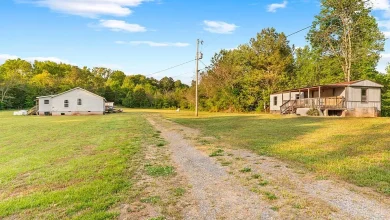
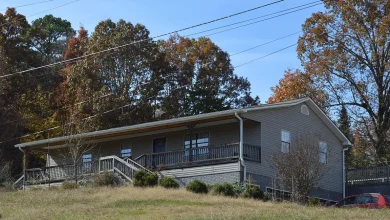
Rare opportunity to snag acreage on Arden Mines Road!
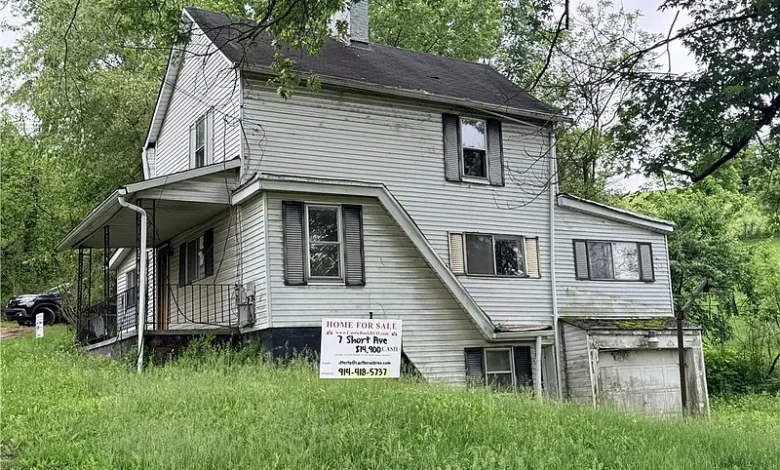
$5,900 Property in Washington, Pennsylvania: 0.27-Acre Land Opportunity With a 1904 Tear-Down Candidate
For real estate investors, builders, contractors, cash buyers, and land-focused purchasers searching for an extremely low-priced property in Washington, Pennsylvania, the listing at 7 Short Ave, Washington, PA 15301 immediately attracts attention because of its remarkable $5,900 asking price.
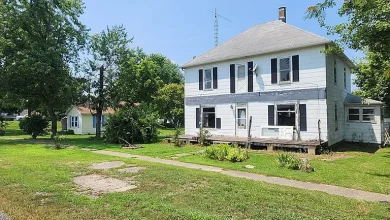
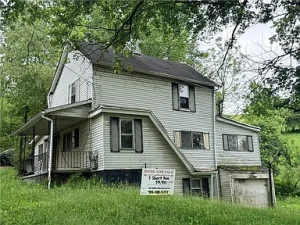
At first glance, the listing appears to offer a two-bedroom, one-bath single-family residence containing approximately 1,327 square feet on about 0.27 acres. However, prospective buyers need to understand the most important detail before evaluating this property: the existing house is described as having severe structural damage and is being marketed primarily for its land value.
According to the listing description, the interior contains collapsed ceilings and compromised flooring, while portions of the house have been boarded off and are inaccessible for safety reasons. The seller identifies the structure as a tear-down candidate and limits the transaction to cash buyers only.
Therefore, this is very different from a conventional $5,900 fixer-upper.
A buyer should not assume that inexpensive cosmetic repairs could make the existing residence habitable. Instead, the property should be analyzed as a potential land acquisition, demolition project, or major structural rehabilitation, depending on what professional evaluations and local regulations determine.
The existing structure was built in 1904, contains approximately 1,327 square feet, and sits on a parcel reported at approximately 0.27 acres. The property is located in a rural setting, while the listing describes Washington’s shopping and amenities as approximately 20 minutes away.
At only $5,900, the acquisition price is exceptionally low. But demolition, debris removal, site preparation, permits, utility work, taxes, insurance, environmental considerations, and new construction could cost many times more than the land purchase itself.
That makes due diligence particularly important.
Property Overview: 7 Short Ave, Washington, PA 15301
The property is currently listed for $5,900 following a reported $2,000 price reduction.
The existing building is classified as a two-story single-family residence with two bedrooms, one full bathroom, and approximately 1,327 square feet of interior space.
It was constructed in 1904 and has aluminum siding.
The parcel contains approximately 0.27 acres, or roughly 11,700 square feet when converting 0.27 acres into square feet.
The property is being marketed primarily for the land because the existing house has serious structural problems.
The listing specifically mentions collapsed ceilings, compromised flooring, inaccessible areas, and portions of the structure being boarded off.
The asking price equates to approximately $4 per square foot when calculated against the existing house, although that figure has limited usefulness when the structure is considered a potential tear-down.
The reported tax assessed value is $85,900, and annual property taxes are listed at approximately $1,576.
The transaction is advertised for cash buyers only.
Why the $5,900 Asking Price Needs Context
A single-family property offered for less than $6,000 will naturally generate attention.
However, the asking price cannot be separated from the property’s condition.
This is not being marketed as a move-in-ready house or even as a conventional renovation opportunity. The seller is explicitly emphasizing the land and identifying the existing structure as a potential tear-down.
For that reason, buyers should think beyond the $5,900 purchase price.
A more realistic financial equation might be:
$5,900 Purchase Price + Closing Costs + Title Work + Inspections + Engineering + Demolition + Debris Removal + Environmental Testing/Remediation if Needed + Permits + Utility Work + Site Preparation + New Construction + Insurance + Taxes + Financing/Capital Costs + Contingency = Total Project Investment
That total is the number that ultimately matters.
Recent $2,000 Price Reduction
The listing reports a $2,000 price reduction, bringing the asking price down to $5,900.
At this price level, a $2,000 reduction is substantial as a percentage of the asking price.
Still, a lower acquisition cost does not automatically make the project financially attractive.
If demolition, site work, or structural stabilization is expensive, saving another $2,000 on the purchase price may represent only a small fraction of the eventual investment.
Investors should therefore focus on total project economics rather than the percentage discount from the previous asking price.
Existing 1,327-Square-Foot Structure
The existing house contains approximately 1,327 square feet.
Under normal circumstances, that would provide a reasonably useful amount of residential living space.
But square footage has limited relevance when substantial parts of a structure may be unsafe or unusable.
The seller reports severe structural damage and specifically identifies compromised flooring.
Before anyone considers rehabilitation rather than demolition, the house should be evaluated by qualified professionals.
No buyer should assume that the listed 1,327 square feet can economically be restored simply because the building remains standing.
Two Bedrooms and One Bathroom
The property records identify the existing house as containing two bedrooms and one full bathroom.
Those details describe the current structure, but they may have limited significance if demolition becomes the preferred strategy.
If rehabilitation is technically and financially feasible, the existing layout could potentially influence future renovation plans.
If the house is demolished, any replacement structure would need to follow applicable zoning, setbacks, building codes, utility requirements, and permitting rules.
The existence of a previous two-bedroom residence does not automatically guarantee approval for every future building plan.
Built in 1904
The existing house dates to 1904, making it more than 120 years old.
Older houses can sometimes be excellent restoration candidates, but age combined with documented severe structural damage changes the analysis considerably.
A building of this age may contain materials, systems, and construction methods from several different periods.
If demolition or extensive renovation is planned, buyers should consider whether professional testing for older building materials is appropriate before disturbing the structure.
The building’s age also makes professional structural evaluation particularly important if preservation is being considered.
Severe Structural Damage Changes Everything
The listing’s description of severe structural damage is arguably more important than any other fact provided.
Structural damage can affect floors, walls, ceilings, framing, roof support, and overall building stability.
The seller specifically reports collapsed ceilings and compromised flooring.
These are not minor cosmetic issues.
A buyer should avoid entering unsafe or restricted portions of the structure simply to conduct an informal inspection.
Qualified professionals should determine what areas can safely be accessed and what evaluation is possible.
Collapsed Ceilings
Collapsed ceilings can result from numerous underlying problems.
Possible causes can include roof leaks, moisture damage, structural movement, failed plaster or drywall systems, deterioration of framing, or combinations of these issues.
The listing does not identify the specific cause.
That means buyers should not speculate.
If rehabilitation is being considered, the source of the ceiling failures would need to be established before a reliable repair estimate could be produced.
If demolition is planned, the condition still matters because unstable materials can affect demolition methods and safety requirements.
Compromised Flooring
The seller also identifies compromised flooring.
That is a significant safety concern.
Floor damage can involve only finish materials, but the word “compromised” in the context of severe structural damage raises questions about subflooring, joists, supports, moisture, deterioration, or other structural components.
Professional assessment is appropriate.
Buyers should not walk through visibly unsafe areas simply to inspect them personally.
The potential for floor failure is one reason portions of distressed buildings may be inaccessible.
Boarded and Inaccessible Areas
According to the listing, portions of the home are boarded off and inaccessible for safety reasons.
This creates an additional challenge for due diligence.
A normal home inspection depends on physical access.
When inspectors cannot safely enter sections of a building, there may be important conditions that cannot be observed before purchase.
Cash buyers considering the property should account for this uncertainty.
The inability to inspect every area increases the importance of a conservative budget and a substantial contingency reserve.
Why This Is Better Viewed as a Land Opportunity
The listing itself states that the property is being sold primarily for land value.
That provides the clearest framework for evaluating it.
Rather than asking, “How inexpensive is this house per square foot?” a buyer may be better served by asking:
What is this 0.27-acre parcel worth after accounting for demolition, site preparation, taxes, utilities, zoning, and potential future use?
That changes the investment analysis completely.
The house becomes an existing site condition rather than necessarily the primary asset.
Approximately 0.27 Acres
The parcel contains approximately 0.27 acres.
That translates to roughly 11,761 square feet, although buyers should rely on an actual survey or official parcel information for precise boundaries.
A parcel of this size could potentially provide adequate space for a residential building and yard, depending on its dimensions, topography, setbacks, access, utilities, and zoning.
The listing references acreage on Arden Mines Road and describes the setting as peaceful and rural.
A buyer interested in redevelopment should independently verify all land characteristics.
Land Value Should Be Compared With Local Sales
Because the existing structure may need demolition, comparable land sales can be more useful than ordinary house sales.
An investor should investigate nearby vacant residential parcels, tear-down properties, and buildable lots.
Important comparison factors include acreage, road frontage, utility availability, topography, zoning, location, and development costs.
A $5,900 price can sound extraordinarily inexpensive, but the true value depends on what can legally and practically be done with the parcel.
Zoning Verification Is Essential
The supplied listing does not provide detailed zoning information.
That should be investigated before purchase.
A buyer should confirm whether the parcel can support the intended replacement residence or other proposed use.
Setbacks, minimum lot requirements, building height, road access, parking, utility connections, and other regulations may influence development.
Anyone considering a manufactured home, modular home, accessory structure, rental configuration, or other specific use should verify that use independently before purchasing.
Demolition Could Be the Largest Immediate Expense
If professional evaluation confirms that the existing structure is not economically repairable, demolition becomes a central part of the project.
Demolition involves more than hiring equipment to knock down a house.
A project may involve permits, utility disconnections, safety procedures, debris sorting, transportation, disposal fees, environmental requirements, foundation removal, grading, and site cleanup.
Costs vary significantly by location and building condition.
For a $5,900 property, demolition expenses could easily be far more significant than the acquisition price.
Get Demolition Quotes Before Buying
A serious buyer should consider obtaining estimates from licensed demolition contractors before closing.
Contractors can evaluate site access, building size, condition, disposal requirements, and other variables.
The buyer should clarify what each estimate includes.
For example, does the price include foundation removal? Are permits included? What about utility disconnection? Is final grading included? Who pays landfill or disposal fees?
Comparing detailed written estimates can provide a much more realistic project budget.
Older Materials May Affect Demolition
Because the house was built in 1904, buyers planning demolition should investigate whether environmental testing is required or advisable.
Older houses may contain lead-based paint or asbestos-containing materials depending on materials installed during the building’s long history.
Their presence should not be assumed without testing.
However, if regulated materials are discovered, removal and disposal requirements can affect demolition cost.
This is one reason an extremely inexpensive tear-down property can require substantial upfront due diligence.
Utility Connections Need Investigation
The supplied property facts do not provide detailed information about water, sewer, gas, or other utility services.
That is a critical information gap for a land-focused purchase.
Buyers should determine what utilities currently serve the parcel, whether services are active, where connections are located, and what it would cost to reconnect or upgrade them for new construction.
Existing utility access can potentially add value to a redevelopment site, while expensive new connections can significantly increase project costs.
Road Access and Site Access Matter
A future construction project requires reliable site access.
The buyer should confirm legal access to the parcel, road conditions, driveway location, and whether construction equipment can reach the building site.
Access can also influence demolition expenses.
If heavy equipment cannot easily reach the structure, contractor costs may increase.
A survey and title review can help identify easements, rights-of-way, or other access considerations.
Aluminum Siding on the Existing House
The existing structure is described as having aluminum siding.
For a normal renovation property, siding condition would be a meaningful consideration.
For this listing, however, structural condition takes priority.
If rehabilitation is pursued, the siding should be evaluated for damage, loose sections, moisture intrusion, and repairability.
If demolition is chosen, exterior material becomes part of the debris-removal process.
The buyer should not assign substantial value to the siding without understanding the building’s overall viability.
Two-Story Configuration
The existing house has two stories.
Again, that might normally be a positive feature because it allows substantial interior area within a relatively compact building footprint.
But structural damage makes the configuration relevant primarily to safety, rehabilitation complexity, and demolition planning.
Second-story instability can complicate access and increase risk.
Professional contractors should determine how the building can safely be evaluated, stabilized, repaired, or demolished.
Cash Buyers Only
The seller specifies cash buyers only.
This is consistent with the property’s condition.
Traditional mortgage lenders generally expect collateral to satisfy certain habitability, safety, appraisal, and insurance requirements.
A severely damaged structure with inaccessible areas may not meet those standards.
Cash buyers still need to think carefully about capital allocation.
Paying $5,900 for the property is only the first step. A buyer needs enough additional capital for closing, demolition or structural work, taxes, insurance, and whatever future development is planned.
Why Zillow’s $8 Estimated Payment Is Misleading Without Context
The listing displays an estimated payment of approximately $8 per month.
That number may look remarkable, but it should not be interpreted as the true monthly cost of ownership.
The seller requires cash buyers, so a conventional mortgage payment estimate may have little practical relevance.
Furthermore, the property carries annual taxes, potential insurance costs, maintenance, demolition expenses, and development costs.
For this particular listing, the cost of dealing with the existing structure could matter far more than any hypothetical mortgage payment.
$4 Per Square Foot Has Limited Meaning Here
The property is shown at approximately $4 per square foot, calculated against the existing 1,327-square-foot residence.
That is an extraordinary number, but it should be interpreted cautiously.
If the building is a tear-down candidate, the square footage may not represent usable economic value.
In fact, the structure could potentially create an additional cost because it may need to be demolished and removed before the land can be redeveloped.
Land value per acre or per buildable lot may therefore be more relevant than house price per square foot.
$85,900 Tax Assessed Value
The listing reports a tax assessed value of $85,900.
That is dramatically higher than the $5,900 asking price.
It would be a serious mistake to interpret the difference as guaranteed instant equity.
Tax assessments are created for taxation purposes and may not reflect the present physical condition of a severely damaged property.
The house’s deterioration could be one reason market pricing differs significantly from an assessment.
Buyers should verify the current assessment directly and research whether future demolition or redevelopment could affect taxation.
Annual Property Taxes of $1,576
Annual property taxes are reported at approximately $1,576.
That figure is particularly important because it represents more than one-quarter of the current $5,900 asking price.
A buyer who holds the property for several years without completing redevelopment could therefore incur meaningful carrying costs relative to the acquisition price.
Investors should verify the current tax bill, determine whether any taxes are delinquent, and investigate whether other municipal charges or liens exist.
Title Search Is Especially Important
Low-priced distressed properties deserve careful title research.
A professional title search can help identify mortgages, tax liens, judgments, easements, ownership issues, or other recorded interests.
A $5,900 purchase can become far more complicated if the buyer inherits unresolved title problems.
Title insurance availability should also be investigated.
Cash purchase does not eliminate the need for good title due diligence.
Insurance May Be Difficult
Insuring a severely damaged and potentially unsafe building may be more complicated than insuring a normal occupied residence.
A standard homeowners policy may not be appropriate.
A buyer should speak with insurance professionals before closing and explain the property’s actual condition and intended use.
If demolition is planned, different coverage may be appropriate during ownership and construction.
Insurance should be treated as a project cost rather than an afterthought.
Rural Setting Near Washington Amenities
The seller describes the location as a peaceful rural setting where surrounding homes are well maintained.
The listing also states that shopping and amenities in Washington are approximately 20 minutes away.
This combination could appeal to someone who wants a quieter setting without being completely isolated from services.
Actual travel times will depend on destination, traffic, weather, and route, so buyers should independently verify commutes important to them.
Neighboring Property Condition Can Matter
The listing’s reference to well-maintained neighboring homes is relevant because surrounding properties can influence the attractiveness of a future residence.
A new or substantially renovated home may benefit from a setting where nearby owners maintain their properties.
However, buyers should visit the area personally rather than relying exclusively on listing language.
They should evaluate road conditions, neighboring land uses, noise, traffic, drainage, and general surroundings.
New Construction Strategy
One possible approach is to purchase the parcel, remove the existing house, prepare the site, and construct a new residence.
The financial analysis might look like:
Land Purchase + Closing Costs + Demolition + Environmental Work + Site Preparation + Utility Connections + Engineering + Architectural Plans + Permits + New Construction + Driveway + Landscaping + Financing + Insurance + Taxes + Contingency = Total Development Cost
That figure can then be compared with the expected market value of the completed home.
Without this analysis, a low land price alone does not establish development profitability.
Manufactured or Modular Home Possibilities Require Verification
A buyer may wonder whether an inexpensive manufactured or modular home could be placed on the parcel after demolition.
That possibility should not be assumed.
Local zoning, building regulations, foundation requirements, utility standards, deed restrictions, and other rules can affect what type of structure is allowed.
The buyer should obtain written or authoritative confirmation before basing a purchase decision on a particular housing type.
Rehabilitation Versus Demolition
Some buyers may still consider restoring the 1904 house.
That decision should be based on structural and financial evidence rather than emotion.
A qualified professional can evaluate framing, foundation, floors, roof structure, exterior walls, and other critical components.
The rehabilitation estimate should include every major system.
If restoration costs approach or exceed the cost of demolition and appropriate replacement construction, the buyer can compare both strategies.
There is no universal answer; it depends on the building’s actual condition and the buyer’s objectives.
Potential Contractor or Builder Opportunity
This property may be more suitable for an experienced contractor or builder than a first-time DIY buyer.
Professionals may be better positioned to evaluate structural conditions, obtain demolition pricing, understand permitting, coordinate subcontractors, and estimate development costs.
That does not guarantee profitability.
Even experienced investors need accurate numbers.
But professional construction knowledge can be particularly valuable when the existing structure is unsafe and the investment thesis centers on land and redevelopment.
Long-Term Land Hold Strategy
Another possibility is purchasing the parcel and holding it for future use.
At $5,900, the acquisition cost is low, but annual carrying expenses must still be considered.
The reported $1,576 annual tax bill alone could accumulate quickly over several years.
There may also be insurance, vegetation control, security, municipal compliance, and maintenance expenses.
An abandoned unsafe structure can create additional liability and code-enforcement concerns.
Therefore, a passive hold strategy requires its own financial analysis.
Online Buyer Interest
According to the supplied listing information, the property has accumulated approximately 1,430 Zillow views and 97 saves over about 126 days.
That shows substantial online interest relative to the property’s extremely low asking price.
However, online views and saves do not indicate that the structure is safe, the land is buildable for a particular use, or the project will be profitable.
The extended marketing period also provides context that should be considered alongside the recent price reduction.
Due Diligence Before Making an Offer
Because this property is primarily a land opportunity with a severely damaged house, due diligence should focus on several areas.
Buyers should verify title, property boundaries, legal access, zoning, setbacks, utility availability, taxes, liens, insurance options, demolition requirements, environmental considerations, and future building possibilities.
The structure should only be accessed where professionals consider it safe.
Written demolition estimates and site-preparation estimates can be particularly valuable.
If rehabilitation is being considered, a structural assessment is essential before creating a renovation budget.
Building a Realistic Project Budget
The $5,900 price can easily distract buyers from larger costs.
A complete redevelopment budget should account for the acquisition, closing, title work, surveys, inspections, demolition, debris removal, environmental testing where appropriate, utility disconnection and reconnection, grading, permits, engineering, architecture, construction, driveway work, landscaping, taxes, insurance, financing, and contingency.
Construction projects frequently encounter unexpected expenses.
A healthy reserve can prevent an unforeseen site condition from stopping the entire project.
Why a Contingency Reserve Is Critical
A tear-down site can reveal surprises after demolition begins.
An old foundation may require more extensive removal than expected.
Underground utilities may need modification.
Site drainage may require additional work.
Old materials can increase disposal costs.
Access conditions can affect equipment requirements.
A contingency reserve is therefore essential.
On a $5,900 property, even a relatively modest unexpected construction expense can exceed the original acquisition price.
Final Thoughts on 7 Short Ave, Washington, Pennsylvania
7 Short Ave, Washington, PA 15301 is one of those listings where the extremely low price requires careful interpretation.
For $5,900, the buyer acquires approximately 0.27 acres of land with an existing 1,327-square-foot, two-bedroom, one-bath residence built in 1904.
However, the seller explicitly states that the property is being marketed primarily for land value.
The existing structure has severe structural damage, collapsed ceilings, compromised flooring, and areas that are boarded and inaccessible for safety reasons. It is described as a tear-down candidate, and the seller is seeking cash buyers only.
Those facts fundamentally change the investment analysis.
This should not be approached as a conventional $5,900 house where a buyer simply paints the walls, installs new flooring, and moves in.
The primary opportunity may instead be the land itself.
For a builder or developer, the key questions concern zoning, buildability, demolition costs, utilities, access, site preparation, construction expenses, and the eventual value of a replacement residence.
For a contractor considering rehabilitation, the first requirement is a professional structural assessment to determine whether restoration is technically and financially reasonable.
For a land investor, annual taxes and the liability associated with the unsafe structure need to be incorporated into carrying costs.
The reported $85,900 tax assessed value should not be interpreted as evidence that someone purchasing for $5,900 immediately gains nearly $80,000 in equity. The current physical condition of the structure and the economics of redevelopment matter far more.
Similarly, the advertised $4-per-square-foot price is not particularly useful if much or all of the existing building has little usable value.
The most important calculation is the all-in cost of transforming this parcel into a safe and legally usable property.
That may involve demolition, environmental evaluation, utility work, site preparation, permits, and eventually new construction.
The peaceful rural setting described by the seller and proximity to Washington-area amenities may make the site appealing to the right buyer. The low acquisition cost provides an inexpensive starting point, but it should never be confused with the final cost of the project.
For buyers prepared to investigate every major issue before closing, 7 Short Ave represents a rare sub-$10,000 real estate opportunity where the potential value lies primarily in the land and the possibility of creating something new—not in assuming that the existing 1904 structure can be inexpensively restored.
Listed on Zillow