Historic skillagalee lighthouse
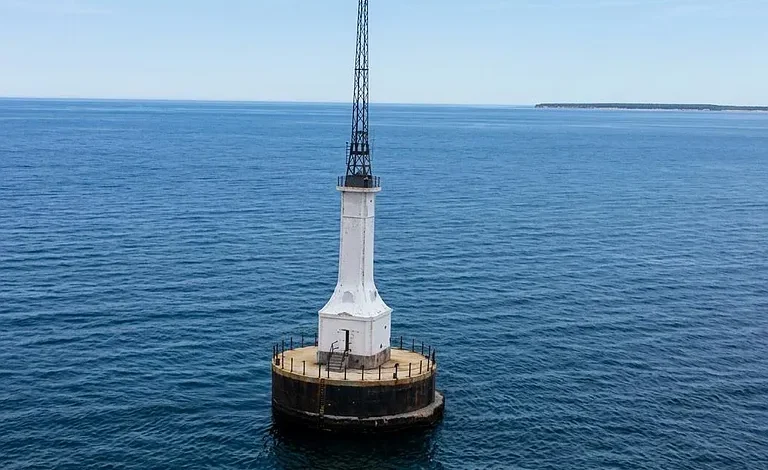
Two Historic Michigan Lighthouses Offered Together for $179,900
A Rare Great Lakes Preservation Opportunity
Some real estate listings are homes, farms, vacant land, or commercial buildings. Others are historic properties that represent an important part of a region’s past. This Michigan offering falls into a very different category. For $179,900, a buyer has the opportunity to acquire two historic and fully operational Great Lakes lighthouses being offered together as assets of a nonprofit organization.
The package includes Gravelly Shoal Lighthouse in Saginaw Bay and the historic Skillagalee Lighthouse, located in the waters of Lake Michigan between Beaver Island and the mainland. Rather than being presented as ordinary residential real estate, these properties are described as working maritime landmarks that require continued stewardship and preservation.
The listing identifies approximately 1,500 square feet of total structure area and a historic construction date of 1857. It also reports spectacular water views, approximately 140 feet of frontage, and a location surrounded by the open waters of the Great Lakes.
For buyers interested in maritime history, historic preservation, Michigan heritage, engineering, architecture, or rare waterfront assets, the opportunity is highly unusual. The properties are not being offered separately, and the seller is seeking a buyer who understands the responsibility associated with preserving historic working lighthouses.
This is also a property that requires a very different kind of due diligence from a conventional home purchase. There are no bedrooms, bathrooms, kitchen, or traditional residential utilities listed in the property facts. The listing also states that prospective buyers must not tour the lighthouses without permission from the listing agent and must provide their own transportation.
Two Lighthouses in One Package
The central feature of this offering is that two historic lighthouses are being sold together.
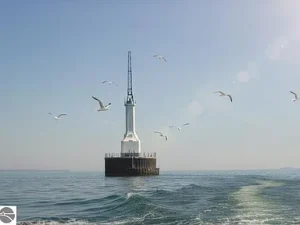
The first is Gravelly Shoal Lighthouse, located in Saginaw Bay. It is described as a historic offshore lighthouse with a classic design, substantial engineering significance, and a unique bunker structure. The listing states that the lighthouse remains fully operational and has been updated and maintained.
The second is Skillagalee Lighthouse, located in Lake Michigan. The listing describes it as an iconic Michigan maritime landmark that has guided vessels through waters containing rocks and shoals that can make navigation challenging.
The two properties represent different locations within the Great Lakes but share a common purpose and historical identity. Their continued existence is connected to Michigan’s maritime history and the development of navigation across some of the largest freshwater bodies in the world.
Because they are being sold as a package, a prospective purchaser is not simply buying one historic structure. The buyer would be assuming responsibility for two distinct landmarks.
Gravelly Shoal Lighthouse in Saginaw Bay
Gravelly Shoal Lighthouse is described as standing in the waters of Saginaw Bay. Its offshore location immediately distinguishes it from many historic lighthouse properties that are situated on accessible coastal land.
The lighthouse has been standing in the bay for decades and is described as having a commanding presence. Its purpose historically centered on maritime navigation, helping vessels safely navigate areas where underwater hazards and shoals could create challenges.
One particularly unusual feature mentioned in the listing is a bunker structure. This element adds another layer to the lighthouse’s physical design and historical interest.
The structure is also described as fully operational. For preservation-minded buyers, that distinction is significant because the property is presented not simply as an abandoned historic building but as a functioning maritime landmark.
A Carefully Maintained Historic Beacon
The listing emphasizes that Gravelly Shoal Lighthouse has been updated and maintained. This means the prospective owner may be able to concentrate more heavily on continued stewardship rather than beginning with a complete restoration project.
Historic properties often require specialized maintenance because their construction, materials, mechanical systems, and structural requirements can differ substantially from modern buildings.
For an offshore lighthouse, those considerations can be even more significant. Exposure to water, wind, storms, ice, moisture, and changing Great Lakes conditions can place demands on exterior materials and structural systems.
A buyer should therefore consider not only the purchase price but also the long-term financial and logistical requirements of maintaining the property.
The Historic Skillagalee Lighthouse
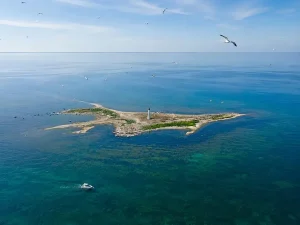
The second lighthouse is Skillagalee Lighthouse, situated in Lake Michigan between Beaver Island and the mainland.
The listing explains that the name Skillagalee means “Island of Pebbles” and describes the lighthouse as one of Michigan’s iconic maritime treasures.
Its role has historically been connected to helping vessels navigate waters containing rocks and shoals. Like Gravelly Shoal, Skillagalee is presented as a working lighthouse rather than simply a historic shell.
The surrounding Great Lakes environment contributes significantly to its character. Open water, changing weather, historic shipping routes, and the remoteness of offshore structures all form part of the property’s identity.
For someone passionate about Michigan’s maritime heritage, owning or stewarding such a structure could represent an opportunity to participate directly in the preservation of an important piece of Great Lakes history.
Why Lighthouse Properties Are So Unusual
Historic lighthouses occupy a special category within real estate because their value cannot be measured only by conventional residential characteristics.
A typical home can be evaluated through bedrooms, bathrooms, square footage, lot size, neighborhood amenities, comparable sales, and utility systems. A lighthouse requires additional considerations, including historical importance, structural condition, accessibility, preservation requirements, operating systems, marine transportation, environmental exposure, and ongoing stewardship.
These factors make the two-lighthouse package unusual from both a real estate and preservation perspective.
The property facts show zero bedrooms and zero bathrooms, which is consistent with the fact that the listing is describing lighthouse structures rather than a conventional residence. Buyers should therefore not approach this offering as though they were purchasing a traditional single-family home.
Great Lakes Waterfront Setting
Few environments in the United States compare with the Great Lakes. Together, the Great Lakes form one of the world’s largest freshwater systems, and Michigan is particularly associated with their maritime history.
This property is connected to both Saginaw Bay and Lake Michigan, placing it within a landscape shaped by commercial shipping, fishing, navigation, weather, and generations of lighthouse service.
The listing identifies Saginaw Bay as the body of water associated with Gravelly Shoal Lighthouse and provides water and bay views as prominent property characteristics.
Approximately 140 feet of frontage is listed, although buyers should carefully confirm how that figure applies to the offshore property configuration and legal boundaries.
A Property Surrounded by Water
The experience of an offshore lighthouse is fundamentally different from owning waterfront land on the mainland.
Instead of having a house with a backyard leading to the water, these structures are surrounded by the Great Lakes environment. Transportation becomes an essential consideration, and weather conditions can affect accessibility.
The listing specifically states that buyers must provide their own transportation.
This means that any prospective owner needs to investigate the practical realities of reaching each property throughout the year. Boat access, seasonal conditions, docking arrangements, transportation equipment, fuel, weather limitations, and emergency access can all become important factors.
No Traditional Residential Utilities
The property facts list no sewer and no water. There are also no conventional appliances, laundry facilities, or kitchen listed.
This is an important distinction for anyone considering the property.
Although the listing describes the structures as fully operational lighthouses, that does not mean they function like modern residential properties. Buyers should obtain detailed documentation concerning electrical systems, water systems, waste management, heating, communications, navigation equipment, and other infrastructure.
Any assumption about residential occupancy, overnight accommodation, commercial use, or conversion should be avoided until the relevant legal, structural, historical, and utility requirements are confirmed.
Historic Preservation as a Central Responsibility
The seller is seeking a buyer who understands the significance of these landmarks and will continue their legacy.
That language is important because the transaction is not simply about acquiring an unusual property. It is also about stewardship.
Historic preservation can involve regular maintenance, careful material selection, documentation, restoration planning, structural monitoring, and coordination with organizations or agencies connected to the property’s history.
Before purchasing, buyers should determine whether either lighthouse has historic designations, preservation restrictions, easements, covenants, grant obligations, or other legal requirements that could influence future modifications.
Engineering and Construction Characteristics
The property facts identify construction materials including steel siding and steel, with foundation information listing block, slab, and stone. The roof is categorized as other.
The original construction date is listed as 1857, making the property historically significant and considerably older than the majority of modern real estate.
The age and offshore environment make professional structural evaluation particularly important.
A qualified engineer with experience in marine structures or historic buildings could potentially provide information about corrosion, structural integrity, foundations, exterior cladding, roof systems, water intrusion, and other issues.
The buyer should also obtain records regarding previous renovations, repairs, engineering assessments, and maintenance.
The Difference Between Restoration and Preservation
The listing emphasizes that the lighthouses have been updated and maintained. That is an important advantage from a preservation standpoint, but it does not mean future maintenance will be simple.
Restoration generally focuses on returning a historic property to a particular earlier appearance or condition. Preservation focuses on protecting and maintaining an existing historic structure.
A lighthouse owner may need to balance historical authenticity with modern safety requirements and the continued operation of the structure.
This can require specialized professionals and careful planning.
Potential Cultural and Educational Value
A property with this kind of maritime history could potentially have cultural and educational significance.
Historic lighthouses can help communities understand how vessels navigated difficult waters before modern navigation technology became widespread. They can also tell stories about shipping, engineering, weather, Great Lakes communities, and the development of Michigan’s maritime infrastructure.
A future owner might explore educational partnerships, preservation programs, historical documentation, or other appropriate initiatives, subject to ownership rights, applicable regulations, and any restrictions associated with the properties.
Any public access or tourism concept would require substantial research because offshore accessibility, insurance, safety, transportation, and preservation requirements can be complex.
Could These Lighthouses Become a Vacation Destination?
The unusual nature of the property may naturally lead some buyers to consider hospitality or tourism possibilities.
However, the current listing does not establish that the lighthouses are approved for short-term rentals, lodging, events, or public accommodation.
Before considering any such use, a buyer would need to investigate zoning, building codes, fire and life-safety requirements, accessibility rules, wastewater systems, water supply, insurance, transportation, historical restrictions, and any nonprofit or governmental agreements affecting the properties.
Therefore, a tourism concept should be viewed only as a possibility requiring extensive verification rather than as an established income-producing use.
Investment Considerations
At $179,900, the offering may attract buyers who recognize that historic properties can have value beyond traditional residential metrics.
Nevertheless, this should not be treated as a conventional investment property.
The listing does not provide bedrooms, bathrooms, conventional utilities, or rental income information. There is also no guarantee of appreciation or future revenue.
The financial model for such an acquisition would need to consider maintenance, transportation, insurance, utilities, preservation work, structural inspections, potential legal requirements, and other specialized expenses.
For a buyer primarily seeking financial returns, these factors are particularly important to understand before proceeding.
The Nonprofit Ownership Context
The listing states that the two lighthouses are being offered together as assets of a nonprofit organization.
That detail may be relevant to the transaction and should be investigated carefully.
Prospective buyers should request information about the nonprofit’s ownership documentation, title, restrictions, historical agreements, property records, and any obligations that transfer with the assets.
It may also be useful to understand why the nonprofit is selling the properties and whether there are preservation expectations associated with the sale.
The seller’s stated preference for a buyer committed to preserving the lighthouses suggests that stewardship is an important part of the transaction.
What the $179,900 Price Represents
The asking price is listed at $179,900.
Unlike an auction listing, this property is presented with a specific asking price. The listing also indicates cash and other terms.
The displayed price should not be interpreted as the total cost of ownership. A buyer should consider closing costs, inspections, transportation arrangements, insurance, maintenance, professional services, and potential preservation expenses.
Historic offshore properties can have ownership costs that are very different from those of an ordinary residential property.
A Property for the Right Kind of Buyer
This offering is likely to attract a very specific type of purchaser.
The ideal buyer from a practical standpoint would need to appreciate historic preservation, understand the challenges of offshore ownership, and be prepared to invest time and resources into maintaining the structures.
Someone looking simply for a traditional waterfront house would likely need a completely different set of features, because this property does not offer bedrooms, bathrooms, a kitchen, or standard residential utilities according to the listing.
Instead, its appeal centers on history, architecture, engineering, maritime heritage, and stewardship.
Important Questions Before Making an Offer
Because of the unusual nature of the property, prospective buyers should conduct extensive due diligence.
Important questions may include:
- Who holds legal title to each lighthouse?
- Are there recorded easements or restrictions?
- Are either properties listed on historic registers?
- Are there federal, state, local, or nonprofit preservation requirements?
- What equipment is included in the sale?
- What does “fully operational” specifically mean?
- Who is responsible for lighthouse operations after closing?
- What electrical systems are currently installed?
- Are generators or alternative power systems present?
- How are water and waste handled?
- What transportation arrangements are currently used?
- Is year-round access possible?
- What marine equipment is required?
- What are the annual maintenance expenses?
- What insurance is available for the structures?
- Are there environmental assessments?
- Have recent structural inspections been completed?
- Are there existing engineering reports?
- What repairs have been performed?
- What repairs are recommended?
- Can either lighthouse legally be occupied overnight?
- Are short-term rentals permitted?
- Can visitors legally access the structures?
- Are there restrictions on renovations?
- What exactly is included in the $179,900 transaction?
These questions should be answered before committing to the purchase.
Touring the Lighthouses
The listing contains an especially important warning concerning property tours.
Prospective buyers are instructed not to tour the lighthouses without permission from the listing agent. The listing also states that buyers will have to provide their own transportation.
This is not a property where someone should simply drive to the address and walk through the home.
Because the structures are offshore, access involves additional logistical and safety considerations. Unauthorized attempts to reach the properties could create serious risks.
Anyone interested should coordinate directly with the listing agent and follow all instructions regarding transportation, access, inspections, and safety.
A Piece of Michigan Maritime Heritage
Michigan’s identity is closely connected to the Great Lakes. Its shoreline, islands, bays, ports, and waterways have played important roles in transportation, commerce, fishing, industry, recreation, and community development.
Lighthouses are physical reminders of that history.
Gravelly Shoal and Skillagalee are more than unusual buildings. Their significance comes from their relationship with the waters they were built to serve.
The structures represent generations of maritime navigation and the engineering required to establish reliable navigation aids in challenging freshwater environments.
For a preservation-minded owner, that historical connection may be the most important aspect of the property.
A Truly Unconventional Real Estate Listing
The $179,900 offering stands apart from conventional Michigan real estate.
There is no traditional yard, no neighborhood subdivision, no HOA, and no standard residential floor plan. Instead, the package consists of two offshore historic lighthouses surrounded by Great Lakes waters.
The listing identifies 1,500 square feet of structure area and a 1857 construction date, but the most important characteristics cannot be reduced to square footage.
The property’s value is connected to its history, location, operational status, architecture, engineering, and cultural significance.
Final Thoughts on the Two-Lighthouse Offering
The opportunity to purchase two historic working lighthouses together is exceptionally unusual. This Michigan offering brings together Gravelly Shoal Lighthouse in Saginaw Bay and Skillagalee Lighthouse in Lake Michigan, creating a package centered on maritime history and preservation rather than conventional residential living.
The listing describes both landmarks as fully operational and carefully updated and maintained. Gravelly Shoal includes a distinctive bunker structure, while Skillagalee is presented as an important Michigan maritime beacon that has guided vessels through challenging Great Lakes waters.
The asking price is $179,900, but the true consideration for a prospective buyer extends far beyond the initial purchase price. Transportation, insurance, structural maintenance, preservation obligations, utilities, access, legal restrictions, and ongoing stewardship all need to be carefully evaluated.
The property facts show zero bedrooms and zero bathrooms, and no traditional water or sewer systems are listed. These details reinforce the importance of viewing the offering as a historic maritime asset rather than a conventional residence.
For the right buyer, however, the opportunity could represent something far more meaningful than ordinary real estate. It could provide a chance to become the steward of two historic Michigan landmarks and help preserve their connection to the Great Lakes for future generations.
Anyone seriously considering the property should work closely with the listing agent and appropriate legal, engineering, maritime, insurance, and historic-preservation professionals. The listing specifically warns that the lighthouses should not be toured without permission and that buyers must arrange their own transportation.
Ultimately, this is an offering defined by rarity. Two historic lighthouses, two Great Lakes locations, decades of maritime history, and continued operational significance come together in a single transaction. For someone passionate about Michigan, the Great Lakes, historic preservation, and maritime heritage, it represents a distinctive opportunity to take responsibility for landmarks that have stood as navigational symbols for generations.

Listed on Zillow.