$149,000 Remote Waterfront Log Cabins in Maine – Historic Fishing Camp on Little Beaver Pond With 370 Feet of Shoreline
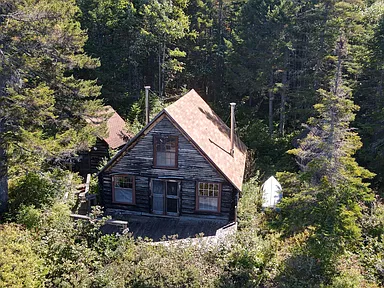
$149,000 Remote Waterfront Log Cabins in Maine – Historic Fishing Camp on Little Beaver Pond With 370 Feet of Shoreline
Discover a Historic Off-Grid Waterfront Retreat in the Maine Wilderness
For buyers searching for remote cabins for sale in Maine, historic fishing camps, off-grid recreational properties, or secluded waterfront retreats surrounded by natural beauty, this unique property at 000 Little Beaver Pond, Magalloway Plantation, ME 03579, presents an extraordinary opportunity to explore.
Currently advertised for $149,000, the property features two original log cabins dating back to the early 1900s, approximately 512 square feet of reported interior living space, and a scenic waterfront setting on Little Beaver Pond in Oxford County, Maine.
The property is described as an authentic Maine sporting camp, offering a traditional wilderness experience far removed from busy roads, crowded neighborhoods, and conventional residential developments.
One of its most distinctive characteristics is its remote location.
The camp is accessible only by boat or snowmobile, according to the listing.
This unusual access arrangement creates a sense of isolation that may appeal to outdoor enthusiasts, anglers, hunters, and buyers who appreciate quiet natural surroundings.
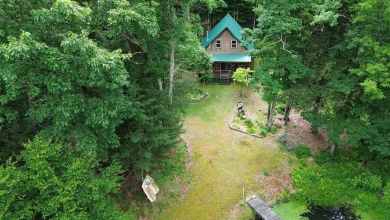
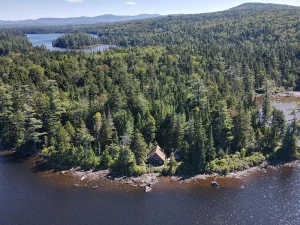
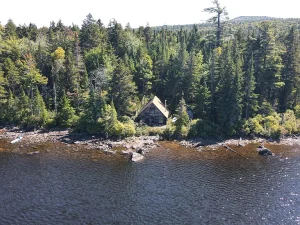
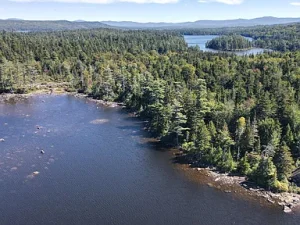
The listing also highlights approximately 370 feet of waterfront frontage, scenic views toward Azicohos Mountain, and a wooded setting with approximately 1.3 acres of reported land area.
However, there is a particularly important ownership consideration.
The cabins are located on leased land. Buyers should not assume that the $149,000 asking price includes ownership of the underlying 1.3-acre parcel or its shoreline.
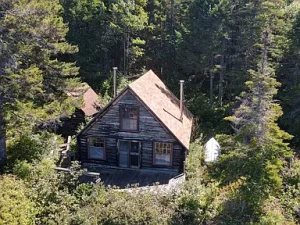
The listing describes two separate log structures, each serving a different purpose.
One cabin functions as a traditional cooking camp, providing space for preparing meals and gathering with guests.
The second cabin offers living accommodations and a loft sleeping area.
Together, these structures reflect the character of historic Maine sporting camps, which have long been associated with fishing, hunting, paddling, and outdoor recreation.
The property is also described as furnished and includes a gas range, refrigerator, woodstove heating, generator hookup, and an outhouse or privy.
There is no conventional electrical service, municipal water supply, or sewer connection reported.
Instead, the property operates as an off-grid retreat, with lake-drawn water and generator-related electrical infrastructure.
For buyers seeking a fully modernized, easily accessible vacation home, these conditions may present significant challenges.
For those who appreciate a simpler wilderness lifestyle, however, the property’s remote setting and historic atmosphere may be central to its appeal.
This comprehensive property guide explores the cabins, waterfront setting, recreational opportunities, access arrangements, leased-land considerations, ownership expenses, and important questions buyers should investigate before purchasing.
Property Overview – 000 Little Beaver Pond, Magalloway Plantation, Maine
The property is located on Little Beaver Pond in the remote northern Maine region near the New Hampshire border.
The listing identifies the property as a single-family residence with a camp-style architectural design.
Key Property Details
| Property Feature | Listing Information |
|---|---|
| Asking Price | $149,000 |
| Property Address | 000 Little Beaver Pond, Magalloway Plt, ME 03579 |
| Property Type | Recreational Camp / Single-Family Residence |
| Architectural Style | Camp |
| Reported Bedrooms | 1 |
| Bathrooms | Not Reported |
| Interior Living Area | 512 Sq. Ft. |
| Number of Cabins | 2 |
| Year Built | 1900 |
| Advertised Lot Area | 1.3 Acres |
| Land Ownership | Leased Land |
| Waterfront | Yes |
| Body of Water | Little Beaver Pond |
| Reported Waterfront Frontage | 370 Feet |
| Views | Mountains and Scenic Surroundings |
| Exterior Construction | Log and Log Siding |
| Foundation | Pillar, Post, or Pier |
| Roof | Shingle |
| Heating | Woodstove |
| Cooling | None |
| Electricity | Off-Grid, Generator Hookup |
| Water | Lake-Drawn |
| Sewer | None Reported |
| Additional Structure | Outhouse / Privy |
| Basement | None |
| Furnished | Yes |
| Access | Boat or Snowmobile |
| Zoning | LUPC |
| Annual Property Taxes | $3,008 |
| Price Per Square Foot | Approximately $291 |
| MLS Number | 1682420 |
These details make it clear that this is not a conventional year-round residence.
It is a remote recreational property with unusual access, utility, and land-tenure arrangements.
A Rare Opportunity to Experience Maine Sporting Camp History
Maine has a long tradition of sporting camps associated with fishing, hunting, canoeing, and wilderness exploration.
Historic camps were often designed to provide simple accommodations in remote natural settings.
Rather than emphasizing modern conveniences, many focused on shelter, warmth, food preparation, and direct access to outdoor recreation.
This Little Beaver Pond property reflects that tradition.
The two log cabins date back to approximately 1900, according to the listing.
Their construction and layout suggest a property intended for recreational use rather than conventional suburban living.
The separate cooking and living structures are particularly distinctive.
For buyers who appreciate historic recreational architecture, the opportunity to preserve such a setting may be attractive.
However, the age of the buildings requires careful inspection.
Historic log structures can need specialized maintenance to address moisture, wood deterioration, foundation movement, and weather exposure.
Two Original Log Cabins With Separate Functions
Unlike a typical single-building cabin, this property includes two original log structures.
The first serves as a cooking camp.
The second provides living space and a loft sleeping area.
This arrangement can create a traditional camp atmosphere, with separate areas for preparing meals and relaxing.
However, buyers should verify the condition, dimensions, and permitted uses of both buildings.
The listing reports approximately 512 square feet of interior living space, but it does not clearly establish how that area is allocated between the two cabins.
Buyers should confirm whether the reported square footage includes both structures or only the principal living cabin.
The exact floor plans and structural conditions should also be verified.
The Traditional Cooking Camp
One of the two cabins is described as a dedicated cooking camp.
Historically, separate cooking structures were sometimes used at recreational camps to provide a practical space for preparing meals and gathering.
This arrangement can be especially useful during extended outdoor stays.
The supplied listing identifies a gas range and refrigerator among the included appliances.
However, buyers should verify their location, operating condition, and fuel or power requirements.
Because the property is off-grid, conventional electrical service is not available.
Food storage, refrigeration, and cooking arrangements may therefore require additional planning.
Buyers should also inspect ventilation and fire safety.
Any fuel-burning equipment should be installed and maintained according to applicable safety standards.
Living Cabin With Comfortable Interior Space
The second cabin provides the main living accommodations.
According to the listing, it includes comfortable living space and a loft sleeping area.
The interior is described as having wood flooring and traditional log construction.
These materials contribute to the rustic atmosphere associated with historic sporting camps.
However, the listing does not provide detailed room dimensions.
Buyers should inspect the cabin to understand the actual usable space.
The condition of windows, doors, flooring, and interior walls should also be evaluated.
In a remote location, even relatively small repairs can involve additional transportation and labor costs.
Loft Sleeping Area for Guests
The listing identifies a loft sleeping area.
The structured property details also report one bedroom located on the second level.
A loft can provide additional sleeping space without requiring a large building footprint.
However, buyers should inspect access arrangements, ceiling height, ventilation, and emergency exits.
A loft may be reached by stairs or a ladder, but the listing does not specify which.
The legal classification of the sleeping area should also be verified.
Older recreational cabins may not meet all standards associated with modern residential bedrooms.
Buyers should evaluate whether the loft suits their intended use.
Approximately 512 Square Feet of Reported Living Space
The property is advertised with approximately 512 square feet of interior living area.
This is a compact footprint compared with many conventional homes.
However, the camp’s primary appeal may be its outdoor setting rather than its interior size.
For buyers seeking a wilderness retreat, a smaller cabin may provide enough space for sleeping, preparing meals, and sheltering from the weather.
The separate cooking cabin may also contribute to the overall usefulness of the property.
Nevertheless, buyers should verify the total usable area of both structures.
The reported price per square foot of approximately $291 does not account for the property’s unusual leased-land arrangement or the separate cabin configuration.
Historic Log Construction and Rustic Character
The cabins are constructed with log and log-siding materials.
Log construction is closely associated with traditional wilderness architecture.
Natural wood surfaces can create a warm, rustic atmosphere.
However, log structures require ongoing maintenance.
Buyers should inspect for moisture damage, insect activity, deteriorated logs, and failed joints.
Areas near the roofline and foundation deserve particular attention.
Protective finishes and proper drainage may be important for long-term preservation.
Because the structures date back to the early 1900s, professional evaluation may be especially valuable.
Pillar, Post, or Pier Foundation
The listing identifies a pillar, post, or pier foundation.
This construction method can elevate a cabin above the surrounding ground.
However, the specific materials and condition are not described.
Buyers should inspect for settlement, movement, damaged supports, and moisture-related deterioration.
The foundation’s suitability for continued use should be evaluated by a qualified professional.
Remote locations can make foundation repairs more complicated.
Transportation of materials, equipment access, and seasonal conditions may affect repair costs.
Any proposed structural work may also require approval under the applicable land lease.
Shingle Roofing and Weather Protection
The cabins are listed with shingle roofing.
A reliable roof is essential for protecting log construction and interior materials.
Buyers should inspect for missing shingles, leaks, damaged flashing, and deteriorated roof decking.
The roof’s age is not provided.
Therefore, its remaining service life should not be assumed.
Maine’s seasonal weather can expose roofing materials to snow, ice, wind, and moisture.
Maintenance may be particularly challenging at a property accessible only by boat or snowmobile.
Buyers should consider how contractors and supplies could reach the site if roof repairs become necessary.
Woodstove Heating for Rustic Cabin Use
The property is listed with woodstove heating.
Woodstoves are commonly associated with traditional recreational cabins.
They can provide warmth without requiring conventional electrical heating systems.
However, safe operation depends on proper installation, ventilation, chimney condition, and maintenance.
Buyers should have the stove and associated venting inspected by a qualified professional.
The listing does not establish whether the woodstove is sufficient for winter occupancy.
Cold-weather suitability depends on insulation, weatherproofing, heating capacity, and other conditions.
Buyers should not assume that the cabin is suitable for extended winter stays without further evaluation.
A Completely Off-Grid Wilderness Experience
One of the property’s defining characteristics is its off-grid status.
The listing identifies no conventional electrical service.
Instead, it reports a generator hookup and generator equipment.
This arrangement may appeal to buyers who want to disconnect from modern infrastructure.
However, off-grid ownership requires careful planning.
Electrical demand, fuel storage, equipment maintenance, and emergency power needs should be considered.
Buyers should determine whether the generator itself is included in the sale and whether it is operational.
They should also inspect the wiring and electrical connections.
A licensed electrician familiar with off-grid systems may be helpful.
Generator Hookup and Electrical Considerations
A generator hookup can provide a way to power certain appliances and equipment.
However, the listing does not specify the generator’s capacity or the condition of the electrical system.
Buyers should verify whether the generator can support the refrigerator, lighting, and other intended uses.
They should also investigate safe fuel storage and ventilation.
Portable generators must never be operated inside cabins or enclosed spaces because of carbon monoxide risks.
Proper installation and operation are essential.
Any planned solar panels, battery storage, or additional electrical systems may require leaseholder and regulatory approval.
Lake-Drawn Water Supply
The listing identifies the property’s water source as lake-drawn.
This is a major distinction from conventional residential water service.
Lake water should not automatically be considered safe for drinking.
Depending on the intended use, appropriate filtration, treatment, and testing may be necessary.
Buyers should investigate the existing water collection equipment and its condition.
They should also determine whether the water system is legally permitted.
Seasonal freezing may affect pipes, pumps, and storage arrangements.
A qualified professional can help evaluate water treatment options.
The property’s off-grid character makes water planning especially important.
No Conventional Sewer System Reported
The property details identify no sewer system.
An outhouse or privy is listed among the additional structures.
This suggests a rustic sanitation arrangement.
However, buyers should verify the existing facilities and their compliance with applicable requirements.
The listing does not identify a conventional septic system or indoor bathroom.
Prospective purchasers should not assume that modern plumbing can be installed without approvals.
The property’s waterfront location may create environmental restrictions affecting wastewater disposal.
Any proposed improvements should be discussed with the relevant authorities and landowner.
Outhouse or Privy – Traditional Camp Facilities
An outhouse or privy is part of the property’s reported improvements.
Such facilities are associated with some remote recreational camps.
However, their condition and legal status should be verified.
Buyers should inspect the structure for safety, sanitation, and maintenance needs.
They should also determine whether repairs or replacement would require permits.
Proper wastewater and waste management are particularly important near lakes and other sensitive environments.
The existence of an outhouse does not establish that additional sanitation facilities can be constructed.
370 Feet of Waterfront on Little Beaver Pond
One of the property’s most appealing features is its reported waterfront frontage.
According to the listing, the camp offers approximately 370 feet along Little Beaver Pond.
This substantial shoreline exposure may provide scenic views and opportunities to enjoy the water.
However, the land is leased.
Therefore, the buyer’s shoreline rights should be determined through the lease rather than assumed from the advertised frontage.
Buyers should verify the exact shoreline boundaries, permitted uses, and any restrictions.
They should also inspect the shoreline for erosion, vegetation, and access conditions.
Waterfront maintenance may be subject to environmental regulations.
Scenic Views Toward Azicohos Mountain
The listing highlights views of Azicohos Mountain.
Mountain scenery can contribute significantly to the atmosphere of a wilderness retreat.
The combination of forest, water, and surrounding terrain may create a peaceful natural setting.
However, the exact views should be evaluated during a property visit.
Visibility can change with weather, seasonal vegetation, and lighting.
Buyers should also understand that scenic views are not necessarily protected from future changes.
Nevertheless, the setting may be particularly attractive to photographers, artists, and outdoor enthusiasts.
Privacy and Seclusion on Little Beaver Pond
The seller describes the property as offering remarkable privacy.
According to the listing, no other camp is visible anywhere on the pond from this location.
This may appeal to buyers who prioritize solitude.
However, buyers should independently evaluate the surrounding area.
The absence of visible neighboring cabins does not establish exclusive use of the pond or surrounding land.
Other recreational users may still have lawful access.
The degree of privacy may also vary by season.
For buyers seeking a quiet retreat, visiting the property before purchase is especially important.
Accessible Only by Boat or Snowmobile
The property’s access arrangement is one of its most important characteristics.
According to the listing, the cabins can be reached only by boat or snowmobile.
There is no conventional driveway leading directly to the camp.
This means everyday activities require additional planning.
Transporting groceries, luggage, tools, fuel, and building materials may involve watercraft or snowmobiles.
Weather conditions may also affect access.
Buyers should investigate whether access is possible during seasonal transitions when boating or snowmobiling may be unsafe.
They should also verify legal access rights and any required permissions.
Parking Area and Boat Access
The listing describes a parking area where owners can leave a vehicle.
It also mentions space along the shore to leave a boat.
However, the exact location, ownership, and legal status of these facilities are not specified.
Buyers should determine whether parking and boat storage rights are included in the lease.
They should also investigate whether the access area is available throughout the year.
The cost and maintenance of a suitable boat or snowmobile should be included in the ownership budget.
A remote camp may require more transportation equipment than a conventional vacation property.
Fishing Opportunities in the Maine Wilderness
The property is described as a historic fishing camp.
Its location on Little Beaver Pond may appeal to anglers seeking a remote experience.
However, the listing does not provide current fish population information or specific fishing regulations.
Buyers should consult the Maine Department of Inland Fisheries and Wildlife for applicable rules and licensing requirements.
Fishing conditions may vary by season.
Access to the pond and permitted activities should also be verified.
The property’s historic association with fishing does not guarantee particular catches or unrestricted fishing rights.
Hunting, Paddling, and Outdoor Recreation
The listing identifies fishing, hunting, snowmobiling, and paddling among the recreational activities associated with the camp.
The surrounding wilderness may appeal to buyers interested in outdoor exploration.
However, all activities remain subject to applicable laws, landowner permissions, and seasonal conditions.
Buyers should verify where hunting is permitted and whether nearby lands are publicly accessible.
Paddling and boating also require appropriate safety precautions.
Because the property is remote, emergency preparedness is especially important.
Recreational possibilities should be researched before purchasing.
Approximately 1.3 Acres of Leased Land
The listing reports approximately 1.3 acres of land associated with the camp.
However, the property is explicitly described as being on leased land.
The advertised acreage should not be interpreted as land ownership.
Buyers should request the complete lease agreement.
Important details include lease duration, annual payments, renewal rights, permitted improvements, and transfer procedures.
The lease should also explain what happens to the cabins if the agreement expires or is terminated.
These terms can significantly affect the property’s value and long-term usefulness.
Understanding Leased-Land Ownership
Leased-land properties differ from conventional fee-simple real estate.
A buyer may acquire buildings or other improvements while the underlying land remains owned by another party.
The right to occupy and use the site depends on the lease.
This arrangement may create restrictions that do not apply to conventional property ownership.
Buyers should determine whether the lease can be assigned, renewed, or terminated.
They should also investigate any annual rent increases or additional obligations.
Because the listing does not provide the full lease terms, legal review is strongly recommended.
Lease Purchase Terms – What Buyers Should Verify
The listing identifies lease purchase among the transaction terms.
However, it does not explain the exact arrangement.
Buyers should not assume that this means they can eventually purchase the underlying land.
The term may refer to a specific contractual structure that requires clarification.
Prospective purchasers should request written documentation describing all parties, payments, rights, and obligations.
They should determine whether the transaction involves the cabins, the land lease, or another contractual interest.
A qualified Maine real estate attorney can help evaluate the arrangement.
LUPC Zoning and Land-Use Requirements
The property is identified as being subject to LUPC zoning.
Maine’s Land Use Planning Commission oversees land-use planning and certain development activities in the state’s unorganized territories.
However, the listing does not identify the specific zoning subdistrict or all applicable restrictions.
Buyers should verify whether repairs, additions, new structures, or utility improvements are permitted.
Waterfront development may be subject to additional rules.
The age of the cabins does not automatically establish approval for every existing or proposed use.
Before beginning improvements, buyers should obtain guidance from the appropriate authorities.
Conservation Land and Natural Surroundings
The listing states that the property abuts conservation land.
This may contribute to the surrounding natural atmosphere.
However, buyers should verify the boundaries and ownership of adjacent land.
Conservation status does not automatically provide public access or recreational rights.
Some protected lands may have restrictions on activities such as motorized travel, hunting, or camping.
Buyers should investigate permitted uses and access arrangements.
The nearby conservation setting may be attractive, but its legal implications should be understood.
Annual Property Taxes of Approximately $3,008
The listing reports annual property taxes of $3,008.
Divided across twelve months, this equals approximately $250.67 per month.
However, buyers should verify the current tax amount.
Because the property is situated on leased land, it is particularly important to understand what is being taxed.
The buyer should determine whether the reported amount relates to improvements, land interests, or other taxable obligations.
Taxes may change over time.
The lease may also involve separate payments that are not included in the reported property taxes.
Estimated Ownership Expenses
The advertised purchase price is only one component of the total cost.
Buyers should also consider lease payments, transportation equipment, maintenance, insurance, taxes, and off-grid utilities.
| Expense | Consideration |
|---|---|
| Advertised Asking Price | $149,000 |
| Annual Property Taxes | Approximately $3,008 |
| Land Lease Payments | Not Provided |
| Lease Transfer Fees | Must Be Verified |
| Insurance | Requires Individual Quote |
| Boat or Snowmobile | Depends on Ownership and Access Needs |
| Generator Fuel | Depends on Usage |
| Woodstove Fuel | Depends on Usage |
| Cabin Maintenance | Ongoing Expense |
| Water Treatment | Depends on Existing Equipment |
| Transportation of Materials | Potential Additional Cost |
The total ownership cost may be substantially higher than the asking price and property taxes alone.
Renovation and Maintenance Considerations
Historic log cabins may require specialized maintenance.
Potential concerns include deteriorated logs, roof leaks, foundation movement, moisture intrusion, and aging electrical equipment.
However, the listing does not provide a detailed inspection report.
Buyers should avoid assuming that major repairs are necessary or unnecessary without professional evaluation.
The property’s remote access can make even ordinary maintenance more complicated.
Contractors may need to transport tools and materials by boat or snowmobile.
Weather conditions can also affect scheduling.
A realistic maintenance budget should reflect these challenges.
Illustrative Improvement Budget
The following figures are general planning examples rather than actual estimates for this property.
| Potential Improvement | Illustrative Cost Range |
|---|---|
| Log Repairs and Preservation | $3,000–$20,000+ |
| Roof Repairs | $2,000–$10,000+ |
| Foundation Repairs | Highly Variable |
| Interior Wood Repairs | $1,500–$8,000 |
| Electrical Inspection and Improvements | $1,000–$8,000+ |
| Generator System Improvements | $1,000–$7,000+ |
| Water Treatment Equipment | $500–$5,000+ |
| Deck Repairs | $1,000–$6,000 |
| Transportation and Remote Labor | Additional Variable Expense |
Actual costs may differ significantly.
Some improvements may require landowner approval or regulatory permits.
Buyers should obtain written estimates and confirm that proposed work is legally permitted.
Financing a Remote Cabin on Leased Land
Financing this property may be more complicated than financing a conventional home.
The land is leased, the cabins are off-grid, and access is limited to boat or snowmobile.
These factors may affect lender eligibility.
The listing displays an estimated monthly payment of $920, but that estimate should not be treated as a guaranteed financing offer.
Actual loan availability depends on the buyer, lender, lease terms, and property condition.
Some lenders may not finance certain recreational or leased-land properties.
Buyers should discuss financing options with institutions experienced in nontraditional real estate.
Insurance for a Remote Waterfront Camp
Insurance is another important consideration.
Remote cabins may face different risks from conventional residences.
These can include fire exposure, severe weather, seasonal vacancy, and limited emergency access.
The property’s leased-land status may also affect coverage requirements.
Buyers should obtain insurance quotations before purchasing.
They should determine whether the policy covers both cabins, personal property, liability, and other relevant risks.
The lease may require specific insurance coverage.
Emergency Preparedness in a Remote Location
Because the camp is accessible only by boat or snowmobile, emergency planning is essential.
Buyers should investigate mobile phone coverage and available communication options.
They should also understand how emergency services could reach the property.
Weather conditions may delay travel.
Adequate first-aid supplies, navigation equipment, and emergency communication devices may be important.
Anyone planning to use the camp during winter should consider cold-weather safety.
Remote recreation can be rewarding, but it requires preparation.
Could This Property Be Used as a Vacation Rental?
Some buyers may consider short-term rental possibilities.
However, the listing does not establish that rental use is permitted.
The lease, LUPC regulations, insurance requirements, and other rules may restrict commercial activity.
Remote access also creates operational challenges.
Guests would need safe transportation and clear information about off-grid facilities.
Maintenance, cleaning, emergency response, and liability would require careful planning.
Buyers should not assume rental income without verifying legal permissions and market demand.
Long-Term Value and Investment Considerations
The property may appeal to buyers interested in historic recreational assets.
However, its value should be assessed differently from conventional waterfront real estate.
The underlying land is leased.
Future value may depend on lease duration, renewal rights, transferability, cabin condition, and market demand.
The limited access and off-grid infrastructure may also affect resale opportunities.
Buyers should avoid assuming that the property’s value will appreciate in the same way as fee-simple waterfront homes.
A professional appraisal or market analysis may be useful.
Important Questions to Ask Before Purchasing
Before making an offer on 000 Little Beaver Pond, buyers should investigate the following questions:
- Who owns the underlying land?
- What is the current annual lease payment?
- How much time remains on the lease?
- Can the lease be transferred to a new buyer?
- What conditions apply to renewal?
- What happens to the cabins if the lease expires?
- Are both log cabins legally recognized and permitted?
- Does the reported 512 square feet include both structures?
- What are the exact legal access rights?
- Where is the designated parking area?
- Are boat storage and shoreline use rights included?
- What is the condition of the woodstove and generator system?
- Is the lake-drawn water system operational and permitted?
- What sanitation facilities are approved?
- Are any special restrictions imposed by LUPC zoning?
- What repairs are needed to maintain the historic structures?
- What insurance coverage is available?
- Are there outstanding lease fees or other obligations?
These questions are essential for understanding the property before purchasing.
Who Might Be Interested in This Historic Maine Fishing Camp?
This property may appeal to buyers who appreciate remote recreational experiences.
Fishing enthusiasts may value the Little Beaver Pond setting.
Outdoor adventurers may enjoy the opportunities for paddling, snowmobiling, and exploring nearby wilderness areas.
Historic property enthusiasts may appreciate the original log cabins and traditional sporting camp layout.
Buyers seeking solitude may find the limited access and lack of nearby visible camps attractive.
However, the property may be unsuitable for those who require conventional road access, full utility service, modern bathrooms, or fee-simple land ownership.
Its suitability depends on the buyer’s expectations, physical abilities, financial resources, and willingness to manage remote property responsibilities.
Final Thoughts – Is This $149,000 Maine Waterfront Camp Worth Considering?
Located on Little Beaver Pond in Magalloway Plantation, Maine, this property offers a distinctive combination of historic log construction, waterfront scenery, and remote wilderness surroundings.
Advertised for $149,000, the camp includes two original log cabins dating back to approximately 1900.
The listing reports one bedroom, approximately 512 square feet of living space, and around 370 feet of waterfront frontage.
The property also offers views toward Azicohos Mountain and a wooded setting associated with approximately 1.3 acres of leased land.
Its separate cooking and living cabins reflect Maine’s traditional sporting camp heritage.
However, several important considerations should be evaluated carefully.
The land is leased rather than owned.
The property is accessible only by boat or snowmobile.
Conventional electricity and sewer service are not reported, and the water supply is lake-drawn.
These characteristics may be appealing to buyers seeking an authentic off-grid experience, but they also introduce financial, logistical, and legal responsibilities.
Prospective purchasers should carefully review the lease, verify access rights, inspect both cabins, and investigate applicable land-use regulations.
For buyers who understand the challenges of remote recreational ownership, this Little Beaver Pond camp may provide an opportunity to enjoy Maine’s natural surroundings and preserve a piece of its sporting camp history.
Ultimately, an informed purchase requires realistic budgeting, professional inspections, and a complete understanding of the rights being acquired.
Listing Information and Real Estate Contact
Property Address: 000 Little Beaver Pond, Magalloway Plt, ME 03579
Advertised Asking Price: $149,000
Property Type: Single-Family Residence / Historic Recreational Camp
Architectural Style: Camp
Number of Cabins: 2
Bedrooms: 1 Reported
Bathrooms: Not Reported
Interior Living Area: 512 Square Feet
Year Built: 1900
Advertised Lot Area: 1.3 Acres
Land Ownership: Leased Land
Waterfront: Yes
Body of Water: Little Beaver Pond
Reported Waterfront Frontage: 370 Feet
Views: Mountains and Scenic Surroundings
Construction: Log and Log Siding
Foundation: Pillar, Post, or Pier
Roof: Shingle
Heating: Woodstove
Cooling: None
Electricity: Off-Grid With Generator Hookup
Water Supply: Lake-Drawn
Sewer: None Reported
Additional Structures: Outhouse / Privy
Basement: None
Furnished: Yes
Access: Boat or Snowmobile
Zoning: LUPC
Reported Annual Property Taxes: $3,008
Listing Terms: Lease Purchase
Listing Brokerage: Morton & Furbish Agency
MLS Number: 1682420
Original Listing Date: September 29, 2026
Listing Last Updated: September 30, 2026
All property information is based on the supplied real estate listing and is provided for general informational purposes. Asking price, availability, lease terms, access rights, cabin condition, utility arrangements, taxes, and other details may change. Buyers should independently verify all material information, review the complete land lease, obtain professional inspections, confirm applicable LUPC requirements, and consult qualified Maine real estate and legal professionals before purchasing. The advertised acreage is leased land and should not be assumed to transfer as fee-simple ownership.
Listed on Zillow