Historic Brick Home for Sale in Farmington, Iowa – $74,500 for 3 Bedrooms, 1,928 Sq. Ft., and a Spacious Corner Lot
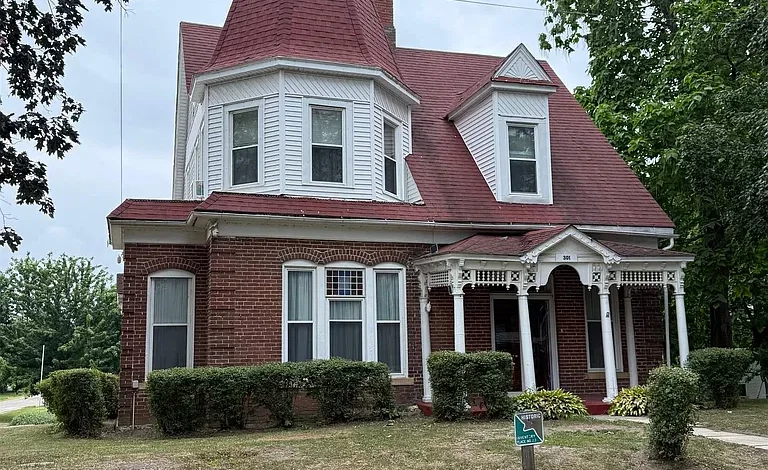
Historic Brick Home for Sale in Farmington, Iowa – $74,500 for 3 Bedrooms, 1,928 Sq. Ft., and a Spacious Corner Lot
Discover a Charming 1885 Historic Home in Farmington, Iowa
For homebuyers and real estate investors searching for affordable historic homes in Iowa, this beautiful property at 301 N 4th St, Farmington, IA 52626, offers an opportunity to own a residence filled with architectural character, traditional craftsmanship, and renovation potential.
Currently advertised at $74,500, following a $5,400 price reduction on August 25, 2026, this historic brick home features three bedrooms, one full bathroom, approximately 1,928 square feet of living space, and a spacious 7,920-square-foot corner lot.
Originally constructed in 1885, the home combines nineteenth-century architectural charm with several reported modern improvements, including a newer roof and all-new windows.
One of its most distinctive features is the stunning open staircase that welcomes visitors upon entering. The home also includes a cozy fireplace, an inviting living room, a full basement, and a large backyard patio.
The property offers a one-and-a-half-story layout, with traditional living areas and an upstairs bathroom accompanied by a convenient laundry area.
Another noteworthy detail is that the furniture and appliances are included in the sale, according to the listing. The range, refrigerator, washer, and dryer are specifically identified among the included items.
However, the property is being sold as-is, where-is, making professional inspections and careful financial planning especially important.
For buyers who appreciate historic architecture, this Farmington home may provide an opportunity to preserve original details while updating selected areas for modern comfort.
For investors, the relatively low advertised price per square foot may make the property worth investigating as a potential renovation, resale, or rental project.
Nevertheless, the property’s true investment potential depends on its condition, renovation costs, local housing demand, and realistic market value.
This comprehensive property guide explores the home’s architectural features, living spaces, outdoor amenities, ownership expenses, renovation considerations, and potential investment strategies.
Property Overview – 301 N 4th St, Farmington, IA 52626
Located in Farmington, Iowa, this property is classified as a single-family residence and offers a combination of historic character and practical residential features.
Key Property Details
| Property Feature | Listing Information |
|---|---|
| Asking Price | $74,500 |
| Price Reduction | $5,400 on August 25, 2026 |
| Property Address | 301 N 4th St, Farmington, IA 52626 |
| Property Type | Single-Family Residence |
| Bedrooms | 3 |
| Bathrooms | 1 Full Bathroom |
| Living Area | 1,928 Sq. Ft. |
| Lot Size | 7,920 Sq. Ft. |
| Lot Dimensions | 66 × 120 Feet |
| Year Built | 1885 |
| Architectural Layout | One and One-Half Stories |
| Exterior Materials | Brick and Vinyl Siding |
| Roof | Newer Roof Reported |
| Windows | All New Windows Reported |
| Fireplace | 1 |
| Basement | Full |
| Heating | Forced Air and Fireplace |
| Cooling | Window Units |
| Water | Public |
| Sewer | Public |
| HOA | None Reported |
| Annual Property Taxes | $1,098 |
| Tax-Assessed Value | $102,590 |
| Price Per Square Foot | Approximately $39 |
| Sale Condition | As-Is, Where-Is |
| MLS Number | 6340799 |
The property offers nearly 2,000 square feet of reported interior living space, which may appeal to buyers who want larger rooms and the architectural features associated with older homes.
However, the listing does not provide a complete floor plan or detailed inspection information.
Prospective buyers should verify room dimensions, structural conditions, and the functionality of major building systems.
Why This $74,500 Iowa Home May Attract Buyers
Affordable historic properties can attract buyers for several reasons.
Some people appreciate the craftsmanship and architectural details commonly found in older homes.
Others are interested in purchasing a larger residence at a price that may be lower than newer construction in certain markets.
At approximately $39 per square foot, this Farmington property may catch the attention of buyers comparing homes by interior size and asking price.
However, price per square foot is only one factor in determining real estate value.
The condition of the roof, foundation, electrical system, plumbing, heating equipment, and interior finishes can significantly affect the total cost of ownership.
This property offers several appealing features, including new windows, a newer roof, a fireplace, and a spacious corner lot.
The inclusion of furniture and appliances may also provide convenience for certain buyers.
Nevertheless, the as-is sale condition means buyers should be prepared to evaluate potential repairs and maintenance requirements.
A low asking price does not automatically guarantee a profitable investment or an inexpensive renovation.
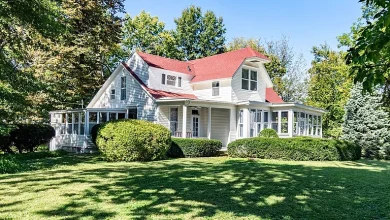
A Historic Brick Residence Built in 1885
One of the property’s most remarkable characteristics is its construction date.
Built in 1885, this home represents a period of American residential architecture when traditional materials and decorative interior craftsmanship were common.
Historic brick houses can have distinctive appearances that differ from contemporary construction.
Their architectural appeal may include traditional masonry, tall interior spaces, decorative woodwork, and unique floor plans.
The listing specifically highlights beautiful historic details and a stunning open staircase.
For buyers who value architectural preservation, these features may be especially attractive.
However, a home constructed in the nineteenth century requires careful evaluation.
Building methods, materials, and mechanical systems have changed substantially since 1885.
Prospective buyers should investigate the condition of the foundation, brickwork, framing, electrical wiring, plumbing, insulation, and heating equipment.
They should also determine whether previous renovations were completed appropriately.
A professional home inspection can help identify visible problems and determine whether additional specialist evaluations are necessary.
The Beautiful Open Staircase – A Distinctive Interior Feature
The listing describes a stunning open staircase that welcomes visitors upon entering the home.
An open staircase can be a central architectural feature in a historic residence.
Traditional staircases may incorporate decorative railings, wood balusters, substantial newel posts, and carefully crafted trim.
Although the listing does not describe the staircase materials in detail, its prominence suggests that it is one of the home’s notable design elements.
For buyers interested in preserving historic character, restoring or maintaining an original staircase can be an important renovation priority.
However, staircases should also be inspected for safety.
Important considerations include tread condition, handrail stability, structural support, and appropriate lighting.
Older staircases may not meet every modern construction standard.
Any necessary improvements should balance safety requirements with the preservation of architectural character.
Spacious Living Room With a Cozy Fireplace
The home features an inviting living room with a fireplace.
A fireplace can create an attractive focal point and contribute to the traditional atmosphere of a historic residence.
During colder months, a fireplace may provide visual warmth and a comfortable setting for gatherings.
However, buyers should not assume that the fireplace is currently safe or functional.
A qualified chimney professional should inspect the chimney, flue, firebox, and associated components before use.
Older fireplaces may require cleaning, repairs, or modifications to meet current safety expectations.
The living room may also offer opportunities for decorative improvements.
Depending on its condition, buyers might consider refinishing existing surfaces, updating lighting, or restoring architectural trim.
For those who appreciate historic interiors, maintaining the fireplace and original room character could be an important part of the home’s appeal.
Three Bedrooms – Flexible Living Space
The property includes three bedrooms.
This configuration may appeal to households seeking separate sleeping areas, guest accommodation, or flexible space for personal activities.
With approximately 1,928 square feet of total reported living area, the home may offer more room than many smaller three-bedroom residences.
However, the listing does not provide individual bedroom measurements.
Buyers should inspect the rooms to determine their dimensions, closet capacity, natural lighting, and overall condition.
One bedroom might potentially serve as a home office or hobby room, depending on household needs.
For buyers interested in long-term ownership, a three-bedroom layout can offer flexibility as living arrangements change.
Any remodeling plans should account for structural limitations and applicable building requirements.
Upstairs Bathroom and Convenient Laundry Area
The home includes one full bathroom located upstairs.
According to the listing, the bathroom has an adjacent laundry area.
This arrangement may provide convenience by placing laundry facilities near the upper-level living spaces.
The washer and dryer are also included in the sale.
However, the listing does not specify the age or condition of the bathroom fixtures, plumbing, or laundry equipment.
Prospective buyers should inspect the bathroom for signs of leaks, water damage, inadequate ventilation, or deteriorated surfaces.
The laundry area should also be evaluated for appropriate electrical connections, water supply, drainage, and dryer ventilation.
Because the home has only one bathroom, its functionality is especially important.
Buyers considering future improvements might investigate whether a second bathroom could be added, subject to available space, plumbing capacity, and applicable permits.
All-New Windows – A Reported Modern Improvement
One of the most appealing updates mentioned in the listing is the installation of all-new windows.
Window replacement can improve the appearance and functionality of an older home.
Depending on the products installed and the quality of installation, newer windows may reduce drafts, improve operation, and contribute to indoor comfort.
They may also help protect interior spaces from weather exposure.
However, the listing does not specify the manufacturer, installation date, energy ratings, or warranty information.
Buyers should request documentation where available.
They should also inspect window frames, flashing, seals, and surrounding walls.
New windows can be a valuable improvement, but their actual energy performance depends on the complete building envelope.
For a historic residence, window design and installation quality may also influence architectural appearance.
Newer Roof – An Important Feature for Buyers
The property is described as having a newer roof.
Roof condition is one of the most important considerations when purchasing an older home.
A properly installed and maintained roof helps protect the building from water intrusion and weather-related damage.
However, the term “newer” does not establish the exact age or remaining service life of the roofing materials.
Buyers should request information about the installation date, contractor, materials, and any available warranties.
A professional roof inspection can help identify potential problems involving flashing, ventilation, drainage, and roof penetrations.
The attic and upper-level ceilings should also be checked for signs of moisture intrusion.
Even when a roof has been replaced recently, proper installation and maintenance remain important.
Large Backyard Patio – Outdoor Relaxation and Entertaining
The listing highlights a large backyard patio.
Outdoor patios can provide additional space for relaxing, dining, and entertaining.
For buyers who enjoy spending time outside, this feature may enhance the home’s everyday functionality.
The patio could potentially accommodate outdoor furniture, planters, or a seating arrangement, depending on its dimensions and condition.
However, the listing does not provide the patio’s exact size or construction materials.
Buyers should inspect the surface for cracks, settlement, drainage problems, and other maintenance concerns.
If improvements are needed, options may include cleaning, resurfacing, repairing damaged sections, or updating surrounding landscaping.
A well-maintained patio can complement the historic home’s exterior and provide a useful connection between indoor and outdoor living.
Spacious Corner Lot – 7,920 Square Feet
The property sits on a corner lot measuring approximately 7,920 square feet.
The reported dimensions are 66 by 120 feet.
This is equivalent to approximately 0.18 acres.
Corner lots can offer distinctive characteristics compared with interior residential parcels.
Depending on the street layout, they may provide additional visibility, different access arrangements, or opportunities for landscaping.
The property may also offer room for gardening, outdoor seating, and yard improvements.
However, buyers should verify the lot boundaries and any applicable setbacks.
Corner properties may have additional street-facing restrictions or maintenance responsibilities.
The actual usability of the lot depends on its layout, terrain, and local regulations.
Landscaping and Outdoor Improvement Possibilities
The property’s corner lot and backyard patio may appeal to buyers interested in landscaping.
Potential improvements could include planting flowers, maintaining lawn areas, adding decorative pathways, or creating garden beds.
However, buyers should first evaluate drainage, soil conditions, and existing vegetation.
Older homes can sometimes have landscaping that affects foundation drainage.
Trees and shrubs located too close to the structure may require maintenance.
Any major landscaping changes should account for utility locations and property boundaries.
For buyers who appreciate traditional architecture, landscaping that complements the home’s historic appearance may enhance its visual character.
However, landscaping expenses should be balanced against essential building repairs and maintenance needs.
Full Basement – Storage and Inspection Considerations
The property includes a full basement.
Basements can provide useful storage and access to mechanical systems.
However, the listing does not identify the basement as finished living space.
Prospective buyers should inspect the basement for moisture intrusion, cracks, structural movement, and drainage issues.
Because the home was built in 1885, foundation condition deserves particular attention.
Older foundations may use construction methods and materials that differ from those in modern homes.
A qualified inspector or structural engineer may be appropriate if significant concerns are observed.
The basement should not automatically be considered suitable for additional bedrooms or finished living space.
Any proposed conversion would need to comply with applicable building and safety requirements.
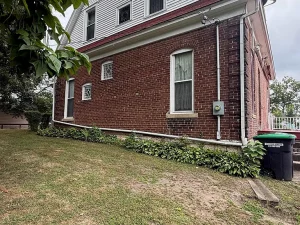
Brick and Vinyl Siding Exterior
The listing identifies brick and vinyl siding as exterior materials.
This combination may reflect different construction periods, additions, or exterior renovations.
However, the listing does not explain exactly where each material is used.
Brick masonry can provide an attractive and durable exterior when properly maintained.
Buyers should inspect mortar joints, cracking, moisture penetration, and any signs of movement.
Vinyl siding should be checked for damage, warping, loose panels, and proper installation.
Exterior maintenance should also include windows, doors, gutters, and drainage.
Preserving the home’s historic appearance while addressing necessary repairs may be an important consideration for future owners.
Forced-Air Heating and Window Air Conditioning
The home is described as having forced-air heating and window air conditioning units.
Forced-air heating can distribute warm air through a duct system when properly designed and maintained.
However, the listing does not provide the heating system’s age, fuel source, or condition.
A licensed HVAC professional should inspect the equipment before purchase.
The property does not report central air conditioning.
Instead, cooling is provided through window units.
Buyers should determine whether the existing units are functional and whether additional cooling improvements would be desirable.
Energy efficiency can be especially important in older homes.
Insulation, air sealing, and heating-system condition may significantly influence utility expenses.
Public Water and Public Sewer Connections
The listing identifies public water and public sewer service.
These connections may simplify certain aspects of property ownership compared with homes that rely on private wells and septic systems.
However, buyers should still inspect interior plumbing and confirm service arrangements.
Older homes may contain plumbing materials that require maintenance or replacement.
Water pressure, drainage, fixture condition, and signs of leaks should be evaluated.
Buyers should also determine whether any outstanding utility charges or municipal requirements affect the property.
Public utility connections are useful features, but they do not eliminate the need for regular maintenance.
Furniture and Appliances Included in the Sale
One distinctive aspect of this listing is that all furniture and appliances are described as remaining with the property.
The specifically identified appliances include a range, refrigerator, washer, and dryer.
For some buyers, this may reduce the need to purchase certain household items immediately after closing.
However, the condition and functionality of the included items are not guaranteed by the listing.
Buyers should inspect the appliances and confirm which furniture pieces will remain.
A written inventory may help avoid misunderstandings.
The purchase agreement should clearly identify included personal property.
Furniture and appliances may provide convenience, but buyers should not assign substantial financial value to them without evaluating their condition.
Understanding the As-Is, Where-Is Sale Condition
The property is being sold as-is, where-is.
This means buyers should expect to accept the property in its existing condition, subject to the actual purchase agreement and applicable law.
The seller may not be willing to complete repairs before closing.
However, as-is language does not automatically eliminate all legal disclosure obligations.
Prospective buyers should carefully review available disclosures and obtain professional inspections.
Important areas to evaluate include the roof, foundation, electrical system, plumbing, heating equipment, and potential moisture problems.
Because the home was built in 1885, buyers should also consider the possibility of older building materials requiring special handling during renovation.
A complete understanding of the property’s condition is essential before making a financial commitment.
Potential Renovation Opportunities
Historic homes can offer opportunities for thoughtful renovation.
For this Farmington property, buyers may want to preserve architectural details while improving functionality and comfort.
Possible projects could include refinishing existing woodwork, updating kitchen finishes, improving bathroom fixtures, or refreshing interior paint.
However, the listing does not identify which improvements are necessary.
A renovation plan should begin with a professional inspection.
Structural and safety concerns should take priority over decorative changes.
If the home contains original materials in good condition, restoration may be preferable to replacement.
Buyers should also consider whether any local historic preservation requirements apply.
The property’s age alone does not establish that it is formally designated as a protected historic structure.
Illustrative Renovation Budget
Renovation costs depend on property condition, materials, labor rates, and the scope of work.
The following figures are hypothetical planning ranges rather than actual estimates for 301 N 4th St.
| Potential Improvement | Illustrative Cost Range |
|---|---|
| Interior Painting and Finishes | $2,000–$7,000 |
| Flooring Restoration or Replacement | $3,000–$12,000 |
| Kitchen Improvements | $5,000–$20,000 |
| Bathroom Updates | $4,000–$15,000 |
| Electrical Improvements | $2,000–$12,000 |
| Plumbing Repairs | $2,000–$10,000 |
| Heating System Improvements | $3,000–$12,000 |
| Masonry and Exterior Repairs | $3,000–$15,000+ |
Actual expenses may differ substantially.
Major structural repairs, foundation work, environmental remediation, or unexpected damage could increase costs.
Some categories may overlap.
For example, purchasing the home for $74,500 and spending $20,000 on improvements would produce a combined acquisition and renovation cost of $94,500 before closing expenses.
If renovations reached $45,000, the combined amount would increase to $119,500.
These examples illustrate why buyers should obtain property-specific contractor estimates before purchasing.
Is This Historic Iowa Home a Good Fix-and-Flip Opportunity?
Some real estate investors may consider purchasing the property, completing improvements, and selling it after renovation.
This strategy is commonly known as fix-and-flip investing.
The home’s historic appearance, interior size, corner lot, and reported updates may be relevant to a resale analysis.
However, profitability depends on the final purchase price, renovation expenses, holding costs, and achievable resale value.
Investors should research recent comparable sales in Farmington and surrounding communities.
Comparable properties should have similar square footage, age, condition, and location.
The after-repair value should be supported by market evidence rather than assumptions.
Selling expenses, insurance, utilities, property taxes, and financing costs should also be included.
Historic renovations can involve unexpected repairs, making contingency funds especially important.
Could the Property Become a Long-Term Rental?
Another potential strategy is using the property as a long-term rental.
A three-bedroom home with nearly 2,000 square feet of living space may appeal to tenants seeking a larger residence.
The corner lot, patio, and included appliances could also influence rental interest.
However, rental demand in Farmington should be researched carefully.
Investors should examine comparable rental listings and recent leasing activity.
They should also investigate property management costs, vacancy risk, maintenance, and local rental requirements.
Older homes may require more frequent maintenance than newer properties.
The property’s actual rental potential cannot be determined from the listing alone.
A realistic investment analysis should use verified market rents and operating expenses.
Understanding the $1,098 Annual Property Taxes
The listing reports annual property taxes of $1,098.
Divided across twelve months, this equals approximately $91.50 per month.
However, the actual tax obligation may change.
Property taxes can be affected by assessments, exemptions, ownership changes, and applicable local rules.
The listing also reports a tax-assessed value of $102,590.
This figure should not be confused with the asking price or a current market appraisal.
Buyers should obtain updated tax information from the appropriate Van Buren County offices.
They should also investigate whether any outstanding taxes, special assessments, or liens affect the property.
Understanding the tax obligation is important for budgeting long-term ownership expenses.
Understanding the $5,400 Price Reduction
The listing reports a $5,400 price reduction on August 25, 2026.
The current advertised asking price is $74,500.
A price reduction may occur for several reasons, including market conditions, seller preferences, or efforts to attract additional buyer interest.
The listing does not explain the seller’s specific motivation.
Buyers should not assume that the reduced price automatically represents a bargain.
Instead, they should compare the property with recent local sales and evaluate its condition.
The original market date is reported as July 25, 2026.
An extended listing period may provide an opportunity to ask questions about buyer feedback, inspection concerns, or market expectations.
However, no specific problem should be assumed without evidence.
Living in Farmington, Iowa
Farmington is a small community in Van Buren County in southeastern Iowa.
The area is associated with small-town living, rural landscapes, and the surrounding agricultural region.
For buyers interested in quieter communities, Farmington may offer a different residential experience from larger cities.
However, prospective buyers should investigate the specific neighborhood around 301 N 4th St.
Important considerations include access to grocery stores, healthcare, schools, employment opportunities, and transportation routes.
Internet service availability may also be important for remote workers.
The property’s corner-lot location should be evaluated for traffic patterns, parking, and neighborhood characteristics.
Buyers should visit the area and research local services before making a decision.
Historic Home Ownership – Benefits and Responsibilities
Owning a historic home can be rewarding for buyers who appreciate traditional architecture.
Original craftsmanship and distinctive design details can create an atmosphere that differs from modern construction.
However, older homes also require ongoing attention.
Maintenance may involve masonry repairs, wood restoration, electrical updates, plumbing improvements, and moisture management.
Buyers should establish a reserve fund for unexpected repairs.
They should also investigate insurance availability and costs.
A property built in 1885 may require additional review from insurance providers, particularly if major systems have not been modernized.
Historic character can be appealing, but responsible ownership requires realistic financial planning.
Lead Paint and Other Older Building Materials
Because the home was built before 1978, buyers should consider the possibility of lead-based paint.
The listing does not confirm whether lead-based paint is present.
However, appropriate disclosures, testing, and lead-safe renovation practices may be relevant.
Other older building materials may also require professional evaluation before demolition or major remodeling.
Buyers should avoid disturbing potentially hazardous materials without proper assessment.
Qualified contractors can help determine appropriate procedures.
Safety should remain a priority throughout any renovation project.
Financing an As-Is Historic Property
Financing an older home sold as-is may involve additional considerations.
Traditional mortgage lenders often require properties to meet certain condition standards.
If major repairs are necessary, financing approval may become more complicated.
Buyers should discuss the property’s condition with lenders before submitting an offer.
Some renovation financing programs may be available, depending on borrower qualifications, property eligibility, and lender requirements.
Cash buyers should also preserve sufficient funds for inspections, repairs, and unexpected expenses.
The total cost of purchasing and maintaining the home should guide financing decisions.
Important Questions to Ask Before Purchasing
Before making an offer on 301 N 4th St, buyers should investigate the following questions:
- When was the newer roof installed, and is warranty documentation available?
- When were the windows replaced?
- What is the condition of the brickwork and foundation?
- Is the fireplace safe and functional?
- Are the electrical and plumbing systems updated?
- Has the basement experienced water intrusion?
- What is the condition of the forced-air heating system?
- Which furniture and appliances are included in the purchase?
- Are there outstanding code violations, liens, or unpaid taxes?
- What repairs or improvements are needed before occupancy?
These questions can help buyers evaluate the property’s condition and total ownership costs.
Who Might Be Interested in This Farmington Historic Home?
This property may appeal to several categories of buyers.
Historic-home enthusiasts may appreciate the original architectural details and open staircase.
Buyers seeking additional living space may be interested in the nearly 2,000-square-foot interior.
Renovation-focused buyers may see opportunities to restore the property while preserving its character.
Real estate investors may investigate the potential for resale or rental use.
The included furniture and appliances may also appeal to buyers who want certain household items to remain after closing.
However, the as-is condition means buyers should be prepared for possible repairs.
The property may be less suitable for someone seeking a newly renovated, maintenance-free residence.
Final Thoughts – Is This $74,500 Historic Iowa Home Worth Considering?
Located at 301 N 4th St in Farmington, Iowa, this historic brick home offers a combination of architectural character, generous living space, and a spacious corner lot.
Built in 1885, the residence includes three bedrooms, one full bathroom, approximately 1,928 square feet of living space, and a 7,920-square-foot lot.
The open staircase, cozy fireplace, backyard patio, and traditional exterior contribute to its historic appeal.
The reported newer roof and all-new windows are additional features worth investigating.
The inclusion of furniture and appliances may provide convenience for the next owner.
However, the home is being sold as-is, where-is, making careful due diligence essential.
The $74,500 asking price may attract buyers searching for affordable historic homes in Iowa, but the property’s actual value depends on its condition and local market comparisons.
Prospective buyers should obtain professional inspections, verify the reported updates, review property taxes, and establish a realistic maintenance or renovation budget.
For buyers who appreciate older homes and are prepared for the responsibilities of historic property ownership, this Farmington residence may represent an opportunity worth exploring.
Ultimately, a successful purchase depends on understanding both the home’s architectural appeal and the financial commitment required to maintain it.
Listing Information and Real Estate Contact
Property Address: 301 N 4th St, Farmington, IA 52626
Advertised Asking Price: $74,500
Price Reduction: $5,400 on August 25, 2026
Property Type: Single-Family Residence
Bedrooms: 3
Bathrooms: 1 Full Bathroom
Living Area: 1,928 Square Feet
Lot Size: 7,920 Square Feet
Year Built: 1885
Exterior: Brick and Vinyl Siding
Heating: Forced Air and Fireplace
Cooling: Window Units
Basement: Full
Reported Annual Property Taxes: $1,098
Sale Condition: As-Is, Where-Is
Included Items: Furniture, Range, Refrigerator, Washer, and Dryer
Listing Agent: Lisa Murguia
Real Estate Brokerage: Fairfield Real Estate
Contact Number: 319-371-5132
MLS Number: 6340799
Original Listing Date: July 25, 2026
Listing Last Updated: September 5, 2026
Additional Disclosure: The listing agent is related to the seller.
All property information is based on the supplied real estate listing and is provided for informational purposes. Asking price, availability, property condition, taxes, included personal property, and other details may change. Buyers should independently verify all material information, obtain professional inspections, and seek appropriate real estate, legal, or financial advice before purchasing.
Listed on Zillow