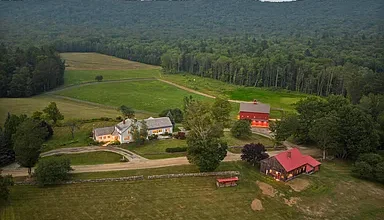
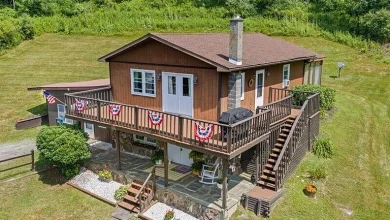
This 13-acre property is located along State Route 18 on the outskirts of Gilmer County and offers a mix of meadow ground,
$59,000 for 13.18 Acres in Troy, West Virginia – Creek Frontage, Barns, Meadow, and Future Homestead Potential
For buyers searching for affordable acreage in rural West Virginia, 5397 State Highway 18, Troy, WV 26443 offers a distinctive combination of open meadow, wooded land, creek frontage, existing outbuildings, an old homesite, and utility infrastructure that may make future development easier than starting with completely raw land.
Listed for $59,000, the property includes approximately 13.18 acres positioned along State Route 18 near the outskirts of Gilmer County. The land lies on both sides of the highway and includes a mix of terrain and uses, making it potentially appealing to hobby farmers, recreational buyers, hunters, homesteaders, or anyone interested in creating a rural retreat.
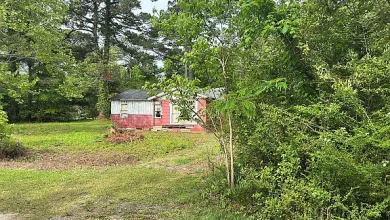
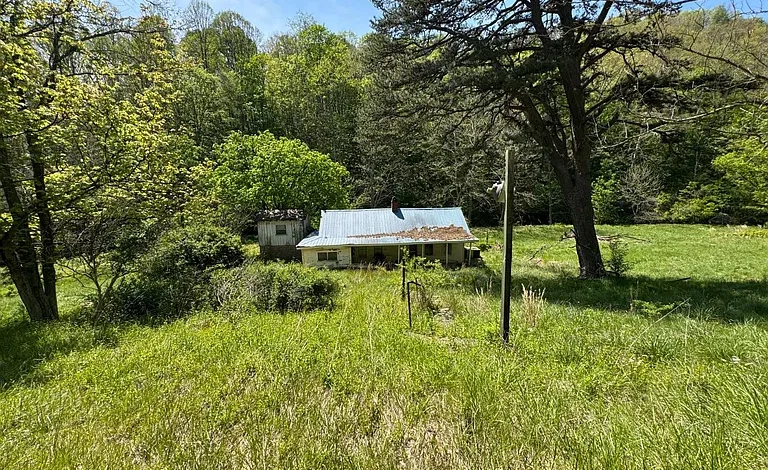
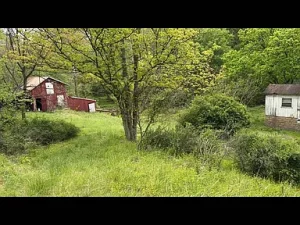
The most notable features are not a finished residence or move-in-ready improvements. Instead, the value lies in the land itself and the infrastructure already present. On the west side of the road, the property reportedly includes an old home, a cellar house, a small barn or shed, and a full-size barn. The listing indicates that the barns are still usable, while the cellar house may also remain functional.
The old home is believed to be beyond repair, so buyers should not approach this property expecting a conventional residence. However, the presence of an existing water well and septic system, both reportedly functional as of 2020, could be important for someone considering a future homesite.
With meadow ground, wooded acreage, stream frontage, existing outbuildings, utility potential, and no HOA, this property offers several possible directions for the right buyer.
Property Overview
The property includes approximately 13.18 acres and is listed for $59,000.
Key features include:
- Approximately 13.18 acres
- Asking price: $59,000
- Rural West Virginia setting
- Meadow ground
- Wooded acreage
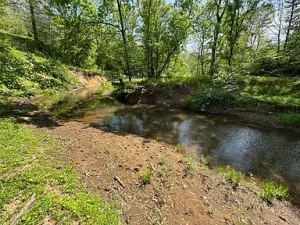
- Creek frontage
- Stream and wooded views
- Old homesite
- Old home believed to be beyond repair
- Cellar house
- Small barn or shed
- Full-size barn
- Existing water well
- Existing septic system
- Utilities reportedly functional as of 2020
- Electric service available
- Natural gas availability unknown
- No HOA
- Annual reported property taxes of approximately $423
- Land positioned on both sides of State Route 18
- Portion of creekside field located in the 100-year floodplain
- Potential hobby farm
- Potential hunting camp
- Potential recreational property
- Potential future homestead
The land offers more flexibility than a simple vacant lot because several supporting structures and utility systems are already present.
13.18 Acres With Multiple Land Types
One of the strongest characteristics of this listing is the diversity within the approximately 13.18 acres.
The parcel includes a mixture of:
- Open meadow
- Creek frontage
- Wooded acreage
- Existing homesite area
- Barns and outbuildings
- Road frontage
This variety can be useful because different parts of the property can serve different purposes.
The meadow area may be suitable for livestock, gardens, hay, or other small agricultural uses.
The wooded portion could appeal to hunters, hikers, wildlife watchers, or buyers seeking privacy.
The creek frontage adds natural character and recreational potential.
The homesite and existing utility infrastructure may help support future construction.
A property with several different land types can often provide more options than a parcel consisting entirely of woods or entirely of open field.
Meadow Ground for a Small Farm or Hobby Farm
The listing specifically notes that the meadow surrounding the old homesite could be suitable for a small farm, hobby farm, or livestock.
That makes the property interesting for buyers who want more than recreational land.
A small-scale agricultural setup could potentially include:
- Goats
- Sheep
- Chickens
- Cattle in limited numbers
- Gardening
- Hay production
- Fruit trees
- Small crop plots
- Homestead food production
Actual agricultural capacity would depend on soil quality, fencing, pasture conditions, water access, and local regulations.
Still, having open land already in place may save a future owner from the cost and effort of clearing large sections of forest.
Wooded Acreage Adds Privacy and Recreation
The wooded portion of the property adds another layer of usefulness.
Wooded land can provide:
- Wildlife habitat
- Hunting potential
- Firewood
- Hiking
- Trail development
- Privacy
- Shade
- Natural beauty
- Seasonal foliage
For buyers who want a mix of open land and forest, this property offers both.
A future owner could potentially maintain the meadow for agricultural use while preserving the woods for privacy and recreation.
This type of balanced land layout can be especially attractive to homesteaders.
Creek Frontage
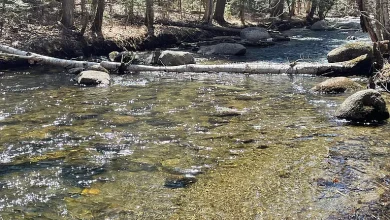
The property includes creek frontage, which is one of its most appealing natural features.
A creek can add visual interest, wildlife activity, and a peaceful atmosphere.
For many rural buyers, water features are highly desirable because they make the land feel more dynamic.
The stream could potentially support:
- Relaxation
- Nature observation
- Photography
- Wildlife activity
- Scenic views
Buyers should independently verify water rights, stream boundaries, and seasonal water levels.
They should also understand the floodplain issue before deciding how to use the creekside portion of the property.
Important Floodplain Consideration
The listing specifically states that a portion of the field along the creek is located within the 100-year floodplain.
This is an important detail.
Being in a floodplain does not necessarily make the entire property unusable, but it can influence:
- Where a future home can be built
- Insurance requirements
- Financing
- Agricultural use
- Outbuilding placement
- Septic location
- Future improvements
A buyer should obtain current flood maps and determine exactly how much of the parcel falls within the designated flood zone.
The best building area may be outside the floodplain.
A surveyor, engineer, local planning office, or floodplain administrator may help clarify the property’s limitations.
Old Home on the Property
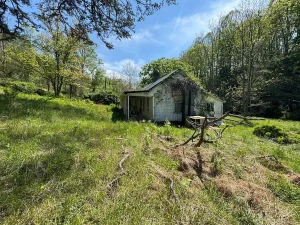
The west side of Route 18 contains an old home.
The listing suggests the structure is beyond repair.
That means buyers should not assign significant residential value to it unless a professional inspection suggests otherwise.
In many cases, a severely deteriorated house can create both opportunities and costs.
The opportunity is that the former homesite may already have:
- Road access
- Utility connections
- Well
- Septic
- Established clearing
The potential cost is demolition and debris removal.
A buyer should estimate demolition expenses before purchasing.
Old structures can also contain hazardous materials such as asbestos or lead-based paint, depending on age and construction.
Existing Homesite Could Be Valuable
Even if the old house itself is not salvageable, the homesite may still be useful.
A previously developed site often has advantages over raw land.
It may already have:
- Utility access
- Driveway or access point
- Graded area
- Clearing
- Existing well
- Existing septic system
These improvements can reduce the amount of initial site work required for a replacement home.
However, buyers should not assume old systems automatically meet current codes.
Any future construction should be evaluated under current permitting requirements.
Existing Water Well
The property includes an existing water well.
According to the listing, the well was reportedly functional as of 2020.
That could be a significant advantage.
Installing a new well can be expensive, depending on depth and geology.
However, an older well should be professionally inspected and tested.
Important factors include:
- Water quality
- Flow rate
- Pump condition
- Well depth
- Casing condition
- Bacterial contamination
- Mineral content
A working well can add value, but only if it is reliable and safe.
Existing Septic System
The property also includes an existing septic system, reportedly functional as of 2020.
Like the well, this could reduce future development costs.
However, the septic system should be professionally evaluated.
A buyer should determine:
- Age
- Tank condition
- Drain field condition
- Location
- Capacity
- Compliance with current standards
If a new residence is built, the existing system may or may not be suitable.
In some cases, a replacement or upgrade may be necessary.
Electric Service Available
The listing indicates that electric service is available.
This is an important advantage for future development.
Running power to completely raw land can be expensive, especially in rural areas.
The presence of existing or nearby electrical infrastructure may make a future homesite more practical.
Buyers should confirm:
- Whether a meter is currently active
- Distance from service to proposed building site
- Capacity
- Connection fees
- Any required upgrades
Natural Gas Availability Unknown
Natural gas availability is described as unknown.
For a rural property, this is not unusual.
If natural gas is unavailable, heating options could potentially include:
- Propane
- Electric heat
- Wood heat
- Heat pump
- Pellet stove
The best option would depend on the future home design and utility availability.
Full-Size Barn
One of the most valuable improvements is the full-size barn.
The listing states that the barns are still usable.
A full-size barn can support several activities, including:
- Livestock shelter
- Hay storage
- Equipment storage
- Tractor storage
- Workshop space
- Feed storage
- Farm tools
Building a new barn can be expensive, so having a usable structure already in place may represent meaningful value.
A buyer should inspect:
- Roof condition
- Foundation
- Framing
- Flooring
- Doors
- Electrical service
- Structural stability
If the barn is in decent condition, it could significantly reduce startup costs for a hobby farm.
Small Barn or Shed
The property also includes a smaller barn or shed.
This could provide useful additional storage for:
- Tools
- Garden equipment
- Feed
- Firewood
- Small machinery
- Outdoor supplies
Multiple outbuildings can improve organization and make rural property ownership easier.
Cellar House
The listing mentions a cellar house that may still be usable.
Older rural properties often include structures originally designed for food storage, root crops, canned goods, or cool storage.
A cellar house could potentially be adapted for:
- Food preservation
- Equipment storage
- Homestead use
- Cool storage
Its actual condition should be professionally inspected before use.
Ideal for a Hobby Farm
With meadow ground, barns, water access, and acreage, this property may appeal to someone interested in a small farm.
A buyer could potentially develop a simple operation centered around:
- Chickens
- Goats
- Sheep
- Gardens
- Hay
- Fruit trees
- Small livestock
The property is not enormous, but 13 acres can be enough for meaningful agricultural use when managed carefully.
Rotational grazing and fencing could help maximize pasture productivity.
Potential Hunting Property
The wooded acreage and rural setting may also attract hunters.
West Virginia is known for outdoor recreation and hunting culture.
A property with woods, meadow edges, and water may support wildlife movement.
Potential hunting opportunities would depend on local species, seasons, and regulations.
A buyer should always verify property boundaries and comply with all state hunting laws.
Recreational Use
The property could also function primarily as recreational land.
Possible uses might include:
- Camping
- Hiking
- ATV riding where permitted
- Hunting
- Wildlife observation
- Fishing if the creek supports it
- Nature photography
- Weekend retreats
A buyer who does not immediately want to build could potentially use the property recreationally while planning long-term improvements.
Future Homestead Potential
Perhaps the most interesting possibility is developing the land into a future homestead.
The combination of:
- Meadow
- Woods
- Water
- Existing well
- Existing septic
- Electric service
- Barns
- Road access
creates a foundation for rural living.
A future owner might build a new home near the old homesite and gradually develop gardens, livestock areas, trails, and storage.
This could appeal to buyers seeking self-sufficiency and a quieter lifestyle.
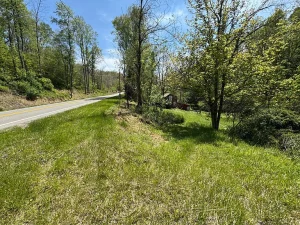
Land on Both Sides of Route 18
An important feature is that the property lies on both sides of State Route 18.
This should be carefully understood before purchase.
A divided parcel can create both benefits and complications.
One side may be better suited for homesite and agricultural use, while the other could be used for woods or recreation.
However, crossing a state highway can affect convenience and safety.
Buyers should review maps and inspect the layout in person.
State Route 18 Access
Location along State Route 18 provides road access.
For rural property, access to a maintained state road can be beneficial.
It can simplify:
- Daily travel
- Delivery access
- Emergency services
- Construction
- Equipment transport
A future buyer should confirm driveway locations and whether any permits are required for changes to access points.
No HOA
The property has no HOA.
That may appeal to buyers who prefer fewer private community restrictions.
There are no reported monthly or annual association dues.
However, county regulations, zoning, environmental rules, road rules, and state laws still apply.
No HOA does not mean the property is completely unrestricted.
Annual Property Taxes of Approximately $423
The annual property tax is reported at approximately $423.
For 13.18 acres, this is relatively low.
Low annual taxes can help make rural acreage more affordable to hold.
Buyers should independently verify current taxes.
Future construction could increase the assessed value and annual tax bill.
$59,000 Asking Price
At $59,000 for 13.18 acres, the property works out to approximately $4,477 per acre if the entire asking price is divided evenly by acreage.
That number does not account for the existing barns, well, septic, creek frontage, or old homesite.
For buyers comparing rural land, the additional infrastructure may make the property more valuable than raw acreage alone.
However, the condition of improvements must be verified.
The Cost of Replacing Existing Infrastructure
One reason the property could be attractive is the potential replacement cost of what is already there.
Installing a new well, septic system, barn, electrical service, and site access can become expensive.
If the existing systems remain usable, a future owner may save significant money.
If they need replacement, the financial picture changes.
That is why professional inspections are especially important here.
Potential Demolition Costs
The old home may need to be removed.
Demolition can involve:
- Equipment
- Labor
- Hauling
- Disposal fees
- Permits
- Hazardous material testing
Buyers should budget for this before making an offer.
A low purchase price can lose some of its appeal if demolition expenses are underestimated.
Potential New Home Site
Once the old structure is removed, the existing homesite could potentially become a logical location for a new residence.
Advantages may include proximity to:
- Well
- Septic
- Electric
- Road
- Meadow
- Barns
A replacement home could potentially be a:
- Traditional house
- Modular home
- Manufactured home
- Cabin
Actual options depend on local regulations.
Manufactured or Modular Home Potential
Buyers interested in a lower-cost build may investigate whether modular or manufactured housing is permitted.
Because utilities may already be present, this could potentially create a more affordable path to a new residence.
However, buyers should confirm all local building and zoning requirements before purchasing.
Creek and Floodplain Management
The creek adds beauty, but it also requires responsible planning.
Buyers should avoid placing critical improvements in flood-prone areas.
Potential strategies could include:
- Keeping structures on higher ground
- Preserving natural vegetation along stream banks
- Avoiding unnecessary grading near water
- Using meadow areas outside the floodplain for agriculture
- Maintaining drainage
Floodplain awareness is essential for long-term ownership.
Insurance Considerations
Floodplain location may influence insurance.
Even if the future home is outside the flood zone, lenders or insurers may request documentation.
A buyer should investigate:
- Flood insurance requirements
- Homeowners insurance
- Barn coverage
- Liability coverage
- Farm insurance if livestock is planned
Insurance should be researched before finalizing purchase.
Financing Considerations
Properties with uninhabitable houses and acreage can sometimes be more difficult to finance through traditional mortgages.
Some lenders may view the property primarily as land.
Others may require the old structure to be removed before financing.
Cash buyers may have more flexibility.
Anyone relying on financing should speak with lenders early.
Who Might Be Interested in This Property?
This property could appeal to:
- Homesteaders
- Hobby farmers
- Hunters
- Recreational buyers
- Rural-lifestyle buyers
- Buyers seeking acreage
- Investors
- Buyers wanting a future homesite
- Livestock owners
- People looking for a weekend retreat
The property is less suitable for someone wanting a move-in-ready home.
Who Should Think Carefully Before Buying?
A buyer who does not want renovation, demolition, land maintenance, or rural infrastructure may find the property too complicated.
The old home is reportedly beyond repair.
The floodplain requires attention.
Well and septic condition must be verified.
The barns may need maintenance.
Rural acreage also requires ongoing work.
This is a property for someone comfortable with projects.
Due Diligence Before Purchase
Potential buyers should investigate:
- Survey
- Property boundaries
- Acreage split across both sides of Route 18
- Floodplain maps
- Creek boundaries
- Well condition
- Water quality
- Septic condition
- Electrical service
- Barn condition
- Cellar house condition
- Old home demolition cost
- Road access
- Driveway permits
- Insurance
- Zoning
- Building restrictions
- Soil conditions
- Livestock regulations
- Mineral rights if relevant
- Easements
- Title issues
For rural property, these details can significantly affect value.
Why Existing Barns Matter
Usable agricultural buildings are becoming increasingly expensive to replace.
A full-size barn can cost tens of thousands of dollars or more depending on size, materials, and design.
Even if repairs are needed, an existing structure may still provide substantial value.
For a hobby farmer, the barns could allow immediate storage while the rest of the property is improved gradually.
The Appeal of Low Holding Costs
With reported annual taxes of approximately $423 and no HOA, carrying costs may be relatively manageable.
That could appeal to buyers who want to purchase land now and develop it later.
A buyer might spend the first year cleaning the property, evaluating utilities, repairing barns, and planning a future home.
This phased approach can make a rural project more manageable.
Potential for a Hunting Camp
The existing outbuildings and utilities could also support a hunting or recreational camp.
A buyer may not need a full-time residence.
The property could potentially function as a seasonal base for outdoor activities.
The barns could store equipment, while the cellar house or future cabin could provide basic shelter.
Again, actual occupancy should comply with local regulations.
West Virginia Rural Lifestyle
The property offers the kind of environment that attracts people to rural West Virginia.
There is space, woods, water, meadow, and separation from dense development.
For buyers seeking a slower pace and more self-directed lifestyle, those characteristics can be more valuable than modern suburban amenities.
The property may require work, but it also offers flexibility.
Potential Long-Term Value
Land with road access, utilities, and water features can retain appeal over time.
The property’s future value will depend on:
- Local real estate demand
- Condition of improvements
- Utility functionality
- Floodplain management
- Market trends
- Development potential
There are no guarantees of appreciation, but usable acreage with infrastructure can be attractive to future buyers.
Final Thoughts on 5397 State Highway 18
At $59,000, 5397 State Highway 18 in Troy, West Virginia offers approximately 13.18 acres with a combination of meadow ground, wooded acreage, creek frontage, old homesite infrastructure, and usable agricultural buildings.
The property is not being sold as a move-in-ready residence.
The existing old home is reportedly beyond repair and may need demolition.
However, that same homesite includes an existing water well and septic system that were reportedly functional as of 2020, along with available electrical service.
A full-size barn, smaller barn or shed, and cellar house add practical value for buyers interested in farming, storage, livestock, recreation, or homesteading.
The meadow surrounding the homesite could potentially support a small farm or hobby farm, while the wooded acreage may appeal to hunters and outdoor enthusiasts.
Creek frontage adds natural beauty, although a portion of the creekside field lies within the 100-year floodplain and should be carefully evaluated before development.
The property’s layout on both sides of State Route 18 is another feature buyers should inspect personally to understand how each section might be used.
For someone seeking an easy, finished home, this property will likely require too much work.
For a buyer who sees value in acreage, existing barns, utilities, and the potential to create a new rural homestead, the opportunity is much more compelling.
With low reported annual property taxes, no HOA, road access, creek frontage, usable outbuildings, and over 13 acres of land, 5397 State Highway 18 offers a foundation that could be transformed over time into a hobby farm, hunting property, recreational retreat, or permanent West Virginia homestead.
Listed on Zillow