$10,000 Starting Bid for a 4-Bedroom Auction Home in Willard, Ohio: 1,280 Sq Ft Fixer-Upper With Metal Roof, Garage, and Park Views
$10,000 Starting Bid for a 4-Bedroom Auction Home in Willard, Ohio: 1,280 Sq Ft Fixer-Upper With Metal Roof, Garage, and Park Views
For real estate investors, renovation buyers, landlords, and experienced homeowners searching for an affordable fixer-upper in Ohio, the property at 418 W Tiffin St, Willard, OH 44890 presents an unusual opportunity. This is not a conventional $10,000 home sale. Instead, the property is being offered through an online-only real estate auction, with bidding scheduled to start at $10,000 and end on Thursday, October 15 at 1:00 p.m., according to the supplied listing information.
The house offers approximately 1,280 square feet of finished above-ground space, four bedrooms, one full bathroom, one half bathroom, an attached garage, a covered front porch, a detached storage shed, municipal water and sewer, and a roughly 0.29-acre lot.
Built in 1954, the property is described as needing a buyer who can “bring it back to life.” That makes the house particularly relevant for someone evaluating a fix-and-flip project, long-term rental renovation, or affordable owner-occupied restoration.
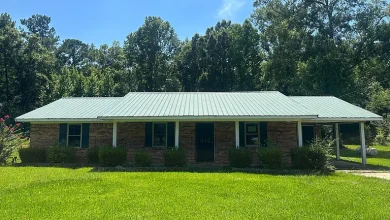
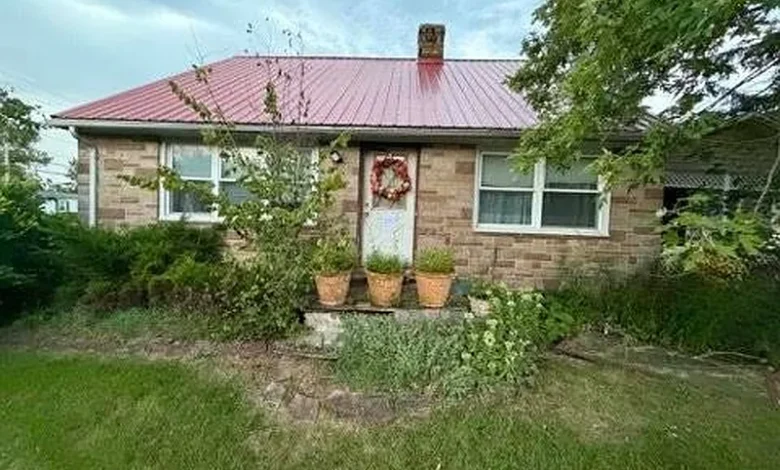
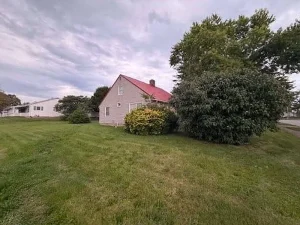
One of its most distinctive exterior features is the red metal roof, complemented by a mixture of brick and siding. Mature trees provide shade around the lot, while the house sits directly across from Willard City Park and the community swimming pool, according to the listing.
The property’s Zillow page also displays a Zestimate of $135,200 and a tax assessed value of $141,250. However, neither number should be interpreted as a guaranteed current market value or as evidence that an auction buyer will automatically receive substantial equity. The property’s condition, auction terms, renovation requirements, local comparable sales, title status, and final winning bid all matter.
Most importantly, the $10,000 figure represents the starting bid—not necessarily the final purchase price.
For anyone considering this auction, the following detailed analysis explores the property’s features, renovation considerations, financing questions, auction risks, potential rental and resale strategies, insurance issues, taxes, inspections, and other due diligence that should be completed before bidding.
Property Overview: 418 W Tiffin St, Willard, OH 44890
The property is located at 418 W Tiffin St in Willard, Ohio 44890 and is classified as a single-family residence.
According to the supplied listing information, its primary characteristics include:
Auction Starting Bid: $10,000
Auction Type: Online-only real estate auction
Scheduled Auction End: Thursday, October 15 at 1:00 p.m.
Bedrooms: 4
Bathrooms: 2 total
Full Bathrooms: 1
Half Bathrooms: 1
Finished Above-Ground Area: Approximately 1,280 square feet
Year Built: 1954
Lot Size: Approximately 0.289 acres
Home Type: Single-Family Residence
Garage: Attached
Additional Structure: Detached shed
Porch: Covered front porch
Roof: Metal
Exterior: Frame with aluminum and vinyl siding listed
Heating: Present, but specific type not provided
Basement: None
Fireplace: None
Water: Municipal
Sewer: Municipal
HOA: None
View: Park and street
Tax Assessed Value: $141,250
Reported Annual Property Tax: $8,198
Zestimate: $135,200
Special Condition: Auction
Parcel Number: 510260040150000
These features make the home worth investigating, but the auction format changes how buyers should interpret the advertised price.
The $10,000 Figure Is a Starting Bid, Not a Purchase Price
This distinction is essential.
The property is advertised with an estimated $10,000 starting point, but the listing explicitly states that bidding will begin at $10,000.
That does not mean the successful bidder will purchase the property for $10,000.
Other participants may increase the price substantially during the auction.
Auction terms may also include a buyer’s premium, deposits, closing deadlines, title conditions, or other fees and requirements. Buyers should obtain and read the complete auction documents before bidding.
The correct financial analysis should therefore begin with the expected total acquisition cost, not simply the opening bid.
Understanding the True Auction Acquisition Cost
For a conventional listing, the asking price gives buyers a reasonably clear starting point for negotiation.
An auction works differently.
A bidder should establish a maximum price based on property condition and project economics before competitive bidding begins.
A useful formula is:
Winning Bid + Buyer’s Premium if Applicable + Closing Costs + Taxes or Other Obligations + Immediate Repairs + Renovation + Insurance + Financing + Holding Costs + Contingency = Total Project Investment
Every part of that calculation matters.
A property that appears extremely inexpensive at a $10,000 opening bid can become a very different investment if bidding rises substantially and the house requires major repairs.
Four Bedrooms in Approximately 1,280 Square Feet
The home contains four bedrooms within approximately 1,280 square feet of finished above-ground space.
That gives the property a relatively high bedroom count for its overall size.
For a household, four bedrooms can provide flexibility for children, guests, a home office, hobby space, or other uses.
For a landlord, bedroom count may influence rental demand, although the actual rent should always be determined from comparable local rental properties.
Investors should verify that all four rooms function appropriately as bedrooms and examine their dimensions, windows, electrical service, heating, flooring, and general condition.
One Full Bathroom and One Half Bathroom
The property includes one full bathroom and one half bathroom.
For a four-bedroom home, the additional half bath can improve functionality compared with having only one bathroom.
During renovation, buyers should determine whether both bathrooms primarily require cosmetic improvements or more substantial plumbing work.
Potential projects could involve flooring, vanities, fixtures, lighting, toilets, shower or bathtub surfaces, ventilation, drywall, and plumbing.
Any signs of leaks or water damage should be investigated before cosmetic work begins.
Approximately 1,280 Square Feet of Finished Space
The structured property information identifies approximately 1,280 square feet of finished above-ground area.
Although the headline does not display square footage, this figure appears in the detailed property facts.
For renovation budgeting, 1,280 square feet is a manageable size compared with much larger distressed houses.
However, smaller houses are not automatically inexpensive to renovate.
A roof, electrical panel, HVAC system, plumbing system, kitchen, or foundation can still represent a substantial expense regardless of total square footage.
The condition of major systems matters more than size alone.
Built in 1954
The home was constructed in 1954, making it more than 70 years old.
A house of this age may have undergone multiple renovations during its lifetime.
Buyers should determine which major systems have been updated and which may still be older.
Electrical wiring, plumbing, insulation, HVAC, windows, roofing components, and interior materials all deserve attention.
The home’s age does not automatically mean these systems are defective, but it increases the importance of verifying their condition rather than assuming they meet modern expectations.
Durable Red Metal Roof
One of the features highlighted in the marketing description is the red metal roof.
Metal roofing can offer long service life when properly installed and maintained, making it an attractive feature on a renovation property.
However, buyers should still inspect the roof.
Fasteners, seams, flashing, penetrations, drainage, corrosion, previous repairs, and underlying decking can all affect performance.
The presence of a metal roof does not eliminate the possibility of leaks or future maintenance.
A roofing contractor can provide a more informed assessment of remaining useful life.
Classic Mixed-Material Exterior
The listing describes a classic exterior with brick and lap-style siding, while the detailed property facts identify frame construction with aluminum and vinyl siding.
This suggests that different exterior materials may be present around the structure.
Buyers should inspect siding for loose panels, dents, cracks, deterioration, and moisture entry.
Brick areas should be checked for damaged mortar, movement, or water-related issues.
The exterior can often be improved significantly through cleaning and repair, but underlying structural or moisture problems should always be corrected first.
Covered Front Porch
A covered front porch welcomes visitors at the entrance.
For an older traditional home, a porch can contribute considerably to curb appeal.
It also provides a sheltered outdoor area that could potentially accommodate seating or seasonal decorations.
During renovation, buyers should inspect porch flooring, steps, railings, columns, roofing, and structural supports.
Simple cleaning and painting may be sufficient if the structure is sound.
If deterioration is present, safety repairs should come first.
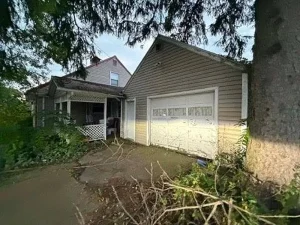
Attached Garage
Another valuable feature is the attached garage.
A garage can provide covered vehicle parking, storage, workspace, and additional utility.
For future resale or rental, it may also distinguish the property from comparable homes without covered parking.
The garage should be inspected for roof condition, structural stability, electrical service, door operation, concrete condition, and any evidence of water intrusion.
Buyers should also confirm how the garage connects to the main residence and whether fire-separation requirements are relevant to planned renovations.
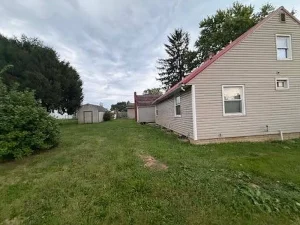
Detached Rear Shed
The property includes a detached shed in the rear yard.
Additional storage can be particularly useful for homeowners who need space for lawn equipment, tools, bicycles, seasonal belongings, or hobby materials.
Investors should inspect the shed before assigning meaningful value to it.
Its roof, floor, framing, doors, foundation, and overall condition should be checked.
Buyers should also verify that the shed sits within the property boundaries and determine whether any permits or records are relevant.
A 0.289-Acre Lot
The property occupies approximately 0.289 acres, rounded to 0.29 acres in the listing.
This provides a reasonably generous residential yard without the maintenance burden associated with several acres.
The listing describes ample yard space in both the front and rear.
For an owner-occupant, the lot could potentially support landscaping, outdoor seating, gardening, recreation, or other normal residential uses.
For investors, cleaning and improving the yard could become part of a curb-appeal strategy.
Mature Trees Add Shade and Character
The property is described as being shaded by mature trees.
Established trees can make a residential lot feel more attractive and provide valuable summer shade.
They may also contribute to the traditional appearance of a 1950s home.
However, mature trees should be evaluated for safety.
Dead branches, disease, trunk damage, or trees located too close to the roof can create maintenance concerns.
Tree trimming or removal can be expensive, so significant work should be considered when building a renovation budget.
Across From Willard City Park
Location is one of the property’s most interesting characteristics.
According to the listing, the home sits directly across the street from Willard City Park.
That gives the property a park view and immediate proximity to green space.
For some buyers, having recreational space nearby can be appealing because it provides outdoor opportunities without requiring the homeowner to maintain a large private parcel.
Investors considering future resale or rental should determine how comparable buyers and tenants in the local market value this location.
Community Swimming Pool Nearby
The listing also states that the property is across from the Willard community swimming pool.
That could appeal to households that value recreation and convenient access to community amenities.
However, buyers should independently confirm operating schedules, access rules, fees if any, and current facility details rather than assuming that proximity guarantees unlimited access.
The location itself remains noteworthy regardless of how individual buyers use the pool.
Park and Street Views
The detailed property facts identify both park and street views.
For a home located directly across from a public park, this is consistent with the listing description.
Views can influence how a property feels from the porch, living spaces, or front yard.
Prospective buyers should visit in person to understand traffic, activity levels, lighting, noise, parking patterns, and other characteristics that cannot be fully understood from listing photographs.
Municipal Water
The home is listed as connected to municipal water.
This means buyers do not need to evaluate a private well based on the supplied information.
Nevertheless, the internal plumbing and water service should still be inspected.
A house built in 1954 may have experienced plumbing repairs or replacements during its lifetime.
Buyers should determine pipe materials, water pressure, fixture condition, and whether any leaks or drainage issues are present.
Municipal Sewer
The property also has municipal sewer, eliminating the septic-system concerns that accompany many rural fixer-uppers.
This can simplify ownership, but buyers should still investigate interior drain lines and the sewer lateral where appropriate.
Slow drainage, backups, root intrusion, or damaged older pipes can create significant expenses.
For an older home, a sewer-line inspection may be worth considering if there are signs of problems or if an inspector recommends one.
Heating Exists, but the Type Is Unspecified
The listing confirms that the house has heating, but it does not identify the heating type.
This is a major item to verify before bidding.
Buyers should determine what equipment is installed, which fuel source it uses, whether the system operates, how old it is, and whether it serves the entire house adequately.
HVAC replacement can materially affect a renovation budget.
Because the auction may have different inspection and contingency rules from a traditional transaction, buyers should investigate what access is available before bidding.
Cooling Is Not Specified
No cooling system is identified in the supplied property information.
Prospective purchasers should therefore verify whether the house has central air conditioning, window units, another cooling system, or no cooling equipment.
If installation is required, buyers should investigate electrical capacity and compatibility with the existing heating system.
The cost should be considered before determining a maximum auction bid.
Electrical Information Requires Clarification
The listing displays “Electric: Amps(0)”.
This should not be interpreted literally as confirmation that the house has zero electrical service.
It is more likely an incomplete database field that needs verification.
A qualified electrician can evaluate the service panel, wiring, grounding, outlets, switches, and electrical capacity.
For a 1954 property, determining whether significant electrical modernization is required can be an important part of renovation planning.
No Basement
The home is listed as having no basement.
All reported finished living area is therefore above ground.
The absence of a basement eliminates basement finishing from the renovation plan, but buyers should still investigate the foundation type and condition.
Foundation repairs can be among the most expensive items on a distressed property.
Any visible cracks, settlement, uneven floors, moisture, or structural movement should receive appropriate professional attention.
No Fireplace
The property does not have a fireplace.
The listing does mention a stately brick chimney, which adds exterior character.
Because a chimney is described while no fireplace is listed, buyers should determine its current purpose and condition.
It may serve or have previously served another heating appliance.
Masonry, flashing, structural condition, and unused openings should be evaluated where relevant.
No HOA
There is no homeowners association listed.
That means there is no reported recurring HOA fee.
For investors, eliminating an HOA expense can simplify monthly operating calculations.
For homeowners, it removes one layer of private association rules.
However, local zoning, municipal codes, permits, and property-maintenance regulations still apply.
No HOA does not mean there are no rules governing renovation or property use.
Zestimate of $135,200
Zillow displays a Zestimate of $135,200 for the property.
Compared with the $10,000 opening bid, that number may appear extremely attractive.
However, an automated valuation estimate should not be treated as a guaranteed current market value, particularly for a distressed auction property.
Algorithms may not fully capture interior condition, deferred maintenance, structural problems, title issues, or the extent of renovation required.
The eventual auction price could also rise considerably above $10,000.
Investors should use comparable sales and property-specific inspection information rather than relying on a Zestimate to calculate potential profit.
Tax Assessed Value of $141,250
The reported tax assessed value is $141,250.
Again, this is substantially above the auction’s opening bid.
But tax assessments and market values serve different purposes.
An assessed value does not mean the property can currently be sold for $141,250.
Condition matters enormously.
If the home requires significant renovation, the as-is market value may be much lower than a valuation associated with a property in average or renovated condition.
Annual Taxes of $8,198 Deserve Special Attention
The listing reports annual property taxes of $8,198.
This is a particularly important figure to verify.
Relative to the opening bid, $8,198 per year is a substantial recurring expense. It is also notable in relation to the reported assessed value.
Buyers should obtain the current tax information and determine exactly what the figure includes.
They should also investigate whether there are delinquent taxes, assessments, exemptions, or other circumstances affecting the amount.
A landlord or flip investor should never ignore property taxes when calculating holding costs.
Why Taxes Matter So Much for a Renovation Project
Imagine a renovation taking several months.
Property taxes continue during the holding period regardless of whether the house is producing income.
The same applies to insurance, utilities, financing expenses, lawn maintenance, and security.
For a project purchased cheaply at auction, recurring expenses can become surprisingly important if renovation or resale takes longer than expected.
Verifying the $8,198 figure should therefore be one of the first financial due-diligence tasks.
Auction Terms Should Be Read Before Bidding
The listing directs prospective purchasers to an online real estate auction.
Anyone considering participation should obtain the official auction terms before placing a bid.
Important questions include whether there is a buyer’s premium, what deposit is required, when funds are due, what forms of payment are accepted, whether financing contingencies are allowed, whether inspections are permitted, and what happens if the winning bidder fails to close.
Buyers should also understand the title and deed terms.
Do Not Let Competitive Bidding Determine Your Budget
Auction environments can encourage buyers to focus on winning rather than economics.
A better strategy is to establish a maximum acceptable total acquisition price before bidding.
That maximum should be based on the property’s expected value after renovation, estimated construction costs, transaction expenses, taxes, insurance, financing, and an appropriate contingency.
If bidding exceeds the amount supported by the buyer’s financial analysis, the project economics change.
The objective should be purchasing under acceptable terms—not simply winning an auction.
Potential Fix-and-Flip Strategy
The property is specifically marketed to investors looking for a potential flip.
There are several characteristics that may justify further analysis: four bedrooms, 1,280 square feet, an attached garage, a metal roof, a shed, municipal utilities, a sizable yard, and a location across from a park.
However, no flip profit can be estimated responsibly from the listing alone.
The most important missing numbers are the actual final purchase price, renovation cost, and realistic after-repair value.
Calculating After-Repair Value
An investor should research recently sold renovated properties that are genuinely comparable.
Relevant characteristics include location, square footage, four-bedroom configuration, bathroom count, garage, lot size, construction age, and overall finished condition.
The Zestimate may provide context, but it should not replace comparable-sales analysis.
Once a realistic after-repair value is established, the investor can work backward to determine the maximum price that makes sense at auction.
Complete Flip Cost Formula
A more complete analysis is:
After-Repair Value – Winning Bid – Buyer’s Premium – Closing Costs – Renovation – Taxes – Insurance – Utilities – Financing – Holding Costs – Selling Costs – Contingency = Potential Project Result
Every expense matters.
A low starting bid does not guarantee a profitable project.
Likewise, a house requiring renovation can still make financial sense if the acquisition cost, repair budget, and realistic finished value align.
Potential Long-Term Rental
A landlord may evaluate the property differently.
Four bedrooms can provide useful flexibility for households, while the park location, garage, yard, municipal utilities, and storage may contribute to rental appeal.
However, the listing does not provide a verified rental estimate.
Investors should research comparable rentals in Willard and determine what renovated four-bedroom properties actually command.
Gross rent should then be compared against operating expenses.
Rental Expenses Beyond the Mortgage
Potential landlord expenses can include property taxes, insurance, vacancy, repairs, maintenance, management, utilities paid by the owner, landscaping, and long-term capital reserves.
The reported $8,198 annual tax amount is particularly important.
If verified, it could materially affect rental cash flow.
Investors should calculate net operating income rather than focusing only on gross monthly rent.
A property can have attractive rent but weak cash flow if recurring expenses are unusually high.
Potential Owner-Occupant Renovation
A handy buyer might also consider restoring the house as a personal residence.
Four bedrooms can provide significant flexibility within a 1,280-square-foot footprint.
The attached garage, covered porch, yard, park view, municipal utilities, and metal roof could all be useful features.
An owner-occupant may also be able to renovate according to personal preferences rather than designing solely around resale trends.
However, habitability and safety should be established before assuming the home can be occupied during renovation.
Renovation Should Start With Major Systems
Cosmetic renovation should generally follow structural and mechanical evaluation.
Before selecting flooring or paint, buyers should investigate the foundation, roof, framing, electrical system, plumbing, heating, water and sewer connections, windows, garage, chimney, and exterior.
Once the property is dry, structurally stable, safe, and mechanically functional, interior improvements become more meaningful.
This sequencing can prevent newly installed finishes from being damaged during later repairs.
Kitchen Renovation
The property facts identify a kitchen, but no detailed description of its condition is provided.
Prospective buyers should examine cabinets, countertops, plumbing, electrical outlets, appliances, flooring, lighting, and ventilation.
A kitchen renovation can range from inexpensive cosmetic work to complete replacement.
Investors should avoid automatically installing luxury finishes.
The appropriate renovation level should reflect the local resale or rental market and the overall quality of the finished property.
Bathroom Renovation
The full and half bathrooms should also be inspected closely.
Water damage around tubs, toilets, sinks, and plumbing connections can affect floors and walls.
If fixtures are functional but dated, cosmetic modernization may be enough.
If plumbing or subflooring is damaged, the scope can expand significantly.
Obtaining contractor estimates before bidding can be particularly valuable when auction rules allow sufficient property access.
Insurance Before and During Renovation
Insurance is another important auction consideration.
A distressed property may not qualify immediately for the same policy as a fully renovated owner-occupied house.
Roof condition, electrical wiring, plumbing, heating, vacancy, and overall condition can affect coverage.
If the house will remain vacant while being renovated, buyers should discuss appropriate coverage with an insurer.
A quote obtained before bidding can help identify whether insurance will become a significant holding expense.
Financing an Auction Purchase
Auction purchases can have tighter closing schedules than traditional real estate transactions.
That can make financing more complicated.
Buyers should determine whether the auction allows financing and whether their lender can meet the required deadlines.
A lender may also have property-condition requirements.
Some investors use cash or specialized financing for distressed auction properties, while others investigate renovation loans.
The correct approach depends on the auction terms, buyer qualifications, and property condition.
Five Days on Zillow
According to the supplied listing information, the property accumulated approximately 266 views and eight saves during its first five days on Zillow.
That shows some early online interest, but auction participation may ultimately come from multiple sources rather than Zillow alone.
Views and saves do not predict the final bid.
The eventual sale price depends on actual auction participation and terms.
Investors should therefore avoid basing their strategy on online engagement statistics.
Questions to Answer Before the Auction
Before bidding, prospective buyers should verify the exact auction terms, buyer’s premium if any, deposit, closing deadline, title conditions, property taxes, and whether liens or other obligations affect the transaction.
The house itself should be evaluated for roof condition, foundation, framing, electrical service, plumbing, heating, cooling, windows, bathrooms, kitchen, garage, chimney, shed, drainage, and interior condition.
Buyers should also verify the actual square footage, tax information, insurance availability, municipal utility status, and any applicable code issues.
These answers can help establish a rational maximum bid.
Creating a Complete Renovation Budget
A realistic project budget could include:
Winning Bid + Auction Premium + Closing Costs + Taxes + Inspections + Roof Work + Structural Repairs + Electrical + Plumbing + HVAC + Kitchen + Bathrooms + Flooring + Paint + Windows + Garage + Porch + Shed + Landscaping + Insurance + Utilities + Financing + Holding Costs + Contingency
Not every category will necessarily require major spending.
The point is to identify potential expenses before bidding rather than after winning.
A contingency reserve is particularly important with distressed properties because hidden conditions may emerge once renovation begins.
Final Thoughts on 418 W Tiffin St, Willard, Ohio
418 W Tiffin St, Willard, OH 44890 is an intriguing auction property because it combines a very low $10,000 starting bid with a four-bedroom house offering approximately 1,280 square feet, 1.5 bathrooms, an attached garage, a covered front porch, a detached shed, a metal roof, municipal water and sewer, and approximately 0.29 acres.
Its location directly across from Willard City Park and the community swimming pool adds another distinctive element, particularly for buyers who value nearby green space and recreational amenities.
The mature trees, front and rear yard space, red metal roof, porch, garage, and brick chimney give the property features that could potentially become more attractive after renovation.
But the most important word in this listing is auction.
The $10,000 figure is an opening bid, not a guaranteed purchase price.
Prospective buyers should determine the maximum amount they can responsibly bid based on renovation costs and realistic property value rather than becoming focused on winning.
The $135,200 Zestimate and $141,250 tax assessed value may attract investor attention, but neither should be interpreted as a guaranteed resale price or proof of immediate equity.
The property’s physical condition remains central to its value.
The reported $8,198 annual property tax also deserves immediate verification because it could materially affect both a rental strategy and a renovation project’s holding costs.
For a fix-and-flip investor, success will depend on the final winning bid, auction fees, repair costs, realistic after-repair value, holding period, and selling expenses.
For a landlord, the critical numbers are achievable market rent and recurring expenses, particularly taxes, insurance, maintenance, and vacancy.
For a handy owner-occupant, the property may represent an opportunity to restore a four-bedroom home with a garage and park views, provided the house can be made safe and functional within a reasonable budget.
Ultimately, this is the kind of property where due diligence before bidding can be more valuable than the low opening price itself.
A buyer who verifies the auction terms, taxes, title, insurance, structural condition, major mechanical systems, and renovation costs can approach the auction with a defined financial limit rather than speculation.
With its four bedrooms, metal roof, attached garage, covered porch, storage shed, mature trees, municipal utilities, and location across from a public park, 418 W Tiffin St offers multiple characteristics that could support a thoughtful renovation project.
Whether it ultimately becomes a successful flip, rental property, or personal residence will depend on the final auction price and the true cost of bringing this 1954 Willard home back to life.
Listed on Zillow