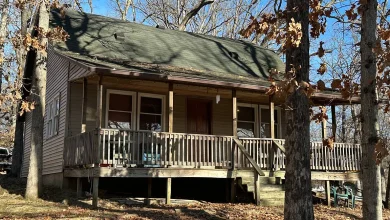
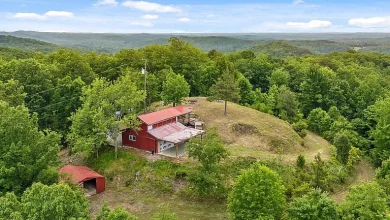
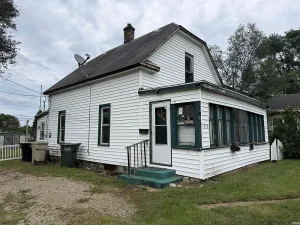
Investor special! Bring this home back to life and put your personal touch on it. Tons of opportunity for a flip, rental, or live-in project. Don’t wait – schedule a showing today! Sold as-is.
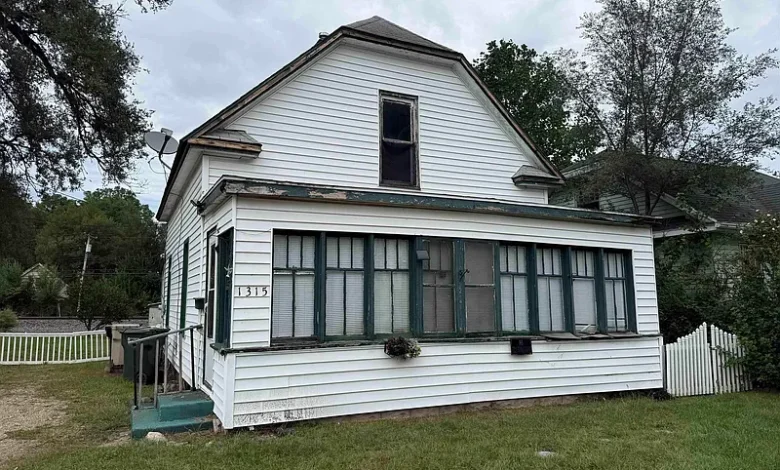
South Bend Indiana Investor Special With 3 Bedrooms and 1,144 Square Feet for $49,900
Affordable real estate opportunities can become especially interesting when a property combines a relatively low purchase price with renovation potential, an established residential location, and several possible strategies for future use. In South Bend, Indiana, a three-bedroom home priced at $49,900 is being marketed as an investor special, offering buyers the opportunity to bring an older property back to life and create a home tailored to their goals.
The property contains approximately 1,144 square feet of finished above-ground living space and sits on a 3,049-square-foot lot. Originally built in 1948, the home has a one-and-a-half-story layout, three bedrooms, one full bathroom, a main-level bedroom, forced-air heating, city water, and city sewer. It also has a partial unfinished basement that could provide useful storage or additional functional space, subject to the property’s condition and local requirements.
The listing specifically identifies the property as an opportunity for a flip, rental, or live-in renovation project. It is being sold as-is, making careful inspection and financial planning particularly important for anyone considering the purchase.
At $49,900, the property may appeal to buyers searching for an entry-level investment, an affordable renovation project, or a lower-cost home in South Bend. However, the purchase price is only one part of the overall investment. Renovation expenses, taxes, insurance, financing or cash requirements, maintenance, and potential carrying costs should all be considered before deciding how to approach the property.
An Affordable South Bend Investment Opportunity
The current asking price is $49,900, placing the property in a price range that may attract investors looking for renovation opportunities.
The listing describes the home as an “investor special” and encourages buyers to bring the property back to life. It also specifically mentions the possibility of using the property as a flip, rental, or live-in project.
These three strategies can have very different financial requirements.
A buyer planning to live in the property may prioritize a comfortable floor plan, safe systems, functional utilities, and improvements that enhance everyday living. An investor planning to rent the home may focus more heavily on tenant demand, operating expenses, durable finishes, and expected rental income. Someone pursuing a flip may instead concentrate on renovation costs, resale demand, comparable properties, market timing, and the potential difference between total project costs and eventual selling price.
The appropriate strategy depends on the buyer’s budget, experience, objectives, and assessment of the local market.
Three Bedrooms and One Full Bathroom
The home offers three bedrooms and one full bathroom.
One of the bedrooms is located on the main level, while another is identified as being on the upper level. The listing facts identify the property as having a one-and-a-half-story configuration.
A three-bedroom layout can be useful for several different types of occupants. A household could use the bedrooms for family members, guests, an office, or other permitted purposes. For a rental property, three bedrooms may also broaden the potential tenant pool compared with a smaller one- or two-bedroom property.
Because the property requires renovation, the condition and arrangement of each bedroom should be inspected carefully. Buyers should verify flooring, walls, ceilings, windows, doors, electrical outlets, heating, and signs of moisture or structural issues.
The single full bathroom should also receive close attention. Bathroom renovations can involve plumbing, electrical work, ventilation, flooring, fixtures, and water-resistant materials. If the existing bathroom is outdated, a buyer should obtain contractor estimates before determining the renovation budget.
Approximately 1,144 Square Feet of Finished Living Space
The home contains approximately 1,144 square feet of finished above-ground living space.
The listing also reports a total structure area of approximately 1,716 square feet, but the finished interior living area is listed at 1,144 square feet. The difference appears to relate to unfinished or non-livable portions of the structure, including the basement.
For a relatively compact home, 1,144 square feet can provide a practical amount of residential space when the floor plan is used efficiently.
The living room is listed on the main level and measures approximately 156 square feet, with dimensions of about 12 by 13 feet.
This central living area could serve as the primary gathering space for an owner-occupant or as a common living room for tenants.
Because the home is an older property, prospective buyers should inspect the entire interior rather than relying only on the listed square footage. Measurements, room configurations, finished areas, and basement conditions should be independently verified when important to the purchase decision.
A Home Built in 1948
The property was built in 1948, giving it more than seven decades of history.
Older homes can provide opportunities for buyers who appreciate established neighborhoods, traditional construction, and properties with character. At the same time, a home of this age can have systems and components that require updating.
For an investor, the age of the property makes inspection especially important.
Potential areas to examine include the roof, foundation, electrical system, plumbing, heating equipment, windows, insulation, siding, drainage, basement, and structural framing.
The listing identifies vinyl siding and a partial unfinished basement. Buyers should inspect the exterior siding for damage and check the basement for moisture, water intrusion, foundation movement, mold, or other concerns.
An older home can sometimes have several layers of previous repairs or modifications, so a detailed inspection may reveal issues that are not visible during a short showing.
Partial Unfinished Basement
The home includes a partial unfinished basement.
Although the basement does not count toward the listed finished living area, it can still provide useful space for storage, utilities, laundry, mechanical equipment, or other functions.
For an investor, an unfinished basement may represent an opportunity for improvement, but it should not automatically be considered future living space.
Any conversion of basement space into finished rooms would depend on ceiling height, moisture control, emergency exits, ventilation, electrical systems, local building codes, and other requirements.
The basement should therefore be inspected carefully before a buyer assigns any monetary value to potential future finished space.
A dry and structurally sound basement can be an advantage for storage and mechanical access. A basement with water or foundation problems, however, could become a significant renovation expense.
Forced-Air Heating
The property has forced-air heating.
The listing does not provide detailed information about the age or condition of the heating system, so buyers should determine whether the furnace or other heating equipment is operational and whether it needs replacement.
Heating is particularly important in Indiana, where winter conditions can create substantial demands on residential systems.
A professional HVAC inspection can help determine the age, efficiency, condition, and expected remaining service life of the heating equipment.
The absence of listed central cooling is another consideration. The listing identifies no cooling system.
A buyer planning to occupy or rent the property should determine whether window units, portable systems, or a new central cooling system would be appropriate and permitted.
Adding cooling can become part of a renovation budget, particularly if the intended use is a long-term rental or resale property.
City Water and City Sewer
The home is connected to city water and city sewer.
Municipal utilities can be a practical advantage for an investor because the property does not depend on a private well or septic system.
However, the condition of the plumbing inside the home still needs to be investigated.
Older properties may have plumbing materials that require replacement or sections that have been modified over the years.
Buyers should determine whether there are any known sewer problems, water service issues, leaks, outdated plumbing, or municipal charges associated with the property.
The city utility connections should also be confirmed during due diligence.
A Small 3,049-Square-Foot Lot
The property sits on approximately 3,049 square feet of land, with listed dimensions of about 43 by 67 feet.
This is a relatively compact residential lot, which means buyers should consider how the available outdoor space fits their intended use.
A smaller lot can have advantages for maintenance because there is less lawn and landscaping to manage. For a rental property, that can potentially reduce certain maintenance responsibilities compared with a larger property.
At the same time, buyers should verify property boundaries, access, setbacks, parking arrangements, and any easements or restrictions that affect the lot.
The listing does not identify a homeowners association or subdivision.
No HOA or Subdivision Listed
The listing does not identify a homeowners association and indicates no subdivision.
For buyers interested in renovation or rental ownership, the absence of an HOA may eliminate certain private restrictions that can apply in planned communities.
However, the absence of an HOA does not mean the property is free from regulation.
City zoning, building codes, rental requirements, property maintenance standards, permits, and other municipal rules may still apply.
Anyone planning a major renovation, conversion, addition, or rental strategy should verify the applicable requirements with the appropriate South Bend authorities.
Sold As-Is
One of the most important terms in the listing is that the property is being sold as-is.
An as-is sale generally means the seller is not promising to complete repairs or make improvements before closing. Buyers should therefore evaluate the property’s condition carefully before committing to the purchase.
For an investor, this makes the inspection process particularly important.
The buyer should identify both visible and potentially hidden problems. A property that appears to need only cosmetic updates can sometimes require significant structural, electrical, plumbing, roofing, or mechanical work.
Before making a final offer, investors should consider obtaining contractor estimates for major anticipated repairs.
Renovation Potential
The listing encourages buyers to bring the home back to life, making renovation the central theme of the opportunity.
Renovation potential can take many forms.
A basic project might involve paint, flooring, lighting, fixtures, landscaping, and other cosmetic improvements.
A more extensive renovation could include kitchen remodeling, bathroom updates, HVAC improvements, electrical work, plumbing, windows, insulation, roof repairs, or structural work.
The appropriate scope depends entirely on the property’s actual condition.
For an investor, it can be helpful to divide renovations into three categories: essential repairs, functional improvements, and cosmetic upgrades.
Essential repairs are items necessary for safety, habitability, code compliance, or protection of the structure.
Functional improvements may include updated mechanical systems, plumbing, electrical work, improved insulation, or better windows.
Cosmetic improvements could include paint, flooring, cabinets, fixtures, landscaping, and finishes.
This approach can help keep a renovation budget organized.
Potential Fix-and-Flip Strategy
The listing specifically identifies the property as having potential for a flip.
A fix-and-flip strategy generally involves acquiring a property, improving it, and eventually reselling it.
For this South Bend property, an investor considering that approach should begin by studying comparable renovated homes in the surrounding area.
The purchase price of $49,900 is only the starting point.
The total project cost could include:
- Purchase price
- Closing costs
- Inspection expenses
- Renovation materials
- Contractor labor
- Permits
- Architectural or engineering services if needed
- Utilities during renovation
- Property taxes
- Insurance
- Financing or opportunity costs
- Landscaping
- Final cleaning
- Selling expenses
The expected resale value should be based on current comparable sales and realistic market conditions rather than an optimistic estimate.
A successful renovation project requires a sufficient margin between total acquisition and improvement costs and the property’s expected resale value.
Potential Rental Property Strategy
The property could also potentially be used as a rental.
Three bedrooms may make the home suitable for households seeking more space than a typical two-bedroom residence.
For an investor, the rental strategy should begin with research into comparable properties in the local area.
Important questions include:
What are similar three-bedroom homes currently renting for?
How much competition exists?
How long do comparable rentals typically remain vacant?
What condition do tenants expect?
What repairs will be necessary before the property can be rented?
What are the expected annual taxes and insurance costs?
Will professional property management be required?
These questions are more useful than simply estimating rent based on the purchase price.
The property tax figure listed is approximately $3,920 annually, based on the current listing information. That amount should be included in any serious rental analysis.
Understanding the Tax Assessment
The listing reports a tax assessed value of $144,900 and annual property taxes of approximately $3,920.
The assessed value is considerably higher than the current asking price of $49,900.
However, buyers should not interpret the assessment as an appraisal or guaranteed market value.
Tax assessments and market values serve different purposes, and the property’s current condition may differ significantly from the assumptions behind the assessment.
The annual tax amount is also an important operating expense for an investor.
Anyone purchasing the property should verify the current tax balance and determine whether any outstanding taxes, assessments, liens, or municipal charges exist.
Potential Live-In Renovation
Not every buyer interested in this property needs to be a professional investor.
The listing also describes the home as potentially suitable for a live-in project.
For someone who wants to purchase an affordable home and renovate it gradually, the property could offer a different path toward homeownership.
A live-in renovation strategy can allow a buyer to prioritize projects over time rather than completing every improvement immediately.
However, safety and habitability should come first.
Before occupying the home, buyers should verify that the heating system, electrical system, plumbing, roof, foundation, windows, and other essential components are safe and functional.
The cost of living in a renovation property can also be higher than expected if major systems require immediate attention.
South Bend Location
South Bend is a well-established city in northern Indiana and is known for its established residential neighborhoods, educational institutions, employment centers, cultural attractions, and regional amenities.
For real estate investors, a city location can provide a broader range of potential tenants and buyers than a remote rural property.
However, neighborhood-level analysis remains important.
A buyer should investigate the specific surroundings of the property, nearby housing conditions, recent comparable sales, rental activity, schools, transportation, commercial development, and other factors that influence demand.
The property’s location should be evaluated independently from the low purchase price.
What Makes This Property Different?
Several characteristics make this home stand out.
First is the $49,900 asking price.
Second is the three-bedroom configuration.
Third is the approximately 1,144 square feet of finished living space.
Fourth is the partial unfinished basement.
Fifth is the city water and sewer connection.
Sixth is the home’s potential for renovation.
Finally, the listing directly identifies three possible strategies: flipping, renting, or living in the home while completing improvements.
That flexibility may appeal to buyers with different real estate goals.
Important Due Diligence for Buyers
Because the property is being sold as-is and is described as an investor special, buyers should take a comprehensive approach to due diligence.
Important items to verify include:
- Roof age and condition
- Foundation and basement condition
- Electrical wiring and electrical panel
- Plumbing materials and condition
- Forced-air heating system
- Cooling options
- Water heater
- City water connection
- City sewer connection
- Windows and doors
- Vinyl siding
- Structural framing
- Moisture and drainage
- Property boundaries
- Zoning
- Rental regulations
- Building permits
- Property taxes
- Existing liens
- Insurance availability
- Recent comparable sales
- Estimated renovation costs
An inspection should be performed by qualified professionals, particularly if the buyer does not have experience evaluating older homes.
Building a Realistic Renovation Budget
One of the biggest mistakes investors can make is underestimating renovation costs.
A $49,900 purchase can appear inexpensive, but the total cost may be much higher once repairs are included.
For example, replacing a roof, furnace, electrical service, plumbing, windows, flooring, kitchen, and bathroom could transform a seemingly affordable property into a major project.
A contingency reserve should therefore be included in the budget.
Unexpected problems are common in older properties, especially when walls, floors, ceilings, or basement areas are opened during renovation.
A buyer should ideally obtain several contractor estimates for major projects and determine which improvements are essential before closing.
A Property for Buyers With a Clear Strategy
This South Bend home is not necessarily the type of property that appeals to someone searching for a turnkey residence.
Instead, it is positioned toward buyers who are comfortable with renovation and willing to take on a project.
The property’s low asking price, three-bedroom layout, city utilities, and established residential setting create a foundation for several possible strategies.
For a flipper, the key issue will be the relationship between renovation cost and resale value.
For a landlord, the central question will be whether rental income can support taxes, insurance, maintenance, vacancy, and other operating expenses.
For an owner-occupant, the focus may be whether the purchase price plus renovation costs creates a comfortable and affordable home.
Final Thoughts
This $49,900 South Bend, Indiana property presents an affordable entry point into a renovation-oriented real estate project.
The home offers three bedrooms, one full bathroom, approximately 1,144 square feet of finished living space, a partial unfinished basement, forced-air heating, city water, city sewer, and a 3,049-square-foot lot.
Built in 1948, the property is an older home that requires careful evaluation before purchase. The listing openly describes it as an investor special and highlights its potential as a flip, rental, or live-in project.
Those possibilities make the property worth examining for buyers who understand renovation and real estate investment.
At the same time, the as-is sale means the buyer should not assume that repairs will be completed by the seller. The actual condition of the property must be established through inspection and professional evaluation.
The reported $144,900 tax assessed value and $3,920 annual tax amount also deserve attention, particularly for investors calculating long-term carrying costs.
The most important step is to determine the total cost of acquisition, renovation, ownership, and eventual resale or rental operation.
For buyers with a clear strategy, realistic renovation budget, and willingness to perform detailed due diligence, this South Bend property offers a chance to transform an older residence into something significantly different from its current condition.
The opportunity is ultimately about potential rather than guarantees. The value created by the project will depend on the property’s actual condition, the cost of improvements, local regulations, neighborhood demand, and the buyer’s ability to manage the renovation successfully.
Listed on Zillow.