10.01 Acres Lot
10 Acres of Unrestricted Mountain Land Near Boone and West Jefferson, North Carolina
Finding a large tract of unrestricted mountain land in North Carolina can be increasingly difficult, especially in an area known for scenic landscapes, outdoor recreation, tourism, and strong interest in mountain living. This approximately 10.01-acre property near West Jefferson offers buyers the opportunity to acquire a substantial piece of wooded High Country land for $72,000, with no homeowners association and no listed subdivision restrictions.
The property is unimproved land, meaning there is currently no house or other completed residential structure on the parcel. Instead, the opportunity centers on the land itself and the possibilities it may provide for future development, recreation, privacy, or long-term ownership.
According to the listing, the property has no restrictions and could potentially accommodate a wide range of ideas, including a private estate, tiny homes, a family retreat, recreational use, or an investment property. Any proposed use would need to be verified with local planning authorities, health departments, utility providers, and other applicable agencies before development begins.
The approximately 10-acre tract is located within a short drive of both Boone and West Jefferson, placing it near restaurants, shopping, Appalachian State University, local attractions, outdoor recreation, and the broader High Country lifestyle. The listing also highlights proximity to the Blue Ridge Parkway, the Mountain-to-Sea Trail, the New River, hiking opportunities, fishing, paddling, and other recreational activities.
For buyers searching for mountain land in North Carolina, this property offers an opportunity to start with a relatively large parcel and determine what comes next.
Approximately 10.01 Acres in the North Carolina High Country
The defining feature of this property is its size.
The parcel contains approximately 10.01 acres, providing substantially more land than a conventional residential lot. For buyers who value privacy, outdoor space, and the ability to shape a property around their own goals, acreage can be one of the most important considerations when purchasing rural real estate.
Ten acres can provide room for multiple potential uses, depending on the property’s terrain, access, zoning, septic suitability, building setbacks, and other regulations.
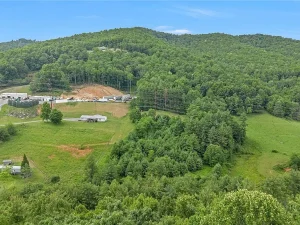
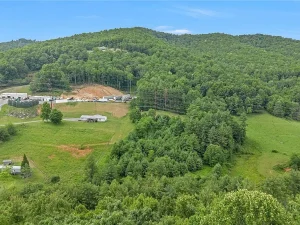
The available property information identifies the land as wooded with sloping topography. This means buyers should think about the terrain as part of both the property’s character and its development considerations.
A sloping mountain parcel can provide views, privacy, and natural beauty, but it can also make driveway construction, building sites, drainage management, grading, and utility installation more complicated.
For that reason, the full value of the property should be considered from both an aesthetic and practical perspective.
Offered for $72,000
The current asking price is $72,000.
At that price, the property provides approximately 10.01 acres, although buyers should remember that acreage alone does not determine land value.
The practical value of mountain property depends on factors such as road frontage, accessibility, topography, usable building areas, views, utilities, septic feasibility, water availability, timber, surrounding development, zoning, and potential future uses.
The listing describes the property as unrestricted, which is a particularly important characteristic for buyers interested in creating a customized mountain property.
Before purchasing, however, buyers should independently confirm the exact nature of any restrictions or lack thereof through a title search and review of recorded documents.
What Does “No Restrictions” Mean?
The listing emphasizes that the property has no restrictions.
For land buyers, this can be an important distinction because some mountain communities have restrictive covenants governing the size and style of homes, minimum square footage, types of buildings, number of residences, short-term rentals, livestock, recreational activities, or other uses.
A parcel without a homeowners association may provide more flexibility.
However, “no HOA” does not mean that every imaginable use is automatically permitted.
County zoning regulations, state regulations, septic requirements, building codes, environmental rules, road standards, and recorded easements may still apply.
Anyone purchasing the property should therefore verify the actual development possibilities rather than assuming that every use described in the marketing material will be approved.
A Wooded Mountain Setting
The property is described as wooded, giving it a natural character that could appeal to buyers seeking privacy and a mountain environment.
Wooded acreage can provide natural screening from nearby properties and create a sense of seclusion.
For someone planning a future residence, the trees can also contribute to the visual character of the property.
A buyer may potentially identify a suitable building area while preserving portions of the existing woodland.
For recreational owners, the wooded environment can provide opportunities for hiking, wildlife observation, photography, nature walks, and simply enjoying a quieter setting.
The condition and type of vegetation should be examined in person. Buyers may also want to determine whether any timber value exists and whether there are environmental considerations affecting tree removal or development.
Sloping Topography
The available property facts identify the terrain as sloping.
Sloping land is common in the North Carolina High Country and can contribute to scenic views and a distinctive mountain setting.
At the same time, topography is one of the most important factors to investigate before buying undeveloped land.
A buyer interested in constructing a home should determine where practical building sites exist.
Other questions include whether a driveway can be constructed economically, whether heavy equipment can reach the proposed building area, how stormwater will move across the property, and whether retaining walls or substantial grading might be necessary.
A professional site evaluation can help identify the most practical areas for future development.
Potential for a Private Mountain Estate
One of the possibilities mentioned in the listing is creating a private estate.
With approximately 10 acres, the property provides considerably more room than a typical residential parcel.
A future owner could potentially design a home around the natural terrain and preserve wooded areas for privacy.
The eventual design could potentially incorporate outdoor living areas, gardens, trails, garages, workshops, or other permitted improvements.
Because the land is sloping, the architectural design could potentially be adapted to the natural grade.
Before making any plans, however, buyers should establish the actual buildable area and verify septic and water feasibility.
Potential for a Family Retreat
The property could also potentially serve as a family retreat.
Mountain land can provide a place where family members gather for weekends, holidays, outdoor activities, and extended stays.
A 10-acre property can offer enough space for different generations to enjoy the outdoors without feeling confined to a small residential lot.
Depending on local regulations and site feasibility, a future owner might explore a primary residence accompanied by additional permitted structures.
The listing specifically mentions a family retreat as one possible use, but buyers should confirm which structures and occupancy arrangements are legally permitted.
Possibility of Tiny Homes
The listing also mentions the possibility of a collection of tiny homes.
This is an interesting concept for buyers considering alternative housing or a small mountain retreat community.
Tiny homes can potentially provide compact accommodations while leaving more of the surrounding land undeveloped.
A buyer might envision several small structures connected by walking paths, shared outdoor areas, or other recreational spaces.
However, this is one area where due diligence is especially important.
Multiple dwelling units on one parcel may require specific zoning approval, septic capacity, driveway standards, fire access, utility planning, building permits, and other approvals.
The marketing description indicates the potential concept, but it should not be interpreted as confirmation that multiple homes are currently approved.
Potential Recreational Property
For buyers who are more interested in outdoor recreation than construction, the land could potentially serve as a private recreational property.
The wooded acreage and mountain setting provide a natural environment for enjoying time outside.
Possible recreational interests could include hiking, nature observation, camping where legally permitted, photography, outdoor gatherings, and exploring the property’s natural features.
Any recreational activity should be evaluated against local rules and the property’s physical characteristics.
The buyer should also investigate neighboring property boundaries and any access easements before using the land extensively.
Near Boone and West Jefferson
Location is another major feature of this property.
The listing indicates that the land is positioned within a short drive of Boone and West Jefferson.
This provides a combination of rural privacy and access to established communities.
For a future homeowner, nearby communities can provide access to restaurants, shopping, services, entertainment, healthcare, education, and other everyday needs.
For an investor, proximity to established destinations may also be relevant when evaluating future development or vacation-rental possibilities.
The exact travel time to any specific destination should be independently verified based on the actual route, traffic, weather, and seasonal conditions.
Access to Appalachian State University
The listing highlights convenient access to Appalachian State University.
A university can contribute to the broader economic and cultural activity of a region.
For property owners, proximity to a major educational institution can sometimes be relevant when considering housing demand, rental opportunities, employment, and community amenities.
However, this parcel is undeveloped land, so buyers should not assume that student housing or other university-related uses would automatically be permitted.
Any development plan would need to be evaluated under the applicable zoning and property regulations.
Blue Ridge Parkway Access
The property is also located near the Blue Ridge Parkway, according to the listing.
The Blue Ridge Parkway is one of the region’s most recognizable scenic attractions and is associated with mountain scenery, overlooks, hiking, photography, and road trips.
Proximity to a major scenic destination can make an area attractive to people looking for second homes, recreational properties, and vacation accommodations.
For this land, that regional recreational environment could contribute to its long-term appeal.
Potential buyers interested in short-term rentals should still research local regulations and determine whether such use is permitted on the specific parcel.
Near the Mountain-to-Sea Trail
The listing also mentions proximity to the Mountain-to-Sea Trail.
For outdoor enthusiasts, access to established hiking infrastructure can be a significant advantage.
The trail network provides additional recreational context for the region and can make the High Country attractive to visitors who enjoy hiking and nature-based travel.
A property located near outdoor attractions can potentially appeal to buyers who want to combine private acreage with convenient access to public recreation.
The New River and Outdoor Recreation
The listing references the New River as another nearby attraction.
The river and surrounding region provide opportunities for activities such as paddling, fishing, wildlife observation, and outdoor exploration.
For buyers seeking a recreational lifestyle, having multiple types of outdoor experiences within driving distance can be a significant part of the property’s appeal.
The land itself may provide privacy, while nearby public recreation offers opportunities that do not require the owner to develop everything on the property.
Water and Septic Considerations
One of the most important issues for any undeveloped rural property is access to water and wastewater services.
The listing states that water is not connected and that septic will be needed.
This means buyers should investigate how a future residence or other permitted structure would obtain water and handle wastewater.
If a public water connection is not available, a well may be one possible option, subject to local requirements and site conditions.
Similarly, septic feasibility should be established through an appropriate evaluation and approval process.
Soil conditions, slope, usable drainfield area, setbacks, and groundwater considerations can all affect septic feasibility.
A buyer should not assume that an entire 10-acre parcel is automatically suitable for residential construction.
Septic Suitability Should Be Verified
For mountain acreage, septic feasibility deserves particular attention.
The property is sloping and wooded, and not every portion of a parcel may be suitable for a septic system.
A professional evaluation can help determine where a septic system could potentially be located.
The buyer should investigate whether the property has an existing septic permit, prior soil evaluations, or other relevant records.
If no such documentation exists, obtaining the necessary evaluation may be one of the first steps after purchase or even before making an offer.
Road Access and Paved Road Surface
The property information identifies the road surface type as paved.
This is useful for a rural land buyer because road access is an important consideration for both construction and everyday ownership.
A paved road can potentially provide more reliable access than an unpaved road, particularly during wet or winter weather.
However, the buyer should confirm the exact road frontage, driveway location, right-of-way, maintenance responsibilities, and any required permits for creating or improving a driveway.
Mountain terrain can make driveway construction more expensive than expected, even when the property fronts a paved road.
No HOA and No Subdivision Listed
The listing identifies no subdivision and no homeowners association.
For buyers interested in rural land, this can provide an appealing sense of independence.
Without an HOA, there may be fewer private community rules governing construction and property appearance.
The absence of a subdivision can also make the property feel more private.
Nevertheless, title records should be reviewed to determine whether there are any private deed restrictions, easements, access agreements, or other recorded conditions.
Annual Property Taxes
The listing reports an annual tax amount of approximately $419.
This relatively low annual figure is one of the property’s ongoing ownership considerations.
However, property taxes can change after development or reassessment.
A buyer should confirm the current tax status with the county and determine how the assessment could potentially change if a residence or other improvements are constructed.
Property taxes should be included in any long-term ownership budget.
Investment Potential of Mountain Land
The listing describes the parcel as having long-term potential.
Unimproved land can appeal to investors because it does not require immediate building maintenance, roof replacement, or interior repairs associated with an existing home.
However, vacant land also produces no rental income unless it is developed or otherwise used for an income-producing purpose.
An investor considering this property should therefore have a clear strategy.
Potential strategies could include holding the land for long-term appreciation, developing a residence, creating a permitted recreational property, or exploring other uses allowed under local regulations.
The feasibility and financial viability of each strategy would need to be independently established.
Long-Term Land Ownership
Some buyers may simply want to own mountain acreage without immediately developing it.
This approach can allow the owner to preserve the property while deciding what to do in the future.
Land ownership can provide flexibility, particularly when there is no immediate need to begin construction.
A future owner could spend time learning the property’s terrain, identifying potential building sites, researching utility options, and developing a long-term plan.
For buyers who are not ready to build immediately, the property could potentially function as a long-term land holding.
Designing Around the Mountain Terrain
One advantage of mountain land is the opportunity to design a future property around the natural landscape.
Rather than purchasing an existing home with a predetermined orientation, a landowner may be able to position a future structure to take advantage of views, sunlight, privacy, and natural features.
The sloping terrain could potentially allow for architectural designs that work with the grade.
However, the final building site should be selected only after professional evaluation.
Drainage, soil conditions, driveway access, septic requirements, and construction costs should all be considered before choosing a location.
Outdoor Living Potential
A future residence on this property could potentially emphasize outdoor living.
Mountain properties often lend themselves to decks, patios, porches, fire areas, gardens, walking paths, and scenic viewing spaces.
With approximately 10 acres, there may be room to create several outdoor zones while maintaining natural woodland.
Any such improvements would depend on the property’s topography and applicable regulations.
The important point is that buyers have the opportunity to start with land rather than adapting an existing home’s layout.
Privacy and Natural Beauty
Privacy is one of the strongest lifestyle arguments for acreage.
Ten acres can provide greater separation from neighbors than a typical residential lot, particularly when much of the land is wooded.
Trees can act as natural visual buffers, while the mountain environment provides a distinct sense of place.
For buyers who want to escape busy neighborhoods, the property could potentially provide a more secluded setting.
The degree of privacy should nevertheless be evaluated in person, since neighboring parcels, road locations, existing development, and future development can affect the experience.
Due Diligence Before Purchasing
A property like this should be investigated carefully before closing.
Important questions include:
- Is the entire 10.01 acres accurately surveyed?
- Where are the exact property boundaries?
- What road frontage does the parcel have?
- Is there legal and practical driveway access?
- Are there recorded easements?
- Are there any deed restrictions?
- Is residential construction permitted?
- How many residences could potentially be allowed?
- Is a septic system feasible?
- Is well water feasible?
- Are public utilities nearby?
- What would utility installation cost?
- Are there environmental restrictions?
- What areas are realistically buildable?
- Are there steep slopes requiring special engineering?
- Are there drainage or erosion concerns?
- Are there any timber rights or mineral rights that need review?
These questions can help a buyer determine whether the property matches their intended plans.
Building Costs Should Be Considered Separately
The $72,000 purchase price represents the acquisition of the land, not the cost of creating a completed home.
Anyone planning to build should prepare a separate development budget.
Potential expenses can include surveying, architectural design, engineering, driveway construction, clearing, grading, septic installation, well drilling, utility connections, permits, foundation work, construction, landscaping, insurance, and financing.
Mountain construction can involve additional costs because of slopes and access.
A buyer should obtain local contractor and professional estimates before committing to a major development plan.
A Flexible Starting Point in the High Country
Ultimately, this property offers something that a finished home cannot provide: a blank canvas.
The approximately 10.01-acre tract gives a buyer the opportunity to determine how the land might eventually be used.
Whether the goal is a private mountain residence, family retreat, recreational property, tiny-home concept, or long-term land investment, the first step is owning the land and understanding its capabilities.
The absence of an HOA and the listing’s statement that there are no restrictions add to the property’s appeal, while the wooded and sloping terrain contributes to its mountain character.
Final Thoughts on This 10-Acre North Carolina Property
This approximately 10.01-acre property near West Jefferson, North Carolina, offers an opportunity to purchase a substantial tract of wooded High Country land for $72,000.
There is no existing residence on the property, so the primary value comes from the acreage, location, natural setting, and potential future uses.
The listing highlights the property’s lack of restrictions and suggests possibilities ranging from a private estate and family retreat to a collection of tiny homes, recreational property, or long-term investment land. These possibilities make the parcel particularly interesting for buyers who want flexibility rather than an already-developed property.
The land is wooded and sloping, creating a natural mountain environment while also making professional due diligence important. Water is not currently connected, and septic will be needed, so buyers planning to build should investigate well and septic feasibility before committing to a construction plan.
The property’s location near Boone and West Jefferson adds another dimension to the opportunity. Nearby restaurants, shopping, Appalachian State University, local events, the Blue Ridge Parkway, the Mountain-to-Sea Trail, the New River, hiking, fishing, paddling, and other outdoor activities contribute to the broader appeal of the High Country.
For an investor, the property could potentially serve as a long-term land holding or future development project. For a future homeowner, it could provide the foundation for a private mountain residence. For a recreational buyer, the acreage could become a personal place to enjoy the outdoors and escape a more crowded environment.
The most important step is determining what the property can actually support.
Before purchasing, buyers should verify zoning, title records, restrictions, road access, property boundaries, septic feasibility, water options, building sites, utility availability, and development costs. A survey, soil evaluation, engineering assessment, and professional legal review may be appropriate depending on the intended use.
At $72,000, this 10-acre tract represents an opportunity to acquire land first and develop a vision later. The combination of acreage, wooded surroundings, mountain terrain, proximity to established High Country communities, and the absence of a listed HOA makes it a property worth investigating for buyers searching for flexible land in western North Carolina.
For someone who has been searching for room to build, invest, recreate, or simply enjoy a private mountain setting, this property provides a substantial canvas in one of North Carolina’s well-known mountain regions.

Listed on Zillow.