2-Bedroom

2-Bedroom Rental Home in Bennettsville, South Carolina Offered at Online Auction
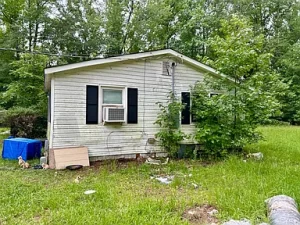
A small rental property in Bennettsville, South Carolina, is attracting attention with an estimated auction listing price of $5,000 and an existing tenant paying $485 per month. The property is a two-bedroom, one-bath single-family residence being offered as part of a larger online-only auction involving 12 rental homes and one duplex. Each property will be sold separately to the highest bidder.
Importantly, the $5,000 figure shown in the listing is for advertising and listing purposes only. It is not the purchase price. The property will be sold through an online auction, meaning the final purchase price will be determined by the bidding process.
For investors interested in rental real estate, this property presents an opportunity to evaluate an existing income-producing home with a tenant already in place. The listing states that the home is currently rented for $485 per month and that many of the properties included in the larger auction have had the same tenants for multiple years. The tenants have continued on a month-to-month basis, often without rent increases.
That combination of an existing rental arrangement, a relatively small residential property, and an auction format makes this an interesting property to examine. However, buyers should evaluate the actual auction terms, rental history, property condition, tenant arrangements, taxes, insurance, maintenance requirements, and all other expenses before determining what the property is worth to them.
Understanding the $5,000 Auction Listing
The first and most important point for prospective buyers is that the advertised $5,000 amount is not the purchase price.
The listing explicitly states that the price displayed is for listing purposes only and that the property is being sold through an online-only auction. The highest bidder will determine the final purchase price through the auction process.
This distinction is particularly important when analyzing the property’s potential investment return.
An investor should never calculate a return based solely on the $5,000 advertised figure. Instead, the final winning bid, auction-related costs, closing expenses, taxes, insurance, repairs, maintenance, vacancy risk, and other ownership costs should all be incorporated into the financial analysis.
Auction properties can attract attention because of low advertised estimates, but the final sale price may be significantly different.
Existing Rental Income of $485 Per Month
The property is currently rented for $485 per month.
That represents an existing rental relationship rather than simply a projected rental amount. The listing states that the home is occupied by a tenant and that many tenants across the auction portfolio have remained in their homes for several years.
For an investor, an existing tenant can potentially reduce the uncertainty associated with finding a new occupant immediately after acquisition. There may be no need to begin marketing the property from scratch if the current tenant remains under the applicable rental arrangement.
However, buyers should verify the lease status, payment history, security deposit, tenant obligations, rental history, and any outstanding issues before closing.
The listing states that the tenants have continued on a month-to-month basis. A month-to-month arrangement can provide flexibility, but it also requires the buyer to understand applicable landlord-tenant laws and notice requirements.
What the Current Rent Means for an Investor
At $485 per month, the property generates $5,820 in scheduled gross rent per year if occupied for all 12 months at the stated rental amount.
That figure is gross rental income, not profit.
An investor must subtract property taxes, insurance, repairs, maintenance, utilities paid by the owner, property management, legal or accounting costs, vacancy, turnover expenses, and other applicable costs.
The final purchase price is also critical.
If the winning auction bid is substantially higher than the advertised estimate, the gross rental yield will change accordingly. A property that appears inexpensive at the advertised figure may have a very different financial profile after competitive bidding.
Therefore, the $485 monthly rent should be treated as one component of a larger investment analysis.
A Two-Bedroom, One-Bath Single-Family Home
The property is described as a two-bedroom, one-bath single-family residence.
This is a straightforward residential configuration that can serve a broad segment of the long-term rental market.
Two-bedroom homes can appeal to small households, couples who need an extra room, individuals seeking an office or guest room, and other renters who do not require a larger residence.
The one-bath layout keeps the home relatively simple, although buyers should evaluate the bathroom’s condition and functionality as part of their due diligence.
The listing does not provide a finished square footage figure, so buyers should not make assumptions about the home’s size when comparing it with other rental properties.
The absence of a reported interior area also makes an in-person inspection especially valuable.
A Rental Property With a Long-Term Tenant History
One of the more notable details in the listing is the statement that many of the homes being offered have been rented to the same tenants for multiple years.
Long-term tenant occupancy can be relevant when evaluating rental property because consistent occupancy may reduce turnover frequency.
Tenant turnover can generate expenses related to advertising, cleaning, repairs, painting, administrative work, and lost rental income. A property with an established tenant may potentially avoid some of those immediate costs.
However, the investor should verify the specific rental history of this particular property rather than assuming that the broader auction portfolio’s tenant history applies equally to this home.
The buyer should request documentation showing rental payments and the terms of the existing tenancy.
Month-to-Month Tenancy
The listing states that tenants have continued as month-to-month occupants.
A month-to-month rental arrangement differs from a long-term fixed lease. The buyer should understand the exact terms governing the current tenancy and determine what rights and obligations will transfer with the property.
South Carolina landlord-tenant laws should be reviewed, and investors may wish to consult a qualified local professional regarding notices, deposits, rent changes, property access, repairs, and termination procedures.
The month-to-month arrangement may also provide the buyer with an opportunity to negotiate a new lease.
The listing specifically notes that buyers can sign new leases with the tenants.
That creates an opportunity to establish updated rental terms, subject to applicable law and any agreement with the existing occupants.
Potential Rent Increase Considerations
The listing states that many of the homes have had no rent increases despite tenants remaining for multiple years.
This information may cause an investor to investigate whether the current $485 monthly rent is consistent with market rents for comparable two-bedroom homes in the area.
However, buyers should not automatically assume that the rent can or should be increased.
Market rent should be determined through comparable properties, current rental listings, property condition, location, amenities, and tenant demand.
A rent adjustment could also affect the relationship with an existing tenant, so investors should consider both financial and operational factors.
Any changes should comply with applicable law and the terms of the existing rental arrangement.
Rent-to-Own Interest From Some Tenants
Another interesting detail in the listing is that some tenants have expressed interest in rent-to-own arrangements if such an opportunity is offered.
For investors, this could potentially introduce another strategy for the property.
A rent-to-own arrangement can take several legal and financial forms, and it should never be established informally without professional advice. Contract structure, purchase price, option terms, rent credits, maintenance responsibilities, financing, default provisions, and compliance with applicable laws can all be significant.
The listing only states that some tenants have expressed interest. It does not guarantee that the tenant of this particular property wants such an arrangement.
Any buyer considering this strategy should obtain appropriate legal and financial guidance before entering into an agreement.
The Larger Auction Portfolio
This property is not being auctioned in isolation.
The listing states that the seller is offering 12 rental homes and one duplex, with each home being sold separately.
Ten of the homes and one side of the duplex are currently rented.
This broader portfolio context may be relevant to investors who are interested in expanding a rental portfolio.
Although each property will sell separately, an investor could potentially evaluate several properties within the auction and determine whether acquiring more than one fits their investment strategy.
However, each property should be analyzed independently.
Different homes may have different tenants, rents, maintenance needs, tax situations, locations, and physical conditions.
The fact that multiple properties are being offered by the same seller does not eliminate the need for individual due diligence.
Potential Portfolio Expansion
For an investor already operating rental properties in South Carolina, an auction involving multiple tenant-occupied homes may provide an opportunity to investigate portfolio expansion.
Buying multiple properties can potentially create efficiencies in property management, maintenance coordination, and contractor relationships.
At the same time, owning multiple properties increases exposure to maintenance expenses, vacancies, tenant issues, insurance costs, and market fluctuations.
Investors should therefore calculate the expected performance of each property individually before considering a portfolio purchase strategy.
No HOA Listed
The available property information indicates that the property does not have a homeowners association.
For a rental owner, the absence of an HOA can potentially eliminate certain association dues and private community restrictions.
However, this does not mean the property is free from rules.
Local zoning requirements, building regulations, municipal requirements, recorded restrictions, and landlord-tenant laws can still apply.
Investors should verify the property’s permitted use and any applicable restrictions before purchasing.
Property Taxes and Ownership Costs
The listing does not provide a current annual tax amount for this particular property.
That means buyers should obtain the latest tax information independently.
Property taxes are an important component of any rental investment calculation. The investor should also research insurance premiums, expected maintenance, utilities, and other recurring costs.
A property with a low purchase price can still become expensive to own if ongoing expenses are high.
Likewise, an inexpensive rental can potentially produce attractive cash flow if the property’s operating expenses remain manageable.
The only reliable way to determine this is to build a complete property-level budget.
Property Condition Should Be Verified
The listing does not provide extensive details about the physical condition of the home.
That is especially important for an auction property.
Prospective buyers should inspect the roof, foundation, exterior, plumbing, electrical system, heating and cooling equipment, windows, doors, flooring, walls, ceilings, kitchen, bathroom, and other accessible components.
A rental property needs to be safe and functional for its occupants, and deferred maintenance can quickly reduce investment returns.
Before bidding, an investor should estimate the cost of both immediate repairs and longer-term maintenance.
Why Inspection Matters for Rental Investments
A rental property’s financial performance is closely connected to its physical condition.
A home requiring a new roof or major mechanical replacement can have significantly different economics from one requiring only minor cosmetic maintenance.
Investors should therefore avoid focusing exclusively on monthly rent.
The condition of the property determines how much of that rent may ultimately remain after expenses.
An inspection can also help identify safety or code-related issues that could affect the property’s ability to remain occupied.
Where access is available before the auction, buyers should take advantage of every permitted opportunity to examine the home.
Estimating Cash Flow
Cash flow is one of the most important concepts when evaluating an income-producing property.
The basic calculation begins with gross rental income and subtracts operating expenses.
For this property, the listing provides a monthly rent of $485.
That equals approximately $5,820 per year before expenses if the property remains continuously occupied at that rate.
An investor might then estimate:
- Property taxes
- Insurance
- Repairs
- Maintenance
- Vacancy allowance
- Property management
- Utilities
- Legal and accounting costs
- Licensing or registration costs
- Capital expenditures
The remaining amount would provide a better picture of potential operating cash flow.
Financing costs should also be included if the property is purchased with borrowed funds.
The Importance of the Final Auction Price
The final auction price will be one of the most important variables in the investment equation.
The $5,000 figure displayed on the listing is explicitly not the purchase price.
If bidding increases significantly, the investor’s expected return on investment may change.
For this reason, bidders should establish a maximum acquisition budget before participating.
That budget should be based on the property’s actual rental income, market value, condition, projected expenses, and desired investment return rather than emotional bidding during the auction.
Having a predetermined maximum can help keep the acquisition consistent with the investor’s financial plan.
Long-Term Rental Versus Personal Ownership
Although the property is currently used as a rental, a future buyer could potentially consider different ownership strategies.
The simplest approach would be to maintain the property as a long-term rental.
Alternatively, an owner could potentially use it as a personal residence, depending on their circumstances and the status of the tenant.
Any transition from rental use to personal occupancy would need to comply with applicable landlord-tenant laws and the existing rental arrangement.
The property’s existing income-producing status makes it particularly relevant to investors, but ownership does not have to remain identical to the seller’s current strategy.
Location and the Bennettsville Market
The property is located in Bennettsville, South Carolina.
For investors, the local market should be examined through current rental listings, comparable sales, employment conditions, population trends, property taxes, insurance costs, and demand for two-bedroom rental homes.
A successful rental investment depends heavily on local demand.
Investors should compare this property with similar homes in the surrounding area rather than relying on broad statewide or national real estate statistics.
Comparable properties can help establish realistic rental expectations and provide context for the auction price.
Evaluating Comparable Rental Properties
Before bidding, an investor can research comparable two-bedroom, one-bath homes in the Bennettsville area.
Useful comparisons include:
- Monthly asking rent
- Property size
- Number of bedrooms and bathrooms
- Condition
- Lot size
- Location
- Included appliances
- Parking
- Utility responsibilities
- Lease terms
- Recent rental history
The goal is to determine whether the current $485 rent appears consistent with the local market.
A lower-than-market rent may provide potential for future adjustment, while a rent already close to market levels may leave less room for increases.
Neither situation is automatically better; the investor must consider the broader financial picture.
Tenant Relations Matter
A rental property is not simply a financial asset. It is also a home for the tenant.
The listing’s reference to long-term occupants suggests that tenant relationships may be an important part of the seller’s rental model.
A new owner should approach any transition carefully.
Clear communication, accurate documentation, proper notice procedures, and compliance with landlord-tenant laws can help make ownership transitions smoother.
Maintaining a good tenant relationship may also reduce unnecessary turnover and vacancy.
Potential for a New Lease
The listing states that buyers can sign new leases with tenants.
A new lease can potentially provide greater clarity for both landlord and tenant.
It can establish the rental amount, payment date, lease duration, maintenance responsibilities, utility obligations, property rules, and other terms.
However, the buyer should first confirm the legal status of the existing tenancy and any requirements governing a new agreement.
A qualified local attorney or property management professional can help ensure that lease documentation complies with applicable South Carolina law.
Due Diligence Checklist for Buyers
Before bidding on this property, prospective investors should consider reviewing several categories of information.
Property Documents
Confirm the legal description, parcel information, ownership records, and any recorded restrictions.
Rental Documents
Request available lease documents, payment history, security deposit information, and tenant correspondence concerning unresolved issues.
Physical Condition
Inspect the roof, foundation, plumbing, electrical system, heating, cooling, kitchen, bathroom, exterior, and structural components.
Financial Records
Review taxes, insurance, maintenance expenses, utilities, and any other ownership costs.
Auction Terms
Read the complete online auction rules, including bidding procedures, buyer premiums if applicable, deposits, closing deadlines, title provisions, and payment requirements.
Tenant Laws
Understand the applicable South Carolina landlord-tenant requirements before making assumptions about rent changes, lease termination, or tenant relocation.
Why the Property Could Interest Small Investors
The property has several characteristics that may appeal to an investor seeking a smaller rental acquisition.
It is a single-family home rather than a large multifamily building. It has two bedrooms, one bathroom, and an existing tenant paying $485 per month.
The simpler configuration may make it easier to understand from a property management perspective.
For someone building a rental portfolio gradually, a smaller property can serve as one component of a broader investment strategy.
However, smaller properties are not automatically lower risk. Maintenance costs, taxes, insurance, and vacancies can still have a meaningful effect on returns.
A Potential Entry Point Into Rental Real Estate
For someone interested in entering the rental market, an auction property with an existing tenant can be an interesting case study.
Instead of buying a vacant house and immediately searching for tenants, the investor is evaluating a property that already has an occupant and established rental income.
That can potentially simplify the initial transition.
At the same time, first-time investors should recognize that rental ownership involves responsibilities beyond collecting rent.
Landlords may be responsible for repairs, maintenance, legal compliance, insurance, tenant communication, accounting, and property management.
Professional property management can be considered, but its cost must be included in the financial analysis.
Final Thoughts on the Bennettsville Rental Property
This two-bedroom, one-bath single-family home in Bennettsville, South Carolina, presents a distinctive auction opportunity for buyers interested in rental real estate.
The property is being offered as part of an online-only auction involving 12 rental homes and one duplex, with each property sold separately. Ten of the homes and one side of the duplex are currently rented, and this particular property is reported to generate $485 per month in rent.
The advertised $5,000 amount is not the purchase price. It is provided for listing purposes, while the final purchase price will be determined through the online auction.
The existing tenant and stated monthly rent are among the property’s most important investment characteristics. The listing also notes that many tenants across the properties have remained in place for multiple years and that many have continued month-to-month without significant rent increases.
For a buyer, this creates several questions worth investigating. Is the current rent competitive with the local market? What is the tenant’s payment history? What is the property’s physical condition? What are the annual taxes and insurance costs? How much maintenance has the property required? Are there any outstanding repairs? What will the final auction price be?
The listing also mentions that buyers can sign new leases with existing tenants and that some tenants have expressed interest in rent-to-own arrangements. These possibilities may be worth exploring, but any new lease or rent-to-own agreement should be structured carefully and in compliance with applicable law.
The property’s investment potential ultimately depends on the relationship between acquisition cost, rental income, operating expenses, property condition, and local market conditions.
For buyers willing to perform detailed due diligence, this Bennettsville property provides an opportunity to examine an existing rental home with a tenant already in place. The online auction format adds another layer to the purchase process, making careful financial planning particularly important.
Rather than focusing only on the attractive $5,000 advertised figure, prospective bidders should concentrate on the property’s complete financial picture and establish a bidding limit that reflects the property’s actual value and expected costs.
With two bedrooms, one bathroom, an existing rental arrangement, and participation in a larger portfolio auction, this South Carolina property offers an interesting example of how small residential rentals can be evaluated as potential income-producing assets.


Listed on Zillow.