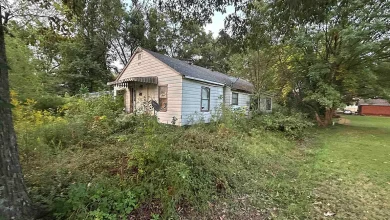
3 beds 1 baths 1,200 sqft
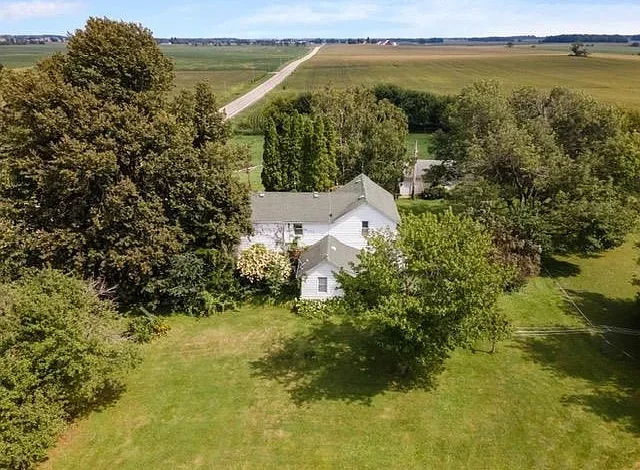
Rare 120-Acre Wisconsin Farm Auction with Home, Outbuildings and Productive Land
A Rare Opportunity in Clinton, Wisconsin
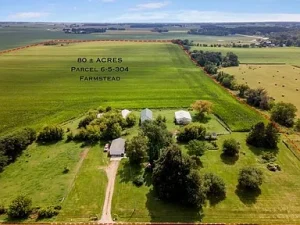
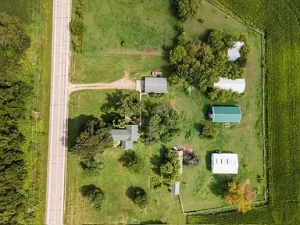
Opportunities to acquire a substantial amount of productive agricultural land with an existing residence and multiple farm-related buildings do not come along every day. In the Clinton, Wisconsin area, an upcoming online auction presents an unusual chance to purchase approximately 120 acres of agricultural property offered in two separate tracts. The offering includes an approximately 80-acre tract with a three-bedroom residence, multiple outbuildings and farmland, along with an adjoining approximately 40-acre tract that provides additional agricultural acreage.
The property is being offered through an online auction, with bidding scheduled to close on October 13 at 6:00 PM. The tracts will be sold separately and are subject to seller confirmation. A 3% buyer’s premium also applies, making it especially important for potential bidders to understand the complete auction terms before participating.
For buyers searching for farmland, a rural homestead, agricultural investment, recreational property or a larger parcel with existing structures, this Clinton-area offering has several characteristics worth considering. The combination of acreage, a residence, farm buildings, agricultural zoning and an established well creates a property profile that can appeal to a variety of buyers.
Approximately 120 Acres Offered in Two Tracts
The central feature of this auction is the overall land offering. Approximately 120 acres are available, divided into two separate tracts.
The first tract contains approximately 80 acres and includes the residence, multiple large buildings and farmland. The second tract contains approximately 40 acres of additional agricultural land. Because the tracts are being sold separately, buyers may have the opportunity to focus on the portion of the property that best matches their plans and financial objectives.
The 80-acre tract is particularly interesting because it combines agricultural land with an existing home and several outbuildings. This gives the property a different profile from a vacant farm parcel where a buyer would need to establish residential improvements from the beginning.
The adjoining 40-acre tract, meanwhile, provides additional agricultural acreage for buyers interested primarily in land. Its presence expands the overall opportunity and makes the auction relevant to farmers, land investors and individuals looking for larger rural holdings.
Potential buyers should carefully review the official auction documentation to understand the exact boundaries, acreage, parcel descriptions, access arrangements and terms applicable to each tract.
The Three-Bedroom Farmhouse
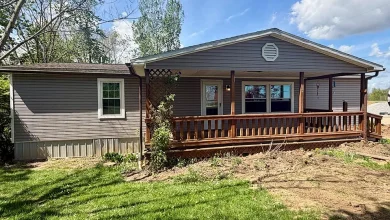
Located on the approximately 80-acre tract is a two-story single-family residence offering approximately 1,200 square feet of interior living space. The home features three bedrooms and one full bathroom.
The property is identified with a National Folk/Farm architectural style, an approach commonly associated with practical rural homes designed around everyday living rather than elaborate architectural details. The home has vinyl siding and wood siding, contributing to its traditional farmhouse appearance.
The residence includes its main living areas on the first level and three bedrooms upstairs. This two-level configuration creates a straightforward separation between common living spaces and private sleeping areas.
Although the listed property information does not specify a heating system, buyers should consider this an important point to investigate during due diligence. The absence of a listed heating system makes it particularly important for prospective owners to understand how the residence is currently heated, whether improvements are required and what costs could be involved in making the home comfortable throughout Wisconsin’s seasons.
The listing identifies the home as having a full basement. A full basement can provide valuable additional space for storage, mechanical equipment or future improvements, depending on its condition and configuration.
Comfortable Main-Level Living Areas
The main level includes a kitchen measuring approximately 12 by 14 feet, providing about 168 square feet of listed space. The kitchen represents an important functional area of the home and could serve as the central gathering point for everyday meals and farm life.
A living room measuring approximately 15 by 14 feet provides around 210 square feet of space. That makes it one of the largest individual rooms in the house and gives residents a dedicated area for relaxing, entertaining guests or spending time together.
The home does not have a listed fireplace. While a fireplace is a traditional feature in many rural properties, its absence may give future owners an opportunity to consider alternative heating or interior improvement options based on their needs and local requirements.
The property’s approximately 1,200 square feet of above-ground finished living space offers a manageable residential footprint for buyers who prioritize land and agricultural functionality over a large modern house.
For some purchasers, this can actually be an advantage. A smaller home can be easier to maintain while the majority of the property remains available for agricultural, storage, recreational or other rural purposes.
Three Upstairs Bedrooms
All three listed bedrooms are located on the upper level.
The primary bedroom is approximately 12 by 10 feet, or about 120 square feet. The second bedroom measures approximately 10 by 11 feet, or about 110 square feet. The third bedroom measures approximately 10 by 10 feet, providing approximately 100 square feet.
Together, the three bedrooms provide a traditional farmhouse sleeping arrangement suitable for a household that needs multiple private rooms.
The upstairs layout also separates the bedrooms from the primary living spaces downstairs. This can provide a practical arrangement for families, guests or anyone who prefers a clear distinction between daytime and nighttime areas.
Potential buyers should independently verify room measurements and total square footage if these details are important to their purchasing decision, as the listing specifically notes that square footage is approximate.
Agricultural Land as the Main Attraction
While the house adds residential functionality, the land is clearly one of the most important components of this property.
Approximately 80 acres are included with the residence, while another approximately 40-acre tract provides additional agricultural land. The listing describes the property as productive agricultural land in the Clinton area.
Agricultural acreage can serve many purposes depending on soil characteristics, drainage, existing land use, farming arrangements and local regulations. A buyer may be interested in continuing agricultural operations, leasing acreage to another operator or holding the land as a long-term real estate asset.
For agricultural buyers, one of the most important advantages is scale. A property measuring approximately 120 acres offers substantially more flexibility than a small rural parcel, particularly when the land can be acquired in separate tracts.
However, buyers should not assume that all acreage is identical in productivity or use. Soil quality, field configuration, drainage, topography, access and existing agricultural practices can all affect the economic value of farmland.
Multiple Farm Buildings and Outbuildings
The property also includes multiple additional structures, increasing its potential usefulness for agricultural and rural purposes.
The listing specifically identifies storage buildings, an outbuilding and a machine shed. It also notes the inclusion of multiple large buildings and the home on the premises.
For a working agricultural property, these structures can be an important component of the overall package. A machine shed can provide space for agricultural equipment, vehicles, tools and other large items. Additional storage structures can help organize supplies and materials.
The condition and dimensions of each building should be inspected before bidding. A large outbuilding may be valuable if it has a sound roof, foundation, doors, electrical service and structural components. Conversely, deferred maintenance could create substantial repair costs.
Buyers should therefore evaluate the buildings not simply by their presence, but by their condition, usability and replacement or repair requirements.
Two-Car Detached Garage
The residential portion of the property includes a detached two-car garage. The listing identifies two total garage spaces and two total parking spaces, along with uncovered parking.
A detached garage can be particularly useful on a rural property because vehicles, farm equipment, recreational gear and tools often require more storage than a typical suburban household.
The separation between the home and garage can also be practical for a farm property. Mud, equipment and outdoor work can remain away from the main living areas, while vehicles can be protected from the elements.
As with the other buildings, inspection is recommended to determine the condition of the structure and its electrical, roofing, doors and foundation components.
A Rural Wisconsin Lifestyle
Properties of this size offer a lifestyle that is fundamentally different from living on a small residential lot.
Instead of having a home surrounded by neighboring houses, a larger agricultural property can provide a stronger sense of open space and rural privacy. The land may offer opportunities for farming, gardening, equipment storage, outdoor activities and other countryside pursuits.
For buyers who enjoy working with the land, the property could become a long-term homestead environment. For agricultural operators, it may represent an opportunity to add acreage to an existing operation.
The rural setting can also appeal to buyers seeking a quieter lifestyle away from dense development. At the same time, prospective owners should understand that rural living comes with responsibilities that are different from suburban homeownership.
Maintaining large areas of land, managing outbuildings, monitoring wells and septic systems, maintaining access roads and caring for agricultural improvements can all require time and money.
Well Water and Rural Utilities
The property uses a private well for water. This is a common arrangement for rural properties and means buyers should conduct appropriate inspections and testing before completing a purchase.
Well water quality can vary depending on local conditions and the condition of the well system. A buyer should consider professional water testing and an inspection of the well itself.
The listing does not provide extensive information about other utility systems. Because of this, potential buyers should investigate electricity, wastewater, heating, fuel systems and other infrastructure during due diligence.
The lack of detailed utility information should not automatically be viewed as a negative, but it does mean that buyers should obtain reliable information before placing a final bid.
Agricultural Zoning
The property is identified with agricultural zoning, which is particularly relevant for buyers considering farming or other land-based uses.
Agricultural zoning can influence how the land may be used, what structures can be constructed and which activities require permits or approvals. It is therefore important for prospective buyers to contact the appropriate local authorities and verify the zoning rules that apply to each parcel.
Potential uses should never be assumed solely from a property’s marketing description. Buyers considering residential expansion, additional agricultural buildings, commercial activity, livestock operations or other improvements should confirm permitted uses in writing.
Understanding zoning before an auction is especially important because auction purchases generally require buyers to perform their own due diligence.
Investment Potential of Large Agricultural Parcels
Large agricultural properties can attract investors because land is a finite resource and well-located acreage can have multiple potential uses.
This property may be considered from several investment perspectives. An investor could potentially evaluate continued agricultural use, farmland leasing, long-term land appreciation or improvements to the existing residential and agricultural structures.
However, investment potential depends on numerous factors. Agricultural productivity, local land values, lease rates, property taxes, maintenance costs, building conditions, financing terms and future demand can all affect returns.
The presence of an existing home and multiple buildings adds another layer to the investment analysis. Rather than purchasing vacant land alone, an investor would be acquiring a combination of residential and agricultural improvements.
This can increase potential utility, but it can also introduce additional maintenance responsibilities.
Potential for a Farm Homestead
For buyers interested in creating a farm homestead, the property has several characteristics worth examining.
The combination of a residence, agricultural acreage, storage structures and a machine shed provides a foundation for rural living. The approximately 80-acre tract could potentially support a variety of agricultural activities depending on the land’s characteristics and applicable regulations.
The additional 40-acre tract could also be attractive to buyers who want to expand their agricultural footprint.
A homestead buyer should evaluate the property as an integrated system. Water supply, wastewater, heating, access, fencing, storage, equipment space and the condition of the home all matter.
The best rural property is not necessarily the one with the largest house. For many buyers, the land and supporting infrastructure can be more important than residential square footage.
Why the Auction Format Matters
This property is being sold through an online auction, which creates a different purchasing process from a conventional real estate transaction.
The listing states that bidding closes October 13 at 6:00 PM and that the tracts are sold separately, subject to seller confirmation. A 3% buyer’s premium also applies.
An estimated price of $1 should not automatically be interpreted as the expected final purchase price. Auction listings can use nominal or placeholder amounts while actual bidding occurs through the auction platform.
Potential bidders should focus on the official auction terms, current bidding information and all conditions of sale rather than treating the displayed estimate as a conventional asking price.
Because the property is being sold as separate tracts, buyers should also understand exactly which buildings, acreage and improvements belong to each parcel.
Understanding the 3% Buyer’s Premium
The 3% buyer’s premium is another important financial consideration.
A buyer’s premium is an additional amount charged according to the auction terms. It should be incorporated into the buyer’s overall acquisition budget rather than considered separately after determining the maximum bid.
For example, a bidder deciding on a maximum amount should calculate the effect of the buyer’s premium along with closing costs, taxes, inspections, financing expenses and any immediate repairs.
This is particularly important with an agricultural property because costs can extend beyond the residence itself. Large buildings, farm structures, acreage maintenance and rural infrastructure may require significant capital after closing.
Due Diligence Before Bidding
Anyone considering this property should perform thorough due diligence before participating in the auction.
Important items to investigate include:
- Exact parcel boundaries and acreage
- Survey information
- Legal access and road frontage
- Agricultural zoning requirements
- Property taxes and assessments
- Well condition and water quality
- Septic or wastewater arrangements
- Electrical service
- Heating system
- Roof and structural condition of the home
- Basement condition
- Condition of the detached garage
- Condition of the machine shed
- Condition of other outbuildings
- Agricultural productivity
- Soil characteristics
- Drainage
- Existing leases or farming agreements
- Easements and restrictions
- Title information
- Insurance availability
- Auction deposit and closing requirements
- Buyer’s premium
- Seller confirmation requirements
The more significant the purchase, the more valuable professional inspections and legal review can become.
Evaluating the Home Separately From the Land
One of the most useful ways to analyze this property is to consider the residence and land as separate components of the overall purchase.
The home provides approximately 1,200 square feet of living space and three bedrooms. Its value and usefulness depend heavily on condition, utilities and future repair needs.
The land represents a much larger portion of the property and may be the primary reason an agricultural buyer would consider the opportunity.
This distinction can help prospective buyers understand what they are actually purchasing. A buyer primarily interested in farmland may place greater importance on soil productivity, acreage configuration and agricultural usability. Someone seeking a rural homestead may place more emphasis on the residence and outbuildings.
Managing a Large Rural Property
Owning approximately 80 or 120 acres requires a different approach to maintenance than owning a conventional suburban property.
Agricultural fields may require ongoing management, while buildings need periodic inspection and repair. Driveways, drainage systems, fencing and access areas may also require attention.
Large properties can also create opportunities for productive use, but those opportunities generally require planning and responsible management.
For buyers without farming experience, consulting local agricultural professionals can help provide insight into land management, potential leasing arrangements and operating costs.
Long-Term Land Ownership
Large parcels can also be viewed from a long-term ownership perspective.
Agricultural land may serve as a multigenerational asset, especially for families interested in maintaining a connection to rural property. The combination of farmland and residential improvements can make the property useful for both current living and future planning.
Long-term ownership decisions should still be based on realistic financial analysis. Property taxes, maintenance, insurance, agricultural expenses and capital improvements should all be included in the ownership budget.
The property’s assessed value is listed at $234,800, with annual property taxes of approximately $5,119. These figures provide useful starting points for financial planning, but buyers should independently verify current tax information and understand how ownership or improvements could affect future expenses.
A Property Worth Serious Consideration
The Clinton-area auction stands out because it combines several elements that are difficult to find together: substantial agricultural acreage, an existing three-bedroom home, multiple large outbuildings, a detached two-car garage, agricultural zoning and an additional adjoining tract.
For a farmer, it could represent additional productive acreage. For a rural homeowner, it could offer a private country setting with substantial land. For an investor, it could provide an opportunity to evaluate agricultural and real estate value within a single acquisition.
The online auction format adds another dimension, requiring careful preparation and disciplined bidding.
The most important step for any interested buyer is to investigate the property thoroughly before the bidding deadline. Auction opportunities can move quickly, and buyers should know their financial limits, understand the terms and verify the physical and legal condition of the property before participating.
Final Thoughts on This Wisconsin Farm Auction
This approximately 120-acre Clinton, Wisconsin property represents a rare combination of farmland, residential space and agricultural infrastructure.
The approximately 80-acre tract includes a three-bedroom, one-bathroom farmhouse with about 1,200 square feet of living space, a full basement, a kitchen, living room and three upstairs bedrooms. A detached two-car garage, machine shed, storage structures and additional outbuildings add practical value for rural living and agricultural use.
The adjoining approximately 40-acre tract expands the overall land opportunity and may appeal to buyers specifically seeking additional agricultural acreage.
With agricultural zoning, private well water and multiple existing structures, the property has many of the basic characteristics associated with a traditional rural farm property. At the same time, prospective buyers should approach the opportunity with careful due diligence, especially regarding utilities, heating, building conditions, land productivity, zoning, access and auction terms.
The October 13 online auction could attract interest from farmers, land investors, homestead buyers and others looking for a larger Wisconsin property. Because the tracts are being sold separately and the sale is subject to seller confirmation, buyers should review all official auction documents and understand the 3% buyer’s premium before placing a bid.
For those searching for a substantial rural property where farmland, a residence and agricultural buildings come together, this Clinton-area offering deserves a closer look. Its combination of acreage and improvements provides flexibility that may be difficult to replicate through a conventional residential purchase.
As always, buyers should verify all property details, measurements, acreage, taxes, zoning, utilities, auction requirements and permitted uses independently before making a purchasing decision.
Listed on Zillow.