74.75 Acres Lot
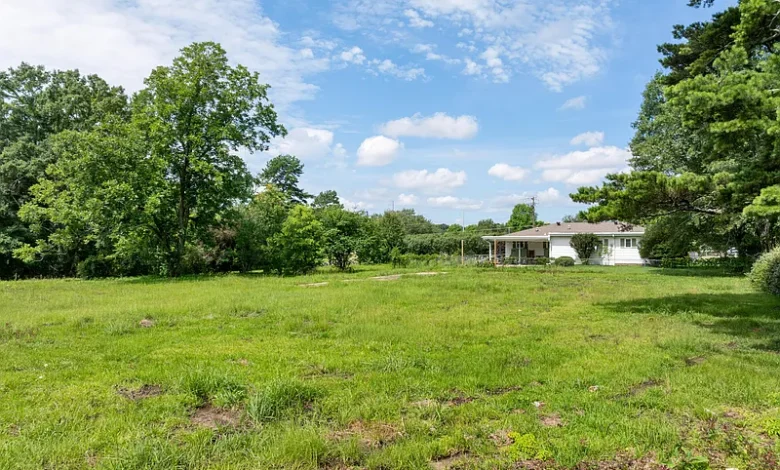
74.75 Acres of Development Land in Hattiesburg Mississippi Offered for $50,000
Large parcels of undeveloped land in established communities can provide opportunities that are difficult to replicate with already-developed properties. In Hattiesburg, Mississippi, a 74.75-acre parcel along N 31st Avenue is currently offered for $50,000 after a substantial $75,000 price reduction. The property is being marketed as residential and unimproved land, with potential appeal for buyers interested in development, rental housing, residential construction, or longer-term land investment.
The listing presents this property as a development opportunity with proximity to the University of Southern Mississippi and Forrest General Hospital. According to the listing, a developer previously received approval for a subdivision, although that approval has lapsed and would need to be renewed. The seller is now offering the land in its current state while leaving open the possibility that a future buyer could pursue multifamily development or seek approval for single-family residential lots.
This distinction is important. The property is not being sold as an already-approved subdivision with active development entitlements. Instead, the prior approval provides historical context and may potentially help a future developer understand what was previously considered feasible. Any new development plan would need to be reviewed and approved by the appropriate city authorities.
The property is also presented as part of a possible package opportunity involving land facing both N 31st Avenue and N 30th Avenue. Buyers interested in acquiring both listings should independently verify the exact parcels, boundaries, combined acreage, pricing, zoning, and development terms before entering into a transaction.
With 74.75 acres, a level site, an asking price of $50,000, and a location near major Hattiesburg institutions, this property could attract developers, investors, builders, and land buyers looking for a larger tract with potential future residential applications.
A Major Price Reduction Brings the Asking Price to $50,000
The property has experienced a substantial $75,000 price reduction, bringing the current asking price to $50,000.
A large price reduction can attract attention from buyers who previously considered the property outside their budget. It also creates an opportunity for investors to reevaluate the land based on its current asking price.
However, buyers should avoid assuming that a lower asking price automatically represents a particular investment return or development value.
Undeveloped land has costs and risks that can differ significantly from those associated with an existing home or commercial building. Development expenses may include surveying, engineering, zoning or entitlement work, environmental studies, road construction, drainage improvements, utility extensions, permitting, site preparation, construction, financing, and other infrastructure requirements.
The $50,000 asking price should therefore be considered the acquisition cost rather than the complete cost of developing the property.
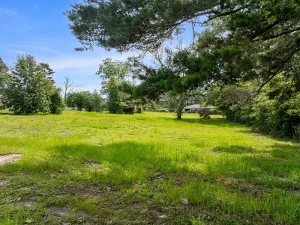
74.75 Acres of Unimproved Land
The listing identifies the property as 74.75 acres of residential and unimproved land.
That amount of acreage creates a scale that could potentially support multiple development concepts, subject to zoning, access, utilities, environmental conditions, subdivision regulations, and city approval.
Large undeveloped parcels can be appealing because they give buyers more flexibility than already-built properties. Instead of inheriting an existing building configuration, a developer can potentially evaluate different site layouts and determine how best to use the land.
The listing describes the property as level, which can be an advantageous characteristic for future development. Level land may potentially reduce some grading requirements compared with steep or highly irregular terrain, although a professional civil engineering evaluation would still be necessary.
Buyers should obtain a current survey to verify the exact boundaries and acreage.
The Property Is Being Offered as Development Land
The seller’s description emphasizes development potential.
The listing states that the developer previously received approval for a subdivision, but the application must now be renewed because of the passage of time.
This information can be significant to a developer because it indicates that subdivision was previously considered by the relevant authorities. However, previous approval should not be interpreted as current approval.
Development regulations, zoning standards, infrastructure requirements, traffic considerations, stormwater rules, utility capacity, and other municipal policies can change.
A buyer considering the property should contact the appropriate city planning and development authorities to determine the property’s current zoning and what uses are currently permitted.
Previous Subdivision Approval
According to the listing, the developer previously obtained approval for a subdivision.
The application has since lapsed, meaning the buyer cannot simply assume that the previously approved plan remains active.
The seller indicates that the approval would need to be renewed.
For a developer, this could create both an opportunity and an additional due-diligence requirement.
Before purchasing, a buyer should request available documentation concerning the previous subdivision approval. Reviewing prior site plans, subdivision layouts, conditions of approval, engineering documents, utility plans, and correspondence with the city could provide useful historical information.
The buyer should also ask city officials whether the prior approval can be renewed, whether the previous plan remains substantially acceptable, and what modifications would be required under current regulations.
Potential Multifamily Development
One of the development concepts specifically mentioned in the listing is multifamily housing.
The seller states that the property is being offered in its current form in case someone wants to build multifamily housing and pursue the necessary city approval.
Multifamily development can include a range of housing formats, but the exact possibilities depend on zoning and municipal regulations.
A buyer would need to determine whether apartments, duplexes, townhomes, or other residential formats are permitted on the property.
The feasibility of multifamily development would also depend on factors such as density allowances, parking requirements, setbacks, stormwater management, fire access, utility capacity, road access, building codes, and other development standards.
Because none of those approvals are guaranteed by the listing, they should be investigated before making an acquisition decision.
Potential Single-Family Residential Development
The listing also describes a possible path for single-family development.
According to the seller, if a buyer wants to build single-family homes, the property would need to go back through the city for approval. The seller indicates that this process is supposedly quick because the property had previously received approval.
That statement should be treated as a seller-provided expectation rather than a guarantee.
A future buyer should obtain written confirmation directly from the relevant municipal authorities regarding the current approval process.
The number of potential single-family lots, required lot sizes, road requirements, utility connections, setbacks, drainage requirements, and other standards should all be determined through professional planning and engineering work.
Proximity to the University of Southern Mississippi
The listing highlights the property’s proximity to the University of Southern Mississippi.
This is one of the key factors that could make the land particularly interesting for residential development.
A university can generate demand for different types of housing, including housing for students, faculty, staff, graduate students, and other members of the surrounding community.
However, proximity alone does not establish demand for a particular development concept.
A prospective developer should research current housing supply, rental rates, occupancy, student housing demand, nearby development projects, transportation patterns, and competing properties.
If multifamily housing is considered, these factors would become particularly important when estimating potential project revenue and determining whether development costs are justified.
Proximity to Forrest General Hospital
The listing also highlights proximity to Forrest General Hospital.
A major healthcare institution can create housing demand from employees, medical professionals, patients’ families, and other workers connected to the healthcare sector.
For a residential developer, proximity to a major hospital may be another factor worth evaluating when studying potential demand.
Again, however, the property’s proximity to a hospital does not guarantee profitability.
A developer should examine the local housing market and determine which residential products are currently underserved.
The land could potentially appeal to a variety of residential concepts, but the appropriate use would depend on zoning, market research, and development economics.
A Level Site Could Offer Development Advantages
The property is described as level.
Topography can be an important consideration when evaluating undeveloped land.
A relatively level parcel may potentially provide more flexibility for site planning, although actual development suitability depends on much more than visible terrain.
A civil engineer should evaluate drainage, soil conditions, flood risk, stormwater requirements, wetlands, environmental constraints, and existing site conditions.
A site that appears level from the road can still require substantial preparation before construction.
The buyer should therefore avoid assuming that the entire 74.75 acres are immediately buildable.
Development Requires Infrastructure
One of the biggest considerations with raw land is infrastructure.
A developer may need to determine how water, sewer, electricity, telecommunications, roads, stormwater systems, and other services can reach the site.
The listing does not provide detailed information about utility availability or existing infrastructure.
This means buyers should investigate these issues before purchasing.
For multifamily or subdivision development, utility capacity can be especially important. A utility line being located nearby does not necessarily mean sufficient capacity is available for a new development.
The cost of extending or upgrading infrastructure can materially change a project’s financial feasibility.
Public Planning and Zoning Review
Because the property’s future use may involve development, zoning should be one of the first issues investigated.
The buyer should determine the property’s current zoning classification and identify which uses are allowed by right, which require conditional approval, and which require rezoning or other municipal action.
The previous subdivision approval may provide useful historical context, but it does not replace current zoning verification.
A developer should also investigate applicable building setbacks, minimum lot sizes, density restrictions, parking requirements, road standards, stormwater regulations, landscaping requirements, and other applicable development rules.
Professional assistance from a land-use attorney, civil engineer, surveyor, or planning consultant may be appropriate.
A Possible Land Investment
Not every buyer will want to develop the property immediately.
The acreage could potentially attract investors interested in holding land for future development.
Land banking involves purchasing property with the expectation that its value or development potential may change over time.
However, holding undeveloped land also carries costs.
Property taxes, insurance, maintenance, financing costs, and opportunity costs can continue while the property remains undeveloped.
Future development conditions are also uncertain.
An investor considering a long-term hold should have a clear strategy and understand the risks associated with zoning, market cycles, infrastructure, and changing development regulations.
Understanding the $578 Annual Tax Amount
The listing reports an annual tax amount of $578.
Property taxes are relatively straightforward to calculate compared with many development expenses, but buyers should still verify the current tax records.
The tax bill could potentially change following development, subdivision, reassessment, or changes in ownership.
Investors should therefore use the current tax amount as a reference rather than assuming it will remain unchanged throughout the entire ownership period.
If the land is eventually divided into multiple parcels, each parcel may have different tax implications.
Potential Package Purchase With N 30th Avenue Land
An additional feature of the listing is the possibility of purchasing the property together with another listing involving land facing N 30th Avenue.
The seller’s description indicates that the two properties may be available as a package.
A combined acquisition could potentially provide a larger or more strategically positioned development area.
However, buyers should verify the exact relationship between the parcels.
Important questions include whether the properties are contiguous, whether they share access, whether they have separate parcel numbers, whether both properties have the same zoning, and whether a combined development plan would be possible.
The exact package price and terms should also be confirmed with the listing agent.
Why Multiple Parcels Can Matter to Developers
Contiguous land can sometimes provide greater flexibility for development than isolated parcels.
A developer may be able to create a more efficient road network, utility plan, stormwater system, or overall site layout when controlling multiple connected properties.
It can also create more flexibility when positioning buildings and common areas.
However, combining parcels does not automatically guarantee development approval.
The city may require separate subdivision actions, lot consolidations, new site plans, or other approvals.
A survey and professional site-planning analysis would be important before assuming that two listings can function as one development tract.
Potential Rental Housing Opportunity
The seller specifically suggests the possibility of building rental properties.
The proximity to the University of Southern Mississippi and Forrest General Hospital could make rental housing one concept worth investigating.
A developer could potentially study demand for apartments, townhomes, duplexes, or other residential formats.
The appropriate housing type would depend on local market research.
Factors to investigate include average rents, vacancy rates, household sizes, tenant preferences, student housing demand, nearby rental inventory, new construction, employment growth, and transportation.
Rental development also requires careful financial modeling.
Construction costs, financing, property management, maintenance, insurance, taxes, utilities, reserves, and vacancy should all be included in a projected operating budget.
Potential Resale Housing Development
The property could also potentially be evaluated for a build-and-sell strategy.
If single-family residential approval can be obtained, a developer might study whether individual homes could be constructed and sold separately.
This approach would require research into local home prices, buyer demand, construction costs, lot values, absorption rates, and competing new construction.
A developer should not assume that every approved lot will automatically generate a profitable resale opportunity.
Market conditions can change between land acquisition and project completion.
A Blank Slate for a Developer
Unlike a property with an existing building, this parcel does not require a buyer to work around an existing house.
That can be advantageous for someone with a clear development concept.
The buyer could potentially evaluate different layouts, subject to approval.
Possible concepts could include detached homes, attached residential units, or multifamily buildings, depending on current zoning and approvals.
The absence of existing structures can also reduce demolition concerns, although site preparation and infrastructure may represent substantial costs.
Importance of a Current Survey
A current survey should be considered essential before closing on a large land transaction.
The listing provides acreage and dimensions, but buyers should verify the exact boundaries independently.
A survey can help identify property lines, easements, access points, encroachments, rights-of-way, and other important characteristics.
This is particularly important if the buyer plans to subdivide the property.
A developer needs accurate boundary information before beginning engineering and site planning.
Environmental and Soil Due Diligence
Environmental conditions can have a major effect on development feasibility.
A buyer should determine whether the property contains wetlands, floodplain areas, drainage challenges, protected features, contamination concerns, or other environmental limitations.
Soil conditions should also be evaluated.
A civil engineer or geotechnical professional may need to perform soil testing to determine whether the land is suitable for the intended structures and infrastructure.
These investigations can be especially important for multifamily development, where larger buildings and more intensive infrastructure may place greater demands on the site.
Access and Transportation Considerations
Road access is another important factor.
A developer should determine how vehicles would enter and exit the property and whether the existing road network can support the intended development.
For a large residential project, traffic considerations can become significant.
The city may require specific road widths, turning areas, sidewalks, emergency access, or other improvements.
The property’s frontage and access should therefore be evaluated as part of a professional site plan.
A Location With Multiple Potential Demand Drivers
The combination of the University of Southern Mississippi and Forrest General Hospital gives this property multiple nearby institutional reference points.
For developers, locations near educational and healthcare institutions can sometimes support diverse housing demand.
Students may seek rental housing, while hospital employees and other professionals may seek apartments, townhomes, or single-family residences.
Families may also be interested in residential communities located near major employment centers.
These potential demand drivers make the property worth studying, but actual market feasibility should be established through independent research rather than assumptions.
Who Might Consider This Property?
Several types of buyers could potentially find the land interesting.
A residential developer could investigate subdivision or multifamily development.
A builder could explore the feasibility of creating single-family homes.
An investor could consider a long-term land-holding strategy.
A local developer might be interested in combining the parcel with the N 30th Avenue listing.
A land investor could also evaluate the property as part of a broader portfolio.
Each buyer type would have different objectives and due-diligence requirements.
Questions Buyers Should Ask Before Purchasing
Because this is undeveloped land with potential development considerations, buyers should obtain detailed answers before making an offer.
Important questions include:
- What is the current zoning classification?
- What uses are currently permitted?
- Why did the previous subdivision approval expire?
- Can the previous approval be renewed?
- What documents are available from the prior approval?
- How many residential lots were previously contemplated?
- Was multifamily housing previously considered?
- What approvals would be required for apartments or other multifamily housing?
- Are public water and sewer available nearby?
- Is sufficient utility capacity available?
- What are the road-access requirements?
- Are there wetlands or floodplain areas?
- What are the current property boundaries?
- Are there easements or restrictions?
- What is the current tax status?
- Is the N 30th Avenue parcel contiguous?
- What is the package price for both properties?
- Are there development deadlines associated with any prior approvals?
These questions can help a buyer determine whether the property is suitable for their intended strategy.
The Difference Between Potential and Approved Development
One of the most important concepts for buyers to understand is the difference between development potential and current approval.
This property has a history of subdivision approval according to the seller, but the approval has expired.
That means buyers should not treat the property as an active approved subdivision.
Similarly, the listing suggests that multifamily housing could be pursued, but the buyer would need to seek the appropriate city approval.
The distinction is important because development approval can affect land value substantially.
A buyer should obtain current written information from the appropriate authorities before assigning a specific development value to the property.
A Property That Requires Research Before Purchase
This 74.75-acre tract is not a traditional turnkey investment.
It is a property where research and planning are likely to be just as important as the land itself.
The low asking price may attract attention, but a serious buyer should investigate zoning, utilities, access, drainage, environmental conditions, development approvals, construction costs, and market demand.
For a developer, the most important question may not be simply whether the land can be purchased for $50,000.
The more important question is what can realistically be built on the property and what it would cost to get from raw land to completed housing.
Final Thoughts on the Hattiesburg Development Opportunity
The 74.75-acre property along N 31st Avenue in Hattiesburg, Mississippi, represents an unusual opportunity for buyers interested in undeveloped residential land.
Listed at $50,000 after a $75,000 price reduction, the parcel is being offered as unimproved land with a level topography and a reported annual tax amount of $578.
The property’s most significant characteristic may be its potential development flexibility. According to the listing, a subdivision had previously received approval, but the approval has lapsed and would need to be renewed. The seller is also presenting the property as an opportunity for someone interested in exploring multifamily housing, while single-family development could potentially be pursued through the city’s approval process.
Its proximity to the University of Southern Mississippi and Forrest General Hospital adds another important consideration. These institutions may create potential demand for different types of housing, although buyers should conduct detailed market research before committing to a development strategy.
The possibility of purchasing this property together with another parcel facing N 30th Avenue could also be relevant to developers interested in assembling a larger development area.
At the same time, buyers should recognize that this is not a ready-to-build subdivision. Current zoning, entitlements, utility availability, access, environmental conditions, engineering requirements, and city approvals all need to be independently verified.
For a developer with experience navigating land-use approvals, this property could provide a starting point for exploring residential development in the Hattiesburg market. For a land investor, it could potentially serve as a longer-term holding, subject to the costs and risks associated with undeveloped property.
The $50,000 asking price creates an accessible entry point relative to the amount of acreage advertised, but the ultimate value of the property will depend heavily on what can legally and economically be developed there.
A thorough review of the previous subdivision documents, a current survey, zoning confirmation, utility research, environmental evaluation, and professional development analysis would be important steps before proceeding.
For buyers willing to perform that level of due diligence, the property offers an opportunity to investigate a large tract of land near important Hattiesburg institutions, with potential residential development applications and the possibility of a larger package acquisition.
The property is best viewed not simply as vacant land, but as a potential development project whose future depends on planning, approvals, infrastructure, market conditions, and the buyer’s ability to execute a viable strategy.
Listed on Zillow.