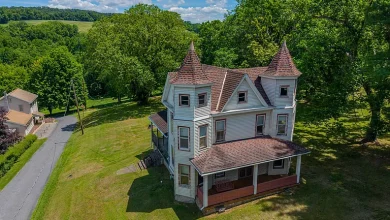
4 beds 2 baths 1,786 sqft
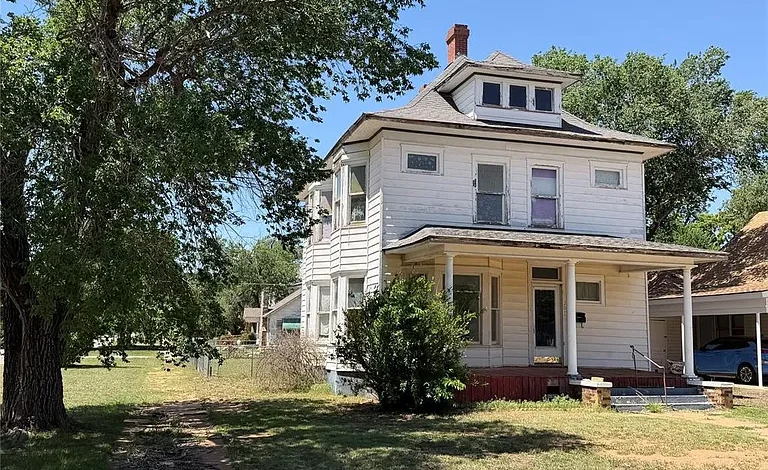
Historic 1918 Victorian Home in Hobart Oklahoma Offers 4 Bedrooms, Hardwood Floors and a Large Basement
A historic Victorian home in Hobart, Oklahoma, is attracting attention with a displayed price of $40,000 and nearly 1,800 square feet of living space. Built in 1918, the two-story residence features four bedrooms, two full bathrooms, hardwood floors, an impressive fireplace, a spacious dining room, numerous bay windows, original-style trim, a large basement, and a corner-lot location.
For buyers who appreciate historic architecture and restoration projects, this property offers an opportunity to bring an older home back to life while preserving many of the details that give it character. The listing describes the residence as a former beautiful Victorian that is now waiting for someone to restore it to its original beauty.
There is, however, an important condition attached to the advertised price. The property is not being offered as an individual $40,000 purchase. According to the listing, it must be purchased together with eight other properties in Hobart for a combined price of $450,000. The transaction is also described as an as-is sale.
That package requirement fundamentally changes how buyers should evaluate the property. Rather than looking at the home simply as a $40,000 house, prospective purchasers need to consider the complete eight-property portfolio, the combined purchase price, the condition and value of all included properties, and the potential costs associated with restoring them.
Even with that important qualification, the Hobart Victorian stands out because of its architectural character, generous layout, historic construction, and potential for restoration.
A Historic Hobart Victorian Built in 1918
The home was built in 1918 and is identified as a Victorian-style single-family residence.
More than a century of history gives the property an architectural identity that is very different from a modern home. Historic houses often feature larger rooms, distinctive trim, wood floors, tall windows, decorative details, and layouts designed around formal entertaining and family living.
The listing specifically highlights the home’s hardwood floors, amazing fireplace, trim, spacious dining room, large basement, and numerous bay windows.
These features can form the foundation of an attractive restoration project.
The challenge is determining how much of the original structure and finishes can be preserved and what systems need to be repaired or replaced. A home that has been standing since 1918 should be professionally inspected before a buyer makes assumptions about its condition.
For someone interested in historic properties, however, the opportunity is not simply about square footage. It is about restoring a piece of residential architecture while adapting it for modern use.
The $40,000 Price Requires an Important Explanation
The property information displays a price of $40,000, which immediately makes the home look like an unusually inexpensive historic property.
At 1,786 square feet, that displayed amount works out to approximately $22 per square foot according to the listing.
However, buyers should pay close attention to the package-sale requirement.
The listing states that this property is being sold along with eight other properties in Hobart for one total price of $450,000. The other properties are identified by their MLS numbers in the original listing.
Therefore, the $40,000 figure should not be interpreted as the amount required to purchase this house by itself.
This distinction is critical for anyone researching the property online. The real transaction is a portfolio purchase involving nine properties for a combined $450,000.
The buyer should obtain the complete list of included properties, review their individual conditions, verify ownership and title information, and determine whether the entire portfolio makes financial sense.
The individual displayed price may be useful for understanding how the listing is presented, but it is not a substitute for the actual package purchase terms.
An Eight-Property Package in Hobart
The package includes this Victorian home along with eight additional properties in Hobart.
For an investor, the portfolio structure could potentially provide opportunities that would not exist with a single property. Multiple properties may offer the possibility of renovating several homes, holding some as rentals, reselling others, or developing a longer-term strategy.
However, buying multiple properties simultaneously also increases the complexity of the transaction.
Every property should be evaluated individually.
A buyer should understand:
- The physical condition of each property
- The estimated renovation requirements
- The legal status of each property
- Existing taxes and assessments
- Utility connections
- Occupancy status
- Zoning
- Potential environmental concerns
- Title and lien information
- Insurance requirements
- Expected carrying costs
- Potential resale or rental value
The $450,000 package price should therefore be analyzed against the combined market value and rehabilitation requirements of all nine properties.
The Victorian residence may be one component of a larger investment strategy, but it should not be evaluated in isolation when considering the actual transaction.
A Four-Bedroom Layout
The home contains four bedrooms and two full bathrooms.
Four bedrooms provide considerable flexibility for a large household and can also make a historic home more attractive to potential future buyers.
The listing does not provide detailed measurements for each bedroom, but the overall home contains approximately 1,786 square feet of listed interior living space.
The bedroom count also gives the property potential to support several different residential configurations.
A future owner could potentially use some rooms as traditional bedrooms while converting others into offices, guest rooms, hobby areas, libraries, or other spaces, subject to the home’s existing layout and applicable requirements.
If the property is intended for resale or rental use, the legal bedroom count should be verified through local records and building requirements.
Two Full Bathrooms
The property has two full bathrooms.
For a four-bedroom house, two full bathrooms provide useful functionality and can help accommodate larger households.
Because the property is a historic renovation, the condition of the plumbing and bathroom fixtures should be examined carefully.
A buyer should determine whether the existing plumbing system is functional, whether there are leaks or drainage problems, and whether the bathrooms require complete modernization.
Historic homes sometimes require extensive plumbing updates, particularly where older supply lines, drain systems, or fixtures have reached the end of their useful life.
The bathroom renovation strategy should therefore be incorporated into the broader rehabilitation budget.
Hardwood Floors Add Restoration Potential
One of the most appealing features mentioned in the listing is the hardwood flooring.
Original hardwood floors can be among the most valuable interior character elements in an older house.
Depending on their condition, they may potentially be restored through cleaning, sanding, refinishing, or selective repair.
Restoring existing hardwood floors can also help preserve the historic atmosphere of a Victorian residence.
Before assuming restoration is possible, however, buyers should inspect for water damage, warping, structural movement, missing boards, previous alterations, and other issues.
If the floors are salvageable, they could become a major visual feature after renovation.
An Amazing Fireplace as a Focal Point
The listing highlights an “amazing fireplace,” and the property is recorded as having one fireplace.
A fireplace can serve as a natural focal point in a historic living area.
For a Victorian house, an original or period-appropriate fireplace may contribute significantly to the architectural atmosphere.
The fireplace should be inspected before use. Buyers should determine the condition of the chimney, flue, masonry, hearth, and surrounding structure.
A fireplace does not necessarily need to be operational to add visual value, but any plans to use it should be based on professional inspection and applicable safety requirements.
If the fireplace retains original decorative elements, careful restoration could make it one of the defining features of the finished home.
Spacious Dining Room
The spacious dining room is another feature emphasized by the listing.
Formal dining rooms were an important component of many historic homes, and a large dining space can still be useful for entertaining today.
The room could accommodate a substantial dining table and provide a dedicated area for gatherings.
Combined with the home’s original trim, hardwood floors, fireplace, and bay windows, the dining room could potentially become one of the most visually impressive rooms in the house.
A renovation could focus on preserving historic details while updating lighting, electrical outlets, wall finishes, and other modern necessities.
Numerous Bay Windows
The listing mentions that the property has too many bay windows to count.
Bay windows are particularly interesting architectural features because they can increase natural light while creating additional interior depth.
In a Victorian home, bay windows can contribute substantially to the exterior appearance and the character of interior rooms.
They may also provide attractive views toward the surrounding neighborhood and create distinctive spaces for furniture or seating.
Because the home is more than 100 years old, the condition of the windows should be carefully examined.
Potential concerns could include deteriorated frames, damaged glass, air leakage, moisture intrusion, or previous modifications.
Restoring historic windows can be worthwhile, but the cost and practicality should be evaluated by a qualified professional.
Original Trim and Architectural Character
The listing specifically calls attention to the home’s trim.
Decorative trim is often one of the details that makes historic homes memorable.
Rather than replacing every old component with modern materials, a thoughtful restoration may preserve existing woodwork wherever practical.
Original trim around doors, windows, stairways, and ceilings can help retain the home’s historic appearance.
For a future owner, this creates an opportunity to combine restoration with modernization.
The home’s electrical, plumbing, heating, cooling, insulation, and other behind-the-scenes systems can potentially be updated while the visible architectural features are preserved.
Large Basement With Additional Potential
The property includes a large basement.
A basement can provide valuable storage and mechanical space, while also offering additional possibilities depending on its condition and local regulations.
The listing does not provide extensive details about the basement’s finished condition, so buyers should inspect it carefully.
Important issues to investigate include:
- Water intrusion
- Drainage
- Foundation walls
- Moisture
- Cracks
- Electrical service
- Plumbing
- Ventilation
- Ceiling height
- Structural supports
- Potential mold or environmental concerns
The basement may also provide useful access for inspecting the foundation and mechanical systems.
Given the age of the property, this area should receive significant attention during due diligence.
Two-Story Home With a Traditional Layout
The residence is listed as a two-story property.
A traditional two-story arrangement can separate common living spaces from bedrooms and private areas.
The first floor could potentially accommodate living, dining, kitchen, and entertaining spaces, while the upper level provides bedrooms and bathrooms.
The exact current configuration should be verified during inspection.
Older homes may have experienced renovations or alterations over the decades, and the existing floor plan may differ from the home’s original design.
A future renovation can potentially improve functionality while preserving important historic elements.
Corner Lot Location
The property sits on a 7,000-square-foot corner lot.
A corner lot can provide greater street frontage and may offer different landscaping and access possibilities compared with an interior parcel.
The listing describes the home as being in a nice area and emphasizes its corner location.
The property also includes a porch and deck, providing outdoor spaces that could become part of a future restoration.
The lot has chain-link fencing, which could potentially be repaired, replaced, or modified depending on the buyer’s plans and local regulations.
Porch and Deck
Outdoor living areas can complement the architecture of a historic home.
The property includes a porch and deck.
A restored front porch could become an attractive gathering space and could reinforce the Victorian appearance of the property.
A deck can provide additional outdoor space for seating, dining, or recreation.
The condition of both structures should be inspected for wood deterioration, structural integrity, railings, stairs, and attachment points.
If repairs are necessary, those costs should be included in the renovation budget.
Frame Construction and Conventional Foundation
The home is constructed with a frame structure and a conventional foundation.
Frame construction is common in historic residential properties and can allow flexibility during renovation, but the structural condition must be carefully evaluated.
A professional inspection should look for evidence of settlement, rot, moisture damage, insect activity, deteriorated framing, or other structural problems.
The foundation should also be examined, particularly around the basement.
A house that has been standing since 1918 can have areas where past repairs have been performed. Buyers should determine what work has already been completed and whether additional structural improvements are needed.
Composition Roof
The property has a composition roof.
The roof is one of the most important systems to inspect during a historic renovation.
A buyer should determine the approximate age of the roof, identify damaged or missing materials, inspect flashing and penetrations, and check for evidence of leaks.
Roofing problems can lead to water damage in ceilings, walls, insulation, framing, and historic interior finishes.
If the roof requires replacement, the cost should be included in the overall rehabilitation plan.
Heating and Cooling
The listing indicates that the property has heating, although the specific heating type is not identified in the provided facts.
Cooling is listed as available.
The exact systems should be verified during inspection.
Heating and cooling are particularly important in an older home because energy efficiency can vary significantly depending on insulation, windows, air sealing, and the condition of mechanical systems.
A future renovation may provide an opportunity to improve energy efficiency while preserving the home’s historic character.
Potential buyers should obtain professional HVAC evaluations and estimates if replacement or upgrades appear necessary.
Public Utilities
The property is listed with public water and public sewer.
Access to municipal utilities can simplify certain aspects of rehabilitation compared with rural properties that require private wells and septic systems.
Nevertheless, buyers should verify the condition of the property’s service lines and internal plumbing.
Older properties can have aging infrastructure even when connected to modern municipal systems.
A full plumbing evaluation can help identify potential replacement costs before renovation begins.
Tax Assessment and Annual Taxes
The property has a listed tax assessed value of $89,261 and an annual tax amount of $985.
These figures can provide useful context for a buyer, but they should not be interpreted as an appraisal or market valuation.
Tax assessments and actual market values can differ significantly.
The annual tax figure should also be considered when evaluating the carrying cost of the property.
For a package purchase involving nine properties, buyers should calculate the combined annual tax obligations rather than evaluating this property alone.
The As-Is Sale Is Important
The listing states that the transaction is an as-is sale.
This means buyers should approach the property with the expectation that the seller is not providing a conventional repair commitment.
The buyer should therefore conduct as much due diligence as possible before closing.
For a historic property, a standard home inspection may not be enough.
Depending on the property’s condition, buyers may also want assessments from specialists in structural engineering, roofing, electrical systems, plumbing, HVAC, foundation work, and historic restoration.
The goal should be to identify major expenses before committing to the entire property package.
Evaluating the Entire $450,000 Package
The most important financial consideration is the $450,000 package price.
Because this home is being sold with eight other Hobart properties, the buyer must analyze all nine properties together.
A useful approach would be to create a property-by-property evaluation.
For each property, the buyer could estimate:
- Current condition
- Estimated renovation cost
- Potential finished value
- Potential rental income
- Annual taxes
- Insurance
- Utility costs
- Carrying costs
- Expected holding period
- Potential resale strategy
This would provide a clearer picture of whether the overall package supports the purchase price.
The $40,000 figure displayed for this specific property should therefore not be treated as an independent acquisition price.
Potential Restoration Opportunity
The strongest appeal of this property may be its potential as a historic restoration project.
The home already contains many of the features that restoration-minded buyers seek: hardwood floors, original trim, bay windows, a fireplace, a large dining room, a substantial basement, and Victorian architecture.
Rather than constructing character from scratch, a buyer could potentially preserve and restore what already exists.
The restoration process could involve modernizing the home’s infrastructure while maintaining visible historic details.
This can create a finished property that combines the appearance and atmosphere of an older home with the comfort and reliability expected from modern housing.
Possible Investment Strategy
The property could potentially fit into a broader investment strategy because it is part of a nine-property package.
An investor might consider renovating properties at different stages, prioritizing those with the strongest potential, and developing a long-term plan for the entire portfolio.
However, this approach requires significant capital and project management.
The buyer would need to coordinate inspections, contractors, permits, materials, insurance, taxes, utilities, and eventual marketing or leasing.
The package structure also means that one or more properties may require substantially more work than initially expected.
A detailed inspection and financial model would therefore be essential.
Who Could Be Interested in This Property?
The property may appeal to several types of buyers.
A historic-home enthusiast could be attracted to the original architecture and restoration possibilities.
An experienced investor could be interested in the larger package.
A contractor or renovation professional may see opportunities to create value through construction work.
A buyer seeking a large traditional residence may also appreciate the four-bedroom layout and extensive interior features.
However, the package requirement means the transaction is fundamentally different from buying a typical single-family home.
The buyer must be prepared to acquire all nine properties rather than selecting only the Victorian residence.
Due Diligence Checklist for Buyers
Before proceeding, prospective buyers should consider the following:
- Obtain the complete list of all nine properties included in the $450,000 package.
- Inspect every property individually.
- Verify title and ownership for each parcel.
- Review taxes and outstanding obligations.
- Determine the renovation needs of every property.
- Obtain professional inspections.
- Evaluate the Victorian home’s foundation and basement.
- Inspect the roof and exterior.
- Evaluate the electrical system.
- Inspect plumbing and sewer connections.
- Verify heating and cooling systems.
- Evaluate the fireplaces and chimney.
- Inspect original hardwood flooring.
- Determine whether historic features can be preserved.
- Research zoning and potential uses.
- Compare local property values.
- Calculate expected carrying costs.
- Review insurance requirements.
- Build a renovation contingency.
- Have qualified professionals review the entire transaction before closing.
This process can help prevent the low displayed price from overshadowing the much larger financial commitment represented by the portfolio purchase.
A Rare Combination of Historic Character and Investment Potential
The Hobart Victorian is interesting because it combines several features that are not commonly found together at this price level.
It is more than 100 years old, contains four bedrooms and two bathrooms, offers nearly 1,800 square feet, includes a large basement, and retains original architectural features.
The corner lot adds another dimension to the property.
The house also has the potential to become a substantial restoration project for someone who wants a distinctive residence rather than a conventional modern floor plan.
The package sale, however, remains the central consideration.
Final Thoughts on the Hobart Victorian
This 1918 Victorian home in Hobart, Oklahoma, presents a compelling restoration story, but it also requires buyers to understand the details behind the advertised $40,000 price.
The home features approximately 1,786 square feet of listed living space, four bedrooms, two full bathrooms, a large basement, hardwood floors, original trim and woodwork, a built-in architectural character, a spacious dining room, numerous bay windows, a fireplace, a porch, and a deck.
Built more than a century ago, the residence has the kind of historic details that can make a restoration project particularly distinctive.
For someone who values historic architecture, the hardwood floors, fireplace, bay windows, original trim, and spacious rooms could provide a strong foundation for a renovation. The large basement and two-story configuration also offer practical flexibility.
The corner-lot setting adds outdoor space and visibility, while public water and sewer provide access to municipal utilities.
But the most important fact for prospective buyers is that the house is being sold as part of a larger package. According to the listing, it must be purchased with eight other properties in Hobart for a total price of $450,000.
That means the $40,000 figure should not be treated as the actual standalone purchase price.
Anyone interested in the opportunity should evaluate all nine properties individually and as a combined investment. The condition of every property, projected renovation costs, potential finished values, taxes, insurance, utilities, title status, and potential uses should all be considered before making an offer.
The sale is also strictly as-is, making professional inspections and careful due diligence particularly important.
For the right buyer, the package could potentially offer an opportunity to acquire multiple properties while restoring a distinctive historic Victorian residence. The Hobart home itself has architectural features worth preserving and a floor plan that could potentially become an attractive family residence after appropriate renovation.
The combination of historic character, a large basement, four bedrooms, two bathrooms, hardwood floors, original woodwork, bay windows, fireplace, and corner-lot location gives the property a strong restoration identity.
Ultimately, this is not simply a $40,000 house. It is part of a $450,000 nine-property transaction that requires a much broader investment analysis. Buyers who understand that distinction and are prepared to evaluate the entire portfolio may find this historic Hobart property an intriguing opportunity.
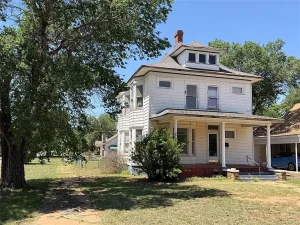
Listed on Zillow.