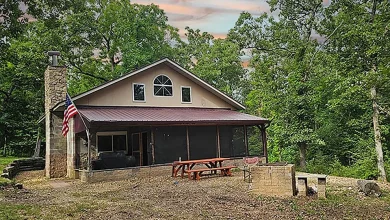
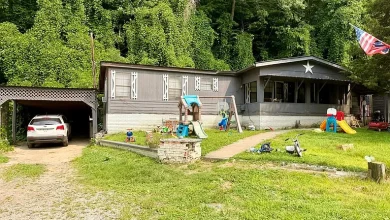
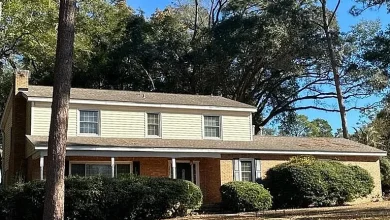
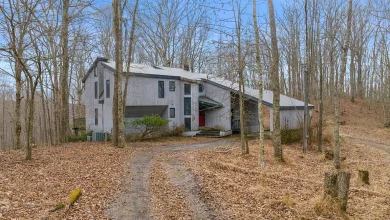
4 bed 2 bath home with garage on a corner lot. This home has lots of potential for someone who is handy, needs some work.
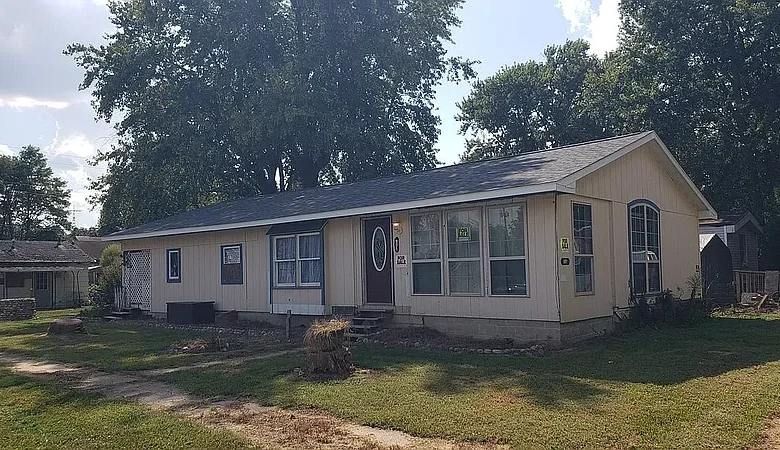
$40,000 4-Bedroom Fixer-Upper in Lerna, Illinois: 1,400 Sq Ft Home With Garage, Newer Roof, 200-Amp Electrical Service and Renovation Potential
For buyers searching for an affordable home in Illinois, a low-cost fixer-upper, an investment property, a potential rental, or a house that can be improved while occupied, the property at 601 Lincoln St, Lerna, IL 62440 presents an interesting opportunity.
Currently offered at $40,000 after a $10,000 price reduction, this single-family home features four bedrooms, two full bathrooms, approximately 1,400 square feet of living space, a detached two-car garage, central air conditioning, forced-air gas heating, and a 6,969-square-foot corner lot.
Unlike many inexpensive renovation properties that are described as unsafe or uninhabitable, the owner states that this house is livable in its current condition and that a buyer could potentially stay in the property while continuing improvements. That distinction may make it particularly interesting to buyers who want a renovation project without necessarily taking on a completely gutted structure.
Several important improvements have also reportedly been completed recently. According to the seller, the home received a new roof and new hot water heater in 2024, while the electrical system was upgraded to 200-amp service. A refrigerator and dishwasher purchased in 2025 are also included with the property.
The home still needs work, and the seller describes it as a property with significant potential for someone who is handy. At approximately $29 per square foot, the acquisition price is low, but prospective buyers should carefully investigate the remaining repairs before deciding whether the property works as a personal residence, rental investment, or future resale project.
Below is an in-depth look at the property, its existing improvements, potential renovation priorities, financing considerations, inspection issues, insurance, taxes, rental possibilities, and other factors buyers may want to evaluate.
Property Overview: 601 Lincoln St, Lerna, IL 62440
The property is located at 601 Lincoln St in Lerna, Illinois 62440.
According to the supplied listing information, its principal features include:
Current Asking Price: $40,000
Previous Price: $50,000
Price Reduction: $10,000
Property Type: Single-Family Home
Bedrooms: 4
Bathrooms: 2 full bathrooms
Interior Living Area: Approximately 1,400 square feet
Year Built: 1971
Lot Size: Approximately 6,969 square feet
Lot Feature: Corner lot
Parking: Detached two-car garage
Heating: Forced air, natural gas
Cooling: Central air conditioning
Water: Public
Roof: Shake/shingle classification in property facts; seller reports new roof in 2024
Electrical: Seller reports upgrade to 200-amp service
Water Heater: Seller reports new unit in 2024
Refrigerator: Purchased in 2025 and included
Dishwasher: Purchased in 2025 and included
Additional Appliances: Microwave, range/oven and garbage disposal listed
Zoning: Residential
Price Per Square Foot: Approximately $29
Tax Assessed Value: $38,355
Reported Annual Property Tax: $804
Parcel Number: 11001874000
Road Surface: Gravel
Date on Market: June 18, 2026
Sale Type: For Sale by Owner
These characteristics make the house notably different from a complete-rehabilitation property where every major system must be installed from scratch.
$10,000 Price Reduction Brings the Asking Price to $40,000
The listing indicates a $10,000 price reduction on July 30, bringing the current price to $40,000.
That represents a substantial reduction from the previous $50,000 price.
The seller also states that the current price is firm.
For prospective buyers, that means the analysis should focus less on expecting another major negotiation and more on determining whether the existing $40,000 price makes financial sense given the condition of the home and remaining repairs.
A lower purchase price is useful only when the total ownership and renovation costs remain manageable.
Approximately $29 Per Square Foot
At $40,000 for roughly 1,400 square feet, the listing calculates an asking price of approximately $29 per square foot.
That figure may attract investors and budget-conscious buyers.
However, price per square foot should always be interpreted in relation to condition.
A fully renovated home and a property requiring repairs should not be compared solely on this metric.
A more useful calculation for a renovation buyer is:
Purchase Price + Closing Costs + Immediate Repairs + Renovation + Financing + Insurance + Taxes + Holding Costs = Total Investment
Once improvements are completed, the buyer can calculate the true all-in cost per square foot.
Four Bedrooms Offer Flexible Living Space
One of the home’s strongest features is its four-bedroom configuration.
Four bedrooms within approximately 1,400 square feet can provide flexibility for different household needs.
A buyer might use all four as traditional bedrooms, while another owner could create a home office, guest room, hobby space, study, exercise room, or combination of uses.
For rental investors, the bedroom count may also be worth researching because different household sizes may value additional sleeping space.
However, rental income should be determined using actual comparable rentals rather than bedroom count alone.
Two Full Bathrooms
The property contains two full bathrooms.
For a four-bedroom home, this can be a meaningful functional advantage.
A buyer is not starting with a house where the only way to obtain a second bathroom is to create an entirely new plumbing area.
The condition of both bathrooms should nevertheless be evaluated.
Potential improvements might range from simple cosmetic updates such as paint, fixtures, lighting, and flooring to more extensive plumbing or subfloor repairs.
An inspection can help identify the appropriate scope.
Approximately 1,400 Square Feet
The home provides approximately 1,400 square feet of interior living area.
This is a manageable size for renovation while still offering four bedrooms and two bathrooms.
A smaller footprint can potentially reduce certain renovation expenses compared with a much larger house because there is less flooring, paint, trim, and general surface area.
However, major systems such as HVAC, plumbing, electrical service, roofing, and kitchen equipment can still represent substantial costs.
The home’s current condition should drive the budget rather than square footage alone.
Built in 1971
The house was constructed in 1971.
At more than 50 years old, it deserves a thorough inspection even though several recent improvements have reportedly been made.
Buyers should investigate the condition and age of plumbing, HVAC equipment, windows, insulation, foundation components, interior finishes, and any portions of the electrical system not included in the recent service upgrade.
A house can have a new roof and electrical service while still containing other systems nearing the end of their useful life.
New Roof Reported in 2024
One of the most important improvements mentioned by the seller is a new roof installed in 2024.
Roof replacement can represent a significant expense on a fixer-upper, so a recently completed roof may reduce one major near-term capital concern.
The structured listing facts describe the roof as shake/shingle, while the seller simply states that a new roof was completed in 2024.
Prospective buyers should request any available documentation showing exactly what was installed.
Invoices, warranties, contractor information, and permit records where applicable may help establish the details.
Why Roof Condition Matters to Insurance
A newer roof may also be relevant when obtaining homeowners insurance.
Insurers often consider roof age, material, condition, and installation when evaluating a property.
However, a recently installed roof does not automatically guarantee a particular insurance rate or eligibility.
Buyers should obtain actual insurance quotes before purchasing.
They should also inspect the roof installation, flashing, gutters, drainage, and attic areas for signs of moisture.
New Hot Water Heater in 2024
The seller also reports that the hot water heater was replaced in 2024.
This is another useful improvement because water heaters are essential household equipment and eventually require replacement.
Buyers should verify the type, capacity, installation, energy source, and condition of the unit.
They should also look for proper drainage, venting where applicable, shutoff arrangements, and evidence of leaks.
If properly installed and functioning, a newer water heater could reduce another near-term maintenance expense.
Upgraded 200-Amp Electrical Service
Perhaps one of the most valuable infrastructure improvements is the reported upgrade to 200-amp electrical service.
Modern households can place substantial demand on electrical systems through kitchen appliances, HVAC equipment, computers, televisions, laundry equipment, tools, and other devices.
A 200-amp service can provide useful capacity for many modern residential needs.
However, buyers should understand the difference between an upgraded service and a completely rewired house.
The listing does not state that every branch circuit or piece of wiring has been replaced.
Electrical Inspection Is Still Recommended
A licensed electrician can verify the service upgrade and inspect the panel, breakers, grounding, outlets, switches, and visible wiring.
The buyer should determine which parts of the electrical system are newer and which may date from earlier renovations.
Any available permit or inspection documentation for the 200-amp upgrade could also be useful.
For an investor, knowing that electrical capacity has already been improved may simplify future renovation planning, particularly if additional appliances or equipment are planned.
Forced-Air Gas Heating
The property has forced-air gas heating.
This is a conventional heating arrangement that many buyers will recognize.
The listing does not provide the age of the furnace, so prospective purchasers should have it inspected.
A qualified HVAC professional can evaluate operation, heat exchanger condition, filters, ductwork, thermostat, venting, and general maintenance needs.
If the furnace is older, eventual replacement should be incorporated into long-term budgeting even if it currently operates properly.
Central Air Conditioning
The house also has central air conditioning.
For a low-priced property, having an existing central cooling system is a notable feature.
Again, equipment age and condition are not specified.
Buyers should test the system and inspect both indoor and outdoor components.
A functioning HVAC system can make it easier to occupy a home while renovations continue, which is particularly relevant because the seller states that the property is livable as-is.
Seller Says the Home Is Livable
One of the most important differences between this property and many low-priced fixer-uppers is the seller’s statement that the house is currently livable.
According to the owner, a buyer could potentially stay in the home while continuing repairs.
That could be attractive to an owner-occupant trying to avoid paying for both a separate residence and a renovation property.
However, “livable” is a seller description rather than an independent inspection result.
Buyers should personally verify safety, utilities, HVAC, plumbing, electrical systems, and overall habitability.
Renovating While Living in the Property
Living in a house while renovating can reduce certain holding expenses, but it introduces practical challenges.
Construction creates dust, noise, disrupted rooms, material storage, and periods when certain systems may be temporarily unavailable.
A buyer planning this approach should divide the project into manageable stages.
For example, maintaining one functional bathroom and usable kitchen area while renovating other spaces can make the process more practical.
Good planning is essential to avoid turning the entire house into a construction zone at once.
Refrigerator Purchased in 2025
The seller states that the refrigerator was purchased in 2025 and will remain with the home.
That means a future owner may not need to immediately purchase this major kitchen appliance.
Buyers should verify that it operates properly and confirm that it is included in the final purchase agreement.
A relatively new refrigerator is not a reason by itself to purchase a property, but it contributes to the overall package of recent improvements.
Dishwasher Purchased in 2025
The dishwasher was also reportedly purchased in 2025 and is included.
Like the refrigerator, this can reduce immediate appliance expenses.
The property facts additionally list a microwave, range/oven, and garbage disposal among the included appliances.
Prospective buyers should verify which appliances will remain at closing and test their condition where possible.
For a budget renovation, keeping functional newer appliances can help direct money toward higher-priority repairs.
Kitchen Renovation Strategy
The listing does not provide detailed information about the kitchen’s overall condition.
A buyer should evaluate cabinets, countertops, flooring, plumbing, electrical outlets, lighting, ventilation, appliances, and storage.
If the cabinets are structurally sound, cosmetic updates could potentially be more economical than complete replacement.
An investor should match kitchen renovation quality to the local market.
Installing excessively expensive materials in an affordable property can reduce the return on renovation spending.
Walk-In Closet
The property facts mention a walk-in closet.
Storage can be an important feature, especially in a four-bedroom home with a relatively compact 1,400-square-foot footprint.
A functional walk-in closet can help maximize usable living space by reducing the need for freestanding storage furniture.
During renovation, simple improvements such as shelving, rods, lighting, and fresh paint could increase functionality without requiring major construction.
Fireplace Information Should Be Clarified
The listing includes the phrase “Fireplace Wood” among the features but separately states “Has fireplace: No.”
This inconsistency should be clarified during a showing.
It could be a database issue or refer to another feature rather than a functioning fireplace.
Buyers should not assume the property contains an operational wood-burning fireplace unless it is physically verified.
If any chimney or fireplace structure exists, it should be professionally evaluated before use.
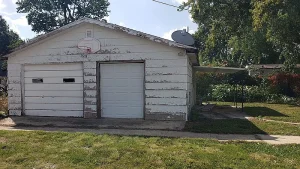
Detached Two-Car Garage
The home includes a detached garage with two parking spaces.
This is a useful feature for a property at this price point.
A two-car garage can provide vehicle protection, workshop space, storage, or room for tools and renovation materials.
Its condition should be inspected independently from the house.
Buyers should examine the roof, framing, foundation or slab, garage doors, electrical service, siding, and overall structural condition.
Garage Value for an Investor
For a future rental property, a garage can potentially improve tenant appeal.
For resale, buyers may value covered parking and storage.
For an owner completing renovations, the garage can be particularly useful during construction because materials and tools can be stored outside the primary living space.
However, the garage’s contribution to value depends on its actual condition and local buyer preferences.
Corner Lot
The seller highlights the property’s corner-lot location.
Corner parcels can offer additional street exposure and potentially different access possibilities compared with interior lots.
Some buyers appreciate the more open feel.
Others may consider additional sidewalk, snow removal, landscaping, or privacy implications depending on the exact property layout.
A buyer should view the lot in person to determine how the corner location affects parking, yard space, access, and overall usability.
6,969-Square-Foot Lot
The parcel contains approximately 6,969 square feet.
This is enough land to provide outdoor space without creating the maintenance requirements associated with a large rural property.
The yard could potentially accommodate landscaping, seating, recreation, gardening, or other typical residential uses.
Any plans for fences, sheds, additions, or other structures should be checked against local zoning and setback requirements.
The property is identified as having residential zoning.
Public Water
The home is connected to public water according to the listing.
That eliminates the need to maintain a private well based on the supplied information.
However, buyers should still inspect the home’s internal plumbing.
They should check water pressure, pipe materials, leaks, fixtures, drainage, and water heater connections.
A public water connection does not guarantee that all plumbing inside an older house is in good condition.
Wastewater Information Should Be Verified
The listing identifies public water but does not provide specific sewer or septic information in the supplied facts.
Prospective buyers should verify the wastewater system before purchasing.
If connected to public sewer, the buyer may want to understand any applicable municipal charges.
If the property uses another system, its condition and maintenance requirements should be investigated.
This is a basic due-diligence item that can materially affect ownership costs.
Residential Zoning
The property is listed as RES, indicating residential zoning.
That is consistent with its use as a single-family home.
Buyers planning standard residential occupancy should still verify local requirements if they intend to make significant structural changes.
Investors considering rental use should also confirm any applicable local rules, registration requirements, occupancy standards, or inspections.
Zoning information should always be verified when it materially affects the intended investment strategy.
Gravel Road Surface
The property facts identify the road surface as gravel.
Prospective buyers should inspect access conditions and determine who maintains the road.
Drainage, snow, dust, grading, and seasonal conditions may be worth considering depending on the exact location.
For many properties, gravel access is routine and manageable.
The important point is simply to understand maintenance responsibilities and access before purchasing.
Tax Assessed Value of $38,355
The property has a reported tax assessed value of $38,355.
That figure is relatively close to the current $40,000 asking price.
However, assessed value and market value are not the same.
Tax assessments are used for taxation and may not reflect the price at which a property would sell in its current condition.
Investors should use recent comparable sales and property-specific condition analysis rather than treating assessed value as a guaranteed valuation.
Annual Property Taxes of $804
The reported annual property tax is approximately $804.
That becomes part of the home’s recurring ownership cost.
For a rental investor, taxes should be included when calculating net operating income.
For a flip investor, taxes should be included in holding costs during renovation and resale.
Owner-occupants should verify the current bill and determine whether ownership changes could affect future taxation.
For Sale by Owner
This property is being offered for sale by owner (FSBO).
Zillow is displaying the listing at the owner’s request rather than acting as the listing broker.
A direct owner sale can operate differently from a transaction represented by a traditional listing agent.
Buyers should still use appropriate contracts, title work, inspections, and closing procedures.
Depending on experience and local practice, buyers may also choose to obtain professional real-estate, legal, or title assistance.
The Seller Says the Price Is Firm
The owner specifically states that the price is now firm.
That is useful information for prospective buyers because it helps frame expectations.
Instead of basing the investment plan on another large price reduction, buyers should determine whether $40,000 works based on the property’s condition and their renovation budget.
If the numbers make sense at $40,000, the project may warrant further investigation.
If they do not, an assumed future discount should not be used to justify the purchase.
Potential Owner-Occupant Opportunity
The property may be especially interesting for a hands-on owner-occupant.
Because the seller says it is livable, a buyer may be able to move in and improve one area at a time.
The four bedrooms and two bathrooms provide flexibility while renovations occur.
Recent improvements such as the roof, water heater, electrical service, refrigerator, and dishwasher could also reduce some immediate expenses.
Still, independent inspection should confirm whether the house is appropriate for occupancy.
Potential Long-Term Rental
Investors may also consider the house as a long-term rental.
Four bedrooms, two bathrooms, central HVAC, a detached garage, and a corner lot could be useful rental features.
However, the listing does not provide a verified rental estimate.
Investors should research comparable rental homes in the surrounding market.
A realistic rental analysis should include vacancy, taxes, insurance, maintenance, management, future repairs, and any utilities paid by the owner.
Calculating Rental Cash Flow
A useful basic formula is:
Gross Rent – Vacancy – Property Taxes – Insurance – Maintenance – Management – Owner-Paid Expenses – Capital Reserves = Net Operating Income
If the property is financed, debt payments can then be considered when calculating actual cash flow.
The $40,000 purchase price may be low, but profitability depends on both rental income and operating expenses.
A low acquisition cost does not automatically guarantee a strong rental return.
Potential Fix-and-Flip Strategy
The house may also warrant analysis as a fix-and-flip property.
Several expensive items have reportedly already been improved, which could help the renovation budget.
However, an investor still needs to establish what work remains.
Cosmetic improvements, kitchen or bathroom work, flooring, paint, windows, HVAC, garage repairs, landscaping, and other projects may all affect total cost.
The finished value should be based on actual comparable sales rather than assumptions.
Determining After-Repair Value
An investor considering resale should research recently sold homes that are genuinely comparable to the expected finished property.
Relevant factors include location, approximately 1,400 square feet, four bedrooms, two bathrooms, detached garage, lot size, age, and renovated condition.
The calculation should not simply compare the $40,000 purchase price with the asking prices of nearby houses.
Completed sales provide stronger evidence than unsold listings.
No specific after-repair value can be responsibly determined from the supplied information alone.
Complete Flip Calculation
A more realistic formula is:
Expected After-Repair Value – $40,000 Purchase Price – Closing Costs – Renovation – Financing – Taxes – Insurance – Utilities – Holding Costs – Selling Costs – Contingency = Potential Project Result
This calculation helps prevent investors from confusing gross price difference with profit.
A project can have a large difference between purchase price and future resale price while still producing a modest return if renovation and transaction costs are substantial.
Financing a $40,000 Home
Very inexpensive homes can sometimes create unusual financing challenges.
Some mortgage lenders have minimum loan amounts or property-condition requirements that make small loans less attractive.
The seller’s statement that the property is currently livable could potentially help compared with a gutted property, but financing eligibility still depends on appraisal, condition, borrower qualifications, lender rules, and loan program.
Buyers should speak with lenders before assuming conventional financing will be available.
Zillow’s Estimated $75 Monthly Payment
The listing displays an estimated monthly payment of approximately $75.
That should not be interpreted as the complete monthly cost of owning the house.
Actual mortgage payments depend on the loan amount, interest rate, down payment, term, credit profile, and fees.
Property taxes, homeowners insurance, utilities, maintenance, and repairs are additional.
For a fixer-upper, renovation expenses can have a much greater financial impact than an online estimated payment.
Homeowners Insurance
Insurance should be investigated before closing.
Insurers may consider the 1971 construction date, roof age, electrical system, plumbing, HVAC, property condition, garage, and other characteristics.
The reported 2024 roof and 200-amp electrical upgrade may be useful information when requesting quotes.
However, insurance eligibility and premiums depend on the carrier’s underwriting standards.
Buyers should obtain actual quotes rather than estimating insurance based on purchase price.
Renovation Priorities
A buyer should begin by identifying what work is truly necessary.
The roof and water heater are reportedly newer, while electrical service has been upgraded.
The next priorities may involve inspecting the foundation or structural components, plumbing, HVAC, windows, kitchen, bathrooms, flooring, walls, garage, drainage, and exterior.
Safety and mechanical reliability should generally come before purely cosmetic improvements.
Once major systems are confirmed, paint, flooring, lighting, fixtures, and landscaping can create visible improvements.
Building a Realistic Renovation Budget
A comprehensive budget might include:
$40,000 Purchase Price + Closing Costs + Inspections + Structural Repairs + Plumbing + HVAC + Electrical Corrections + Windows + Kitchen + Bathrooms + Flooring + Paint + Lighting + Garage Repairs + Exterior Improvements + Landscaping + Insurance + Taxes + Financing + Holding Costs + Contingency
Because the roof, water heater, and electrical service have reportedly received recent work, those categories may require less immediate spending if inspection confirms the improvements are in good condition.
The remaining scope should be established through contractor estimates.
Why a Contingency Fund Still Matters
Even a livable fixer-upper can contain hidden problems.
Once renovation begins, buyers may discover plumbing leaks, damaged subflooring, outdated wiring outside the new service panel, HVAC issues, moisture, pests, or other concerns.
A contingency reserve helps prevent an unexpected repair from stopping the project.
This is especially important for investors operating on a strict budget.
The lower the purchase price, the easier it can be to underestimate how quickly multiple smaller repairs add up.
102 Days on Zillow
The supplied listing information shows approximately 102 days on Zillow, 785 views, and 39 saves.
Those statistics indicate that the property has received online exposure.
The $10,000 price reduction may also attract renewed attention.
However, views, saves, and days on market do not determine whether the property is a good investment.
Physical condition, renovation costs, local comparable sales, financing, and the buyer’s intended use are much more important.
Questions Buyers Should Answer Before Purchasing
Prospective buyers should verify the 2024 roof installation, 2024 water heater, and 200-amp electrical upgrade and request documentation where available.
The age and condition of the furnace and central air system should be established.
Plumbing, wastewater service, foundation, windows, bathrooms, kitchen, garage, appliances, driveway, and general structural condition should also be inspected.
Buyers should confirm what personal property and appliances remain with the sale and understand the FSBO closing process.
Final Thoughts on 601 Lincoln St, Lerna, Illinois
601 Lincoln St, Lerna, IL 62440 presents an interesting middle ground between a move-in-ready home and a complete rehabilitation project.
At $40,000 after a $10,000 price reduction, the property offers approximately 1,400 square feet, four bedrooms, two full bathrooms, a detached two-car garage, forced-air gas heating, central air conditioning, and a 6,969-square-foot corner lot.
At roughly $29 per square foot, the acquisition price is low enough to attract investors and budget-conscious owner-occupants.
More importantly, several major improvements have reportedly already been completed.
The seller states that the house received a new roof and new hot water heater in 2024, while electrical capacity was upgraded to 200-amp service. A refrigerator and dishwasher purchased in 2025 are included, along with other listed kitchen appliances.
Those improvements could be meaningful because roofing, electrical service, and mechanical equipment can consume a significant portion of a renovation budget.
The seller also states that the house is livable in its current condition, potentially allowing a hands-on buyer to occupy the property while completing improvements over time.
That could distinguish 601 Lincoln St from inexpensive homes requiring months of construction before occupancy.
Nevertheless, buyers should independently verify habitability and inspect all major systems.
The condition of the furnace, central air conditioning, plumbing, windows, kitchen, bathrooms, garage, foundation, interior finishes, and wastewater system should be understood before purchase.
The recent roof and electrical work should also be documented where possible.
For a potential landlord, the four-bedroom, two-bath layout, garage, central HVAC, and manageable lot may justify further rental-market research. Actual comparable rents and operating expenses should determine whether the numbers work.
For a flip investor, the critical calculation is the relationship between the $40,000 purchase price, remaining renovation costs, holding and selling expenses, and a realistic after-repair value established through comparable sales.
For an owner-occupant, the property may offer a different benefit: an opportunity to acquire a four-bedroom home at a low initial price and improve it gradually rather than purchasing a fully renovated property at a higher price.
The $38,355 tax assessed value and approximately $804 reported annual property tax provide additional financial context, although assessed value should not be confused with market value.
Because the house is being offered directly by the property owner and the seller states that the $40,000 price is firm, prospective buyers should focus on determining whether the current price works for their budget rather than depending on another major discount.
Ultimately, the most important question is not simply whether $40,000 for a four-bedroom Illinois home sounds inexpensive.
The better question is whether the purchase price plus all necessary repairs produces a total investment that makes sense for the buyer’s intended use.
If inspections confirm that the recent roof, water heater, and electrical upgrades were properly completed, the HVAC and plumbing systems remain serviceable, and the remaining work is manageable, 601 Lincoln St could provide an interesting path to affordable homeownership or a renovation-based real estate investment.
Careful inspections, contractor estimates, financing research, insurance quotes, and realistic comparable-property analysis can help determine whether this Lerna fixer-upper fits that plan.
Listed on Zillow