3 beds 2 baths 1,947 sqft
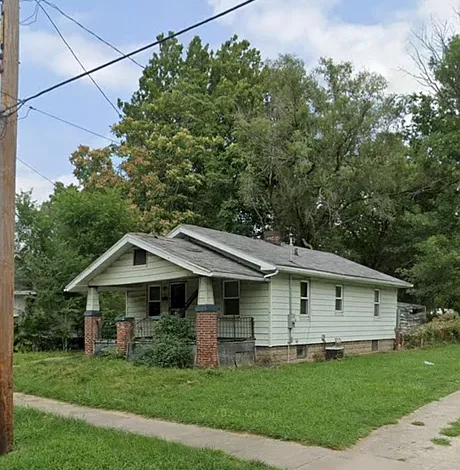
$19,250 Fixer-Upper in Decatur, Illinois: 3-Bedroom, 2-Bath Home With 1,947 Sq Ft and Owner Financing Option
For buyers searching for an affordable fixer-upper in Illinois, a Decatur investment property, a potential flip under $20,000, a future rental property, or a large DIY renovation project, the home at 1234 N Woodford St, Decatur, IL 62521 stands out because of its exceptionally low cash asking price and relatively large amount of living space.
The property is currently being offered for sale by owner (FSBO) with a stated cash price of $19,250. According to the listing, the single-family residence contains approximately 1,947 square feet of living space, three bedrooms, and two full bathrooms. It sits on a 5,200-square-foot lot and is being marketed specifically as a property that needs substantial work both inside and outside.
At approximately $10 per square foot, the headline acquisition price is extremely low compared with the cost of many finished homes. However, the property’s condition is the central factor in determining whether that low price ultimately translates into a viable investment.
The owner openly describes the house as needing work and markets it as a potential fix-and-flip project, future cash-flowing rental, or DIY home. Buyers should treat those descriptions as possible strategies rather than guaranteed financial outcomes. Actual resale value, achievable rent, renovation costs, insurance availability, financing, and local market conditions all need to be independently investigated.
One particularly unusual feature of this listing is the availability of seller financing. Instead of paying the $19,250 cash price, the owner states that a buyer may potentially purchase the property at a total price of $32,000, with $3,000 down and monthly payments of $450.
That financing option may lower the amount of cash required at the beginning, but the substantial difference between the cash price and seller-financed price deserves careful analysis. Buyers should obtain the complete written financing terms—including interest, payment count, maturity date, balloon payment if any, taxes, insurance responsibilities, late fees, title transfer arrangements, and default provisions—before making a decision.
Property Overview: 1234 N Woodford St, Decatur, IL 62521
The property is a single-family residence in Decatur, Illinois.
The advertised cash price is $19,250.
The home reportedly contains approximately 1,947 square feet of interior living space, with three bedrooms and two full bathrooms.
The lot measures approximately 5,200 square feet.
At the cash price, Zillow displays a price of approximately $10 per square foot.
No HOA fee is shown.
The annual property tax is reported at approximately $525, while the tax assessed value is approximately $5,421.
The listing went on the market on September 30, 2026 and had accumulated approximately 113 Zillow views and two saves during its first day, according to the supplied information.
Understanding the $19,250 Cash Price
The property’s biggest attention-grabber is obviously the $19,250 cash price.
Buying nearly 2,000 square feet of residential space for less than $20,000 sounds compelling.
But investors should avoid making a decision based only on acquisition cost.
The listing explicitly says the property needs work inside and out.
That means the financially meaningful number is not $19,250. It is the amount the buyer will have invested when the property is repaired, insured, functional, and ready for its intended use.
A complete calculation should include:
Purchase Price + Closing Costs + Title Costs + Inspections + Cleanup + Structural Repairs + Roof + Electrical + Plumbing + HVAC + Kitchen + Bathrooms + Flooring + Windows + Exterior Work + Insurance + Taxes + Utilities + Financing + Holding Costs + Contingency = Total Investment
Only then can the project be compared with realistic resale or rental values.
Approximately $10 Per Square Foot
Using the $19,250 cash price and 1,947 square feet of reported living space produces an asking price of approximately $10 per square foot.
That is certainly an attention-grabbing figure.
However, fixer-upper properties demonstrate why price per square foot can be misleading.
Imagine two homes of identical size. One needs paint and flooring. The other needs a roof, foundation repairs, complete electrical replacement, plumbing, HVAC, kitchen, bathrooms, windows, and structural work.
They may have the same advertised square footage, but their financial value to an investor can be dramatically different.
The condition of 1234 N Woodford St therefore matters more than its $10-per-square-foot headline.
Nearly 2,000 Square Feet of Living Space
One of the property’s strongest characteristics is its size.
At approximately 1,947 square feet, this is not a tiny distressed house.
There is enough space to accommodate three bedrooms, two bathrooms, and potentially generous common living areas depending on the actual floor plan.
For a future owner-occupant, the square footage could provide flexibility for family living, guests, storage, or a home office.
For an investor, larger square footage can potentially support a stronger resale presentation after renovation.
The tradeoff is renovation cost.
A larger house has more flooring, walls, ceilings, electrical circuits, windows, and other components that may require work.
Three Bedrooms
The home is listed with three bedrooms.
Three-bedroom houses often serve a broad range of households, which can be useful for either resale or long-term rental strategies.
A third bedroom can also function as a home office, guest room, children’s room, or flexible space.
Buyers should personally confirm that the rooms are functional bedrooms and evaluate their dimensions, closets, windows, flooring, and condition.
The listing provides the bedroom count but does not include detailed room measurements.
Two Full Bathrooms
The property reportedly contains two full bathrooms.
That can be a meaningful advantage in a three-bedroom home.
Two bathrooms improve everyday functionality and can make a renovated property more appealing than comparable homes with only one bathroom.
However, two bathrooms also mean potentially twice the plumbing fixtures and wet areas that may require renovation.
An inspection should examine plumbing, drains, toilets, showers or tubs, ventilation, subflooring, water damage, and electrical safety.
Unknown Year of Construction
The supplied listing information does not provide a year built.
That uncertainty matters when developing a renovation plan.
Knowing the approximate age of a house helps buyers anticipate construction methods and potential issues.
A buyer can research county records, previous transactions, permits, or other reliable sources to determine the home’s age.
Until that information is verified, it is better not to make assumptions about the age of its roof, electrical system, plumbing, foundation, or other components.
Significant Interior Work Is Expected
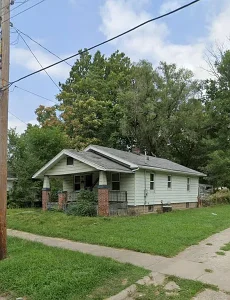
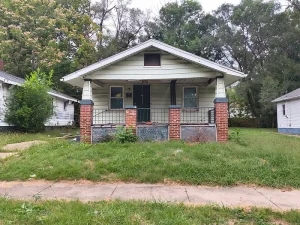
The seller specifically says the house needs work inside and out.
No detailed renovation scope is provided.
That means prospective buyers should investigate the interior carefully before deciding how much they can afford to pay.
Important areas include the kitchen, bathrooms, flooring, ceilings, walls, windows, doors, electrical system, plumbing, heating and cooling, and signs of water intrusion.
Cosmetic appearance should be separated from essential mechanical and structural repairs.
Exterior Condition Matters Too
Exterior repairs can consume a large portion of a renovation budget.
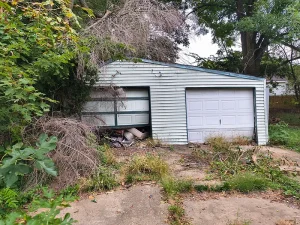
Buyers should inspect the roof, siding or exterior wall materials, foundation, gutters, drainage, windows, exterior doors, porch or steps if present, driveway, yard, and any accessory structures.
Water management is especially important.
Poor grading, failed gutters, roof leaks, and foundation drainage problems can cause expensive interior damage if left unresolved.
Roof Inspection Should Be a Priority
The listing does not provide information about the roof.
For an inexpensive fixer-upper, roof condition can dramatically affect project economics.
A professional should inspect the roof covering, decking where visible, flashing, penetrations, gutters, and interior areas for evidence of leaks.
If replacement is required, the cost should be included in the renovation budget before determining whether the property is financially attractive.
Foundation and Structural Condition
No foundation details are supplied.
A structural evaluation should therefore be part of the due-diligence process.
Inspectors can look for settlement, significant cracks, uneven floors, damaged framing, moisture, deterioration, and other warning signs.
Structural repairs should generally be understood before money is spent on cosmetic upgrades.
Fresh flooring and paint provide little value if serious foundation problems remain underneath.
Electrical System
No electrical information is included in the supplied facts.
A licensed electrician may need to evaluate the electrical panel, service capacity, wiring, grounding, outlets, switches, and safety devices.
Electrical upgrades can range from relatively inexpensive repairs to extensive rewiring.
For an investment property, safe and code-compliant electrical service is essential for insurance, occupancy, and long-term reliability.
Plumbing Condition
The listing also provides no detailed plumbing information.
A buyer should investigate supply lines, drain lines, water heater, fixtures, water pressure, leaks, sewer connection, and any evidence of previous water damage.
Because the property contains two bathrooms, plumbing condition can materially affect renovation costs.
A sewer-line inspection may also be worth considering depending on the age and condition of the property.
HVAC and Heating
No heating or cooling information is provided in the supplied listing details.
This is an important unknown for an Illinois property.
A functional heating system is essential, and winter temperatures make heating reliability particularly important.
Buyers should determine what heating system exists, whether it works, its approximate age, and whether the property has central air conditioning.
Replacing HVAC equipment can represent a major project expense.
Kitchen Renovation Potential
A renovated kitchen can significantly change the appearance and functionality of a fixer-upper.
However, the listing does not describe the current kitchen.
Buyers should evaluate cabinetry, counters, sink and plumbing, appliances, flooring, lighting, electrical outlets, walls, and layout.
For a low-cost investment property, renovation spending should remain consistent with the surrounding market.
Installing luxury finishes that local comparable sales do not support can reduce investment efficiency.
Bathroom Renovation Strategy
With two full bathrooms, a buyer has an opportunity to create a more functional renovated home.
The priority should be infrastructure first.
Leaks, plumbing, damaged subflooring, ventilation, waterproofing, and electrical issues should be corrected before decorative finishes are installed.
Durable materials can be especially valuable for a future rental property because they may reduce maintenance over time.
5,200-Square-Foot Lot
The property sits on approximately 5,200 square feet of land.
That is a manageable residential lot size.
A future renovation may include yard cleanup, landscaping, tree trimming, drainage improvements, exterior lighting, or other curb-appeal work depending on current conditions.
The precise boundaries and permitted uses should be independently confirmed if a buyer intends to add structures or make substantial exterior changes.
No HOA Listed
There is no HOA reported.
This means there is no listed homeowners association fee adding to recurring ownership expenses.
However, city rules, building codes, zoning regulations, permits, and property-maintenance requirements still apply.
An investor should verify local requirements before making major renovations or changing the property’s use.
Tax Assessed Value of $5,421
The listing reports a tax assessed value of approximately $5,421.
This is substantially below the $19,250 cash asking price.
That difference illustrates why assessed value should not be treated as equivalent to market value.
Tax assessment systems use their own valuation methodology.
The property’s actual market value depends on condition, location, comparable sales, buyer demand, and other factors.
Annual Property Taxes of Approximately $525
Annual taxes are reported at approximately $525.
This is a recurring expense that investors should include when calculating holding costs or rental cash flow.
Buyers should verify the latest tax information and determine whether there are any outstanding taxes or assessments.
Future taxes may also change after ownership transfer or property improvements.
No Zillow Zestimate
The property currently has no Zillow Zestimate.
That means buyers do not have an automated Zillow valuation to compare with the asking price.
For a heavily distressed property, this may actually encourage a more useful valuation process.
Investors should research comparable sales of both distressed and renovated homes in the surrounding Decatur market.
A professional appraisal may also be useful depending on financing and investment strategy.
Zillow’s Estimated $40 Monthly Payment
The listing displays an estimated payment of approximately $40 per month.
That figure should not be interpreted as the actual monthly cost of owning this property.
It does not replace a financing quote and may not capture renovation costs, insurance, property taxes, utilities, maintenance, or the seller-financing terms.
The owner’s advertised financing option is considerably more relevant to buyers considering seller financing.
Seller Financing Option
One of the most unusual features of the listing is the owner-financing offer.
The seller states the following terms:
$32,000 total financed price, $3,000 down payment, and $450 per month.
At first glance, this can make the property accessible to a buyer who does not want to provide the entire cash purchase price upfront.
However, important details are missing.
Cash Price Versus Financed Price
The difference between the $19,250 cash price and $32,000 owner-financed price is $12,750.
That is a substantial difference.
A buyer should therefore compare the total economic cost of both options rather than looking only at the $3,000 down payment.
The financing contract needs to specify exactly how the $450 monthly payment is applied and how many payments are required.
Financing Terms That Need Clarification
Before accepting seller financing, the buyer should obtain a complete written agreement.
Important questions include the interest rate, amortization schedule, number of monthly payments, maturity date, whether there is a balloon payment, whether early repayment is permitted without penalty, who pays taxes and insurance, when title transfers, how late fees work, and what happens after default.
The buyer should also understand whether the arrangement is a mortgage, deed of trust, land contract, installment agreement, or another structure.
Professional legal review can be valuable.
The Down Payment Is Only the Beginning
The advertised $3,000 down payment may make entry appear inexpensive.
However, a buyer taking possession of a distressed property also needs renovation capital.
If the house requires thousands of dollars in immediate repairs, having enough money for the down payment but no repair reserve could create a difficult situation.
A realistic buyer should plan for both acquisition and rehabilitation.
Cash Purchase Strategy
The $19,250 cash option is significantly less expensive than the advertised $32,000 seller-financed total price.
For a buyer with sufficient funds, the lower purchase price may provide more room in the renovation budget.
But paying cash should not mean skipping due diligence.
A cash buyer still needs title work, inspections, insurance research, tax verification, and contractor estimates.
Speed should not replace careful analysis.
Title Search and Closing
Because this is a for-sale-by-owner transaction, professional closing assistance can be particularly important.
A title company or attorney can investigate ownership, liens, judgments, unpaid taxes, recorded easements, and other title matters.
Title insurance may also protect against certain covered ownership defects.
The low purchase price does not make title due diligence less important.
For Sale by Owner
The property is being marketed directly by the property owner rather than through a conventional listing agreement.
Zillow states that it is displaying the property at the owner’s request.
FSBO transactions can work perfectly well, but buyers should make sure that contracts, disclosures, title work, financing documents, and closing procedures are properly handled.
The seller’s marketing description should not replace independent inspection and verification.
Potential Fix-and-Flip Opportunity
The seller explicitly presents the property as a potential flip.
That is one possible strategy, but profitability is not guaranteed.
An investor should calculate:
Realistic After-Repair Value – Purchase Price – Closing Costs – Renovation – Insurance – Taxes – Utilities – Financing – Holding Costs – Selling Expenses – Contingency = Potential Project Result
The after-repair value should be supported by recent comparable renovated sales.
A projected profit should never be created simply by subtracting $19,250 from the price of a nearby finished house.
After-Repair Value Research
Determining a realistic ARV is one of the most important steps for a flip investor.
The strongest comparable properties generally have similar location, living area, bedroom and bathroom count, lot characteristics, construction type, and overall quality after renovation.
Recent completed sales are more meaningful than active asking prices.
An appraiser or experienced local real-estate professional can provide additional context.
Long-Term Rental Potential
The seller also markets the property as a potential future cash-flowing rental.
A three-bedroom, two-bathroom house with nearly 2,000 square feet could potentially appeal to households seeking additional space.
But rental profitability depends on actual market rent and total ownership expenses.
The low acquisition price alone does not guarantee positive cash flow.
Calculating Rental Cash Flow
A rental investor should estimate realistic monthly rent and subtract vacancy, taxes, insurance, maintenance, management if applicable, owner-paid utilities, financing payments, and capital reserves.
Major future expenses should also be anticipated.
Roof replacement, HVAC equipment, plumbing, electrical systems, and exterior maintenance can create large costs even when monthly cash flow appears strong.
DIY Home Opportunity
The owner also presents the house as a potential DIY home.
For a buyer with construction experience, completing some labor personally could reduce renovation costs.
However, electrical, plumbing, structural, HVAC, and other specialized work may require licensed professionals or permits.
DIY buyers should also assign value to their own time.
A project that takes a year to complete has financial costs even when much of the labor is unpaid.
Renovation Sequence
A disciplined renovation should begin with safety and structural integrity.
First investigate the roof, foundation, framing, water intrusion, electrical hazards, plumbing failures, and HVAC.
After those systems are addressed, the project can move toward kitchen and bathroom improvements.
Flooring, drywall, paint, lighting, trim, fixtures, and other cosmetic improvements should generally come later.
Exterior cleanup and landscaping can then strengthen curb appeal.
Insurance Considerations
Insurance should be researched before purchasing.
A distressed property can sometimes be more difficult to insure than a move-in-ready home.
Roof condition, electrical systems, plumbing, vacancy, structural condition, and other factors may affect coverage.
A property undergoing renovation may require specialized coverage until it becomes occupied.
Obtaining an insurance quote early can prevent an unpleasant surprise after closing.
Permit and Contractor Costs
Some renovation work may require permits and professional contractors.
Buyers should investigate local requirements before beginning major work.
Unpermitted renovation can create problems during future resale, insurance claims, inspections, or refinancing.
Contractor estimates should be obtained in writing when possible and should clearly identify labor, materials, permits, and exclusions.
Building a Complete Rehabilitation Budget
The most useful renovation budget should account for the entire project rather than only visible repairs.
Potential expenses include the $19,250 cash purchase price or seller-financed acquisition cost, closing and title fees, cleanup, roof, structure, electrical, plumbing, HVAC, kitchen, two bathrooms, flooring, windows, doors, drywall, paint, appliances, exterior repairs, landscaping, permits, insurance, property taxes, utilities, financing, holding costs, and eventual selling expenses.
Then add a contingency reserve.
Why a Contingency Reserve Matters
Fixer-uppers routinely contain hidden problems.
Removing old flooring can reveal damaged subflooring.
Opening walls can expose outdated wiring or plumbing.
Roof leaks can hide framing damage.
An apparently functional HVAC system can fail during renovation.
A contingency reserve allows the project to absorb these surprises without immediately becoming financially unsustainable.
Early Market Activity
According to the supplied listing information, the property received approximately 113 Zillow views and two saves during its first day on the market.
That provides only an early snapshot.
The low cash price may attract considerable online attention, but online views do not necessarily translate into qualified buyers.
Condition, title, renovation cost, neighborhood characteristics, and financing terms will ultimately play larger roles.
Evaluating the Neighborhood
The seller specifically invites prospective buyers to drive by and examine the house and neighborhood.
That is a useful step, but serious buyers should go further.
Visit the surrounding area at different times of day.
Study nearby property conditions, recent sales, rental listings, vacant properties, redevelopment activity, and access to everyday services.
For a real-estate investment, neighborhood economics can be just as important as the physical house.
Comparing the Two Purchase Options
The choice between $19,250 cash and $32,000 owner financing should be evaluated carefully.
The cash option offers a substantially lower headline acquisition cost but requires more money upfront.
Seller financing lowers the advertised initial payment to $3,000 but increases the stated total price significantly.
Neither option is automatically better for every buyer.
The correct choice depends on available capital, complete financing terms, renovation needs, alternative borrowing costs, and the buyer’s investment plan.
Final Thoughts on 1234 N Woodford St, Decatur, Illinois
1234 N Woodford St, Decatur, IL 62521 is an unusual fixer-upper opportunity because it combines a very low cash asking price with nearly 2,000 square feet of reported living space.
At $19,250 cash, the property offers approximately 1,947 square feet, three bedrooms, two full bathrooms, and a 5,200-square-foot lot.
That works out to approximately $10 per square foot based on the supplied listing figures.
The owner makes no attempt to portray the house as move-in ready.
The listing clearly states that the property needs work inside and outside, making it particularly relevant to investors, contractors, experienced DIY buyers, or people prepared to manage a significant rehabilitation project.
The potential uses are straightforward.
An investor could evaluate the house for renovation and resale.
A landlord could investigate whether rehabilitation followed by long-term rental creates acceptable cash flow.
An owner-occupant with renovation skills could potentially purchase an inexpensive house and improve it over time.
But none of these strategies guarantees profit or instant equity.
The condition of the roof, foundation, electrical system, plumbing, HVAC, kitchen, bathrooms, windows, and exterior remains critical.
The absence of a listed construction year and detailed mechanical information makes independent inspection even more important.
The owner-financing option adds another interesting dimension.
A buyer may potentially acquire the property at a $32,000 financed price with $3,000 down and payments of $450 per month. However, the complete terms need to be obtained in writing and carefully reviewed.
The $12,750 difference between the cash and seller-financed prices is significant enough that buyers should calculate the true financing cost rather than focusing exclusively on the small down payment.
The reported annual property tax of approximately $525 provides a relatively modest current carrying expense, while no HOA is shown.
Because there is no Zillow Zestimate, investors should rely heavily on actual Decatur comparable sales when estimating future value.
Ultimately, the appeal of this property comes from the combination of low acquisition cost, substantial square footage, three bedrooms, two bathrooms, and flexible purchase options.
Its risk comes from the unknown scope and cost of repairs.
A disciplined buyer should inspect the property, verify title, research comparable sales and rents, obtain contractor estimates, investigate insurance, calculate financing costs, and maintain a substantial contingency reserve.
If those numbers support the project, 1234 N Woodford St could provide a foundation for a renovation, rental investment, resale project, or affordable DIY residence in Decatur—but the opportunity should be measured by total project economics rather than the $19,250 headline price alone.
Listed on Zillow