2 beds 1 baths 1,080 sqft
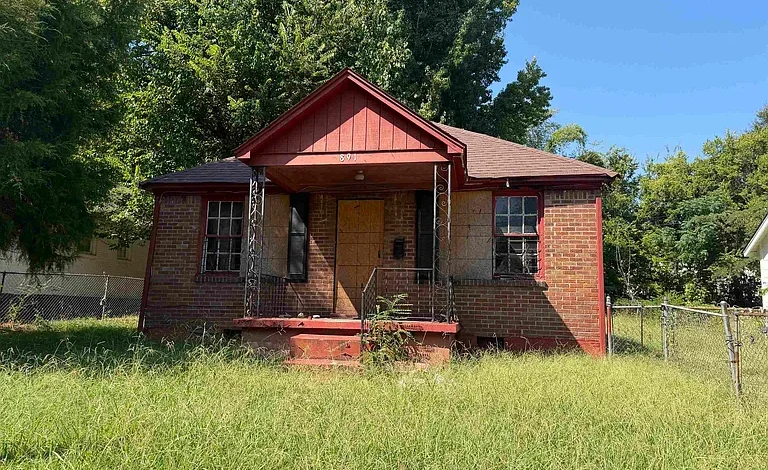
$9,900 Memphis Fixer-Upper: 2-Bedroom Brick Home With Fire Damage at 891 Meagher St
Affordable residential properties priced below $10,000 are unusual enough to attract immediate attention, particularly when they are located in a major city. A property at 891 Meagher St, Memphis, TN 38108 is currently listed for $9,900, offering two bedrooms, one bathroom, approximately 1,080 square feet of interior living space, and a 7,840-square-foot lot.
Built in 1949, this traditional single-family residence is being marketed primarily as a renovation opportunity. The listing clearly states that the house has experienced fire damage, although the damage reportedly does not affect the entire property. That condition is one of the most important factors prospective buyers should evaluate before considering a purchase.
At approximately $9 per square foot, the asking price is exceptionally low compared with the prices typically associated with completed residential properties. However, the purchase price represents only one component of the potential cost. A fire-damaged house may require extensive evaluation and rehabilitation before it can safely and legally be occupied.
For contractors, experienced renovators, or buyers prepared to investigate a significant rehabilitation project, 891 Meagher St is the type of property that deserves careful analysis rather than a decision based only on the headline price.
Property Overview
The home is located in Memphis and is identified as a traditional single-family residence within the East Jackson Avenue subdivision.
According to the supplied listing information, the principal property details include:
Address: 891 Meagher St, Memphis, TN 38108
Asking price: $9,900
Property type: Single-family residence
Bedrooms: 2
Bathrooms: 1 full bathroom
Living area: Approximately 1,080 square feet
Lot size: Approximately 7,840 square feet
Lot dimensions: Approximately 50 by 163 feet
Year built: 1949
Architectural style: Traditional
Exterior material: Brick veneer
Stories: 1
Flooring: Hardwood
Parking: Driveway or parking pad
Fireplace: None
Pool: None
HOA: None listed
Tax assessed value: $30,700
Annual property taxes: Approximately $404
Price per square foot: Approximately $9
Parcel number: 052026 00030
Date placed on market: September 29, 2026
The listing’s most significant disclosure is that the house has sustained fire damage.
Understanding the $9,900 Asking Price
A house priced at $9,900 naturally generates curiosity.
The asking price is low even compared with many properties marketed specifically to renovators.
However, a low acquisition price should not be confused with a low total project cost.
With a distressed property, the more meaningful financial calculation is usually the combination of purchase price, closing expenses, inspections, cleanup, repairs, permits, insurance, utilities, taxes, and rehabilitation.
If significant structural or mechanical work is required, renovation expenses can be many times greater than the initial purchase price.
For that reason, prospective buyers should evaluate the property as a complete project rather than simply as a $9,900 house.
Approximately $9 Per Square Foot
Based on the advertised price and 1,080 square feet of living space, the property is listed at approximately $9 per square foot.
That number helps explain why the listing is likely to attract attention.
Price per square foot can be useful for quick comparisons, but it becomes less reliable when comparing distressed property with renovated homes.
A house requiring extensive rehabilitation cannot reasonably be compared dollar-for-dollar with a move-in-ready residence simply because both contain approximately the same amount of interior space.
The condition of the structure is a major part of its value.
Fire Damage Is the Central Issue
The listing states:
“House has some fire damage but not entirely.”
This is the most important sentence in the property description.
Fire damage can range from relatively localized damage in one section of a building to extensive structural and mechanical problems.
The supplied information does not specify where the fire occurred, how much of the house was affected, or what repairs have already been completed.
That uncertainty makes a detailed inspection particularly important.
A prospective buyer should avoid assuming that visible damage represents the full extent of the problem.
Fire Damage Can Extend Beyond Burned Areas
When evaluating a fire-damaged home, buyers should consider more than obviously burned materials.
Heat can affect framing, wiring, plumbing, windows, insulation, roofing materials, and other building components.
Smoke and soot can travel into areas that were not directly exposed to flames.
Water used during firefighting efforts can create additional damage.
If moisture remained in walls, floors, ceilings, or other enclosed spaces, additional remediation could potentially be necessary.
None of these conditions should be assumed to exist at 891 Meagher St without inspection. They are simply important areas to investigate when evaluating any property with a disclosed fire history.
A Professional Structural Evaluation Could Be Valuable
The condition of the home’s structural components should be carefully assessed.
A qualified professional may examine framing, roof components, floor systems, exterior walls, foundation areas, and other structural elements for evidence of damage.
Heat exposure can weaken certain building materials even when they remain standing.
The goal is to understand whether rehabilitation involves primarily cosmetic work or whether major structural replacement is required.
That distinction can have an enormous impact on the project’s budget.
Electrical Inspection Is Particularly Important
Electrical systems deserve close attention in a fire-damaged property.
The house was built in 1949, and the listing does not provide detailed information about the current electrical system or previous upgrades.
A licensed electrician can evaluate wiring, service equipment, outlets, switches, circuits, and other components.
Depending on the extent of the fire and the age of the system, repairs or substantial modernization may be necessary.
Electrical work is also an area where proper permits and code compliance can be especially important.
Plumbing Should Be Evaluated
The listing provides little detail about the home’s plumbing.
A buyer planning rehabilitation should determine the condition of water supply lines, drains, fixtures, and water-heating equipment.
Fire, heat, age, freezing conditions during vacancy, or previous deterioration can affect plumbing systems.
Leaks hidden behind walls or beneath flooring can also add to renovation expenses.
A thorough assessment can help establish a more realistic scope of work.
Heating and Cooling Require Further Investigation
Heating is listed as “Other (See REMARKS)”, and cooling is described the same way.
That means the supplied property information does not clearly identify a conventional operational HVAC system.
For a renovation project, this should be investigated early.
If heating and cooling equipment needs replacement, the buyer should include that expense in the rehabilitation budget.
A new HVAC installation may also interact with electrical improvements, ductwork, insulation, and other parts of the renovation.
Two Bedrooms
The home contains two bedrooms, with the listing indicating that all bedrooms are located on the main level.
For a 1,080-square-foot house, a two-bedroom layout can provide a comfortable balance between private rooms and common living areas.
A future owner could use the second bedroom traditionally or potentially as a home office, guest room, hobby room, or flexible space.
During renovation, buyers should verify bedroom dimensions, window requirements, closet arrangements, and the overall floor plan.
One Full Bathroom
The property contains one full bathroom.
A one-bathroom configuration is common in smaller homes from this era.
If the bathroom requires complete renovation, buyers may need to budget for plumbing fixtures, flooring, wall materials, ventilation, electrical improvements, and potentially plumbing repairs.
Because there is only one bathroom, its functionality will be especially important for anyone planning to occupy or rent the property after rehabilitation.
1,080 Square Feet of Living Space
The home provides approximately 1,080 square feet of interior living area.
This is a manageable size for a renovation compared with much larger residential properties.
There are fewer square feet of flooring, walls, ceilings, and interior finishes to address.
However, major systems can still create significant expenses regardless of house size.
A roof, electrical service, HVAC system, kitchen, or bathroom can cost substantial amounts even in a relatively compact home.
The smaller footprint is useful, but it should not create unrealistic expectations about rehabilitation costs.
Separate Living Room
The property information identifies a separate living room.
A defined living area can be attractive to buyers who prefer a traditional floor plan rather than one completely open space.
Depending on the condition of the interior, renovation might preserve the original room arrangement or modify it where structurally and legally appropriate.
Older homes sometimes contain layouts that can be modernized without eliminating all of their traditional character.
Hardwood Flooring
One noteworthy interior feature is hardwood flooring.
Original hardwood can add character to an older home when it remains in restorable condition.
In some renovation projects, hardwood floors can be sanded, repaired, and refinished rather than completely replaced.
However, because this property has fire damage, the condition of the flooring should be carefully examined.
Heat, smoke, soot, firefighting water, moisture, and long-term exposure can all affect wood.
Buyers should determine which areas, if any, are suitable for restoration.
Traditional 1949 Architecture
The house was constructed in 1949 and is described as having a traditional architectural style.
Older homes can offer simple proportions and established neighborhood character.
They can also contain building systems and materials that differ significantly from modern construction.
Before renovation, contractors should evaluate how previous modifications were completed and whether major components meet current requirements.
A house approaching eight decades of age deserves a comprehensive assessment even without fire damage.
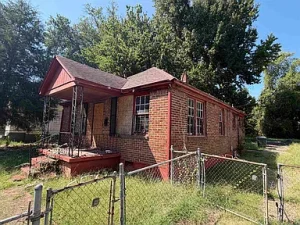
Brick Veneer Exterior
The exterior is described as brick veneer.
Brick can provide an attractive traditional appearance and generally requires different maintenance than painted wood siding.
However, brick veneer is only part of the exterior wall assembly.
Buyers should inspect mortar joints, cracking, movement, openings around doors and windows, flashing, and any areas affected by the fire.
If heat exposure occurred near exterior masonry, professional evaluation may be appropriate.
One-Story Layout
The property contains one story, with the bedrooms located on the main level.
Single-story houses can simplify certain renovation tasks and make everyday movement through the home straightforward.
There is no need to distribute living spaces across multiple floors.
For some buyers, one-level living can also make a renovated property more appealing because bedrooms, bathroom, kitchen, and living areas are accessible without an interior staircase.
A 7,840-Square-Foot Lot
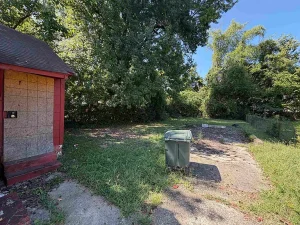
The home sits on approximately 7,840 square feet of land.
The reported dimensions are approximately 50 feet by 163 feet, creating a relatively long residential parcel.
With a 1,080-square-foot house, the lot provides considerably more land than the building footprint alone.
Depending on the exact placement of the house and local regulations, outdoor space may accommodate a yard, landscaping, recreation, or other permitted improvements.
Buyers should verify parcel boundaries before making permanent changes.
Level Lot
The listing describes the lot as level.
A relatively level property can be useful for yard maintenance, landscaping, driveway improvements, and certain construction projects.
It may also reduce some of the complications associated with steeply sloped land.
However, level terrain does not automatically mean drainage is ideal.
Buyers should still inspect how water moves around the house, particularly near the foundation.
Driveway or Parking Pad
Parking is provided through a driveway or pad, with uncovered parking spaces indicated.
Although there is no garage identified in the supplied details, off-street parking can still be a practical feature.
During renovation, the driveway area should be evaluated for condition, drainage, and accessibility.
If buyers intend to add covered parking or another structure later, local zoning and permit requirements should be checked first.
No Pool and No Fireplace
The home does not have a pool or fireplace listed.
For a renovation property, simplicity can sometimes be helpful.
Pools and fireplaces can create additional inspection, maintenance, repair, insurance, and safety considerations.
A straightforward two-bedroom home without those features may allow a renovator to focus resources on the fundamental residential systems.
East Jackson Avenue Subdivision
The property is identified as being within the East Jackson Avenue subdivision in Memphis.
Neighborhood context matters when planning a rehabilitation project.
A buyer should research nearby property sales, typical home sizes, renovation quality, ownership patterns, and local buyer demand.
The goal is to understand what level of renovation makes sense for a 1,080-square-foot, two-bedroom property in this particular area.
Spending heavily on improvements that exceed what the local market typically supports can create financial challenges.
Tax Assessed Value of $30,700
The reported tax assessed value is $30,700.
That is more than three times the current $9,900 asking price.
However, tax assessment and current market value are not interchangeable.
An assessment may not fully reflect recent fire damage or other changes in property condition.
It also does not guarantee that the home could sell for $30,700 after purchase.
The assessment is useful background information, but a buyer should rely on current condition, comparable sales, and professional analysis when estimating value.
Approximately $404 in Annual Property Taxes
Annual property taxes are listed at approximately $404.
Taxes are an important part of carrying costs, especially during a renovation.
If rehabilitation takes several months, the owner may be paying taxes, insurance, utilities, security expenses, lawn maintenance, and other costs before the property can be occupied or sold.
Each expense may appear relatively small individually, but together they can materially affect a project’s total budget.
No HOA Listed
There is no homeowners association fee shown.
That removes one potential recurring expense from the supplied property information.
However, the property remains subject to municipal codes, zoning, building requirements, permit rules, and other local regulations.
A renovation involving fire damage may also require specific inspections or approvals before the home can legally be occupied again.
Building Permits and Code Requirements
Before beginning rehabilitation, buyers should determine what permits are required.
Projects involving structural repairs, electrical work, plumbing, HVAC replacement, roofing, or major interior reconstruction commonly require permits or inspections.
A fire-damaged property may also have additional requirements depending on the circumstances and local authorities.
Attempting to avoid proper permits can create problems later when selling, insuring, or occupying the home.
A professional renovation plan should include regulatory compliance from the beginning.
Insurance Considerations
Insurance can be a major issue with distressed property.
A conventional homeowners policy designed for an occupied, move-in-ready house may not be appropriate for a vacant property undergoing extensive renovation.
Buyers should investigate insurance before closing rather than assuming coverage will be easy to obtain afterward.
Insurers may ask about fire damage, occupancy, roof condition, electrical systems, plumbing, security, and planned construction.
Renovation or vacant-property coverage may have different terms and costs.
Financing a $9,900 Distressed Property
Traditional mortgage financing may be difficult for a property in this condition.
Lenders generally evaluate both the borrower and the property serving as collateral.
A home with significant fire damage may not satisfy requirements for a conventional residential mortgage until repairs are completed.
Some buyers of distressed properties use cash, specialized renovation financing, or other funding arrangements.
Anyone who requires financing should speak with an appropriate lender before making commitments.
The low asking price alone does not guarantee that conventional financing will be available.
Create a Detailed Rehabilitation Budget
A buyer considering 891 Meagher St should develop a renovation budget before deciding what the property is worth to them.
The budget should begin with inspection findings rather than general assumptions.
Potential categories could include structural work, fire remediation, smoke and soot cleanup, demolition, electrical systems, plumbing, HVAC, roofing, windows, insulation, drywall, flooring, kitchen work, bathroom renovation, painting, exterior repairs, permits, dumpsters, security, landscaping, and contingency funds.
Not every category will necessarily apply.
The purpose of the exercise is to identify the complete project rather than focusing exclusively on the $9,900 purchase price.
Include a Contingency Reserve
Renovating an older distressed property can reveal hidden problems after walls, ceilings, or flooring are removed.
For that reason, experienced renovators commonly plan for unexpected expenses.
A contingency reserve can help address discoveries that were impossible to see during the initial walkthrough.
The appropriate amount depends on the scope and uncertainty of the project.
With disclosed fire damage, leaving no financial room for surprises could make the project considerably riskier.
Compare Contractor Estimates
Whenever possible, buyers should obtain estimates from qualified contractors before closing.
One estimate can provide a starting point, but multiple opinions can reveal significant differences in scope and pricing.
The lowest estimate is not automatically the best choice.
Contractor licensing where applicable, insurance, experience, references, schedule, and understanding of fire-damaged structures can all matter.
Clear written scopes of work also make estimates easier to compare.
Research Comparable Sales
Anyone considering the property for eventual resale should examine recent comparable sales.
The most useful comparisons would generally involve nearby houses with similar bedroom counts, square footage, lot characteristics, age, and construction.
Condition is especially important.
A fully renovated property should not be compared directly with a fire-damaged home without accounting for the cost and quality of rehabilitation.
Recent closed transactions can provide more meaningful information than simply looking at active asking prices.
Estimating After-Repair Value
Renovators often use the concept of after-repair value, or ARV, when evaluating distressed property.
ARV is an estimate of what a property might reasonably be worth after a defined renovation is completed.
It should be based on credible comparable sales rather than optimism.
The listing’s low price may create room for rehabilitation, but that alone does not establish the economics of the project.
A buyer needs to compare the expected completed value with acquisition costs, rehabilitation, carrying expenses, transaction costs, and a margin for uncertainty.
Rental Considerations
A renovated two-bedroom home may also be evaluated as a potential rental property.
Before relying on that strategy, buyers should research realistic local rents for comparable homes.
A rental analysis should account for more than monthly rent.
Operating expenses can include taxes, insurance, maintenance, repairs, vacancy, property management, utilities paid by the owner, capital improvements, and compliance requirements.
The home would also need to be restored to a safe and habitable condition before tenant occupancy.
Security During Renovation
Vacant renovation properties may require additional security.
Construction materials, tools, new appliances, copper components, and mechanical equipment can attract theft.
Broken windows or damaged doors may also leave a distressed house more vulnerable.
A renovation budget may therefore need to include locks, temporary boarding, lighting, cameras, fencing, or other security measures where appropriate.
Insurance companies may also have requirements related to vacancy and site security.
Title and Closing Due Diligence
Physical condition is only one part of the purchase.
Buyers should also conduct normal legal and title due diligence.
A title search can help identify liens, ownership issues, easements, unpaid obligations, or other recorded matters.
The listing also states that “No assignment language of any kind will be viewed.”
Anyone considering the transaction should understand the seller’s contractual requirements and review the actual purchase agreement carefully.
A real estate attorney or appropriate closing professional can provide guidance when necessary.
Strong Early Online Attention
The property has already generated substantial online interest.
According to the supplied Zillow information, the listing accumulated approximately 628 views and 38 saves within six days.
Zillow also indicates that the property is likely to sell faster than 93% of nearby listings.
Those metrics do not guarantee a quick sale or establish the home’s value, but they demonstrate that the unusually low asking price has attracted attention.
Buyers interested in the property should base decisions on due diligence rather than allowing online activity to create unnecessary urgency.
Why Cheap Homes Attract So Much Attention
Properties below $10,000 naturally stand out because most buyers are accustomed to seeing much higher home prices.
However, distressed real estate demonstrates why asking price is only part of the story.
A $9,900 house requiring substantial rehabilitation can ultimately demand more capital than a more expensive property needing little work.
The relevant question is not simply, “How cheap is the house?”
A more useful question is, “What will the complete property cost after it is safely and properly restored?”
That distinction is essential when analyzing 891 Meagher St.
Who Could Be a Fit for This Property?
This property is likely to appeal most to buyers who understand renovation risk.
An experienced contractor may be comfortable evaluating fire and structural damage.
A renovation-focused buyer might see an opportunity to restore a compact brick home.
A landlord could investigate whether rehabilitation followed by long-term rental makes financial sense.
A future owner-occupant with construction experience might consider completing a substantial renovation for personal use.
For someone looking for a move-in-ready home, however, the disclosed fire damage makes this a very different type of purchase.
A Manageable Residential Footprint
One advantage is the relatively compact size.
At approximately 1,080 square feet, the house is large enough to provide two bedrooms and conventional living space without creating the material quantities associated with a much larger renovation.
The 7,840-square-foot lot also provides outdoor space without being excessively large.
That combination can make the property easier to understand as a project.
Still, the ultimate scope depends almost entirely on the extent of the fire damage and the condition of major systems.
Final Thoughts on 891 Meagher St in Memphis
The property at 891 Meagher St, Memphis, TN 38108 is a striking example of a low-priced home where condition matters far more than the headline number.
Listed for just $9,900, the traditional single-family residence offers two bedrooms, one full bathroom, approximately 1,080 square feet of living space, hardwood flooring, a separate living room, a driveway or parking pad, and a 7,840-square-foot level lot.
The house was built in 1949 and features a brick-veneer exterior.
At approximately $9 per square foot, the advertised price is likely to attract contractors, renovators, and buyers searching for distressed real estate.
However, the listing clearly discloses that the property has fire damage.
That fact should be at the center of every financial and construction decision involving the house.
Prospective buyers should determine the extent of structural damage, inspect electrical and plumbing systems, evaluate heating and cooling, investigate smoke and water damage, understand permit requirements, and develop a comprehensive rehabilitation budget.
The reported tax assessed value of $30,700 and annual property taxes of approximately $404 provide useful background information, but neither figure determines what the property will be worth after renovation.
Comparable sales, contractor estimates, inspection results, title research, insurance availability, carrying costs, and the quality of future rehabilitation are all more important when analyzing the complete project.
For a buyer with the appropriate experience, capital, professional assistance, and tolerance for renovation risk, 891 Meagher St may be worth a closer look.
For someone attracted solely by the $9,900 price, the property is a reminder that distressed real estate should always be evaluated according to total acquisition and rehabilitation cost, not simply the amount shown at the top of the listing.
With hundreds of Zillow views in its first week on the market, this Memphis property is already drawing attention. The next owner will need to look beyond the low price and determine exactly what will be required to bring this 1949 two-bedroom home back into safe, functional residential use.
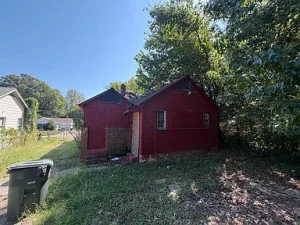
Listed on Zillow.