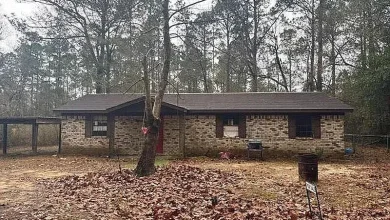
Spacious fixer-upper opportunity in the Village of Chateaugay.
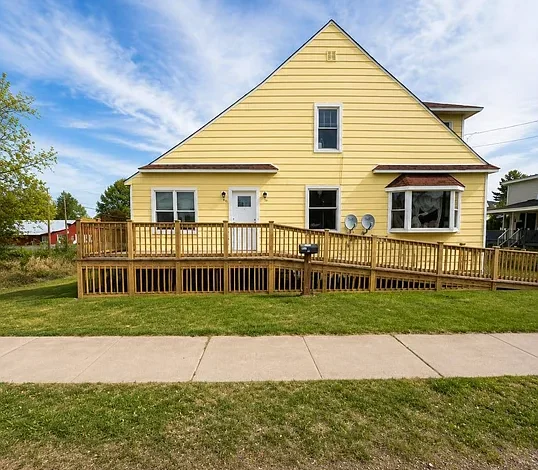
$15,000 Fixer-Upper in Chateaugay, New York: 3-Bedroom Home With 1,903 Sq Ft, Detached Garage and Major Renovation Potential
For real estate investors, contractors, landlords, house flippers, and buyers searching for an extremely affordable fixer-upper in Upstate New York, the property at 1 Collins St, Chateaugay, NY 12920 presents an unusual opportunity. Currently listed for only $15,000 after a recent $1,500 price reduction, this single-family residence combines a remarkably low acquisition price with nearly 2,000 square feet of interior living space.
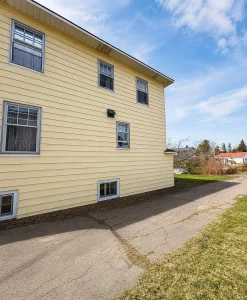
The home offers approximately 1,903 square feet, three bedrooms, one full bathroom plus one half bathroom, municipal water and sewer, a detached garage or storage structure, and a 6,969-square-foot lot. Built in 1930, the property is specifically marketed as a fixer-upper requiring significant renovation and is being sold as-is.
At approximately $8 per square foot, the asking price immediately attracts attention. However, distressed properties should never be evaluated on purchase price alone. A $15,000 house can still become a substantial investment once structural repairs, roofing, electrical work, plumbing, heating, insulation, kitchens, bathrooms, flooring, insurance, permits, and holding expenses are considered.
The property is therefore best viewed as a value-add rehabilitation project rather than an inexpensive move-in-ready home.
For an investor with renovation experience—or a contractor capable of accurately estimating repairs—the combination of three bedrooms, nearly 1,903 square feet, municipal utilities, a detached garage/storage structure, and a very low entry price could make this Chateaugay property worth investigating carefully.
Property Overview: 1 Collins St, Chateaugay, NY 12920
The property is located in the Village of Chateaugay, New York, and is listed as a single-family residence.
The asking price is currently $15,000, following a $1,500 price reduction reported on September 24.
The house contains approximately 1,903 square feet of finished above-ground living area, three bedrooms, two bathrooms consisting of one full bath and one half bath, and no basement.
The residence was constructed in 1930.
The lot contains approximately 6,969 square feet, providing a conventional residential parcel around the existing structure.
Municipal water and municipal sewer are listed, and no homeowners association is reported.
Heating is shown as present, although the specific type is not identified. The electrical data contains an “Amps(0)” entry, which should not be interpreted as an actual statement that the property has zero electrical capacity. The electrical system should instead be independently inspected and verified.
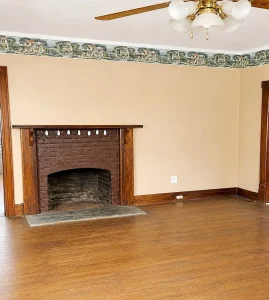
The property is being sold as-is and requires significant rehabilitation.
Why the $15,000 Price Immediately Gets Attention
The asking price is unquestionably the headline feature.
For $15,000, a buyer is looking at an existing three-bedroom house containing approximately 1,903 square feet rather than simply a small vacant parcel.
That equates to approximately $8 per square foot.
However, the low purchase price needs to be placed in context.
The seller explicitly identifies the property as a fixer-upper requiring significant renovation.
A more useful financial equation is:
$15,000 Purchase Price + Closing Costs + Inspections + Structural Repairs + Roof + Electrical + Plumbing + Heating + Insulation + Windows + Kitchen + Bathrooms + Flooring + Garage Repairs + Insurance + Taxes + Utilities + Permits + Holding Costs + Contingency = Total Project Investment
That final number matters far more than the original $15,000.
Recent $1,500 Price Reduction
The property recently received a $1,500 price cut, bringing the asking price to $15,000.
For an inexpensive property, a $1,500 reduction is meaningful as a percentage of the total price.
Still, investors should avoid buying simply because a property has been reduced.
The relevant question is whether the current asking price, combined with the required renovation expenses, produces a financially reasonable all-in cost.
A price reduction can improve the numbers, but it cannot compensate for an underestimated rehabilitation budget.
Approximately $8 Per Square Foot
The house is currently marketed at approximately $8 per square foot.
For nearly 1,903 square feet of interior space, that is an exceptionally low acquisition figure.
Yet price per square foot becomes less useful when comparing a distressed property with a fully renovated house.
A completed residence contains functional mechanical systems, finished walls, usable bathrooms, a working kitchen, flooring, heating, weather protection, and numerous other improvements.
A distressed house may require the buyer to restore much of that functionality.
The investor should eventually calculate the total renovated cost per square foot, not merely the acquisition cost.
1,903 Square Feet Offers Significant Interior Space
One of the property’s strongest characteristics is its size.
At approximately 1,903 square feet, the house offers considerably more living space than many low-priced fixer-uppers.
The seller specifically highlights its generous living space.
That size can provide flexibility when planning a renovation.
There may be room for comfortable bedrooms, living areas, storage, and other functional spaces without needing an expensive addition.
However, additional square footage also means more flooring, drywall, paint, insulation, electrical fixtures, heating capacity, and general material expense.
Large distressed houses can cost significantly more to rehabilitate than smaller ones.
Three Bedrooms
The house contains three bedrooms.
A three-bedroom configuration can appeal to several types of future occupants.
An owner-occupant may use the rooms for family, guests, office space, or hobbies.
A landlord could potentially market the renovated property to households requiring multiple bedrooms.
A fix-and-flip investor may find that a three-bedroom layout provides a broader resale audience than a very small one-bedroom property.
Actual resale and rental demand should still be researched specifically for the Chateaugay market.
One Full Bathroom and One Half Bathroom
The property has two bathrooms, consisting of one full bathroom and one half bathroom.
That is an important distinction.
It should not be marketed as having two full bathrooms.
For a three-bedroom house, a full bath plus an additional half bath can provide useful functionality.
Because the home requires significant renovation, both bathrooms should be evaluated for plumbing, drainage, fixtures, ventilation, electrical safety, flooring, subflooring, and evidence of moisture.
Bathroom renovation can become expensive if plumbing and structural work are necessary.
Built in 1930
The residence was built in 1930, making it close to a century old.
Older construction can provide character and durable framing, but it also deserves careful inspection.
A house of this age may have experienced multiple generations of improvements.
Electrical wiring, plumbing, roofing, windows, insulation, heating equipment, siding, and interior finishes may have been replaced at different times.
The construction year alone does not reveal what remains original.
A professional inspection can help determine which components are serviceable and which require replacement.
Significant Renovation Means Due Diligence Is Essential
The seller does not describe this as a property requiring only paint and flooring.
The listing states that the home needs significant renovation.
Buyers should therefore approach the property expecting a substantial project until professional inspection proves otherwise.
Structural integrity, roof condition, foundation, electrical service, plumbing, heating, windows, water intrusion, and interior damage should all be evaluated.
Obtaining contractor estimates before closing can help transform a vague concept of “significant renovation” into an actual financial plan.
Sold As-Is
The property is being offered as-is.
An as-is sale generally means the seller is not promising to complete repairs for the buyer.
That makes pre-purchase investigation especially important.
A buyer should understand the condition before closing rather than expecting defects to be corrected afterward.
“As-is” does not tell a buyer how serious the defects are. It simply reinforces the importance of inspecting the property and understanding the transaction terms.
No Basement
The house is listed as having no basement.
This eliminates some common basement-specific concerns, but buyers still need to identify and evaluate the foundation.
The listing does not provide detailed foundation information.
Inspectors should look for settlement, moisture, deteriorated supports, floor movement, drainage problems, pest activity, and other structural issues.
The absence of a basement also affects where mechanical systems and storage are located.
Heating Is Present, but the Type Is Unspecified
Unlike some distressed listings that report no heating, this property indicates that heating is present.
However, the specific heating system is not identified.
That creates an important due-diligence question.
A buyer should determine what equipment serves the house, its fuel source, age, condition, efficiency, distribution system, and whether it is currently operational.
Northern New York experiences cold winters, making reliable heating a fundamental part of both habitability and property protection.
Heating Costs Matter in a 1,903-Square-Foot Home
A larger older home can require meaningful energy consumption during winter.
Renovation planning should therefore consider more than simply whether the existing heating equipment turns on.
Insulation, windows, doors, air sealing, and the overall building envelope can influence operating costs.
If the heating system requires replacement, a contractor can recommend equipment appropriate for the home’s size and energy characteristics.
Improving efficiency during a major renovation may help reduce future operating expenses.
Electrical Information Requires Verification
The listing includes an electrical field showing “Amps(0).”
This should not automatically be interpreted as meaning the house literally has zero electrical service.
Database fields can contain incomplete or placeholder information.
Instead, a licensed electrician should inspect the actual service.
Important questions include panel type, service capacity, wiring condition, grounding, outlets, safety devices, and whether the system can support modern appliances and heating equipment.
Electrical Upgrades Should Come Before Cosmetic Finishes
If rewiring or panel upgrades are necessary, they should generally be completed early in the renovation.
Electrical work can require access through walls and ceilings.
Installing new drywall, paint, flooring, or cabinets before major electrical work is finished can result in duplicated labor.
For an older house undergoing substantial rehabilitation, planning mechanical systems before cosmetic improvements is usually more efficient.
Municipal Water Is a Useful Existing Asset
The property is connected to municipal water.
This eliminates the need to maintain a private well.
However, the home’s internal plumbing still requires evaluation.
A buyer should check supply lines, valves, fixtures, water pressure, water heater, and evidence of leaks.
If the property has been vacant during cold weather, plumbing deserves additional attention because freezing can damage pipes.
Municipal service does not guarantee that the home’s private plumbing is functional.
Municipal Sewer
The house also has municipal sewer service.
For many buyers, this simplifies ownership compared with maintaining a private septic system.
Still, the sewer lateral connecting the house to the municipal system can experience problems.
Given the age of the property, buyers may want to determine the material and condition of the line.
Where appropriate, a sewer camera inspection can identify blockages, root intrusion, deterioration, or other problems.
Roof Condition Should Be Investigated
No roof age or material is supplied in the provided listing information.
For a significant rehabilitation project, roof condition is one of the first things that should be established.
Interior renovation makes little sense if the building is not weather-tight.
Inspectors should check roofing, flashing, drainage, penetrations, gutters, and evidence of leaks.
If replacement is necessary, buyers should obtain a realistic contractor estimate and include it in the total acquisition analysis.
Windows and Insulation Matter in Northern New York
The listing does not provide information about windows or insulation.
These components can be especially important in a colder climate.
Older windows may contribute to drafts and heat loss, while inadequate insulation can increase winter heating expenses.
Replacement is not automatically necessary simply because the house is old.
The actual condition and performance should be evaluated.
During a major renovation, energy-efficiency improvements may be easier to complete while walls or other building components are already accessible.
Detached Garage or Storage Structure
The seller specifically mentions detached garage/storage.
This can be a useful feature for both owner-occupants and future tenants.
A garage can provide vehicle protection, workshop space, equipment storage, or general household storage.
However, because the property requires significant rehabilitation, buyers should inspect the detached structure separately.
Roofing, framing, foundation, doors, siding, and electrical service—if any—should all be checked.
The garage should not automatically be assumed to be in better condition than the house.
6,969-Square-Foot Lot
The property sits on approximately 6,969 square feet of land.
This provides outdoor space without creating the maintenance responsibilities associated with several acres.
A future owner may have room for landscaping, gardening, recreation, or other residential uses permitted by local rules.
Property boundaries should be verified before constructing fences, sheds, additions, or other improvements.
Buyers should also inspect drainage around the house because exterior water management can affect the structure.
Convenient Access to Route 11
The listing emphasizes the property’s location near Route 11 and local amenities.
For an investment property, accessibility can influence both rental and resale demand.
Potential buyers or tenants may value convenient connections to shopping, services, employment, and surrounding communities.
Actual travel times should be checked according to the destinations that matter to the individual buyer.
Location should also be considered when researching comparable sales and rental properties.
No HOA
The listing reports no homeowners association.
That means there is no HOA fee shown.
For an inexpensive renovation property, avoiding recurring association dues can help reduce fixed ownership expenses.
However, municipal regulations, building codes, zoning rules, property-maintenance requirements, and permit obligations still apply.
No HOA should not be interpreted as unrestricted renovation authority.
$111,628 Tax Assessed Value
One of the most striking figures in the listing is the reported tax assessed value of $111,628.
That is dramatically higher than the current $15,000 asking price.
The difference naturally attracts attention, but it should be interpreted carefully.
A tax assessment is not equivalent to a current appraisal or guaranteed resale value.
The property requires significant renovation, and its actual market value depends on condition, location, comparable sales, title, financing availability, and buyer demand.
An investor should not calculate “instant equity” simply by subtracting $15,000 from $111,628.
Why the Assessment Difference Needs Investigation
A large difference between asking price and tax assessment can have many explanations.
The physical condition may have deteriorated since an assessment was established.
Assessment methodology may differ from current market valuation.
The house may require repairs that substantially affect what buyers are willing to pay.
A buyer should verify the current assessment and property tax bill directly with the appropriate local authority.
The most useful valuation information for investment purposes will generally come from comparable sales and professional evaluation.
No Zestimate Is Provided
The listing does not provide a Zestimate.
That means buyers should avoid inventing a future market value based on the platform.
For a heavily distressed house, automated valuation models can also have difficulty accounting accurately for unusual property condition.
A better approach is to research comparable properties.
An investor planning a resale should look for renovated three-bedroom houses of similar size and location.
A professional appraisal may also be useful if the project depends heavily on a particular after-repair value.
Zillow’s Estimated $106 Monthly Payment
The listing displays an estimated payment of approximately $106 per month.
This should not be interpreted as the actual cost of owning the house.
Mortgage estimates depend on financing assumptions.
Taxes, insurance, utilities, repairs, renovation, maintenance, and closing costs are separate.
In addition, a property requiring significant rehabilitation may not qualify for every conventional mortgage program.
Financing should be discussed with a lender familiar with distressed properties rather than assumed from an online payment estimate.
Financing a $15,000 Fixer-Upper Can Be Complicated
Extremely inexpensive properties can sometimes be more difficult to finance than higher-priced homes.
Some lenders have minimum loan amounts.
Property-condition requirements can also create obstacles.
A buyer may need to explore cash, renovation-oriented loans, private financing, or other appropriate solutions depending on qualifications and the property’s condition.
Even a cash buyer needs to think about renovation capital.
The cost of rehabilitation could easily exceed the $15,000 acquisition price.
Insurance Before Closing
Insurance is another important consideration.
An insurer may evaluate the roof, electrical system, plumbing, heating, vacancy, structural condition, and ongoing renovation.
A vacant distressed house may require different coverage from a completed owner-occupied residence.
Investors should obtain insurance quotes before closing.
The premium should be based on the property’s actual risk profile rather than estimated simply from the low purchase price.
Potential Fix-and-Flip Strategy
The property is explicitly marketed toward investors and contractors, making a fix-and-flip strategy an obvious possibility to investigate.
The low acquisition price creates room for renovation spending, but only if the completed home’s value supports the total project cost.
No reliable after-repair value is supplied.
An investor should research recently sold renovated homes in Chateaugay with similar bedroom count, square footage, lot size, and location.
Completed sales are generally more useful than optimistic asking prices.
Calculating a Potential Flip
A disciplined formula is:
Expected After-Repair Value – $15,000 Purchase – Closing Costs – Renovation – Financing – Insurance – Property Taxes – Utilities – Holding Costs – Selling Costs – Contingency = Potential Project Result
This calculation demonstrates why the difference between the purchase price and future resale price is not automatically profit.
A large rehabilitation can involve many expenses before the property ever returns to the market.
Long-Term Rental Potential
Another possibility is rehabilitating the house as a long-term rental.
Three bedrooms and approximately 1,903 square feet could provide generous space for tenants.
Municipal water and sewer can simplify certain infrastructure responsibilities.
The detached garage or storage structure may also be attractive to renters if it is functional.
However, the listing does not provide a verified rental estimate.
Investors should research comparable Chateaugay rentals before forecasting income.
Calculating Rental Cash Flow
A rental analysis should include:
Gross Annual Rent – Vacancy – Property Taxes – Insurance – Maintenance – Management – Owner-Paid Utilities – Repairs – Capital Reserves = Net Operating Income
If financing is used, debt service can then be considered.
This approach is much more useful than looking only at monthly rent.
Older houses require ongoing maintenance, even after extensive rehabilitation.
Owner-Occupant Renovation Potential
The property could also appeal to someone seeking an inexpensive home to renovate for personal use.
Nearly 1,903 square feet provides substantially more interior space than many homes at this price point.
Three bedrooms and one-and-one-half bathrooms can support a practical household layout.
An owner-occupant may also value the detached garage/storage and proximity to local amenities.
The challenge is financing and completing the substantial renovation required before comfortable occupancy.
Kitchen Renovation Considerations
The listing does not provide detailed information about the kitchen.
A buyer should inspect cabinets, countertops, plumbing, electrical outlets, appliances, flooring, lighting, walls, and ventilation.
If the existing layout works, retaining major plumbing and appliance locations may help reduce costs.
For an investment property, durable and functional materials can often provide better economics than luxury finishes.
The kitchen should be designed according to the home’s realistic market position after renovation.
Bathroom Renovation Considerations
The property has one full bath and one half bath.
Both should be evaluated before deciding whether they need cosmetic updating or complete reconstruction.
Water supply, drainage, ventilation, electrical safety, fixtures, flooring, subflooring, and moisture damage are all relevant.
In a major rehabilitation, coordinating bathroom plumbing with other plumbing work can reduce duplicated labor.
Older-Home Environmental Considerations
Because the residence dates to 1930, renovation could encounter older materials.
Lead-based paint or asbestos-containing materials are possibilities in older homes depending on previous renovations and materials used.
Their presence should not be assumed without appropriate evaluation.
However, a buyer planning extensive demolition should understand the possibility and seek qualified advice where appropriate.
Testing or remediation can affect both budget and construction schedule.
Renovation Priorities
A logical rehabilitation sequence begins with structural integrity and weather protection.
Foundation and framing concerns should be identified first.
Roof leaks and exterior water intrusion should then be addressed.
Electrical, plumbing, sewer, heating, and insulation work can follow.
Once essential systems are functional, the project can move toward kitchen and bathroom finishes, drywall, flooring, paint, lighting, trim, exterior appearance, and landscaping.
Completing work in the correct order can prevent expensive duplication.
Building a Comprehensive Renovation Budget
A realistic project budget might include:
$15,000 Purchase Price + Closing Costs + Inspections + Structural Work + Foundation + Roof + Electrical + Plumbing + Sewer + Heating + Water Heater + Windows + Insulation + Kitchen + Full Bathroom + Half Bathroom + Flooring + Walls/Ceilings + Paint + Appliances + Garage Repairs + Exterior Work + Landscaping + Permits + Insurance + Taxes + Utilities + Financing + Holding Costs + Contingency
Not every category will necessarily require substantial spending.
The purpose is to investigate each one rather than assume it is functional simply because the listing does not describe a defect.
A Contingency Reserve Is Essential
Unexpected expenses are common in older renovation projects.
Opening walls can reveal outdated electrical wiring.
Removing flooring can expose damaged subflooring.
Roof work can uncover deteriorated decking.
Plumbing repairs can expand once old pipes are exposed.
A contingency reserve provides financial flexibility when these problems appear.
A buyer should avoid spending every available dollar on the acquisition itself.
130 Days on Zillow
According to the supplied listing information, the property has accumulated approximately 130 days on Zillow, with around 1,204 views and 78 saves.
The longer marketing period and recent price reduction provide useful context.
However, views, saves, and days on market do not determine the property’s value.
They should not substitute for comparable sales, inspections, contractor estimates, and financial analysis.
They simply show how buyers have interacted with the listing online.
Questions Buyers Should Answer Before Purchasing
A serious buyer should determine exactly what the seller means by significant renovation.
The structural condition should be established.
The roof age and condition should be confirmed.
The type and functionality of the heating system need clarification.
Electrical service should be inspected rather than relying on the ambiguous “Amps(0)” database entry.
Plumbing and sewer lines should be evaluated.
The detached garage or storage structure should be inspected.
Current property taxes, title status, insurance availability, municipal requirements, and renovation permits should also be researched.
Finally, investors should establish realistic resale or rental values using comparable properties.
Final Thoughts on 1 Collins St, Chateaugay, New York
1 Collins St, Chateaugay, NY 12920 presents the type of real estate opportunity that attracts attention because the acquisition price is so low relative to the amount of physical property offered.
At $15,000, the buyer is considering a three-bedroom single-family residence with one full bathroom, one half bathroom, approximately 1,903 square feet of interior living space, municipal water and sewer, a detached garage/storage structure, and a 6,969-square-foot lot.
The approximately $8-per-square-foot asking price is exceptionally low.
The reported $111,628 tax assessed value is also dramatically higher than the asking price, although that comparison should not be treated as proof of immediate equity or future resale value.
The most important fact is that this property requires significant renovation and is being sold as-is.
That means the real investment begins after the purchase.
For a fix-and-flip investor, success depends on determining an accurate renovation budget and a realistic after-repair value from comparable sales.
For a long-term landlord, the important variables include achievable rent, vacancy, heating costs, insurance, property taxes, maintenance, management, and capital reserves.
For an owner-occupant, the home offers generous space at an unusually low acquisition price, but substantial rehabilitation may be necessary before it provides comfortable and reliable housing.
Municipal water and sewer are meaningful advantages. The three-bedroom configuration, nearly 1,903 square feet, and detached garage/storage also give the property useful fundamental characteristics.
But the condition of the structure, roof, heating system, electrical infrastructure, plumbing, windows, insulation, kitchen, bathrooms, and garage must be established before the opportunity can be evaluated responsibly.
The $15,000 asking price is therefore only one number in a much larger equation.
The more important number is the total all-in investment required to transform this 1930 fixer-upper into a safe, functional, insurable, attractive, and marketable home.
If professional inspections show that the underlying structure is serviceable and rehabilitation costs remain supported by local property values, the low acquisition price may provide room for value creation.
If major structural, mechanical, roofing, and interior problems are discovered simultaneously, renovation expenses could become many times greater than the purchase price.
For investors, contractors, and renovation buyers prepared to conduct thorough due diligence, 1 Collins St offers an unusually inexpensive entry point into a three-bedroom New York property with nearly 2,000 square feet of living space, municipal utilities, a detached garage/storage structure, and substantial value-add potential.
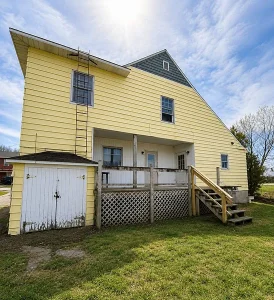
Listed on Zillow