Rare Art Deco Home in Baltimore, Maryland – A Stunning 1940s Residence With Curved Architecture, Glass-Block Details, and Mid-Century Charm Near Lake Montebello
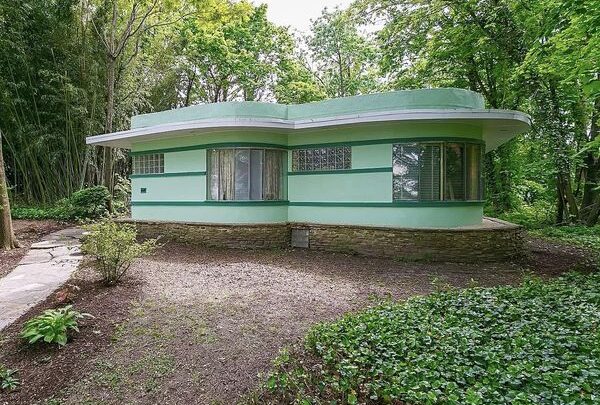
Rare Art Deco Home in Baltimore, Maryland – A Stunning 1940s Residence With Curved Architecture, Glass-Block Details, and Mid-Century Charm Near Lake Montebello
Discover a Remarkable Art Deco Residence in Baltimore, Maryland
In Baltimore, Maryland, a remarkable residential property stands out for its unusual architecture, colorful exterior, and distinctive combination of Art Deco and mid-century design.
Built in the late 1940s, this architecturally striking home reflects a period when American residential design was experimenting with modern materials, flowing shapes, decorative details, and unconventional approaches to everyday living.
Unlike traditional houses characterized by rectangular forms and familiar architectural arrangements, this residence embraces graceful curves, distinctive glass-block features, and a visually memorable exterior.
Its design draws inspiration from the bold architectural character associated with Miami-style Art Deco buildings while maintaining elements of mid-century residential design.
The result is a property with an unmistakable personality.
Large windows introduce natural light into the interior, helping emphasize the home’s distinctive architectural lines.
Curved walls contribute to a flowing layout that differs from the more rigid arrangements found in many conventional homes.
Original design elements and vintage finishes preserve a connection to the property’s history, giving the interior a sense of character that may appeal to buyers interested in historic architecture.
Another attractive feature is the home’s setting near Lake Montebello, one of Baltimore’s recognizable outdoor landmarks.
The surrounding area provides a scenic neighborhood context, adding to the appeal of a residence already distinguished by its design.
Outdoor spaces offer additional opportunities to enjoy fresh air, relax, and appreciate the surrounding neighborhood.
For architecture enthusiasts, preservation-minded homeowners, and buyers seeking something different from a standard residential property, this Baltimore home represents an interesting example of late-1940s design.
However, the supplied property description does not identify the exact street address, asking price, bedroom count, bathroom count, interior square footage, or lot size.
These details should be confirmed through the official listing before publication or purchase.
This comprehensive guide explores the property’s architectural style, historical influences, exterior design, interior character, neighborhood setting, preservation considerations, and the important questions prospective buyers should investigate.
A Distinctive Combination of Art Deco and Mid-Century Modern Design
One of the most fascinating aspects of this Baltimore residence is its combination of architectural influences.
Art Deco emerged during the early twentieth century and became associated with bold geometry, decorative materials, streamlined forms, and expressive building design.
Mid-century modern architecture developed through a somewhat different design philosophy, often emphasizing simplicity, functionality, natural light, and connections between interior and exterior spaces.
This residence appears to bring elements of both traditions together.
Its curved walls and decorative glass-block details reflect the influence of streamlined Art Deco architecture.
Meanwhile, its late-1940s construction period and flowing interior arrangement connect it with the evolution of mid-century residential design.
Rather than fitting neatly into a single architectural category, the home demonstrates how design ideas can overlap.
This combination contributes to its distinctive appearance and historical interest.
Built in the Late 1940s
The property description identifies the home’s construction period as the late 1940s.
This was a time of significant change in American residential architecture.
Following World War II, housing design increasingly reflected new construction methods, changing lifestyles, and evolving aesthetic preferences.
Traditional architectural styles remained popular, but modernist influences were becoming more visible.
Some architects and builders experimented with curved surfaces, large windows, innovative materials, and unusual floor plans.
This Baltimore residence reflects that broader period of architectural experimentation.
However, the exact construction year has not been provided.
Buyers interested in historical accuracy should consult property records, original permits, or other available documentation.
Miami-Inspired Art Deco Character
The home’s exterior is described as having Miami-inspired Art Deco character.
This comparison suggests an influence from the streamlined architectural forms associated with South Florida’s historic Art Deco buildings.
Miami’s Art Deco architecture is widely recognized for curved corners, decorative geometry, colorful finishes, and distinctive visual compositions.
However, the Baltimore residence should not be assumed to have been designed by an architect associated with Miami.
The description identifies a stylistic influence rather than a documented architectural connection.
Its colorful exterior and curved forms contribute to the visual comparison.
These features give the property a distinctive identity within its residential surroundings.
Curved Walls Create an Unusual Architectural Experience
Curved walls are among the home’s defining characteristics.
Most conventional houses rely heavily on straight walls and rectangular rooms.
Curved architectural elements introduce a different sense of movement.
They can soften transitions between spaces and create visually interesting interior and exterior compositions.
In this residence, the curved forms help establish the Art Deco character.
They may also influence furniture placement and room organization.
Buyers should consider how the home’s unusual geometry fits their needs.
A distinctive floor plan can provide considerable visual appeal while requiring thoughtful interior design choices.
The Beauty of Glass-Block Architectural Details
The property features distinctive glass-block elements.
Glass blocks became popular in several twentieth-century architectural movements.
They can allow natural light to enter while providing a different level of visual privacy from ordinary clear windows.
Their textured surfaces can also create decorative patterns.
In Art Deco and Streamline Moderne architecture, glass blocks often complemented curved walls and smooth exterior surfaces.
The Baltimore home’s glass-block details contribute to its historical character.
However, the listing does not identify their exact locations or condition.
Buyers should inspect the blocks, surrounding frames, and seals for damage or moisture intrusion.
A Colorful Exterior With Unforgettable Personality
The home’s colorful exterior is another notable feature.
Color can play an important role in Art Deco architecture.
Rather than relying entirely on natural materials or muted finishes, some Art Deco buildings use distinctive color combinations to emphasize architectural shapes.
In this residence, the exterior colors help highlight the unusual design.
The result is a building that stands apart from more conventional residential styles.
However, the supplied description does not identify the specific exterior materials or paint colors.
Buyers should inspect the exterior finishes and investigate any maintenance requirements.
Large Windows Bring Natural Light Indoors
The property description emphasizes large windows.
Natural light can significantly influence the atmosphere of a home.
Broad window openings may make interior spaces feel more open and visually connected to their surroundings.
They can also emphasize architectural features such as curved walls and vintage finishes.
However, the exact window configuration is not provided.
Buyers should inspect the glazing, frames, seals, and operating mechanisms.
Older windows may have different insulation characteristics from modern systems.
Any replacement project should consider both energy performance and architectural preservation.
A Flowing Interior Layout
The home is described as having a flowing interior layout.
This suggests a design that emphasizes movement and visual continuity between spaces.
Unlike houses organized around highly compartmentalized rooms, a flowing layout may create a more connected residential experience.
However, the supplied information does not include a floor plan.
Buyers should visit the property to understand how the rooms connect.
The arrangement may influence privacy, furniture placement, and daily functionality.
The home’s architectural character should be considered alongside practical living requirements.
Vintage Interior Details
Original design elements contribute to the home’s historic atmosphere.
Vintage finishes can provide a connection to the period in which a property was constructed.
They may also reveal craftsmanship and design preferences that are less common in contemporary homes.
However, the supplied description does not identify specific interior materials, cabinetry, or fixtures.
Buyers should inspect the residence to determine which features are original.
They should also evaluate their condition.
Some details may be suitable for restoration, while others may require replacement for practical or safety reasons.
Preserving Original Architectural Features
For a distinctive historic residence, preservation can be an important consideration.
Curved walls, glass-block windows, original finishes, and unusual exterior details all contribute to the property’s identity.
Major alterations could change the appearance that makes the home special.
Buyers interested in renovation may wish to consult professionals experienced in historic or mid-century architecture.
A preservation-minded approach can help balance modern functionality with architectural character.
However, the appropriate renovation strategy depends on the building’s condition and the owner’s needs.
A Home With a Strong Sense of History
The residence’s late-1940s origins contribute to its appeal.
Buildings from this period can reflect the changing relationship between traditional design and modern architectural experimentation.
The home’s unusual appearance may provide an opportunity to explore Baltimore’s residential architectural history.
However, the description does not identify the original architect or builder.
It also does not establish that the property has an official historic designation.
Buyers should request documentation before making claims about architectural authorship or protected historical status.
Living Spaces With Architectural Character
The home’s interior is described as having a strong historical atmosphere.
Its flowing layout and original design elements may create a memorable environment for everyday living.
However, the description does not identify specific living room dimensions or features.
Buyers should evaluate the size and arrangement of the main gathering areas.
Furniture placement may require additional planning in rooms with curved walls.
The relationship between natural light and architectural details can also influence interior design choices.
Interior Decorating Opportunities
An Art Deco-inspired home provides opportunities for distinctive interior decorating.
Furniture with curved silhouettes, carefully selected lighting, and decorative materials may complement the architecture.
However, homeowners are not limited to historically inspired furnishings.
Contemporary furniture can also work within unusual spaces.
The most important consideration is the relationship between the home’s existing architectural features and the chosen interior design.
Buyers should measure rooms carefully before purchasing large furniture.
The Importance of Original Materials
Original materials can contribute significantly to the character of a historic residence.
However, the listing does not identify all construction materials.
Buyers should inspect walls, floors, ceilings, windows, and exterior finishes.
They should also determine which components have been replaced or renovated.
Original materials may require specialized maintenance.
A qualified inspector can help identify areas that need attention.
Architectural Details That Make the Home Stand Out
The combination of curved walls, glass blocks, colorful exterior finishes, and large windows gives the residence a distinctive appearance.
Each feature contributes to the overall design.
Curved forms introduce movement.
Glass blocks add texture and filtered light.
Exterior colors emphasize the building’s personality.
Large windows connect the interior with the surrounding environment.
Together, these elements create a cohesive architectural identity.
A Beautiful Setting Near Lake Montebello
The home is located near Lake Montebello in Baltimore.
This setting adds an appealing neighborhood context.
Lake Montebello is a recognizable outdoor landmark within the city.
Its surrounding area provides opportunities to experience an open landscape in an urban environment.
However, the property description does not provide the home’s exact distance from the lake.
Buyers should verify the location and available walking or driving routes.
Proximity to the lake should not be interpreted as a guarantee of direct waterfront views or access from the property.
Exploring the Lake Montebello Area
Lake Montebello is associated with outdoor recreation and neighborhood scenery.
Residents of the surrounding area may appreciate access to open space.
However, available facilities and access rules should be verified through current local information.
The home’s setting may interest buyers who value nearby outdoor environments.
A personal visit can help establish how the property relates to the surrounding streets and lake area.
Baltimore’s Architectural Diversity
Baltimore is known for a wide range of residential architectural styles.
The city includes traditional rowhouses, historic detached homes, and buildings influenced by different design periods.
An Art Deco-inspired residence can provide an interesting contrast to more familiar Baltimore housing styles.
However, the architectural significance of this particular property should be evaluated through documentation.
Its unusual design may appeal to buyers who appreciate architectural diversity.
Outdoor Spaces for Relaxation
The property description mentions outdoor areas suitable for relaxing and enjoying the neighborhood.
However, it does not identify a patio, deck, porch, or specific landscaping features.
Buyers should inspect the available outdoor space.
They should also verify the lot boundaries.
Outdoor areas may provide opportunities for seating, gardening, or other permitted activities.
Any proposed improvements should comply with applicable local regulations.
The Relationship Between Architecture and Landscape
A distinctive building can create a strong relationship with its surroundings.
In this residence, the exterior design and large windows contribute to that connection.
However, the description does not provide detailed information about the yard or landscaping.
Buyers should evaluate privacy, sunlight, drainage, and outdoor maintenance requirements.
The property’s setting may influence how the architecture is experienced throughout the year.
A Rare Alternative to Conventional Residential Design
Many residential buyers focus primarily on square footage, room counts, and conventional layouts.
Architecturally distinctive homes offer a different set of considerations.
Their appeal may come from unusual forms, original craftsmanship, and historical character.
This Baltimore residence stands out because of its combination of Art Deco and mid-century influences.
However, unusual architecture may also require specialized maintenance.
Buyers should evaluate both the visual appeal and practical responsibilities of ownership.
Understanding the Difference Between Art Deco and Streamline Moderne
Art Deco is a broad architectural and decorative movement associated with geometric forms and expressive design.
Streamline Moderne developed as a related style emphasizing smooth surfaces, rounded corners, and horizontal movement.
The curved walls and glass-block details described in this residence may reflect Streamline Moderne influences.
However, a definitive architectural classification would require further research.
The property’s original plans and historical records may provide additional context.
Could the Home Have Historical Significance?
The residence may interest architectural historians or preservation enthusiasts.
However, the supplied description does not establish an official historical designation.
A distinctive appearance alone does not prove that a property is listed on a historic register.
Buyers should investigate local preservation records.
They may also wish to research the home’s original architect and construction history.
Any restrictions associated with historical designation should be verified before renovation.
Renovating an Unusual Historic Home
Renovation planning can be more complicated when a property has uncommon architectural features.
Curved walls and original glass-block installations may require specialized materials or workmanship.
However, the listing does not identify any specific repairs.
Buyers should obtain a professional inspection.
They should also request estimates from contractors experienced with older homes.
A renovation budget should account for unexpected conditions.
Window Restoration and Energy Efficiency
Large windows and glass-block features contribute to the home’s design.
However, older glazing systems may require maintenance.
Buyers should evaluate air leakage, moisture intrusion, and frame condition.
Energy improvements may be possible, but they should be planned carefully.
Replacing original windows with incompatible designs could change the building’s appearance.
A professional familiar with historic properties may help identify suitable options.
Heating and Cooling Considerations
The supplied description does not identify the home’s heating or cooling systems.
These details should be verified.
Older homes may have equipment installed or modified during different periods.
Buyers should inspect system age, capacity, maintenance history, and operating condition.
Energy efficiency may also depend on insulation and window performance.
A professional assessment can help identify potential improvements.
Plumbing and Electrical Systems
The description does not provide information about plumbing or electrical upgrades.
Buyers should investigate both systems.
The home’s construction period makes documentation particularly useful.
However, age alone does not establish that systems are unsafe.
A qualified professional should evaluate the existing installations.
Any necessary upgrades should be included in the renovation budget.
Roof and Exterior Maintenance
The property’s distinctive exterior deserves careful inspection.
Buyers should evaluate roofing, drainage, exterior finishes, and connections around windows.
Curved architectural elements may require specialized repair methods.
The listing does not identify the roof’s age or condition.
A professional inspection can help establish maintenance needs.
Understanding Property Taxes and Ownership Costs
The supplied description does not identify the asking price or annual property taxes.
These are important details for buyers.
Ownership costs may include taxes, insurance, utilities, maintenance, and repairs.
A distinctive older home may also require specialized services.
Buyers should request accurate financial information.
No monthly payment estimate can be established from the available details.
Insurance for an Architecturally Distinctive Home
Insurance coverage should reflect the property’s construction and replacement requirements.
Unusual architectural elements may influence repair costs.
However, the listing does not provide insurance information.
Buyers should consult qualified insurance professionals.
They should also investigate whether specialized coverage is appropriate.
Architectural Homes and Resale Considerations
Distinctive homes may appeal to buyers who value design and history.
However, their resale markets can differ from those of conventional houses.
Some buyers may appreciate unusual layouts.
Others may prefer more traditional arrangements.
Future market value cannot be guaranteed.
A professional appraisal and comparable sales analysis may provide useful information.
Who Might Be Interested in This Baltimore Residence?
The home may appeal to architecture enthusiasts.
Preservation-minded buyers may appreciate its original details.
Individuals seeking a distinctive residential environment may also find the property interesting.
However, the unusual design may not suit every household.
Buyers should consider maintenance requirements, interior layout, and potential renovation costs.
The property’s exact size and room configuration should be verified before determining suitability.
Important Questions to Ask Before Purchasing
Before purchasing this Art Deco-inspired Baltimore residence, buyers should investigate the following:
- What is the exact street address?
- What is the current asking price?
- What year was the home built?
- Who was the original architect?
- Are original architectural plans available?
- How many bedrooms and bathrooms are included?
- What is the total interior square footage?
- What is the lot size?
- Which architectural features are original?
- What is the condition of the curved exterior walls?
- Are the glass-block installations original?
- Have the windows been repaired or replaced?
- What is the condition of the roof?
- Have the electrical and plumbing systems been updated?
- What heating and cooling equipment is installed?
- Are there any structural concerns?
- Is the property subject to historic preservation restrictions?
- What are the annual property taxes?
- What repairs or renovations are necessary?
- How close is the property to Lake Montebello?
These questions can help buyers understand the home’s condition, historical character, and ownership requirements.
Final Thoughts – A Remarkable Art Deco-Inspired Residence in Baltimore
This distinctive Baltimore home offers an unusual combination of late-1940s architecture, Art Deco influences, and mid-century residential character.
Its curved walls, glass-block details, colorful exterior, and large windows contribute to an appearance that stands apart from conventional houses.
Inside, original design elements and vintage finishes preserve a connection to the home’s history.
The flowing layout adds character and reflects a period of architectural experimentation.
Its setting near Lake Montebello provides an additional point of interest for buyers who appreciate nearby outdoor scenery.
For those interested in unusual residential architecture, the property represents an opportunity to explore a home with a distinctive visual identity.
However, its exact address, asking price, room counts, square footage, and construction details should be verified through official records.
The home’s lasting appeal lies in its combination of architectural personality, historical character, and uncommon design.
Property Highlights and Listing Information
Location: Baltimore, Maryland
Nearby Landmark: Lake Montebello
Architectural Style: Art Deco-Inspired / Mid-Century Modern
Design Influence: Miami-Inspired Art Deco and Streamline Moderne
Construction Period: Late 1940s
Exact Year Built: Not Provided
Asking Price: Not Provided
Property Address: Not Provided
Bedrooms: Not Provided
Bathrooms: Not Provided
Interior Living Area: Not Provided
Lot Size: Not Provided
Exterior Features: Curved Walls, Glass-Block Details, Colorful Exterior
Windows: Large Windows Providing Natural Light
Interior Features: Vintage Details and Original Design Elements
Layout: Flowing Architectural Arrangement
Outdoor Features: Outdoor Living Areas Mentioned; Details Not Provided
Architectural Character: Distinctive Historic Design
Original Architect: Not Identified
Historic Designation: Not Confirmed
Property Condition: Not Specified
Annual Property Taxes: Not Provided
Listing Agent: Not Provided
MLS Number: Not Provided
All property information is based on the supplied description and is provided for general informational purposes. The home’s exact address, asking price, room counts, square footage, construction year, architect, historical designation, condition, taxes, and other details should be independently verified through the official real estate listing and relevant records. The terms Art Deco-inspired and Miami-inspired describe architectural characteristics and do not establish a documented connection to any particular architect or historical designation. Buyers should arrange appropriate inspections and professional evaluations before purchasing.
Listed on Zillow