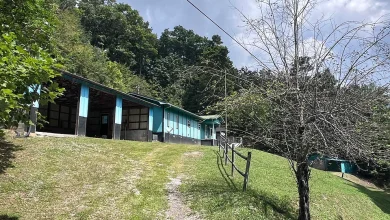
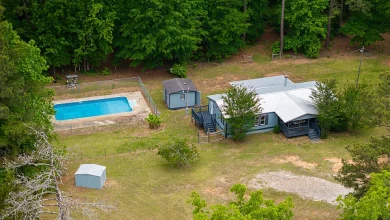
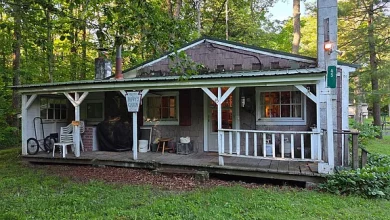
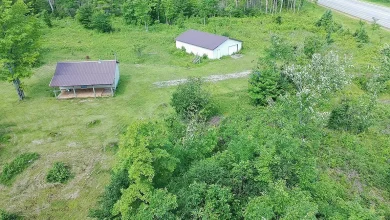
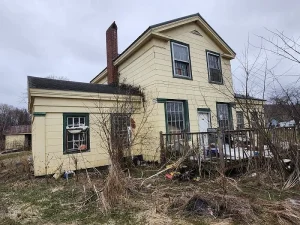
Opportunity knocks with this 3 bed 1 bath home. Sitting on 1.39 acres.
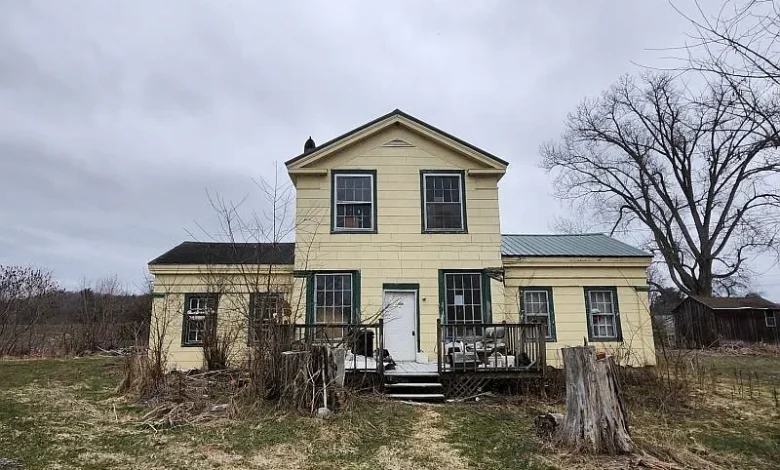
$29,000 Foreclosure Home in Fillmore, New York: 3-Bedroom Historic Fixer-Upper on 1.39 Acres With Investment Potential
For real estate investors, renovation buyers, contractors, and experienced homeowners searching for an affordable foreclosure property in New York, the home at 5939 W River Rd, Fillmore, NY 14735 presents an opportunity to acquire a sizable historic residence at a relatively low asking price.
Listed at $29,000, this real-estate-owned property offers approximately 1,695 square feet of living space, three bedrooms, one full bathroom, a partial basement, an open porch, forced-air gas heating, a private well, a septic system, and approximately 1.39 acres of land.
Built in 1880, the property is classified as a historic/antique two-story single-family residence. At approximately $17 per square foot, the asking price is notably low, but prospective buyers should understand that foreclosure properties can involve substantial repairs, limited seller knowledge, financing restrictions, and additional due diligence.
The listing describes the property simply and directly: an opportunity for a buyer to bring a vision and potentially build sweat equity.
That makes this house particularly relevant for buyers who are comfortable evaluating an older structure and taking responsibility for improvements.
The property is also listed with cash terms, an important detail that may significantly affect who can purchase it and how the transaction is structured.
Below is a comprehensive analysis of the house, its foreclosure status, renovation considerations, well and septic systems, stone foundation, financing issues, potential rental or resale strategies, taxes, insurance, inspections, and the financial planning required before purchasing a low-cost historic fixer-upper.
Property Overview: 5939 W River Rd, Fillmore, NY 14735
The property is located at 5939 W River Rd in Fillmore, New York 14735.
According to the supplied listing information, the principal property facts include:
Asking Price: $29,000
Special Condition: Foreclosure / Real Estate Owned
Listing Terms: Cash
Property Type: Single-Family Residence
Architectural Style: Historic/Antique, Two Story
Year Built: 1880
Bedrooms: 3
Bathrooms: 1 full bathroom
Main-Level Bedrooms: 1
Main-Level Bathrooms: 1
Interior Living Area: Approximately 1,695 square feet
Stories: Two
Lot Size: Approximately 1.39 acres
Approximate Lot Dimensions: 164 x 344 feet
Foundation: Stone
Basement: Partial
Heating: Gas, forced air
Water Heater: Gas
Water: Private well
Sewer: Septic tank
Garage: None
Driveway: Dirt and gravel
Porch: Open porch
Fireplace: None
Price Per Square Foot: Approximately $17
Tax Assessed Value: $60,000
Reported Annual Property Tax: $1,664
Parcel Number: 02580001700000010150030000
Date on Market: March 30, 2026
The combination of a $29,000 asking price, 1,695 square feet, and more than an acre of land may attract attention, but the property’s age and foreclosure status make careful due diligence essential.
Understanding the $29,000 Asking Price
A three-bedroom detached home on 1.39 acres for $29,000 can immediately look like a bargain.
However, the purchase price is only one part of the investment.
The property is a foreclosure and is offered with cash terms, which suggests buyers should be prepared for a transaction that may differ from a conventional owner-occupied home sale.
A more useful calculation is:
$29,000 Purchase Price + Closing Costs + Inspections + Structural Repairs + Roof and Exterior Work + Electrical + Plumbing + HVAC + Well + Septic + Kitchen + Bathroom + Interior Renovation + Insurance + Taxes + Holding Costs + Contingency = Total Project Investment
The difference between $29,000 and the future value of a renovated home should never automatically be interpreted as profit.
Approximately $17 Per Square Foot
At $29,000 and approximately 1,695 square feet, the listing calculates a price of about $17 per square foot.
That is an attention-grabbing figure.
But price per square foot has limited meaning when comparing distressed and renovated properties.
A move-in-ready home includes functioning systems, finished surfaces, a usable kitchen and bathroom, reliable utilities, weather protection, and other improvements.
A foreclosure may require significant investment before reaching comparable condition.
For that reason, investors should eventually calculate their all-in renovated cost per square foot.
What Real Estate Owned Means
The property is identified as Real Estate Owned, commonly abbreviated as REO.
Generally, this means a lender or other institutional owner has taken ownership after a foreclosure process rather than the property being sold by a conventional homeowner.
This distinction matters because an institutional seller may have limited firsthand knowledge about the property’s history.
The seller may not know when certain systems were installed, how repairs were completed, or whether previous occupants experienced specific problems.
That makes independent inspections particularly important.
Foreclosure Does Not Automatically Mean Bargain
The word “foreclosure” often attracts investors because buyers associate it with discounted real estate.
Sometimes distressed properties are sold at low prices because they need extensive work.
The critical issue is whether the discount is greater than the cost and risk of completing the project.
A $29,000 property requiring $100,000 of work is economically very different from one requiring $20,000.
The listing alone cannot determine that number.
Contractor estimates and physical inspections are therefore essential.
Cash Terms Are an Important Detail
The listing identifies the sale terms as cash.
This is one of the most important financial facts about the property.
Buyers should not assume that a conventional mortgage can be used simply because Zillow displays general pre-qualification information on its platform.
Cash terms may reflect property condition, seller requirements, lender concerns, or another aspect of the transaction.
Prospective purchasers should confirm the exact offer requirements with the listing representatives before proceeding.
Financing Renovation After a Cash Purchase
Even a buyer capable of paying $29,000 in cash should think carefully about renovation capital.
Purchasing the property is only the beginning.
A buyer who uses most available cash for acquisition but has insufficient funds for structural repairs, mechanical systems, and interior work could end up owning a project that cannot be completed.
Before purchasing, buyers should create a realistic plan for financing the entire rehabilitation.
That might involve existing cash reserves, appropriate renovation financing after acquisition, or another funding strategy.
Three Bedrooms
The house contains three bedrooms.
One bedroom is listed on the main level, while the remaining sleeping space is associated with the two-story configuration.
For a household, three bedrooms can provide flexibility for sleeping areas, guests, a home office, or hobbies.
For a rental investor, a three-bedroom layout may have broad residential appeal after renovation.
However, actual rental demand and rent levels should be researched locally rather than assumed from the bedroom count.
Main-Level Bedroom
Having a main-level bedroom can be useful in a two-story house.
It provides sleeping space without requiring access to the upper floor and can also function as an office or guest room.
Because the home dates to 1880, buyers should verify the dimensions, windows, heating, electrical outlets, flooring, and overall condition of every bedroom.
Older floor plans may differ significantly from modern construction.
One Full Bathroom
The property has one full bathroom, located on the main level.
For a three-bedroom home, one bathroom can be functional, although some renovation buyers may investigate whether an additional bathroom could be added.
Adding another bathroom is not simply a cosmetic project.
It may require plumbing, drainage, ventilation, electrical work, framing, waterproofing, fixtures, permits, and sufficient physical space.
Investors should determine whether the additional cost would be supported by the local market before changing the floor plan.
Approximately 1,695 Square Feet
The house offers approximately 1,695 square feet of living area.
That provides substantial space relative to the $29,000 asking price.
It is large enough to accommodate three bedrooms and multiple living areas while remaining smaller than many expensive large-scale renovation projects.
Still, 1,695 square feet means significant quantities of flooring, paint, drywall, insulation, trim, electrical devices, and other materials if a comprehensive renovation is necessary.
Square footage can create both value and cost.
Built in 1880
The property’s 1880 construction date is one of its most significant characteristics.
A house approaching 150 years of age should be evaluated differently from a modern residence.
It may have undergone numerous repairs, alterations, additions, and mechanical upgrades over multiple generations.
Some components may be relatively modern while others could be much older.
The key is to identify what exists today rather than assuming every system dates from 1880.
Historic and Antique Architectural Classification
The listing describes the architectural style as Historic/Antique and Two Story.
Older houses can offer architectural character that buyers may find appealing.
Proportions, porches, framing, room layouts, woodwork, and other features can distinguish historic properties from newer construction.
However, preservation and renovation need to be balanced with safety, efficiency, and budget.
A buyer should identify which original elements are worth restoring and which systems need modernization.
Environmental Considerations in an 1880 Home
Older houses can contain materials that require special consideration during renovation.
Depending on previous work, materials such as lead-based paint or asbestos-containing products may be present.
Their presence should not be assumed without proper evaluation, but renovation buyers should understand the possibility.
If construction will disturb older materials, qualified professionals can advise on testing and safe work practices.
Environmental remediation can affect both budget and project schedule.
Stone Foundation
The property is listed with a stone foundation.
This is common in homes from the 19th century and deserves careful inspection.
A stone foundation can remain functional for a very long time when properly maintained.
However, buyers should look for deteriorated mortar, movement, moisture intrusion, bowing, settlement, drainage problems, and previous repairs.
A structural professional familiar with older construction can help distinguish normal aging from conditions requiring substantial work.
Partial Basement
The house includes a partial basement.
An unfinished or partial basement can provide access to mechanical systems, plumbing, structural components, and storage.
It also creates an important inspection area.
Buyers should investigate moisture, drainage, foundation walls, floor structure, pests, ventilation, and evidence of previous water intrusion.
For a property with a stone foundation, basement and foundation inspection should be a high priority.
Moisture Management Matters
Older homes often depend on proper drainage to protect foundations and framing.
Buyers should inspect gutters, downspouts, grading, roof drainage, and how water moves around the house.
Persistent moisture can damage wood framing, masonry, insulation, and interior finishes.
Correcting exterior drainage problems before expensive interior renovation can prevent repeated damage.
This is particularly important when restoring a house that has been vacant or poorly maintained.
Gas Forced-Air Heating
The home is listed with gas forced-air heating.
That is a useful starting point because the listing does not describe the property as having no heating system.
However, the age and condition of the furnace are not provided.
A qualified HVAC professional should inspect the equipment, ductwork, thermostat, venting, and general operation.
If replacement is necessary, the cost should be included in the rehabilitation budget.
Gas Water Heater
A gas water heater is included among the appliance information.
As with the furnace, buyers should verify its age, condition, capacity, installation, and functionality.
A water heater is relatively straightforward compared with many structural repairs, but it remains an essential component of a habitable home.
Any evidence of leaks, corrosion, improper venting, or aging equipment should be evaluated.
Private Well
The property obtains water from a private well.
That means the owner is responsible for a water system that would ordinarily be handled by a municipal utility in a city-served property.
Buyers should consider testing water quality and evaluating well performance.
Important issues can include water flow, pressure, pump condition, pressure tank, electrical components, well depth, and water quality.
A properly functioning well can serve a property for many years, but repairs or replacement can become a meaningful expense.
Water Testing Is Important
Water quality cannot be determined simply by looking at it.
Depending on local conditions and professional recommendations, buyers may consider testing for bacteria and other relevant contaminants.
If a house has been vacant, the water system may require additional evaluation before normal use.
A well professional can help determine the appropriate tests and inspect the equipment.
The results should be understood before committing a large renovation budget.
Septic Tank
Wastewater is handled by a septic tank rather than municipal sewer.
This is another important due-diligence item.
A septic professional can evaluate system condition and determine whether further testing is appropriate.
Buyers should understand the approximate location of the tank and disposal area, maintenance history if available, and whether the system is appropriately sized for the residence.
Septic repairs can range from manageable maintenance to substantial replacement expenses.
Well and Septic Affect the Total Budget
A rural or semi-rural property can appear inexpensive partly because the owner maintains systems that municipal residents pay for through utility bills.
Well and septic ownership is not inherently negative.
Many properties operate successfully with both systems.
But a buyer should include them in the inspection process because failure of either system can significantly affect habitability and renovation costs.
For an investor, these systems should be evaluated before spending heavily on cosmetic improvements.
No Garage
The property has no garage.
Buyers who require enclosed vehicle parking should account for that limitation.
The lot may offer outdoor parking, but any plan to construct a future garage would require investigation of zoning, setbacks, permits, site conditions, and cost.
For resale analysis, investors should compare the property with similar local homes rather than assuming that adding a garage will automatically generate a positive return.
Dirt and Gravel Driveway
The property includes a dirt and gravel driveway.
This is common in more rural settings.
A buyer should evaluate drainage, grading, surface condition, and winter accessibility.
Gravel driveways periodically require maintenance, including adding material and correcting ruts or drainage problems.
Those expenses are usually modest compared with structural renovation but should still be considered as part of long-term ownership.
Open Porch
The house features an open porch.
A porch can add traditional character to a historic two-story home and create useful outdoor seating space.
However, older porches should be evaluated for structural stability.
Posts, flooring, stairs, railings, roof connections, and supports may require repair.
Restoring a porch can also contribute significantly to curb appeal if the property is eventually resold.
1.39 Acres of Land
The property sits on approximately 1.39 acres.
That is a meaningful amount of land for a residential property.
The listing gives approximate dimensions of 164 x 344 feet and identifies the parcel as irregular.
For an owner-occupant, the acreage may provide space for gardening, outdoor recreation, privacy, storage, or other permitted residential uses.
For an investor, the land can help differentiate the property from homes on small lots.
Irregular Residential Lot
The lot is described as irregular, so buyers should not assume the parcel is a simple rectangle.
If exact boundaries matter, a survey can help clarify the shape and location of the property lines.
This becomes particularly important if a buyer plans fencing, additional structures, driveway changes, or other improvements near boundaries.
Acreage should also be independently verified when it materially affects the purchase decision.
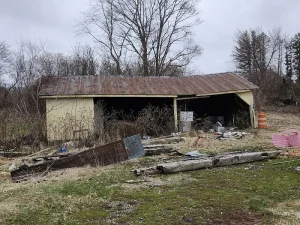
Additional Structure Listed as “Other”
The property information mentions an additional structure, but describes it only as “Other.”
Buyers should determine exactly what this refers to during a showing.
It may be a shed, outbuilding, or another structure.
Its condition and legal status should be investigated before assigning value to it.
If usable, an outbuilding could provide storage or workshop space, particularly because the home itself has no garage.
Tax Assessed Value of $60,000
The property has a reported tax assessed value of $60,000, more than double the $29,000 asking price.
This difference may attract investor attention, but it should not be interpreted as proof that the property is worth $60,000 in its current condition.
Tax assessments and market values serve different purposes.
A distressed foreclosure may sell below assessed value for many reasons, including condition and required repairs.
The best valuation evidence comes from comparable sales and property-specific inspection.
Annual Property Taxes of $1,664
The listing reports approximately $1,664 in annual property taxes.
At a $29,000 purchase price, that is an important recurring cost.
A rental investor should incorporate taxes into annual operating expenses.
A flip investor should include them in holding costs for however long renovation and resale take.
Prospective buyers should verify the current tax status and determine whether there are any unpaid amounts or other obligations associated with the transaction.
Title Work Is Important in a Foreclosure Purchase
Title review is important in any real estate transaction and deserves particular attention with distressed property.
A title professional or attorney, where appropriate, can help determine what interests, liens, easements, or other recorded matters affect the property.
Buyers should understand what type of title documentation will be provided and what title insurance options are available.
The low purchase price should not encourage shortcuts in legal due diligence.
Potential Fix-and-Flip Opportunity
A buyer may evaluate the property as a potential fix-and-flip project.
The ingredients are easy to understand: a $29,000 asking price, 1,695 square feet, three bedrooms, more than an acre, and an older structure that may offer character after renovation.
But those characteristics alone do not establish profit.
The investor needs a realistic estimate of the finished market value and a detailed construction budget.
Establishing After-Repair Value
A potential flipper should research recently sold renovated properties in and around Fillmore that resemble the expected finished house.
Relevant factors include location, approximately 1,700 square feet, three bedrooms, one bathroom, acreage, age, condition, and lack of a garage.
Comparables should ideally be actual closed sales rather than asking prices.
No reliable after-repair value can be calculated from the supplied listing information alone.
A Complete Flip Formula
A disciplined investor might use:
Expected After-Repair Value – $29,000 Purchase Price – Closing Costs – Renovation – Well/Septic Work – Financing – Insurance – Taxes – Utilities – Holding Costs – Selling Costs – Contingency = Potential Project Result
This formula makes clear why a cheap acquisition does not automatically create a profitable flip.
The cost of restoring an 1880 home can quickly become the largest part of the project.
Potential Long-Term Rental
The property could also be evaluated as a long-term rental after rehabilitation.
Three bedrooms, 1,695 square feet, and 1.39 acres may appeal to tenants looking for more space.
However, there is no verified rental figure in the listing.
Investors should research actual comparable rentals and consider whether tenants in the local market value acreage enough to support the required investment.
Well and septic maintenance should also be included in long-term planning.
Rental Operating Expenses
A rental analysis should account for property taxes, insurance, vacancy, repairs, maintenance, management, well maintenance, septic maintenance, landscaping, snow-related costs where applicable, and capital reserves.
A useful formula is:
Gross Rental Income – Vacancy – Operating Expenses = Net Operating Income
If financing is later added, debt service can then be considered separately.
The goal is to understand sustainable cash flow rather than focusing only on low acquisition cost.
Owner-Occupant Restoration
An experienced owner-occupant might see the property differently.
Instead of maximizing investment return, the objective could be restoring an affordable historic home on a larger parcel.
The two-story configuration, main-floor bedroom and bathroom, open porch, and 1.39 acres create a potentially attractive foundation for personal use.
However, habitability and financing must be carefully considered.
Cash terms and unknown repair requirements make this a project for a buyer prepared to handle substantial uncertainty.
Kitchen Renovation
The listing does not provide detailed information about the kitchen.
A buyer should inspect cabinetry, countertops, plumbing, electrical outlets, flooring, lighting, appliances, and structural condition.
If a full kitchen replacement is necessary, costs can become significant.
Investors should select finishes appropriate for the local market rather than automatically choosing premium materials.
A clean, functional, durable kitchen can often be more financially sensible than an overbuilt luxury design.
Bathroom Renovation
The single full bathroom should receive equally careful attention.
A complete bathroom project can involve plumbing, fixtures, flooring, waterproofing, ventilation, electrical work, walls, and subfloor repairs.
Because there is only one bathroom, construction sequencing matters if the property is occupied during renovation.
A buyer considering a second bathroom should first determine whether the additional cost is justified by local resale or rental demand.
Electrical and Plumbing Inspections
The listing does not provide detailed information about electrical or plumbing systems.
Given the 1880 construction date, both deserve professional evaluation.
A house of this age may have experienced multiple generations of upgrades.
Some components could be modern while others may be outdated.
A qualified electrician and plumber can help establish what remains usable, what should be repaired, and what may require replacement.
Roof and Exterior Inspection
Roof details are not provided in the supplied facts.
A roof inspection should therefore be considered a priority.
Buyers should determine roof material, age, remaining useful life, flashing condition, drainage, and evidence of leaks.
The exterior framing and siding should also be evaluated.
Weatherproofing the structure should come before major interior improvements.
Insurance for an Older Foreclosure
Insurance availability should be researched before closing.
An 1880 foreclosure may present underwriting questions related to roof condition, electrical wiring, plumbing, heating, vacancy, well and septic systems, and overall maintenance.
If the property is vacant during renovation, standard homeowners insurance may not be appropriate.
A buyer should obtain actual insurance quotes and determine what coverage is required during construction.
Insurance premiums are part of the project’s true cost.
Renovation Priorities
For a property of this age, renovation should generally begin with safety and structure.
The stone foundation, framing, roof, drainage, porch, electrical system, plumbing, heating, well, and septic system should be evaluated before major cosmetic spending.
Once the building is structurally stable, weather-resistant, and mechanically reliable, the project can move toward insulation, walls, kitchen, bathroom, flooring, trim, lighting, paint, and landscaping.
Correct sequencing can prevent expensive rework.
Creating a Realistic Renovation Budget
A complete budget could include:
$29,000 Purchase Price + Closing Costs + Title Work + Inspections + Stone Foundation Repairs + Structural Work + Roof + Exterior + Porch + Electrical + Plumbing + HVAC + Well + Septic + Insulation + Kitchen + Bathroom + Flooring + Windows + Doors + Paint + Driveway + Landscaping + Insurance + Taxes + Utilities + Holding Costs + Contingency
Not every category will necessarily require major work.
The purpose is to investigate each one before assuming the project is inexpensive simply because the purchase price is low.
Why a Contingency Reserve Is Essential
Historic homes can produce surprises during renovation.
Hidden moisture damage, deteriorated framing, old wiring, plumbing problems, foundation movement, pests, and previous repairs may only become visible once work begins.
A contingency reserve provides financial flexibility.
Without one, an unexpected structural repair can interrupt construction or force an investor to compromise elsewhere.
The older and less documented the property, the more important contingency planning becomes.
182 Days on Zillow and Longer Cumulative Market Time
The listing shows approximately 182 days on Zillow, while cumulative days on market are reported at 371 days.
The property has accumulated around 802 views and 42 saves according to the supplied information.
Those statistics provide context but should not determine the buying decision.
Long market exposure can reflect condition, financing restrictions, pricing, location, or the narrower buyer pool for a cash-only foreclosure.
It does not by itself establish whether the property is overpriced or underpriced.
Due Diligence Before Making a Cash Offer
Before purchasing, buyers should investigate the stone foundation, partial basement, roof, framing, porch, heating, electrical system, plumbing, well, septic system, water heater, driveway, additional structure, and overall interior condition.
Title status, taxes, insurance, boundaries, and any applicable permits should also be reviewed.
Because the listing calls for cash, buyers should confirm proof-of-funds requirements and closing terms before submitting an offer.
Contractor estimates can help establish a maximum sensible investment.
Final Thoughts on 5939 W River Rd, Fillmore, New York
5939 W River Rd, Fillmore, NY 14735 offers a combination that naturally attracts renovation buyers: a $29,000 asking price, approximately 1,695 square feet, three bedrooms, one bathroom, 1.39 acres, a historic two-story design, forced-air gas heating, a private well, and a septic system.
At approximately $17 per square foot, the acquisition price appears extremely low.
But this property should be evaluated as a foreclosure renovation project, not as a conventional finished home available for $29,000.
Its 1880 construction date makes structural, electrical, plumbing, roofing, foundation, and environmental due diligence particularly important. The stone foundation and partial basement should be carefully inspected, while the private well and septic system introduce additional systems that need evaluation before substantial renovation spending begins.
The property’s REO status is another important factor.
A lender-owned seller may have limited information about the home’s maintenance history, and buyers should be prepared to rely heavily on their own inspections and professional advice.
The listing’s cash terms also significantly shape the transaction. Buyers should confirm the exact purchase requirements and ensure that enough capital remains available after acquisition to complete necessary repairs.
For a fix-and-flip investor, the project should be evaluated using realistic comparable sales and detailed construction estimates rather than the low asking price alone.
For a landlord, the three-bedroom configuration and acreage may justify further research, but achievable rent must be weighed against taxes, insurance, maintenance, vacancy, well and septic responsibilities, and renovation costs.
For an owner-occupant interested in historic properties, the house offers something different: the possibility of restoring an 1880 two-story residence on more than an acre of land at a relatively low initial acquisition price.
The reported $60,000 tax assessed value is above the asking price, but that difference should not be treated as guaranteed equity. Likewise, the approximately $1,664 annual property tax should be verified and included in ongoing ownership calculations.
Ultimately, the opportunity at 5939 W River Rd depends on what professional inspections reveal.
If the stone foundation is serviceable, major structural components can be repaired economically, the well and septic systems remain functional or can be restored within budget, and the remaining renovation costs are supported by local property values, this foreclosure could offer a path toward building value through renovation.
If major structural, water, septic, roofing, or mechanical problems are discovered simultaneously, the total project cost could rise considerably.
That is why the strongest advantage a buyer can bring to this property is not simply cash—it is careful due diligence, realistic construction budgeting, and a clear plan for the finished home.
For buyers prepared to take on a historic renovation rather than a turnkey purchase, this three-bedroom Fillmore property offers 1,695 square feet, 1.39 acres, an open porch, a main-level bedroom and bathroom, and the opportunity to transform an inexpensive foreclosure into a restored residence or investment property.
Listed on Zillow