Escape to your own private retreat! This beautiful 1.9-acre wooded lot offers peace, privacy, and endless possibilities
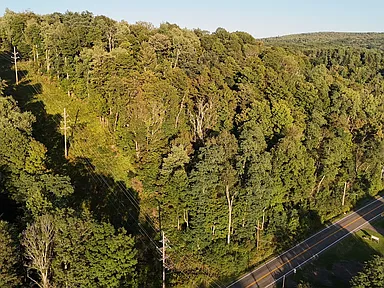
$9,790 for 1.9 Wooded Acres in Chenango Forks, New York – Affordable Land With Privacy and Building Potential
Affordable land can be difficult to find in New York, especially for buyers who want more than a small residential lot. At $9,790, the unimproved property at 6568 State Route 79, Chenango Forks, NY 13746 offers approximately 1.9 acres of wooded land with privacy, natural views, and several possible future uses.
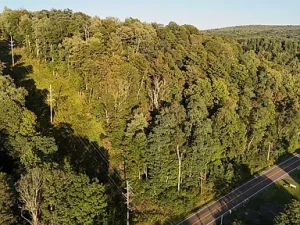
The parcel contains approximately 82,764 square feet and is described as wooded, sloping upward, and offering views. There are currently no utilities installed on the property, so buyers should approach it as raw land rather than a finished building site. For someone interested in creating a cabin, building a year-round residence, establishing a recreational retreat, or simply holding an affordable piece of land for the future, the listing presents an interesting opportunity.
The relatively low asking price is one of the property’s most immediate attractions. Reported annual property taxes are approximately $135, and the property’s tax-assessed value is listed at approximately $7,000. There is also no homeowners association reported, which may appeal to buyers who want to avoid recurring HOA dues.
Like any undeveloped property, however, the real value depends on what a buyer hopes to accomplish and whether the land can support those plans. Access, utilities, soil conditions, zoning, drainage, topography, and permitting should all be carefully investigated before purchasing.
Property Overview
The property is located along State Route 79 in Chenango Forks, New York and is currently listed for $9,790.
Important details include:
- Asking price: $9,790
- Property type: Unimproved land
- Approximately 1.9 acres
- Approximately 82,764 square feet
- Wooded property
- Sloping-up terrain
- Views reported
- No utilities currently installed
- No bedrooms
- No bathrooms
- No existing residence
- No HOA reported
- Annual property taxes reported at approximately $135
- Tax-assessed value approximately $7,000
- Located in the Chenango Forks region
- Estate ownership
- Potential cabin, residential, or recreational use subject to approvals
For buyers searching online for inexpensive New York land, these characteristics make the listing easy to notice.
A $9,790 Land Opportunity in New York
The asking price is perhaps the most attention-grabbing feature.
At just under $10,000, this parcel provides an opportunity to acquire nearly two acres of land for substantially less than the purchase price of most finished residential properties.
If the $9,790 asking price were divided evenly across the listed 1.9 acres, it would equal roughly $5,153 per acre.
Price per acre is only a basic reference point, however.
Land should never be evaluated solely by dividing the purchase price by acreage. A parcel’s real usefulness depends on several other factors, including road access, buildable area, zoning, topography, utilities, environmental conditions, and local market demand.
A flat two-acre lot with utilities already installed is fundamentally different from wooded land requiring substantial site preparation.
The relatively low price therefore creates opportunity, but buyers should investigate what additional costs would be required to transform the property into their intended retreat or residence.
Approximately 1.9 Acres of Space
The parcel offers approximately 1.9 acres, or around 82,764 square feet.
That is considerably more land than many traditional residential lots.
For someone interested in building a private home, additional acreage can provide more separation from neighboring properties and more space for outdoor features.
Potential uses might include a house, cabin, garden, recreational space, trails, storage structures, or natural woodland, depending on zoning rules and site suitability.
Buyers who prefer privacy may also appreciate having enough land to preserve mature trees around a future building site rather than clearing the entire parcel.
The key will be understanding how much of the 1.9 acres is realistically usable after accounting for setbacks, slope, drainage, utility installation, and any environmental limitations.
A Wooded Setting
The property is described as wooded.
Trees can significantly change the character of a parcel.
Instead of beginning with a completely cleared lot, a buyer could potentially retain much of the natural landscape and selectively clear only what is necessary.
This may help create a more private and attractive setting.
A future cabin tucked into the woods could provide a very different experience from a home built on a completely open suburban lot.
The trees may also create seasonal beauty.
Spring brings new vegetation and growth.
Summer provides dense greenery and shade.
Autumn can transform the property with changing foliage.
Winter creates a quieter landscape with greater visibility through the woods.
For buyers specifically searching for land because they want to spend more time outdoors, this natural character may be one of the property’s strongest qualities.
Sloped-Up Terrain
The listing describes the land as sloping upward.
Topography is an important consideration for undeveloped property.
A slope can provide attractive views and potentially allow a future home to sit above road level. It may also create interesting possibilities for a cabin or house design that works with the natural terrain.
At the same time, sloped land can increase development costs.
Driveways may require grading.
Foundations may need to be engineered for the terrain.
Drainage must be carefully managed to prevent erosion or water problems.
Excavation could also cost more than it would on a completely level site.
A buyer who plans to build should consider having the property evaluated by an experienced contractor, engineer, or other qualified professional.
The goal should be to understand the slope before designing a structure rather than trying to force a standard building plan onto land that may require a different approach.
Views Add to the Property’s Appeal
The listing indicates that the property has views.
On wooded, sloping land, elevation changes can sometimes create interesting sightlines through or above the trees.
A future owner may potentially enhance views through selective clearing, provided all applicable rules are followed.
For someone building a cabin or year-round residence, positioning the structure to take advantage of views could significantly improve the property’s overall experience.
Large windows, a porch, deck, or outdoor seating area might allow a future owner to enjoy the surrounding landscape.
Of course, buyers should visit the property personally whenever possible to understand what the views actually look like.
Online descriptions can provide useful information, but seeing land in person is especially important when scenery and topography are part of the purchase decision.
Potential for a Cozy Cabin
The listing specifically suggests the possibility of a cozy cabin.
For recreational buyers, that may be one of the most appealing visions for the property.
A small cabin can provide shelter and comfort without requiring the expense of building a large traditional home.
On nearly two wooded acres, a thoughtfully positioned cabin could potentially create a peaceful weekend retreat surrounded by nature.
Buyers may envision a simple structure with a porch, wood-inspired interior, and windows facing the surrounding woods.
Such a property might be used for weekend visits, seasonal recreation, quiet vacations, or as a base for exploring the broader region.
However, buyers should verify building requirements before assuming any cabin can be constructed.
Local building codes, zoning, septic requirements, minimum setbacks, driveway permits, and utility needs may all influence what is allowed.
Possibility of a Year-Round Home
The listing also suggests the property could potentially accommodate a year-round residence.
For buyers interested in permanent living, the 1.9-acre size may offer more privacy than a small neighborhood lot.
A home could potentially be designed around the natural setting rather than requiring complete clearing.
However, building a full-time residence requires considerably more planning than creating a basic recreational property.
A buyer would need to investigate:
- Building permits
- Zoning compliance
- Septic feasibility
- Water source
- Electricity
- Driveway access
- Foundation requirements
- Drainage
- Heating
- Internet availability
- Emergency access
A professional feasibility review before purchase could provide valuable information.
No Utilities Currently Installed
One of the most important practical details is that the listing reports no utilities on the property.
That means buyers should not assume electricity, water, sewer, natural gas, or other services are immediately ready for use.
For someone intending to build, utility costs could become a major part of the total project budget.
Electricity may need to be extended to the building location.
Water may require a well if public service is unavailable.
Wastewater may require an approved septic system.
Internet and communication services should also be investigated if the future owner plans to work remotely or live on the property full time.
The cost of developing raw land can sometimes exceed the land purchase price itself.
That is particularly important with a property listed for less than $10,000.
Planning for Electricity
The listing does not identify existing electrical service.
A potential buyer should determine how close power lines are to the parcel and what the utility company would charge to establish service.
The cost can vary significantly depending on distance, terrain, poles, trenching, and the planned location of the future structure.
Some recreational buyers may instead consider off-grid systems.
Solar panels paired with batteries can potentially provide power for a small cabin, especially if energy needs are limited.
However, the wooded nature of the property could affect solar exposure.
Tree coverage, slope orientation, and seasonal sunlight should all be evaluated.
Water Supply Considerations
Because no utilities are installed, a future owner will need to determine how water could be provided.
For a permanent residence, a private well may be an option if groundwater conditions are suitable.
Well drilling costs vary depending on depth, geology, equipment access, and water availability.
For a very simple recreational property, owners sometimes transport potable water rather than immediately installing a well.
That may work for occasional camping but is generally less practical for full-time living.
Anyone planning to build should investigate water options early rather than treating them as a minor detail.
Wastewater and Septic Feasibility
A year-round home or cabin with plumbing will typically require an approved wastewater solution.
If public sewer is unavailable, that may mean installing a septic system.
Septic feasibility depends heavily on soil conditions.
A parcel may have sufficient acreage but still face limitations if the soil does not drain appropriately or if the terrain creates challenges.
Potential buyers should investigate whether soil testing or a perc test has been performed.
If not, testing may be an important step before committing to a construction plan.
A failed or unusually expensive septic solution could dramatically change the economics of an otherwise inexpensive property.
No HOA Reported
The listing does not identify a homeowners association.
For some buyers, that is an advantage.
HOAs can require monthly or annual fees and may impose rules regarding home design, exterior colors, parking, recreational vehicles, sheds, landscaping, and other property uses.
Without an HOA, buyers may have fewer private-community restrictions.
However, no HOA does not mean the land is unrestricted.
Municipal zoning, county regulations, building codes, environmental regulations, utility rules, and deed restrictions can still apply.
Buyers should always verify what is permitted before purchasing land for a specific project.
Low Reported Annual Property Taxes
The listing reports annual property taxes of approximately $135.
That is a relatively modest ongoing cost compared with many developed residential properties.
Low holding costs may make the parcel interesting to someone who wants to purchase land now and develop it later.
A buyer could potentially hold the property while saving money, planning a cabin, or waiting to decide on a long-term use.
However, taxes should be independently verified.
The current amount may also change if the property is improved.
Building a house, adding utilities, or making other significant improvements could increase the assessed value and future annual tax obligation.
Tax-Assessed Value of Approximately $7,000
The listed tax-assessed value is approximately $7,000.
Assessment values are used for property tax purposes and should not necessarily be interpreted as the property’s current market value.
A property’s asking price, assessed value, appraised value, and final sale price can all be different.
For buyers, the tax assessment is useful primarily as another piece of financial information.
Anyone considering the land as an investment should also review comparable vacant-land sales in the surrounding area.
State Route 79 Location
The address places the parcel along State Route 79.
Location along an established state route may offer better connectivity than land reached only through remote private roads.
For someone planning a home or cabin, convenient access to a maintained route can be a meaningful advantage.
It may make trips to stores, services, work, and surrounding communities easier.
However, buyers should investigate the exact legal and physical access point.
A road frontage address does not automatically mean an existing driveway is installed or that a new driveway can be placed anywhere along the road.
State or local permits may be necessary.
Recreational Retreat Potential
Not every buyer needs to build a full-time house.
Some may simply want land for recreation.
A wooded parcel can provide a place to spend time outdoors, enjoy privacy, observe wildlife, hike, relax, or establish a simple seasonal retreat where permitted.
For buyers who currently live in more densely populated areas, even a modest amount of private land can provide a significant change of environment.
A simple fire pit, picnic area, walking path, or campsite could potentially make the property enjoyable long before a permanent structure is built, subject to local regulations.
This gradual approach may also help owners understand how water moves across the property, where sunlight is strongest, and which location would work best for future construction.
Opportunity for a Small Homestead
Some buyers searching for affordable land are interested in creating a small homestead.
Nearly two acres may provide enough space for gardening, fruit trees, outdoor storage, and other modest self-sufficiency projects depending on zoning and site conditions.
The wooded setting would likely require selective clearing to create enough sunlight for productive garden areas.
Anyone interested in animals should verify local regulations.
Rules regarding chickens, goats, livestock, fencing, or agricultural structures can vary by location.
A small homestead would also require reliable water, making well feasibility especially important.
Why Affordable Raw Land Requires Careful Research
A low listing price can make raw land look simple.
The reality is that undeveloped property often requires more investigation than purchasing an existing home.
With a house, many fundamental systems are already present.
There is usually an established driveway, electrical service, water, wastewater, and a known building footprint.
With raw land, the buyer must determine whether those systems can be created.
That makes due diligence particularly important for this Chenango Forks parcel.
The $9,790 asking price may be affordable, but buyers should calculate total development costs before deciding whether it fits their goals.
Possible Site Preparation Costs
Before building, some trees may need to be removed.
The land may require excavation or grading.
A driveway could need to be created.
Drainage systems may be necessary.
A foundation site must be prepared.
Utilities may need to be extended.
Each of these costs can add up.
For buyers on a tight budget, it may make sense to obtain preliminary estimates from local professionals before purchasing.
A property can still represent good value even if development costs are substantial, but buyers should understand the complete picture.
Building With the Terrain Instead of Against It
The upward slope could actually become an architectural advantage if handled correctly.
Instead of trying to flatten a large area, a buyer could potentially design a home that follows the natural terrain.
A walkout lower level, elevated deck, or stepped foundation may allow a structure to take advantage of the slope.
Designing around the land can sometimes preserve more trees and reduce unnecessary disturbance.
A site-specific building plan may also create better views.
An architect, builder, or engineer experienced with sloped properties could help determine whether such an approach is practical.
Privacy as a Major Selling Point
One of the strongest emotional reasons people purchase wooded acreage is privacy.
A future owner may be able to position a cabin or house away from the road and retain trees around it as natural screening.
This can create a sense of separation even on a parcel that is less than two acres.
Privacy can also increase the enjoyment of outdoor spaces.
Instead of sitting on a porch directly visible from multiple neighboring homes, an owner may have a more peaceful wooded environment.
The actual degree of privacy will depend on lot shape, neighboring properties, tree coverage, and the location of any future structure.
Potential Long-Term Investment
Some buyers may be interested in the parcel primarily as a long-term land investment.
At less than $10,000, the initial capital requirement is relatively modest compared with many other real estate investments.
However, land values do not automatically increase.
Future appreciation depends on local demand, economic conditions, nearby development, buildability, utilities, and other factors.
A buyer interested in investment potential should study comparable sales and the broader Chenango Forks market.
Low annual taxes may make long-term holding easier, but there is never a guarantee that the land will appreciate.
Estate Ownership
The listing identifies ownership as an estate.
Estate sales can sometimes create opportunities for buyers because the sellers may have different priorities from a traditional owner-occupant.
However, buyers should not assume that estate ownership automatically means the seller will accept a significant discount.
The asking price remains the relevant starting point.
Title work should also be handled carefully during any real estate transaction to ensure ownership transfers properly.
Questions Buyers Should Ask
Before purchasing the property, buyers should seek answers to several important questions.
Has the land been surveyed?
Where are the exact property boundaries?
How much road frontage is included?
Is there an approved driveway location?
What utilities are available nearby?
Can electricity be economically extended?
Can a private well be drilled?
Has the property been tested for septic suitability?
What building setbacks apply?
Are there wetlands?
What are the zoning requirements?
Is a cabin permitted?
Are manufactured or modular homes allowed?
Are recreational vehicles or camping permitted?
Are there any deed restrictions or easements?
Obtaining clear answers can help prevent costly surprises.
Who Could Find This Property Attractive?
The property may appeal to several different types of buyers.
A first-time land buyer might appreciate the low entry price.
A recreational buyer may want a simple wooded getaway.
A future homeowner may see an opportunity to create a private residence.
A cabin enthusiast may value the natural environment.
A long-term investor may prefer inexpensive acreage with manageable reported taxes.
A buyer interested in a small homestead could potentially explore gardening and other rural uses.
The property’s flexibility is part of its appeal, but every intended use should be verified before purchase.
Comparing Land Cost With Development Cost
One of the most important financial lessons with inexpensive land is that the acquisition price may be the smallest part of the total project.
At $9,790, someone may initially think they can create a complete retreat for very little money.
But installing a driveway, well, septic system, electricity, foundation, and building can quickly raise total costs.
That does not make the property unattractive.
It simply means buyers should separate the price of the land from the cost of making it usable.
Someone who plans to hold the property without immediate development may face far fewer upfront expenses.
A Blank Canvas in Chenango Forks
Perhaps the best way to describe this property is as a blank canvas.
There is no existing house that must be remodeled.
There is no old floor plan that limits future design.
There are no existing interior finishes to remove.
A future owner can potentially start with the land itself and create a project that fits personal needs and budget.
For some buyers, that freedom is far more appealing than purchasing an older house and renovating someone else’s choices.
Final Thoughts on 6568 State Route 79
At $9,790, 6568 State Route 79 in Chenango Forks, New York presents an affordable opportunity to purchase approximately 1.9 acres of wooded land.
The property offers roughly 82,764 square feet, wooded surroundings, an upward slope, and reported views.
It is marketed as a blank canvas for buyers who may be considering a cozy cabin, year-round home, recreational getaway, or another permitted use.
The relatively low reported annual tax amount of approximately $135 may also appeal to buyers who want to hold land without the much higher annual expenses typically associated with a finished home.
However, prospective purchasers should understand that this is unimproved land.
There are currently no utilities installed, and any development plan should include careful investigation of electricity, water, septic feasibility, driveway access, zoning, soil conditions, topography, permits, and site-preparation costs.
The wooded nature of the parcel may provide privacy and natural beauty, while the slope could potentially support interesting views and creative building designs. At the same time, those characteristics may require additional excavation and engineering.
For a buyer who wants a turnkey residence, this property will require too much work.
For someone who enjoys the idea of starting from the ground up, it may offer exactly the type of freedom they are searching for.
With a purchase price under $10,000, nearly two acres of land, low reported property taxes, and a natural wooded setting, 6568 State Route 79 deserves consideration from buyers searching for affordable land in New York.
Careful due diligence remains essential, but for the right buyer with a realistic development plan, this Chenango Forks property could become the starting point for a private cabin, permanent home, recreational retreat, or long-term land investment.
Listed on Zillow