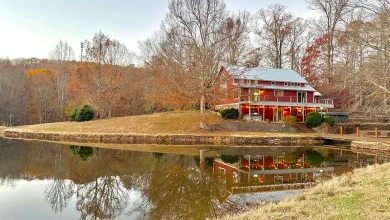
4 beds 3 baths
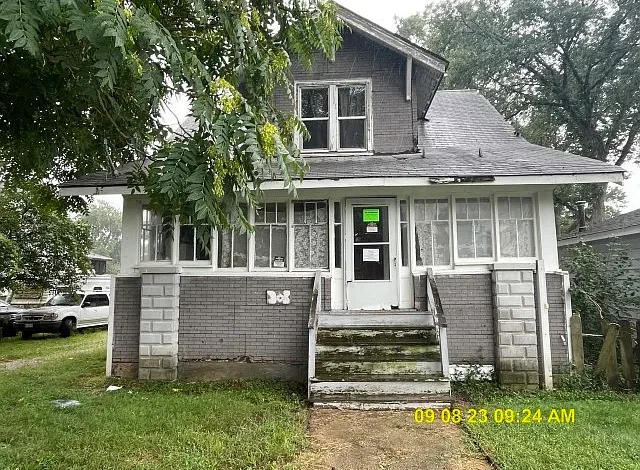
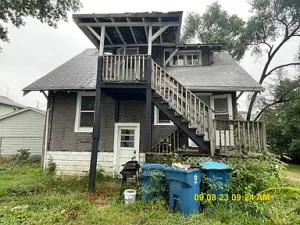
$5,000 House for Sale in Calumet City, Illinois – 4 Bedrooms, 3 Bathrooms, and 0.39 Acres With Major Investment Considerations
A $5,000 Real Estate Listing in Illinois That Deserves a Closer Look
Finding a house advertised for just $5,000 in Illinois may seem like an extraordinary opportunity, especially when the property includes four bedrooms, three listed bathrooms, a two-car garage, and approximately 0.39 acres of land. However, some of the cheapest houses on the real estate market come with substantial financial obligations, renovation requirements, and municipal restrictions that can dramatically change the actual cost of ownership.
Located at 305 River Oaks Dr, Calumet City, IL 60409, this property is currently advertised for $5,000 following a reported $14,000 price reduction on September 24, 2026.
At first glance, the low asking price may attract investors searching for affordable real estate, distressed houses, renovation opportunities, or properties with long-term appreciation potential.
However, this particular listing contains several important conditions that every prospective buyer should understand before considering an offer.
According to the listing, the City of Calumet City requires a $50,000 escrow deposit, the property must be converted back into a single-family residence, and the existing coach house unit must be demolished.
Additionally, the buyer is responsible for all closing and transfer expenses, including costs that sellers would customarily pay.
These requirements make this property significantly different from a conventional $5,000 home purchase.
The advertised price represents only one part of the financial commitment involved.
For experienced real estate investors, contractors, and developers, this property may still be worth investigating. However, a successful investment would depend on understanding the municipal requirements, structural condition, demolition expenses, renovation budget, property taxes, and potential resale value.
This comprehensive guide explores the property’s characteristics, financial obligations, renovation possibilities, and the key questions buyers should investigate before making a decision.
Property Overview – 305 River Oaks Dr, Calumet City, IL 60409
The property is identified as a multifamily residence built in 1929, although the listing specifically requires its conversion back into a single-family home.
Its current classification should not be interpreted as permission to continue operating it as a multifamily property.
| Property Feature | Listing Information |
|---|---|
| Asking Price | $5,000 |
| Price Reduction | $14,000 on September 24, 2026 |
| Address | 305 River Oaks Dr, Calumet City, IL 60409 |
| Property Type | Multifamily, conversion required |
| Bedrooms | 4 |
| Bathrooms | 3 listed, including 2 full |
| Living Area | Not provided |
| Lot Size | 0.39 Acres |
| Year Built | 1929 |
| Construction | Frame |
| Basement | Full, Unfinished |
| Heating | Natural Gas |
| Garage | Attached, 2 Spaces |
| Water | Public |
| Sewer | Public |
| Annual Property Taxes | $13,656 reported |
| Tax-Assessed Value | $240,830 reported |
| Required Municipal Escrow | $50,000 |
| Coach House | Demolition required |
| Sale Condition | Strictly As-Is |
| Survey | Not provided by seller |
| Ownership | Fee Simple |
| MLS Number | 12201002 |
The property offers a combination of existing residential improvements and a relatively sizable parcel of land.
However, the listing’s municipal requirements and reported tax burden are central to determining whether the purchase is financially practical.
Why Is This Illinois Property Listed for Only $5,000?
One of the first questions buyers may ask is why a property with four bedrooms, multiple bathrooms, and a garage would be advertised for such a low amount.
The listing does not provide a complete explanation of the seller’s pricing decision, but it does identify several substantial obligations.
The property must be sold strictly as-is, meaning the seller is not offering to complete repairs before closing.
The buyer must also pay all closing and transfer costs, including customary seller expenses.
Most importantly, the city requires a $50,000 escrow deposit and mandates changes to the property’s existing configuration.
These obligations may substantially reduce the number of interested buyers because the actual financial commitment could be many times greater than the advertised price.
A low listing price may reflect the challenges associated with purchasing, restoring, or bringing a distressed property into compliance.
It is essential to understand that the $5,000 asking price does not establish the property’s market value, renovation cost, or potential profitability.
The property should be evaluated based on its complete acquisition and compliance expenses.
Understanding the Required $50,000 Escrow Deposit
Perhaps the most important financial detail in this listing is the city’s reported requirement for a $50,000 escrow deposit.
For prospective buyers, this condition requires careful investigation before submitting an offer.
An escrow requirement associated with municipal property compliance may be intended to secure the completion of required work.
However, the listing does not explain the complete terms of the escrow arrangement.
Buyers should contact the appropriate Calumet City department to obtain written confirmation of the requirements.
Important details include who must provide the escrow funds, when the deposit must be made, what work it secures, and whether the funds may be released after satisfactory completion.
Buyers should also determine whether any portion of the escrow can be forfeited if required improvements are not completed by the applicable deadline.
The $50,000 escrow should not automatically be treated as a permanent expense, but it also should not be assumed to be refundable without reviewing the city’s written conditions.
Even if the escrow is ultimately returned, the buyer may need sufficient available capital to fund both the deposit and the renovation work separately.
This creates a potentially substantial liquidity requirement.
For an investor with limited cash reserves, the escrow obligation alone may make the transaction impractical.
The Required Conversion Back to a Single-Family Home
Although the property is currently identified as multifamily in the listing, the city requires conversion back to a single-family residence.
This requirement could affect the property’s layout, future use, financing options, and investment strategy.
A buyer should not assume that the existing arrangement can legally continue as multiple residential units.
The conversion may involve removing or modifying certain interior features, updating building systems, obtaining permits, and passing municipal inspections.
The precise scope of work is not specified in the listing.
A contractor familiar with local building requirements should evaluate the structure and develop a realistic budget after reviewing the city’s written instructions.
Potential work might involve changes to kitchens, entrances, utility arrangements, or interior partitions, depending on the existing configuration.
However, no particular interior alteration should be assumed necessary without confirmation from the municipality.
This requirement is particularly important for investors considering rental income.
A property advertised as multifamily might ordinarily attract buyers seeking multiple rental units, but this listing expressly requires single-family conversion.
Any financial projection based on operating multiple dwelling units would therefore be inappropriate unless the city independently authorizes that use.
Mandatory Coach House Demolition – An Important Additional Expense
Another significant condition is the requirement to demolish the coach house unit.
Demolition can involve more than simply removing a structure.
Depending on the building’s condition, size, construction materials, and proximity to other improvements, the project may require professional planning and specialized contractors.
Possible expenses include demolition permits, utility disconnections, hazardous-material surveys, debris transportation, disposal fees, and site restoration.
Older structures may also contain materials that require special handling under applicable environmental regulations.
Because the property was originally built in 1929, buyers should consider whether asbestos-containing materials, lead-based paint, or other regulated substances may be present.
The age of the main residence does not establish the construction date or material composition of the coach house.
A qualified demolition contractor should inspect the structure and provide a written estimate.
Buyers should also verify whether demolition must occur before other renovations and whether the city has established specific completion deadlines.
Failure to account for demolition expenses could significantly distort the total investment budget.
A 1929 Property With Historic Character and Renovation Challenges
Homes built in the early twentieth century can offer architectural details and construction characteristics that appeal to buyers interested in older residential properties.
At the same time, buildings approaching a century in age may require extensive modernization.
This Calumet City property was constructed in 1929 and is described as having a frame structure.
Without a professional inspection, its current structural condition cannot be determined.
Buyers should investigate the foundation, framing, roofing system, exterior walls, windows, doors, and drainage conditions.
Older homes can also have outdated electrical wiring, plumbing systems, insulation, and heating equipment.
Any renovation plan should begin with a comprehensive assessment of safety-related issues.
A qualified home inspector may identify visible problems, while structural engineers or specialized contractors may be needed for more detailed evaluations.
Renovation decisions should be based on documented conditions rather than assumptions about the home’s age.
Four Bedrooms and Three Bathrooms – Interior Possibilities
The listing identifies four bedrooms and three bathrooms, including two full bathrooms.
However, the total interior square footage is not provided.
This missing information makes it difficult to assess room sizes, functional layout, and renovation costs.
Buyers should obtain floor plans, measurements, or inspection information before making assumptions about the amount of usable living space.
Following the required conversion to single-family use, the home may offer possibilities for a traditional residential arrangement.
Potential improvements could include modernizing the kitchen, updating bathrooms, refinishing or replacing flooring, improving lighting, and repairing interior finishes.
However, the final layout must comply with the city’s conversion requirements.
A property with multiple bathrooms may appeal to larger households, but the condition and functionality of those bathrooms remain unknown.
Renovation planning should prioritize structural stability, safe utilities, and code compliance before cosmetic improvements.
The 0.39-Acre Lot – Understanding the Land’s Potential
The listing reports approximately 0.39 acres of land.
That equals roughly 16,988 square feet, which provides a substantial amount of outdoor area relative to many residential parcels.
The land may contribute to the property’s long-term appeal, but buyers should investigate its actual usable area and legal restrictions.
Because the coach house must be demolished, the property’s future outdoor configuration may change.
After demolition and site restoration, buyers could investigate landscaping or other permitted improvements.
However, the removal of an accessory building does not automatically create permission to construct a replacement structure.
Zoning, setbacks, easements, utility locations, drainage requirements, and municipal restrictions may limit future development.
The seller is not providing a survey, making boundary verification particularly important.
A buyer may need to commission a professional survey to confirm property lines and identify potential encroachments.
The Attached Two-Car Garage
The property includes an attached garage with two listed parking spaces.
A functional garage can be a valuable residential feature, particularly in regions with cold winters and seasonal precipitation.
Covered parking may help protect vehicles from snow, ice, and other weather conditions.
A garage can also provide storage for household equipment, depending on its condition and permitted use.
However, the listing does not establish whether the garage is structurally sound or currently functional.
The garage foundation, roof, doors, electrical system, and connection to the residence should be inspected.
If significant repairs are necessary, garage restoration could add to the overall renovation budget.
Buyers should not assume the garage is immediately usable simply because parking spaces are included in the listing.
Full Unfinished Basement – Storage or Additional Repair Liability?
A full unfinished basement is another listed feature.
Basements can offer storage space and access to building systems, but their value depends heavily on their condition.
Older basements may experience moisture intrusion, foundation movement, inadequate drainage, or deteriorating structural materials.
A professional inspection should evaluate visible cracks, water damage, floor conditions, and signs of persistent humidity.
Buyers should also investigate whether the basement has experienced flooding.
Because the basement is unfinished, it should not automatically be included in finished residential square footage.
Any plan to convert basement space into living accommodation would require review of applicable building codes, ceiling-height standards, emergency egress requirements, and other safety regulations.
For a distressed property, basement repairs may be among the most important and potentially expensive improvements.
Estimated Renovation and Compliance Costs
The property’s unusually low asking price makes it especially important to develop a comprehensive budget.
The following amounts are hypothetical planning scenarios rather than estimates for this specific home.
| Expense Category | Illustrative Budget |
|---|---|
| Property Purchase | $5,000 |
| Closing and Transfer Expenses | $2,000–$8,000 |
| Coach House Demolition | $8,000–$25,000 |
| Structural and Exterior Repairs | $15,000–$50,000 |
| Electrical and Plumbing Improvements | $10,000–$30,000 |
| Interior Renovation | $15,000–$45,000 |
| Single-Family Conversion Work | To Be Determined |
| Municipal Escrow | $50,000 Required |
These figures are examples for financial planning only. Actual contractor estimates could fall outside these ranges.
The categories may overlap, and the budget excludes several possible expenses, including environmental remediation, major foundation reconstruction, financing charges, insurance, taxes, and unexpected repairs.
The $50,000 escrow is listed separately because its ultimate treatment depends on municipal requirements.
Buyers should determine whether the escrow funds can be used toward required work, must remain restricted, or are released only after completion.
A purchase involving significant demolition and renovation work may require access to substantial capital beyond the initial asking price.
The $13,656 Annual Property Tax Figure
One of the most striking financial details in the listing is the reported annual property tax amount of $13,656.
This figure is much higher than the property’s $5,000 asking price.
Based on the reported annual amount, the equivalent monthly tax expense would be approximately $1,138.
That does not mean the buyer will necessarily owe the same amount after purchasing the property.
Actual future taxes depend on applicable assessments, exemptions, ownership changes, and local tax rules.
However, the reported amount is significant enough to require verification before making an offer.
The listing also reports a tax-assessed value of $240,830.
An assessed value is not the same as an appraisal or current market value.
Buyers should obtain current tax records and investigate whether any outstanding taxes, penalties, special assessments, or liens affect the property.
It may also be appropriate to consult a local property tax professional about assessment procedures and potential appeal options.
A low purchase price cannot compensate for an unsustainable ownership expense if the tax burden remains high.
Understanding the Real Cost of a $5,000 House
A property advertised for $5,000 may appear accessible to buyers with relatively limited savings.
However, this transaction illustrates why acquisition cost and total project cost must be evaluated separately.
Consider a hypothetical example in which a buyer pays $5,000 for the property, incurs $5,000 in transaction expenses, spends $15,000 on demolition, and completes $75,000 in renovations and conversion work.
The combined project expense would reach $100,000 before property taxes, insurance, financing costs, and other holding expenses.
If the required $50,000 escrow must remain deposited separately during construction, the buyer’s peak cash requirement could be considerably higher.
This scenario is illustrative and does not represent an actual contractor estimate.
The final financial outcome would depend on the property’s condition, the city’s requirements, the cost of completing the project, and the market value of the finished residence.
Investors should develop conservative budgets and include contingency reserves.
Is This Property Suitable for a Fix-and-Flip Investment?
Fix-and-flip investing involves purchasing a property, renovating it, and attempting to resell it at a profit.
The strategy can be attractive when the acquisition price is low, but profitability depends on the relationship between total costs and the eventual resale price.
For this property, the required demolition, municipal escrow, and single-family conversion introduce additional complexity.
Before proceeding, investors should research comparable sales of renovated single-family homes in Calumet City.
They should compare properties with similar bedroom counts, lot sizes, garages, and overall condition.
An accurate after-repair value estimate should rely on recent local transactions rather than broad assumptions about the Illinois housing market.
Investors must also consider how long the property may take to renovate and sell.
Extended holding periods can increase costs through property taxes, insurance, utilities, maintenance, and financing.
If the project encounters unexpected structural problems or municipal delays, projected profit margins may decline.
The listing may warrant investigation by experienced investors, but the $5,000 asking price alone does not establish a profitable flipping opportunity.
Could the Home Become a Long-Term Rental Property?
Some investors may consider restoring the property for long-term rental income.
However, the required conversion to single-family use is essential to any rental strategy.
The listing does not support an assumption that the property can legally operate as multiple rental units.
A potential landlord would need to verify rental licensing, occupancy requirements, inspections, and other local regulations.
Rental income should be estimated using comparable single-family rental properties in the surrounding market.
Expenses would include property taxes, insurance, maintenance, vacancies, repairs, and property management if applicable.
Given the reported annual tax amount, investors should carefully examine whether projected rental revenue could support operating expenses.
A positive cash-flow estimate should be based on documented local rental data and verified ownership costs.
Without that research, the property’s rental profitability cannot be established.
Living in Calumet City, Illinois
Calumet City is located in Cook County in northeastern Illinois, near the Indiana state line and within the broader Chicago metropolitan region.
Its location may appeal to buyers who want access to metropolitan employment opportunities while considering housing outside central Chicago.
The community includes established residential neighborhoods and access to regional roads and commercial services.
However, buyers should evaluate the specific property’s surroundings rather than relying exclusively on general information about the city.
Factors worth investigating include commute times, local transportation, grocery access, healthcare facilities, schools where relevant, and nearby amenities.
Property condition and neighborhood-level market activity can vary significantly.
For investors, local resale demand and comparable sales are particularly important.
A property should be assessed within its immediate market rather than assuming that broader Chicago-area housing trends apply equally to every location.
Financing Challenges With Distressed Real Estate
Traditional mortgage financing may be difficult for a property with substantial compliance obligations and unknown repair requirements.
Mortgage lenders typically evaluate property condition, appraised value, borrower qualifications, and loan eligibility.
A $5,000 purchase price can also create practical financing challenges because some lenders do not offer conventional mortgages for very small loan amounts.
The mandatory escrow and demolition requirements may introduce additional restrictions.
Buyers considering renovation financing should consult lenders familiar with distressed properties and construction projects.
Private financing or investor capital may be alternatives in some circumstances, but these options can involve higher costs and additional risks.
Cash buyers should also maintain sufficient reserves.
Completing the purchase without a mortgage does not eliminate renovation, compliance, or ownership expenses.
Insurance Considerations for a Property Sold As-Is
Insurance is another essential part of the acquisition process.
Properties that are vacant, significantly deteriorated, or undergoing extensive renovations may require specialized coverage.
A standard homeowners insurance policy may not provide appropriate protection during major construction work.
Buyers should discuss the property’s condition and intended renovation plans with qualified insurance professionals.
Potential coverage needs may include vacant-property insurance, builder’s risk coverage, liability protection, and contractor-related insurance requirements.
Coverage availability and premiums can vary depending on property condition, location, and insurer underwriting rules.
Before closing, buyers should confirm that suitable insurance can be obtained.
An uninsured or inadequately insured property may expose the owner to substantial financial losses.
Environmental and Building Safety Considerations
Because the home was constructed in 1929, environmental and safety assessments may be important.
Older residential buildings can contain lead-based paint, asbestos-containing materials, outdated electrical components, or other hazards.
The presence of these materials has not been confirmed for this property.
However, buyers should consider appropriate testing before demolition or major renovation.
Lead-based paint regulations can be particularly relevant to residential properties built before 1978.
Renovation work may also trigger requirements related to permits, inspections, contractor qualifications, and safe disposal of construction materials.
The mandatory coach house demolition makes environmental due diligence especially important.
Professional assessments can help identify potential risks before work begins.
Why the Property Has Been on the Market for an Extended Period
The supplied listing reports that the property has been advertised on Zillow for approximately 711 days.
It also identifies an original market date of October 31, 2024.
An extended listing period can result from many factors, including pricing, condition, financing limitations, title issues, or complicated transaction requirements.
In this case, the listing clearly identifies several significant obligations that may affect buyer interest.
However, the exact reason the property has remained available cannot be determined from the supplied information alone.
The reported $14,000 price reduction suggests the advertised asking price has changed substantially.
Prospective buyers should ask the listing agent whether previous offers were received and whether any transactions failed to close.
They should also confirm whether the municipal requirements have changed since the property was initially listed.
Understanding the history of the listing may help buyers assess the transaction’s complexity.
Important Questions to Ask Before Purchasing
A buyer considering this property should obtain written answers to several essential questions.
-
What are the exact conditions of the city’s $50,000 escrow requirement?
-
When must the escrow be deposited, and under what circumstances can it be released?
-
What specific work is required to convert the property into a single-family residence?
-
What is the deadline for demolishing the coach house?
-
Are there outstanding building violations, fines, liens, or unpaid taxes?
-
What is the current structural condition of the main house and garage?
-
Are the electrical, plumbing, heating, and utility systems operational?
-
What are the complete buyer-paid closing and transfer expenses?
-
Is a current property survey available from another source?
-
What permits and inspections are required before legal occupancy?
These questions can help establish whether the project is financially and practically feasible.
Buyers should seek independent legal, inspection, and construction advice before making a binding commitment.
Who Should Consider This $5,000 Illinois Property?
This listing may be most relevant to experienced real estate investors, licensed contractors, and buyers familiar with complex municipal renovation projects.
An investor with sufficient capital and knowledge of local regulations may be better positioned to evaluate the risks.
A contractor who can accurately estimate structural repairs and demolition costs may also have an advantage.
However, this property is unlikely to be appropriate for someone seeking an immediately habitable home at a $5,000 total cost.
First-time buyers with limited savings should be particularly cautious.
The mandatory escrow, demolition obligation, reported property taxes, and unknown renovation requirements could create significant financial exposure.
A buyer’s experience and financial capacity are just as important as the advertised asking price.
Final Thoughts – Is 305 River Oaks Dr Worth Investigating?
The property at 305 River Oaks Dr, Calumet City, Illinois, is an unusual real estate listing.
For just $5,000, it offers an advertised four-bedroom residential structure, three listed bathrooms, a full basement, an attached two-car garage, and approximately 0.39 acres of land.
Those features may initially make the property appear to be an exceptional bargain.
However, the listing’s restrictions fundamentally change the financial picture.
The city requires a $50,000 escrow, conversion to single-family use, and demolition of the coach house.
The buyer must also assume all closing and transfer costs, while the seller offers the property strictly as-is and without a survey.
The reported $13,656 annual property tax amount introduces another major issue requiring verification.
For experienced investors who can obtain accurate renovation estimates and navigate municipal compliance requirements, the property may justify further research.
For buyers focused primarily on the low purchase price, the financial obligations could be unexpectedly large.
The most responsible approach is to investigate the property’s legal status, structural condition, tax records, escrow requirements, and complete renovation budget before submitting an offer.
A low asking price can create an opportunity, but only when the total costs and risks are understood.
Listing Details and Contact Information
Property Address: 305 River Oaks Dr, Calumet City, IL 60409
Advertised Asking Price: $5,000
Price Reduction: $14,000, reported September 24, 2026
Listing Agents: Anthony Disano and William Volpe
Brokerage: Parkvue Realty Corporation
MLS Number: 12201002
Original Market Date: October 31, 2024
Listing Last Updated: September 29, 2026
All property details are based on the supplied listing information and should be independently verified. Prices, availability, taxes, municipal requirements, and transaction terms may change. The renovation scenarios discussed are illustrative and do not constitute appraisals, contractor quotations, financial advice, or guarantees of investment performance.
Listed on Zillow