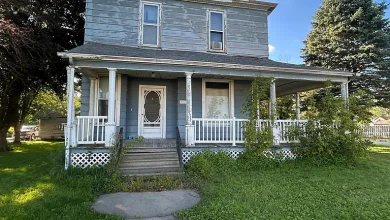
Historic 7-Bedroom Home for Sale in Bedford, Pennsylvania – 3125 Main Rd Listed for Just $39,500
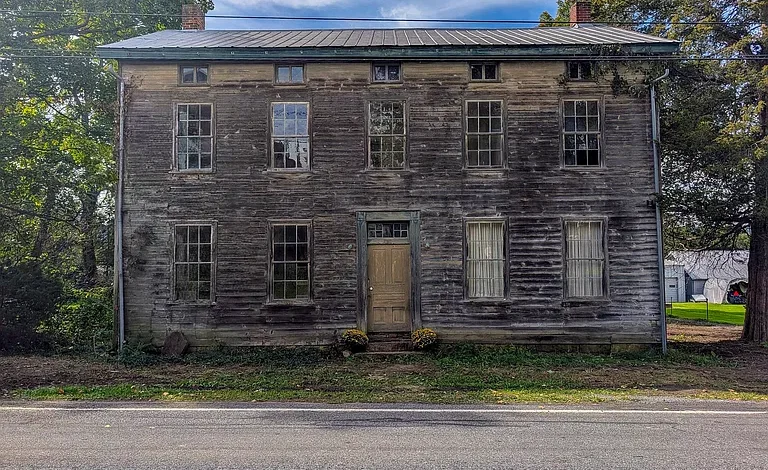
Historic 7-Bedroom Home for Sale in Bedford, Pennsylvania – 3125 Main Rd Listed for Just $39,500
Discover a Rare 1800s Historic Property With 3,888 Square Feet and Incredible Restoration Potential
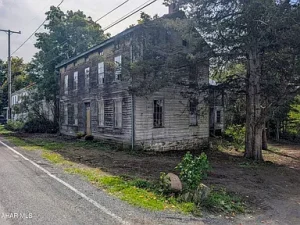
Finding a historic home with nearly 4,000 square feet of living space for less than $40,000 is an unusual opportunity in today’s real estate market. Located at 3125 Main Rd, Bedford, PA 15522, this remarkable property is listed for just $39,500, offering buyers a chance to explore a piece of Pennsylvania history while considering an ambitious renovation project.
Originally built in 1800, this seven-bedroom residence has a fascinating background that distinguishes it from ordinary fixer-upper homes. According to the property listing, the building once served as a dormitory for the Allegheny Male and Female Seminary of the Baltimore Conference of the Methodist Episcopal Church. Following the seminary’s closure during the Civil War era, the building reportedly became the Cessna Hotel before eventually transitioning into a private residence.
Today, the property stands as a reminder of the region’s architectural and educational history. Its traditional Colonial-style design, wood siding, stone foundation, multiple fireplaces, and spacious interior offer a foundation for buyers interested in historic restoration.
However, this is not a move-in-ready home. The property requires substantial renovations, has no sewer connection, and is being sold strictly as-is for cash.
For experienced renovators, preservation enthusiasts, and investors who understand the challenges of restoring older buildings, this Pennsylvania property presents an opportunity worth investigating.
Property Overview: Key Features and Listing Information
| Property Detail | Information |
|---|---|
| Address | 3125 Main Rd, Bedford, PA 15522 |
| Asking Price | $39,500 |
| Property Type | Single-Family Residence |
| Bedrooms | 7 |
| Bathrooms | Not specified |
| Total Reported Living Area | 3,888 sq. ft. |
| Year Built | 1800 |
| Lot Size | 0.45 acres |
| Price per Square Foot | Approximately $10 |
| Architectural Style | Colonial / Traditional |
| Foundation | Stone |
| Exterior | Wood siding |
| Roof | Metal, pitched |
| Heating | None |
| Cooling | None |
| Sewer | None |
| Water | Public |
| Electricity | Available |
| Fireplaces | 3 wood-burning |
| Basement | Partial, unfinished |
| Annual Property Taxes | $315 |
| Tax Assessed Value | $17,000 |
| Purchase Terms | Cash only |
| MLS Number | 81480 |
The asking price is particularly notable when compared with the building’s reported size. At approximately $10 per square foot, the property has a low advertised acquisition cost relative to its floor area.
Nevertheless, the purchase price represents only one component of the total financial commitment. Renovation expenses, infrastructure installation, inspections, permits, and ongoing maintenance could substantially increase the amount required to make the property usable.
The Fascinating History Behind 3125 Main Rd
One of the most compelling characteristics of this property is its connection to nineteenth-century Pennsylvania history.
The listing states that the building originally served as a dormitory for the Allegheny Male and Female Seminary, an educational institution associated with the Baltimore Conference of the Methodist Episcopal Church.
During the nineteenth century, religious organizations played an important role in establishing educational institutions throughout the United States. Seminaries and academies often provided academic instruction and residential accommodations for students.
Buildings associated with these institutions were frequently designed to accommodate larger groups of people, which may help explain the substantial size and seven-bedroom configuration of this property.
According to the seller’s description, the Civil War contributed to the seminary’s closure.
Afterward, the building reportedly operated as the Cessna Hotel.
This transition from educational housing to hospitality use represents an interesting chapter in the building’s history.
Hotels in small Pennsylvania communities historically provided accommodations for travelers, merchants, and visitors passing through the region.
Eventually, the property ceased operating as a hotel and became a primary residence.
The listing indicates that it has remained residential since that time.
Although this history is intriguing, prospective buyers interested in preservation should verify historical details through local archives, historical societies, or available property records.
Original documents, photographs, and ownership records may provide additional information about the building’s past.
A Historic Home Built in 1800
Constructed in 1800, the property is more than two centuries old.
Buildings from this period can provide a distinctive architectural experience, particularly when original construction materials and design elements remain intact.
The property is described as Colonial and Traditional in architectural style.
Its wood siding, stone foundation, and multiple wood-burning fireplaces reflect characteristics commonly associated with older American residential buildings.
Historic homes often differ significantly from modern construction.
Room proportions, ceiling heights, structural framing, staircases, and interior finishes may reflect construction methods that were common at the time of original development.
For preservation-minded buyers, these differences can contribute to a property’s appeal.
However, older construction also requires specialized attention.
Structural systems may have undergone multiple modifications over the years, and some materials may no longer meet contemporary building standards.
A professional inspection conducted by someone familiar with historic properties is particularly important.
Buyers should avoid assuming that the original construction date guarantees architectural integrity or structural soundness.
The property’s age makes careful evaluation essential.
Seven Bedrooms and Nearly 4,000 Square Feet of Interior Space
One of the property’s most impressive reported features is its size.
With seven bedrooms and approximately 3,888 square feet of interior area, 3125 Main Rd offers substantially more space than many conventional single-family homes.
The listing identifies approximately 2,928 square feet of finished area above ground and another 960 square feet reported below ground.
It also describes a partial, unfinished basement, so buyers should verify how the reported finished and livable areas were calculated.
The building includes three or more levels, providing a multistory layout that may offer flexibility for restoration planning.
Seven bedrooms could accommodate a large household, extended family, or a variety of residential uses, depending on the final renovation design and applicable regulations.
However, the number of bathrooms is not specified.
More importantly, the property currently lacks a sewer system, meaning the presence of seven bedrooms should not be interpreted as evidence that the building is ready for residential occupancy.
Before planning a renovation, buyers should determine which rooms meet current legal bedroom requirements and whether the building can be adapted to modern habitability standards.
The existing floor plan may offer opportunities for creative restoration, but structural changes and new plumbing installations would require careful professional planning.
Why the $39,500 Asking Price Deserves Attention
The advertised price of $39,500 may initially appear attractive for a property of this size and age.
At approximately $10 per square foot, the asking price is unusually low compared with the replacement cost of constructing a similarly sized building.
However, low acquisition prices often reflect substantial physical or functional limitations.
In this case, the listing openly identifies several important challenges.
The property requires renovations, has no installed heating or cooling systems, and does not have a sewer connection.
It also features single-pane windows, an older stone foundation, and historic construction materials that may require specialized repairs.
These characteristics can create significant expenses.
For example, a buyer might need to install a code-compliant wastewater system, modernize electrical equipment, repair structural components, improve insulation, and install heating and plumbing systems.
The total cost of these improvements could exceed the property’s asking price.
Therefore, buyers should evaluate the complete project budget rather than focusing only on the purchase price.
An inexpensive property is not necessarily an inexpensive renovation.
A Major Renovation Opportunity for Experienced Buyers
3125 Main Rd is best understood as a substantial historic restoration project rather than a conventional ready-to-occupy residence.
The listing clearly states that the home needs renovations and care.
It is being sold as-is, meaning the seller is not offering a general commitment to complete repairs before closing.
For experienced renovators, this arrangement may provide flexibility to plan improvements according to their own priorities.
However, it also transfers significant responsibility to the purchaser.
A successful restoration should begin with a comprehensive property assessment.
The first priority is determining whether the building’s foundation, framing, roof, and exterior envelope are structurally sound.
Next, buyers should evaluate essential infrastructure, including wastewater disposal, water distribution, electrical systems, and heating.
Interior improvements should generally follow once the building is structurally stable and protected from moisture.
Historic features may be worth preserving wherever practical, but safety and compliance should remain central considerations.
Buyers should obtain detailed contractor estimates before making a final financial commitment.
No Sewer Connection: One of the Most Important Property Details
Perhaps the most significant practical limitation of this property is the absence of a sewer system.
The listing specifically states that the home has no sewer connection and includes a three-hole outhouse.
This unusual feature contributes to the property’s historical character, but it also highlights the need for major infrastructure improvements.
Modern residential occupancy generally requires an approved method of wastewater disposal.
Depending on local regulations and site conditions, a buyer may need to investigate whether a septic system can be installed or whether a public sewer connection is available.
Neither option should be assumed feasible without verification.
A septic system may require soil testing, site evaluation, engineering, permits, and installation by qualified contractors.
The property’s 0.45-acre lot could create additional design considerations depending on soil conditions, setbacks, water sources, and local requirements.
A buyer should consult the relevant local sewage enforcement authorities before purchasing.
This is especially important because the feasibility and cost of an approved wastewater system could determine whether the property can realistically be restored for residential use.
Public Water and Available Electricity
Although the property lacks sewer infrastructure, the listing identifies public water service and available electricity.
These are potentially useful characteristics for a restoration project.
Public water access may reduce the need to develop a private well, although the condition of existing plumbing and service connections should be verified.
Likewise, electricity availability does not necessarily mean the building has a modern or fully operational electrical system.
An older home may contain outdated wiring, insufficient electrical capacity, or equipment that requires replacement.
Before planning renovations, buyers should request an electrical inspection and determine the condition of the service panel, circuits, outlets, and wiring.
Modern residential requirements may include additional circuits, grounding, smoke detectors, and other safety improvements.
If substantial electrical work is necessary, it should be included in the renovation budget.
The availability of utilities is encouraging, but the property’s actual infrastructure condition remains an important unknown.
Three Wood-Burning Fireplaces and Traditional Interior Features
The listing identifies three wood-burning fireplaces, which may be among the property’s most distinctive historic features.
Fireplaces were an important component of heating systems in older American buildings.
Today, original fireplaces often serve as architectural focal points, contributing to the atmosphere of historic interiors.
However, the presence of a fireplace does not mean it is safe or operational.
Chimneys, flues, masonry, and hearth structures may deteriorate over time.
Before using any fireplace, a qualified chimney professional should inspect the system.
Repairs may be necessary to address damaged masonry, blocked flues, missing liners, or other hazards.
The property also features wood flooring, another traditional material that may be suitable for restoration.
Depending on its condition, original wood flooring can sometimes be repaired and refinished.
However, damaged or structurally compromised flooring may require replacement.
Preserving authentic materials can contribute to the building’s historical appearance, but the feasibility of restoration must be evaluated individually.
Stone Foundation and Structural Considerations
The property’s stone foundation is another important characteristic.
Stone foundations were widely used in older American buildings and can remain serviceable for long periods when properly maintained.
However, their condition depends on factors such as drainage, soil movement, moisture exposure, and previous repairs.
Buyers should inspect the foundation for visible cracks, displacement, deteriorated mortar, and signs of water intrusion.
The partial basement should also be evaluated for moisture and structural issues.
Older foundations sometimes require specialized repointing techniques or drainage improvements.
Using inappropriate repair materials can potentially damage historic masonry.
For this reason, contractors experienced in traditional stone construction may be particularly valuable.
A structural engineer can help determine whether observed defects are cosmetic or indicate more significant problems.
Because the building has multiple stories, the condition of the foundation and structural framing should be established before planning major interior renovations.
Metal Roof and Exterior Wood Siding
According to the listing, the home has a pitched metal roof and wood siding.
Metal roofing can provide durable weather protection when properly installed and maintained.
However, the listing does not specify the roof’s age or current condition.
An inspection should examine roof panels, fasteners, flashing, drainage, and potential corrosion.
Leaks can cause significant damage to older wood framing and interior finishes.
Exterior wood siding also requires attention.
Potential maintenance issues include peeling paint, moisture damage, wood rot, and insect activity.
Depending on the siding’s condition, restoration may involve repairs, selective replacement, painting, or other protective treatments.
Because the property was built long before modern lead-paint restrictions, buyers should consider the possibility of lead-based paint.
Appropriate testing and lead-safe renovation practices may be required.
Exterior restoration should prioritize weather protection while respecting the building’s historical character.
Nearly Half an Acre of Land in Rainsburg, Pennsylvania
The property sits on approximately 0.45 acres in the Rainsburg area of Bedford County.
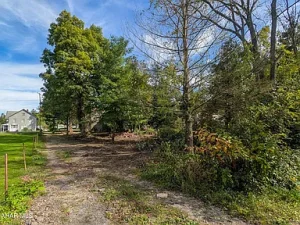
The lot is described as level, wooded, and accessible year-round.
For buyers considering a historic restoration, outdoor space can provide opportunities for landscaping, garden areas, and improved access.
The listing also identifies a private yard, covered porch, deck, and driveway parking.
These features may enhance the property’s usability after appropriate repairs.
However, the available outdoor area must also be considered in connection with wastewater infrastructure.
If a new septic system is required, its location and necessary setbacks may affect how much of the lot remains available for other uses.
Buyers should also investigate drainage patterns and potential environmental limitations.
The property’s surroundings may appeal to people who appreciate smaller Pennsylvania communities and historic residential settings.
Nevertheless, buyers should personally evaluate the location, road access, nearby services, and neighborhood characteristics before purchasing.
The Appeal of Historic Properties in Bedford County
Bedford County is located in south-central Pennsylvania and is known for its rural landscapes, small communities, and historical heritage.
The broader region includes mountains, wooded areas, agricultural land, and longstanding towns.
Historic properties can contribute to the identity of these communities by preserving architectural features and stories associated with earlier generations.
For buyers interested in restoration, an older property may provide an opportunity to preserve local history.
However, demand for restored historic homes varies significantly by location.
A property’s future resale value depends on numerous factors, including renovation quality, infrastructure, market conditions, and buyer preferences.
It would be inappropriate to assume that restoring this building will automatically produce a financial profit.
Prospective investors should examine recent sales of comparable properties in Bedford County and consult local real estate professionals.
The most relevant comparisons may include large older homes, renovated historic residences, and properties requiring substantial rehabilitation.
Could This Historic Building Become a Bed-and-Breakfast?
Given the building’s reported history as the Cessna Hotel, some buyers may wonder whether it could be converted into a bed-and-breakfast or another hospitality-related property.
Its seven bedrooms, large interior, and historic character could make the concept interesting to explore.
However, the property’s previous use as a hotel does not establish that hospitality operations would be permitted today.
Modern lodging businesses may be subject to zoning, fire safety, accessibility, building code, health, insurance, and licensing requirements.
The absence of a sewer system is a particularly important limitation.
A commercial lodging operation may require more extensive infrastructure than a single-family residence.
Before considering such a project, buyers should consult local officials and qualified professionals to determine whether the proposed use is legally and technically feasible.
A feasibility study should also examine local tourism demand, operating expenses, renovation costs, and expected occupancy.
Without this research, a hospitality conversion should be viewed only as a speculative possibility.
Could the Property Be Divided Into Multiple Residential Units?
Another potential concept involves converting the large building into multiple apartments.
With 3,888 square feet and seven reported bedrooms, the existing structure may initially appear suitable for different residential layouts.
However, the property is currently listed as a single-family residence.
There is no confirmation that it can legally be subdivided into additional housing units.
Such a conversion could require zoning approval, separate entrances, fire-rated construction, emergency exits, plumbing systems, and other improvements.
Local building codes and occupancy requirements would determine whether the concept is possible.
The absence of sewer infrastructure could further complicate any proposed increase in residential density.
Investors should never base a purchase decision on an assumed conversion that has not been approved.
Instead, they should obtain written guidance from the appropriate authorities before developing a financial plan.
Understanding the True Cost of Renovating a Historic Home
Renovating a building constructed in 1800 can be significantly different from remodeling a modern residence.
Older structures may contain hidden defects that are not visible during an initial walkthrough.
Potential expenses include structural repairs, roof restoration, electrical modernization, plumbing installation, heating systems, insulation, window repairs, interior finishes, and wastewater infrastructure.
For a property of this size, even relatively modest per-square-foot renovation costs can produce a substantial total budget.
Consider the following hypothetical scenarios based on 3,888 square feet:
| Illustrative Renovation Budget | Total Cost |
|---|---|
| $25 per sq. ft. | $97,200 |
| $50 per sq. ft. | $194,400 |
| $75 per sq. ft. | $291,600 |
| $100 per sq. ft. | $388,800 |
These figures are mathematical examples, not contractor estimates or predictions of the property’s actual renovation costs.
A historic building requiring major structural or infrastructure improvements could cost more, while the scope of certain projects may be narrower.
The purpose of this comparison is to demonstrate how quickly renovation expenses can exceed the initial $39,500 purchase price.
Buyers should obtain detailed professional estimates and maintain an appropriate contingency reserve.
Cash-Only Purchase: What Buyers Need to Know
The seller specifies that 3125 Main Rd is available for cash purchase only.
This is an important restriction.
Traditional mortgage lenders generally require properties to satisfy certain standards relating to safety, condition, and habitability.
A home without an approved wastewater system or functioning heating may not qualify for many conventional residential mortgage programs.
Cash buyers may have greater flexibility when purchasing distressed properties, but they also assume the responsibility of funding repairs.
A cash purchase does not eliminate closing costs, title expenses, inspections, property taxes, or other obligations.
Buyers should confirm proof-of-funds requirements and the terms of the purchase agreement.
They should also consider whether enough capital will remain available after closing to complete essential improvements.
Purchasing a property for $39,500 without sufficient funds for necessary repairs could create financial difficulties.
Annual Property Taxes and Ownership Expenses
The listing reports annual property taxes of approximately $315.
This amount is relatively small compared with the potential renovation budget, but it should not be treated as a permanent guarantee.
Property assessments and tax obligations can change.
The listing also identifies a tax assessed value of $17,000.
An assessed value is used for property taxation and should not be confused with a professional appraisal or an estimate of market value.
Buyers should verify tax records and ask whether substantial renovations could affect future assessments.
Other ownership expenses may include insurance, utilities, property maintenance, security, and liability protection.
Insuring a vacant or significantly deteriorated historic building may be more complicated than insuring a conventional occupied residence.
Some insurance providers may require additional inspections or offer specialized policies.
Obtaining an insurance quotation before closing is therefore advisable.
Environmental and Safety Issues in Older Buildings
Properties constructed before modern building standards may contain materials that require special handling.
Potential concerns include lead-based paint, asbestos-containing materials, outdated electrical wiring, and deteriorated structural components.
Not every historic building contains every hazard, and the listing does not confirm the presence of specific environmental problems.
Nevertheless, buyers should consider appropriate testing and professional evaluation.
Lead-based paint is especially relevant because the building predates 1978.
Renovation activities that disturb painted surfaces may require lead-safe work practices.
Older buildings can also contain unconventional electrical installations or plumbing materials.
A comprehensive inspection can help identify issues that should be addressed before occupancy.
Safety improvements may include smoke alarms, carbon monoxide detectors, safe stairways, functional exits, and appropriate fire protection.
For a multistory residence with seven bedrooms, emergency egress and fire safety deserve particular attention.
The Importance of Preserving Historic Architectural Character
Restoring a historic property involves balancing modern functionality with architectural preservation.
For 3125 Main Rd, the building’s reported history as a seminary dormitory and later hotel provides an additional reason to investigate its original design.
Preservation-minded buyers may wish to retain original woodwork, flooring, fireplaces, staircases, or exterior details where possible.
Before removing historic materials, it can be helpful to document their condition and determine whether they can be repaired.
Local historical organizations may provide guidance or archival resources.
Buyers should also investigate whether the property has any formal historic designation or preservation restrictions.
The listing does not establish that the building is individually listed on a historic register.
Such status should be verified independently.
Some historic rehabilitation projects may qualify for specific incentive programs, but eligibility depends on property status, proposed use, project requirements, and applicable law.
No particular grant or tax credit should be assumed available for this property.
Evaluating the Property as a Real Estate Investment
From an investment perspective, the central question is not simply whether the asking price is low.
The more important question is whether the total acquisition and restoration costs are reasonable relative to the property’s eventual value and intended use.
For example, consider a hypothetical purchase at the asking price of $39,500.
If a buyer subsequently spends $150,000 on renovations and $15,000 on closing costs, professional services, permits, and contingencies, the total investment would reach approximately $204,500.
If renovation costs increase to $250,000 with the same additional costs, the total would reach approximately $304,500.
These examples illustrate why financial planning is essential.
The completed property’s market value would need to be evaluated independently.
Investors should consider the local market for large historic homes, the availability of qualified contractors, and the potential time required to complete renovations.
Holding costs during construction can also affect the final investment.
A restoration project may take considerably longer than a conventional cosmetic renovation.
Questions Buyers Should Ask Before Making an Offer
Prospective buyers should investigate several important matters before purchasing the property.
First, they should confirm whether an approved septic system or another legally acceptable wastewater solution can be installed.
Second, they should determine the condition of the foundation, roof, framing, and other structural components.
Third, they should obtain estimates for electrical, plumbing, heating, and other essential systems.
The reported bedroom count and interior square footage should also be verified.
Buyers should ask whether the property has any outstanding code violations, open permits, liens, or title concerns.
It is important to establish whether the building can legally be occupied after the proposed repairs.
A qualified contractor or architect familiar with historic structures may help develop a realistic renovation plan.
For investors, a local real estate professional can assist with comparable sales and potential resale value.
These steps can reduce uncertainty, although no inspection or analysis can eliminate every risk.
Zillow Listing Activity and Buyer Interest
According to the supplied listing details, 3125 Main Rd appeared on Zillow on October 7, 2026.
The listing reported approximately 2,746 views and 213 saves after four days on the platform.
It also displayed a platform-generated indicator suggesting the property could sell faster than nearby listings.
These metrics may reflect online interest in the property’s unusual price, size, or historic background.
However, listing views and saves do not prove that qualified buyers are preparing offers.
They also do not establish the property’s market value or investment profitability.
Buyers should verify current availability and listing terms directly with the real estate representative.
The property is listed by Betty Everly of Charis Realty Group Bedford, according to the supplied information.
Who Might Be Interested in This Property?
3125 Main Rd may be most relevant to buyers with experience handling complex renovation projects.
Historic preservation enthusiasts may appreciate the building’s connection to nineteenth-century education and hospitality.
Experienced contractors may be interested in evaluating whether the structure can be restored efficiently.
Investors who specialize in distressed properties might examine the purchase price alongside the potential cost of rehabilitation.
Buyers seeking a distinctive long-term residence could also consider the property, provided they have the resources and patience required for extensive restoration.
However, the building may be unsuitable for buyers seeking immediate occupancy or predictable renovation expenses.
The lack of sewer infrastructure and other essential systems creates substantial uncertainty.
A successful project would likely require careful coordination among inspectors, contractors, engineers, local authorities, and financial professionals.
Final Thoughts: A $39,500 Historic Home With an Extraordinary Past
3125 Main Rd in Bedford, Pennsylvania, is not an ordinary real estate listing.
Built in 1800 and reportedly used first as a seminary dormitory and later as the Cessna Hotel, this property carries a distinctive historical background.
Its seven bedrooms, approximately 3,888 square feet, three wood-burning fireplaces, wood flooring, stone foundation, and traditional architectural style contribute to its character.
The 0.45-acre lot, public water access, available electricity, and driveway parking provide additional features for buyers to evaluate.
At an asking price of $39,500, the property may initially attract attention because of its size and unusually low advertised price per square foot.
However, its condition and infrastructure limitations are equally important.
The home requires renovations, has no sewer system, and lacks installed heating and cooling systems. It is offered as-is and is available for cash purchase only.
For the right buyer, the property could represent an opportunity to investigate the restoration of a historically significant building.
For others, the financial and technical challenges may outweigh the appeal of the low purchase price.
A thorough inspection, wastewater feasibility assessment, detailed renovation budget, and review of local regulations are essential before proceeding.
The building’s future will depend on the feasibility of restoring it safely, legally, and within a realistic budget.
For buyers who appreciate historic architecture and are prepared for the complexities of major rehabilitation, 3125 Main Rd offers a distinctive property to explore in Bedford County, Pennsylvania.
Property Address: 3125 Main Rd, Bedford, PA 15522
Asking Price: $39,500
Property Type: Historic Single-Family Residence
Bedrooms: 7
Reported Interior Area: 3,888 Square Feet
Lot Size: 0.45 Acres
Year Built: 1800
MLS Number: 81480
Listing Agent: Betty Everly
Brokerage: Charis Realty Group Bedford
Disclaimer: Property information is based on the supplied real estate listing and has not been independently verified. Pricing, availability, physical condition, and other details may change. The property is being sold as-is for cash and requires substantial due diligence. Renovation budgets and potential future uses discussed in this article are illustrative, not guarantees. Buyers should consult qualified professionals and verify all information before making a purchase.
Listed on Zillow