154.69 Acres
$1,000 Auction Opportunity: 154.69-Acre Working Farm in North Stonington, Connecticut
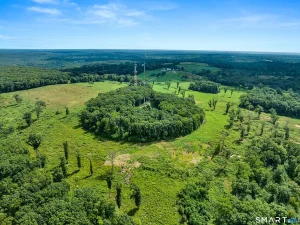
A rare agricultural property in North Stonington, Connecticut is drawing attention for its scale, existing infrastructure, working-farm history, and unusual online auction format. Located at 118-A&D Wintechog Hill Road, North Stonington, CT 06359, the offering includes approximately 154.69 acres, plus an additional 0.22-acre tax lot, and is being sold together as one package through a reserved online auction.
The listing currently shows an estimated figure of $1,000, but buyers should understand that this amount should not be interpreted as the final purchase price. The property is being sold by auction, which means the eventual selling price will depend on bidding activity, auction terms, reserve requirements, and the seller’s conditions.
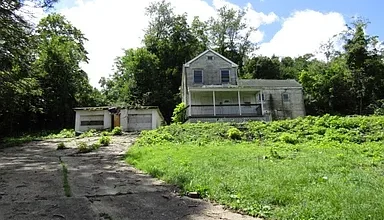
What makes this property especially interesting is that it is not simply vacant agricultural land. It served as an important working base for Firefly Farms and includes major farm improvements, established access roads, agricultural infrastructure, a renovated residence, a large dairy-style barn, a greenhouse, water systems for livestock, and significant open acreage.
For buyers interested in farming, livestock, regenerative agriculture, equestrian use, agricultural investment, or the possibility of assembling an even larger landholding, this North Stonington property offers a combination that is increasingly difficult to find.
Property Overview
The property being offered consists of 118A Wintechog Hill Road, containing approximately 154.69 acres, and 118D Wintechog Hill Road, containing approximately 0.22 acres.
The two tax lots are being sold together.
Major features include:
- Approximately 154.69 acres
- Additional 0.22-acre parcel included in the package
- Unimproved land and agricultural property
- Existing working-farm infrastructure
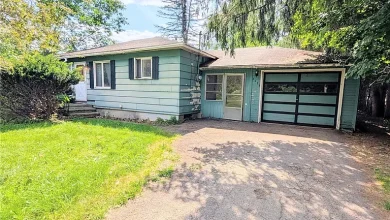
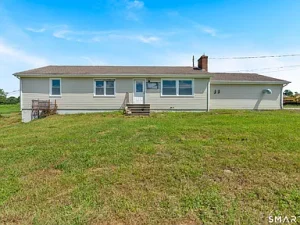
- Renovated 4-bedroom residence
- 2 full bathrooms in the residence
- Approximately 1,428-square-foot ranch-hand house
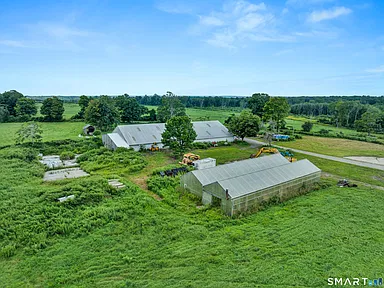
- Approximately 9,380-square-foot dairy-style barn
- Approximately 4,459-square-foot greenhouse
- 10 frost-free water hydrants
- Well water
- Septic system
- Electricity available
- Cable available
- Established farm roads
- Open acreage
- Cleared and level areas
- Rural setting
- Barns, garages, and sheds
- Horse use permitted
- No HOA
- Additional surrounding acreage potentially available
- Potential to assemble more than 400 acres
- Approximately 2,579 feet of frontage
- R80 zoning
- Paved road access
- Annual reported taxes of approximately $6,078
- Tax-assessed value of approximately $347,340
The property has been used as an active farm rather than simply held as undeveloped acreage, and that distinction is important when evaluating its potential.
Understanding the $1,000 Auction Figure
The first thing many buyers will notice is the $1,000 figure associated with the listing.
However, this is an auction property, and buyers should not assume that $1,000 represents the final price.
The listing states that the property is being offered through an online reserved auction. A reserved auction typically means the seller retains the right to accept or reject the final bid depending on the auction conditions.
This is very different from a traditional real estate listing where a seller simply advertises an asking price.
The final purchase price may be substantially higher depending on bidder interest and the seller’s reserve requirements.
Anyone considering participation should review the complete auction terms carefully.
Important questions may include:
- Whether a buyer premium applies
- How much earnest money is required
- When deposits must be paid
- Whether financing contingencies are permitted
- Whether inspections are allowed
- What closing timeline applies
- Whether the sale is subject to seller approval
- What rights, easements, and pasture agreements transfer
- Whether any agricultural tax program obligations continue after closing
Auction buyers should never bid before understanding every financial and legal condition attached to the sale.
More Than 154 Acres of Agricultural Land
The property’s size alone makes it significant.
At approximately 154.69 acres, the land provides enough space for a range of agricultural activities, depending on local regulations, soil conditions, existing improvements, and the buyer’s plans.
The acreage includes open areas and established farm roads, which can be especially valuable for livestock operations and equipment movement.
Open agricultural land can support grazing, rotational pasture systems, crop production, haying, regenerative farming, or other farm uses where appropriate.
The presence of established internal roads reduces one of the practical challenges associated with large rural properties.
Instead of beginning with completely undeveloped land, a buyer inherits an existing farm layout that has already supported real agricultural activity.
A Working Base for Firefly Farms
The property served as an important working base for Firefly Farms.
According to the listing, the broader farming operation included more than 400 acres and supported grass-fed, grass-finished beef, pork, and chicken production.
That history adds meaningful context.
This is not simply land that looks suitable for agriculture on paper. It has already been used as part of a substantial livestock and farming operation.
A new owner could choose to continue agricultural use, adapt the infrastructure for another type of farm, pursue equestrian activities, or create a new long-term land-management strategy.
Existing infrastructure can save years of work compared with beginning with raw acreage.
Approximately 9,380-Square-Foot Dairy-Style Barn
One of the property’s most important improvements is the approximately 9,380-square-foot dairy-style barn.
Large agricultural buildings are expensive and time-consuming to construct.
Having a barn of this size already on the property could be valuable to a buyer who needs space for livestock, equipment, feed, storage, farm operations, or workshops.
The barn reportedly includes heavy-equipment access through a 25-foot powered roll-up door and a 15-foot sliding door.
Those large openings make it easier to move machinery and agricultural equipment in and out of the building.
For an active farm, equipment access can have a major impact on daily efficiency.
A buyer should still inspect the barn’s structural condition, roof, foundation, electrical service, ventilation, doors, drainage, and any livestock-related systems before determining its long-term value.
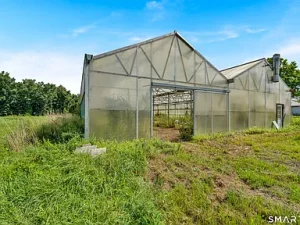
Approximately 4,459-Square-Foot Greenhouse
The property also includes a greenhouse measuring approximately 4,459 square feet.
A greenhouse can significantly expand agricultural possibilities.
Depending on the buyer’s plans, it could potentially support seedlings, vegetables, flowers, specialty crops, season extension, or other controlled growing activities.
The listing indicates that the greenhouse has power and insulated water.
Those features can improve functionality during colder periods and may reduce the amount of infrastructure a new owner would need to install.
Greenhouses can be valuable for diversified farms because they allow producers to extend growing seasons and develop additional sources of farm revenue.
As with the barn, buyers should evaluate the greenhouse’s current condition, glazing materials, framing, ventilation, heating potential, electrical systems, and water infrastructure.
Ten Frost-Free Water Hydrants
One of the most practical features of the farm is the presence of 10 frost-free water hydrants.
This may not sound as visually impressive as a barn or greenhouse, but for livestock operations it can be extremely important.
Moving water manually in winter can be difficult, time-consuming, and physically demanding.
Frost-free hydrants distributed around a farm can make watering livestock far more efficient.
The listing specifically emphasizes that owners would not need to haul buckets to animals during winter.
For someone planning cattle, horses, pigs, poultry, or other livestock, this established water infrastructure may represent one of the property’s strongest operational advantages.
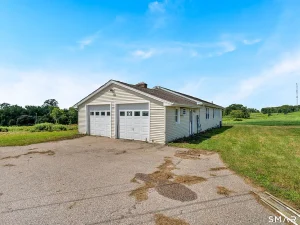
Renovated 1,428-Square-Foot Residence
The agricultural property also includes a renovated residence of approximately 1,428 square feet.
The home reportedly contains:
- 4 bedrooms
- 2 full bathrooms
This residence has been described as a ranch-hand house, suggesting it has served a practical role within the farm operation.
A property with on-site housing can be especially useful for owners, farm managers, workers, or caretakers.
Livestock operations often require regular supervision, especially during calving, lambing, farrowing, severe weather, feeding periods, or medical emergencies.
Being able to live directly on the property can reduce travel time and improve farm management.
Buyers should independently inspect the residence and verify its legal status, utility systems, condition, permits, and suitability for their intended use.
Established Farm Roads
Large acreage can be difficult to use efficiently when there are no internal access routes.
This property already contains established farm roads.
These roads may help provide access to barns, pastures, fields, water infrastructure, and other parts of the property.
Farm roads can support tractors, livestock trailers, maintenance vehicles, utility equipment, and seasonal farm work.
Their presence may reduce the initial cost and effort required to make the property operational.
However, buyers should evaluate road condition, drainage, erosion, seasonal accessibility, and maintenance requirements.
Even established farm roads may need periodic grading, gravel, culverts, or other improvements.
Open Acreage Creates Agricultural Flexibility
The property includes open acreage in addition to wooded or less-developed areas.
Open land is valuable because it can be adapted to multiple agricultural uses.
Potential uses may include:
- Grazing
- Hay production
- Rotational pasture
- Livestock paddocks
- Crop production
- Equestrian activities
- Farm roads and infrastructure
- Agricultural storage
- Regenerative land management
Actual suitability will depend on soils, topography, drainage, regulations, and environmental conditions.
A buyer should review soil maps, agricultural records, and local land-use requirements before finalizing a production plan.
Regenerative Agriculture Potential
One of the most interesting aspects of the listing is the property’s connection with regenerative farming practices.
The previous farming operation reportedly created its own terra preta soil supplement using biochar, wood chips, and manure.
Terra preta-style soil amendment focuses on adding carbon-rich organic material to improve soil structure, nutrient retention, biological activity, and long-term productivity.
Biochar has gained attention among regenerative farmers because of its potential to help retain nutrients and support soil health when used appropriately.
The property’s farming history may appeal to buyers interested in sustainable or regenerative agriculture rather than conventional intensive production.
No Chemical Fertilizers or Pesticides Since 2014
According to the listing, no chemical fertilizers, pesticides, herbicides, or fungicides have been applied since 2014.
This is a significant claim for buyers interested in organic or regenerative farming.
A long period without those chemical applications may help a future buyer who wants to investigate organic certification.
However, buyers should not assume the land is automatically certified organic.
Formal organic certification involves specific documentation, inspections, standards, and verification.
Anyone considering certified organic production should contact the appropriate certification organizations and determine what records or processes would be required.
Still, the property’s reported agricultural history could provide a valuable starting point.
Potential for Livestock Operations
The listing identifies horses as permitted, and the farm has a clear livestock history.
That creates numerous possibilities for agricultural buyers.
The property could potentially support:
- Cattle
- Horses
- Sheep
- Goats
- Pigs
- Poultry
- Mixed livestock systems
Actual stocking capacity depends on forage quality, pasture management, water availability, soil conditions, seasonal climate, and agricultural practices.
Rotational grazing could be one possible strategy for maintaining pasture health while supporting livestock production.
The existing water hydrants, farm roads, barns, open acreage, and rural setting create an infrastructure base that could be difficult and expensive to reproduce elsewhere.
Potential Equestrian Use
Horse owners may also find the property attractive.
More than 150 acres can provide substantial flexibility for paddocks, turnout areas, riding trails, hay production, and barn use.
The listing indicates horses can be raised on the property.
Nearby stables and riding-related community features are also noted.
A future owner interested in equestrian use should evaluate fencing, pasture quality, water access, barn configuration, manure management, and riding conditions.
Depending on regulations and site suitability, the land could potentially serve a private equestrian estate or agricultural horse operation.
Additional Land May Be Available
One of the most significant strategic opportunities is the possibility of purchasing additional surrounding acreage.
The listing states that nearby parcels can potentially be acquired to assemble more than 400 acres.
For buyers interested in large-scale farming, conservation, equestrian use, or long-term land ownership, assembling hundreds of acres in Connecticut can be extremely difficult.
Large contiguous tracts are increasingly rare in many parts of New England.
A buyer interested in expansion should investigate which surrounding parcels are available, their acreage, prices, easements, zoning, and relationship to the main property.
Approximately 2,579 Feet of Frontage
The property is reported to have approximately 2,579 feet of frontage.
Long road frontage can be valuable for access and flexibility.
It may allow multiple agricultural entry points, equipment access, or future planning opportunities depending on zoning and subdivision rules.
However, buyers should not assume that road frontage automatically creates subdivision rights.
Any future division of the property would need to comply with local zoning, health codes, frontage requirements, access regulations, conservation restrictions, and other applicable laws.
R80 Zoning
The property is identified as being zoned R80.
Zoning is a critical consideration for any buyer.
Agricultural uses may be permitted, but specific activities, structures, commercial operations, events, equestrian facilities, farm stands, additional residences, or subdivisions may require approvals.
Before making plans, buyers should confirm regulations directly with North Stonington’s appropriate municipal departments.
This is especially important for anyone considering development beyond traditional agricultural use.
Well, Septic, and Electricity
Unlike completely unimproved farmland, the property already has important utility infrastructure.
The listing identifies:
- Well water
- Septic system
- Electricity on the property
- Cable availability
These features can significantly improve usability.
Installing a new well, septic system, and electrical service can add substantial cost to rural property development.
A buyer should still inspect and test all existing systems.
Wells should be evaluated for water quality and production capacity.
Septic systems should be inspected for condition and compliance.
Electrical infrastructure should be reviewed to ensure it is safe and sufficient for current or future agricultural needs.
Paved Road Access
The road surface is identified as paved.
That can be an important benefit for a working farm.
Paved road access generally makes it easier to move livestock trailers, farm machinery, delivery vehicles, feed trucks, construction equipment, and passenger vehicles.
Reliable road access can also improve year-round usability compared with properties reached only by seasonal dirt roads.
The internal farm roads then extend access beyond the paved road into the property.
Location Near Foxwoods
The property is located approximately 2.2 miles from Foxwoods according to the listing.
That proximity creates an unusual combination.
A buyer can own a large agricultural property in a rural setting while still being near one of the region’s major entertainment destinations.
This may be useful for access to restaurants, employment, services, lodging, or visitor traffic.
However, agricultural buyers will likely be more interested in how the location affects transportation and regional connectivity than entertainment itself.
Approximately 9.5 Miles From Mystic
The listing also notes that the property is approximately 9.5 miles from Mystic.
Mystic is one of southeastern Connecticut’s best-known destinations.
Being relatively close to Mystic may increase the property’s appeal because it provides access to established services, tourism, dining, and regional attractions.
A rural property that still has reasonable access to popular communities can sometimes offer a stronger combination of privacy and convenience than extremely isolated farmland.
Access to Route 2 and Interstate 95
Transportation is another strong point.
The property offers relatively convenient access to Route 2 and Interstate 95.
For agricultural businesses, major-road access can be extremely important.
Farmers may need to transport animals, feed, supplies, equipment, or products.
Easy access to regional highways can reduce transportation time and make it easier to reach markets, processors, suppliers, veterinarians, and customers.
Potential for Organic Certification
Because the listing reports no chemical fertilizer, pesticide, herbicide, or fungicide use since 2014, buyers may want to explore whether the property could eventually qualify for organic certification.
Certification standards vary and require documentation.
A buyer would need to verify land-use history and meet all applicable requirements.
If certification is achievable, it could create opportunities for premium agricultural products.
Potential operations might include organic vegetables, pasture-raised livestock, specialty crops, greenhouse production, or other agricultural businesses.
Agricultural Investment Potential
Large farm properties should be evaluated differently from conventional homes.
The value comes from a combination of:
- Land
- Existing structures
- Utilities
- Soil
- Agricultural history
- Water infrastructure
- Road access
- Development limitations
- Location
- Future agricultural income potential
A buyer interested in agricultural investment should create a detailed financial model.
Potential revenue sources could include livestock, hay, crops, greenhouse production, leasing farmland, equestrian use, or other permitted activities.
Expenses may include taxes, insurance, fencing, equipment, maintenance, utilities, feed, repairs, labor, and property improvements.
Tax Information
The reported tax-assessed value is approximately $347,340.
Annual property taxes are reported at approximately $6,078.
The property is also identified as being in PA490.
Connecticut’s PA490 program generally relates to qualifying farm, forest, or open-space land and can affect property taxation.
Buyers should investigate how the program applies to this specific property and whether there are potential tax consequences associated with changing land use.
A knowledgeable local attorney, accountant, or tax professional can help explain obligations before purchase.
Rights, Easements, and Pasture Considerations
The listing refers to right to pasture/right-of-way and easements.
These legal details are extremely important.
Large agricultural properties often have rights, easements, access agreements, utility easements, or farming arrangements that can affect how the land is used.
A buyer should carefully review the deed, title report, surveys, recorded easements, rights-of-way, and any pasture rights before bidding.
Legal review is especially important because the property consists of multiple tax lots and may be connected to surrounding agricultural parcels.
No HOA
The property does not report an HOA.
For a large farm, that is generally expected, but it still means buyers do not have a homeowners association imposing additional private residential rules.
However, municipal zoning, environmental regulations, agricultural rules, easements, deed restrictions, and state laws still apply.
A rural property is not regulation-free simply because there is no HOA.
Why Existing Infrastructure Matters
One of the biggest advantages of this property is how much infrastructure already exists.
Starting a farm from raw land can require enormous investment.
A buyer may need to create roads, install water systems, construct barns, build greenhouses, drill wells, establish fencing, install electrical service, build housing, and improve soils.
Here, much of that work has already been started or completed.
The existing barn, greenhouse, residence, roads, hydrants, utilities, and agricultural improvements could save a future owner considerable time and money.
The condition of each system must still be verified, but the established infrastructure is a major part of the property’s appeal.
Who Could Be Interested in This Property?
The property could appeal to several types of buyers.
An established farmer may see an opportunity to expand operations.
A regenerative agriculture entrepreneur could appreciate the farm’s soil-management history.
A livestock producer could benefit from the water hydrants and barn infrastructure.
An equestrian buyer could value the acreage and rural environment.
An investor might be interested in assembling more than 400 acres.
A conservation-minded purchaser may value the opportunity to preserve a large tract.
The scale and improvements create more possibilities than would typically exist on ordinary vacant land.
Important Due Diligence Before Bidding
Anyone considering the auction should conduct extensive due diligence.
Buyers should investigate:
- Auction terms
- Reserve price requirements
- Buyer premiums
- Deposit requirements
- Closing deadlines
- Financing restrictions
- Property boundaries
- Surveys
- Easements
- Pasture rights
- Rights-of-way
- PA490 requirements
- Taxes
- Zoning
- Agricultural restrictions
- Environmental conditions
- Well condition
- Septic condition
- Electrical systems
- Barn condition
- Greenhouse condition
- Residence condition
- Water hydrants
- Soil quality
- Fencing
- Internal roads
Large agricultural properties contain many systems, and each one can affect the eventual cost of ownership.
Final Thoughts on 118-A&D Wintechog Hill Road
118-A&D Wintechog Hill Road in North Stonington, Connecticut represents a rare combination of substantial acreage, agricultural infrastructure, working-farm history, and expansion potential.
The offering includes approximately 154.69 acres, plus the additional 0.22-acre parcel being sold with it.
The farm features a renovated four-bedroom, two-bath residence, an approximately 9,380-square-foot dairy-style barn, an approximately 4,459-square-foot greenhouse, 10 frost-free water hydrants, established farm roads, open acreage, well water, septic, electricity, and numerous agricultural support structures.
Its previous use as part of Firefly Farms demonstrates that the property has already supported a serious farming operation.
The reported lack of chemical fertilizer, pesticide, herbicide, and fungicide use since 2014 may be especially interesting to buyers focused on regenerative or organic agriculture.
The possibility of acquiring surrounding parcels and assembling more than 400 acres makes the opportunity even more unusual.
At the same time, potential buyers should understand the auction structure.
The displayed $1,000 figure should not be considered the expected final sale price. This is a reserved online auction, and the eventual purchase price will depend on bidding and seller approval under the published auction terms.
Anyone considering this property should carefully review title documents, easements, agricultural tax classifications, zoning, improvements, utility systems, soil conditions, and auction requirements before bidding.
For the right buyer, however, this is far more than simply 154 acres of land.
It is an established agricultural property with years of infrastructure, soil improvement, livestock support systems, and operational investment already in place.
In a region where assembling large contiguous acreage can be increasingly difficult, 118-A&D Wintechog Hill Road may offer a rare chance to acquire a substantial Connecticut farm and build on an existing agricultural foundation.
Listed on Zillow