$13,500 Fixer-Upper in Burlington, Iowa: 4-Bedroom Historic Home With Character and Investment Potential
$13,500 Fixer-Upper in Burlington, Iowa: 4-Bedroom Historic Home With Character and Investment Potential
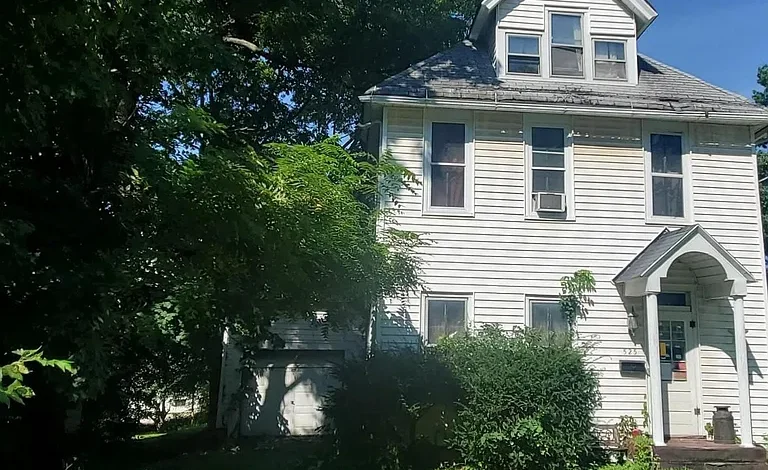
For buyers searching for an extremely affordable fixer-upper with substantial interior space, this property in Burlington, Iowa, immediately stands out. Located at 525 S Garfield Ave, Burlington, IA 52601, this single-family residence is currently listed for just $13,500 and offers four bedrooms, one bathroom, approximately 1,479 square feet of living space, a full basement, and an attached one-car garage.
Built in 1890, the home is more than 130 years old and is clearly being marketed as a renovation opportunity rather than a finished, move-in-ready property. According to the listing description, the house still has “solid bones” and “tons of character,” making it potentially interesting for investors, contractors, landlords, house flippers, or buyers who want to restore an older home according to their own vision.
The low purchase price is certainly attention-grabbing, but properties like this need to be evaluated carefully. A $13,500 acquisition price does not mean the entire project will be inexpensive. Renovation expenses, structural repairs, mechanical systems, permits, taxes, insurance, cleanup, and financing can quickly become more important than the initial purchase price.
Still, for the right buyer with experience, patience, and a realistic budget, this Burlington property offers an unusual combination of size, historic character, land, and a remarkably low asking price.
Property Overview
Here are the key details currently provided for 525 S Garfield Ave:
Asking Price: $13,500
Address: 525 S Garfield Ave, Burlington, IA 52601
Property Type: Single-Family Residence
Bedrooms: 4
Bathrooms: 1 full bathroom
Interior Living Area: Approximately 1,479 square feet
Year Built: 1890
Lot Size: Approximately 7,840 square feet
Lot Dimensions: Approximately 48 feet by 161 feet
Price Per Square Foot: Approximately $9
Stories: Two
Basement: Full basement
Garage: One attached garage space
Exterior: Vinyl siding
Heating: Forced air
Cooling: Central air
Water: Public
Sewer: Public sewer
HOA: No HOA indicated
Subdivision: Smiths Add
Annual Property Tax: Approximately $1,380
Tax Assessed Value: $76,400
At only around $9 per square foot, the advertised price is exceptionally low compared with what buyers typically expect to pay for residential real estate. That alone makes the listing worth examining, but the home’s condition and renovation requirements will ultimately determine whether it represents genuine value.
A Four-Bedroom Home for Only $13,500
The headline feature is difficult to ignore: this is a four-bedroom house listed for $13,500.
At first glance, that price may sound almost unbelievable to buyers accustomed to today’s housing market. However, the property is being positioned as a fixer-upper and investment opportunity, so prospective purchasers should approach it differently from a conventional home.
Instead of asking whether $13,500 is inexpensive for a four-bedroom house, investors should ask how much money will be required to bring the property to the desired condition.
The purchase price is simply the first number in the equation.
A complete investment analysis should include the acquisition price, closing costs, cleanup, construction materials, contractor labor, mechanical repairs, permits, insurance, utilities, taxes, financing expenses, holding costs, and eventual selling costs if the property is intended as a flip.
Only after calculating those numbers can a buyer determine whether the project makes financial sense.
1,479 Square Feet Provides Significant Space
One of the strongest aspects of this property is its size relative to the asking price.
The home contains approximately 1,479 square feet of above-ground finished area.
That is considerably larger than many extremely inexpensive properties, which are sometimes small one- or two-bedroom houses with limited possibilities.
Here, the existing footprint provides enough space for four bedrooms and potentially allows a future owner to create a comfortable residential layout after renovation.
The two-story design also helps separate living and sleeping spaces, depending on the existing floor plan.
However, more square footage also means more area to renovate. Flooring, walls, ceilings, electrical wiring, plumbing, insulation, windows, and interior finishes all become more expensive as the size of a renovation increases.
Investors should therefore consider the 1,479 square feet both an advantage and a budgeting factor.
Four Bedrooms Create Multiple Possibilities
Having four bedrooms gives this home flexibility.
For an owner-occupant, those rooms could provide sleeping areas for a larger household, guest accommodations, a home office, hobby space, or additional storage.
For a landlord considering the property as a long-term rental, the four-bedroom configuration may potentially appeal to tenants needing additional space.
For a fix-and-flip investor, the bedroom count could potentially make the finished property attractive to a wider range of future buyers.
However, investors should verify that each room legally qualifies as a bedroom under applicable local requirements. The supplied listing information identifies four bedrooms, but due diligence remains important with older properties.
Built in 1890: More Than a Century of History
This property was built in 1890, making its age one of its most distinctive characteristics.
Historic and older homes can offer features that are difficult to reproduce in modern construction. Room proportions, architectural details, woodwork, trim, staircases, doors, and other elements may contribute to the character mentioned in the listing.
That character can become a major advantage when a renovation is done thoughtfully.
Rather than stripping away every original detail and making the property look like a generic new house, a future owner may choose to preserve salvageable historical elements while modernizing essential systems.
But age also creates potential challenges.
A house constructed in 1890 deserves a comprehensive evaluation before purchase. Structural components, electrical wiring, plumbing, foundation conditions, insulation, roofing, windows, drainage, and other major systems should all be investigated.
“Solid Bones” and Tons of Character
The listing emphasizes two important phrases: solid bones and tons of character.
For renovation buyers, those words can be encouraging because the underlying structure of a property is often more important than outdated cosmetic finishes.
Paint can be changed.
Flooring can be replaced.
Cabinets can be updated.
Landscaping can be improved.
But serious structural problems can dramatically increase renovation costs.
That is why buyers should never rely solely on a listing description when evaluating the structural condition of a home. A qualified professional should inspect the foundation, framing, roof structure, floors, walls, and other major components.
If the home truly retains a strong structural foundation for renovation, the low asking price could become significantly more interesting.
Full Basement Adds Additional Utility
Another noteworthy feature is the full basement.
Basements can provide valuable storage, access to mechanical systems, utility space, and other practical benefits.
For renovation projects, a basement may also make certain plumbing, electrical, or HVAC work easier to access than in homes built directly on slabs.
However, basements in older houses require careful examination.
Buyers should check for moisture intrusion, foundation cracks, drainage problems, mold, deterioration, and evidence of previous flooding.
Because the home dates to 1890, a professional foundation assessment may be particularly valuable before committing to a purchase.
Attached One-Car Garage
The property reportedly includes one attached garage space.
Garage space can be a practical advantage, particularly in areas where residents experience winter weather.
A garage provides vehicle protection and may also offer additional storage.
As with the rest of the property, the condition of the garage should be inspected. Buyers should verify the roof, foundation, framing, electrical service, garage door, and structural connection to the main residence.
If the garage can be restored economically, it could add functionality to the completed renovation.
A 7,840-Square-Foot Lot
The home sits on approximately 7,840 square feet of land, with reported dimensions of around 48 feet by 161 feet.
The relatively deep lot could provide useful outdoor space for a future owner.
Depending on local rules and the existing layout, the yard might accommodate landscaping, gardening, recreational space, outdoor seating, or other residential uses.
The lot size also means that the property offers more than simply an inexpensive structure. The land itself is part of the investment.
Before making plans for additions, fences, sheds, garages, or other improvements, buyers should confirm zoning regulations, setbacks, easements, and property boundaries.
Public Water and Public Sewer
The listing indicates that the property is connected to public water and public sewer.
For many renovation buyers, this can be preferable to dealing with private wells or septic systems, particularly on an older property.
Nevertheless, buyers should confirm that the connections are functional and determine the condition of the property’s water and sewer lines.
A house can be connected to municipal utilities while still requiring significant repairs to the private service lines running between the home and the public system.
Those potential expenses should be investigated before finalizing a renovation budget.
Forced-Air Heating and Central Air Conditioning
The property information identifies forced-air heating and central air conditioning.
Those features could be valuable if the systems remain functional or can be repaired economically.
However, because this is a fixer-upper and the home is more than a century old, buyers should not assume that existing HVAC equipment is ready for continued use.
A professional HVAC inspection can determine the age and condition of the furnace, air-conditioning equipment, ductwork, thermostats, and related components.
Replacement of an entire HVAC system can represent a meaningful portion of a renovation budget.
Vinyl Siding on the Exterior
The house reportedly has vinyl siding, which may simplify certain aspects of exterior maintenance compared with some traditional exterior materials.
Still, siding should be inspected carefully for cracks, missing sections, water intrusion, improper installation, or hidden damage underneath.
The condition of exterior walls is particularly important on older homes because moisture problems can lead to rot and other structural deterioration.
Exterior improvements may ultimately become part of the property’s transformation and significantly improve curb appeal.
Fix-and-Flip Potential
The listing specifically identifies the property as an opportunity for a fix and flip.
At an acquisition price of $13,500, it’s easy to understand why investors might be curious.
But successful flipping depends on the spread between the total investment and the realistic after-repair value—not merely the difference between the purchase price and a renovated home’s selling price.
For example, investors should calculate:
Purchase and closing expenses, cleanup and debris removal, structural repairs, roof work, plumbing, electrical upgrades, HVAC replacement, kitchen renovation, bathroom renovation, flooring, drywall, painting, windows, doors, landscaping, permits, taxes, insurance, financing, utilities, and real estate transaction expenses.
Unexpected repairs should also be included through a contingency reserve.
A professional investor evaluates the entire project before purchasing.
Rental Property Potential
The listing also suggests the home could potentially become a rental property.
A renovated four-bedroom house may appeal to tenants seeking additional living space, but potential landlords should research Burlington’s local rental market carefully.
Important questions include realistic monthly rent, vacancy rates, property management expenses, maintenance costs, insurance, taxes, and local rental requirements.
Investors should avoid calculating returns based on optimistic rent assumptions.
Instead, they should examine actual comparable rental properties and determine a conservative estimate of both income and operating expenses.
Potential for an Owner-Occupant
Not every renovation project has to be an investment property.
A buyer who enjoys restoring older homes might consider purchasing the property and creating a residence tailored to personal preferences.
At $13,500, the acquisition cost leaves the possibility of allocating a larger portion of the overall budget toward renovation.
A future owner could potentially preserve historic character while introducing modern conveniences.
The result could be a unique four-bedroom home that combines 19th-century origins with 21st-century functionality.
Again, the feasibility depends entirely on the property’s actual condition and the cost of the required work.
The Importance of Cleanup
The listing makes an unusual but straightforward reference to looking past the items currently inside the property, essentially suggesting that cleanup is part of the opportunity.
For distressed properties, debris and accumulated belongings can make a home appear significantly worse than it might after being emptied.
Professional cleanup and dumpster rental can sometimes create one of the most dramatic early transformations in a renovation project.
However, buyers should avoid assuming that everything underneath the clutter is in good condition.
Once belongings and debris are removed, additional damage may become visible.
Cleanup should therefore be considered the beginning of the evaluation process rather than the end.
Neighboring Property and Investment Value
The listing also highlights the condition of a neighboring property as a positive factor.
Surrounding homes can have a meaningful effect on residential property values.
A well-maintained neighboring property can improve the overall visual appeal of a street and may help support future resale value.
Nevertheless, investors should evaluate the broader neighborhood rather than relying on a single adjacent property.
Recent comparable sales within the immediate area provide a much stronger basis for determining potential after-repair value.
$9 Per Square Foot Gets Attention
Based on the supplied figures, the asking price works out to approximately $9 per square foot.
That number is exceptionally low and will naturally attract attention online.
But price per square foot has limited usefulness when comparing a distressed renovation project with move-in-ready homes.
A renovated property selling for a much higher price per square foot has already absorbed construction, labor, materials, and improvement costs.
Therefore, investors should not simply compare this home’s $9-per-square-foot asking price with finished properties and assume the difference represents profit.
The cost of getting from one condition to the other is what matters.
Tax Assessed Value of $76,400
One particularly interesting figure in the supplied listing information is the tax assessed value of $76,400.
That is substantially higher than the $13,500 asking price.
While the difference is attention-grabbing, buyers should understand that a tax assessment is not the same thing as current market value.
Assessments are used for taxation purposes and may not reflect a property’s present physical condition or what buyers would currently pay on the open market.
The most reliable valuation approach for an investor is to examine recent comparable sales and obtain professional opinions when necessary.
Annual Property Taxes
The annual tax amount is listed at approximately $1,380.
For a buyer purchasing the home for only $13,500, that tax amount is worth factoring carefully into holding-cost calculations.
Investors planning a lengthy renovation should remember that property taxes continue while work is underway.
Insurance, utilities, lawn maintenance, security, financing costs, and other expenses can also accumulate during the renovation period.
A project that takes twelve months instead of four months can have very different economics.
No HOA
The listing indicates no homeowners association.
That means there is no HOA fee identified with the property.
For investors and renovation buyers, the absence of an HOA can sometimes simplify a project because there are no association dues or private HOA renovation rules to consider.
However, municipal building codes, zoning requirements, permits, historic restrictions if applicable, and other government regulations still need to be followed.
Strong Online Interest
The supplied listing information indicates that the property has generated approximately 912 views and 46 saves on Zillow.
It has also been identified as likely to sell faster than 90% of nearby properties, according to the information provided.
Those numbers suggest that the $13,500 asking price is attracting attention.
Potential buyers should remember, however, that views and saves represent interest—not completed transactions.
A popular listing can still require extensive renovation or remain financially unsuitable for many investors.
What Buyers Should Inspect Before Purchasing
Due diligence is critical with a property of this age and price.
A potential purchaser should consider professional evaluations of the foundation, structural framing, roof, electrical system, plumbing, HVAC system, basement, windows, exterior siding, drainage, sewer line, water service, and interior condition.
Because the house dates to 1890, buyers should also investigate potential environmental concerns associated with older construction and determine whether specialized testing or remediation may be appropriate.
Title status, liens, unpaid taxes, code violations, permits, zoning, and property boundaries should also be confirmed.
A $13,500 purchase can become expensive very quickly if major problems are discovered after closing.
A Renovation Strategy Could Preserve the Character
If the structure is suitable for rehabilitation, one compelling strategy could be combining modern updates with the home’s historic personality.
Instead of eliminating every original element, a renovator might preserve attractive woodwork, doors, trim, staircases, or other period details where practical.
Modern electrical, plumbing, heating, cooling, kitchen, and bathroom systems could then be integrated around those preserved features.
This approach could potentially create a home that feels updated without losing the character that makes a property built in 1890 different from modern construction.
Could There Be Instant Equity?
The listing mentions the possibility of instant equity, but buyers should interpret that idea carefully.
Equity is not created simply because a property has a low asking price or a higher tax assessment.
True equity depends on what the property is worth after accounting for its condition and the money invested.
If a buyer purchases for $13,500, spends wisely on renovation, and creates a property worth substantially more than the total investment, meaningful equity could potentially be created.
If renovation costs become excessive, that advantage could disappear.
The numbers must work.
Who Is This Property Best Suited For?
This property is likely most interesting to buyers who understand renovation projects.
That could include contractors, experienced house flippers, long-term rental investors, real estate developers, or owner-occupants comfortable managing substantial repairs.
Someone looking for a perfectly finished house with no projects may find this property unsuitable.
Someone capable of seeing beyond its current condition, accurately budgeting improvements, and managing construction could view it very differently.
That’s what makes fixer-uppers so interesting: the same house can represent a burden to one buyer and an opportunity to another.
Final Thoughts on 525 S Garfield Ave
At $13,500, 525 S Garfield Ave in Burlington, Iowa, is unquestionably an attention-grabbing real estate listing.
The property combines four bedrooms, one bathroom, approximately 1,479 square feet of living space, a full basement, an attached garage, and a 7,840-square-foot lot.
Its 1890 construction gives the home more than a century of history, while the listing’s emphasis on solid bones and character suggests that restoration could be worth investigating.
The possibilities include a fix-and-flip project, long-term rental renovation, or restoration for personal use.
But the low asking price should never replace proper due diligence.
Potential buyers should inspect the property carefully, obtain contractor estimates, verify all listing details, research Burlington comparable sales, understand the local rental market if applicable, investigate title and code issues, and calculate the complete cost of ownership and renovation.
The asking price is only the beginning.
For someone with the right experience and renovation plan, this old Iowa home could potentially become an impressive transformation. For someone without the budget or expertise required for a major project, the same property could become far more expensive than expected.
That contrast is exactly why properties like this generate so much attention.
Would you take on a four-bedroom, 1890 fixer-upper for just $13,500, or would the renovation be too big of a project for you?
Listed on Zillow.