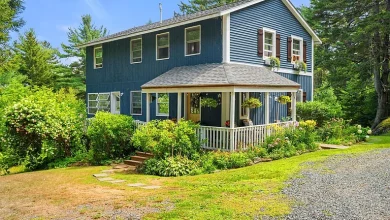
$4,000 Property in Triadelphia, West Virginia: 5-Bedroom Home on Half an Acre With Limited Access
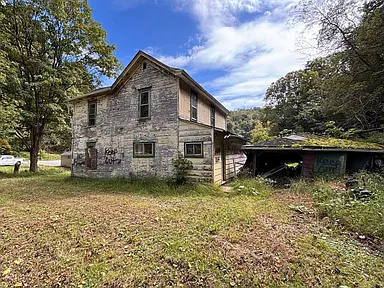
$4,000 Property in Triadelphia, West Virginia: 5-Bedroom Home on Half an Acre With Limited Access
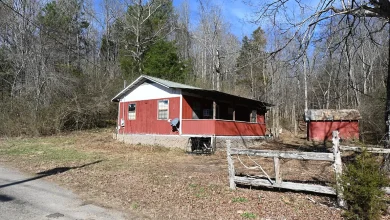
A property listed for only $4,000 will naturally attract attention, especially when the listing identifies a traditional single-family home with five bedrooms, four full bathrooms, 1,494 square feet of living space, and approximately half an acre of land. That is the situation at 129 Battle Run Road, Triadelphia, WV 26059, a property that stands out because of its unusually low asking price and an important access issue that prospective buyers need to understand.
Built in 1907, the property is more than a century old and is listed at approximately $3 per square foot. The supplied property information shows county water, county sewer, a basement, two stories, and a traditional architectural style.
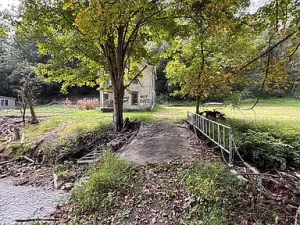
However, the marketing description focuses less on the existing residence and more on the land itself, calling it a “nice 1/2 acre building lot.” Most importantly, it states that access is limited because of an unsafe bridge leading onto the land.
That detail fundamentally changes how this listing should be evaluated.
A low asking price can be appealing, but real estate value is determined by far more than bedrooms, bathrooms, square footage, and acreage. Legal and physical access can be among the most important characteristics of any property. A house may exist on a parcel, but if reaching it requires crossing a bridge that is currently considered unsafe, a buyer may face significant practical, engineering, insurance, financing, and construction questions.
For anyone considering this West Virginia property, careful due diligence is essential.
Property Overview
The property at 129 Battle Run Road is listed as a single-family residence in Triadelphia, West Virginia.
According to the supplied listing data, the main details include:
Asking price: $4,000
Address: 129 Battle Run Road, Triadelphia, WV 26059
Property type: Single-family residence
Bedrooms: 5
Bathrooms: 4 full bathrooms
Interior living area: Approximately 1,494 square feet
Lot size: Approximately 0.5 acre
Year built: 1907
Stories: 2
Architectural style: Traditional
Basement: Yes
Heating: Present, type unspecified
Cooling: None
Water: County
Sewer: County
Price per square foot: Approximately $3
Tax assessed value: $54,200
Annual property taxes: Approximately $916
Parcel number: 35080VG800030000
Date placed on market: September 25, 2026
The unusual combination of a $4,000 asking price and a $54,200 tax assessed value makes the access problem particularly important to investigate.
Why Is a Five-Bedroom Property Listed for Only $4,000?
The headline numbers make this listing look extraordinary.
Five bedrooms, four bathrooms, almost 1,500 square feet, and half an acre for $4,000 is far outside what buyers usually expect from residential real estate.
But the listing provides a major clue as to why the price is so low:
Access is limited because of an unsafe bridge onto the property.
Access problems can dramatically affect real estate.
If buyers cannot safely drive onto the property, they may have difficulty inspecting the house, moving construction materials, obtaining insurance, arranging financing, receiving deliveries, reaching the property with emergency vehicles, or legally occupying the residence.
The bridge issue therefore may be far more important than the number of bedrooms or bathrooms.
The Unsafe Bridge Is the Central Issue
The bridge should be the first thing a prospective buyer investigates.
The listing does not provide enough information to determine the bridge’s ownership, construction type, dimensions, damage, legal status, or repair requirements.
Potential questions include:
Who owns the bridge?
Is it entirely on the property?
Is it shared with neighboring parcels?
Does a recorded easement govern access?
Has a professional engineer evaluated it?
Is the bridge closed to all vehicles or simply considered unsafe for certain loads?
Can pedestrians safely cross?
Who would be responsible for repair or replacement?
Would government approval be required?
Could an alternative access route be created?
These questions can directly influence whether the property is practical to own.
Physical Access Versus Legal Access
When buying real estate, it is important to distinguish between physical access and legal access.
Physical access refers to the actual ability to reach the property.
Legal access refers to the legal right to use a road, driveway, bridge, or easement to reach the parcel.
A visible road or bridge does not automatically guarantee legal rights.
Conversely, a recorded access easement does not necessarily mean the physical route is currently usable.
A buyer should understand both.
Title records, surveys, easement documents, and professional legal guidance can help clarify the situation.
Bridge Repair Could Become a Major Expense
Repairing or replacing a bridge can be significantly more complicated than repairing a driveway.
Costs can depend on span length, waterway conditions, engineering requirements, load capacity, foundation design, materials, drainage, permits, environmental regulations, and contractor access.
A small private bridge and a larger engineered crossing are completely different projects.
Without an engineering assessment, buyers should avoid estimating the cost casually.
A $4,000 property could still become an expensive acquisition if reliable access requires a major bridge project.
Emergency Vehicle Access Matters
One issue buyers sometimes overlook is emergency access.
Fire trucks, ambulances, utility vehicles, construction equipment, and other heavy vehicles may need to reach a residential property.
If the bridge cannot support those vehicles, that may affect future occupancy or renovation plans.
Local authorities may have requirements regarding emergency access for residential properties.
A buyer considering restoring or rebuilding on the parcel should investigate those rules before assuming the existing access can simply be repaired informally.
The Listing Calls It a Building Lot
Although Zillow’s detailed information describes a five-bedroom, four-bathroom single-family residence, the short seller description emphasizes a “nice 1/2 Acre building lot.”
That wording is important.
It may suggest that the current structure is not the principal source of value or may not be considered practical for rehabilitation.
The supplied listing does not clearly describe the home’s condition.
Prospective buyers should therefore determine whether the existing residence is standing, structurally sound, habitable, repairable, or potentially a demolition candidate.
The property should not be evaluated as a conventional five-bedroom house without physically confirming the building’s current state.
Built in 1907
The residence is listed as having been constructed in 1907.
A home of this age can contain substantial historic character, but it may also contain systems and structural components from many different periods.
Over more than a century, previous owners may have repaired, renovated, or modified the building numerous times.
Important areas to investigate include:
foundation condition, structural framing, roofing, electrical systems, plumbing, heating, windows, exterior walls, basement moisture, drainage, stairs, porches, and interior finishes.
The home’s age makes professional evaluation especially valuable if rehabilitation is being considered.
Five Bedrooms
The listing identifies five bedrooms.
Bedroom 1 and Bedroom 2 are specifically shown on the second level, although detailed information about the remaining bedrooms is not included in the supplied data.
A five-bedroom configuration is unusual for a home with only 1,494 square feet of living space.
That suggests the floor plan may contain relatively compact bedrooms or may have been configured differently over time.
Buyers should verify the actual layout and determine whether all listed bedrooms meet current legal requirements.
Four Full Bathrooms
The property is listed with four full bathrooms.
Again, that is a surprisingly high bathroom count for a house of approximately 1,494 square feet.
The supplied information specifically identifies one first-floor bathroom but does not provide detailed descriptions for all four.
Prospective buyers should confirm how many bathrooms physically exist and their condition.
Older property records can sometimes contain information that no longer perfectly reflects the current structure.
Physical inspection and official records should be compared.
1,494 Square Feet of Living Space
The home’s reported interior living area is approximately 1,494 square feet.
At the current $4,000 asking price, this creates the displayed figure of roughly $3 per square foot.
That number is exceptionally low, but it should not be used to compare this property directly with conventional habitable homes.
Access problems and unknown building condition can make price-per-square-foot calculations much less meaningful.
The true cost per usable square foot would depend on what repairs are required to the house and bridge.
Two-Story Traditional Home
The residence is listed as a two-story traditional-style property.
The dining room, kitchen, living room, and one bathroom are identified as being on the first floor.
At least two bedrooms are on the second floor.
A traditional multi-level floor plan can offer distinct living and sleeping areas, but stair condition and accessibility should be assessed carefully in a century-old building.
Structural movement, handrails, stair dimensions, and floor stability may all deserve attention during inspection.
Basement Included
The property is listed with a basement.
A basement can provide useful access to the home’s foundation, utilities, plumbing, and mechanical systems.
For an older house, that makes basement inspection particularly important.
Buyers should look for signs of:
water intrusion, foundation cracking, masonry deterioration, structural movement, damaged floor joists, mold, standing water, drainage problems, or previous repairs.
If the property has been difficult to access for an extended period, maintenance may also have been deferred.
Heating Is Present but Unspecified
The listing indicates that the home has heating, but the type is unspecified.
That means buyers should investigate what heating system currently serves the residence and whether it works.
Possible questions include:
What type of fuel is used?
How old is the equipment?
Has it been maintained?
Does the system serve the entire home?
Are radiators, ductwork, or other distribution systems functional?
Would replacement be required before occupancy?
Mechanical systems can represent a substantial renovation expense.
No Cooling System Listed
The property is listed with no cooling system.
A future owner intending to occupy or rent the property might consider adding air conditioning, depending on renovation plans.
Potential solutions could range from central air to ductless systems, depending on the home’s existing heating configuration and electrical capacity.
However, cooling would likely be a secondary concern until access and structural condition are fully understood.
County Water
The listing indicates county water.
This can be an advantage compared with rural properties that require private wells.
Public or county water typically eliminates well-drilling and private water-system maintenance.
However, buyers should verify whether service is currently active and whether any repairs are required to the line serving the house.
If the property has been vacant, utilities may have been disconnected.
County Sewer
The home is also listed with county sewer.
Again, this can simplify rehabilitation compared with installing or replacing a private septic system.
Buyers should still determine the condition of the sewer lateral connecting the house to the public system.
Older underground lines can deteriorate, become blocked by roots, or collapse.
A sewer scope may be useful if the home’s condition and access allow it.
Half-Acre Lot
The property contains approximately 0.5 acre of land.
Half an acre equals roughly 21,780 square feet.
That is significantly larger than many urban residential lots and may provide room for yard space, landscaping, or a replacement residence if permitted.
However, usable area depends on the parcel shape, topography, setbacks, drainage, access, and location of the bridge.
A survey can help buyers understand the property’s actual configuration.
Potential as a Building Lot
Because the seller describes the property as a building lot, some buyers may consider purchasing primarily for the land rather than restoring the existing house.
That strategy would require investigation of zoning and construction requirements.
Important questions include:
Can the existing residence legally be demolished?
Would demolition permits be required?
Can a new house be constructed?
What setbacks apply?
Would the existing water and sewer connections be reusable?
Would the bridge have to be replaced before building permits are issued?
Can construction vehicles physically reach the site?
The bridge again becomes central to the feasibility of development.
Demolition Costs Should Be Considered
If the existing residence is not economically repairable, demolition could become part of the project.
Demolition costs vary based on building size, construction materials, environmental concerns, access, landfill fees, permits, and utility disconnection.
Limited access could make demolition more expensive if heavy equipment cannot cross the bridge.
Any buyer considering the property primarily as vacant land should account for the possibility that removing the current structure may require substantial work.
Construction Equipment Needs Reliable Access
Building a new home requires heavy equipment and delivery vehicles.
Excavators, concrete trucks, lumber deliveries, cranes, utility contractors, dump trucks, and other vehicles may need to reach the site.
An unsafe bridge may prevent this until repairs or replacement are completed.
That means access may need to be solved before any meaningful construction begins.
A builder or engineer may be able to assess what bridge capacity is required.
Tax Assessed Value of $54,200
The property has a reported tax assessed value of $54,200.
That is dramatically higher than the $4,000 asking price.
However, a tax assessment should not be interpreted as a guaranteed market value.
Assessments may not fully reflect current access problems, building condition, or changes since the last assessment.
The large gap between asking price and assessed value is interesting, but buyers should not assume it automatically represents built-in equity.
Annual Property Taxes of Approximately $916
Annual property taxes are listed at approximately $916.
This is particularly notable relative to the $4,000 purchase price.
At the current asking price, one year of reported property taxes equals nearly one-quarter of the acquisition cost.
That means carrying costs deserve attention.
If it takes several years to resolve bridge access or redevelopment issues, taxes can accumulate.
Buyers should verify whether any past-due taxes or other obligations exist.
Title Research Is Essential
A title search can help identify:
ownership status, liens, easements, rights-of-way, bridge access rights, unpaid taxes, restrictions, and other recorded matters.
Because access is the defining issue, any easement related to the road or bridge should be examined particularly carefully.
If the bridge is shared, maintenance responsibilities may be governed by recorded agreements.
If no agreement exists, the situation may be more complicated.
A Professional Survey May Be Important
A survey can identify exact property lines and show where the bridge, road, waterway, house, and other improvements are located relative to the parcel.
This can answer important questions about bridge ownership.
If part of the bridge crosses neighboring land, a buyer should understand the legal arrangement before purchasing.
A survey can also help determine whether alternative access may be possible.
Insurance Could Be Challenging
Insurance availability should be investigated early.
An old home with uncertain condition and unsafe access may be difficult to insure under a conventional homeowners policy.
Insurers may consider:
building condition, roof condition, electrical systems, plumbing, vacancy, bridge access, emergency vehicle access, and planned renovations.
If the house is vacant or undergoing rehabilitation, specialized insurance may be required.
Traditional Mortgage Financing May Be Difficult
A conventional mortgage could be challenging for several reasons.
The asking price is extremely low, which may be below minimum loan amounts for some lenders.
More importantly, property-condition and access issues may prevent the home from satisfying lender requirements.
A lender may require reliable legal and physical access, adequate insurance, functioning utilities, and acceptable building condition.
Buyers relying on financing should investigate options before making commitments.
Cash Buyers Still Need Due Diligence
Because a property costs only $4,000, buyers may be tempted to treat it as a low-risk cash purchase.
That can be misleading.
The potential cost of solving access, demolishing or repairing the residence, paying taxes, securing permits, and making the site usable could far exceed the purchase price.
Low acquisition cost does not automatically mean low financial risk.
Due diligence matters regardless of whether a bank is involved.
Renovation Could Be Extensive
If the house is repairable, the potential renovation scope could include:
foundation work, structural repairs, roofing, electrical upgrades, plumbing, heating, windows, kitchens, bathrooms, flooring, drywall, insulation, painting, basement work, exterior improvements, and safety systems.
The exact condition is not described in detail.
Prospective buyers should avoid assuming that a five-bedroom, four-bathroom house can be restored inexpensively simply because it exists in public records.
Verify the Actual Room Count
Because the listed room count is unusual relative to the square footage, buyers should physically verify the layout.
Five bedrooms and four full bathrooms within 1,494 square feet would create a very dense floor plan.
It is possible that the home’s current configuration differs from the data or that previous renovations affected the layout.
Accurate room count matters for renovation, appraisal, insurance, resale, and future occupancy.
Comparable Sales May Be Difficult to Use
Traditional comparable-sale analysis may be challenging.
A nearby renovated home with safe access is not directly equivalent to a property where the bridge is unsafe.
The access issue may apply a substantial discount.
Buyers should look for comparable distressed properties where possible and then adjust carefully for land size, home condition, utilities, and access.
A local real estate professional or appraiser may provide useful context.
Could the Property Be Valuable After Access Is Restored?
One obvious question is whether repairing the bridge could significantly improve the property’s usefulness.
Potentially, yes—but the answer depends entirely on cost and the condition of the land and structure.
If reliable access can be restored economically and the house is repairable, the property could look very different from its current listing.
If bridge work requires substantial engineering and the home also needs major rehabilitation or demolition, the overall project could be expensive.
The correct calculation is based on the complete project, not the $4,000 acquisition price.
Strong Zillow Interest
According to the supplied listing information, the property received approximately 1,503 views and 92 saves within 10 days.
That is substantial online attention.
A $4,000 price naturally attracts viewers because it appears extraordinary compared with ordinary residential listings.
However, views and saves do not indicate how many people are prepared to take on the bridge issue.
Online interest should not pressure a buyer into skipping research.
Why Properties Like This Generate Viral Interest
Extremely inexpensive houses frequently circulate online because the headline price is shocking.
A five-bedroom house for $4,000 sounds almost unbelievable without context.
But unusual real estate prices usually reflect unusual circumstances.
In this case, the unsafe bridge and unknown condition of the residence are critical parts of the story.
That makes the property more complex than an ordinary cheap home.
Who Might Consider This Property?
The most likely buyer may be someone experienced with unusual real estate projects.
A contractor could evaluate the home and access infrastructure.
A neighboring owner might have a special reason to acquire the land.
A builder could investigate whether the parcel makes sense as a redevelopment project.
An investor might examine the potential difference between total project cost and future property value.
Someone simply looking for an inexpensive move-in-ready house is unlikely to find the listing suitable in its current condition.
Questions Buyers Should Answer Before Closing
Before purchasing, a serious buyer should attempt to answer several questions:
Who owns the bridge?
Why is it classified as unsafe?
Is there an engineering report?
What would repair or replacement cost?
Can emergency vehicles access the property?
Is there an alternative access route?
Is the existing home structurally sound?
Is the building currently habitable?
Are county water and sewer connections active?
Are there liens or unpaid taxes?
What permits would be required for bridge work?
Could the parcel legally support a replacement home?
Can heavy construction equipment reach the site?
These answers would provide far more useful information than the $4,000 price alone.
Final Thoughts on 129 Battle Run Road
The property at 129 Battle Run Road, Triadelphia, WV 26059 is one of those real estate listings where the headline price immediately captures attention.
At only $4,000, the property is listed as a traditional two-story single-family residence with five bedrooms, four full bathrooms, approximately 1,494 square feet of living space, a basement, and half an acre of land.
County water and county sewer are also listed.
The home was built in 1907, while the tax assessed value is reported at approximately $54,200 and annual property taxes at about $916.
Those numbers make the $4,000 asking price appear extraordinary.
But the property’s defining issue is not its bedroom count or price per square foot.
It is access.
The listing clearly states that access is limited because of an unsafe bridge onto the land.
That one issue can affect almost every aspect of ownership, including inspection, renovation, financing, insurance, emergency access, demolition, construction, utility work, and eventual resale.
The seller’s description of the parcel as a “nice 1/2 Acre building lot” also suggests that prospective buyers should independently investigate whether the existing residence contributes meaningful value or whether the land itself is the primary opportunity.
For someone evaluating the property, the most important first step is understanding the bridge.
A professional engineering evaluation could help determine its condition and what would be required to restore safe vehicle access. Buyers should also investigate ownership and maintenance responsibilities through surveys, title records, and easement documents.
Only after understanding access does it make sense to evaluate the house in detail.
If the residence is structurally repairable and access can be restored at a reasonable cost, the property may present a very different opportunity than its current condition suggests.
If both the bridge and house require major work, the total project cost could become many times higher than the purchase price.
With more than 1,500 Zillow views and over 90 saves according to the supplied data, plenty of people have already noticed this unusual West Virginia listing.
The right buyer will need to look beyond the remarkable $4,000 asking price and determine what it would actually cost to create safe access and make the property usable again.
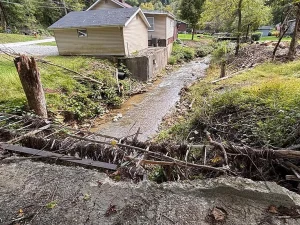
Listed on Zillow.