Great opportunity to rehab a duplex for an investment
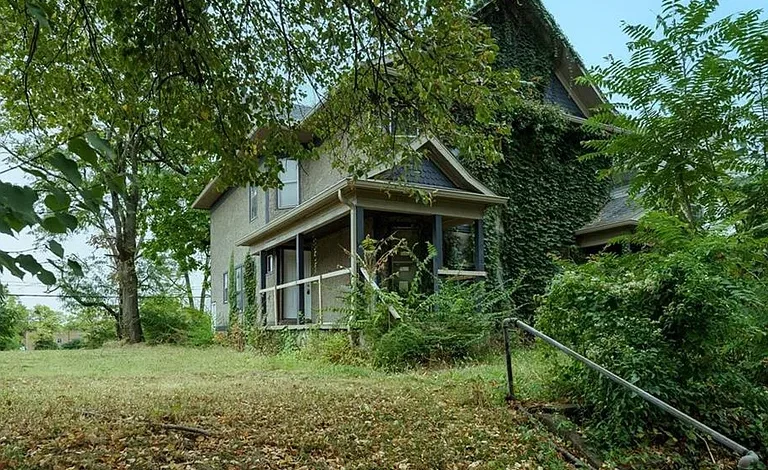
$5,000 Opening Bid for a 6-Bedroom Dayton Duplex: 3,353 Sq Ft Multi-Family Rehab Opportunity
A large multi-family property in Dayton, Ohio, is heading to an online auction with an estimated $5,000 opening bid, offering buyers an opportunity to evaluate a substantial duplex rehabilitation project. Located at 908-910 Harvard Blvd #908, Dayton, OH 45406, the property includes six bedrooms, two full bathrooms, and approximately 3,353 square feet of interior living space.
Built in 1905, this duplex is being marketed primarily to buyers prepared to take on a renovation. The listing highlights large rooms and states that the roof, soffit, gutters, downspout, and exterior appear newer and in good condition. At the same time, the property is being sold strictly AS-IS, and the auction does not provide an inspection contingency or financing contingency.
Bidding is scheduled to open at 12:00 noon on Thursday, October 15, 2026, and close at 1:00 PM on Monday, October 19, 2026.
The estimated $5,000 figure represents the opening bid, not a conventional fixed asking price. The eventual winning bid will be determined through the auction process. Buyers must also account for an additional buyer’s premium of $6,000 or 10% of the winning bid, whichever is greater.
For contractors, experienced renovators, landlords, and buyers interested in multi-family real estate, this Dayton duplex offers an unusual combination of substantial square footage and a low auction starting point. However, the auction structure and AS-IS condition make detailed due diligence essential.
Property Overview
The property at 908-910 Harvard Blvd is classified as a duplex and multi-family residence.
The primary listing details include:
Address: 908-910 Harvard Blvd #908, Dayton, OH 45406
Opening bid: Estimated $5,000
Property type: Duplex / Multi-Family
Bedrooms: 6
Bathrooms: 2 full bathrooms
Interior living area: Approximately 3,353 square feet
Year built: 1905
Lot size: Approximately 4,961 square feet
Lot dimensions: Approximately 40 x 141.2 feet, irregular
Basement: Unfinished with walk-out access
Heating: Natural gas
Cooling: None listed
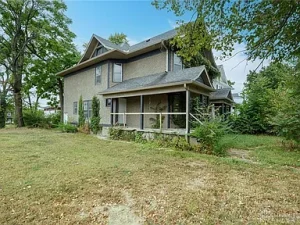
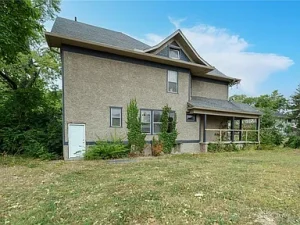
Exterior: Stucco
Garage: None
Water: Public
Utilities: Water and sewer available
Zoning: Residential
Parcel number: R72066020050
Subdivision: City/Dayton Rev
Special condition: Auction
Ownership: Corporate owned
Date placed on market: October 5, 2026
The property is not being presented as move-in ready. Its primary attraction is the possibility of rehabilitating a large existing duplex.
The $5,000 Figure Is an Opening Bid
One of the most important facts for buyers to understand is that the $5,000 listing amount represents the opening auction bid.
It should not be interpreted as a promise that the duplex can be purchased for $5,000.
Once online bidding begins, interested buyers can compete according to the auction platform’s rules. The eventual winning bid could be substantially higher than the opening amount.
Anyone considering participation should therefore establish a maximum bid before the auction ends.
That maximum should be based on the property’s condition, estimated renovation expenses, closing costs, buyer’s premium, financing costs, carrying expenses, comparable sales, potential rental income, and the buyer’s intended strategy.
Online Auction Dates
The auction is scheduled to open at 12:00 noon on Thursday, October 15, 2026.
Bidding is scheduled to close at 1:00 PM on Monday, October 19, 2026.
Prospective bidders should register early enough to understand the platform and resolve any account or verification issues.
The official auction documents should also be reviewed carefully because they establish the binding terms of the transaction.
Buyers should determine whether bidding can be extended if offers are received near the scheduled closing time and should understand exactly when a bid becomes binding.
Buyer’s Premium: $6,000 or 10%
The buyer’s premium is particularly important with this auction.
According to the listing, the successful buyer will pay $6,000 or 10% of the winning bid, whichever amount is greater.
This means the winning bid does not represent the complete purchase amount.
Consider a hypothetical winning bid of $25,000.
Ten percent would equal $2,500. Because $2,500 is less than the $6,000 minimum, the buyer’s premium would be $6,000.
The resulting amount would therefore be $31,000 before other applicable closing expenses, taxes, renovation costs, insurance, financing expenses, and carrying costs.
At a hypothetical $70,000 winning bid, 10% would equal $7,000, so the percentage-based premium would apply.
Understanding this calculation is essential before determining a bidding limit.
10% Earnest Money Deposit
The auction terms require a 10% earnest money deposit at contract execution.
The successful bidder therefore needs access to funds immediately after the auction.
Auction purchases can move more quickly than traditional residential transactions, leaving less time to arrange financing after a winning bid has already been placed.
Buyers should have their funding strategy established before participating.
No Financing Contingency
The listing explicitly states that there is no financing contingency.
This creates a meaningful financial obligation for the winning bidder.
In many conventional transactions, a financing contingency can provide protection if a buyer is unable to obtain an approved mortgage.
That protection is not offered here.
A buyer should not place a bid expecting to arrange uncertain financing afterward.
The listing specifically identifies cash or hard money as the expected purchase methods.
Cash or Hard-Money Financing
Distressed properties are frequently purchased with cash because traditional mortgage lenders may have property-condition requirements that a rehabilitation project cannot immediately satisfy.
Hard-money financing is another option sometimes used by real estate investors.
However, hard-money loans can have higher interest rates, origination charges, shorter repayment periods, and different underwriting requirements than conventional mortgages.
The cost of financing should be included when calculating the total project budget.
A seemingly inexpensive acquisition can become substantially more expensive when financing and holding costs accumulate during renovation.
Sold Strictly AS-IS
The duplex is being sold AS-IS.
The seller is not offering to complete repairs before closing.
The buyer will therefore assume responsibility for the property in its existing condition.
For a building constructed in 1905, a comprehensive condition review is especially important.
Potential areas for evaluation include foundation components, framing, roofing, electrical service, plumbing, heating equipment, windows, exterior stucco, basement conditions, drainage, kitchens, bathrooms, flooring, ceilings, walls, stairs, and life-safety systems.
The listing does not indicate that all these components require repair. They are simply important areas to investigate in an older rehabilitation property.
No Inspection Contingency
The auction also states that there is no inspection contingency.
That means buyers should complete as much property evaluation as the auction process allows before submitting a binding bid.
A winning bidder should not assume they can inspect afterward and cancel the transaction simply because the renovation turns out to be more expensive than expected.
This condition makes professional due diligence particularly valuable.
Experienced contractors or inspectors may be able to identify potential cost categories that are difficult for inexperienced buyers to recognize.
More Than 3,300 Square Feet
At approximately 3,353 square feet, this is a large residential building.
Size is one of the property’s biggest advantages and one of its most important renovation considerations.
A larger building provides more usable interior space and potentially larger residential units.
However, it also means more walls, ceilings, floors, windows, electrical circuits, plumbing, heating requirements, and interior finishes.
Renovation budgets should therefore reflect the property’s substantial size.
Six Bedrooms
The duplex contains six bedrooms.
If the building is divided relatively evenly, this could potentially correspond to three bedrooms per unit, although the actual configuration should be verified.
Larger bedroom counts can increase flexibility for future tenants.
Three-bedroom units, for example, may appeal to households needing more space than a typical one- or two-bedroom apartment provides.
Before relying on the bedroom count for rental analysis, buyers should verify the legal configuration and ensure that each bedroom meets applicable requirements.
Two Full Bathrooms
There are two full bathrooms.
For a conventional two-unit configuration, that could mean one bathroom serving each unit.
Bathrooms can be among the more expensive rooms to rehabilitate because several building systems come together in a relatively small area.
A complete renovation might involve plumbing, fixtures, electrical work, ventilation, flooring, wall finishes, waterproofing, and cabinetry.
With two units, many rehabilitation expenses occur twice.
Large Rooms
The listing specifically highlights the home’s large rooms.
Older multi-family properties can sometimes offer room dimensions that are difficult to find in newer apartments.
Generous living spaces and bedrooms may become an important selling or rental feature after rehabilitation.
During renovation, buyers may want to preserve useful room dimensions while improving lighting, flooring, finishes, and functionality.
A thoughtful renovation can modernize a property without eliminating all of the architectural character associated with an older building.
Built in 1905
The property was constructed in 1905.
A building of this age can contain materials and construction techniques from several different periods because repairs and renovations may have occurred repeatedly over more than a century.
Some major systems may already have been updated.
Others may require modernization.
Buyers should avoid making assumptions based only on the original construction date.
The current condition of each system matters more than age alone.
Roof Appears Newer
The seller states that the roof appears to be newer and in good shape.
If confirmed through inspection or available documentation, this could be an important advantage.
Roof replacement on a building of more than 3,300 square feet can represent a significant expense.
However, buyers should verify the roof rather than relying exclusively on visual appearance.
Useful questions include when it was installed, what materials were used, whether permits were required, whether flashing was replaced, and whether there is any evidence of active leakage.
Soffit, Gutters and Downspout
The listing also states that the soffit, gutters, and downspout appear newer and in good condition.
These components play an important role in controlling water around the building.
Proper gutters and downspouts help move roof runoff away from walls and foundations.
This is particularly relevant for a property with a basement.
During a site visit, buyers should observe where downspouts discharge and whether water appears to collect near the structure.
Exterior Appears in Good Shape
The seller also describes the exterior as appearing newer or in good condition.
That could reduce some exterior rehabilitation needs if the observation is confirmed.
However, the building uses a stucco exterior, which should be evaluated for cracking, separation, moisture intrusion, and previous repairs.
Exterior appearance alone cannot reveal every condition hidden behind the surface.
Stucco Construction
Stucco can provide a distinctive appearance and has been used on residential buildings for many years.
Maintenance becomes particularly important as stucco ages.
Small cracks may require repair to prevent moisture penetration.
Areas around windows, doors, roof transitions, and the foundation should be examined carefully.
If the existing stucco is largely sound, rehabilitation may focus primarily on localized repair and cosmetic improvement rather than complete replacement.
Unfinished Basement
The property contains an unfinished basement.
Basements can be valuable in multi-family properties because they may provide storage and access to utilities.
For renovators, an unfinished basement can also make it easier to inspect plumbing, electrical wiring, structural elements, and mechanical systems.
However, buyers should evaluate moisture conditions carefully.
Evidence of water intrusion, foundation movement, drainage problems, or deterioration can materially affect the rehabilitation budget.
Walk-Out Basement Access
The basement includes walk-out access.
This can improve usability and make renovation work easier because contractors may be able to move tools, materials, and debris directly between the basement and exterior.
A walk-out basement may also provide better access for future maintenance.
Any plans to convert basement space into additional living area should be evaluated separately for zoning, ceiling height, egress, fire safety, and other building-code requirements.
Natural Gas Heating
The property uses natural gas heating.
The listing does not provide detailed information about the age or configuration of the heating equipment.
A buyer should determine whether each unit has an independent heating system or whether the building uses shared equipment.
This distinction can influence operating expenses and tenant utility arrangements.
An HVAC professional can evaluate equipment condition and determine whether repair or replacement should be included in the renovation.
No Cooling
No cooling system is listed.
Adding air conditioning could become part of the rehabilitation strategy depending on the buyer’s target rental market and overall budget.
Potential solutions would need to be evaluated based on the existing heating system, electrical capacity, ductwork, building configuration, and renovation scope.
Cooling is not simply a cosmetic upgrade; it can involve electrical and mechanical work that should be incorporated into the project plan early.
Public Water and Sewer Availability
The property is listed with public water, while sewer and water utilities are shown as available.
The details also reference storm sewer infrastructure.
A buyer should confirm the exact sanitary sewer configuration and determine how water service is metered.
For a duplex, separate utility meters can influence how operating expenses are divided between landlord and tenants.
If services are shared, the owner may need to account for those costs differently.
No Garage
There is no garage listed.
Parking arrangements should therefore be investigated during a property visit.
A six-bedroom duplex could potentially house multiple adults, making parking an important practical consideration.
Buyers should understand how much off-street parking is available and whether any improvements could be made within local zoning requirements.
4,961-Square-Foot Lot
The property sits on approximately 4,961 square feet of land.
The lot dimensions are reported as roughly 40 by 141.2 feet, with an irregular configuration noted.
This is a relatively compact urban parcel compared with the size of the 3,353-square-foot building.
That may reduce landscaping responsibilities, but it can also limit options for additional parking or outdoor improvements.
A survey can help clarify exact boundaries.
Residential Zoning
The property carries residential zoning.
Because it is being marketed as a duplex, buyers should verify that the existing two-unit use is legally recognized.
This is especially important for investors calculating future rental income.
A building physically divided into two units is not automatically equivalent to a legally recognized duplex in every situation.
Zoning records, occupancy documentation, and applicable municipal requirements should be reviewed before major renovation funds are committed.
Corporate Ownership
The property is listed as corporate owned.
This may help explain the structured auction process and detailed sale terms.
Corporate sellers often follow standardized transaction procedures.
Buyers should therefore read the auction documents carefully and should not assume that conventional negotiation practices will apply.
Rehabilitation Strategy
A successful renovation begins with a detailed scope of work.
Rather than estimating one large repair number, buyers can divide the project into categories.
These may include structural work, exterior repairs, roofing verification, windows, electrical systems, plumbing, HVAC, kitchens, bathrooms, flooring, drywall, painting, doors, insulation, basement work, appliances, landscaping, permits, cleanup, and safety improvements.
Breaking the project into categories makes contractor estimates easier to compare.
Electrical Due Diligence
Electrical systems deserve special attention in a building constructed in 1905.
The original electrical infrastructure would obviously predate modern household demand, although the property may have been updated many times since construction.
A licensed electrician can determine the current service capacity, panel condition, wiring types, grounding, outlet configuration, and any upgrades required.
Separate metering should also be investigated if the property will continue operating as a duplex.
Plumbing Due Diligence
A six-bedroom, two-bathroom duplex can contain a substantial plumbing network.
Buyers should evaluate supply lines, drains, water heaters, fixtures, shutoffs, and the connection to municipal infrastructure.
Older drain systems can create expensive problems if deterioration is discovered after renovation begins.
A plumbing inspection can help establish whether repairs are localized or whether more extensive replacement should be included in the budget.
Kitchen Renovation
A duplex will typically require two functional kitchens.
If both need complete rehabilitation, buyers should account for cabinetry, countertops, sinks, faucets, plumbing, electrical circuits, lighting, flooring, appliances, ventilation, and wall finishes.
Kitchen expenses can become significant because nearly every component must be duplicated across two units.
Durable materials may be particularly important for a long-term rental strategy.
Bathroom Renovation
The same principle applies to the property’s two bathrooms.
Renovation costs can include tubs or showers, toilets, sinks, vanities, plumbing, flooring, ventilation, lighting, waterproofing, and wall finishes.
Hidden plumbing problems can also appear once demolition begins.
A realistic budget should leave room for unexpected conditions.
Permits and Inspections
Major rehabilitation work may require permits.
Electrical, plumbing, HVAC, structural, roofing, and other improvements can be subject to inspection.
A multi-family property may also have life-safety requirements that differ from those of a single-family residence.
Prospective buyers should understand the applicable process before construction begins.
Completing work correctly can be important for insurance, future refinancing, rental occupancy, and eventual resale.
Insurance Considerations
Insurance for a vacant rehabilitation property can differ from standard homeowners insurance.
Insurers may evaluate occupancy, building condition, electrical systems, plumbing, roof condition, security, and the planned construction.
A specialized vacant-property or renovation policy may be necessary.
Buyers using hard-money financing should also understand the lender’s insurance requirements.
Insurance costs should be calculated before bidding rather than treated as an afterthought.
Estimating Potential Rental Income
A buyer planning to retain the duplex should research realistic rents for comparable renovated units in the surrounding area.
Useful comparisons would include properties with similar bedroom counts, unit sizes, condition, parking, and amenities.
The listing itself does not provide enough information to establish future rental income.
Conservative rent estimates are generally more useful than optimistic projections when determining a maximum auction bid.
Rental Property Operating Costs
Rental revenue should never be analyzed without expenses.
Potential operating costs can include property taxes, insurance, repairs, maintenance, water, sewer, vacancy, property management, lawn care, pest control, common utilities, and long-term capital improvements.
If hard-money financing is used, interest expense during rehabilitation may also be substantial.
A complete investment analysis should focus on net income rather than gross rent alone.
After-Repair Value and Comparable Sales
Investors considering resale should investigate the property’s potential after-repair value, or ARV.
ARV is not simply a guess about what a renovated duplex might sell for.
It should be based on recent comparable transactions involving similar multi-family properties.
Square footage, unit configuration, condition, location, parking, age, and renovation quality can all influence value.
Accurate comparable sales are essential because an unrealistic ARV can make an otherwise careful renovation budget misleading.
Carrying Costs During Construction
A major rehabilitation can take months.
During that period, the owner may have no rental income while continuing to pay insurance, utilities, financing costs, taxes, security expenses, lawn maintenance, and other bills.
Unexpected delays can increase those carrying costs.
Contractor schedules, permitting, material availability, inspections, and hidden damage can all affect the timeline.
A project budget should therefore include time as well as construction expenses.
Buyer Pays Transfer and Recordation Taxes
The auction terms state that the buyer is responsible for all transfer and recordation taxes.
These expenses need to be added to the acquisition budget.
Combined with the buyer’s premium, earnest money requirements, and other closing costs, they demonstrate why the winning bid alone does not represent the total amount required to acquire the property.
Buyer’s Agent Registration
Anyone intending to use a buyer’s agent should pay close attention to the registration requirement.
The auction states that the buyer’s agent must be registered on Homesale.plus before the buyer places their first bid.
A bidder who wants agent representation should therefore handle this requirement before participating.
Understanding the $1 Per Square Foot Display
Based on the $5,000 opening bid, Zillow displays the property at approximately $1 per square foot.
That figure is attention-grabbing but should not be treated as the property’s final acquisition cost per square foot.
The auction may produce a much higher winning bid.
The buyer’s premium will then be added, followed by closing expenses and rehabilitation.
For an investor, a more useful calculation would eventually compare the complete project cost with the building’s finished value or sustainable rental income.
Early Zillow Interest
According to the supplied listing information, the property recorded approximately 67 Zillow views and one save during its first 22 hours online.
Because the listing is new and the auction is still ahead, those numbers may continue changing.
Online activity can demonstrate interest, but it should not determine bidding strategy.
Investors should remain focused on their own calculations.
Who Is This Property Best Suited For?
The duplex is likely to be most appropriate for buyers who understand rehabilitation and auction transactions.
An experienced contractor may be able to evaluate construction costs efficiently.
A landlord may see the potential for two rental units.
A renovation investor might evaluate the property for eventual resale.
A buyer with access to cash or established hard-money financing may be better positioned to satisfy the auction terms.
Someone relying on a standard mortgage and conventional inspection contingency may find this sale structure significantly more challenging.
Final Thoughts on the Dayton Duplex Auction
The property at 908-910 Harvard Blvd #908, Dayton, OH 45406 offers a combination rarely represented by a conventional listing: a 3,353-square-foot, six-bedroom duplex entering an online auction with a $5,000 opening bid.
Built in 1905, the property contains two full bathrooms, large rooms, natural-gas heating, an unfinished walk-out basement, public water, residential zoning, and a stucco exterior.
The seller also states that the roof, soffit, gutters, downspout, and exterior appear newer and in good condition.
Those characteristics could provide a useful starting point for rehabilitation, but buyers should independently verify the condition of every major system.
The auction begins at 12:00 noon on Thursday, October 15, 2026, and is scheduled to close at 1:00 PM on Monday, October 19, 2026.
The sale is strictly AS-IS.
There is no inspection contingency and no financing contingency. Cash or hard money is expected. A 10% earnest money deposit is required at contract execution, and the buyer is responsible for applicable transfer and recordation taxes.
Most importantly, the successful bidder must pay a buyer’s premium of $6,000 or 10% of the winning bid, whichever is greater.
For that reason, the $5,000 opening bid should be viewed only as the beginning of the auction—not as the total cost of acquiring this property.
A disciplined buyer should calculate the maximum bid only after considering the buyer’s premium, closing expenses, rehabilitation, permits, insurance, financing, holding costs, potential rental income, and realistic after-repair value.
For an experienced investor or contractor prepared for a substantial multi-family renovation, this Dayton property could be worth investigating carefully. With more than 3,300 square feet, six bedrooms, two potential residential units, and large rooms, there is considerable physical space to work with.
The ultimate opportunity will depend on the winning auction price and the true cost of bringing this century-old duplex back into productive residential use.
Listed on Zillow.