Fixer-Upper on Nearly 4 Acres with Barn Near Ashland
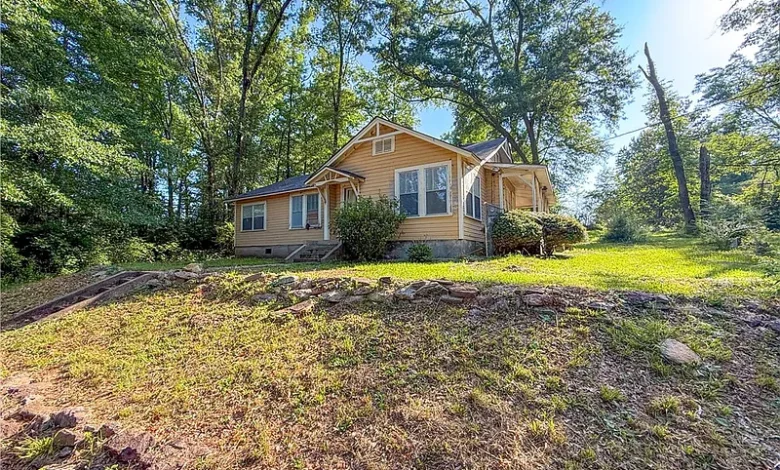
$50,000 Fixer-Upper Near Ashland, Alabama: Country Home on 3.68 Acres With Historic Barn, Stream and Homestead Potential
For buyers searching for an affordable fixer-upper in Alabama with acreage, the property at 80428 Highway 9, Ashland, AL 36251 presents an interesting combination of rural land, an existing residence, a historic-style barn, mature trees, and nearly four acres of countryside. Offered at $50,000, this property could appeal to renovation buyers, investors, contractors, future landlords, homestead enthusiasts, or anyone looking for a country property that can be improved over time.
Although the structured property category identifies the listing as unimproved land, the marketing description clearly states that an existing three-bedroom, one-bathroom fixer-upper home is located on the property. This discrepancy is important. Buyers should independently verify the legal and tax classification of the residence, its condition, square footage, permitting history, and whether it is considered habitable before making assumptions about financing, insurance, or value.
The property includes approximately 3.68 acres of rolling, partially cleared and partially wooded land. Public water is listed as available, electricity is available and identified as being on the property, and there is no HOA.
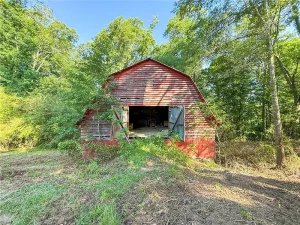
One of the most distinctive features is the red split-level barn located behind the home. According to the listing, the barn includes a loft and multiple stalls, creating possible opportunities for equipment storage, livestock, workshop use, agricultural storage, or a small homestead operation, subject to its physical condition and local regulations.
A small running stream is also described along the property boundary, adding another natural feature to the landscape.
At $50,000, the property offers a relatively low entry price for a combination of acreage, an existing home, and an outbuilding. However, buyers should focus on the total cost of acquisition and rehabilitation, not simply the asking price. The condition of the house, barn, roof, foundation, electrical system, plumbing, septic or sewer arrangement, HVAC, driveway, and other infrastructure should all be investigated before determining whether this represents a financially attractive project.
Property Overview: 80428 Highway 9, Ashland, AL 36251
The property is currently offered at $50,000 and consists of approximately 3.68 acres just outside Ashland, Alabama.
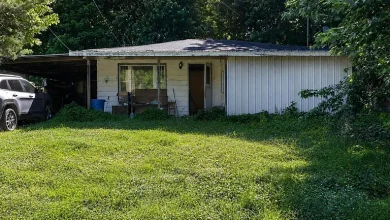
According to the listing description, an existing three-bedroom, one-bathroom home sits on the acreage and requires renovation.
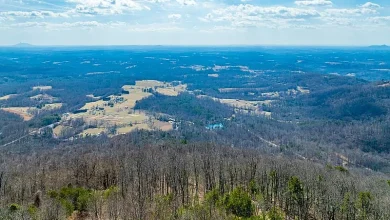
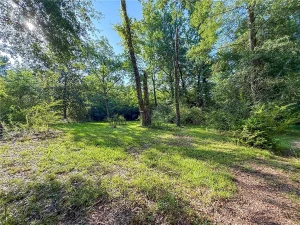
The land is described as rolling, partially cleared, and partially wooded.
A scenic tree-lined yard surrounds the property, while a small running stream reportedly follows part of the property boundary.
Behind the residence is a distinctive red barn with multiple stalls and a loft.
Public water is available, electricity is available, and the listing identifies electrical service as present on the property.
No homeowners association is reported.
Annual property taxes are listed at approximately $145, while the tax assessed value is approximately $141,640.
Understanding the $50,000 Asking Price
The $50,000 asking price is likely to be one of the first things that attracts buyers to this listing.
For that amount, the marketing description presents a package consisting of nearly four acres, an existing three-bedroom residence, a barn, mature vegetation, and a rural setting.
But the purchase price is only the beginning of the financial analysis.
A buyer considering a fixer-upper should calculate:
Purchase Price + Closing Costs + Inspections + Repairs + House Renovation + Barn Repairs + Utility Work + Septic/Sewer Costs + Insurance + Taxes + Site Improvements + Landscaping + Financing Costs + Holding Costs + Contingency = Total Investment
That total is much more useful than the $50,000 headline alone.
An Important Listing Classification Discrepancy
One unusual aspect of this listing deserves immediate attention.
The structured Zillow information classifies the property as “Unimproved Land” and does not display a bedroom or bathroom count in the main facts.
However, the seller’s description clearly refers to an existing three-bedroom, one-bathroom home.
This could simply reflect how the property was entered into the MLS, but buyers should not assume that explanation.
The status of the residence should be independently verified.
Questions to investigate include whether the house is legally recognized as a residential structure, whether it is currently habitable, whether utilities are connected, and whether any major permitting or structural issues exist.
Nearly Four Acres of Alabama Countryside
The property contains approximately 3.68 acres.
That is substantially larger than a conventional residential lot.
Three-plus acres can provide room for a home, barn, garden, animals where permitted, equipment storage, outdoor recreation, and increased privacy.
At the same time, acreage creates maintenance responsibilities.
Grass cutting, brush management, tree maintenance, drainage, driveway upkeep, fencing, and outbuilding maintenance can all become part of rural ownership.
Buyers should evaluate both the advantages and responsibilities of maintaining this amount of land.
Rolling Topography
The land is described as having rolling topography.
Rolling terrain can contribute to visual appeal and make a rural property feel more dynamic than completely flat ground.
It can also influence drainage, driveway construction, building locations, pasture management, and accessibility.
Anyone considering additional structures should understand how slope affects construction costs.
Water movement during heavy rainfall should also be observed because low areas can collect runoff even when they appear dry during normal weather.
Partially Cleared and Partially Wooded
The acreage provides a mixture of cleared and wooded areas.
That combination can be particularly useful for a country property.
Cleared ground can provide usable yard space, gardens, pasture, recreation, or locations for future improvements.
Wooded sections can create shade, privacy, wildlife habitat, and natural visual boundaries.
A buyer interested in a small homestead may appreciate having both environments on one parcel.
Tree condition should still be evaluated, particularly around the home, barn, driveway, and utility lines.
Scenic Tree-Lined Yard
The listing specifically highlights a scenic tree-lined yard.
Mature trees can dramatically improve the appearance of a rural home.
They may provide shade during Alabama summers and contribute to a more established landscape.
For a renovation buyer, improving the house while preserving healthy mature trees could substantially enhance curb appeal.
However, dead or damaged trees near structures can create risk.
An arborist may be useful if large trees appear unhealthy or are positioned close to the house or barn.
Small Running Stream
Another distinctive feature is the small running stream along the property boundary.
Water features can add visual interest and support wildlife.
For a future homestead, a stream can also contribute to the rural atmosphere that many acreage buyers are seeking.
However, buyers should investigate the exact location and legal boundary relationship.
They should also determine whether the stream creates flood, drainage, erosion, wetland, or setback considerations.
The presence of a stream should be appreciated as an amenity while still receiving appropriate due diligence.
Existing Three-Bedroom Home
According to the seller’s description, the property includes a three-bedroom house.
A three-bedroom configuration can provide enough space for a household while also offering flexibility for guests, an office, or storage.
Unfortunately, the supplied listing data does not provide the home’s square footage, room dimensions, year built, architectural style, or detailed interior features.
That means buyers need to evaluate the residence primarily through inspection rather than relying on extensive MLS specifications.
The lack of information itself should encourage more thorough investigation.
One Bathroom
The existing house is described as having one bathroom.
For a three-bedroom country home, one bathroom can be functional, although some future buyers may prefer an additional bathroom.
A renovation buyer might investigate whether adding another bathroom is technically and financially practical.
That possibility should not be assumed.
Available floor space, plumbing location, septic capacity if applicable, building codes, permits, and construction costs all need to be considered.
Fixer-Upper Condition
The listing clearly presents the house as a fixer-upper.
That wording should shape the buyer’s expectations.
Rather than approaching the property as a move-in-ready residence, it should be evaluated as a renovation project until inspection establishes otherwise.
The first questions should concern structure and major systems.
Is the foundation stable?
Does the roof keep water out?
Is the electrical system safe?
Does the plumbing function?
Is there reliable heating and cooling?
Are the floors structurally sound?
Those questions matter more initially than paint colors or cosmetic finishes.
Start With Structural Condition
A renovation should generally begin with structural integrity.
The foundation, floor framing, exterior walls, roof framing, and other load-bearing components should be evaluated.
If significant structural work is required, buyers need to know before spending money on kitchens, bathrooms, flooring, or paint.
A professional home inspection can provide an initial overview, while specialized structural evaluation may be appropriate if major concerns are discovered.
Roof Condition Is Unknown
The supplied listing does not identify the roof type, age, or condition.
This represents an important unknown.
A leaking roof can damage ceilings, insulation, walls, electrical systems, flooring, and structural materials.
Before completing interior renovation, buyers should ensure that the building is protected from water intrusion.
If the roof needs replacement, that expense belongs near the top of the renovation budget.
Electrical System
Electricity is identified as available, and the property information says an electric utility is on the property.
That is useful, but it does not tell buyers about the condition of the home’s electrical system.
A licensed electrician should evaluate the service panel, wiring, grounding, outlets, switches, safety devices, and overall capacity.
Older or damaged systems may require modernization before the house can be safely occupied or insured.
Plumbing Requires Verification
The listing does not provide detailed plumbing information.
A buyer should determine whether water is currently connected to the house and whether the plumbing system functions correctly.
Supply pipes, drain lines, fixtures, water heater, leaks, and water pressure should all be evaluated.
If the property has been vacant for an extended period, plumbing deserves particular attention.
Leaks that are invisible while the water is turned off can appear quickly when service is restored.
Public Water Availability
The listing identifies public water.
This can be an advantage compared with a property requiring a private well.
Buyers should still confirm whether the existing residence is currently connected, whether the account can be activated normally, and whether any repairs are necessary between the public connection and the house.
Water availability and functioning household plumbing are two separate issues.
Sewer or Septic System Must Be Confirmed
The supplied information does not identify the wastewater arrangement.
Given the rural setting, buyers should determine whether the house uses a septic system, public sewer, or another approved arrangement.
If a septic system exists, its location, age, capacity, and condition should be investigated.
A failing septic system can become a significant expense.
It is particularly important to understand septic capacity if a buyer hopes to add another bathroom or expand the residence.
HVAC Condition Is Unknown
No detailed heating or cooling information is provided.
In Alabama’s climate, dependable air conditioning is an important part of residential comfort.
A buyer should determine what HVAC equipment exists, whether it functions, how old it is, and whether ductwork requires repair.
If the property needs a complete heating and cooling system, that expense should be included in the renovation budget before evaluating profitability.
The Historic Red Barn
One of the property’s most memorable features is the historic split-level red barn behind the home.
The barn provides visual character and could potentially become a valuable functional asset.
According to the listing, it contains a loft and multiple stalls.
Depending on its condition, it could potentially support storage, equipment, agricultural supplies, livestock, or homestead activities.
Its future use should depend on structural condition and applicable local requirements.
Barn Loft
A barn loft can provide valuable storage space.
Hay, seasonal equipment, tools, or other appropriate materials could potentially be kept above the primary barn level.
However, buyers should never assume an older loft can safely support heavy loads.
Floor framing, stairs or ladders, roof structure, moisture damage, and overall stability should be evaluated before use.
Structural repairs to an older barn can range from straightforward to extensive.
Multiple Barn Stalls
The listing states that the barn includes multiple stalls.
That may appeal to buyers interested in animals or a small homestead.
However, livestock suitability depends on more than the existence of stalls.
Fencing, pasture, water, ventilation, manure management, animal shelter, zoning, and local regulations all matter.
A buyer planning horses, cattle, goats, or other livestock should confirm that the property can legally and practically support the intended animals.
Mini-Farm Potential
The marketing description suggests the property could function as a mini farm.
With 3.68 acres, a barn, partially cleared land, and public water availability, the idea is understandable.
Possible small-scale uses could include gardening, certain livestock where permitted, poultry, equipment storage, or other homestead activities.
However, the exact carrying capacity of the land depends on the type and number of animals, pasture quality, fencing, supplemental feed, and management.
Homestead Opportunity
The property may particularly interest buyers attracted to a small homestead lifestyle.
Unlike a standard suburban house, the land provides room to develop outdoor projects over time.
A buyer might prioritize renovating the residence first, then improving the barn, fencing, garden areas, landscaping, and other parts of the property as finances allow.
This phased approach can make a rural project more manageable than attempting every improvement simultaneously.
Potential Primary Residence
One possible strategy is renovating the house as a primary residence.
At a $50,000 acquisition price, a buyer may have room in the overall budget for substantial improvements compared with purchasing a finished home at a much higher price.
However, the final cost must still make sense relative to comparable homes in the Ashland area.
An inexpensive purchase followed by an excessively expensive renovation can produce a property that costs more than its market supports.
Rental Investment Potential
The seller also identifies the property as a potential rental investment.
A renovated three-bedroom country home with acreage could attract tenants seeking more outdoor space than a typical in-town rental.
The barn might also contribute to appeal depending on permitted tenant use.
Investors should research actual local rental comparables rather than estimating rent from the asking price or acreage.
Rural rental management can also involve different maintenance considerations from conventional apartments.
Rental Cash Flow Analysis
A landlord should estimate gross rent and subtract vacancy, taxes, insurance, repairs, maintenance, property management if applicable, owner-paid utilities, lawn or acreage maintenance, and capital reserves.
The barn and acreage can increase potential appeal but also increase maintenance exposure.
Roofs, fences, trees, driveways, outbuildings, septic systems, and HVAC equipment eventually require capital.
A rental budget should therefore include reserves rather than assuming every month of rent represents profit.
Fix-and-Flip Potential
Another possible strategy is purchasing the property, renovating the residence, improving the grounds, repairing the barn, and reselling.
The correct financial equation is:
Realistic After-Repair Value – $50,000 Purchase Price – Closing Costs – Renovation – Barn Repairs – Insurance – Taxes – Utilities – Financing – Holding Costs – Selling Expenses – Contingency = Potential Project Result
The after-repair value should be based on relevant comparable sales.
The reported tax assessment should not automatically be used as an expected resale price.
$141,640 Tax Assessed Value
The property has a reported tax assessed value of approximately $141,640.
That is considerably higher than the $50,000 asking price.
At first glance, the difference may appear to represent substantial built-in equity.
However, tax assessed value and current market value are not interchangeable.
The condition of the residence, barn, utilities, and other improvements can significantly affect what buyers are willing to pay.
The $141,640 assessment should therefore be treated as a tax-related data point rather than proof of current value.
Very Low Reported Annual Property Tax
Annual property tax is reported at approximately $145.
That is a notably low figure based on the supplied listing information.
Buyers should verify the current tax bill and understand why the amount is at that level.
Tax treatment can depend on assessment classifications, exemptions, land use, and other factors.
A future sale, renovation, change in occupancy, or reassessment could potentially change taxes.
Investors should not assume the $145 figure will remain unchanged indefinitely.
No Zestimate Is Displayed
Zillow does not display a Zestimate for this property.
That is not particularly surprising given the unusual combination of acreage, a fixer-upper residence, barn, and land classification.
Automated valuation models can have difficulty pricing unique rural properties.
A conventional neighborhood house may have dozens of close comparables.
A 3.68-acre property with a fixer-upper and historic barn can be much harder to compare directly.
Local comparable sales are therefore particularly important.
No HOA
The property has no HOA listed.
For buyers interested in rural living, this can be appealing because there is no reported homeowners association fee.
However, the absence of an HOA does not mean there are no restrictions.
County regulations, zoning, health requirements, building codes, environmental rules, and permitting still apply.
Any planned addition, new structure, livestock use, business activity, or major change should be independently verified.
Highway 9 Access
The address places the property directly along Highway 9.
Road access can be important for a rural property because it influences everyday commuting, construction deliveries, emergency access, and future resale appeal.
Buyers should inspect the driveway entrance, visibility, drainage, and general accessibility.
Traffic noise and road activity should also be personally evaluated because preferences vary.
Insurance Considerations
Before purchasing, buyers should obtain an insurance quote.
A fixer-upper can be more difficult to insure than a fully renovated residence.
Insurers may consider roof condition, electrical wiring, plumbing, HVAC, vacancy, structural condition, and outbuildings.
The barn may also need to be specifically disclosed.
If substantial construction will occur before occupancy, renovation or vacant-property coverage may be necessary.
Financing a Fixer-Upper
Financing can be another consideration.
A conventional mortgage lender may require the residence to meet certain condition standards.
If the house needs extensive work, traditional financing may be difficult until repairs are completed.
Cash, renovation financing, local bank products, or other financing structures may be alternatives depending on buyer qualifications and property condition.
The financing method should be investigated before making an offer.
Renovation Priorities
The most efficient renovation sequence generally begins with safety and weather protection.
First evaluate the foundation, structure, roof, exterior drainage, and water intrusion.
Then address electrical, plumbing, septic or sewer, water supply, and HVAC.
After the major systems are dependable, the project can move toward insulation, windows, kitchen, bathroom, flooring, drywall or plaster, lighting, painting, appliances, and cosmetic finishes.
Exterior cleanup, barn restoration, landscaping, and fencing can be coordinated with the overall budget.
Kitchen Renovation
No kitchen details are supplied, so buyers should avoid assuming that a cosmetic update will be sufficient.
Cabinetry, countertops, appliances, flooring, plumbing, electrical circuits, lighting, and ventilation may all need attention.
For an investment renovation, the goal should usually be a functional kitchen appropriate for the local market rather than the most expensive possible finishes.
A primary-residence buyer may choose to invest more heavily according to personal preferences.
Bathroom Renovation
The home’s single bathroom deserves careful inspection.
Water damage around tubs, showers, toilets, and sinks can extend into subfloors and walls.
Plumbing and ventilation should be evaluated before installing new cosmetic finishes.
If a buyer considers adding a second bathroom, the cost should be compared with the likely improvement in usability and market value.
Older Materials and Environmental Considerations
The year of construction is not provided, so no specific claim can be made about the age of building materials.
If the home proves to be older, renovation contractors may recommend testing suspect materials before demolition.
The stream and rural land also deserve environmental consideration when planning grading, drainage changes, septic work, or additional construction.
Appropriate local requirements should be followed.
Barn Restoration Budget
The barn should have its own renovation budget rather than being treated as a free bonus.
Potential expenses include roofing, structural framing, siding, doors, stalls, loft repairs, electrical service, drainage, and foundation work.
If the barn is fundamentally sound, targeted repairs could preserve its historic character at reasonable cost.
If it has major structural deterioration, the expense could be considerably higher.
Landscaping and Acreage Maintenance
A nearly four-acre property requires a different maintenance plan from a suburban yard.
Equipment may be necessary for mowing or brush control.
Trees may need pruning.
Driveways require maintenance.
Storms can bring down limbs.
Drainage areas may need attention.
An investor planning to rent the property should decide whether the tenant or owner will maintain the acreage and reflect that responsibility clearly in the lease.
Online Buyer Interest
According to the supplied listing information, the property accumulated approximately 1,048 Zillow views and 131 saves over eight days.
That represents notable online engagement.
The combination of a $50,000 asking price, acreage, an existing home, and a barn may contribute to that interest.
However, views and saves do not establish market value or guarantee a sale.
Physical condition and project economics remain much more important.
Due Diligence Checklist Before Purchasing
A serious buyer should verify the legal status and condition of the residence, property boundaries, title, roof, foundation, structure, electrical system, plumbing, HVAC, public water connection, wastewater system, barn, stream location, drainage, driveway, trees, and insurance availability.
Contractor estimates can then be compared with local renovated-home values.
For anyone considering livestock or additional construction, zoning and permitting requirements should also be confirmed.
Building a Realistic Total Budget
The $50,000 purchase price should be combined with every likely project expense.
A buyer should account for closing costs, inspection, insurance, structural work, roofing, electrical, plumbing, HVAC, wastewater system, kitchen, bathroom, flooring, windows, insulation, paint, appliances, barn repairs, fencing, landscaping, driveway work, utilities, taxes, financing, permits, and holding costs.
A contingency reserve should then be added.
Only after completing this calculation can the buyer understand the property’s true financial profile.
Why a Contingency Reserve Matters
Fixer-uppers regularly reveal unexpected problems after work begins.
Removing flooring can expose damaged subfloors.
Opening walls can reveal electrical or plumbing issues.
Roof leaks can extend farther than expected.
Barn repairs can expose structural deterioration.
Septic systems can require unexpected work.
A contingency reserve prevents every surprise from becoming a financial emergency.
The less information available before purchase, the more important this reserve becomes.
Final Thoughts on 80428 Highway 9, Ashland, Alabama
80428 Highway 9, Ashland, AL 36251 stands out because it offers more than a conventional $50,000 fixer-upper.
According to the marketing description, the buyer receives an existing three-bedroom, one-bathroom home, approximately 3.68 acres of rolling Alabama countryside, a historic split-level red barn with a loft and multiple stalls, a scenic tree-lined yard, and a small stream running along the property boundary.
The combination creates several possible paths.
A buyer could renovate the residence and create an affordable country home.
An investor could evaluate the house as a future long-term rental.
A renovation specialist could consider improving the residence and grounds for resale.
A homestead-oriented buyer could potentially make use of the barn, cleared land, wooded sections, and acreage for permitted small-scale agricultural activities.
The asking price of $50,000 provides a relatively accessible starting point, especially when compared with the reported $141,640 tax assessed value.
But that difference should not be interpreted as guaranteed equity.
The current condition of the residence and barn will ultimately determine how much additional capital is required.
There are also several important unknowns.
The structured listing classifies the parcel as unimproved land even though the marketing description identifies an existing three-bedroom home. The home’s square footage and construction year are not provided. Roof, HVAC, plumbing, and wastewater details are also absent.
Those uncertainties make professional due diligence particularly important.
The reported $145 annual property tax is another attractive figure, but it should be independently confirmed, including whether future renovation, ownership changes, or reassessment could affect the amount.
Public water and electricity availability provide useful infrastructure advantages. The absence of an HOA may also appeal to rural buyers, although local land-use and building regulations continue to apply.
The barn may be the property’s most distinctive feature beyond the acreage itself.
A structurally sound barn with a loft and multiple stalls could provide useful storage, agricultural functionality, and visual character. For a buyer dreaming of a small country homestead, it could become an important part of the property’s identity.
The land itself also contributes considerable appeal.
With approximately 3.68 acres of partially cleared and partially wooded rolling terrain, there is room for privacy, gardens, recreation, landscaping, and potentially animals where permitted. The stream and mature trees enhance the rural atmosphere.
For investors, however, the opportunity ultimately comes down to numbers.
The correct question is not simply whether $50,000 sounds inexpensive. The correct question is whether the purchase price plus all necessary renovation and holding costs produces a total investment that makes sense relative to the property’s realistic finished value or rental income.
For owner-occupants, the analysis can include lifestyle value as well. Someone specifically looking for acreage, a barn, mature trees, and a quiet setting may value features that cannot easily be added to a small residential lot later.
With careful inspection, realistic contractor estimates, appropriate insurance research, verification of the home’s legal status, and a sufficient renovation contingency, 80428 Highway 9 could offer the right buyer an opportunity to transform an affordable rural fixer-upper into a distinctive Alabama country home, rental property, or small homestead.
Listed on Zillow