5 beds 2 baths 1,553 sqft
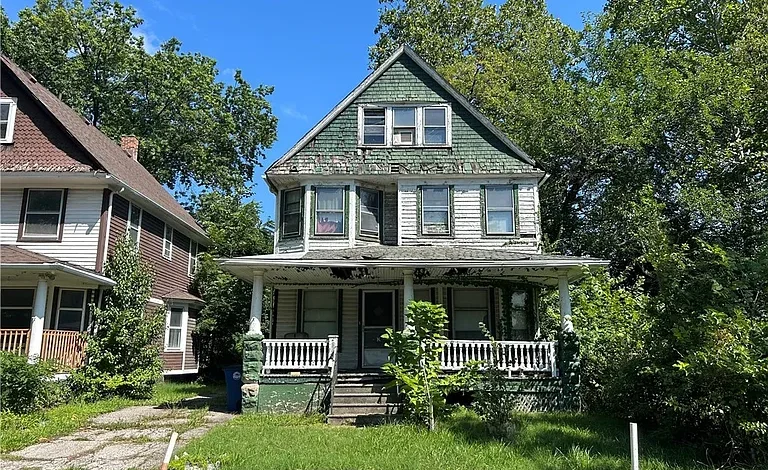
Cleveland Ohio Five-Bedroom Renovation Opportunity Near University Circle
An Affordable Cleveland Property With Significant Renovation Potential
A property priced below $25,000 can attract attention for many reasons, but a five-bedroom home in Cleveland with more than 1,500 square feet, a full basement, a covered front porch, and a detached garage presents a particularly interesting renovation opportunity. Listed at $24,900 following a $5,000 price reduction, this two-story single-family residence offers a substantial footprint for buyers willing to take on a major rehabilitation project.
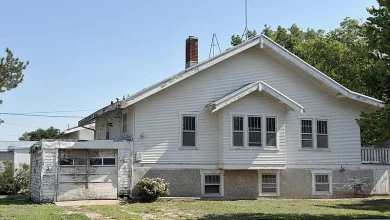
Located in Cleveland, Ohio, the property was built in 1920 and sits on a 4,081-square-foot lot. The home provides approximately 1,553 square feet of finished above-ground living space, with five bedrooms and two bathrooms. It also includes a full unfinished basement that adds valuable utility and storage potential, along with a detached one-car garage.
The property is being marketed as a full renovation opportunity rather than a move-in-ready residence. That distinction is important. Buyers should approach the home as a project that may require substantial investment in systems, finishes, structural components, and general modernization. At the same time, the property’s size, traditional layout, and location near several major Cleveland institutions make it an opportunity worth examining for investors, renovators, and buyers with construction experience.
A $24,900 Entry Point
The current asking price is $24,900, following a $5,000 price reduction on August 31, 2026. At approximately $16 per square foot based on the listed living area, the property has a very low acquisition price compared with many conventional residential properties.
However, the low price should not be interpreted as the total cost of acquiring and improving the property. A full renovation can involve expenses for roofing, electrical systems, plumbing, heating, windows, insulation, kitchens, bathrooms, flooring, drywall, painting, exterior repairs, and other components depending on the home’s present condition.
For an investor, the central question is therefore not simply how inexpensive the property is. The more important question is whether the purchase price plus renovation costs, holding expenses, financing costs, permits, insurance, and other project expenses can support the intended exit strategy.
For an owner-occupant with renovation experience, the property could represent an opportunity to create a customized five-bedroom home. For an investor, it could potentially become a renovated rental property or resale project, subject to local market conditions and a thorough financial analysis.
Traditional Two-Story Layout
The home has a traditional two-story design, a layout that can provide considerable flexibility during renovation.
Five bedrooms are listed, including one bedroom on the main level. The property also has one full bathroom and one half bathroom. Having a bedroom on the first floor can be useful for a variety of household arrangements, including guests, multigenerational living, a home office, or an owner seeking reduced reliance on stairs.
The two-story configuration also creates a clear separation between common living spaces and private bedroom areas. Depending on the existing floor plan and what is discovered during inspection, a renovation could focus on preserving the traditional character of the home while improving functionality and modern comfort.
Because the property was constructed in 1920, buyers may also encounter older construction techniques and materials that differ substantially from those used in newer homes. A professional inspection should be considered an essential step before determining the actual renovation scope.
Five Bedrooms Create Flexibility
Five bedrooms are one of the most notable characteristics of this Cleveland property.
A five-bedroom configuration can appeal to larger households, buyers who need dedicated office space, or investors evaluating rental strategies. The bedroom count can also provide flexibility for future owners who want to create guest accommodations, study areas, hobby rooms, or other specialized spaces.
The listing identifies one bedroom on the main level, while the remaining bedroom spaces are part of the two-story layout. Buyers should independently verify bedroom dimensions, egress requirements, closet configurations, and the legal status of each bedroom during the due-diligence process.
If the property is renovated for resale, functional bedroom space can be an important component of the finished home’s marketability. If renovated as a rental, bedroom count can influence the potential tenant pool, although local rental demand, permitted occupancy, neighborhood conditions, and applicable regulations should all be researched before making assumptions about income.
Full Unfinished Basement
The home includes a full unfinished basement, providing additional space beyond the 1,553 square feet of listed livable area.
Basements can be valuable features in older Cleveland homes because they can provide storage, mechanical space, laundry areas, workshops, or future finishing potential. However, an unfinished basement should not automatically be counted as finished living space.
Before investing in basement improvements, buyers should inspect the foundation, walls, floor, drainage, moisture levels, ventilation, plumbing, electrical systems, and other relevant components. Water intrusion can be particularly important in older properties, and any signs of dampness or previous flooding should be carefully investigated.
If the basement is structurally sound and suitable for future improvements, it could provide additional utility to the property. Depending on local building requirements, some portions could potentially be finished for recreation, storage, an office, or other uses. Any conversion into habitable space would need to comply with applicable building codes and permitting requirements.
Detached One-Car Garage
Another useful feature is the detached one-car garage.
A detached garage can provide secure parking, storage, workshop space, or a combination of uses. For a renovation project, having an existing garage can be advantageous compared with purchasing a property that offers no dedicated off-street parking.
The condition of the garage should be evaluated separately from the main house. Buyers should inspect the roof, siding, foundation, doors, electrical service, floor, drainage, and structural components.
Depending on its condition and local regulations, the garage could remain a traditional parking and storage area or potentially become part of a broader property improvement plan. Any alternative use should be researched with local authorities before construction begins.
Covered Front Porch Adds Traditional Character
The covered front porch is another feature that contributes to the property’s traditional character.
Porches were common architectural elements in many early twentieth-century homes, and they can provide useful outdoor space while also influencing curb appeal. A properly restored porch can become an attractive entrance area for a renovated residence.
Because this property was built in 1920, the porch should be inspected for structural integrity, rot, damaged decking, railing issues, water drainage, and roof-related concerns. Restoring rather than completely replacing original features may also be worth considering if the property’s historic character is important to the renovation strategy.
A refreshed front porch, landscaping, exterior lighting, and repaired siding can collectively make a major difference in how a renovated property presents from the street.
A 1920 Colonial-Style Cleveland Home
The property is classified as a Colonial-style single-family residence and was constructed in 1920.
Homes from this era can offer architectural characteristics that are difficult to replicate in newer construction. Traditional proportions, two-story layouts, and established neighborhood streetscapes can provide a strong foundation for restoration.
At the same time, nearly a century of age means that the home should be evaluated carefully. Buyers should not assume that major systems remain in their original condition or that previous renovations were completed according to modern standards.
A professional inspection can help identify issues involving the foundation, roof, electrical wiring, plumbing, heating system, windows, insulation, framing, basement, and exterior envelope.
The home’s frame construction and block foundation should also be examined carefully during due diligence.
Cleveland Location Near Major Institutions
Location is one of the property’s most significant selling points.
The listing highlights proximity to University Circle, Cleveland Clinic, Case Western Reserve University, University Hospitals, the VA Medical Center, and museums and cultural institutions surrounding Wade Oval.
These destinations form an important part of Cleveland’s educational, medical, research, and cultural landscape. Their presence can be relevant to homeowners as well as investors evaluating housing demand.
A property located within a reasonable distance of major employment, education, healthcare, and cultural centers can appeal to a broad range of potential residents. However, buyers should independently evaluate exact travel times, neighborhood boundaries, transportation options, rental demand, and comparable properties before making an investment decision.
The proximity to major institutions is a location advantage to investigate, not a guarantee of future property appreciation or rental performance.
Potential Investment Strategy
A full renovation property at this price can attract investors because the acquisition cost is relatively low. However, the renovation budget becomes especially important.
An investor could potentially evaluate several strategies.
One option could be a traditional buy-and-hold rental. After a complete renovation, the five-bedroom layout could potentially appeal to larger households or other rental segments, depending on local demand.
Another possibility could be a renovation and resale project. In this scenario, the investor would acquire the property, renovate it, and eventually sell the completed home. The viability of that strategy would depend on comparable renovated sales, total project costs, market conditions, financing, holding expenses, and the property’s finished quality.
A third strategy could involve owner occupancy. A buyer with construction experience may see the property as a chance to purchase an inexpensive home and personally oversee improvements.
None of these strategies should be assumed to be profitable without detailed analysis. The property’s current condition and renovation requirements need to be established before calculating potential returns.
Why Comparable Sales Matter
The listing notes that numerous nearby homes have been renovated and that comparable sales support the potential for a well-executed rehabilitation.
Comparable sales, often referred to as “comps,” are particularly important when evaluating a fixer-upper.
A buyer should look for recently sold properties that are similar in:
- Location
- Square footage
- Bedroom count
- Bathroom count
- Lot size
- Architectural style
- Construction type
- Garage or parking availability
- Renovation quality
- Overall condition
The most useful comparison is generally not simply the closest property. A renovated five-bedroom home may provide a very different benchmark from an unrenovated property on the same block.
For investors, recent closed sales can help establish a realistic potential resale range. For buyers planning to occupy the home, comps can provide context for the neighborhood’s housing market.
Estimating the True Renovation Budget
One of the biggest challenges with a low-priced fixer-upper is avoiding the assumption that the purchase price represents most of the investment.
A $24,900 acquisition can sound inexpensive, but renovation expenses can quickly exceed the purchase price.
Depending on the home’s condition, a comprehensive project could involve:
- Electrical modernization
- Plumbing repairs or replacement
- Heating system work
- New windows
- Roof repairs or replacement
- Exterior improvements
- Foundation or masonry repairs
- Insulation
- Drywall
- Interior doors
- Flooring
- Kitchen renovation
- Bathroom renovation
- Painting
- Basement improvements
- Garage repairs
- Landscaping
- Appliances
- Permits and professional services
The actual requirements cannot be determined from the listing information alone. An inspection and contractor estimates are essential for creating a realistic budget.
It is also wise for buyers to maintain a contingency reserve for unexpected repairs. Older homes frequently reveal additional issues after walls, ceilings, flooring, or other components are opened during renovation.
Public Utilities
The property is connected to public sewer and public water.
Access to municipal utilities can simplify certain aspects of ownership compared with rural properties that depend on private wells or septic systems. However, buyers should still verify the condition of service lines, water pressure, sewer connections, utility balances, and other relevant matters.
Utility availability does not necessarily mean every component inside the property is functioning properly. The plumbing and electrical systems should be inspected as part of the overall due-diligence process.
Heating and Cooling Considerations
The listed heating system is forced air, while the property does not have listed cooling.
For a renovation project, the heating and cooling systems should be carefully evaluated.
A buyer should determine the age and condition of the furnace or other heating equipment, inspect ductwork, verify fuel type, and determine whether the existing system is capable of efficiently serving the entire home.
Because no cooling system is listed, a future owner may want to consider the costs and practicality of adding central air conditioning or another cooling solution. Any HVAC improvements should be included in the renovation budget rather than treated as an afterthought.
Energy efficiency can also be an important consideration in an older home. Insulation, windows, air sealing, ductwork, and heating equipment can all influence long-term operating costs.
No Homeowners Association
The property is listed as having no HOA.
For some buyers, the absence of a homeowners association can provide greater flexibility regarding exterior improvements, landscaping, parking, and other property decisions. However, the absence of an HOA does not eliminate municipal requirements.
Renovators should still investigate local zoning rules, building permits, occupancy requirements, property maintenance regulations, and any restrictions that may apply to the parcel.
Understanding the Property Taxes
The listed tax-assessed value is $54,800, while the annual tax amount is approximately $1,884.
The assessed value should not be confused with the current market value or a potential future resale value. Tax assessments are determined for taxation purposes and may not reflect what a property would sell for on the open market.
Similarly, buyers should not assume that the current tax bill will remain unchanged after a major renovation. Depending on local assessment practices and the extent of improvements, future taxes may differ.
Investors should incorporate property taxes into their long-term financial projections.
Lot Size and Outdoor Potential
The property sits on approximately 4,081 square feet of land, with listed dimensions of roughly 40 by 102 feet.
Although the lot is not large by rural standards, it provides a manageable urban residential footprint. A future owner could potentially improve the exterior with landscaping, a defined backyard area, fencing where permitted, outdoor seating, or other improvements.
The detached garage occupies part of the property’s usable outdoor area, but it also provides practical value through off-street parking and storage.
For a renovated city home, curb appeal can become an important part of the overall project. Exterior maintenance, porch improvements, landscaping, and a clean driveway can significantly influence the finished appearance.
What Buyers Should Inspect First
Because the property is being presented as a full renovation opportunity, buyers should prioritize the major structural and mechanical systems before focusing on cosmetic upgrades.
Important inspection areas include:
- Foundation and basement walls
- Roof condition
- Structural framing
- Electrical wiring and service
- Plumbing supply and drain lines
- Heating equipment
- Potential water intrusion
- Windows and exterior doors
- Exterior siding and trim
- Porch structure
- Garage condition
- Sewer connection
- Water service
- Drainage around the foundation
- Potential environmental concerns
The order matters. There is little value in installing expensive flooring or designing a new kitchen before determining whether the roof, foundation, electrical system, and plumbing require major work.
A Project for the Right Buyer
This Cleveland property is clearly not designed for someone seeking an immediately move-in-ready home.
Instead, it is aimed at a buyer who understands renovation, budgeting, inspections, contractors, permits, and the realities of older housing stock.
The combination of five bedrooms, 1,553 square feet, a full basement, detached garage, covered porch, traditional two-story layout, and proximity to major Cleveland institutions gives the property a substantial base from which to work.
The low acquisition price can make the opportunity attractive on paper, but the project’s ultimate value will depend heavily on the renovation plan.
Possible Owner-Occupant Opportunity
Although the listing is positioned toward investors, an experienced owner-occupant could also consider the property.
A buyer willing to live through a renovation could potentially customize the home according to personal needs. Five bedrooms provide significant flexibility, while the main-level bedroom could be useful for guests, family members, or a home office.
However, owner-occupants should realistically evaluate the time, financing, construction management, and temporary living arrangements that a major rehabilitation can require.
For someone without renovation experience, working with qualified professionals may be especially important.
The Importance of Professional Inspections
A property built in 1920 deserves careful inspection.
Even if the exterior appears structurally sound, problems may exist behind walls, beneath floors, inside the basement, or within mechanical systems.
A comprehensive inspection can help identify visible deficiencies and provide a starting point for additional specialist evaluations. Depending on what is discovered, buyers may wish to consult contractors, electricians, plumbers, HVAC professionals, roofers, structural specialists, or other qualified professionals.
Environmental testing may also be appropriate depending on the property’s age and condition.
The inspection process is particularly important when the property is intended as an investment because unexpected repairs can materially change the financial outcome.
Why the Neighborhood Context Matters
The listing describes the surrounding area as an increasingly active pocket of renovation and investment, with numerous nearby homes having already been renovated.
For an investor, neighborhood context can be as important as the individual property.
Signs of redevelopment can include renovated homes, infrastructure improvements, new businesses, updated public spaces, and increasing demand for housing. At the same time, neighborhood conditions can vary significantly from one block to another.
Prospective buyers should personally evaluate the immediate surroundings, nearby properties, street conditions, parking patterns, commercial activity, transportation, schools, services, and other factors relevant to their intended use.
Recent Listing Activity
The property was listed in late August 2026 and had accumulated 26 days on Zillow at the time of the supplied listing information.
The listing reported 2,840 views and 212 saves, indicating that the property had generated significant online attention.
Zillow also displayed a platform-generated metric indicating that the property was likely to sell faster than 88 percent of nearby properties. This type of platform metric can provide context about online listing activity, but it should not be treated as a guarantee of a sale timeline.
The $5,000 price reduction on August 31, 2026 also changed the asking price to $24,900, potentially increasing interest from buyers searching for low-cost renovation properties.
Questions to Ask Before Making an Offer
Before committing to a property of this type, prospective buyers should gather as much information as possible.
Useful questions include:
- What major repairs are currently known?
- Is the home structurally sound?
- How old is the roof?
- Is the heating system operational?
- What is the condition of the electrical service?
- Are the plumbing systems functional?
- Is there evidence of basement moisture?
- Are there outstanding municipal violations?
- Are there unpaid taxes or utility balances?
- What permits may be required for renovation?
- Are all five bedrooms legally recognized?
- What are the current zoning requirements?
- What comparable renovated homes have recently sold nearby?
- What would a realistic contractor renovation estimate be?
- Is the detached garage structurally sound?
- Are there environmental concerns associated with the older construction?
Answers to these questions can dramatically improve the quality of an investment decision.
A Cleveland Renovation Opportunity With a Large Footprint
At $24,900, this five-bedroom Cleveland property offers a low entry price for a two-story home with approximately 1,553 square feet of living area.
The property includes several features that can add practical value to a finished renovation: a full basement, detached garage, covered front porch, two-level layout, five bedrooms, two bathrooms, public utilities, and a residential lot of approximately 4,081 square feet.
Its proximity to University Circle, Cleveland Clinic, Case Western Reserve University, University Hospitals, the VA Medical Center, and Cleveland’s cultural institutions adds another dimension to the opportunity.
The property nevertheless requires a realistic approach. It is a full renovation project, and the cost of bringing an older home up to modern standards can be substantial. The purchase price should therefore be viewed as the beginning of the financial analysis rather than the entire investment.
For an experienced investor, contractor, renovator, or buyer searching for a project with a substantial existing structure, this property could provide an interesting opportunity to investigate. The key is careful due diligence, realistic renovation budgeting, professional inspections, and a clear understanding of the local Cleveland market.
With the right renovation plan, the home’s five-bedroom layout, traditional architecture, basement, porch, and detached garage could provide a strong foundation for creating a substantially improved residential property. Whether the eventual goal is a personal residence, rental property, or resale project, buyers should verify every important detail and calculate the complete project cost before moving forward.
Listed on Zillow.