4 beds 2 baths 1,798 sqft
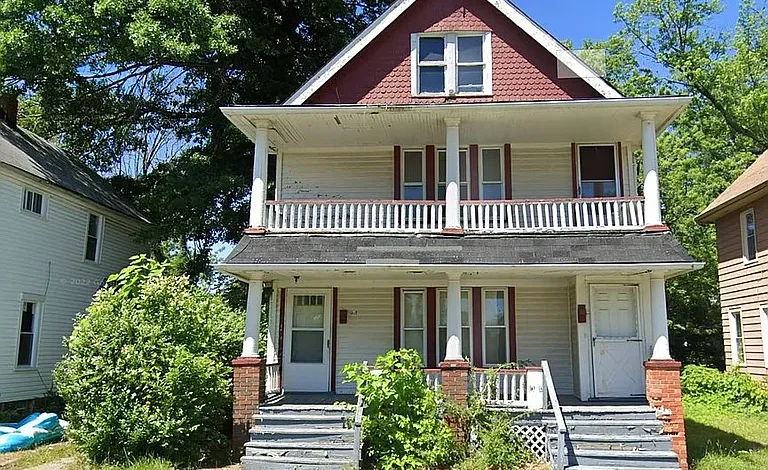
Cleveland Ohio Investor Special With 4 Bedrooms and 1,798 Square Feet for $30,000
A Historic Cleveland Property With Major Renovation Potential
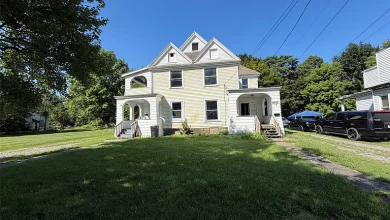
A $30,000 multi-family property in Cleveland, Ohio, presents an opportunity for investors, experienced renovators, and buyers searching for an older property that can be completely reimagined. Built in 1910, this Colonial-style residence offers approximately 1,798 square feet of interior living space, four bedrooms, two full bathrooms according to the property facts, a partially finished basement, and an attic that could provide additional storage or potential future possibilities.
The property is located in Cleveland’s South Collinwood area and sits on approximately 5,120 square feet of land. It is being marketed as an investor special and requires a full rehabilitation. That makes this property very different from a move-in-ready home. The primary appeal is not its current condition, but the possibility of restoring an older structure and creating a useful residential or investment property.
The listing highlights original architectural charm, a spacious layout, forced-air heating, a basement, and attic space. These features can give an experienced buyer a starting point for a substantial renovation project.
At $30,000, the purchase price is relatively low compared with the cost of many renovated properties, but buyers should understand that the acquisition price is only the beginning of the financial commitment. A full rehabilitation can involve structural work, electrical systems, plumbing, roofing, windows, exterior repairs, kitchens, bathrooms, flooring, drywall, insulation, heating, cooling, and other improvements.
For investors who understand construction and local real estate markets, however, the property could offer an opportunity to create value through careful planning and rehabilitation.
Property Overview
The Cleveland property offers several characteristics that make it especially relevant to renovation and investment buyers.
Key details include:
- Asking price: $30,000
- Location: Cleveland, Ohio
- Area: South Collinwood
- Property type: Multi-family
- Architectural style: Colonial
- Bedrooms: 4
- Bathrooms: 2 full bathrooms according to the property facts
- Interior living area: 1,798 square feet
- Lot size: approximately 5,120 square feet
- Year built: 1910
- Basement: Partially finished
- Attic: Yes
- Heating: Forced air
- Cooling: None listed
- Exterior: Frame and wood
- Roof: Asphalt
- Parking: No parking features listed
- Tax assessed value: $43,300
- Annual property taxes: approximately $1,014
- Price per square foot: approximately $17
- HOA: None listed
The listing itself describes the property as requiring a full rehabilitation, so prospective buyers should evaluate it with the expectations of a major renovation project.
A $30,000 Entry Price With a Larger Renovation Budget Ahead
The $30,000 asking price is likely to be the first figure that catches the attention of investors.
At approximately $17 per square foot based on the listed 1,798 square feet, the property enters the market at a low acquisition price relative to many completed residential properties.
However, low acquisition prices can sometimes reflect significant deferred maintenance, and this listing clearly states that a full rehabilitation is needed.
That means the more important financial calculation is the total project cost.
An investor should consider:
- Purchase price
- Closing costs
- Inspection expenses
- Architectural or engineering work
- Building permits
- Structural repairs
- Electrical work
- Plumbing
- HVAC
- Roofing
- Windows
- Exterior restoration
- Interior walls
- Flooring
- Kitchen renovation
- Bathroom renovation
- Appliances
- Landscaping
- Debris removal
- Insurance
- Property taxes
- Utility expenses
- Contractor labor
- Financing or carrying costs
- Contingency reserves
The final investment should then be compared with verified local property values and potential rental income.
A 1910 Colonial-Style Residence
The property’s 1910 construction date gives it a distinctive historical character.
The Colonial architectural style can be particularly attractive to buyers who appreciate older residential architecture. Older homes can feature proportions, trim, layouts, and construction details that differ from contemporary housing.
The listing specifically highlights the property’s original architectural charm.
For a renovation-minded buyer, preserving some of those original characteristics could potentially become an important part of the property’s finished identity.
At the same time, a 1910 structure requires careful inspection. More than a century of age means that multiple systems may have been replaced, modified, or deteriorated over time.
A professional inspection should evaluate the foundation, framing, roof, electrical system, plumbing, heating, windows, exterior materials, and basement.
The goal should be to distinguish cosmetic renovation needs from major structural or mechanical problems.
Four Bedrooms Provide Flexible Space
The property offers four bedrooms.
A four-bedroom configuration can be useful for a variety of potential residential arrangements.
Depending on the final layout and local regulations, the space could potentially accommodate a larger household, roommates, long-term tenants, or a multi-family investment strategy.
Investors should verify the legal status of each unit, the existing floor plan, the number of kitchens and bathrooms, and the property’s permitted use before developing any rental or multi-family business plan.
The four-bedroom count is a useful starting point, but the current condition and configuration are much more important than the number alone.
Two Full Bathrooms Listed in the Property Facts
The property facts identify two full bathrooms.
Bathrooms are among the most expensive rooms to renovate because they involve plumbing, electrical work, ventilation, waterproofing, flooring, fixtures, and finishes.
For a full rehabilitation, buyers should determine whether the existing bathroom locations can be retained.
Keeping plumbing in approximately the same locations can sometimes reduce renovation complexity, while moving fixtures or creating entirely new bathroom layouts can increase costs.
The condition of the existing plumbing should be evaluated before any final renovation budget is established.
Spacious 1,798-Square-Foot Interior
The property contains approximately 1,798 square feet of interior living space.
That amount of space gives a future owner significant room to work with.
A renovation could potentially focus on improving the flow between living areas, bedrooms, bathrooms, and other functional spaces while preserving elements of the original Colonial character.
Because the property is described as needing a full rehab, the buyer should not assume that all existing rooms are currently functional or that the existing finishes can be reused.
A contractor walkthrough can help identify what can be restored and what should be removed and replaced.
Partially Finished Basement
The home includes a partially finished basement.
Basements can be useful additions to older homes because they provide space for storage, mechanical equipment, laundry, recreation, workshops, or other functions.
However, below-grade areas require special attention during renovation.
Potential buyers should inspect the basement for:
- Moisture
- Water intrusion
- Foundation cracks
- Mold
- Drainage problems
- Low ceilings
- Structural concerns
- Electrical issues
- Plumbing problems
- Insulation deficiencies
A basement that appears usable during a quick visit may still require substantial waterproofing or structural work.
The buyer should therefore avoid assigning full finished-living-space value to the basement without verifying its condition and legal status.
Attic Space Creates Additional Possibilities
The listing also highlights an attic for additional storage or potential expansion.
Attic areas in older homes can provide valuable storage, but converting an attic into legal living space involves much more than adding flooring and walls.
A future owner would need to investigate ceiling height, structural capacity, insulation, ventilation, electrical requirements, emergency egress, heating and cooling, and local building codes.
If an attic conversion is feasible, it could potentially increase usable space. If not, it can still provide valuable storage.
The important point is that buyers should treat expansion as a possibility to investigate rather than a guaranteed feature.
Forced-Air Heating
The property has forced-air heating listed among its features.
A functioning heating system is an important consideration for a Cleveland property, particularly because the local climate includes cold winters.
The age and condition of the heating equipment should be determined during inspection.
Investors should ask whether the current system is operational, whether ductwork needs repairs, and whether the system is adequately sized for the finished home.
If the property has been vacant or unused for an extended period, the heating system should receive particularly careful attention.
No Cooling Listed
The property does not currently list a cooling system.
That does not necessarily prevent the property from becoming a comfortable residence, but it should be included in renovation planning.
A future owner may consider installing central air conditioning, ductless systems, or another appropriate cooling solution.
The best option would depend on the final renovation plan, existing ductwork, electrical capacity, budget, and professional recommendations.
The cost of adding cooling should be incorporated into the total rehabilitation budget rather than treated as an afterthought.
Frame Construction and Asphalt Roof
The property is constructed primarily with frame materials and has an asphalt roof.
Both components should be inspected carefully.
For a house built in 1910, roof condition is particularly important because water intrusion can affect ceilings, walls, insulation, framing, and interior finishes.
The buyer should determine the remaining life of the roof and identify any areas requiring immediate repair.
The frame structure should also be examined for signs of rot, insect damage, moisture intrusion, structural movement, or other deterioration.
An experienced inspector or contractor can provide a more accurate assessment than a simple visual review.
Original Architectural Character Could Become a Selling Point
One of the more interesting aspects of this property is the possibility of combining historic character with modern functionality.
A thoughtful rehabilitation could potentially preserve selected original features while introducing updated mechanical systems, kitchens, bathrooms, flooring, insulation, and finishes.
This approach can be particularly appealing for buyers who appreciate historic homes but still want modern comfort.
Potential renovation themes could include:
- Restoring original trim
- Refinishing existing wood elements
- Updating lighting
- Improving kitchen functionality
- Modernizing bathrooms
- Restoring interior doors
- Improving insulation
- Updating electrical systems
- Installing modern HVAC
- Repairing exterior materials
- Improving energy efficiency
Any original feature should be evaluated individually to determine whether restoration is practical.
South Collinwood Location
The property is located in Cleveland’s South Collinwood area.
Location is one of the most important components of any real estate investment, particularly for a property being purchased with the intention of renovation.
Investors should research nearby home sales, rental properties, neighborhood development, employment access, transportation, schools, retail areas, parks, and other community amenities.
For a future rental property, the surrounding neighborhood can influence tenant demand, achievable rent, vacancy, and long-term maintenance considerations.
For a resale project, nearby comparable sales are particularly important.
The property should therefore be analyzed as part of its broader neighborhood rather than solely as an individual building.
Potential Multi-Family Investment
The listing identifies the property as multi-family.
This is an important distinction for investors.
Multi-family properties can potentially offer opportunities to generate rental income from multiple residential units, but buyers must confirm the property’s legal configuration before making financial assumptions.
Important questions include:
- How many legal units currently exist?
- Are the units separately metered?
- How are utilities configured?
- Are there existing kitchens?
- How many entrances are there?
- What is the legal bedroom count?
- What zoning classification applies?
- Are there outstanding code violations?
- Are rental licenses required?
- What permits are necessary for rehabilitation?
- Does the current configuration comply with local regulations?
A buyer should confirm these matters with the appropriate Cleveland authorities and professionals before purchasing.
Potential House-Hacking Strategy
If the property is legally configured for multiple residential units, an owner-occupant could potentially consider a house-hacking strategy.
House hacking generally involves living in one portion of a property while renting another portion, potentially helping offset housing expenses.
However, the feasibility of such a strategy depends entirely on the property’s legal unit configuration, financing, renovation requirements, local rental regulations, and market rents.
The listing’s multi-family classification makes the concept worth investigating, but it should not be assumed that the property can immediately operate as a multi-unit rental.
Potential Rental Investment
Another possible strategy could involve rehabilitating the property and holding it as a rental.
A four-bedroom property may offer several rental possibilities, depending on the final configuration and local market demand.
Before pursuing this strategy, investors should research comparable rentals in the surrounding area.
A proper rental analysis should estimate:
- Gross monthly rent
- Annual rental income
- Vacancy
- Property taxes
- Insurance
- Maintenance
- Capital expenditures
- Property management
- Utilities
- Licensing
- Repairs
- Reserves
The goal is to calculate realistic net operating income rather than relying on gross rent alone.
Potential Fix-and-Resell Strategy
Investors may also consider renovating the property and reselling it.
A fix-and-flip strategy can potentially create value by purchasing a property below the price of comparable renovated homes and investing in improvements.
However, the success of such a project depends heavily on renovation costs and the eventual resale value.
A buyer should identify multiple comparable renovated properties before purchasing.
The analysis should include the expected completed value, renovation budget, closing costs, selling costs, carrying expenses, and contingency reserve.
Older homes can also produce unexpected construction problems, making conservative budgeting especially important.
The Importance of a Professional Inspection
The listing explicitly states that the property needs a full rehabilitation.
That makes professional inspection even more important.
An investor should consider obtaining inspections or evaluations for:
- Foundation
- Structural framing
- Roof
- Electrical system
- Plumbing
- Heating
- Cooling options
- Basement
- Attic
- Exterior
- Windows
- Sewer line
- Water service
- Potential environmental issues
Depending on the age and condition of the property, additional specialist inspections may be appropriate.
Electrical and Plumbing Evaluation
A 1910 home can contain electrical and plumbing systems that are substantially different from those expected in modern construction.
Older electrical wiring may require replacement or upgrades to accommodate modern appliances, heating and cooling equipment, lighting, and safety standards.
Plumbing can present similar challenges.
Before purchasing, investors should determine the material and condition of supply lines, drains, fixtures, and sewer connections.
These systems can become some of the largest expenses in a major renovation, particularly if walls and floors must be opened.
Foundation and Structural Due Diligence
The foundation is one of the most important elements of any older property.
The basement provides access to portions of the lower structure, making it possible to inspect areas that may not be visible from the exterior.
Buyers should look for signs of:
- Foundation movement
- Cracks
- Water penetration
- Uneven floors
- Bowed walls
- Settlement
- Structural modifications
- Rot
- Drainage issues
A structural professional should be consulted if significant concerns are identified.
A low purchase price does not compensate for an underestimated structural problem, so this part of the due diligence process should receive serious attention.
Tax Information and Financial Planning
The listing reports a tax assessed value of approximately $43,300 and annual property taxes of about $1,014.
Tax assessments should not be interpreted automatically as market values.
The assessed value may be determined using local taxation methods and may not reflect the current condition or future renovated value of the property.
Investors should independently confirm current taxes, potential reassessment implications, and any outstanding balances before completing a transaction.
Property taxes should also be incorporated into the project’s long-term operating budget.
No Parking Features Listed
The listing does not identify dedicated parking features.
This could be an important consideration for a future owner or rental operator.
Potential buyers should inspect the property to determine whether there is usable off-street parking, driveway access, alley access, or other parking arrangements.
If the property is ultimately operated as a rental, parking availability can influence tenant appeal.
Any plan to create or modify parking should be checked against local zoning and property requirements.
Owner-Sale Considerations
The property is being sold directly by the property owner.
The listing notes that it is a for-sale-by-owner property and is being displayed on Zillow at the owner’s request.
This means buyers should pay close attention to the transaction process and confirm how offers, inspections, disclosures, contracts, and closing arrangements will be handled.
A buyer may wish to work with an experienced real estate professional or attorney, particularly given the property’s rehabilitation needs and multi-family classification.
Who Could Be Interested in This Property?
This property is most naturally suited to buyers who understand renovation and real estate investment.
Potential buyer profiles could include:
- Experienced real estate investors
- House flippers
- Long-term rental investors
- Contractors
- Experienced owner-occupants
- Historic-home enthusiasts
- Buyers seeking a multi-family project
- Investors interested in Cleveland real estate
The property is less likely to be appropriate for someone seeking a turnkey residence that requires little or no work.
The listing’s description of a full rehabilitation makes the buyer’s experience, financing capacity, and construction plan especially important.
A Property Where Planning Matters More Than the Purchase Price
The $30,000 price can make the property appear straightforward at first glance, but experienced investors know that acquisition price is only one component of a real estate project.
The actual opportunity lies in the relationship between purchase price, renovation costs, finished value, and long-term operating potential.
A buyer who can accurately estimate construction costs may be able to determine whether the property fits a particular investment strategy.
The same property could represent a very different financial opportunity for an experienced contractor compared with a buyer who must hire outside contractors for every phase of the renovation.
Labor costs, materials, permits, timelines, and financing can dramatically affect the final numbers.
Final Thoughts on This $30,000 Cleveland Investment Property
This Cleveland, Ohio, multi-family property offers a compelling starting point for a buyer who understands the challenges and opportunities of full-scale rehabilitation.
Listed at $30,000, the 1910 Colonial-style residence provides approximately 1,798 square feet of interior space, four bedrooms, two full bathrooms according to the property facts, a partially finished basement, attic storage, forced-air heating, and original architectural character.
The property sits on approximately 5,120 square feet of land and is located in the South Collinwood area of Cleveland.
Its low purchase price is the primary attraction, but the listing makes clear that the property requires a full rehab. That means buyers need to focus on the complete project economics rather than viewing the $30,000 figure as the total investment.
A successful renovation could potentially transform the property into a substantially improved residential asset. Depending on legal configuration, zoning, and local market conditions, possible future strategies could include a multi-family rental, owner-occupied house hack, long-term investment property, or renovated resale.
The property’s original Colonial character may also provide an opportunity to combine historic appeal with modern improvements. Restoring selected architectural elements while upgrading the electrical, plumbing, heating, cooling, kitchens, bathrooms, and other systems could create a distinctive finished property.
However, the property’s age means due diligence is essential. Structural condition, foundation, roof, basement moisture, electrical systems, plumbing, HVAC, parking, zoning, legal unit configuration, and code compliance should all be investigated before a purchase decision.
The $43,300 listed tax assessment and approximately $1,014 annual tax amount should also be independently verified.
For an experienced investor with access to renovation capital and a detailed construction plan, this $30,000 Cleveland property offers the possibility of turning an older structure with historic character into a completely renewed residential asset.
The opportunity is ultimately about vision, budgeting, and execution. Buyers who carefully evaluate the property before purchasing can better understand the challenges involved and determine whether the project aligns with their financial and real estate goals.
Listed on Zillow.