4 beds 2 baths 1,524 sqft
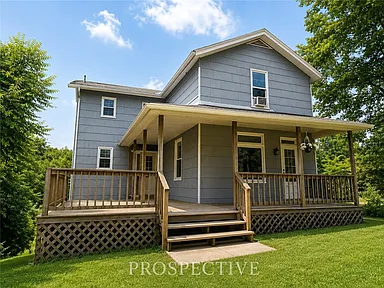
Brownsville Pennsylvania Home With 4 Bedrooms, Wraparound Porch and Full Basement for $16,900
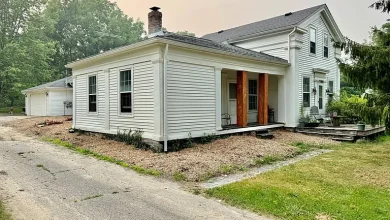
A historic two-story home in Brownsville, Pennsylvania, is now listed for $16,900 following a $3,100 price reduction on September 17. Built in 1910, this four-bedroom property offers approximately 1,524 square feet of living space on an 8,712-square-foot lot. With original character throughout, a spacious covered wraparound porch, large bedrooms, a level backyard, off-street access, and a full walk-up basement, the property presents an interesting opportunity for a buyer looking for an affordable home with room for improvement.
The property is being marketed as a potential primary residence, rental investment, or renovation project. It is not presented as a newly renovated home, but rather as a property that gives the next owner an opportunity to make updates and finishing touches according to their own goals.
For buyers searching for inexpensive real estate in Pennsylvania, the combination of four bedrooms, two levels, a basement, public utilities, gas heating, central air, and a substantial covered porch makes this Brownsville property worth a closer look.
A Recently Reduced Asking Price of $16,900
One of the first details that stands out is the current asking price. The home is listed at $16,900 after a $3,100 price cut recorded on September 17.
At approximately 1,524 square feet, the listing works out to roughly $11 per square foot. That is an unusually low advertised price for a four-bedroom single-family property, although the home’s age and need for personal updates should be considered when evaluating the opportunity.
A low purchase price does not necessarily mean a low total cost of ownership. Buyers should consider closing costs, property taxes, insurance, repairs, maintenance, utilities, and any improvements needed after purchase.
The annual property tax is listed at $1,765, while the tax-assessed value is $83,900. The assessed value is a taxation figure rather than an appraisal or guaranteed market value, so buyers should not assume that it represents the home’s current market value.
The important question for a prospective buyer is how the acquisition price, renovation budget, and long-term property value fit together.
A Four-Bedroom Home With 1,524 Square Feet
The home provides four bedrooms and one full bathroom plus one half bathroom. With four bedrooms in approximately 1,524 square feet, the floor plan offers considerable residential capacity without requiring a very large building.
Large bedrooms are specifically highlighted in the listing. Generously sized bedrooms can be useful for families, roommates, guests, or tenants and may provide more flexibility than smaller modern layouts.
The property is arranged over two stories, consistent with its traditional construction. The two-story design can help separate living areas from sleeping spaces while preserving the historic character of the home.
For a buyer planning renovations, the existing layout provides a starting point rather than a finished design. Depending on the condition and configuration, improvements could focus on kitchens, bathrooms, flooring, paint, lighting, storage, and energy efficiency.
Any major structural or layout changes should be evaluated by qualified professionals and completed in accordance with local permitting and building requirements.
Historic Character Dating to 1910
Built in 1910, this Brownsville residence is more than a century old.
Properties from this period can offer architectural details and proportions that are increasingly difficult to find in newer construction. The listing specifically describes the home as having original character throughout, making preservation one of its potentially attractive features.
Original character can include elements such as traditional room proportions, hardwood floors, older doors and trim, staircases, porch details, and other period-specific features. The listing confirms hardwood flooring, although buyers should inspect its current condition to determine whether it can be refinished or requires replacement.
A historic home can be particularly appealing to someone who appreciates older architecture but also wants the opportunity to update the property for modern living.
At the same time, age requires careful due diligence. Buyers should inspect the structure, roof, electrical system, plumbing, heating, windows, foundation, basement, and exterior for age-related wear or previous repairs.
The Expansive Covered Wraparound Porch
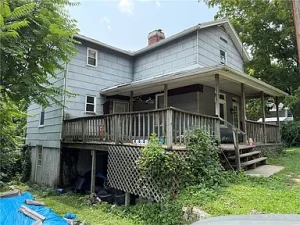
Perhaps one of the most visually distinctive features of the property is its expansive covered wraparound porch.
Large covered porches are a defining feature of many older American homes, providing an outdoor living area that can be used across multiple seasons depending on the weather.
The porch could provide space for chairs, tables, plants, outdoor entertaining, or simply a place to relax. Because it wraps around the home, it can also create several different outdoor seating areas.
For a renovation-minded buyer, maintaining and improving the porch could be an important part of preserving the property’s historic appearance.
Before making an offer, buyers should inspect the porch carefully for structural stability, wood deterioration, drainage problems, railings, steps, and other safety concerns. Older porches can require specialized maintenance, particularly when exposed to years of moisture and changing temperatures.
A Level Backyard Adds Usable Outdoor Space
The property includes a level backyard, another feature that can increase the practical usability of the lot.
The total lot measures approximately 8,712 square feet, or about 0.2 acres. While this is not a large rural parcel, it provides meaningful outdoor space for a residential property in an established community.
A level yard can be useful for gardening, outdoor recreation, pets, seating areas, or landscaping. It may also be easier to maintain than a steep or heavily sloped lot.
Potential buyers should confirm property boundaries before planning fences, sheds, landscaping, gardens, or other improvements. The parcel information and exact boundaries should be verified through appropriate property records and, if necessary, a professional survey.
Off-Street Access and Parking
The listing identifies off-street parking as one of the property’s features.
Off-street access can be particularly convenient in an established neighborhood where street parking may be limited. For homeowners, it provides an alternative to relying entirely on public street parking.
For an investor, convenient parking can also be an attractive feature for future tenants, especially in a four-bedroom property.
The exact parking capacity and configuration should be verified during a property visit. Buyers should also confirm whether the access area is entirely within the parcel boundaries and whether there are any shared driveways or easements.
Full Walk-Up Basement
Another major feature is the full basement with walk-up access.
Basements can provide valuable additional space even when they are not included in the advertised living area. This property has approximately 1,524 square feet of listed living space, while the basement provides additional storage and workspace potential.
The walk-up configuration can make moving equipment, tools, storage containers, and other items in and out of the basement easier than with a small interior staircase alone.
For a homeowner, the basement could potentially serve as a workshop, storage area, utility space, hobby room, or other functional area depending on its condition.
A buyer should not assume that the basement can legally be converted into bedrooms or finished living space. Ceiling height, moisture control, insulation, emergency egress, electrical systems, and local building regulations would need to be evaluated first.
Gas Heating and Central Air
Unlike some inexpensive older homes where heating and cooling systems may be absent or unknown, this property is listed with gas heating and central air.
Having existing heating and cooling infrastructure can be an important consideration when evaluating an older property.
Gas heating can provide a traditional whole-home heating solution, while central air offers cooling throughout the residence. However, buyers should verify the age, operating condition, service history, and efficiency of these systems.
An inspection by qualified HVAC professionals can help determine whether the equipment is operational and whether replacement may be needed in the near or long term.
The presence of existing systems should therefore be viewed as a useful feature, but not as a guarantee that no mechanical work will be necessary.
Hardwood Flooring and Original Interior Details
Hardwood flooring is listed among the home’s interior features.
Hardwood can be one of the most attractive features in an older home, particularly when original flooring remains beneath newer coverings or has been preserved over time.
Depending on its condition, existing hardwood could potentially be cleaned, repaired, and refinished as part of a renovation.
The broader description of original character throughout suggests that buyers interested in historic homes may find additional details worth preserving.
Rather than automatically replacing older features, a thoughtful renovation could focus on identifying which original elements are structurally sound and visually valuable, then incorporating modern improvements around them.
This approach can potentially create a home that retains historic personality while offering more contemporary comfort.
Public Water and Public Sewer
The property is connected to public water and public sewer.
This can simplify ownership compared with properties that rely on private wells and septic systems. Public utilities can also make renovation planning more straightforward because the property is already situated within an established utility network.
Nevertheless, buyers should verify the condition and capacity of the service connections, particularly in a home built more than 100 years ago.
Older properties can have plumbing systems that have been modified repeatedly over the decades. A professional inspection can help identify leaks, outdated materials, drainage issues, or other concerns.
Brownsville Location
The home is located in Brownsville, Pennsylvania, an established community in Fayette County.
The listing identifies public transportation as a community feature, which can be useful for residents who do not rely exclusively on private vehicles.
The location also places the property within a community environment rather than on an isolated rural parcel. For a potential rental investor, neighborhood characteristics can be particularly important because tenants often consider transportation, employment access, services, schools, shopping, and community amenities when selecting a home.
Prospective buyers should spend time in the area before purchasing. Visiting during different times of day can provide a better understanding of traffic, noise, parking, surrounding properties, and general neighborhood conditions.
Potential as a Primary Residence
For a buyer searching for an inexpensive Pennsylvania home, this property could potentially serve as a primary residence after appropriate updates.
The four-bedroom layout provides flexibility for a family or household that needs several bedrooms. The basement provides additional storage and workspace, while the wraparound porch creates valuable outdoor living space.
The level backyard could also provide room for gardening, recreation, or entertaining.
The primary advantage is the opportunity to purchase at a low entry price and customize the property according to personal preferences.
However, buyers should carefully determine what repairs are needed before assuming that the home can be occupied immediately. An older house may require electrical, plumbing, structural, roofing, or cosmetic improvements.
Potential Rental Investment
The listing also specifically presents the property as a possible rental investment.
A four-bedroom home can potentially appeal to families, groups of roommates, or other tenants depending on the local rental market.
Investors should research comparable rental properties in Brownsville before estimating potential income. Asking rents should be compared with actual property conditions and should account for differences in bedroom count, bathrooms, parking, renovations, utilities, and neighborhood location.
A rental analysis should include more than monthly rent.
Potential expenses include:
- Property taxes
- Landlord insurance
- Routine maintenance
- Major capital repairs
- Vacancy periods
- Property management
- Utilities paid by the owner
- Landscaping
- Pest control
- Legal and licensing expenses
- Renovation costs
The goal should be to understand the potential net operating economics rather than focusing only on gross rent.
A Renovation Opportunity With a Low Entry Price
The property appears particularly suited to buyers who are comfortable with improvement projects.
The listing describes it as ready for personal updates and finishing touches rather than presenting it as a fully renovated residence.
For a renovation buyer, the project could involve cosmetic updates such as painting, flooring, fixtures, lighting, kitchen improvements, and bathroom updates. Depending on inspection findings, more significant work could also be necessary.
The best renovation strategy will depend on the buyer’s objective.
Someone planning to live in the home may prioritize comfort and personal design choices. A landlord may prioritize durability and operating costs. A resale investor may focus on improvements that appeal to buyers in the local market.
Due Diligence Is Essential
The low purchase price makes due diligence particularly important.
A buyer should not assume that a $16,900 property will require only minor repairs. The actual condition could significantly influence the total investment.
Important inspection areas include:
- Foundation and structural framing
- Roof and attic
- Exterior siding and masonry
- Wraparound porch
- Windows and doors
- Electrical service and wiring
- Plumbing supply and drainage
- Gas heating system
- Central air system
- Basement moisture
- Basement structure
- Hardwood flooring
- Stairs and railings
- Drainage around the property
- Sewer connection
- Water service
- Pest or wood-destroying insect concerns
A qualified home inspector and appropriate specialists can help identify issues that are difficult to see during a casual showing.
Understanding the Tax Assessment
The listing reports a tax-assessed value of $83,900 and an annual tax amount of $1,765.
The difference between the asking price and assessed value may attract attention, but assessed values should be interpreted carefully.
Tax assessments are established for property taxation purposes and do not necessarily represent current market value. They can also differ from an independent appraisal or the price a property might actually command in an open-market transaction.
For that reason, buyers should use comparable sales, professional appraisals, inspection findings, and renovation estimates when evaluating the property’s financial potential.
What Buyers Should Verify Before Closing
Because this is an older property being offered at a very low price, buyers should verify all material information before completing a purchase.
A practical checklist could include:
- Confirm the legal property description.
- Verify the lot dimensions and boundaries.
- Review the title and check for liens.
- Confirm current property taxes.
- Inspect the foundation and basement.
- Inspect the roof.
- Evaluate heating and central air systems.
- Test plumbing and electrical systems.
- Check for water intrusion.
- Review public water and sewer connections.
- Examine the wraparound porch for structural issues.
- Verify parking and off-street access.
- Confirm zoning and permitted uses.
- Obtain insurance quotes before closing.
- Estimate immediate repair costs.
- Estimate long-term maintenance costs.
- Review comparable sales and rental properties.
- Confirm whether permits are required for planned renovations.
Taking these steps can help turn an inexpensive purchase into a more informed real-estate decision.
Why the Price Reduction Matters
The $3,100 price reduction recorded on September 17 brings the asking price down to $16,900.
Price reductions can sometimes indicate that a seller is adjusting expectations based on market response, property condition, buyer feedback, or time on the market. In this case, the property had been listed for 53 days according to the supplied listing information.
The reduction does not by itself establish the property’s market value or guarantee that another reduction will occur. Buyers should focus on the home’s actual condition, comparable properties, and the total cost required to achieve their intended use.
A Property With Multiple Possible Strategies
The strongest feature of this Brownsville home may be its flexibility.
A buyer could potentially approach it as an affordable primary residence, a renovation project, a long-term rental, or a resale investment.
The four-bedroom layout provides significant residential space, while the basement and large porch add practical and lifestyle features. The level backyard and off-street access further increase the property’s functionality.
At the same time, the home’s 1910 construction means that renovation should be approached carefully.
A successful project will depend on understanding the existing structure and systems before deciding how much to invest.
Final Thoughts on This Brownsville Opportunity
This $16,900 Brownsville, Pennsylvania property combines an unusually low asking price with features that are difficult to find together in one affordable home.
Built in 1910, the two-story residence offers four bedrooms, one full bathroom, one half bathroom, approximately 1,524 square feet of living space, hardwood flooring, gas heating, central air, public water, public sewer, a full walk-up basement, off-street access, and an expansive covered wraparound porch.
The property also sits on an approximately 8,712-square-foot lot with a level backyard.
For a homeowner, it could offer an opportunity to create a personalized residence at a relatively low acquisition price. For an investor, the four-bedroom layout and location could justify investigating the local rental market. For a renovation enthusiast, the combination of original character and a low asking price may make the property particularly interesting.
The most important consideration is that the purchase price is only one part of the equation. Buyers should determine the property’s actual condition, calculate renovation expenses, verify the mechanical systems, inspect the basement and foundation, and understand the total cost of ownership before committing.
The home’s historic character, large bedrooms, wraparound porch, and flexible layout provide a foundation for improvement. With careful planning and appropriate due diligence, the property could potentially be transformed into a comfortable residence or income-producing asset.
At $16,900 after a recent $3,100 price cut, this Brownsville home offers a low-cost entry point into Pennsylvania real estate, but its ultimate value will depend on the condition of the property and the buyer’s renovation plan.
Listed on Zillow.