Historic 1850 New York Farmhouse on 2 Acres With Renovation Potential
Historic 1850 New York Farmhouse on 2 Acres With Renovation Potential
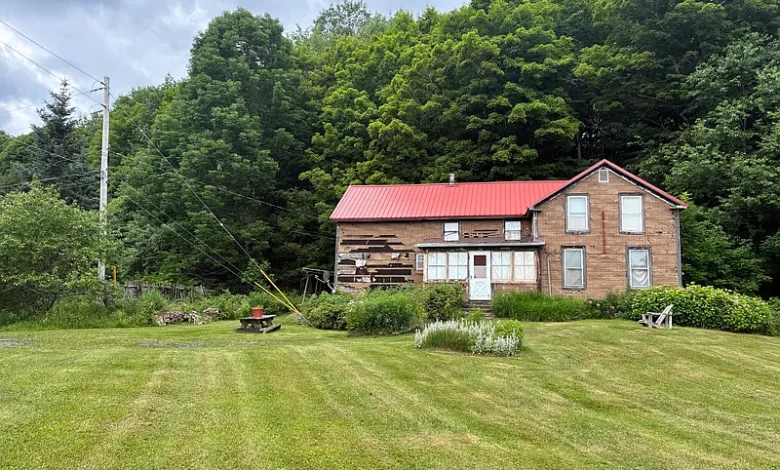
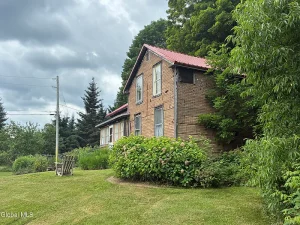
A historic country property in Summit, New York, is offering buyers an opportunity to own a substantial piece of rural real estate for $49,999. Built in 1850, this traditional single-family residence offers approximately 1,932 square feet of living space, four bedrooms, one full bathroom, and 2.05 acres of land.
Located on a dead-end road, the property is described as a fixer and is specifically marketed toward contractors, handymen, and buyers with a country-style vision. Its combination of historic character, acreage, privacy, and relatively low asking price creates several possibilities for someone willing to undertake a renovation project.
The home features four bedrooms on the second level, while the first floor includes a kitchen, dining room, living room, laundry area, and mud room. Heating is provided by oil and wood, and the property includes a wood-burning fireplace. A metal roof, stone foundation, shingle siding, partial crawl-space basement, and 100-amp electrical service are among the property’s existing characteristics.
The 2.05-acre parcel is described as secluded, sloped, and cleared. There is no homeowners association, and the property is zoned for single-residence use. The home also benefits from a rural location with access to Cobleskill, Route 88, and the Cobleskill-Richmondville School District.
For buyers interested in historic homes, rural real estate, renovation projects, or affordable acreage in upstate New York, this property offers a combination worth examining carefully.
An Affordable Entry Into Upstate New York Real Estate
At $49,999, this property sits at an unusually low price point for a four-bedroom home with nearly 2,000 square feet and more than two acres of land.
The low purchase price, however, should be considered in the context of the property’s condition.
The listing clearly identifies the home as a fixer, meaning buyers should expect renovation work rather than a turnkey residence. The opportunity is therefore likely to be most relevant to people who understand construction, home rehabilitation, or rural property ownership.
For an experienced contractor or handyman, the property could provide an opportunity to purchase an older structure and gradually improve it according to a carefully planned budget.
For someone looking for a move-in-ready home, the property may require considerably more work than a conventional listing.
The difference between those two buyer profiles is important when evaluating the opportunity.
Approximately 1,932 Square Feet of Living Space
The home provides approximately 1,932 square feet of interior living area.
That amount of space gives the property a substantial footprint for a four-bedroom rural residence.
The floor plan includes the main living spaces on the first level and four bedrooms upstairs. This traditional arrangement can provide a natural separation between common areas and private sleeping spaces.
The first floor includes a kitchen, dining room, living room, laundry area, and mud room.
That combination creates a practical foundation for a future renovation.
Depending on the existing condition and layout, the new owner could potentially update the interior while preserving some of the home’s historic character.
Four-Bedroom Layout
Four bedrooms are located on the second level.
A four-bedroom layout provides flexibility for different household needs.
The rooms could potentially accommodate family members, guests, home offices, hobby areas, or other uses depending on the buyer’s plans.
For an investor, the number of bedrooms may also be relevant when researching potential rental demand.
However, buyers should evaluate the condition and dimensions of each bedroom during an inspection.
Older homes can have room layouts, stairways, windows, electrical systems, and other features that may require updating to meet modern expectations and applicable codes.
One Full Bathroom
The property currently has one full bathroom.
For a four-bedroom home, this may be an area that a future renovation could potentially address.
Depending on the existing floor plan, plumbing configuration, and local regulations, a buyer might investigate whether an additional bathroom could be added.
However, adding a bathroom can involve significant plumbing and construction work.
Before including such an improvement in a renovation budget, buyers should have a contractor or qualified professional evaluate the feasibility and expected cost.
The existing bathroom should also be inspected for plumbing condition, ventilation, water damage, fixtures, flooring, and other potential issues.
A Home Dating to 1850
One of the property’s most distinctive characteristics is its age.
Built in 1850, the home is more than 170 years old and represents a much earlier period of American residential construction.
Historic houses can offer character that is difficult to reproduce in modern construction.
Traditional proportions, wood details, older floor plans, fireplaces, and other architectural elements can give an older home a unique identity.
At the same time, a house built in the nineteenth century should receive particularly careful inspection.
A buyer should investigate the foundation, framing, roof, electrical wiring, plumbing, insulation, windows, heating systems, drainage, and other components.
The age itself does not determine the condition of a property. Renovations and maintenance performed over the decades can be just as important.
Traditional and Old-Style Architecture
The listing identifies the architectural style as Old Style and Traditional.
That description fits the home’s historic construction and rural setting.
For buyers who appreciate traditional architecture, the property’s age could be an important part of its appeal.
A renovation does not necessarily have to erase that character.
A thoughtful rehabilitation could potentially preserve distinctive elements while updating systems that are important for comfort, safety, and efficiency.
Features such as the wood-burning fireplace, traditional room arrangement, and older exterior design may contribute to the home’s character.
The appropriate renovation approach will depend on the property’s actual condition and the owner’s goals.
A Wood-Burning Fireplace
The home includes a wood-burning fireplace.
A fireplace can become an important focal point in a rural residence, particularly in a region where colder seasons are part of the lifestyle.
Before using an existing fireplace, however, it should be professionally inspected.
The chimney, flue, masonry, hearth, and surrounding structure should be evaluated for safety.
Older fireplaces may require repairs or upgrades before they can be used regularly.
The listing also identifies wood as one of the home’s heating sources, making the fireplace potentially relevant to the property’s heating strategy.
Oil and Wood Heating
The property is listed with oil and wood heating.
This combination is common in some rural properties where homeowners use more than one heat source.
The buyer should determine exactly what heating equipment is currently installed and whether it is functional.
The age and condition of the furnace, boiler, wood-burning equipment, chimney, fuel tank, and associated components should be verified.
Heating costs can be an important part of ownership in upstate New York, so energy efficiency should also be considered as part of any renovation.
Insulation, windows, doors, air sealing, and heating-system efficiency can all affect long-term operating expenses.
No Central Cooling Listed
The listing does not identify a cooling system.
For buyers planning to occupy the home year-round, this may be an area to consider.
Depending on the home’s electrical capacity, layout, and budget, future owners could investigate window air conditioners, ductless mini-split systems, or other cooling solutions.
Any new system should be evaluated based on the home’s existing electrical infrastructure and the buyer’s long-term renovation plans.
Historic Stone Foundation
The property has a stone foundation.
Stone foundations are common in very old homes and can be an important structural component.
They should also receive careful attention during inspection.
Buyers should look for signs of water infiltration, deteriorated mortar, movement, cracks, settlement, drainage problems, and other conditions that could affect the foundation.
A qualified professional with experience in older homes can provide more useful insight than a basic visual assessment.
If foundation work is required, it should be incorporated into the renovation budget before the buyer commits to the project.
Metal Roof
The property has a metal roof.
Metal roofing can provide a long service life when properly installed and maintained, but its current condition should still be evaluated.
Potential buyers should inspect for corrosion, damaged panels, loose fasteners, flashing problems, leaks, and other issues.
The roof is particularly important for an older property because water intrusion can affect ceilings, walls, insulation, framing, and the foundation over time.
A professional roof inspection can help determine whether the existing roof can remain in service or requires repairs.
2.05 Acres of Rural Land
The home sits on approximately 2.05 acres.
That amount of land gives the property a rural character and provides additional space beyond the house itself.
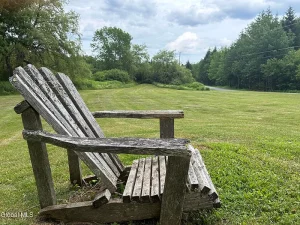
The lot is described as secluded, sloped, and cleared.
For buyers seeking privacy, the setting may be particularly appealing.
Two acres can provide room for gardens, outdoor recreation, landscaping, storage, trails, pets, or other permitted uses.
The slope of the land should also be considered.
Topography can affect drainage, driveway design, landscaping, future construction, and the cost of site improvements.
A Dead-End Road Setting
The property is located on a dead-end road.
A dead-end road can provide a quieter residential environment with less through traffic than a major roadway.
For a rural home, that can contribute to the property’s private atmosphere.
The buyer should nevertheless evaluate road maintenance, winter access, snow removal arrangements, emergency access, and any shared-road responsibilities.
These practical considerations can become especially important in rural areas.
A Country-Style Vision
The listing specifically describes the property as an opportunity for contractors, handymen, and those with a country-style vision.
That description captures the property’s central appeal.
Rather than purchasing a finished home, the buyer has an opportunity to envision what the property could become.
A country renovation could preserve traditional elements while introducing modern functionality.
Potential improvements might include a refreshed kitchen, updated bathroom, refinished wood floors, improved lighting, modern insulation, updated electrical service, repaired siding, landscaping, and improvements to the outdoor areas.
The exact scope should be based on an inspection and realistic construction estimates.
Kitchen and Dining Areas
The first floor includes a kitchen and dining room.
These areas can become central to a future renovation.
A kitchen renovation could potentially include updated cabinetry, countertops, appliances, lighting, flooring, and storage.
The dining room could be preserved as a dedicated dining area or potentially incorporated into a more open living arrangement if the structure and layout allow it.
Because the home is historic, buyers may want to balance modern functionality with preservation of traditional character.
Main-Level Laundry
Laundry is located on the first floor.
Main-level laundry can be convenient because it eliminates the need to carry clothes between multiple floors.
For a future renovation, the laundry area could potentially be improved with better storage, updated appliances, ventilation, and flooring.
The existing washer and dryer are listed among the included appliances, although their condition should be verified.
Mud Room Potential
The property includes a mud room.
A mud room can be particularly useful in a rural home, where residents may frequently transition between outdoor activities and indoor living spaces.
A practical mud room can provide storage for coats, boots, tools, outdoor clothing, and other items.
Depending on its existing condition, this area could become one of the more functional spaces in a renovated country home.
Existing Appliances
The listing indicates that a refrigerator and washer/dryer are included.
For buyers purchasing a fixer upper, included appliances can provide a starting point, but their age and condition should be confirmed.
If appliances are outdated or nonfunctional, replacement costs should be included in the renovation budget.
Energy-efficient appliances could potentially reduce future operating expenses while also improving the functionality of the kitchen and laundry areas.
Electrical Service
The property is listed with 100-amp electrical service.
For a historic house undergoing modernization, electrical capacity deserves careful attention.
Modern households often use considerably more electricity than homes did decades ago.
If the buyer plans to add electric heating, air conditioning, major appliances, workshops, or other equipment, the existing service may need evaluation.
A licensed electrician can determine whether the current system is adequate and identify any safety or code issues.
Electrical upgrades can become a significant part of an older-home renovation, so they should be addressed early in the planning process.
Septic System
The property is served by a septic tank rather than public sewer.
For a rural property, this is an important part of the due-diligence process.
The buyer should determine the location, age, condition, maintenance history, and capacity of the septic system.
A septic inspection and, where appropriate, pumping or testing can help identify potential problems.
If the buyer plans to add a bathroom or increase occupancy, septic capacity should be evaluated before making those changes.
Cable Availability
Cable is listed as an available utility.
For buyers working remotely or relying heavily on internet access, connectivity can be an important consideration.
However, availability does not necessarily indicate a specific speed or service plan.
Potential buyers should independently verify current internet providers, speeds, installation requirements, and costs.
This can be particularly important for anyone planning to use the home as a full-time residence or remote-work property.
Four Parking Spaces
The property provides four total parking spaces.
That amount of parking can be useful for a four-bedroom home, especially when hosting guests or accommodating multiple vehicles.
The buyer should verify the location, surface, condition, and accessibility of the parking area.
If additional parking or a garage is desired, local zoning and property conditions should be reviewed before construction.
No Homeowners Association
The property does not have an HOA.
For rural property owners, the absence of an HOA can offer greater flexibility in landscaping and exterior improvements.
However, municipal zoning and other legal restrictions still apply.
The property is listed as single-residence zoning, so prospective owners should confirm the permitted uses and restrictions before planning additional structures or business activities.
Access to Cobleskill and Route 88
One of the listing’s notable location advantages is its access to Cobleskill and Route 88.
For rural homeowners, accessibility can have a major influence on daily convenience.
A property can provide privacy without necessarily being completely isolated from services.
The buyer should evaluate actual driving times to grocery stores, medical facilities, schools, employment centers, restaurants, fuel stations, and other amenities.
The property’s rural location may appeal to buyers who want a quieter lifestyle while maintaining access to nearby communities.
Cobleskill-Richmondville School District
The listing notes access to the Cobleskill-Richmondville School District.
For households with children, school district information can be an important part of evaluating a property.
Buyers should verify current district boundaries, school assignments, transportation arrangements, and enrollment information directly with the relevant school district.
School boundaries and policies can change, so current confirmation is recommended.
Rural Living in Summit, New York
Summit offers a very different setting from a densely developed urban neighborhood.
The property provides the opportunity to live with more land, fewer immediate neighbors, and a stronger connection to the surrounding rural landscape.
For some buyers, that environment can be the primary reason for considering a property like this.
The acreage can provide space for outdoor projects, gardening, recreation, and simply enjoying a quieter setting.
At the same time, rural ownership comes with responsibilities involving septic systems, private maintenance, heating, snow, road access, and other infrastructure.
Potential as a Weekend or Country Retreat
Although the listing describes the property as a single-family residence, its rural location and acreage could also appeal to someone seeking a country retreat.
A buyer who lives elsewhere could potentially renovate the home as a seasonal residence, subject to the practical considerations of maintaining an older property.
The four-bedroom layout provides enough space for family visits and guests.
The fireplace, acreage, dead-end road setting, and traditional architecture could contribute to a comfortable country-retreat atmosphere once the necessary improvements are completed.
Potential Investment Considerations
The property’s low asking price may attract real estate investors.
However, investors should perform a complete analysis before treating the property as an investment opportunity.
A basic calculation should include the acquisition price plus renovation, financing, taxes, insurance, maintenance, utilities, holding costs, and closing expenses.
If the intended strategy is resale, the investor should research comparable renovated properties in the local market.
If the strategy is rental, current rents for comparable four-bedroom homes should be investigated.
Neither resale value nor rental income should be assumed without supporting local market data.
Why Contractors and Handymen May Find It Interesting
The listing’s direct appeal to contractors and handymen is understandable.
Someone with construction experience may be able to identify repair priorities more accurately and manage some of the work themselves.
This could potentially reduce labor expenses, although materials, permits, specialized trades, and unexpected repairs still need to be budgeted.
An experienced renovator may also be better positioned to preserve the home’s historic character while modernizing its essential systems.
Renovation Priorities
A logical renovation sequence could begin with the property’s structural and weather-protection systems.
Potential priorities include:
- Foundation and structural inspection
- Roof evaluation
- Water intrusion and drainage
- Electrical safety
- Plumbing and septic
- Heating systems
- Windows and exterior envelope
- Kitchen and bathroom
- Flooring and interior finishes
- Landscaping and cosmetic improvements
The actual sequence should be determined by qualified professionals after inspection.
Due Diligence Before Buying
Because this is a fixer upper dating to 1850, thorough due diligence is essential.
Potential buyers should investigate:
- Structural condition
- Foundation stability
- Roof condition
- Electrical wiring
- 100-amp service capacity
- Plumbing
- Septic system
- Heating equipment
- Fireplace and chimney
- Water intrusion
- Drainage
- Insulation
- Windows
- Property boundaries
- Zoning
- Road access
- Property taxes
- Title status
- Any easements
- Renovation permits
- Potential environmental concerns
An older property can contain issues that are not visible during a casual viewing.
A professional inspection can help reduce surprises.
Understanding the $49,999 Price
The $49,999 asking price is one of the property’s most attention-grabbing features.
At approximately $26 per square foot based on the listed interior area, the property provides nearly 2,000 square feet of living space plus more than two acres.
However, the price should be considered alongside the property’s fixer condition.
The real financial question is not simply whether the house is inexpensive to purchase.
It is whether the combined cost of acquisition and renovation produces a property that meets the buyer’s objectives.
For an owner-occupant, that could mean creating a comfortable country home.
For an investor, it could mean producing a profitable rental or resale property.
For a contractor, it could mean undertaking a renovation project with the potential to add value through improvements.
Final Thoughts on This Historic Summit Property
This historic Summit, New York property offers a distinctive combination of low acquisition cost, acreage, traditional architecture, and renovation potential.
Listed at $49,999, the property includes approximately 1,932 square feet, four bedrooms, one full bathroom, and 2.05 acres.
The home dates to 1850 and features a traditional old-style design, shingle siding, a stone foundation, a metal roof, a partial crawl-space basement, and a wood-burning fireplace.
Its location on a dead-end road adds to the property’s rural character, while access to Cobleskill, Route 88, and the Cobleskill-Richmondville School District provides practical connections to nearby services and communities.
The property is clearly marketed as a fixer upper, making it particularly relevant to contractors, handymen, experienced renovators, and buyers who have a clear vision for a country-style home.
The 2.05-acre parcel adds another important dimension. Instead of purchasing a small residential lot, the future owner would have more than two acres of secluded and partially cleared land.
That space could potentially support gardens, outdoor recreation, landscaping, pets, storage, or other permitted uses.
At the same time, buyers should carefully consider the property’s age and infrastructure.
A home built in 1850 requires more extensive due diligence than a newer residence. The stone foundation, metal roof, electrical system, septic tank, heating equipment, plumbing, fireplace, and overall structure should all be inspected.
The 100-amp electrical service may also need evaluation if the buyer intends to modernize the property extensively.
The most important factor is to approach the property with realistic expectations.
The $49,999 purchase price creates an affordable entry point, but the eventual cost of transforming the property will depend on its existing condition and the buyer’s renovation goals.
A thoughtful buyer should obtain contractor estimates, inspect the major systems, verify zoning and septic information, review property records, and establish a contingency fund before beginning major work.
For someone who wants a historic rural property with land and is prepared to take on a renovation project, this Summit opportunity provides a substantial starting point.
The combination of four bedrooms, nearly 2,000 square feet, more than two acres, a traditional 1850 structure, a wood-burning fireplace, rural privacy, and access to nearby communities gives the property several potential future directions.
It could become a restored country residence, a personalized family home, a weekend retreat, or a carefully planned investment property, depending on the buyer’s objectives and the results of due diligence.
The property’s greatest appeal may ultimately be the opportunity to create something rather than simply purchase something finished. For buyers with construction experience, patience, and a clear renovation plan, an older home like this can offer the chance to preserve traditional character while introducing modern comfort and functionality.
Before making an offer, however, prospective buyers should understand the full scope of work, the condition of the property, and the total cost of ownership.
For those prepared to take on the challenge, this 2.05-acre Summit property represents an affordable entry point into rural New York real estate with plenty of room for a new owner to develop a personal country-style vision.
Listed on Zillow