8 beds 4 baths 4,908 sqft
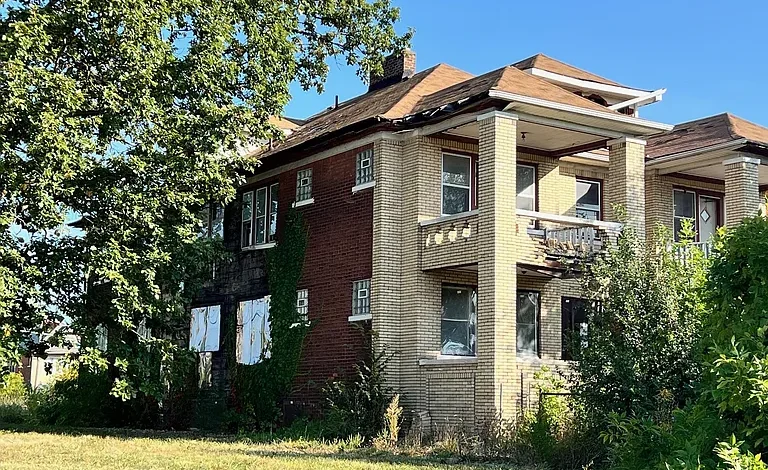
Detroit Multifamily Opportunity With 8 Bedrooms and Nearly 5,000 Square Feet
A large multifamily property in Detroit, Michigan is presenting an unusual opportunity for buyers, investors, and experienced property renovators seeking a substantial redevelopment project at a relatively low asking price. Listed at $30,000, this two-story Colonial-style multifamily property offers approximately 4,908 square feet of interior space, eight bedrooms, four full bathrooms, a full unfinished basement, and a lot of approximately 6,098 square feet.
Located in the Linwood Heights subdivision of Detroit, the property dates back to 1925 and features brick construction, a block foundation, public water, and public sewer. The property is identified as a four-unit multifamily building, making it potentially relevant to buyers interested in residential redevelopment, rental housing, or a larger renovation project.
However, this is not a conventional move-in-ready property. The listing includes specific requirements connected to the Detroit Land Bank Authority and states that the sale is contingent upon an executed development agreement. Prospective purchasers are expected to provide proof of funds, proposed development timelines, offer amounts, and evidence of previous renovation experience where applicable.
That combination makes this property particularly different from a typical $30,000 residential listing. The purchase price is only one part of the financial picture. A buyer will need to evaluate the renovation requirements, development agreement, financing strategy, potential taxes, and other costs before deciding whether the opportunity fits their plans.
A Four-Unit Multifamily Property With Significant Interior Space
The most notable feature of this Detroit property is its size. With approximately 4,908 square feet of finished above-ground interior area, the building offers considerably more space than many entry-level properties in the same price range.
The listing identifies the property as a four-unit multifamily building. It contains eight bedrooms and four full bathrooms, suggesting a configuration that could potentially accommodate multiple residential households once renovated and approved for its intended use.
For an investor, the four-unit structure may create several possible strategies. Depending on the existing floor plan, local regulations, building condition, and renovation requirements, the property could potentially be restored as a multifamily rental asset. Another possibility could involve creating separate living spaces with layouts designed around modern tenant preferences.
Those possibilities should not be interpreted as guaranteed outcomes. A purchaser would need to verify the current interior configuration, unit status, legal occupancy, mechanical systems, building code requirements, and zoning requirements before developing a specific plan.
Still, the combination of eight bedrooms, four bathrooms, and nearly 5,000 square feet makes the property notable from a redevelopment perspective.
A $30,000 Asking Price With Important Conditions
At first glance, the $30,000 asking price may attract considerable attention. The listing indicates a price of approximately $6 per square foot based on the stated interior area.
That figure is important because the property is being offered as a redevelopment opportunity rather than as a finished investment property. A low acquisition price can provide an investor with more room to allocate capital toward renovation, but only if the total project economics support the investment.
Buyers should therefore avoid looking at the $30,000 price in isolation.
The actual project budget could include expenses such as:
- Property acquisition costs
- Renovation and construction
- Electrical upgrades
- Plumbing repairs
- Heating system work
- Roofing or masonry repairs
- Windows and exterior improvements
- Interior finishes
- Kitchens and bathrooms
- Permits and inspections
- Professional design or architectural services
- Insurance
- Property taxes
- Utility costs
- Financing expenses
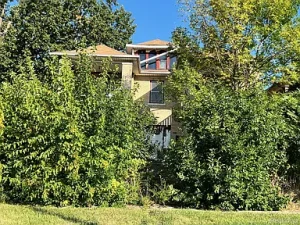
- Landscaping and site work
- Possible environmental or structural evaluations
- Compliance with the development agreement
The actual scope will depend on the property’s current condition and the development plan approved for the purchase.
For an experienced investor, understanding the complete project budget is essential before submitting a proposal.
Development Agreement Is a Key Part of the Sale
One of the most important details in the listing is that the sale is contingent upon a buyer and seller executing a development agreement.
This means prospective purchasers are not simply submitting an offer based on price alone. The development proposal is an important component of the transaction.
The listing specifically states that proposals must include proof of funds documentation, development timelines, and offer amounts. Renovation experience must also be documented when applicable, including property addresses and before-and-after photographs.
These requirements can make the opportunity more relevant to experienced renovators, developers, contractors, and investors who can demonstrate a history of successfully completing rehabilitation projects.
Anyone considering the property should carefully review the development agreement and all associated requirements before making an offer.
Proof of Funds Is Required
The listing specifically emphasizes that proof of funds must be presented with the proposal and cannot simply be stated in the proposal.
This is an important distinction for prospective buyers.
A purchaser considering a property like this should have appropriate documentation available to demonstrate that sufficient funds exist for the acquisition and planned development. The exact form of acceptable documentation should be confirmed directly with the seller or the relevant authority handling the transaction.
For investors using financing rather than cash, the financing structure should also be carefully evaluated because the listing identifies cash and quit claim deed among the listing terms.
The financing approach can have a major impact on the feasibility of a renovation project. Traditional mortgage financing may not be available or appropriate for a property requiring substantial rehabilitation, particularly when government ownership and development requirements are involved.
Renovation Experience Could Be Important
The listing asks prospective purchasers to provide renovation experience and specifically requests addresses and before-and-after photographs when such experience is being presented.
That requirement provides an important clue about the nature of the opportunity.
This is not necessarily intended for someone looking for a simple cosmetic renovation. The development requirements suggest that the seller wants to understand the purchaser’s ability to execute a rehabilitation plan.
Experienced investors may already have portfolios showing completed projects. Contractors may be able to document their construction work. Developers may provide examples of previous residential redevelopment projects.
For a buyer without a substantial renovation history, it would be important to understand what documentation is acceptable and whether a partnership with an experienced contractor or developer could satisfy the relevant requirements.
Historic Detroit Construction From 1925
The property was built in 1925, placing it within an era when Detroit was experiencing substantial residential and industrial growth.
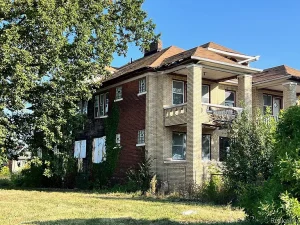
The building’s Colonial architectural style and brick exterior give it a traditional appearance. Brick construction can provide a distinctive character that may be attractive to buyers seeking to preserve older Detroit housing stock while upgrading the interior for contemporary residential use.
Older buildings can also require more extensive inspections than newer properties.
Potential buyers should investigate structural conditions, masonry, roofing, windows, electrical systems, plumbing, heating, insulation, basement conditions, and other components that may have been altered or repaired over the decades.
The fact that the property dates to 1925 should therefore be viewed as both a characteristic and a due-diligence consideration.
Brick Exterior and Block Foundation
According to the listing, the property is constructed primarily with brick and has a block foundation with a full basement.
Brick can contribute to the visual appeal of an older multifamily building and may provide a strong exterior foundation for a future renovation.
At the same time, masonry should be inspected carefully. Buyers may want to evaluate mortar joints, areas of cracking, water intrusion, damaged brick, lintels, and other components associated with older masonry construction.
The full basement is another potentially important feature.
Although it is currently described as unfinished, basement space can provide utility and storage functions in a multifamily property. Depending on local code requirements and the building’s configuration, portions of the basement might potentially support mechanical equipment, storage, laundry facilities, or other uses.
However, buyers should not assume that unfinished basement space can automatically be converted into legal living space. Ceiling height, moisture conditions, emergency exits, electrical systems, ventilation, fire separation, and building codes would all need to be reviewed.
Eight Bedrooms and Four Full Bathrooms
The eight-bedroom, four-bathroom configuration is consistent with the property’s four-unit multifamily classification.
An average of two bedrooms and one full bathroom per unit could potentially make the building appealing to households seeking more space than a typical one-bedroom rental.
That configuration may also provide flexibility during redevelopment.
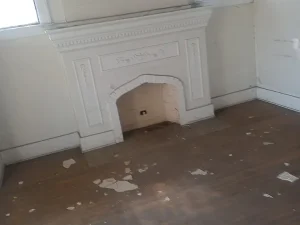
Depending on the existing floor plans, a renovation could potentially focus on creating functional kitchens, updated bathrooms, comfortable living areas, adequate storage, and modern mechanical systems.
The final layout, however, must be determined by the existing structure and applicable building regulations.
Prospective buyers should obtain detailed information about the individual units before assuming that each unit has the same layout or condition.
Two-Story Layout
The property is a two-story building, providing residential space across two levels.
A two-story configuration can be useful in multifamily housing because it separates living areas vertically while maintaining a relatively compact building footprint.
For renovation planning, the layout can also influence construction costs. Plumbing stacks, electrical distribution, stairways, fire separation, entrances, and heating systems may all affect the final project budget.
A professional inspection and detailed walkthrough would be important before developing a renovation estimate.
Full Unfinished Basement
The full unfinished basement represents additional physical space within the building.
Basements in older Detroit properties can be valuable for mechanical systems, storage, laundry, utilities, and building infrastructure. However, basement conditions can vary significantly from one property to another.
Potential buyers should evaluate:
- Water intrusion
- Foundation condition
- Drainage
- Sump pump systems
- Basement ventilation
- Electrical service
- Plumbing
- Ceiling height
- Mold or moisture concerns
- Structural conditions
- Utility access
- Fire safety requirements
The basement should be inspected carefully before a purchaser includes any basement improvements in a financial projection.
Public Water and Public Sewer
The listing indicates that the property is connected to public water and public sewer.
Public utility connections can simplify certain aspects of redevelopment compared with properties that rely on private wells and septic systems.
Nevertheless, buyers should verify the condition and functionality of the existing service connections.
Older multifamily buildings may have plumbing infrastructure that requires substantial work, especially if systems have not been comprehensively updated.
A professional inspection can help determine whether existing water and sewer lines are adequate for the planned use.
Natural Gas and Forced-Air Heating
The property is listed with forced-air heating and natural gas.
A functional heating system is particularly important for a multifamily property in Michigan, where winter temperatures can place substantial demands on residential buildings.
The buyer should determine the age, condition, efficiency, and service history of the heating equipment.
If the existing system is outdated or nonfunctional, replacement costs could become a significant part of the renovation budget.
The same applies to ductwork, thermostats, ventilation, and insulation. Improving energy efficiency may also become part of a broader modernization strategy.
Detroit Location and Linwood Heights
The property is located in Detroit’s Linwood Heights subdivision.
Detroit has a large inventory of historic residential properties, multifamily buildings, vacant structures, and redevelopment opportunities. Neighborhood conditions can vary considerably from one area to another, making property-specific research particularly important.
For a potential investor, location analysis should go beyond the property’s purchase price.
Important factors may include nearby employment centers, transportation, schools, retail services, neighborhood investment, rental demand, comparable properties, crime statistics, property taxes, and future development plans.
Buyers should also investigate nearby recently renovated properties to understand the level of investment occurring in the surrounding area.
Potential Rental Housing Strategy
Because the property is identified as a four-unit multifamily building, rental housing is one possible redevelopment strategy.
A renovated four-unit building could potentially generate multiple income streams rather than relying on a single tenant.
The economics of such a strategy depend heavily on local rental rates and the cost of bringing the building into rentable condition.
Before purchasing, an investor should research comparable rental properties with similar bedroom counts, bathrooms, square footage, amenities, and neighborhood characteristics.
Projected rent should never be based solely on optimistic assumptions.
A detailed rental analysis can help determine whether expected income would reasonably cover operating costs, maintenance, insurance, taxes, utilities, management, vacancy, and financing expenses.
Potential Value Through Renovation
The low acquisition price may make the property interesting to buyers who specialize in value-add real estate.
A value-add strategy generally involves acquiring a property that requires improvement and investing capital to increase its functionality, appeal, and potential market value.
For this Detroit property, improvements could potentially include modern kitchens, updated bathrooms, new flooring, fresh paint, improved lighting, upgraded mechanical systems, exterior repairs, landscaping, and energy-efficiency improvements.
However, renovation should be guided by a realistic market analysis.
Spending heavily on improvements does not automatically guarantee a corresponding increase in property value. The neighborhood’s sales prices, rental demand, and buyer expectations should determine how much capital makes sense to invest.
Detroit Land Bank Authority Tax Capture
One of the most significant financial considerations in the listing concerns the Detroit Land Bank Authority.
The listing states that the Detroit Land Bank Authority is entitled to a tax capture for the five tax years following the transfer of ownership.
This is an important issue because the tax capture may be incompatible with certain tax abatements and lot combinations that could otherwise be available to a selected purchaser.
The listing also explains that the Detroit Land Bank Authority may review requests to waive its tax capture rights.
If a waiver is requested, the authority may require a payment in lieu of taxes. The amount would be determined after reviewing the development pro forma and considering the impact of tax abatements on purchase and development financing.
This means prospective purchasers should not make assumptions about future tax benefits.
A buyer should obtain current documentation, understand the tax capture provisions, and have professional advisers review the potential financial impact.
Understanding the Development Pro Forma
A development pro forma can be an important tool when evaluating a property like this.
The pro forma can bring together the expected acquisition cost, renovation budget, financing, taxes, insurance, projected rental income, operating expenses, and potential future value.
For this property, the development pro forma may also need to account for the tax capture requirements associated with the Detroit Land Bank Authority.
Investors should consider preparing multiple scenarios.
A conservative scenario might assume higher construction costs and lower rental income. A moderate scenario could reflect realistic market assumptions. A more optimistic scenario could demonstrate potential upside but should not be treated as guaranteed.
The purpose of the analysis is to understand how sensitive the project is to unexpected costs.
Why Due Diligence Matters
A $30,000 multifamily property can look inexpensive compared with larger renovated buildings, but low acquisition prices often come with additional responsibilities.
A buyer should investigate the property thoroughly before submitting a final proposal.
Important due-diligence questions may include:
- What is the current condition of each unit?
- Are all four units legally recognized?
- What renovations are required?
- Are there outstanding code violations?
- What permits will be required?
- Are utilities currently functioning?
- What is the condition of the roof?
- Are there structural or foundation concerns?
- What is the condition of the electrical system?
- What plumbing repairs are necessary?
- Are there environmental concerns?
- What are the exact development agreement requirements?
- How will the tax capture affect future operating costs?
- Are any tax abatements available?
- What financing options are realistic?
- What is the projected renovation timeline?
- What are comparable renovated properties selling or renting for?
Answers to these questions can dramatically change the project’s financial outlook.
Cash and Quit Claim Deed Terms
The listing identifies cash and quit claim deed among the listing terms.
This is particularly important for purchasers who are accustomed to conventional residential transactions.
A quit claim deed transfers whatever interest the grantor has in the property without the same type of warranties typically associated with some other deed forms.
Buyers should obtain legal advice regarding the implications of the deed and should investigate title, liens, ownership history, and other matters before closing.
Title insurance and professional legal review may also be relevant depending on the transaction structure.
Property Taxes and Assessed Value
The listing provides a tax assessed value of approximately $29,800 and an annual tax amount of approximately $2,319.
These figures provide a starting point for financial analysis, but buyers should verify current tax records and understand how taxes may change after acquisition and redevelopment.
The presence of the Detroit Land Bank Authority’s tax capture provisions makes this especially important.
Investors should not assume that the existing tax figure will remain unchanged under a future development plan.
A Potential Project for Experienced Investors
This property is likely to attract attention from people who understand renovation and redevelopment projects.
The combination of four units, nearly 5,000 square feet, a large number of bedrooms, and a $30,000 asking price creates a potentially interesting starting point for an experienced investor.
At the same time, the transaction requirements indicate that the buyer must present more than an attractive offer.
A strong proposal may need to demonstrate available capital, a credible development timeline, renovation experience, and a clear plan for the property.
That makes preparation particularly important.
Creating a Realistic Renovation Budget
One of the biggest mistakes investors can make with inexpensive properties is focusing too heavily on the purchase price.
For a building of this size, renovation expenses could potentially exceed the acquisition cost by a significant margin.
A realistic budget should separate cosmetic improvements from major systems.
Cosmetic work may include paint, flooring, cabinets, fixtures, and landscaping.
Major rehabilitation could involve roofing, electrical service, plumbing, heating, windows, masonry, structural repairs, and code-related improvements.
The buyer should also maintain a contingency reserve because older properties frequently reveal unexpected issues during construction.
Potential Appeal for Multifamily Investors
Multifamily properties can offer a different investment model from single-family homes.
Instead of depending on one household for rental income, a four-unit property can potentially distribute income across several tenants.
If one unit becomes vacant, the entire property does not necessarily become income-free.
However, multifamily ownership also introduces additional management responsibilities.
Owners must consider tenant screening, leases, maintenance requests, repairs, insurance, utility arrangements, property management, turnover, and compliance with applicable landlord-tenant laws.
These factors should be included in any investment analysis.
A Property With Redevelopment Potential
The most accurate way to view this Detroit opportunity is as a redevelopment project rather than simply a low-priced home.
Its size and four-unit configuration provide a substantial foundation for a future residential project.
The property may appeal to buyers looking for a building where significant value could potentially be created through rehabilitation.
But the success of that strategy depends on execution.
The purchaser must understand the building, the neighborhood, the development agreement, the tax implications, the renovation costs, and the eventual market.
Final Considerations for Buyers
At $30,000, this Detroit multifamily property stands out because of its approximately 4,908 square feet, eight bedrooms, four full bathrooms, four-unit configuration, and redevelopment potential.
The 1925 Colonial-style brick building includes a full unfinished basement, public water and sewer, natural gas forced-air heating, and a lot of approximately 6,098 square feet.
However, the listing also contains substantial conditions that prospective purchasers need to understand.
The sale is contingent upon an executed development agreement. Proof of funds must accompany the proposal. Development timelines and offer amounts are required, and renovation experience must be documented when applicable. The Detroit Land Bank Authority’s five-year tax capture provision also needs to be incorporated into the buyer’s financial planning.
For an experienced Detroit real estate investor, contractor, or developer, these requirements may be an important part of determining whether the property fits a particular acquisition strategy.
The key is to evaluate the entire project rather than the $30,000 purchase price alone.
A successful redevelopment plan should begin with careful inspection, accurate construction estimates, legal and title review, realistic rental or resale projections, and a thorough understanding of the development agreement.
With nearly 5,000 square feet and four potential residential units, this property represents a substantial amount of physical space at a relatively low listed price. Its future potential will ultimately depend on the buyer’s renovation plan, available capital, experience, neighborhood research, and ability to satisfy the transaction requirements.
For buyers who specialize in older multifamily properties and urban redevelopment, the property provides an opportunity worth investigating carefully. For anyone considering it, professional inspections, legal review, financial modeling, and confirmation of all Detroit Land Bank Authority requirements should be completed before committing to the purchase.
Listed on Zillow.