Time-Sensitive Opportunity
Former El Reno School Property Offers a Rare Full City Block Redevelopment Opportunity
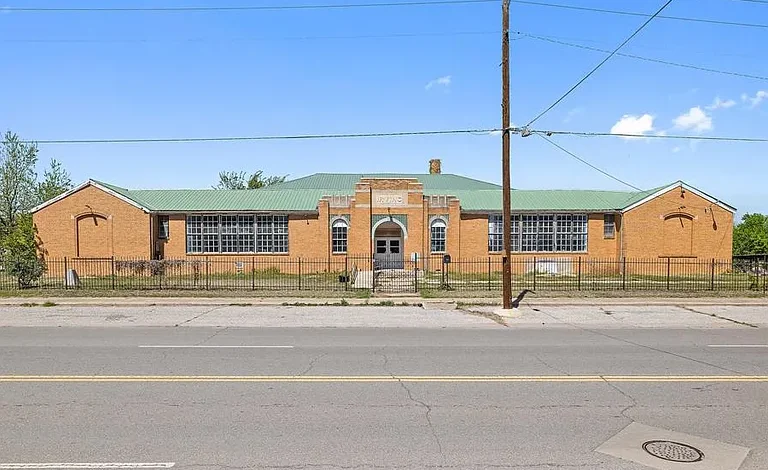
A distinctive redevelopment opportunity is available in El Reno, Oklahoma, where a former school property is being offered for $59,999 following a $30,000 price reduction. The property presents a very different proposition from a conventional residential listing. Instead of a move-in-ready house, buyers are looking at a large former school building occupying an entire city block, with the seller offering an opportunity to take control of the demolition process and potentially redevelop the site.
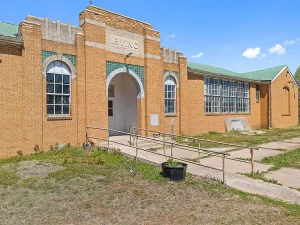
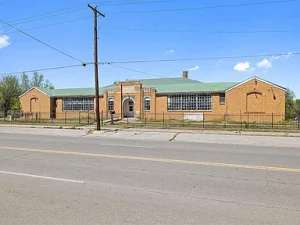
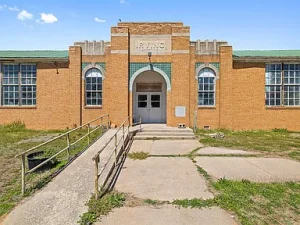
The property dates to approximately 1930 and contains an extraordinary reported 13,626 square feet of interior structure on roughly one acre of land. The building is described as the former Irving School and includes features such as original hardwood floors, large open spaces, and a stage area. However, the central issue surrounding the property is that the City of El Reno is preparing to move forward with demolition.
According to the listing, the city has agreed to allow the seller to handle the demolition directly rather than the city taking on the work. The seller is therefore seeking a buyer prepared to assume responsibility for clearing the existing structure and considering what could come next.
The property is currently zoned residential, and the listing identifies potential future uses that could include new construction, multi-unit housing, single-family estate lots, or other residential development, with all intended uses subject to verification with the city.
For investors, builders, contractors, developers, or buyers with experience managing large redevelopment projects, the combination of a low asking price, central location, full city block, and redevelopment potential makes this property particularly unusual.
A $59,999 Property With a Very Different Value Proposition
The current asking price is $59,999 after a reported $30,000 price reduction on September 9.
At first glance, the Zillow figure of approximately $4 per square foot may appear unusually low. That figure is based on the reported 13,626 square feet of structure, but it should not be interpreted in the same way as the price per square foot of a conventional finished home.
The existing structure is not being presented as a typical residential building ready for occupancy. The listing specifically states that the seller is prepared to sell to someone willing to take on demolition and redevelopment.
In other words, the underlying opportunity is largely about the land, location, scale, and future possibilities rather than the existing building as a finished residence.
This distinction is important for anyone researching the property.
The purchase price represents only the beginning of the potential financial commitment. A buyer considering this opportunity would need to evaluate demolition expenses, debris removal, site preparation, utility work, engineering, architectural plans, permitting, construction costs, financing, insurance, and carrying expenses.
The property therefore deserves to be evaluated as a redevelopment project rather than a conventional home purchase.
A Full City Block in El Reno
One of the most significant features is the size and configuration of the property.
The listing describes the property as a full city block, while the listed lot size is approximately one acre. That scale can provide considerably more flexibility than a typical residential parcel.
A full city block can potentially support different site-planning concepts, depending on zoning and municipal approval.
Instead of being restricted to a single house footprint, a future owner could potentially explore several residential development concepts. The listing specifically mentions new construction, multi-unit housing, and single-family estate lots as possibilities.
These are potential uses rather than guaranteed entitlements. Before purchasing, a buyer should confirm zoning, density limits, setbacks, parking requirements, utility availability, subdivision rules, stormwater requirements, access, fire regulations, and all other applicable municipal standards.
Nevertheless, the size of the site is one of the property’s defining characteristics.
The Former Irving School
The existing building was constructed around 1930 and is described as the former Irving School.
With approximately 13,626 square feet of structure, it is substantially larger than a typical single-family home.
The building contains large open spaces and a stage area, features that reflect its former institutional use.
Although the listing indicates that demolition is planned, the building’s history may still be of interest to buyers considering architectural salvage or documentation of the property’s past.
The listing also identifies original hardwood floors, which could potentially have salvage value depending on their condition and the buyer’s plans.
For a redevelopment-oriented purchaser, however, the primary question is likely to be whether the existing structure should be removed and the site prepared for new construction.
The listing makes clear that demolition is central to the current opportunity.
Why Demolition Is Part of the Opportunity
Demolition is often one of the largest initial expenses associated with a redevelopment project.
In this case, the seller’s arrangement with the city may allow a private buyer to control the demolition process rather than leaving the city to carry it out.
The listing states that the city has agreed to let the seller handle the demolition directly.
That creates an opportunity for a buyer who already has relationships with contractors, demolition companies, equipment operators, waste haulers, or construction professionals.
The buyer could potentially approach the project as a coordinated land-clearing and redevelopment plan.
However, demolition should never be treated as a simple matter of bringing in heavy equipment.
Before work begins, buyers should investigate permits, environmental requirements, utility disconnections, asbestos or other hazardous materials, structural risks, debris disposal, insurance, safety requirements, and municipal inspection procedures.
A professional demolition contractor should evaluate the building and provide a realistic estimate of the full cost.
Original Hardwood Floors and Architectural Character
Although the property is primarily being marketed around redevelopment, the building contains features that may have value to a buyer interested in architectural salvage.
Original hardwood floors are specifically mentioned, as is a stage area.
Older institutional buildings can contain materials such as wood flooring, doors, framing components, hardware, masonry, and other architectural elements that may be reusable depending on their condition.
A buyer should determine whether any materials can legally and safely be salvaged before demolition.
For someone with experience in historic restoration or reclaimed materials, the building may provide an opportunity to recover certain elements before the site is cleared.
This could potentially reduce waste and preserve a small part of the property’s history.
Large Open Spaces
The building’s large open spaces are another reflection of its original school function.
Institutional buildings are generally designed around larger rooms, circulation areas, classrooms, assembly areas, and common spaces rather than the compartmentalized layout of a traditional residence.
The listing reports five bedrooms, but the overall building size and former use indicate that those bedroom figures should not be interpreted as evidence of a conventional five-bedroom home.
The property’s current condition and planned demolition are much more relevant to its future than the bedroom count.
For buyers researching the listing, the 13,626-square-foot structure should be understood as an existing building scheduled for potential removal rather than as a finished residential asset.
Residential Zoning and Future Development
The property is currently zoned residential according to the listing.
That is particularly important because the seller’s redevelopment concept is centered on future residential construction.
Potential ideas mentioned in the listing include new construction, multi-unit housing, single-family estate lots, and other residential uses.
The exact development potential will depend on municipal regulations.
A developer should contact the appropriate city departments to determine what is currently permitted and what approvals would be required for the proposed project.
Questions may include:
- What residential uses are permitted?
- How many units could potentially be developed?
- Is subdivision possible?
- What are the minimum lot sizes?
- What are the required setbacks?
- What parking standards apply?
- What utility connections are available?
- Are sidewalks required?
- What stormwater requirements apply?
- What fire-access requirements apply?
- Are there height or density limitations?
- What demolition permits are required?
- Are environmental assessments necessary?
- Are there any historic considerations?
These questions can materially change the economics of a redevelopment project.
Potential Multi-Unit Housing Concept
The listing specifically identifies multi-unit housing as one possible future direction.
If permitted by the city, a full city block could potentially provide a larger footprint for residential development than an individual urban parcel.
A developer might investigate townhomes, small multifamily buildings, apartment-style housing, or other residential configurations.
The actual feasibility would depend on zoning, infrastructure, construction costs, market demand, financing, and municipal approvals.
The property should therefore not be advertised as having guaranteed multifamily development rights.
Instead, it can be viewed as a site where a qualified buyer may investigate those possibilities.
Potential Single-Family Development
Another potential direction mentioned by the seller is single-family estate lots.
If the parcel can legally be divided and the city approves the necessary infrastructure and subdivision plan, the site could potentially be evaluated for multiple residential lots.
The exact number of homes or lots would depend on the city’s requirements and the physical characteristics of the property.
Factors such as street frontage, utility connections, drainage, setbacks, easements, and access would all influence the final plan.
A developer should obtain professional site planning and engineering advice before assuming that a particular number of homes can be constructed.
A Centrally Located El Reno Property
The listing emphasizes the property’s established location in El Reno and its access to local amenities.
For redevelopment projects, location is often one of the most important factors.
A large site may have limited value if it is difficult to access or located far from services. Conversely, a sizable parcel within an established community can potentially provide a foundation for new housing.
The property’s location within El Reno gives it a different profile from a remote rural development parcel.
Future residents could potentially benefit from proximity to existing roads, businesses, schools, services, and community amenities, subject to the exact location and future development plan.
This established setting may also reduce some of the challenges associated with developing an entirely new community in an undeveloped rural area, although site-specific infrastructure requirements still need to be confirmed.
A Property for Builders and Contractors
This opportunity may be particularly relevant to buyers who already have construction experience.
The listing effectively asks buyers to bring their contractor, equipment, and vision.
That wording reflects the nature of the project.
Someone who already understands demolition, site preparation, construction scheduling, permitting, subcontractor management, and development financing may be better positioned to evaluate the opportunity.
A conventional homebuyer could face a very different experience because the property requires a substantial project rather than normal residential maintenance.
For experienced professionals, however, the project may provide an opportunity to control the process from demolition through redevelopment.
Potential Land Value After Demolition
The most interesting question for many investors will be what the property could become after the existing building is removed.
Once cleared, the site could potentially be evaluated as a development parcel rather than an aging institutional structure.
A clean, properly prepared site can be easier to plan and market for new construction.
However, clearing a property does not automatically create development value. Demolition costs, environmental remediation, utility work, grading, infrastructure, and construction can consume substantial capital.
A buyer should therefore create a detailed project budget before assuming that the low acquisition price represents a low total development cost.
The economics need to be evaluated from acquisition through completion.
Importance of Utility Research
Before developing the site, a buyer should verify all existing utility infrastructure.
This may include water, sanitary sewer, electricity, natural gas, telecommunications, stormwater systems, and other municipal services.
A former school may have utility infrastructure that differs from what a future residential development would require.
For example, the capacity and location of existing connections may not correspond to a new multi-unit housing project.
The buyer should determine whether existing utility lines can be reused, upgraded, relocated, or expanded.
Those costs can have a meaningful impact on development feasibility.
Environmental and Demolition Due Diligence
Because the building dates to approximately 1930, environmental due diligence should be taken seriously.
Older buildings can contain materials that require specialized handling during demolition.
A buyer should consult appropriate environmental professionals regarding asbestos, lead-based materials, old mechanical systems, insulation, paints, and other potential hazards.
The exact environmental requirements will depend on the building’s history and condition.
A professional assessment can help determine what must be removed before demolition and how materials must be transported and disposed of.
This is especially important because unexpected environmental costs can significantly change a project’s budget.
The Importance of a Development Plan
A property like this should ideally be purchased with a preliminary development concept already in mind.
That does not mean every detail must be finalized before closing, but the buyer should have a reasonable understanding of the intended direction.
For example, a prospective buyer might investigate:
- Demolishing the former school.
- Clearing and preparing the site.
- Confirming residential development parameters.
- Designing a preliminary site plan.
- Determining utility requirements.
- Estimating construction costs.
- Reviewing financing options.
- Obtaining necessary approvals.
- Constructing the proposed residential project.
- Marketing or retaining the completed properties.
Each stage introduces costs, timing considerations, and regulatory requirements.
The $59,999 purchase price should therefore be considered the acquisition component of a much larger potential project.
A Full City Block Is Difficult to Find
One of the strongest characteristics of this opportunity is the site’s scale.
A full city block in an established Oklahoma community can offer development flexibility that is difficult to reproduce by purchasing several small parcels separately.
Assembling adjacent properties can be expensive, time-consuming, and uncertain.
Here, the seller is offering a property that already represents a substantial contiguous site.
That does not guarantee any particular development outcome, but it can simplify the starting point for a buyer who has a clear plan.
The fact that the property is already assembled is one of the reasons it may attract attention from developers and investors.
The $30,000 Price Reduction
The listing reports a $30,000 price reduction on September 9, bringing the asking price to $59,999.
Price reductions can make a property more visible to buyers, but the significance of the reduction depends on the project’s underlying economics.
For this property, the central consideration remains the cost and feasibility of demolition and redevelopment.
A lower acquisition price can improve a project’s potential financial structure, but only if demolition, construction, infrastructure, financing, and other expenses are properly accounted for.
Investors should focus on the total project budget rather than looking only at the purchase price.
Understanding the Existing Tax Information
The listing reports a tax-assessed value of $99,545 and an annual tax amount of approximately $1,252.
These figures can provide useful background information, but assessed value and market value are not necessarily the same.
Future taxes may also change depending on redevelopment, reassessment, new construction, subdivision, or changes in ownership.
A buyer should verify current tax records and investigate how the proposed development could affect future property taxes.
This is particularly important for investors modeling a long-term project.
As-Is Sale
The property is being sold as-is.
That is an important condition because the buyer should not expect the seller to complete repairs, modernization, or redevelopment work before closing.
The as-is structure is consistent with the property’s redevelopment focus.
Anyone considering the purchase should conduct appropriate inspections and investigations before committing to the transaction.
The buyer should also understand exactly what obligations will transfer at closing, particularly regarding demolition, debris, permits, utilities, and any municipal requirements.
A Time-Sensitive Opportunity
The listing describes the situation as time-sensitive because the City of El Reno is preparing to move forward with demolition.
The seller is seeking a buyer who can take over the process and move forward with redevelopment plans.
This makes timing an important consideration.
However, urgency should not replace due diligence.
A buyer should obtain written confirmation of the city’s requirements, demolition timeline, approvals, responsibilities, and any agreements that affect the property.
Understanding exactly what the city expects can help prevent misunderstandings after closing.
Potential for a New Residential Community
One possible long-term vision is the transformation of the former school site into a new residential development.
The full block could potentially be redesigned around modern housing, landscaping, streetscape improvements, parking, and pedestrian access, depending on municipal requirements.
A successful redevelopment could change the physical appearance and function of the property dramatically.
Instead of a large vacant or obsolete institutional building, the site could potentially become a collection of modern homes or other approved residential structures.
That transformation is precisely why the property may be of interest to developers who specialize in adaptive land reuse and urban infill.
A Project With Multiple Possible Strategies
There is no single obvious strategy for the site.
A buyer could potentially pursue a relatively simple residential development concept or investigate a larger multi-unit project.
Another approach could involve creating several single-family lots.
An investor might also explore holding the land for future development after clearing the existing structure, subject to market and regulatory considerations.
Each strategy carries different costs, risks, timelines, and financing requirements.
The best approach will depend on the buyer’s experience, available capital, development objectives, and findings from professional due diligence.
Why This Property Is Different
The property in El Reno stands apart from most low-priced real estate listings because its appeal is not based on the condition of a finished house.
Instead, it is about land and redevelopment.
For $59,999, the buyer is potentially acquiring control of a full city block with an existing 13,626-square-foot structure that is expected to be demolished.
The property has residential zoning, an established community setting, and potential future residential applications that should be verified with the city.
It is a project requiring vision and execution rather than a simple purchase-and-move-in transaction.
Final Thoughts
The former Irving School property in El Reno, Oklahoma, presents a highly unusual real estate opportunity for buyers interested in redevelopment.
Listed at $59,999 after a $30,000 price reduction, the property includes approximately one acre configured as a full city block and an approximately 13,626-square-foot former school building constructed around 1930.
The existing structure includes original hardwood floors, large open spaces, and a stage area, but the primary opportunity is centered on the future of the site.
The seller states that the City of El Reno is preparing for demolition while allowing the seller to handle the process directly. This creates an opportunity for a buyer prepared to take responsibility for demolition and pursue a new development plan.
Potential concepts mentioned in the listing include new construction, multi-unit housing, single-family estate lots, and other residential uses. Every proposed use should be independently verified with city officials, and buyers should obtain professional guidance regarding zoning, subdivision, utilities, environmental conditions, demolition, engineering, and construction requirements.
The property’s full-block configuration is particularly notable. Large contiguous parcels within established communities can provide development flexibility that is difficult to achieve through assembling multiple individual properties.
At the same time, this is clearly a project for a buyer prepared to deal with substantial work and expense beyond the purchase price. Demolition, site preparation, utility work, permitting, construction, financing, insurance, and ongoing carrying costs should all be included in any serious financial analysis.
For a builder, contractor, investor, or developer with a clear plan, the opportunity lies in transforming an aging institutional property into something new. The existing school may soon disappear, but the land beneath it could become the foundation for a new chapter in the property’s history.
With its full city block, residential zoning, established El Reno location, substantial existing structure, and potential for future residential development, this property represents a land-and-redevelopment opportunity rather than a conventional home sale.
Listed on Zillow.