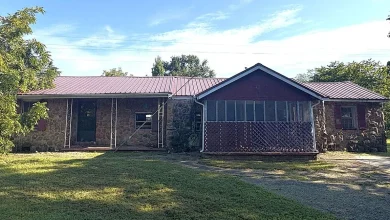
3 beds 1 baths 1,268 sqft
69-Acre Kentucky Legacy Property With Historic Farmhouse, Creek and Multiple Building Sites
A rare opportunity is available in Mount Vernon, Kentucky, for buyers looking beyond conventional residential real estate and searching for land, privacy, history, and long-term potential. Priced at $276,000, this approximately 69-acre property combines a historic farmhouse, additional historic structures, usable pasture, wooded acreage, a year-round creek, wildlife habitat, and multiple potential building sites.
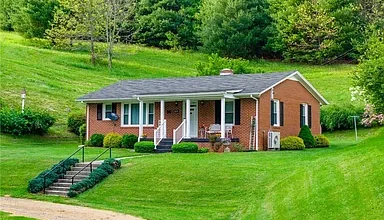
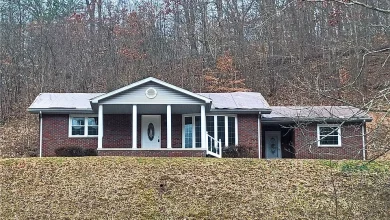
The property includes a three-bedroom, one-bathroom farmhouse with approximately 1,268 square feet of interior living space. Built around 1900, the residence is more than a century old and forms only one part of a much larger rural property. The acreage is the central feature, offering a mixture of approximately 13 acres of usable pasture and extensive wooded areas with pockets of mature hardwoods.
The property is described as a legacy property, making it particularly interesting for buyers who want to create something that can remain in the family for years to come. It could potentially serve as a private homestead, recreational retreat, agricultural property, cabin destination, or long-term land investment, subject to local zoning, permitting, and development requirements.
A Year-Round Creek and Natural Setting
One of the property’s most notable natural features is a year-round creek that winds through the acreage. Water features can add both visual appeal and practical value to rural land, while also creating habitat for wildlife and contributing to the overall character of the property.
The listing indicates that the creek could potentially provide an opportunity for a future pond, which might enhance the landscape or support wildlife and livestock. Any pond construction would require careful evaluation of topography, drainage, environmental considerations, permits, engineering requirements, and applicable regulations.
The presence of active deer trails and turkey adds another dimension to the property for people interested in observing wildlife and enjoying outdoor recreation. Rather than having a small residential lot surrounded by neighboring homes, the property provides a substantially larger natural environment.
For someone interested in a private rural lifestyle, these characteristics can be just as important as the house itself.
Approximately 69 Acres With Multiple Uses
The property contains approximately 69 acres according to the listing, although the seller specifically notes that acreage is based on the deed and should be verified by the buyer.
That amount of land provides considerable flexibility compared with a typical residential property.
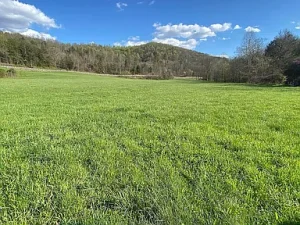
Approximately 13 acres are described as usable pasture. This open acreage could potentially support gardens, animals, agricultural activities, recreational space, or other rural uses depending on zoning and local regulations.
The remaining acreage includes wooded land and areas with mature hardwoods. Forested land can provide privacy, natural beauty, wildlife habitat, and opportunities for responsible woodland management.
The combination of pasture and woods creates a diverse landscape rather than one uniform parcel. For buyers planning a homestead, this diversity can be particularly useful because different portions of the property can potentially serve different purposes.
A Historic Farmhouse Dating to 1900
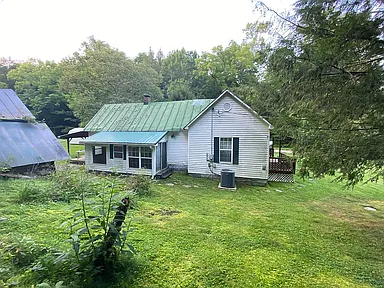
The existing farmhouse was built in 1900 and contains three bedrooms and one full bathroom.
Although the house provides a relatively modest 1,268 square feet of living space, the surrounding acreage dramatically expands the overall scale of the property.
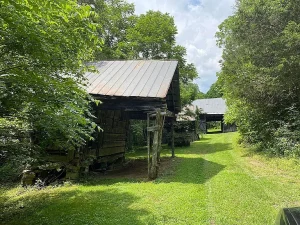
A century-old farmhouse can offer architectural character that is difficult to reproduce in modern construction. The listing also identifies historic structures elsewhere on the property, including a hand-hewn timber building.
The farmhouse may therefore be appealing not only as a residence but also as part of the historical identity of the entire property.
Buyers should recognize that a home of this age requires thorough inspection. The foundation, framing, roof, electrical systems, plumbing, heating, cooling, windows, insulation, moisture management, and other components should all be evaluated before purchase.
The listing identifies a stone foundation and metal roof, while the home also features vinyl exterior materials. These details provide a starting point for understanding the existing structure, but an inspection is essential for determining its actual condition.
A Home With Modern Utility Features
Despite its historic construction date, the farmhouse has several utility features that can support modern living.
The property is equipped with forced-air electric heating and central cooling. Central air conditioning can be particularly valuable during Kentucky’s warmer months, while forced-air heating provides a familiar residential heating system.
The listing also includes a washer among the appliances.
The interior contains approximately 1,268 square feet of livable space. With three bedrooms and one bathroom, the layout could potentially serve as a full-time residence, weekend retreat, caretaker home, or base for a larger rural property.
The house also has a fireplace, adding another traditional feature to the property’s historic character.
The exact condition and functionality of the fireplace should be professionally evaluated before use.
A Property Surrounded by Privacy
Privacy is one of the strongest themes associated with this property.
The listing describes the land as being surrounded by hundreds of undeveloped acres. That surrounding environment can create a sense of seclusion that is difficult to achieve with smaller parcels.
At the same time, the property is not described as being isolated from essential transportation routes. The listing indicates that it is approximately 15 minutes from town and Interstate 75, while Highway 461 is less than 10 minutes away.
This combination of privacy and accessibility can be significant.
A rural property may provide the feeling of being far away from development while still allowing residents to reach nearby services, shopping, employment areas, and major roads without an exceptionally long drive.
For a homestead or recreational retreat, that balance can make rural land more practical for everyday use.
Multiple Potential Building Sites
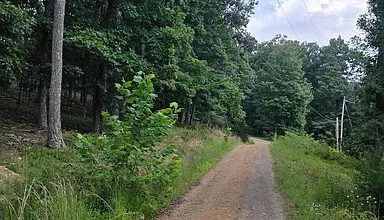
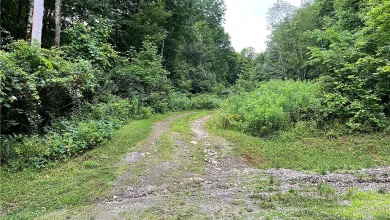
Another important feature is the network of interior roads that lead toward rolling hilltops with potential building sites.
The listing specifically highlights the possibility of creating a homestead, cabins, or a private retreat layout.
Multiple building locations can be valuable because buyers are not necessarily limited to the existing farmhouse. Depending on zoning, septic requirements, utility access, road standards, setbacks, environmental restrictions, and building permits, portions of the acreage could potentially accommodate additional structures.
This could be particularly interesting for someone considering a multigenerational property, family compound, recreational cabin concept, or carefully planned rural retreat.
However, buyers should not assume that every potential site is immediately buildable. Each proposed building location should be evaluated for access, soil conditions, drainage, septic suitability, utilities, topography, setbacks, and local regulations.
The distinction between a visually attractive building site and a legally permitted building site is extremely important when purchasing rural acreage.
A Potential Homestead
The property is well suited to the concept of a long-term homestead.
With pasture, woodland, water, wildlife, an existing residence, and potential additional building sites, the property contains many of the ingredients buyers often seek when looking for rural land.
The approximately 13 acres of usable pasture could potentially support gardens, livestock, orchards, or agricultural projects.
Wooded areas could provide privacy and recreational space.
The creek could contribute to the property’s natural environment.
The existing farmhouse could provide a place to live while other improvements are considered over time.
For a buyer with a long-term vision, the property could potentially be developed gradually rather than all at once.
That gradual approach can be especially useful when purchasing a large rural parcel because improvements can be prioritized according to available resources and changing needs.
Historic Structures and Salvage Potential
The property also contains historic structures that could become important components of a future restoration or design project.
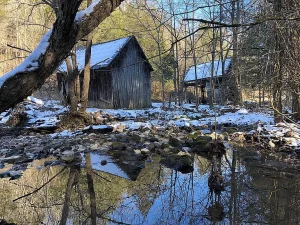
One of the structures is described as a hand-hewn timber building. Historic timber construction can have substantial visual and material appeal, particularly for buyers interested in rustic architecture, restoration, woodworking, or traditional building techniques.
The listing indicates that historic structures may offer salvageable wood and other materials for restoration projects or rustic design elements.
This creates an interesting possibility for someone who wants to preserve portions of the property’s history rather than replacing everything with modern construction.
Before removing, relocating, or repurposing any historic materials, however, buyers should evaluate the structural condition and determine whether professional preservation, engineering, or construction assistance is appropriate.
The historical elements could potentially become one of the defining characteristics of a future homestead or retreat.
A Rural Retreat With Recreational Potential
The property could also serve as a private recreational retreat.
Large acreage provides room for outdoor activities that are difficult to accommodate on conventional residential lots. The combination of wooded land, pasture, rolling terrain, water, and wildlife creates a setting that may appeal to people who enjoy spending time outdoors.
Deer trails and turkey activity can make the property interesting to wildlife enthusiasts. The creek adds another natural feature, while the surrounding undeveloped land contributes to the sense of privacy.
For a weekend retreat, a buyer might focus on preserving the natural character of the land while improving the existing farmhouse and creating outdoor gathering spaces.
For a longer-term project, additional cabins or structures could potentially be considered if permitted.
Any hunting, lodging, agricultural, commercial, or recreational use should be confirmed against applicable local laws and regulations.
Potential Cabin or Retreat Concept
The listing specifically identifies a cabin retreat and boutique resort concept among possible uses.
A property of this size naturally lends itself to the idea of creating several private spaces while maintaining a shared natural setting.
For example, if local rules and site conditions allow, a future owner could potentially envision a primary residence accompanied by one or more small guest cabins.
Such a concept could be attractive for family use, private retreats, or potentially hospitality purposes.
However, a resort or short-term lodging project involves considerably more requirements than a standard residential purchase. Zoning, wastewater capacity, water supply, road access, fire safety, building codes, parking, insurance, licensing, and other regulatory requirements would all need to be investigated.
The property’s potential should therefore be considered as a planning opportunity rather than an existing entitlement.
A Long-Term Land Investment
Large rural properties can also appeal to buyers who think in terms of long-term land ownership.
The 69-acre parcel offers a substantial amount of land compared with conventional residential properties. Its combination of open pasture, woods, water, road access, and potential building locations gives the property multiple characteristics that could remain useful over time.
The seller also notes various buying options may be available for well-qualified buyers, with additional details available directly from the seller.
Any proposed purchase structure should be reviewed carefully, including the price, financing terms, title requirements, closing costs, taxes, and all other obligations.
Because the listing states that acreage is based on the deed, a buyer should also confirm the exact acreage through appropriate documentation and, if necessary, a professional survey.
Understanding the Rural Farm Setting
The property is fundamentally different from a conventional suburban home.
A buyer is purchasing both a residence and a large rural landscape.
That means land management becomes an important part of ownership.
The pasture may require mowing, fencing, drainage management, or agricultural maintenance depending on how it is used. Wooded areas may require occasional management, trail maintenance, storm cleanup, or professional forestry advice.
Water features can require monitoring as well.
Large acreage can provide extraordinary freedom, but it also comes with responsibilities. Prospective buyers should understand those responsibilities before purchasing.
Wildlife and Natural Habitat
The presence of deer and turkey suggests that wildlife is already using portions of the property.
For nature enthusiasts, this can be an important part of the property’s appeal.
Wooded acreage provides habitat and cover, while open pasture can offer feeding areas and varied ecological conditions. The creek further increases habitat diversity.
Maintaining portions of the land in a natural condition could potentially help preserve wildlife activity, although specific wildlife management goals should be discussed with appropriate local professionals.
For buyers interested in conservation-oriented land management, the property may provide a broad canvas for creating a balance between residential use, agriculture, recreation, and natural habitat.
A Legacy Property for Future Generations
The word “legacy” is particularly appropriate for a property of this scale.
A home on 69 acres can become more than a residence. It can become a place associated with family gatherings, outdoor activities, farming, gardening, hunting, restoration projects, and shared experiences.
A buyer could potentially improve the farmhouse while maintaining portions of the historic structures and natural landscape.
Future generations could inherit a property that includes both developed and undeveloped areas.
This long-term perspective may be especially appealing to families who want to establish a permanent rural base rather than simply purchase another house.
At the same time, succession planning, ownership structures, taxes, maintenance responsibilities, and future transfer considerations should be discussed with qualified legal and financial professionals when appropriate.
Agricultural Possibilities
The approximately 13 acres of usable pasture create meaningful agricultural potential.
Depending on zoning and soil conditions, a buyer might consider gardens, pasture animals, orchard areas, hay production, or other small-scale agricultural activities.
The existing open land may also reduce the amount of clearing required compared with purchasing a property that is entirely wooded.
However, agricultural potential depends on factors such as soil quality, drainage, fencing, water availability, slope, access, and local regulations.
A professional soil evaluation and consultation with local agricultural resources can help determine which uses are realistic.
Potential Pond Opportunity
The year-round creek is another feature that could influence future land planning.
The seller suggests that the creek could potentially be suitable for creating a pond to enhance the landscape or support wildlife and livestock.
A pond can become a significant feature on a rural property, potentially providing wildlife habitat, visual appeal, recreational opportunities, and water resources depending on its design and legal status.
But pond construction is not a simple landscaping project.
Engineering, drainage, soil conditions, water flow, environmental considerations, permits, dam requirements, and maintenance should all be investigated before construction.
The creek should therefore be viewed as a natural asset and possible future planning feature rather than a guaranteed pond site.
Financial Considerations for Buyers
The asking price is $276,000, with a reported price of approximately $218 per square foot based on the 1,268-square-foot residence.
The listing reports a tax-assessed value of $45,000 and annual property taxes of approximately $367.
These figures should be independently verified because property tax assessments and market values serve different purposes.
The relatively low annual tax amount compared with the asking price may be one factor buyers investigate, but taxes can change over time and should not be treated as a fixed future expense.
Buyers should also budget for insurance, utilities, maintenance, repairs, land management, road maintenance, equipment, and potential improvements.
Due Diligence Before Purchasing
Large rural properties require careful due diligence because many important factors extend beyond the house.
A prospective buyer should consider verifying:
- Exact acreage and legal boundaries
- Property survey and deed information
- Legal road access
- Interior road conditions
- Easements and rights of way
- Zoning regulations
- Building restrictions
- Septic suitability for additional structures
- Well and water availability
- Electrical service
- Existing utility locations
- Creek boundaries
- Floodplain information
- Drainage
- Soil conditions
- Potential pond requirements
- Condition of the farmhouse
- Condition of historic structures
- Roof condition
- Stone foundation
- Heating and cooling systems
- Fireplace condition
- Termite or pest activity
- Timber and woodland conditions
- Agricultural suitability
- Property taxes
- Insurance availability
- Title issues
- Any deed restrictions
This process is especially important when the purchase involves multiple potential uses.
A Property for Buyers Who Think Beyond the House
The strongest appeal of this Mount Vernon property is that it should not be viewed solely as a 1,268-square-foot house.
The residence is only one part of the overall opportunity.
The 69 acres provide the larger canvas. The farmhouse provides an existing place to live. The historic structures provide character and potentially reusable materials. The creek provides a natural feature. The pasture provides open ground. The woods provide privacy and habitat. The hilltops provide potential building locations.
That combination creates a property where the future owner can potentially think in terms of an entire land plan rather than simply a home renovation.
For someone searching for a conventional three-bedroom house, the property may offer more land and responsibility than necessary.
For someone looking for a large rural property with multiple possibilities, the acreage may be the primary attraction.
Accessibility Without Giving Up Privacy
Another notable characteristic is the property’s reported proximity to Mount Vernon, Interstate 75, and Highway 461.
The listing indicates approximately 15 minutes to town and I-75 and less than 10 minutes to Highway 461.
For rural property buyers, transportation access can be a major factor.
A property can feel remote without being excessively difficult to reach. This can make it more practical for full-time residents, weekend owners, contractors, guests, and future development projects.
The combination of nearby transportation and surrounding undeveloped acreage gives the property a balance between convenience and privacy.
A Rare Kentucky Land Opportunity
Large parcels with a combination of existing housing, water, pasture, mature woods, historic structures, and potential building sites are not typical suburban real estate.
This property is fundamentally a land opportunity with a house included.
At $276,000, the approximately 69-acre parcel provides a substantial amount of rural space for buyers willing to take a long-term view.
Its historic character adds another layer of interest, while the year-round creek, wildlife activity, and natural scenery contribute to the property’s recreational appeal.
Whether the future owner chooses to focus on homesteading, preservation, agriculture, recreation, additional construction, or simply maintaining a private rural retreat, the property offers several potential directions.
Final Thoughts on the Mount Vernon Property
The 69-acre property in Mount Vernon, Kentucky, presents a distinctive opportunity for buyers looking for privacy, land, history, and flexibility.
The existing three-bedroom farmhouse provides approximately 1,268 square feet of living space, while the surrounding acreage offers far more room than a typical residential property. With approximately 13 acres of usable pasture, extensive woods, mature hardwoods, a year-round creek, active wildlife trails, historic structures, and potential building sites, the property has characteristics that extend well beyond the existing house.
The 1900 farmhouse, hand-hewn timber structure, and other historic elements provide a connection to the property’s past. At the same time, the interior roads, hilltop sites, and expansive acreage create possibilities for its future.
A buyer could potentially restore the existing residence, preserve historic materials, establish gardens or agricultural areas, maintain wildlife habitat, create outdoor recreation areas, or explore additional structures subject to local regulations.
The property is also positioned close enough to Mount Vernon and major highways to remain practical while offering the privacy of a much larger rural landscape.
For buyers considering a property like this, the most important step is careful due diligence. Acreage, zoning, building sites, access, utilities, water, septic, structures, taxes, and development possibilities should all be independently verified before making a purchase decision.
For someone with a long-term vision, however, this Kentucky property offers an unusually broad foundation. It is a place where the land itself can become an important part of the investment and lifestyle.
Rather than simply buying another house, a future owner would have the opportunity to shape an entire rural property around a personal vision for a homestead, retreat, recreational destination, agricultural project, or family legacy.
Listed on Zillow.