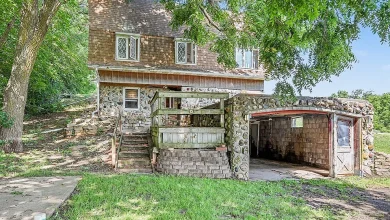
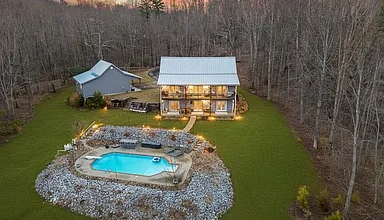
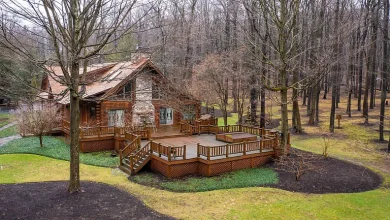
9 Acres Lot
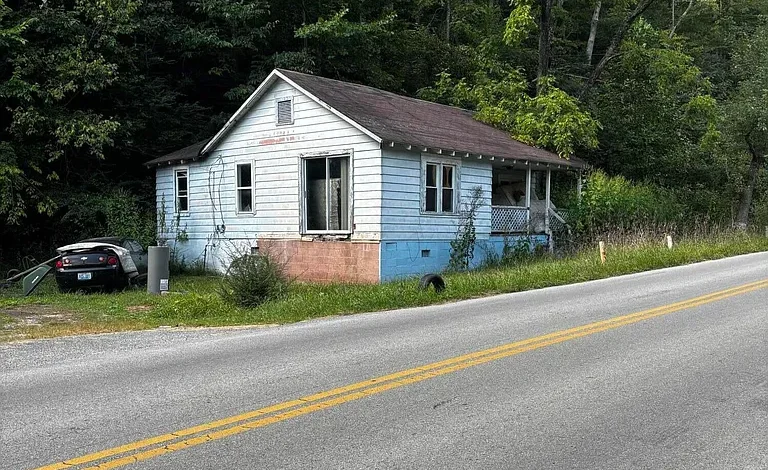
9-Acre Kentucky Property With a 1,200-Square-Foot House for $22,000
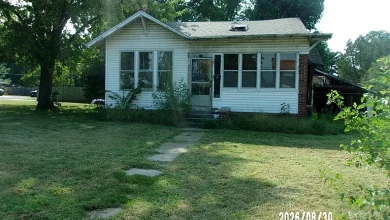
Affordable land with an existing house can be difficult to find, particularly when a property offers several acres for a relatively low purchase price. In Bevinsville, Kentucky, a 9-acre property is currently listed for $22,000 and includes an existing approximately 1,200-square-foot house. The residence is described as being in rough condition, making this property more suitable for buyers who are prepared to renovate, restore, rebuild, or evaluate the land for a different long-term use.
The combination of acreage and a very low asking price makes this property especially interesting for buyers searching for rural land, a renovation project, a private homestead setting, or an affordable opportunity in Eastern Kentucky. The property is located in a rural subdivision setting, has no HOA, and includes public water access according to the listed property information.
At the same time, this is clearly not a move-in-ready home. The listing specifically identifies the house as being in rough condition, and the available property records show no sewer service. Buyers considering the property should therefore approach it as a land-and-improvement opportunity rather than a conventional turnkey residence.
With approximately 9 acres and an existing structure, the property may offer several possibilities for the right buyer. Those possibilities will depend heavily on the condition of the house, the suitability of the land, zoning and building requirements, utility availability, access, and the cost of rehabilitation.
A $22,000 Rural Property With 9 Acres
The $22,000 asking price is the most immediate feature of this listing.
For buyers focused on land ownership, nine acres can represent a substantial amount of rural space. The property could potentially provide room for outdoor activities, gardening, recreation, additional improvements, or a future homestead concept, subject to local regulations and the physical characteristics of the land.
The price also makes the property relevant to buyers who are specifically searching for affordable rural real estate. However, the low purchase price should not be interpreted as the total amount required to make the property usable or habitable.
The existing house is described as being in rough condition. That means a buyer may need to spend significantly more than the purchase price on repairs, renovation, utility work, structural improvements, or potentially replacement of the existing structure.
The most important question is therefore not simply whether someone can purchase nine acres for $22,000. It is whether the land and existing improvements justify the total investment required to accomplish the buyer’s goals.
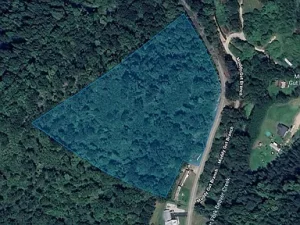
Approximately 9 Acres of Kentucky Land
The property includes approximately 9 acres of land.
For someone accustomed to suburban properties with small lots, nine acres represents a dramatically different type of ownership experience. The additional space can provide privacy and flexibility, although the actual usability of the acreage depends on terrain, access, drainage, vegetation, boundaries, and other physical characteristics.
Potential uses for rural acreage can include:
- Gardening
- Outdoor recreation
- Wildlife observation
- Personal trails
- Small-scale agricultural activities
- Hobby projects
- Additional storage
- Future construction
- Private outdoor space
- A rural homestead concept
Any agricultural, livestock, construction, commercial, rental, or other specialized use should be verified with local authorities before being assumed to be permitted.
The listing does not provide detailed information about the property’s topography, fencing, outbuildings, pasture condition, timber, or specific agricultural features. Buyers should therefore inspect the acreage personally and determine how much of the nine acres is practically usable.
The Existing 1,200-Square-Foot House
The property includes an existing house that the listing describes as approximately 1,200 square feet.
The home is reported as having one bedroom and one full bathroom. The primary bedroom, kitchen, and living room are listed on the first level, creating a single-level configuration.
The listing also identifies wood flooring and a block foundation.
The house is constructed with Masonite materials and is classified as a single-family residence.
Although the listing describes the house as approximately 1,200 square feet, the detailed Zillow facts do not report a finished square footage figure. Buyers should therefore verify the actual dimensions and usable interior area during due diligence.
The difference between the general listing description and the detailed property data is another reason an inspection and verification process is important.
A Home in Rough Condition
The property’s greatest challenge is also one of its biggest potential opportunities.
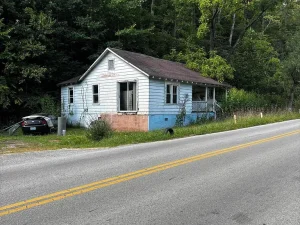
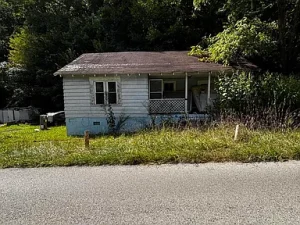
The house is explicitly described as being in rough condition.
For a buyer looking for a move-in-ready home, this could be a significant disadvantage. For a contractor, experienced renovator, or investor looking for a rural rehabilitation project, however, the same condition could create an opportunity to purchase land at a low entry price and determine whether the existing structure can be restored.
The cost of rehabilitation can vary enormously depending on what is discovered.
A thorough inspection should examine the foundation, framing, roof, exterior walls, windows, doors, electrical system, plumbing, heating and cooling systems, kitchen, bathroom, flooring, insulation, moisture intrusion, and other major components.
Because the house has a block foundation, the foundation should receive particular attention during an inspection. Signs of movement, water intrusion, cracking, or deterioration could materially affect the renovation budget.
Why Due Diligence Is Essential
A property priced at $22,000 can be appealing because the initial financial commitment appears relatively small. However, low-cost rural properties can involve hidden costs that are not immediately visible in a listing.
Before purchasing, buyers should investigate:
- Property boundaries
- Legal access
- Road frontage
- Utility connections
- Water service
- Sewer options
- Septic feasibility
- Electrical service
- Structural condition
- Roof condition
- Foundation condition
- Property taxes
- Zoning
- Building restrictions
- Flood risk
- Easements
- Mineral rights
- Title condition
- Survey information
- Insurance availability
The listing states that public water is available, but sewer is listed as none.
That distinction is especially important.
Public Water but No Sewer
One of the most significant utility details is that the property has public water but no sewer service listed.
Public water can be an advantage because it may eliminate the need for a private well. However, the lack of sewer means the buyer needs to determine how wastewater will be handled.
Depending on local regulations and site conditions, a private septic system could potentially be an option. However, buyers should never assume a septic system can be installed simply because there is acreage available.
Soil conditions, setbacks, slope, groundwater, property boundaries, existing improvements, and local health department requirements can all affect septic feasibility.
Before purchasing, a buyer should determine whether the property has an existing septic system, whether it is functioning, whether it has been abandoned, and whether a new system can legally be installed.
A professional septic evaluation or site assessment may be worthwhile.
Potential Renovation Opportunity
The house’s rough condition may make it particularly relevant to renovation-minded buyers.
A renovation project could potentially transform the existing residence into a comfortable rural home, provided that the structure is economically feasible to restore.
A sensible renovation process would begin with the structure rather than cosmetic improvements.
The first priorities should typically include determining whether the foundation, roof, framing, electrical, plumbing, and major systems can be repaired.
Only after the major structural and safety issues have been addressed should a buyer focus heavily on finishes such as paint, flooring, cabinetry, lighting, and decorative improvements.
Because the property already has a one-bedroom, one-bathroom layout, the buyer should also evaluate whether the existing floor plan is suitable for the intended use.
Wood Flooring and Interior Character
The listing identifies wood flooring as an interior feature.
Older rural properties can sometimes contain materials that add character to a future renovation. Wood flooring can potentially be restored, refinished, repaired, or replaced depending on its condition.
However, buyers should inspect the floors carefully.
Water damage, rot, structural movement, pests, or prolonged neglect can affect the condition of wood flooring and the subfloor underneath.
If the existing flooring is salvageable, restoring it could become part of a broader renovation strategy. If it is not, replacement flooring could provide an opportunity to modernize the interior.
The condition of the flooring should be evaluated alongside the foundation and moisture conditions of the property.
A One-Bedroom Rural Home
The home includes one bedroom and one full bathroom.
A one-bedroom configuration can work well for an individual, couple, weekend retreat, or smaller household. It may also make the property relevant to buyers who do not need a large residence.
The listing indicates that the bedroom, kitchen, and living room are all located on the first level.
The single-level layout could make the property easier to navigate and potentially simpler to renovate than a larger multi-story structure.
Whether the existing home can support additional bedrooms or other changes would need to be determined by a qualified professional and confirmed against local building requirements.
Potential Rural Homestead Concept
The nine acres create the possibility of a rural homestead lifestyle.
Homesteading can mean different things to different buyers. For some, it may involve gardening and growing food. For others, it could mean maintaining a small number of animals, creating outdoor recreation areas, building workshops, or simply enjoying more land and privacy.
This property could potentially serve as a starting point for such a lifestyle, subject to zoning, land conditions, and local regulations.
Nine acres may provide enough space for a variety of personal projects without requiring the extensive acreage associated with a large commercial farm.
A buyer might consider creating a large garden, establishing fruit trees, developing walking paths, or maintaining outdoor recreation areas.
Any livestock plans should be reviewed with local authorities and should take into account fencing, water access, shelter, waste management, and applicable regulations.
Potential for a Garden
One potential use for rural acreage is gardening.
A nine-acre property can provide considerably more room than a typical residential lot. A buyer could potentially dedicate a portion of the land to a vegetable garden, fruit trees, herbs, or other plants.
However, the suitability of the land for gardening depends on sunlight, soil quality, drainage, slope, and water availability.
Because public water is listed, water access could be useful for household needs and potentially for landscaping or gardening, but buyers should verify connection status, usage costs, and any restrictions.
A soil test can also help determine whether particular areas of the property are suitable for cultivation.
Outdoor Recreation and Privacy
Rural acreage can offer opportunities for outdoor recreation that are difficult to achieve on smaller residential properties.
The nine-acre setting could potentially provide space for walking, nature observation, photography, gardening, outdoor gatherings, or simply enjoying a quieter environment.
The property is described as being in a rural subdivision, and the absence of an HOA may provide greater flexibility than some planned residential communities.
However, “no HOA” does not mean there are no restrictions.
County zoning regulations, deed restrictions, building codes, environmental requirements, utility rules, and other local regulations may still apply.
Buyers should verify the rules governing their intended use before assuming that any particular improvement or activity is permitted.
No HOA: What That Means
The property is listed as having no homeowners association.
For many rural buyers, this can be attractive.
HOA-free properties may provide greater freedom regarding exterior projects, landscaping, storage, and other aspects of property use. Nevertheless, buyers should distinguish between HOA restrictions and government regulations.
Even without an HOA, a property may still be subject to zoning requirements, setbacks, building permits, septic regulations, access requirements, and other laws.
The absence of an HOA should therefore be considered a benefit, but not as a guarantee of unrestricted land use.
Rural Kentucky Location
The property is located in Bevinsville, Kentucky.
A rural Kentucky setting can appeal to buyers seeking a lifestyle away from dense urban development. Eastern Kentucky is known for its mountainous and rural landscapes, and properties in smaller communities can offer a different pace of life from major metropolitan areas.
For someone considering relocation, the surrounding area should be evaluated based on employment, healthcare, shopping, schools, transportation, internet availability, recreation, and access to larger communities.
Rural living can offer peace and space, but it can also require more planning for everyday services.
The best way to evaluate the location is to visit the property at different times and understand how long it takes to reach the services that matter most to the buyer.
A Possible Investment Angle
The property may attract investors because of its low asking price and large acreage.
However, investors should be especially cautious about assuming that the property will automatically produce a profit.
An investment analysis should begin with the value of the land, followed by a realistic estimate of the cost to rehabilitate the house.
If the structure requires extensive repairs, renovation costs could quickly exceed the original purchase price.
An investor should calculate:
- Acquisition cost
- Closing expenses
- Inspection costs
- Survey costs
- Utility expenses
- Renovation costs
- Contractor labor
- Materials
- Septic-related expenses
- Insurance
- Property taxes
- Ongoing maintenance
- Potential resale value
Only after those figures are established can a buyer determine whether the property represents an attractive investment.
Could the House Be Rehabilitated?
The central question for many prospective buyers will be whether the existing house can realistically be restored.
The answer depends on the actual condition of the structure.
If the foundation, framing, roof, and major systems are fundamentally sound, renovation may be possible.
If significant structural damage exists, the economics could change dramatically.
The buyer should therefore avoid making a renovation decision based solely on photographs or listing descriptions.
An experienced contractor or home inspector can provide a much more reliable assessment of the structure.
The cost of a professional evaluation can be small compared with the potential cost of discovering major problems after closing.
The Possibility of Building Something New
Another interesting aspect of owning approximately nine acres is the possibility that the land could eventually support additional construction.
Whether a new home, workshop, garage, cabin, or other structure can be built depends on local zoning, setbacks, utility availability, access, septic feasibility, permits, and other requirements.
The listing does not state that a new residence is approved, so buyers should not assume that construction is automatically permitted.
However, the acreage gives a buyer more physical space to explore potential future uses than a small residential lot would provide.
A buyer interested in new construction should speak with the relevant county offices and qualified professionals before relying on this possibility.
Evaluating the Land Before Closing
Land should be evaluated as carefully as the house.
A nine-acre parcel can contain areas that are easy to access and other portions that may be steep, wooded, wet, or otherwise difficult to use.
During a property visit, buyers should examine the terrain and identify:
- Level areas
- Steep slopes
- Drainage patterns
- Existing roads
- Driveway conditions
- Clearing
- Vegetation
- Water flow
- Potential building sites
- Boundary markers
- Utility locations
A professional survey can help confirm the exact property boundaries.
This is particularly important for buyers considering fencing, construction, agricultural use, or other improvements.
Understanding the Financial Opportunity
The listing reports an annual tax amount, although the supplied detailed property information does not provide a specific annual figure.
Prospective buyers should obtain current tax information before closing.
Property taxes are only one part of the long-term ownership cost.
Insurance, utilities, maintenance, repairs, land management, and potential renovation expenses should all be included in a complete budget.
For a property with a $22,000 asking price, it can be tempting to focus almost entirely on the purchase amount. A more useful approach is to calculate the total cost required to achieve the buyer’s desired end result.
Who Could Benefit From This Property?
This property may be most suitable for buyers who are comfortable with uncertainty and willing to investigate a renovation or land project.
Potential buyers could include:
- Experienced contractors
- Renovation enthusiasts
- Rural property seekers
- Buyers looking for acreage
- Small-scale homesteaders
- Land investors
- Buyers seeking a private retreat
- Buyers interested in a rehabilitation project
It may be less suitable for someone who needs a move-in-ready residence immediately.
The property’s rough condition means that patience, budgeting, and professional due diligence are particularly important.
A Practical Due-Diligence Checklist
Before making an offer or completing the purchase, a buyer should consider working through a detailed checklist.
House Condition
Have the foundation, roof, structure, electrical, plumbing, heating, flooring, windows, and other major components inspected.
Utilities
Confirm the status of public water and determine how wastewater is currently handled.
Septic Feasibility
If there is no sewer service, determine whether an existing or new septic system is possible and compliant.
Land Boundaries
Verify the nine-acre size and property boundaries through appropriate records or a survey.
Access
Confirm legal access to the property and investigate the condition of the driveway or road connection.
Zoning
Verify current zoning and determine what residential, agricultural, recreational, or construction uses are allowed.
Title
Conduct appropriate title and lien research before closing.
Insurance
Determine whether homeowners or rural property insurance is available and what it will cost.
Renovation Costs
Obtain contractor estimates before assuming the house can be economically restored.
Future Plans
If you intend to build, add outbuildings, keep animals, or operate a business, confirm those uses with the appropriate authorities first.
The Difference Between Cheap and Affordable
A $22,000 property can be cheap without necessarily being affordable.
This distinction is important.
A cheap property has a low purchase price.
An affordable property has a total cost that fits the buyer’s financial resources.
For this property, the difference could depend on the renovation budget.
If the house requires modest improvements, the low acquisition cost could potentially create an attractive opportunity.
If the property requires major structural work, new utility systems, extensive plumbing or electrical repairs, and significant renovation, the total investment could become much larger.
That is why careful due diligence is particularly important with very low-priced properties.
Final Thoughts on This 9-Acre Kentucky Opportunity
This $22,000 property in Bevinsville, Kentucky, offers a combination that is increasingly difficult to ignore for buyers searching for affordable rural real estate: approximately nine acres of land and an existing house with roughly 1,200 square feet of described living space.
The property includes one bedroom, one full bathroom, a first-level kitchen and living room, wood flooring, a block foundation, public water, and no HOA. The rural setting and acreage could provide opportunities for recreation, gardening, privacy, or a future homestead concept, depending on local regulations and the actual characteristics of the land.
The major consideration is the condition of the house. The listing describes the residence as being in rough condition, meaning this should be approached as a project rather than a move-in-ready property.
The lack of listed sewer service is another critical factor. Buyers should investigate septic options and confirm whether wastewater can be handled legally and economically.
For a contractor, experienced renovator, land investor, or buyer looking for an affordable rural project, the property could be worth investigating. The nine-acre parcel provides significantly more space than a typical residential lot, while the existing structure creates the possibility of rehabilitation if the economics make sense.
Ultimately, the property’s value will depend on much more than the $22,000 asking price. Buyers should evaluate the condition of the home, the usability of the acreage, utility arrangements, septic feasibility, access, zoning, title, taxes, insurance, and the total cost of achieving their intended use.
For someone prepared to do the necessary research and willing to take on a challenging rural property, this Kentucky opportunity offers an intriguing combination of acreage, an existing residence, and a low initial asking price.
Listed on Zillow.