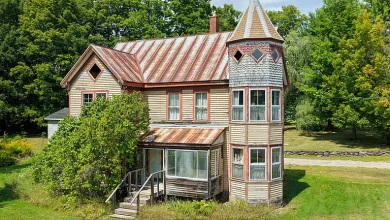
7.16 Acres Lot
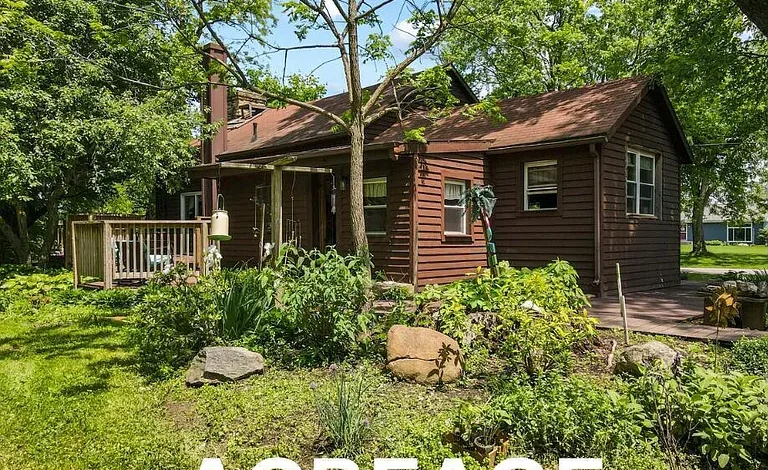
Historic Cape Cod Home on 7.16 Wooded Acres With Ponds and Barns
A Unique Blend of History, Privacy, and Opportunity
Properties that combine historic character, acreage, natural beauty, and useful outbuildings are becoming increasingly difficult to find. In the Granville, Ohio area, this distinctive Cape Cod home offers an opportunity to own a property that feels connected to the past while still providing several modern conveniences.
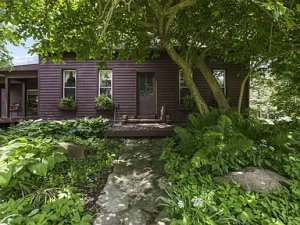
Built in 1920, the approximately 1,646-square-foot home sits on 7.16 wooded acres and features two bedrooms and one full bathroom. The property also includes two ponds, a historic turn-of-the-century bank barn, a milkhouse or wood shop, and a two-car barn with a concrete floor and electricity. These additional structures significantly expand the possibilities beyond the main residence.
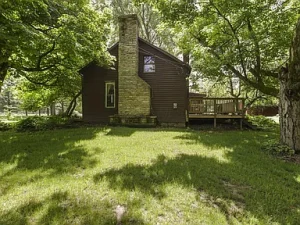
The home itself combines original woodwork, wood tongue-and-groove flooring, exposed beams, an updated kitchen, newer windows, a newer furnace, first-floor laundry, and a wood-burning fireplace. A replica of an 1880s hand-built limestone chimney adds a particularly distinctive architectural feature and creates an inviting atmosphere for evenings at home.
The property is scheduled to be sold at a live, on-site auction on September 19, 2026. The auction format makes this an especially interesting opportunity for buyers looking for land, a historic home, hobby-farm potential, workspace, or a property that could support a small business, subject to applicable regulations and approvals.
Seven Acres of Wooded Privacy
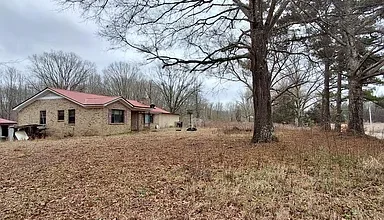
One of the most compelling features of this property is its 7.16 acres of wooded land.
Acreage provides something that is increasingly valuable in residential real estate: privacy. Instead of being surrounded by closely spaced homes, this property offers a natural environment where trees, water, open areas, and historic structures contribute to a more secluded setting.
The wooded landscape can provide shade, wildlife habitat, seasonal scenery, and opportunities for outdoor recreation. Depending on the owner’s goals, portions of the property could potentially be used for gardening, recreation, nature observation, outdoor work, or simply enjoying the peaceful surroundings.
For buyers who are tired of conventional subdivision living, a property of this size can offer a very different lifestyle.
The acreage also gives the property an investment in land as well as a residence. While buyers should never assume that future development or subdivision will be permitted, the size of the parcel creates possibilities worth investigating with local authorities.
A Charming Cape Cod Home
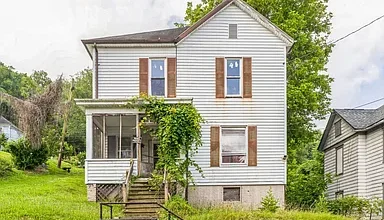
The main residence is a Cape Cod-style single-family home built in 1920.
Cape Cod architecture is known for its practical proportions, traditional appearance, and timeless appeal. Historic homes of this era can offer details and craftsmanship that are difficult to reproduce in modern construction.
This residence retains elements of its historic identity while incorporating several updates.
The interior includes wood flooring, original woodwork, exposed beams, and a wood-burning fireplace. These features create an atmosphere that is very different from a newly constructed home with standardized finishes.
At the same time, the property has been updated in several important areas, including the kitchen, windows, and furnace. The combination allows a new owner to enjoy historic character without necessarily having to start with a completely untouched restoration project.
Original Woodwork and Historic Character
For buyers who appreciate older homes, original woodwork can be one of the most valuable aesthetic features.
Historic woodwork can provide a sense of craftsmanship and personality that is often missing from newer construction. In this home, original wood details work together with exposed beams and wood flooring to reinforce the property’s early-20th-century character.
Rather than creating a completely modern interior, the existing features offer an opportunity to preserve the home’s history while making additional improvements over time.
A future owner could continue updating the property in a way that respects its architectural character. Thoughtful restoration could include maintaining original wood features, improving energy efficiency, upgrading selected fixtures, and modernizing spaces without removing the details that make the house distinctive.
An Updated Kitchen
The kitchen has been updated, giving the home an important modern element.
For a historic property, the kitchen often becomes one of the most important areas to evaluate because contemporary homeowners typically expect functionality that reflects modern lifestyles.
An updated kitchen can make everyday living more convenient while still allowing the surrounding historic elements to remain the focus.
The combination of a modernized kitchen with original woodwork and exposed beams creates the potential for a particularly attractive contrast between old and new.
First-Floor Laundry
First-floor laundry is another practical feature.
For a smaller home with one-and-a-half levels, having laundry conveniently located on the first floor can make everyday living easier. It can also be beneficial for buyers who prefer to avoid carrying laundry between floors.
This feature reinforces the idea that the property can function as a comfortable full-time residence rather than simply serving as a seasonal retreat.
Newer Windows and Furnace
The property also benefits from newer windows and a newer furnace, according to the listing.
These updates are particularly relevant when evaluating an older home. Windows and heating equipment can have a significant impact on comfort, operating costs, and maintenance planning.
The home uses forced-air heating, providing a conventional heating system for the residence.
Prospective buyers should still inspect the condition and age of all mechanical systems and obtain professional opinions where appropriate. Newer does not necessarily mean new, and understanding the remaining useful life of major systems is an important part of evaluating any older property.
The Wood-Burning Fireplace
The wood-burning fireplace is one of the home’s most appealing lifestyle features.
There is something naturally inviting about a fireplace in a historic country home. During colder Ohio evenings, a fireplace can create a warm focal point for family gatherings, reading, conversation, or quiet relaxation.
The property’s replica limestone chimney makes this feature even more distinctive.
The chimney is described as a replica of an 1880s hand-built limestone chimney, adding historical inspiration to the home while complementing its older architectural character.
Before using any fireplace or chimney, buyers should have the entire system professionally inspected, including the chimney, flue, fireplace structure, and surrounding components.
A Replica Limestone Chimney With Historic Inspiration
The limestone chimney is an especially memorable feature because it connects the property to an earlier era of American rural architecture.
Hand-built limestone chimneys were practical architectural elements in many historic homes and farm properties. Recreating that style gives this residence a visual connection to the past while maintaining the advantages of a more contemporary structure.
For buyers who enjoy historic architecture, details such as this can be a major reason to choose an older property over a conventional modern house.
Two Ponds Add Natural Appeal
The property includes two ponds, creating another major attraction.
Water features can transform an acreage property by adding scenery, wildlife habitat, recreational possibilities, and visual interest.
The ponds may provide opportunities for nature watching, photography, relaxing outdoors, or other recreational activities depending on their condition, depth, water quality, and applicable regulations.
For someone seeking a peaceful rural retreat, having two ponds on the property can make the land feel considerably more special.
Potential buyers should investigate whether the ponds are natural or constructed, their maintenance history, drainage characteristics, water levels, and any applicable environmental considerations.
A Turn-of-the-Century Bank Barn
The property also features a turn-of-the-century bank barn.
Historic barns are increasingly appreciated for their architectural character, versatility, and connection to rural history. A bank barn can be particularly useful because its design often provides different access points and multiple levels.
This barn could potentially serve agricultural, storage, workshop, hobby, or event-related purposes depending on its condition and local regulations.
For a buyer interested in preserving historic structures, the barn could become one of the property’s most valuable character features.
Restoration could potentially focus on preserving the existing structure while improving safety and usability.
Milkhouse and Wood Shop
In addition to the main barn, the property includes a milkhouse or wood shop.
This type of structure adds another layer of versatility.
A wood shop could be useful for woodworking, crafts, equipment maintenance, hobbies, or small-scale production. A milkhouse reflects the property’s agricultural history and could potentially be restored, repurposed, or maintained as a historic feature.
Multiple outbuildings can be especially valuable for buyers who need workspace but do not want to sacrifice space inside the main home.
A Two-Car Barn With Electricity
Another major feature is a two-car barn with a concrete floor and electricity.
This structure provides practical space for vehicles, tools, equipment, recreational items, workshop activities, and storage.
The concrete floor can make the building easier to maintain and use, while electricity increases its functionality.
For buyers interested in operating a hobby business, workshop, contracting operation, craft business, or other small enterprise, this kind of outbuilding could potentially be useful.
However, anyone planning commercial activity should confirm zoning, parking, signage, licensing, traffic, building-code, and other requirements before assuming that business use is permitted.
Potential for a Small Business
The listing specifically highlights the property as a potential location for a small business.
The combination of acreage, privacy, a residence, multiple outbuildings, parking, electricity in the barn, and workspace possibilities creates an interesting setup for certain types of businesses.
Depending on local regulations, possible concepts could include a woodworking operation, agricultural-related business, workshop, creative studio, specialty production, equipment-based business, or other low-impact enterprise.
The property should not be considered automatically approved for commercial use. Buyers should contact the appropriate local zoning and planning authorities before developing a business plan.
Still, the potential is noteworthy because many residential properties simply do not provide the combination of land and accessory structures necessary for a home-based business.
A Property for Hobby Farmers
The acreage and historic agricultural structures could also appeal to hobby farmers.
Seven acres can provide space for gardens, small-scale agricultural activities, animals, orchards, or other rural pursuits, depending on zoning and soil conditions.
The historic barn and additional structures could potentially support agricultural storage or equipment needs.
Buyers considering livestock should verify zoning requirements, animal regulations, fencing requirements, water availability, manure management rules, and any applicable setbacks.
For someone who wants to transition toward a more self-sufficient lifestyle, the property offers an intriguing starting point.
A Private Country Retreat
Not every buyer will want to operate a farm or business.
For some, the greatest value will simply be privacy.
A wooded 7.16-acre property with two ponds, historic structures, and a character-filled home can serve as a private retreat from the pace of modern life.
The natural surroundings provide opportunities to spend more time outdoors, enjoy seasonal changes, and create a lifestyle centered around the property itself.
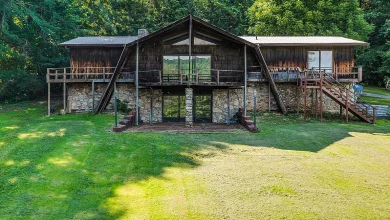
The deck provides an outdoor location for relaxing, dining, or enjoying the wooded surroundings.
A Potential Weekend Getaway
Although the home can function as a full-time residence, it could also serve as a weekend or vacation retreat.
Its location in central Ohio, combined with acreage and rural surroundings, could appeal to buyers who want a place where they can disconnect from a busy schedule.
A weekend at the property could include walks through the woods, time near the ponds, working on a hobby project, enjoying the fireplace, restoring the barn, gardening, or simply relaxing outdoors.
The historic architecture adds to the sense that the property is more than an ordinary second home.
Investment Potential in Land and Improvements
Real estate investors may also find several aspects of the property worth studying.
The investment opportunity is not necessarily limited to the house. The land, ponds, barns, workshop areas, and other structures all contribute to the property’s overall utility.
A buyer could potentially improve the residence, restore the historic structures, enhance the land, or develop an appropriate business use.
However, investment decisions should be based on verified numbers rather than assumptions.
Before bidding, an investor should estimate acquisition costs, renovation expenses, insurance, taxes, maintenance, utilities, potential income, financing costs, and resale value.
The auction format also makes it especially important to establish a maximum bid before the event.
Understanding the Auction Process
The property will be sold through a live, on-site auction on Saturday, September 19, 2026, at 10:00 AM.
Unlike a conventional real estate transaction where buyers negotiate directly with a seller, an auction requires bidders to understand the specific rules established for the sale.
Anyone considering participation should obtain and carefully review the complete auction terms before attending.
Important questions may include:
- What deposit is required from the winning bidder?
- Is the sale subject to any minimum or reserve price?
- What are the accepted forms of payment?
- What closing timeline applies?
- Are financing contingencies permitted?
- Is the property being sold as-is?
- What title information is available?
- Are there buyer premiums or additional auction fees?
- What inspections are permitted before the auction?
- Are there any easements or deed restrictions?
- What personal property, if any, is included?
Understanding these details in advance can help bidders participate responsibly.
The Meaning of the $1 Estimated Price
The listing displays an estimated price of $1 because the property is being marketed through an auction.
This should not automatically be interpreted as a realistic expectation that the entire property will sell for one dollar.
Auction pricing works differently from a traditional asking price. The final sale price is determined through the auction process and bidding activity, subject to the official terms of the sale.
The $1 figure therefore functions primarily as an auction-related listing indicator rather than a conventional valuation.
Prospective buyers should research comparable properties, evaluate the land and improvements, estimate renovation costs, and determine what the property is worth to them before bidding.
Due Diligence Is Essential
Older acreage properties with multiple structures require careful inspection.
The residence was built in 1920, and the additional barns and outbuildings are also historic or older structures. Their character is part of the appeal, but age also means buyers should understand maintenance requirements.
A thorough evaluation should consider:
- Structural condition of the home
- Foundation and drainage
- Roof condition
- Electrical systems
- Plumbing
- Well condition and water quality
- Private sewer or septic system
- Heating system
- Windows
- Fireplace and chimney
- Barn structure
- Outbuilding roofs
- Concrete floors
- Electrical service to outbuildings
- Pond conditions
- Property boundaries
- Easements and access
- Zoning
- Potential business uses
- Property taxes
- Insurance requirements
Professional inspections and appropriate legal and financial advice can help buyers understand the risks before committing to an auction purchase.
Well Water and Private Sewer
The property uses a private well for water and a private sewer system.
These systems are common in rural properties but require different maintenance and due diligence compared with municipal utilities.
A buyer should verify the condition of the well, water quality, well location, production capacity, and available records.
The private sewer or septic system should also be evaluated to determine its condition, capacity, location, and compliance with applicable requirements.
These systems are particularly important when considering future renovation, additional bedrooms, business use, or other changes that could increase demand on the property.
No Homeowners Association
The listing indicates that there is no homeowners association.
For many acreage buyers, the absence of an HOA can be a significant advantage.
Without a traditional HOA structure, owners may have greater flexibility regarding outdoor activities, property improvements, landscaping, equipment, and the use of accessory structures.
That does not mean the property is unrestricted. Local zoning, building codes, environmental rules, deed restrictions, and other regulations may still apply.
Nevertheless, the lack of an HOA can make rural property ownership more appealing to buyers who value independence.
Annual Property Taxes
The listed annual property tax amount is approximately $4,250.
Taxes are an important part of the long-term ownership calculation, particularly for buyers considering an acreage property with multiple structures.
Prospective buyers should verify the current tax amount, assessment, exemptions, and any changes that could occur after a sale.
When calculating the overall cost of ownership, taxes should be considered alongside insurance, utilities, maintenance, repairs, land management, and potential renovation expenses.
Preserving the Character of the Property
One of the most attractive possibilities here is the ability to preserve and enhance a historic property rather than replacing its character with generic modern finishes.
The original woodwork, exposed beams, wood floors, fireplace, limestone chimney design, historic barn, and additional structures all contribute to a distinctive identity.
A thoughtful owner could focus on improvements that make the property more comfortable and efficient while protecting its historical character.
This could include carefully updating mechanical systems, improving insulation where appropriate, maintaining original wood details, repairing historic structures, and creating modern functionality without removing the features that make the property special.
Why This Property Stands Out
There are many homes on the market with two bedrooms and one bathroom.
There are many properties with seven acres.
There are also properties with barns and ponds.
What makes this opportunity unusual is the combination of all these characteristics in one setting.
A historic Cape Cod home, 7.16 wooded acres, two ponds, multiple outbuildings, a bank barn, wood shop, two-car barn, updated kitchen, newer furnace, newer windows, original woodwork, exposed beams, and a wood-burning fireplace create a property with considerable personality.
It is difficult to replicate that combination through a standard new construction project.
A Property With Multiple Possible Futures
Perhaps the most interesting aspect of this property is its flexibility.
One buyer may see a historic country home.
Another may see a hobby farm.
A different buyer may see a workshop and small-business opportunity.
An investor may see land with several improvement possibilities.
A family may see a private retreat.
A preservation-minded buyer may focus on the historic structures and architectural details.
These different possibilities demonstrate why acreage properties can be so appealing. The property does not have to serve only one purpose.
Final Thoughts
This historic property in the Granville, Ohio area offers an unusual combination of character, acreage, water features, outbuildings, and modern updates.
The approximately 1,646-square-foot Cape Cod home provides two bedrooms and one full bathroom, while features such as original woodwork, wood flooring, exposed beams, an updated kitchen, first-floor laundry, newer windows, newer furnace, and a wood-burning fireplace create a comfortable balance between historic charm and modern convenience.
Outside, the approximately 7.16-acre wooded setting provides privacy and natural beauty. Two ponds add visual and recreational interest, while the turn-of-the-century bank barn, milkhouse or wood shop, and two-car barn with concrete floor and electricity create additional possibilities.
For buyers interested in rural living, historic homes, hobby farming, workshops, small businesses, outdoor recreation, or simply having more space and privacy, this property deserves careful consideration.
The upcoming live, on-site auction on September 19, 2026, adds an important opportunity but also makes preparation essential. Anyone planning to bid should review the official auction terms, inspect the property, investigate the well and private sewer system, evaluate the condition of the home and outbuildings, confirm zoning and potential business uses, and establish a realistic maximum budget before participating.
The estimated $1 price should be viewed in the context of the auction format rather than as a conventional asking price. The eventual sale price will depend on the auction process and its terms.
Ultimately, this is the kind of property that appeals to buyers who want more than a standard house. It offers land, history, privacy, water, workspace, storage, and the opportunity to create a lifestyle around a distinctive piece of property.
For someone willing to appreciate the character of an older home and explore the possibilities offered by seven wooded acres, this could be an especially intriguing opportunity in central Ohio.
Listed on Zillow.