Hand-cut stone cellar
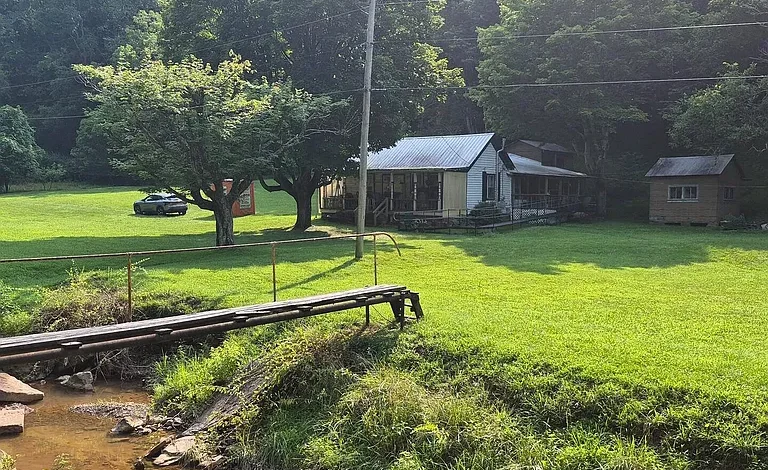
67-Acre West Virginia Homestead With Historic Farmhouse, Creek and Hunting Potential
There are properties that are designed primarily for everyday residential living, and then there are properties that offer something much broader: land, privacy, recreation, natural surroundings, and the opportunity to create a lifestyle around the property itself. This 67-acre homestead in Cedarville, West Virginia, falls firmly into the second category.
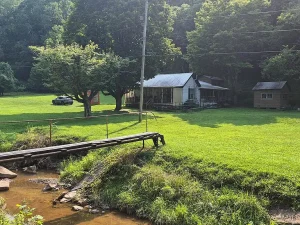
Listed for $140,000, this property combines an older circa-1900 farmhouse with approximately 67 acres of mostly wooded hillside, a small creek, covered porches, a hand-cut stone cellar, additional outbuildings, and a private well and septic system. The approximately 1,100-square-foot home includes three bedrooms and one full bathroom, along with a kitchen, dining room, living room, and utility area.
The residence is described as a fixer-upper in need of TLC, so this is not a conventional move-in-ready property. Instead, it represents an opportunity for someone who understands rural real estate, renovation projects, recreational land, hunting properties, or private country retreats.
The listing specifically suggests that the property could work well as a quiet getaway, hunting camp, or recreation property. With 67 acres, there is also substantial land to explore, manage, improve, and potentially use for additional recreational or residential purposes, subject to zoning, access, septic requirements, permits, and other local regulations.
For buyers searching for affordable acreage in West Virginia, the combination of a historic home, wooded land, creek frontage, outbuildings, and proximity to outdoor recreation makes this property particularly interesting.
A Large 67-Acre Rural Property
The centerpiece of this opportunity is the land itself.
Approximately 67 acres provide considerably more room than the typical residential parcel. Instead of having a small backyard surrounded by neighboring houses, the owner can enjoy a much larger rural environment consisting primarily of wooded hillside.
Large acreage can support many different lifestyles. Some buyers may be interested in hunting and wildlife observation. Others may want a weekend retreat, private campground, recreational base, hiking property, or future homestead.
The land is described as wooded and hilly, which creates a natural environment for wildlife and outdoor recreation. The listing also describes the hunting as excellent.
For anyone considering the property primarily for hunting, however, local hunting regulations, seasons, licensing requirements, access, habitat conditions, neighboring properties, and any restrictions should be independently verified.
The property’s size also creates a sense of privacy that is increasingly difficult to find at an accessible price point.
A Circa-1900 West Virginia Home
The existing house dates to approximately 1900, giving the property more than a century of history.
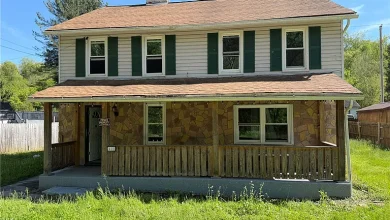
Older rural homes often have a character and construction style that differ significantly from modern housing. This residence is described as a traditional-style home with a frame structure, wood siding, and a metal roof.
The house contains approximately 1,100 square feet of living space. Within that footprint are three bedrooms, one full bathroom, a kitchen, dining room, living room, and utility area.
Because the home is identified as a fixer-upper requiring TLC, buyers should approach the property as a renovation opportunity rather than assume that the existing condition meets modern expectations.
A comprehensive inspection should evaluate the roof, foundation, framing, electrical system, plumbing, heating, insulation, windows, doors, floors, septic system, well, and other major components.
For the right buyer, restoring an older rural home can be a rewarding project. The goal could be to preserve its traditional character while improving comfort, safety, energy efficiency, and functionality.
A Flexible Three-Bedroom Floor Plan
The three-bedroom layout provides a useful foundation for renovation.
The home includes one full bathroom, a kitchen, dining room, living room, and utility area. Having separate dining and living areas allows a future owner to maintain a more traditional floor plan rather than needing to create everything around one large open room.
A three-bedroom configuration can also support several different uses.
A buyer intending to live at the property full time could use two bedrooms for household members and reserve the third as an office, guest room, or hobby space.
A recreational owner could use the bedrooms for family and guests during weekends or hunting seasons.
Someone planning a rural retreat could potentially redesign portions of the interior to create a more comfortable gathering area while retaining sleeping accommodations.
Any structural alterations, additions, or changes to room configuration should be evaluated by qualified professionals and completed in accordance with applicable building requirements.
The Hand-Cut Stone Cellar
One of the property’s most distinctive architectural features is its hand-cut stone cellar.
Stone cellars are strongly associated with older rural homes and can provide a visual connection to the property’s history. The listing also identifies a cellar house attached to the rear of the home.
From a restoration perspective, the cellar deserves careful inspection.
Stone foundations and cellars can perform well for decades, but water infiltration, drainage, mortar deterioration, moisture, ventilation, structural movement, and grading should all be examined.
A professional inspection can help determine whether the cellar is primarily a historic feature, functional storage area, or whether it requires significant maintenance.
For buyers interested in historic homes, however, the hand-cut stone construction adds a layer of authenticity and personality that is difficult to reproduce in new construction.
Covered Porches and Outdoor Living
The home includes a couple of covered porches, another feature that fits naturally with a rural West Virginia lifestyle.
Covered porches can provide a comfortable transition between indoor and outdoor spaces. They can become places for morning coffee, relaxing after a day of working on the land, watching wildlife, or simply enjoying the surrounding scenery.
Because the property has wooded views and a private rural setting, the porch can become an especially important part of the home’s lifestyle.
A future owner could furnish the porch with outdoor seating, create a small dining area, or use it as a sheltered gathering space.
The existing porch structures should be inspected for structural integrity, roofing condition, decking condition, railings, and water drainage.
A Small Creek Adds Natural Appeal
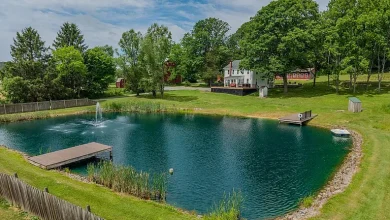
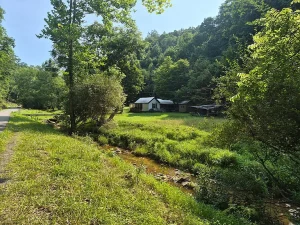
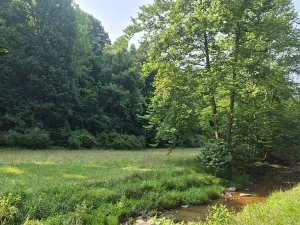
Another significant feature is the small creek flowing through the front portion of the property.
A creek can enhance the landscape and create an attractive natural setting. Moving water can also contribute to wildlife habitat and provide another element of visual interest.
For recreational property owners, a creek can make the land feel more secluded and connected to nature.
At the same time, buyers should carefully investigate water-related considerations. The exact location and boundaries of the creek should be confirmed, along with any floodplain designations, drainage patterns, erosion concerns, access rights, and applicable environmental or construction restrictions.
The presence of a creek should therefore be viewed as both a lifestyle feature and a due-diligence consideration.
Wooded Hillside and Hunting Opportunities
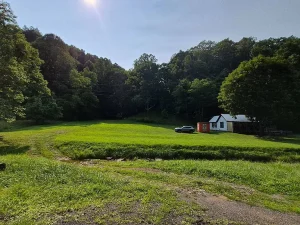
The majority of the 67 acres consists of wooded hillside.
For outdoor enthusiasts, this is arguably one of the property’s greatest advantages.
Wooded acreage can provide opportunities for hiking, wildlife observation, hunting, photography, nature study, and recreational exploration. Depending on the terrain and existing trails, a future owner might also develop walking paths or designated recreation areas.
The listing describes the hunting as excellent, making the property particularly interesting for buyers searching for a private hunting camp.
A hunting-oriented owner may value the ability to spend the night on the property rather than traveling back and forth from a distant residence.
The existing home could potentially serve as a base for outdoor activities after renovation, while the surrounding acreage provides the larger recreational environment.
Before purchasing for hunting purposes, prospective buyers should confirm the property’s legal hunting conditions, local regulations, game seasons, and any restrictions affecting hunting structures or equipment.
Additional Buildings and Outbuildings
The property includes more than just the main house.
Additional structures include an older garage or shop and a wash house. The listing also references a shed.
These buildings can be valuable because rural property owners often need storage and workspace beyond what a traditional house provides.
An older garage or shop could potentially serve as a workshop, equipment storage area, tool room, or recreational storage facility, depending on its structural condition.
The wash house adds another piece of historic rural character.
The actual condition and usability of each structure should be carefully inspected. Buyers should not assume that an older outbuilding is suitable for occupancy, heavy equipment, electrical work, or other specialized uses without professional evaluation.
Potential for a Private Retreat
The property is particularly well suited to the concept of a private country retreat.
At 67 acres, there is enough land to create a sense of separation from everyday life. The wooded surroundings, creek, older farmhouse, porches, cellar, and additional buildings all contribute to the atmosphere.
A retreat does not necessarily need to be luxurious to be valuable.
For many buyers, the appeal lies in simplicity: spending weekends away from urban traffic, enjoying nature, working on the property, cooking meals with family, exploring the woods, or sitting outside in the evening.
The existing home could become the central gathering point after renovation, while the land provides opportunities for outdoor recreation.
Depending on local rules and site conditions, a buyer might also investigate whether additional cabins or structures could be developed. The listing mentions spots for additional cabins or homes, but this should be treated only as potential. Any future construction would require confirmation of zoning, parcel configuration, road access, setbacks, septic capacity, water availability, electrical service, building permits, and other requirements.
Possibility of a Hunting Camp
The listing specifically identifies a hunting camp as one of the property’s best potential uses.
This makes sense given the combination of acreage, wooded terrain, wildlife habitat, and an existing house.
A hunting camp does not necessarily need to be elaborate. After appropriate repairs, the existing residence could provide sleeping rooms, a kitchen, dining area, bathroom, and living room for a small group.
The covered porches could provide an outdoor gathering space, while the garage or shop could offer storage for equipment.
The surrounding acreage provides the larger recreational setting.
However, buyers should distinguish between the property’s current condition and its future potential. Significant work may be necessary before the home is suitable for regular occupancy.
Rural Utilities and Infrastructure
The property uses a private well and private septic system.
Private water and septic systems are common in rural West Virginia, but they require different considerations from municipal utility systems.
A well should be professionally evaluated, including water quality, flow, pump condition, pressure system, well construction, and available records.
The septic system should also be inspected and evaluated. Buyers should determine the system’s age, capacity, condition, permit history, drain field location, and compliance with applicable requirements.
The property is listed with gas heating, while the electrical service is shown without a specified amperage. This makes an electrical inspection especially important for anyone considering substantial renovation.
A modern renovation could involve new appliances, heating improvements, additional lighting, workshop equipment, or other electrical loads. A qualified electrician should determine whether the existing service is adequate or whether an upgrade would be required.
The Older Gas Well
One unusual feature of the property is an older gas well.
The listing states that the gas well is currently not in use and will convey with the property.
This is an important item for prospective buyers to investigate before closing.
Ownership, legal status, location, historical production, plugging or abandonment status, environmental considerations, mineral rights, access rights, liability, and any associated documentation should be carefully reviewed with appropriate professionals.
A buyer should not assume that an inactive gas well has no implications simply because it is not currently producing.
A title company, attorney, environmental professional, or relevant state agency may be able to provide guidance depending on the specific circumstances.
Renovation Potential
The house is clearly presented as a fixer-upper.
That can be a disadvantage for buyers looking for a turnkey residence, but it can be an advantage for someone who wants to purchase rural acreage at a lower entry price and gradually improve the home.
Renovation possibilities could include restoring original wood details, improving the kitchen, updating the bathroom, modernizing electrical and plumbing systems, improving insulation, repairing floors, upgrading heating, and improving windows and doors.
Because the property dates to approximately 1900, renovation planning should balance modern functionality with the home’s original character.
A successful restoration does not necessarily require eliminating everything old. Features such as the stone cellar, traditional layout, covered porches, wood construction, and other period details can become part of the home’s identity.
Building a More Self-Sufficient Lifestyle
Large rural acreage can also appeal to buyers interested in a more self-sufficient lifestyle.
The approximately 67 acres provide substantial space for outdoor projects, gardening, woodland management, recreation, and other rural activities.
The property’s existing structures could potentially support storage and workshops.
The land may also offer opportunities for a larger garden, depending on soil, sunlight, slope, water access, and deer pressure. Buyers interested in agricultural use should investigate soil conditions, zoning, access, and any applicable restrictions.
The steep or hilly portions of the property may be better suited to woodland and recreation than conventional agriculture.
Understanding the property’s topography is therefore essential when planning future improvements.
Proximity to Cedar Creek State Park
Location adds another layer of appeal.
The property is approximately 10 minutes from Cedar Creek State Park, according to the listing.
For outdoor enthusiasts, nearby recreational amenities can expand the possibilities beyond the property’s own 67 acres.
State park access can provide additional opportunities for hiking, fishing, camping, boating, picnicking, and enjoying nature, depending on seasonal conditions and park rules.
Having recreational resources nearby can also make the property more appealing as a weekend getaway.
Access to Glenville and Surrounding Communities
The property is approximately 20 minutes from Glenville, giving residents access to a nearby community for everyday needs.
Glenville is also home to Glenville State University, which can be relevant to buyers who value proximity to educational and community resources.
Burnsville and Interstate 79 are approximately 30 minutes away, according to the listing.
This creates an interesting balance between rural privacy and regional connectivity.
The property does not sit in an isolated wilderness with no access to nearby towns. Instead, it offers a country setting while remaining within driving distance of communities and major transportation routes.
Actual travel times can vary depending on road conditions, weather, traffic, and the exact destination.
Financial Perspective
The asking price is $140,000, which places the property in an accessible range compared with many larger-acreage rural properties.
The listing indicates approximately $127 per square foot based on the 1,100-square-foot living area.
Annual property taxes are listed at approximately $717, with a tax-assessed value of $64,300.
However, buyers should not evaluate this property based solely on the purchase price.
Because the home requires TLC, renovation expenses could represent a substantial part of the overall investment. Buyers should develop a realistic budget that includes inspection costs, repairs, materials, labor, permits, utility work, septic or well expenses, insurance, property taxes, maintenance, and contingency reserves.
For buyers paying cash, the low purchase price may provide flexibility for phased improvements. For buyers financing the property, loan availability and lender requirements should be confirmed in advance, especially because the home is described as a fixer-upper.
Potential Uses for the Property
The versatility of the acreage allows buyers to consider several possible uses.
Primary Residence
After appropriate renovation, the home could potentially serve as a full-time residence for someone seeking rural living and privacy.
Weekend Retreat
The property could become a second home where owners escape city life and spend weekends surrounded by woods and water.
Hunting Camp
The listing specifically highlights hunting as a strong potential use.
Recreational Property
Hiking, wildlife observation, outdoor projects, fishing, and other activities could become part of the property’s lifestyle.
Homestead Project
The acreage may appeal to buyers interested in gardens, woodland management, and a more self-directed rural lifestyle.
Future Development
The listing mentions possible locations for additional cabins or homes. Such possibilities must be verified through zoning, septic, utility, access, and permitting research before being considered part of the property’s value.
Important Due Diligence Before Buying
Because this is an older rural property with significant acreage, buyers should perform more extensive due diligence than they might for a conventional suburban house.
Important questions include:
- What is the current structural condition of the 1900-era home?
- Is the metal roof in good condition?
- What repairs are needed to the stone foundation and cellar?
- What is the condition of the well?
- Has the well water been professionally tested?
- What is the age and condition of the septic system?
- Is the septic system properly permitted?
- What is the condition of the electrical service?
- What exactly is the status of the inactive gas well?
- Are there mineral rights or easements associated with the property?
- Are there recorded rights-of-way?
- What portions of the land are buildable?
- Are additional cabins legally permitted?
- What restrictions apply to hunting?
- Are there floodplain areas around the creek?
- Are all outbuildings structurally sound?
- What improvements require permits?
A survey may also be worthwhile for a 67-acre property, particularly if boundaries, creek locations, access roads, easements, or future development are important to the buyer.
Why Large Acreage Can Be Valuable
One of the strongest characteristics of this property is that the purchase includes substantially more than the house.
The 67 acres provide long-term flexibility.
A buyer can renovate the home gradually while enjoying the land immediately, assuming access and safety conditions allow. Over time, the property could evolve into a more personalized retreat.
Large parcels can also provide privacy that cannot easily be created by renovating a small residential lot. There is simply more room between the house and surrounding properties.
For someone who values solitude, wildlife, outdoor recreation, and rural scenery, that privacy may be just as important as the house itself.
Property Facts at a Glance
- Asking price: $140,000
- Location: Cedarville, West Virginia
- Property type: Single-family residence
- Year built: Approximately 1900
- Bedrooms: 3
- Full bathrooms: 1
- Living area: Approximately 1,100 square feet
- Lot size: Approximately 67 acres
- Architectural style: Traditional
- Construction: Frame and wood siding
- Foundation: Fieldstone/stone
- Roof: Metal
- Heating: Gas
- Cooling: None listed
- Water: Private well
- Sewer: Private septic
- Outdoor feature: Covered porches
- Water feature: Creek
- Views: Mountain, private, scenic
- Additional structures: Older garage/shop, wash house, shed
- Basement/cellar: Hand-cut stone cellar and cellar house
- HOA: None
- Annual property tax: Approximately $717
- Tax assessed value: Approximately $64,300
- Road setting: Rural
- Recreational potential: Hunting, getaway, outdoor recreation
- Nearby recreation: Cedar Creek State Park
- Approximate nearby communities: Glenville and Burnsville
- Interstate access: I-79 approximately 30 minutes away
Final Thoughts
This Cedarville, West Virginia property is an opportunity centered around land, privacy, recreation, and character rather than simply square footage.
For $140,000, the buyer is looking at approximately 67 acres accompanied by an older three-bedroom farmhouse, a creek, wooded hillsides, covered porches, a hand-cut stone cellar, an older garage or shop, a wash house, and additional storage.
The home itself needs TLC, and that fact should remain central to any purchase decision. This is not a turnkey property. It is a project with significant potential for the right buyer.
The appeal becomes much clearer when the property is viewed as a complete rural package.
Someone looking for a quiet getaway could restore the home into a comfortable retreat. A hunter could explore its recreational possibilities. An outdoor enthusiast could use the acreage for hiking and wildlife observation. A buyer interested in rural living could gradually develop a more personalized homestead.
The small creek and wooded hillside add natural character, while the proximity to Cedar Creek State Park, Glenville, Burnsville, and I-79 provides practical regional connectivity.
The older gas well is an unusual feature that deserves careful professional review, and the private well and septic system should also receive appropriate inspections before closing.
Ultimately, this property is likely to appeal most strongly to buyers who see opportunity in acreage and are comfortable taking on an older home.
With the right planning, professional inspections, realistic renovation budgeting, and careful research into the land and existing infrastructure, the property could become a distinctive West Virginia retreat with a combination of privacy and recreational possibilities that is difficult to reproduce on a smaller residential parcel.
For buyers searching for affordable rural acreage with an existing home, hunting potential, creek scenery, historic character, and room to create something personal, this 67-acre Cedarville property deserves serious consideration.
Listed on Zillow