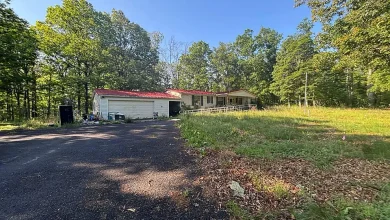
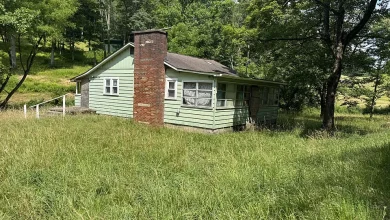
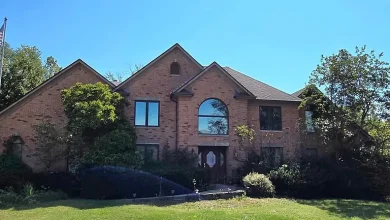
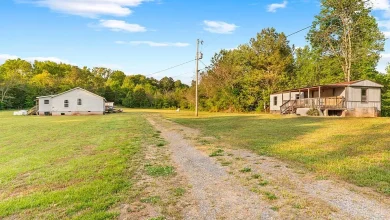
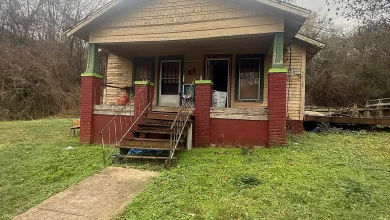
3 beds 1 baths 914 sqft
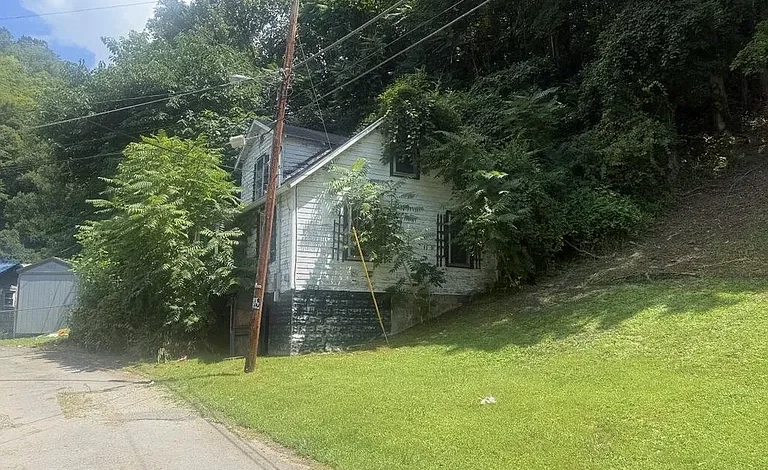
$10,000 Fixer-Upper in Matewan, West Virginia: A 3-Bedroom Home With Renovation Potential
An Affordable West Virginia Real Estate Opportunity
Finding a single-family home listed for only $10,000 is unusual in almost any real estate market. In Matewan, West Virginia, buyers looking for an affordable property with renovation potential may want to take a closer look at this three-bedroom residence.
The home offers 3 bedrooms, 1 bathroom, and approximately 914 square feet of living space on a 0.30-acre lot. Built in 1945, the property has an older character and a straightforward footprint that could provide a foundation for a renovation project.
This is not being presented as a move-in-ready luxury property. Instead, the opportunity is aimed at buyers who are willing to bring their tools, ideas, planning, and renovation experience to the project. The listing specifically highlights the potential appeal to investors, house flippers, and handy homeowners.
The property is being sold strictly in as-is condition, meaning prospective buyers should carefully investigate its current condition and independently verify the information provided in the listing.
For the right buyer, the appeal is straightforward: a low purchase price, a residential structure with three bedrooms, a full bathroom, a relatively spacious lot, public water, public sewer, and a location within the small West Virginia community of Matewan.
Property Overview
The home provides a relatively compact residential layout while maintaining three bedrooms.
Here are the key property facts:
- Asking Price: $10,000
- Location: Matewan, West Virginia
- Property Type: Single Family Residence
- Bedrooms: 3
- Bathrooms: 1
- Living Area: Approximately 914 square feet
- Lot Size: Approximately 0.30 acres
- Year Built: 1945
- Stories: One and one-half
- Basement: Unfinished
- Parking: No dedicated parking listed
- Front Porch: Yes
- Flooring: Carpet and hardwood
- Windows: Single pane
- Exterior: Wood siding
- Roof: Shingle
- Water: Public
- Sewer: Public sewer
- HOA: None listed
- Condition: Sold as-is
- Primary Appeal: Renovation and investment potential
The combination of an extremely low asking price and an existing residential structure makes this a property that may attract buyers searching for inexpensive real estate in West Virginia.
However, the low purchase price should not be interpreted as an indication that the entire project will cost only $10,000. A renovation budget could be significantly higher depending on the home’s condition.
Why the $10,000 Price Gets Attention
Price is clearly one of the most noticeable aspects of this property.
At $10,000, the home enters a category that is attractive to buyers who are specifically searching for distressed properties, fixer-uppers, renovation projects, or low-cost real estate.
For an investor, the purchase price represents only the first part of the financial calculation.
The more important question is what the total investment would be after repairs and improvements.
A buyer might need to consider the cost of:
- Structural repairs
- Roofing work
- Plumbing
- Electrical improvements
- Heating and cooling
- Flooring
- Kitchen renovation
- Bathroom renovation
- Windows
- Exterior repairs
- Painting
- Landscaping
- Appliances
- Permits
- Professional inspections
- Insurance
- Property taxes
- Financing
- Unexpected repairs
Because the home dates to 1945, a professional inspection could be particularly important before any purchase decision.
Older houses can have features and systems that require modernization, and some issues may not be visible during a casual walkthrough.
Three Bedrooms Provide Useful Flexibility
The property includes three bedrooms, which is an important feature considering its compact size.
A three-bedroom home can appeal to a range of potential buyers depending on the final condition and renovation quality.
For an owner-occupant, the bedrooms could provide space for a small family, guests, a home office, or other uses.
For an investor, three bedrooms can potentially make a renovated property more marketable than a comparable one-bedroom or two-bedroom residence, depending on local housing demand.
The existing floor plan should be carefully evaluated before renovation begins.
Rather than completely changing the structure, a buyer may be able to improve the existing layout through relatively targeted updates.
The final possibilities will depend on the home’s condition, structural configuration, local building requirements, and renovation budget.
Approximately 914 Square Feet of Living Space
The home contains approximately 914 square feet of livable space.
While this is smaller than many modern suburban houses, smaller homes can have advantages.
They can require less material for certain renovations and may have lower ongoing maintenance requirements than larger properties.
A smaller footprint can also make it easier to create an efficient floor plan.
Modern buyers often value practical spaces rather than simply large square footage. An intelligently renovated 914-square-foot house could potentially include a functional kitchen, comfortable living area, three bedrooms, and an updated bathroom.
That said, buyers should carefully inspect the existing layout and determine whether the current configuration works for their intended use.
A 0.30-Acre Lot Adds Outdoor Potential
The property sits on approximately 0.30 acres.
For a small residential property, this provides a meaningful amount of outdoor space while remaining relatively manageable.
A future owner could potentially improve the lot through landscaping, gardening, outdoor seating, or other residential uses permitted by local regulations.
The existing front porch is another feature that could contribute to the property’s curb appeal after renovation.
Outdoor areas can have a surprisingly large impact on how a renovated property feels.
Simple improvements such as landscaping, exterior painting, repaired siding, improved steps, porch maintenance, and better lighting can dramatically change the appearance of an older house.
Built in 1945 With Traditional Character
The property was built in 1945, giving it an older architectural history.
Homes from this era can have characteristics that differ significantly from newer construction.
The listing identifies wood siding, a shingle roof, hardwood and carpet flooring, and single-pane windows.
These features may require attention during renovation.
Single-pane windows, for example, may be less energy-efficient than modern window systems. Depending on their condition, a renovation plan might include repairs or replacement.
Hardwood flooring can also be an attractive feature if it is salvageable.
Rather than automatically replacing older materials, a renovator may want to determine whether existing features can be restored.
That approach can sometimes preserve character while reducing unnecessary renovation expenses.
Unfinished Basement Offers Additional Utility
The property includes an unfinished basement.
Although the listing does not identify finished living area below ground, an unfinished basement can still provide useful storage and utility space.
Before considering any conversion into finished space, buyers should determine whether the basement meets applicable requirements for occupancy.
Issues such as moisture, drainage, ceiling height, electrical service, insulation, ventilation, foundation condition, and emergency egress may influence what can legally and practically be done.
Even if the basement remains unfinished, it can still be useful for storage, mechanical equipment, or other purposes.
A professional inspection can provide a clearer understanding of its condition.
Public Water and Public Sewer
One potentially important feature is that the property has access to public water and public sewer.
For buyers evaluating affordable rural or small-town properties, utility arrangements can have a major impact on convenience and long-term costs.
Public water and sewer can simplify certain aspects of ownership compared with properties that depend entirely on private wells and septic systems.
Nevertheless, buyers should verify the current status of all utilities and determine whether service connections, repairs, or fees are required.
The listing indicates that water and sewer are available, but buyers should independently verify utility information as part of their due diligence.
No HOA Listed
The listing does not identify a homeowners association.
For some buyers, the absence of an HOA can provide greater flexibility regarding property improvements and ownership decisions.
However, the absence of an HOA does not mean that there are no local regulations.
Zoning requirements, building codes, municipal ordinances, property restrictions, and other rules may still apply.
The listing indicates that zoning is unknown, so prospective buyers should verify zoning and permitted uses directly with the appropriate local authorities.
This is especially important for anyone considering an investment strategy beyond traditional owner occupancy.
A Potential Project for House Flippers
House flippers often look for properties where improvements can significantly change the property’s market appeal.
This home could attract that type of buyer because of its very low acquisition price.
A successful flip would require much more than cosmetic improvements, however.
The investor would first need to determine whether the property can be economically renovated.
A typical renovation strategy might begin with structural and safety-related work before moving toward cosmetic improvements.
Potential phases could include:
Phase One: Inspection and Planning
The buyer evaluates the foundation, roof, electrical system, plumbing, heating, windows, exterior, basement, and interior.
Phase Two: Essential Repairs
Safety, structural, water-related, roofing, electrical, plumbing, and mechanical problems would generally receive priority.
Phase Three: Interior Renovation
The kitchen, bathroom, flooring, walls, lighting, doors, and other interior features could then be addressed.
Phase Four: Exterior Improvements
Curb appeal improvements could include siding repairs, landscaping, porch improvements, exterior lighting, and other appropriate updates.
Phase Five: Final Preparation
The property could be cleaned, staged, inspected, and prepared for its intended use.
The actual sequence should be determined by qualified professionals after inspecting the property.
An Opportunity for Handy Homeowners
Not every buyer interested in a fixer-upper is a professional investor.
Some homeowners actively seek properties that they can improve themselves.
For someone with construction experience or strong DIY skills, a property like this may offer a chance to purchase at a low entry price and gradually complete improvements.
A hands-on buyer may be able to perform certain tasks personally while hiring licensed professionals for specialized work.
However, buyers should understand their own limitations.
Electrical, plumbing, structural, roofing, and other specialized work may require professional expertise and permits.
The goal should be to control costs without compromising safety or code compliance.
Understanding the Risks of a Distressed Property
The low asking price is attractive, but it comes with a corresponding level of risk.
The listing specifically states that the property is being sold as-is.
This means buyers should approach the transaction with careful due diligence.
Potential buyers should not assume that everything works simply because a feature exists.
For example, the presence of a roof does not guarantee that it is watertight.
The presence of plumbing does not guarantee that pipes are in good condition.
The presence of electrical wiring does not guarantee that the system meets current standards.
The same applies to the foundation, heating system, windows, doors, and basement.
The inspection process is therefore an essential part of evaluating the true cost of ownership.
Renovation Economics Matter More Than the Purchase Price
One of the most important lessons when evaluating a $10,000 property is that the purchase price alone does not determine whether the property is a good investment.
Imagine an investor purchasing the home for $10,000.
If the property requires $50,000 in repairs, the investment has already reached $60,000 before accounting for other expenses.
If the renovation costs $80,000, the total becomes $90,000 before financing, insurance, taxes, selling costs, and other expenses.
These numbers are only examples, not estimates of this particular property’s renovation cost.
The actual cost could be substantially different.
This is why an investor should obtain detailed contractor estimates before making assumptions about profitability.
Researching the Local Real Estate Market
Anyone considering this property as an investment should research comparable properties in and around Matewan.
Comparable sales can help establish a more realistic picture of the potential finished value.
Important factors include:
- Sale prices of renovated homes
- Number of bedrooms
- Square footage
- Lot size
- Property condition
- Location
- Recent sales activity
- Rental demand
- Days on market
- Local buyer preferences
An investor should compare the projected finished property against similar homes rather than against much larger or more expensive properties in distant markets.
Local market research is especially important in smaller communities.
Potential Rental Property Strategy
Another possible strategy could involve renovating the property for long-term rental use.
The three-bedroom layout may be relevant for rental demand, depending on the local market.
A rental investor would need to calculate potential income against expenses such as:
- Mortgage or financing
- Property taxes
- Insurance
- Maintenance
- Repairs
- Property management
- Vacancy
- Utilities, if owner-paid
- Capital expenditures
The property’s final condition would also influence tenant appeal.
A clean, safe, functional home with updated systems and practical finishes can be much more attractive to prospective renters than a property that still has obvious deferred maintenance.
Again, local rental-market research is essential before choosing this strategy.
Improving the Kitchen Could Transform the Home
In many residential renovations, the kitchen becomes one of the most important areas.
The listing does not provide detailed information about the current kitchen, so buyers should inspect it carefully.
Depending on its condition, improvements could potentially involve cabinets, countertops, flooring, lighting, appliances, plumbing fixtures, and paint.
A modest kitchen does not necessarily need to become luxurious.
For a smaller home, an efficient and attractive kitchen may provide better value than excessive high-end finishes.
Investors should consider the neighborhood and target buyer when choosing materials.
Over-improving a property can sometimes reduce investment efficiency if the local market does not support the additional expense.
Bathroom Renovation Potential
The home includes one bathroom.
Because the property has three bedrooms, the bathroom could become an especially important part of the renovation.
A bathroom renovation might include updated fixtures, flooring, lighting, vanity, plumbing fixtures, paint, ventilation, and other improvements.
However, plumbing conditions should be investigated before cosmetic decisions are made.
If the underlying plumbing requires major work, that should be incorporated into the renovation budget.
Curb Appeal Could Make a Major Difference
The exterior of an older home can strongly influence first impressions.
The property already includes a front porch and wood siding.
A renovation could potentially focus on improving these existing features rather than completely changing the exterior.
Possible improvements might include:
- Porch repairs
- Exterior cleaning
- Siding repairs
- Fresh exterior paint
- Updated lighting
- Landscaping
- Improved entry area
- Repaired steps
- New house numbers
- Yard maintenance
The objective would be to make the home appear clean, maintained, and inviting.
Why Location Matters
Matewan is a small community in West Virginia with a distinct Appalachian setting.
For buyers interested in small-town real estate, the location can offer a lifestyle different from that of larger metropolitan areas.
The surrounding region is known for mountains, outdoor recreation, historic communities, and scenic landscapes.
That broader regional character may appeal to buyers looking for a quieter environment.
At the same time, anyone purchasing an investment property should focus on practical considerations such as employment access, local services, schools, transportation, healthcare, retail, rental demand, and population trends.
Lifestyle appeal and investment fundamentals should both be considered.
A Property That Rewards Vision
The biggest appeal of a property like this is its potential.
Today, the house requires work.
After a thoughtful renovation, however, the finished property could look dramatically different.
The three-bedroom layout provides a useful starting point.
The 0.30-acre lot provides outdoor space.
The front porch contributes traditional residential character.
The basement provides storage or potential utility space.
Public water and sewer provide important infrastructure.
And the low acquisition price creates room for an experienced buyer to investigate whether the numbers make sense.
The transformation would depend entirely on the property’s actual condition and the buyer’s renovation plan.
What Prospective Buyers Should Do Before Purchasing
Anyone seriously considering this $10,000 property should take several steps before completing a purchase.
First, arrange an inspection by an appropriately qualified professional.
Second, have experienced contractors evaluate major repairs.
Third, verify utilities.
Fourth, confirm zoning and permitted uses.
Fifth, research comparable properties.
Sixth, establish a realistic renovation budget.
Seventh, include a contingency reserve for unexpected costs.
Eighth, calculate the projected total investment.
Finally, compare that investment with the realistic value or rental potential of the completed property.
These steps can help distinguish an attractive low-cost opportunity from a project that may become financially difficult.
Who Could Be a Good Fit for This Property?
This property may be most appropriate for:
Experienced Investors: Buyers familiar with distressed properties and renovation budgets may appreciate the opportunity to analyze a very low-cost acquisition.
House Flippers: Investors who specialize in buying, renovating, and reselling properties may want to evaluate the potential finished value.
Contractors: Professionals with construction knowledge may be able to assess the renovation requirements more efficiently.
DIY Homeowners: Buyers with substantial renovation skills may enjoy the opportunity to create a customized home.
Long-Term Investors: Those considering a rental strategy may investigate whether the local market supports a renovated three-bedroom rental.
It may be less appropriate for someone looking for a turnkey residence that can be occupied immediately without substantial work.
Final Thoughts
This $10,000 three-bedroom property in Matewan, West Virginia, is the kind of real estate opportunity that attracts attention because of its combination of price, size, and potential.
The home offers approximately 914 square feet, three bedrooms, one bathroom, an unfinished basement, a front porch, and approximately 0.30 acres.
Built in 1945, it has traditional construction characteristics including wood siding, a shingle roof, hardwood and carpet flooring, and single-pane windows.
The property also has public water and public sewer, while the listing indicates no HOA.
Most importantly, however, this is a renovation opportunity.
The property is being sold as-is, and prospective buyers should expect that significant work may be necessary. The final renovation cost cannot be determined from the listing information alone.
That is why this property is best suited to buyers who understand construction, real estate investing, or property renovation.
At only $10,000, the initial purchase price is certainly compelling. But the real opportunity, if one exists, will depend on the relationship between the acquisition price, renovation expenses, market conditions, and the property’s potential finished value.
For someone willing to bring a toolbelt, a realistic budget, and a clear renovation strategy, this Matewan property could provide an interesting project.
The key is not simply seeing the low price.
The key is understanding what it will take to transform the existing structure into a safe, functional, attractive home and determining whether that transformation makes financial sense.
With careful inspection, professional advice, realistic budgeting, and thorough market research, buyers can make a more informed decision about whether this affordable West Virginia fixer-upper fits their goals.
Property Facts at a Glance
- Price: $10,000
- Location: Matewan, West Virginia
- Bedrooms: 3
- Bathrooms: 1
- Living Area: 914 square feet
- Lot: Approximately 0.30 acres
- Year Built: 1945
- Property Type: Single Family Residence
- Basement: Unfinished
- Stories: One and one-half
- Exterior: Wood siding
- Roof: Shingle
- Flooring: Carpet and hardwood
- Windows: Single pane
- Water: Public
- Sewer: Public sewer
- Parking: None listed
- Porch: Front porch
- HOA: None listed
- Condition: Sold as-is
- Potential Uses: Renovated residence, investment property, or other legally permitted residential use
Important: Buyers should independently verify all property information, measurements, utilities, zoning, condition, renovation requirements, and permitted uses. The $10,000 asking price does not represent the total cost of purchasing and renovating the property, and actual renovation expenses can vary considerably.
Listed on Zillow