4 beds 3 baths 2,149 sqft
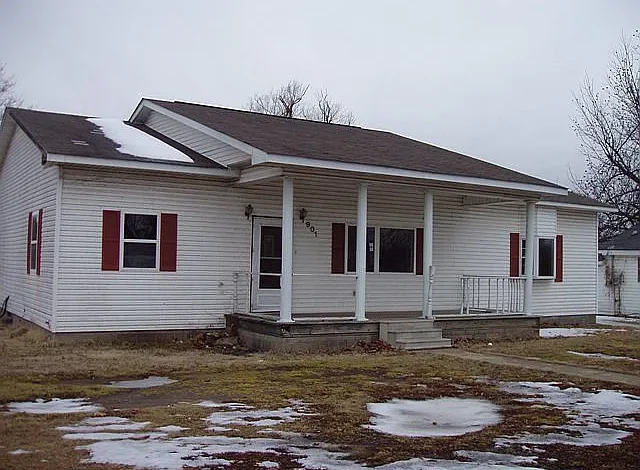
Major Rehab Opportunity in Malden, Missouri: 4-Bedroom Property Offered as Land Only
Finding an affordable real estate opportunity can sometimes mean looking beyond move-in-ready homes and considering properties that require extensive rehabilitation. In Malden, Missouri, a property currently listed at $10,000 presents a very different type of opportunity for buyers who understand renovation projects, redevelopment costs, and the risks associated with severely distressed real estate.
The property is described as a home that needs major rehabilitation and is being sold as land only. According to the available listing information, the property includes a structure originally built in 1996, with approximately 2,149 square feet of interior living area, four bedrooms, and three full bathrooms. It sits on a lot measuring approximately 9,605 square feet.
Although the existing structure provides a substantial amount of square footage on paper, buyers should pay particular attention to the listing’s statement that the home requires major rehabilitation and is being sold as land only. This means the property’s value and potential should be evaluated primarily from the perspective of the land and redevelopment possibilities rather than assuming the existing home is suitable for occupancy.
For investors, builders, experienced renovators, or buyers searching for an affordable parcel with an existing structure, this type of listing may be worth researching. At the same time, the property requires significant due diligence before any purchase decision is made.
A $10,000 Listing That Requires a Different Perspective
The listed price of $10,000 immediately makes this property stand out.
However, a low asking price does not necessarily mean a low total cost of ownership. When a property requires major rehabilitation and is marketed as land only, buyers must consider the entire project rather than focusing exclusively on the initial acquisition price.
Potential expenses can include demolition, debris removal, structural work, utility work, permits, engineering, architectural services, construction materials, labor, site preparation, landscaping, and other project-related costs.
For this reason, the $10,000 figure should be viewed as the listed acquisition price rather than an indication of the total investment required to develop the property.
The listing also shows a price-per-square-foot figure of approximately $5, but buyers should be cautious when interpreting this number because the property is specifically described as requiring major rehabilitation and being sold as land only.
Approximately 9,605 Square Feet of Land
The property occupies approximately 9,605 square feet of land.
This represents a manageable residential parcel that could potentially appeal to buyers interested in a smaller redevelopment project.
The size may be suitable for a variety of residential concepts depending on local zoning, setbacks, utility connections, building requirements, and other regulations.
Because the existing structure is severely distressed, buyers may need to determine whether rehabilitation, partial reconstruction, demolition, or another approach makes the most economic sense.
The best strategy will depend on the property’s actual condition, local regulations, construction costs, and the buyer’s objectives.
Existing 2,149-Square-Foot Structure
The listing identifies approximately 2,149 square feet of interior livable area.
On paper, that is a substantial amount of residential space for a four-bedroom property.
However, the phrase “needs major REHAB selling as land only” is critical.
The existing square footage should not automatically be interpreted as usable finished living space. The buyer must determine whether the structure can realistically be rehabilitated or whether the project would be better approached as a land redevelopment opportunity.
Structural integrity, foundation condition, roofing, framing, electrical systems, plumbing, HVAC, water damage, environmental concerns, and other building components could significantly affect the economics of the project.
The available listing information does not provide a detailed inspection report or complete description of the structure’s current condition.
Four-Bedroom Configuration
The property is listed with four bedrooms.
If the structure were capable of rehabilitation, the bedroom count could potentially make the home attractive to families or residential buyers seeking a larger house.
A four-bedroom configuration can also be relevant to investors researching local housing demand.
However, because the listing explicitly states that the property needs major rehabilitation and is being sold as land only, buyers should not assume that the existing four-bedroom layout can be preserved.
A future project might involve significant reconfiguration or even complete redevelopment.
Three Full Bathrooms
The property is also listed with three full bathrooms.
Three bathrooms can be an appealing characteristic in a larger residential property, particularly for families or future buyers looking for convenience.
But once again, the current condition of those bathrooms is unknown from the available information.
Fixtures, plumbing lines, flooring, walls, ventilation, water damage, and other components could all require replacement.
If the existing structure is ultimately demolished, the bathroom count would simply become part of the historical listing information rather than a feature of the new construction.
Concrete Block Foundation
The property’s foundation is listed as concrete block.
The foundation is one of the most important elements to evaluate when considering a major rehabilitation project.
A buyer would normally want to know whether the foundation is stable, whether there are cracks or movement, whether moisture has affected the structure, and whether previous repairs have been completed.
Because the property is being sold as land only, the foundation condition should not be assumed to be satisfactory.
A qualified structural professional may be necessary to determine whether the existing structure has rehabilitation potential.
Asphalt Roof
The roof is described as asphalt.
Roof condition can have a major effect on the economics of a distressed property.
A compromised roof can allow water intrusion, which can subsequently affect ceilings, walls, insulation, flooring, framing, electrical systems, and other parts of a building.
The listing does not provide sufficient information to determine the age or condition of the roof.
Therefore, prospective buyers should not assume that the existing roofing system can be reused.
If rehabilitation is considered, the roof should be evaluated as part of the overall structural and construction assessment.
Forced-Air Heating
The property is listed with forced-air heating.
However, there is no detailed information about the age, fuel source, operating condition, or efficiency of the heating system.
On a heavily distressed property, mechanical systems should be treated as items requiring verification.
A future renovation could potentially require repairs or complete replacement of HVAC equipment and ductwork.
The cost of such work can vary substantially depending on the condition of the existing system and the design of any future renovation.
Interior Flooring
The listing identifies tile and carpet flooring.
These materials provide some information about the property’s former interior finishes, but they should not be interpreted as an indication of current usability.
Major rehabilitation can involve removal or replacement of flooring, particularly if there has been moisture exposure, structural deterioration, or long-term neglect.
For a future redevelopment project, flooring choices would likely be determined by the buyer’s renovation budget and intended market.
No Fireplace
The listing does not identify a fireplace.
This is a relatively minor characteristic compared with the property’s overall rehabilitation needs.
For buyers evaluating the opportunity, the most important considerations are likely to be structural condition, land value, utility access, zoning, redevelopment requirements, and total project cost.
Potential Land Redevelopment Opportunity
Because the property is being sold as land only, redevelopment may be one of the concepts that buyers consider.
Depending on local zoning and building requirements, a buyer could investigate whether the parcel is suitable for a new residential construction project.
This might involve removing the existing structure and constructing a new home.
However, redevelopment should never be assumed to be permitted simply because a previous house existed on the site.
Buyers should verify current zoning, setbacks, lot requirements, utility connections, access, permits, and building regulations with the appropriate local authorities.
Potential Major Renovation Project
Another possibility could be attempting to rehabilitate the existing structure.
A major renovation can involve almost every component of a property.
Potential areas of work could include:
- Structural repairs
- Roof replacement
- Electrical upgrades
- Plumbing repairs
- HVAC replacement
- Window replacement
- Exterior improvements
- Interior walls and ceilings
- Kitchen renovation
- Bathroom renovation
- Flooring
- Painting
- Landscaping
- Utility improvements
These are examples of potential work categories, not a statement that each repair is required.
The actual scope would need to be determined through professional evaluation.
Why Experienced Investors May Pay Attention
Severely distressed properties can attract experienced investors because they require a different type of analysis than conventional real estate.
An investor may look at the property from several perspectives.
First is the land itself.
Second is the possibility of rehabilitating the existing structure.
Third is the potential for redevelopment.
Fourth is the local market and the value of comparable completed properties.
The investor’s objective is to determine whether the total project cost can make sense relative to the property’s potential future use.
That calculation should be based on conservative estimates rather than optimistic assumptions.
Fix-and-Hold Considerations
If rehabilitation is technically and financially feasible, a buyer could potentially evaluate a long-term ownership strategy.
A renovated four-bedroom home could potentially serve as a long-term residence or rental property.
However, rental income should not be assumed.
Investors would need to research comparable rental properties in Malden, local demand, property taxes, insurance, maintenance costs, vacancy, management expenses, financing, and applicable rental regulations.
Because the listing describes the property as land only, the buyer should first determine whether a habitable residential structure can realistically be created.
Fix-and-Flip Considerations
Another potential strategy could be renovation followed by resale.
For a flip project, the investor would need to compare the total acquisition and construction budget with realistic comparable sales.
The calculation might include:
Purchase Price + Rehabilitation + Construction + Financing + Holding Costs + Closing Costs + Selling Costs = Total Project Cost
The expected resale value should be based on comparable properties rather than assumptions.
A significant contingency reserve is also important when dealing with a property described as needing major rehabilitation.
Unexpected structural or environmental problems can substantially change a project’s budget.
The Importance of the Land
When a property is sold as land only, the land itself becomes especially important.
The parcel’s location, dimensions, access, utility availability, zoning, surrounding properties, and development requirements can all affect its potential usefulness.
The approximately 9,605-square-foot lot provides a defined residential parcel, but buyers should verify whether the existing lot configuration meets current requirements for redevelopment.
Potential buyers should also determine whether public utilities are available and whether existing utility connections can be reused.
Utility Information Requires Verification
The listing does not provide detailed utility information beyond identifying the property as having forced-air heating.
For a redevelopment project, utilities can become a major consideration.
Potential buyers may need to investigate:
- Water availability
- Sewer availability
- Electrical service
- Natural gas availability
- Existing utility connections
- Utility capacity
- Connection fees
- Abandonment requirements
- Local service providers
The availability of utilities can significantly influence both the cost and feasibility of a future project.
Malden, Missouri Location
The property is located in the Malden, Missouri region.
Malden provides a smaller-community setting for buyers who may be interested in affordable residential real estate and redevelopment opportunities.
When evaluating a property at this price point, local market research becomes especially important.
Buyers should study nearby homes, recent sales, active listings, land transactions, rental properties, and properties requiring renovation.
Comparable properties can help establish a more realistic understanding of the potential market rather than relying on the property’s low acquisition price.
Property Taxes and Assessment
The listing reports a tax-assessed value of $46,660 and an annual tax amount of approximately $427.
These figures can be useful when evaluating the property’s historical financial profile.
However, assessed value should not be interpreted as market value.
Tax assessments are determined for taxation purposes and may differ substantially from what a property could sell for in the current market.
Likewise, future taxes could change depending on ownership, improvements, reassessment, or other factors.
Potential buyers should verify current tax information before making a purchase.
A Property That Requires Careful Budgeting
The biggest lesson with a property like this is that the acquisition price is only one part of the equation.
A $10,000 purchase can become a much larger project once construction, demolition, professional services, permits, utilities, financing, and holding costs are included.
For example, if a structure requires extensive structural work, the cost of rehabilitation could potentially exceed the buyer’s original expectations.
If demolition becomes the preferred option, the project budget would shift toward demolition, site preparation, utility work, and new construction.
That is why buyers should evaluate the property based on multiple scenarios rather than assuming one outcome.
Due Diligence Before Purchase
Before moving forward, potential buyers should conduct extensive due diligence.
Important questions may include:
- Can the existing structure legally be rehabilitated?
- Is demolition permitted if necessary?
- What zoning applies to the parcel?
- What are the current setback requirements?
- Are public utilities available?
- Are there easements affecting the property?
- Are there outstanding taxes or other obligations?
- What is the condition of the foundation?
- What is the condition of the roof?
- Is there evidence of water intrusion?
- Are environmental concerns present?
- What would demolition cost?
- What would a new construction project cost?
- What are comparable properties selling for?
These questions can help establish whether the property is financially viable for a particular buyer.
Why Buyers Should Not Focus Only on the $10,000 Price
A $10,000 listing naturally attracts attention.
But distressed real estate requires a broader financial perspective.
The true opportunity is not necessarily the lowest purchase price. Instead, it is the relationship between the acquisition cost, land value, construction requirements, market conditions, and eventual use of the property.
A buyer who spends more on a properly planned redevelopment project may ultimately have a better result than someone who purchases cheaply but underestimates rehabilitation costs.
The objective should be to understand the complete project before committing funds.
Final Thoughts
This Malden, Missouri property is an unusual real estate opportunity because it combines a very low listed price with substantial rehabilitation requirements.
Listed at $10,000, the property includes approximately 9,605 square feet of land and an existing structure described as a four-bedroom, three-bathroom single-family home with approximately 2,149 square feet.
The home was originally built in 1996, has a concrete block foundation, asphalt roof, wood-related construction elements, forced-air heating, and tile and carpet flooring.
But the most important statement in the listing is that the home needs major rehab and is being sold as land only.
That distinction changes how the opportunity should be evaluated.
Instead of assuming that the existing residence can simply be renovated and occupied, potential buyers should investigate whether the structure can realistically be rehabilitated, whether demolition makes more sense, or whether another legally permitted use of the parcel could be considered.
The approximately 9,605-square-foot lot provides a meaningful land component, but zoning, setbacks, utilities, access, building requirements, and other local regulations must be verified.
For an experienced investor, builder, developer, or renovation professional, the property may be worth researching because the low entry price creates an opportunity to evaluate several possible project scenarios.
At the same time, major rehabilitation projects can carry significant financial risks. Structural problems, utility issues, environmental concerns, construction costs, and unexpected repairs can quickly increase the total investment.
The reported annual property tax of approximately $427 and assessed value of $46,660 provide useful reference points, but neither figure should be treated as a guarantee of market value or future financial performance.
Ultimately, this property should be viewed as a land and redevelopment opportunity with an existing distressed structure, rather than a conventional move-in-ready home.
Anyone considering the purchase should complete appropriate due diligence, verify zoning and utilities, research comparable properties, obtain professional opinions where necessary, and build a conservative project budget before committing to the acquisition.
For buyers with the right experience and a clear understanding of redevelopment risk, this Malden property offers an intriguing opportunity to explore what can potentially be done with an affordable residential parcel and an existing structure requiring major rehabilitation.
Listed on Zillow