5 beds 4 baths 2,348 sqft
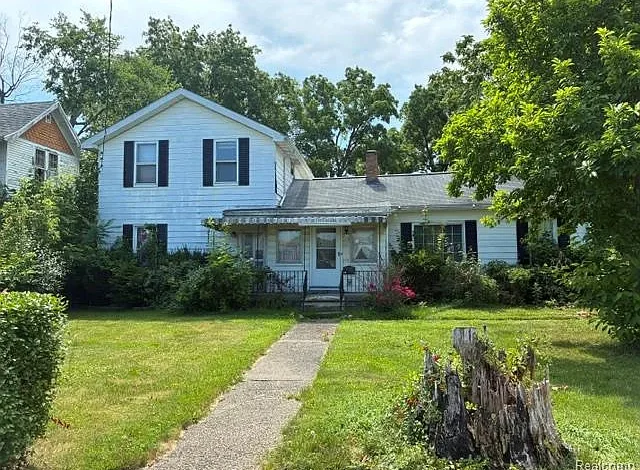
$36,900 Three-Unit Multifamily Investment in Flint, Michigan: 5 Bedrooms, 4 Bathrooms and 2,348 Sq Ft With Renovation and Rental Potential
For real estate investors searching for an affordable multifamily property in Michigan, a value-add rental project, a low-cost income property, or a renovation opportunity with multiple units, the property at 215 W 10th St, Flint, MI 48503 deserves a closer look.
Listed for $36,900, this multifamily building offers approximately 2,348 square feet of above-ground living space, a total of five bedrooms and four full bathrooms, a partial unfinished basement, multiple private entrances, approximately 0.25 acres, and parking capacity listed for as many as 10 vehicles.
Built in 1915, the Colonial-style property is configured as three separate units, each currently presenting a different level of renovation need.
According to the listing, Unit 1 is the closest to being livable. It contains three bedrooms and two full bathrooms and reportedly needs primarily cleaning, cosmetic improvements, and a relatively light rehabilitation.
Units 2 and 3 require substantially more work.
The listing explains that pipes in the bathroom of Unit 3 froze and burst several years ago, causing extensive damage to that unit and contributing to damage in Unit 2 below it. Unit 3 is described as the smallest of the three apartments but requiring a full rehabilitation. Unit 2 also requires renovation, largely because of the water damage originating upstairs.
This creates an interesting value-add scenario: rather than rehabilitating the entire building before generating any potential income, an investor may be able to prioritize Unit 1, subject to inspections, permits, local occupancy requirements, and confirmation that it is legally rentable. The listing itself suggests that rental income from Unit 1 could potentially begin sooner than income from the other units.
At approximately $16 per square foot, the acquisition price is remarkably low, but the property’s condition makes the renovation budget far more important than the purchase price alone.
Property Overview: 215 W 10th St, Flint, MI 48503
The property is located at 215 W 10th St in Flint, Michigan 48503.
According to the supplied listing information, the principal facts include:
Asking Price: $36,900
Property Type: Multifamily
Number of Units Described: 3
Total Bedrooms: 5
Total Bathrooms: 4 full bathrooms
Interior Living Area: Approximately 2,348 square feet
Finished Above-Ground Area: 2,348 square feet
Year Built: 1915
Architectural Style: Colonial
Stories: Approximately 1.5
Lot Size: Approximately 0.25 acres
Lot Dimensions: Approximately 69 x 158 feet
Heating: Forced air, natural gas
Basement: Partial and unfinished
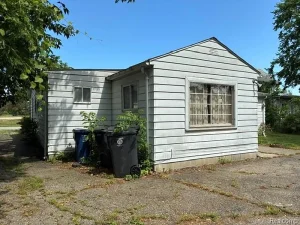
Exterior: Aluminum siding
Foundation: Block/basement
Roof: Asphalt
Parking: 10 spaces listed
Porch: Yes
Fencing: Backyard
Additional Structure: Shed
Zoning Description: Residential
Reported Annual Property Tax: $826
Tax Assessed Value: $7,700
Price Per Square Foot: Approximately $16
Listing Terms: Cash
Parcel Number: 4118383028
For an investor, however, the unit-by-unit condition is more important than the headline statistics.
Why the $36,900 Price Gets Investor Attention
A three-unit multifamily building listed for $36,900 naturally attracts attention.
The property offers five total bedrooms, four bathrooms, more than 2,300 square feet, multiple entrances, parking, and a quarter-acre parcel.
But an inexpensive purchase price does not automatically create an inexpensive investment.
A better way to analyze this property is:
$36,900 Purchase Price + Closing Costs + Inspections + Plumbing Repairs + Water-Damage Remediation + Structural Repairs + Electrical Work + HVAC + Unit Renovations + Insurance + Permits + Taxes + Utilities + Holding Costs + Contingency = Total Investment
That final number—not the $36,900 acquisition price by itself—is what should be compared with potential rental income and future property value.
Approximately $16 Per Square Foot
The listing reports an asking price of approximately $16 per square foot.
That sounds exceptionally inexpensive.
However, distressed multifamily properties cannot be evaluated the same way as stabilized, occupied rental buildings.
A renovated property with three functional units and paying tenants is fundamentally different from a building containing water-damaged apartments requiring construction.
The more meaningful figure will eventually be the investor’s all-in cost per finished square foot and, even more importantly, the cost per legally rentable unit.
Understanding the Three-Unit Configuration
The seller describes three units with very different rehabilitation requirements.
That creates the possibility of a phased investment strategy.
Instead of attempting to complete every apartment simultaneously, an investor could potentially prioritize the unit closest to occupancy and then direct resources toward the more heavily damaged units.
Before doing so, the buyer should verify that the existing three-unit configuration is legally recognized and determine what inspections or certificates are required for rental occupancy.
The listing’s “residential” zoning description alone does not establish every detail of permitted multifamily use.
Unit 1: The Closest to Rent-Ready
According to the listing, Unit 1 contains three bedrooms and two full bathrooms.
It is described as being close to livable condition and needing cleaning, cosmetics, and a light rehabilitation.
If professional inspection confirms that assessment, Unit 1 could become an important part of the investment strategy.
Getting one apartment ready before completing the entire building could potentially reduce the period during which the property generates no income.
However, “close to livable” should not be interpreted as “ready to rent.”
Inspect Unit 1 Before Budgeting for Quick Income
An investor should confirm the condition of Unit 1’s electrical system, plumbing, heating, windows, doors, kitchen, bathrooms, smoke and carbon-monoxide protection, flooring, walls, ceilings, and exits.
Any local rental inspection requirements should also be researched.
A cosmetic-looking problem can occasionally conceal a mechanical or structural issue.
The goal should be to determine exactly what is required to make Unit 1 safe, compliant, insurable, and legally rentable—not simply visually attractive.
Three Bedrooms and Two Bathrooms in Unit 1
A three-bedroom, two-bathroom apartment can provide meaningful residential space.
Depending on the local rental market, that configuration may appeal to households requiring more room than a typical one- or two-bedroom apartment provides.
But the listing does not supply an actual rent figure.
An investor should research comparable Flint rentals with similar bedroom count, condition, location, utilities, and parking.
Projected rental income should come from market evidence rather than assumptions based solely on the number of bedrooms.
Unit 3: Full Rehabilitation Required
Unit 3 presents the most clearly described renovation challenge.
According to the listing, pipes in the bathroom froze and burst several years ago.
The resulting water release caused extensive damage, and the unit now requires a full rehabilitation.
The fact that the damage occurred several years ago makes moisture-related inspection especially important.
A buyer should investigate not only visible surfaces but also concealed structural and environmental conditions where appropriate.
Frozen and Burst Pipes Can Cause Extensive Damage
When plumbing freezes, expanding water can rupture pipes.
Once a pipe breaks, water can affect ceilings, walls, floors, insulation, electrical components, framing, and rooms below.
If the water remained present for an extended period, secondary moisture damage can become more serious.
An investor should therefore avoid budgeting only for replacement drywall and paint.
The affected area should be professionally evaluated to determine the full scope of damage.
Moisture and Mold Evaluation
Past water damage can create conditions conducive to microbial growth if materials remained wet.
The listing does not state that mold is present, so its existence should not be assumed.
However, because significant water damage is specifically disclosed, buyers may want qualified professionals to investigate moisture-related concerns.
Damaged drywall, insulation, flooring, subflooring, framing, and other materials may require removal or repair depending on their condition.
These expenses should be established before finalizing the renovation budget.
Unit 2 Was Also Affected
The listing explains that Unit 2 requires rehabilitation largely because of damage caused by the burst pipes in Unit 3 above it.
This is important because water does not necessarily remain within the apartment where the plumbing failure begins.
It can travel through floors and ceilings and affect the unit below.
For Unit 2, buyers should investigate ceiling cavities, electrical fixtures, walls, flooring, framing, and any other areas exposed to water.
A coordinated repair plan for Units 2 and 3 may be more efficient than treating them as completely separate projects.
Repair the Source Before the Damage
A logical renovation strategy begins by ensuring the plumbing problem that caused the original damage has been fully corrected.
There is little value in installing new ceilings and walls in Unit 2 if the plumbing above remains vulnerable.
The buyer should determine what portions of the plumbing system froze, why freezing occurred, and whether insulation, heating, pipe placement, or other conditions need improvement.
Preventing a repeat incident should be part of the rehabilitation.
Five Bedrooms Across the Property
The entire building contains five bedrooms according to the listing.
Because Unit 1 alone contains three bedrooms, the remaining bedroom configuration across Units 2 and 3 should be confirmed.
An investor should obtain or create a clear floor plan for each unit.
Knowing the exact bedroom and bathroom configuration matters when estimating market rent, planning renovation, obtaining insurance, and verifying legal occupancy.
Room count should match the property’s actual approved configuration.
Four Full Bathrooms
The building contains four full bathrooms in total.
Multiple bathrooms across three apartments create additional plumbing infrastructure.
Given the known pipe failure, all bathroom plumbing deserves careful inspection.
Supply lines, drains, shutoff valves, fixtures, water pressure, ventilation, flooring, and subflooring should be evaluated.
For heavily damaged bathrooms, complete reconstruction may be more practical than piecemeal repair.
2,348 Square Feet of Interior Space
The property contains approximately 2,348 square feet of finished above-ground area.
For three units, this suggests relatively compact apartment sizes overall, although Unit 1 appears to account for a significant portion of the bedroom count.
The building’s size can be an advantage during renovation because it is considerably smaller than many large multifamily structures.
Still, three separate units mean multiple kitchens, bathrooms, entrances, mechanical considerations, and tenant spaces.
Multifamily renovation complexity is not determined by square footage alone.
Built in 1915
The building was constructed in 1915, making it more than a century old.
An older multifamily property deserves comprehensive inspection beyond the known water damage.
Electrical wiring, plumbing, foundation components, roof, windows, insulation, framing, stairs, porches, and mechanical equipment should all be evaluated.
The building may have undergone many renovations over its lifetime.
Buyers should focus on the current condition of each system rather than assuming everything is original.
Older-Building Environmental Considerations
Because the property predates modern construction standards, renovation could encounter older building materials.
Depending on previous improvements, lead-based paint, asbestos-containing materials, or other materials requiring specialized handling may be present.
Their presence should not be assumed without testing.
However, an investor planning significant demolition should account for the possibility and obtain appropriate professional advice where necessary.
Unexpected remediation can affect both cost and construction schedules.
Forced-Air Natural Gas Heating
The property has forced-air natural gas heating.
The listing does not explain whether there is one heating system for the entire property or separate equipment serving individual units.
That distinction matters greatly for a landlord.
Separate heating systems can allow tenants to control their own usage and may simplify utility billing, while a shared system creates different operational considerations.
The equipment’s age, condition, ductwork, venting, and service history should be inspected.
Utility Separation Is a Critical Question
For any multifamily investment, buyers should determine how utilities are metered.
Are electricity, natural gas, and water separately metered for each unit, or does the owner pay some or all utilities?
The supplied listing does not answer this.
Utility configuration can materially affect operating expenses and rental pricing.
If separation is desired, the cost of creating independent service should be investigated before assuming tenants can simply place every utility in their own names.
Partial Unfinished Basement
The property includes a partial unfinished basement.
For an investor, the basement can provide useful access to plumbing, heating equipment, electrical systems, and structural components.
It is also an important inspection area.
Buyers should investigate moisture, drainage, foundation walls, supports, pests, mechanical equipment, and evidence of water intrusion.
Because the property already has documented water damage above ground, understanding moisture conditions throughout the building is especially important.
Block Foundation
The foundation is described as block, with basement construction.
A professional inspection should look for cracks, movement, bowing, moisture penetration, deterioration, and previous repairs.
Foundation problems can become expensive and should be identified before money is directed toward kitchens, flooring, or cosmetic finishes.
For an income property, structural stability also affects insurance and long-term maintenance.
Asphalt Roof
The property has an asphalt roof, but the listing does not provide its age.
Roof condition should be investigated carefully.
A leaking roof could introduce additional water damage beyond the known plumbing incident.
Inspectors should look for worn roofing, damaged flashing, roof penetrations, gutters, drainage, and signs of leaks in upper areas.
If replacement is required, the cost should be incorporated into the acquisition analysis.
Aluminum Siding
The building has aluminum siding.
This can be a relatively durable exterior material when properly maintained.
Buyers should inspect for dents, loose sections, corrosion, missing pieces, and areas where moisture may be entering behind the siding.
A thorough exterior inspection should also include trim, windows, doors, flashing, foundation transitions, and drainage.
Improving the exterior can eventually contribute to curb appeal once major repairs are complete.
Private Entrances
The listing highlights private entrances, an important feature for a multifamily building.
Separate entrances can improve tenant privacy and help distinguish individual units.
Buyers should inspect doors, locks, steps, lighting, handrails, and access routes.
Local codes may have requirements for exits and emergency egress.
For upper-level units in particular, safe access should be carefully evaluated during renovation.
Porch
The property includes a porch.
A porch can add useful outdoor space and contribute to the appearance of a Colonial-style building.
Because the house dates to 1915, structural condition should be checked.
Decking, supports, stairs, railings, roof connections, and foundations may need repair.
Safety-related porch work should take priority over purely decorative improvements.
Fenced Backyard
The property facts describe a fenced backyard.
For tenants, a fenced outdoor area can be a useful amenity depending on its configuration and condition.
An investor should inspect the fence for damaged sections and determine how outdoor space would be shared among tenants.
Landlord responsibilities for mowing, snow, trash areas, and exterior maintenance should also be considered when developing an operating budget.
Approximately 0.25 Acres
The property sits on approximately 0.25 acres, with dimensions listed at around 69 x 158 feet.
That provides outdoor space while remaining a manageable lot for a multifamily investment.
The parcel includes parking and a shed in addition to the main building.
Investors should determine how parking, trash storage, tenant access, and outdoor areas can function without conflict among the three units.
Parking for Up to 10 Vehicles
The listing reports 10 total parking spaces.
If physically accurate and legally usable, substantial parking can be a meaningful advantage for a three-unit building.
Many older multifamily properties have limited off-street parking.
Prospective buyers should verify the actual parking layout rather than relying solely on the database entry.
Surface condition, snow removal, drainage, access, lighting, and local parking requirements should all be considered.
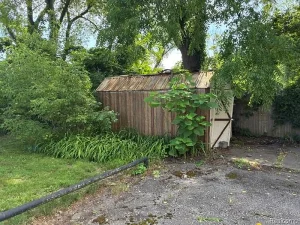
Additional Shed
An additional shed is listed on the property.
This may provide storage for maintenance tools, lawn equipment, or landlord supplies.
Its physical condition should be inspected.
An investor should also decide whether the shed will remain exclusively for owner use or be made available to tenants.
Clearly defining storage areas can help avoid confusion in a multifamily property.
Sewer and Water Information
The listing states “Sewer at Street” and “Water at Street.”
This wording deserves clarification.
Buyers should confirm that all units are properly connected to municipal water and sewer and determine whether service is active.
The condition of service lines should also be considered.
Given the known plumbing damage, a licensed plumber can help evaluate both interior piping and connections.
Residential Zoning and Three-Unit Use
The zoning description is listed as Residential, while the property itself is marketed as multifamily with three units.
An investor should independently verify that the three-unit configuration is legally recognized and may continue to be used as intended.
This can involve reviewing zoning records, permits, certificates of occupancy, and local rental requirements.
This step is particularly important before calculating income from three apartments.
If only a different number of units is legally recognized, the investment model could change substantially.
Cash-Only Listing Terms
The listing identifies the transaction terms as cash.
That is an important signal for prospective buyers.
The property’s current condition and water damage may make conventional mortgage financing difficult.
Cash terms also mean an investor needs to consider not just the $36,900 acquisition amount but the capital required immediately afterward for rehabilitation.
Buying inexpensively but running out of renovation funds can leave a property vacant and generating expenses rather than income.
Financing the Renovation
A cash buyer may still explore financing for rehabilitation after acquisition.
Options depend on borrower qualifications, property condition, lender policies, equity, and project scope.
Some investors use private capital or specialized renovation financing, but financing costs can be materially higher than conventional owner-occupied mortgages.
Interest, lender fees, draw schedules, and repayment periods should all be incorporated into the project budget.
Zillow’s Estimated $103 Monthly Payment
The listing displays an estimated payment of approximately $103 per month.
This should not be interpreted as the actual ownership cost or confirmation that a mortgage is available.
The listing itself specifies cash terms.
Even if financing were available through another arrangement, taxes, insurance, utilities, repairs, renovation, maintenance, and property management would be additional.
For this investment, construction cost is likely much more important than an online mortgage estimate.
Annual Property Taxes of Approximately $826
The reported annual property tax is $826.
For a multifamily investment, property taxes are an operating expense that should be included when calculating net income.
Buyers should verify the current bill and determine whether taxes could change after sale or renovation.
A stabilized property’s economics should be based on realistic future expenses rather than assuming every current cost will remain unchanged indefinitely.
Tax Assessed Value of $7,700
The listing reports a tax assessed value of $7,700.
That is substantially below the $36,900 asking price, but tax assessment should not be confused with market value.
Michigan property taxation has its own assessment framework, and a single assessment number does not establish what the building is worth to an investor.
Physical condition, legal unit count, rent potential, expenses, and comparable sales are far more useful for evaluating the acquisition.
Potential Phased Renovation Strategy
The property’s condition may lend itself to a phased renovation plan.
Phase one could focus on making Unit 1 safe, compliant, and rentable if inspections confirm that only light rehabilitation is required.
Phase two could address the plumbing source and reconstruct Unit 3.
Phase three could repair the resulting damage and fully rehabilitate Unit 2, although the actual order may need to change based on contractor recommendations.
The goal would be to minimize unnecessary vacancy while completing the larger project.
Potential Rental Income
The listing calls the property a potential money maker and suggests Unit 1 rent could begin relatively quickly.
That is possible in principle, but no actual rent figures are supplied.
An investor should research comparable Flint apartments for each unit size and condition.
Projected rent should reflect what tenants actually pay for comparable units—not optimistic asking prices.
It is also important to understand which utilities the landlord will pay.
Gross Rent Is Not Profit
A three-unit property can produce multiple rent checks, but gross rent should never be confused with profit.
A proper operating analysis includes:
Gross Scheduled Rent – Vacancy – Property Taxes – Insurance – Maintenance – Repairs – Management – Owner-Paid Utilities – Landscaping/Snow – Administrative Costs – Capital Reserves = Net Operating Income
Debt service and financing costs can then be considered separately.
This approach provides a much more realistic picture of investment performance.
Vacancy Should Be Included
Even after all three units are renovated, an investor should not assume 100% occupancy forever.
Tenants move.
Units require turnover work.
Leasing can take time.
Vacancy should therefore be incorporated into financial projections.
A conservative model can help determine whether the property remains financially viable when income is temporarily interrupted.
Maintenance and Capital Reserves
A 1915 building will continue to require maintenance after renovation.
The investor should reserve money for roofing, HVAC, plumbing, electrical repairs, appliances, exterior work, common areas, and future unit turnovers.
Renovation does not eliminate long-term capital expenses.
A sustainable rental business keeps reserves rather than distributing every dollar of early cash flow.
Insurance for a Multifamily Renovation
Insurance deserves early attention.
A partially damaged and potentially vacant multifamily building can be different to insure from a stabilized occupied property.
Carriers may evaluate plumbing damage, roof condition, electrical systems, heating, occupancy, renovation activity, number of units, and liability exposure.
The investor may need different coverage during construction than after tenants move in.
Actual insurance quotes should be obtained before closing.
Potential Resale Strategy
Another strategy is to rehabilitate all three units and sell the property as a stabilized income-producing asset.
In that case, the future buyer may evaluate the building partly based on rental income and operating expenses.
Accurate leases, expense records, utility information, maintenance history, and documentation of improvements can become valuable.
A professionally completed renovation with documented systems may also be easier for future buyers and lenders to evaluate.
Determining After-Repair Value
No Zestimate is provided, and a reliable future value should not be invented.
An investor should research recent sales of comparable multifamily properties in Flint.
Relevant characteristics include legal unit count, building size, unit configuration, condition, parking, neighborhood, rental income, operating expenses, and renovation quality.
Income-based valuation may also be relevant once the property is stabilized.
Total Project Cost Matters More Than Purchase Price
A useful calculation is:
$36,900 Purchase + Closing Costs + Unit 1 Rehab + Unit 2 Rehab + Unit 3 Full Rehab + Plumbing + Water-Damage Repairs + Electrical + HVAC + Roof/Exterior + Permits + Insurance + Taxes + Utilities + Financing + Holding Costs + Contingency = Total Investment
That number can then be compared with both expected stabilized value and expected rental income.
This is far more informative than focusing only on the $16-per-square-foot purchase price.
Renovation Priorities
The first priority should be determining whether the building is structurally secure and weather-resistant.
Next comes identifying and permanently correcting the plumbing problem associated with the previous freeze.
Water-damaged areas should then be evaluated, followed by electrical, heating, plumbing, roof, basement, foundation, and utility systems.
Only after major problems are understood should the project move toward kitchens, bathrooms, flooring, paint, lighting, fixtures, and other cosmetic work.
Why a Contingency Reserve Is Essential
A century-old multifamily property with documented water damage has meaningful renovation uncertainty.
Opening walls and ceilings can reveal damaged framing, hidden plumbing problems, deteriorated electrical work, moisture, or previous repairs.
A contingency reserve can keep the project moving when unexpected work appears.
An investor should avoid committing every available dollar to acquisition and the visible renovation scope.
Financial flexibility is especially valuable in value-add multifamily projects.
1,347 Views and 91 Saves
According to the supplied listing data, the property has accumulated approximately 1,347 views and 91 saves during 35 days on Zillow.
That indicates considerable online interest for a low-priced renovation property.
The combination of a $36,900 asking price and three-unit income potential naturally attracts investor attention.
However, views and saves do not establish profitability.
The physical condition, legal unit status, rehabilitation cost, market rent, insurance, and operating expenses are what ultimately determine investment viability.
Final Thoughts on 215 W 10th St, Flint, Michigan
215 W 10th St, Flint, MI 48503 is a distinctive value-add opportunity because it combines an extremely low $36,900 asking price with an existing three-unit multifamily configuration, approximately 2,348 square feet, five total bedrooms, four full bathrooms, natural-gas forced-air heating, a partial basement, private entrances, a fenced backyard, and substantial listed parking.
The strongest feature of the investment concept is the difference in condition among the three units.
Unit 1, with three bedrooms and two bathrooms, is described as close to livable and requiring primarily cleaning, cosmetics, and light rehabilitation. If professional inspections and local requirements confirm that assessment, it may offer a path toward generating rental income sooner than would be possible in a building where every unit requires complete reconstruction.
Unit 3, by contrast, needs a full rehabilitation after frozen bathroom pipes burst and caused extensive damage.
Unit 2 was also affected by the water damage originating above and requires its own rehabilitation.
That means the investor is not buying a stabilized triplex for $36,900. The buyer is acquiring a multifamily renovation project with one potentially near-rent-ready unit and two more substantial construction projects.
That distinction is essential.
The $16-per-square-foot asking price may be what initially captures attention, but it does not determine profitability.
The decisive numbers will be the cost of correcting the plumbing system, repairing water damage, rehabilitating Units 2 and 3, completing Unit 1, addressing any roof, electrical, HVAC, basement or structural concerns, and carrying the property until all rentable space is stabilized.
The property’s cash-only listing terms reinforce the importance of capital planning. A buyer should have sufficient resources not only to close but also to fund the renovation and maintain appropriate reserves.
Legal due diligence is equally important. The existing three-unit use should be independently confirmed, including applicable zoning, occupancy, rental inspection, and permitting requirements.
For an experienced investor willing to undertake a phased rehabilitation, however, the property presents an intriguing structure.
Rather than waiting for the entire building to be completed, there may be an opportunity to restore the most viable unit first, establish legitimate rental income, and then work through the remaining units in a logical sequence.
If the building can be acquired and rehabilitated at a total cost supported by local rents and comparable multifamily values, 215 W 10th St could potentially transition from a distressed 1915 property into a functioning three-unit income-producing asset.
The opportunity is real, but so is the work.
Success will depend on disciplined inspections, accurate contractor estimates, careful water-damage remediation, verification of legal unit status, realistic rent research, adequate insurance, sufficient renovation capital, and a contingency reserve for the unexpected issues that often accompany century-old buildings.
For buyers specifically searching for an affordable Flint multifamily fixer-upper with multiple potential income streams, this property offers a compelling starting price and a clearly defined value-add challenge.
Listed on Zillow