5.71 Acres
Off-Grid Colorado Mountain Land at 11,500 Feet: 5.71 Acres of Alpine Wilderness Near Fort Garland
There are few real estate opportunities that can offer the feeling of being completely surrounded by nature while still providing the possibility of creating a personal mountain retreat. High in the Colorado Rockies, this approximately 5.71-acre parcel near Fort Garland presents an unusual opportunity for buyers looking for privacy, alpine scenery, outdoor recreation, and a potential off-grid lifestyle.
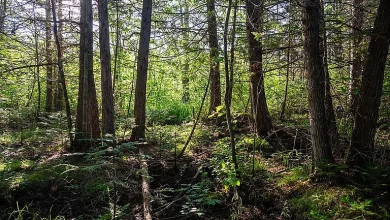
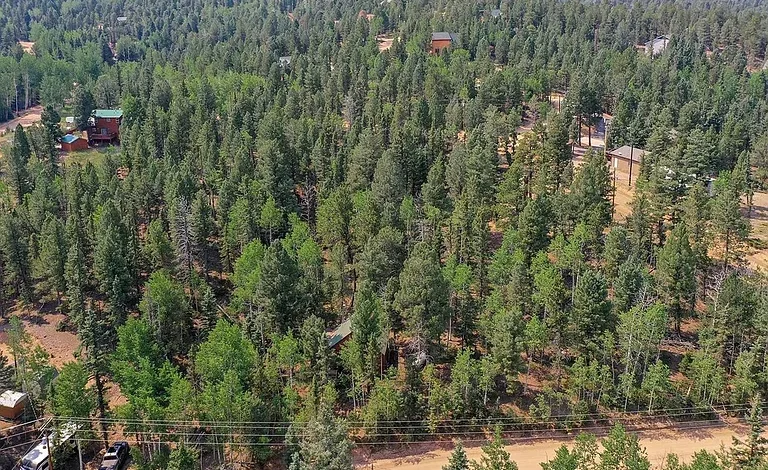
Situated at an impressive elevation of approximately 11,500 feet, this heavily wooded property is located within Sangre De Cristo Ranches and features mountainous terrain, rolling slopes, natural vegetation, and an environment that feels far removed from the pace of everyday life.
For buyers searching for Colorado mountain land, recreational acreage, an off-grid property, or a future mountain retreat, the parcel offers a combination of natural characteristics that deserve careful consideration.
There is no existing home or developed residence described in the listing, making this primarily a land opportunity rather than a move-in-ready property. The parcel is zoned residential, has no HOA according to the listing, and is being offered for cash purchase.
The property also has seasonal-only access, which is an important consideration for anyone planning future use. During the accessible months, the land provides opportunities for hiking, exploring, wildlife observation, and enjoying the surrounding alpine environment.
A Rare High-Elevation Colorado Land Opportunity
The elevation is one of the first features that distinguishes this property.
At approximately 11,500 feet, the land is situated in a true high-altitude environment. This creates a landscape characterized by crisp mountain air, native vegetation, rugged terrain, and dramatic alpine surroundings.
High-elevation properties can provide an experience very different from conventional residential real estate. Instead of manicured lawns and densely developed neighborhoods, buyers may encounter natural vegetation, forested terrain, mountain slopes, wildlife, and expansive wilderness.
This property is particularly suited to buyers who value solitude and outdoor adventure.
The environment may appeal to individuals interested in hiking, wildlife observation, seasonal recreation, camping, and exploring Colorado’s mountain landscapes.
At the same time, the elevation and seasonal access mean buyers should approach the property with realistic expectations and carefully investigate what forms of development and use are permitted.
Approximately 5.71 Acres of Mountain Land
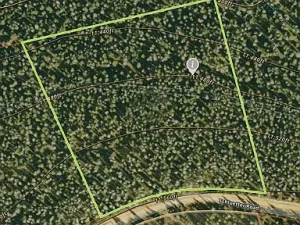
The property encompasses approximately 5.71 acres.
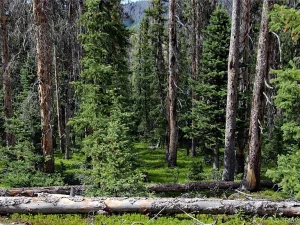
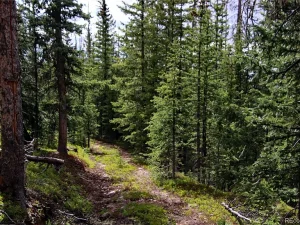
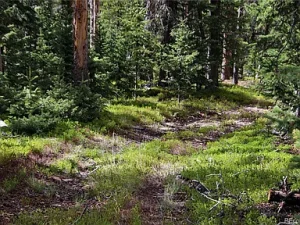
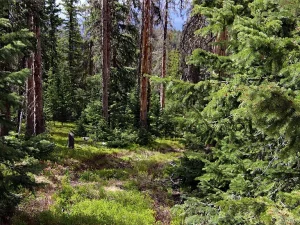
That amount of land provides substantial space compared with a conventional residential lot. The acreage is described as heavily wooded and mountainous, with a rolling slope and natural vegetation.
The property is also identified as being in a natural, wooded state.
For someone looking for a private piece of Colorado land, the size and setting may provide an opportunity to create a personal recreational environment.
However, buyers should not assume that the entire acreage is equally usable. Mountain properties can contain variations in slope, soil, vegetation, drainage, access, and terrain.
A professional land survey and site evaluation can help prospective buyers understand the property’s boundaries, topography, access, and development possibilities.


Surrounded by Native Alpine Vegetation
The property is described as supporting native Colorado flora and vegetation.
Among the plants identified on the land are Little Leaf Huckleberry, Wild Strawberry, Showy Jacob’s Ladder, Chickweed, Elk Sedge, and Northern Rock Jasmine.
These native plants contribute to the property’s natural alpine character.
Rather than viewing the landscape as an empty development site, buyers may appreciate the opportunity to experience an environment where native vegetation remains an important part of the setting.
For nature enthusiasts, botanists, photographers, hikers, and people simply seeking a peaceful outdoor environment, the presence of native plants can be part of the property’s appeal.
Of course, buyers should recognize that alpine ecosystems are sensitive environments. Any future improvements should be planned carefully and in accordance with applicable land-use and environmental regulations.
Wildlife in the Surrounding Landscape
The property is also described as a haven for local wildlife, including elk and deer.
Colorado’s mountain regions are well known for their wildlife, and seeing animals in their natural environment can be one of the most rewarding aspects of owning recreational land.
Elk and deer may forage throughout suitable habitat, while the surrounding forests and alpine vegetation provide an environment supporting a variety of wildlife species.
The presence of wildlife should also be considered when planning future improvements. Property owners may need to account for wildlife movement, seasonal activity, vegetation management, and applicable regulations.
The property should not be assumed to provide private hunting rights simply because wildlife is present. Any hunting activity must comply with Colorado laws, licensing requirements, land ownership rules, and applicable seasons.
Established Trails Across the Property
Another particularly interesting characteristic is the property’s trail connectivity.
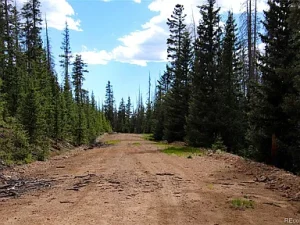
According to the listing, a path accessible from the road runs partway through the property and slopes gently downhill from south to north.
This provides a natural route for exploring the acreage.
A second established trail is also identified, running approximately west to east across the property. The listing references OnX Hunt GIS mapping in connection with this trail.
Together, these routes may provide multiple ways to explore the land.
For recreational landowners, having established paths can be valuable because trails can make it easier to navigate a larger parcel and experience different portions of the property.
Before relying on any mapped trail for permanent access, buyers should verify its location, legal status, maintenance responsibilities, and whether it crosses any neighboring parcels.
A Property Designed for Outdoor Enthusiasts
This parcel is particularly appealing to people who enjoy spending time outdoors.
Instead of being centered around a traditional house, the property offers the possibility of building an experience around the land itself.
Potential recreational activities may include:
- Hiking
- Wildlife observation
- Photography
- Nature exploration
- Seasonal camping
- Mountain recreation
- Snowmobile access during appropriate conditions
- UTV recreation where legally permitted
- Scenic exploration
- Backcountry adventures
The actual availability of each activity depends on weather, seasonal access, property restrictions, local regulations, and land-use rules.
For someone who considers outdoor recreation an important part of their lifestyle, the property’s natural setting may be one of its strongest characteristics.
Seasonal-Only Access
One of the most important details prospective buyers need to understand is that access to the property is seasonal.
The listing describes the property as having seasonal-only access.
This means buyers should not approach the parcel in the same way they would approach a property with year-round paved-road access.
Seasonal mountain roads can be affected by snow, ice, mud, weather conditions, maintenance, and other environmental factors.
Anyone considering ownership should investigate exactly when access is available, who maintains the road, what type of vehicles can reach the property, and whether there are seasonal restrictions.
This information can be especially important for buyers planning to transport construction materials, recreational equipment, trailers, UTVs, or snowmobiles.
A Staging Area for Trucks and Trailers
The listing also describes a local staging area used for parking trucks and trailers.
The area is reportedly recognizable by “2 big rocks,” providing a reference point for those familiar with the location.
From this area, owners may be able to unload UTVs or snowmobiles and continue toward the mountain property during suitable seasonal conditions.
This can be an important practical consideration for recreational users.
However, buyers should independently verify whether the staging area is legally available for their use, whether permission is required, and whether parking or unloading recreational vehicles is permitted.
These details should be confirmed before purchasing or planning regular recreational access.
Potential Off-Grid Lifestyle
For many Colorado land buyers, the appeal of a remote mountain parcel comes from the possibility of creating an off-grid lifestyle.
This property could attract buyers interested in exploring that concept.
Off-grid living can involve alternatives to conventional utilities, such as solar power, battery storage, water systems, propane, composting or approved waste systems, and other infrastructure.
However, the listing does not establish that these systems are installed or that all forms of off-grid development are permitted.
Anyone considering construction should first verify zoning, building codes, septic requirements, water availability, access requirements, wildfire considerations, and other applicable regulations.
The property is zoned residential, but residential zoning alone does not guarantee that a specific type of structure or off-grid system can be installed.
Residential Zoning
The listing identifies the property as residentially zoned.
This is an important detail for buyers interested in future development.
Residential zoning may create possibilities for certain types of residential use, but buyers should confirm exactly what is permitted on the parcel.
Before purchasing, prospective owners should contact the relevant county or local planning authority to verify:
- Permitted structures
- Minimum dwelling requirements
- Building setbacks
- Access standards
- Septic requirements
- Water requirements
- Utility requirements
- Driveway requirements
- Seasonal access rules
- Camping regulations
- Short-term rental regulations
- Environmental restrictions
Because the property is located in a high-altitude mountain environment, development requirements may differ significantly from those in lower-elevation communities.
No HOA According to the Listing
Another attractive feature for some buyers is that the listing indicates there is no HOA.
The absence of an HOA may provide greater flexibility than properties governed by extensive community association rules.
However, no HOA does not mean there are no regulations.
County zoning, state requirements, building codes, road agreements, environmental regulations, subdivision restrictions, and other legal requirements can still apply.
Buyers should verify the property’s current title documents and any recorded covenants, conditions, easements, or restrictions.
Sangre De Cristo Ranches
The property is located within Sangre De Cristo Ranches.
The subdivision is part of the broader mountain landscape near Fort Garland.
The area is known for its rural and recreational character, making it attractive to buyers searching for larger parcels, mountain land, and opportunities to enjoy the outdoors.
Properties in this type of setting can appeal to people who want more separation from dense urban development.
The lifestyle is generally centered more around nature, recreation, privacy, and outdoor exploration than conventional suburban amenities.
The Fort Garland Area
The listing identifies Fort Garland as the region.
Fort Garland is located in southern Colorado and provides access to the broader San Luis Valley and surrounding mountain landscapes.
For buyers considering a remote property, understanding the nearest communities and services is essential.
Prospective owners should investigate distances to groceries, fuel, healthcare, hardware stores, emergency services, restaurants, and other necessities.
Because this property is at high elevation with seasonal access, buyers should also prepare for the practical realities associated with mountain ownership.
A Recreational Land Investment Opportunity
Some buyers may evaluate this property as an investment opportunity rather than solely as a personal retreat.
Land in scenic recreational regions can attract buyers interested in long-term ownership, future development, recreational use, or potential resale.
However, land investment involves significant due diligence.
Buyers should consider current market conditions, comparable land sales, access, zoning, utilities, development feasibility, taxes, holding costs, and future demand.
The property should not be purchased based solely on assumptions about appreciation or future returns.
Instead, buyers should perform independent research and determine whether the parcel fits their individual investment objectives.
Potential Mountain Retreat
One of the most obvious potential uses is creating a personal mountain retreat.
A future retreat could potentially provide a place for seasonal recreation, relaxation, hiking, wildlife observation, and enjoying the surrounding wilderness.
The property’s wooded environment and high elevation could provide a strong foundation for a rustic mountain experience.
Any construction plans should be evaluated carefully, particularly because of the seasonal access and challenging alpine environment.
Transportation of materials and equipment can be more complicated in remote areas, and buyers should obtain professional estimates before beginning any project.
Outdoor Recreation and Snowmobile Access
The property description specifically references UTVs and snowmobiles.
For recreational enthusiasts, this adds another dimension to the opportunity.
Snowmobiles can provide access to mountain areas during winter conditions where conventional vehicles may not be practical. UTVs can similarly provide recreational mobility on appropriate roads and trails.
However, recreational vehicle use is subject to land ownership, road access, seasonal restrictions, and applicable laws.
Buyers should verify exactly where these vehicles can legally operate and whether any neighboring or public lands require permits or have restrictions.
What Buyers Should Know About High-Altitude Property
Owning land at approximately 11,500 feet comes with unique considerations.
High-elevation environments can experience colder temperatures, significant snowfall, strong winds, rapid weather changes, shorter growing seasons, and difficult winter access.
These factors can influence everything from construction schedules to transportation and utility planning.
If development is being considered, buyers should consult professionals familiar with high-altitude construction and mountain properties.
The site’s elevation should be considered a defining characteristic rather than simply a number in the listing.
Due Diligence Before Purchasing
Because this is land rather than an existing finished residence, due diligence should focus heavily on development feasibility and access.
Potential buyers should investigate:
- Legal road access
- Seasonal access
- Property boundaries
- Survey information
- Zoning
- Building regulations
- Septic feasibility
- Water availability
- Electricity options
- Internet availability
- Driveway requirements
- Soil conditions
- Topography
- Fire restrictions
- Recorded easements
- Covenants and restrictions
- Wildlife considerations
- Snow and winter access
- Recreational vehicle rules
A land purchase can look simple because there is no house to inspect, but undeveloped mountain acreage can involve many important questions.
Professional assistance from a surveyor, engineer, contractor, septic specialist, and local planning authority may be appropriate depending on the buyer’s plans.
Annual Property Taxes
The listing reports an annual tax amount of approximately $375.
Property taxes can be an important consideration when holding undeveloped land.
However, buyers should independently verify the current tax assessment and annual tax obligation with the relevant county authority.
Future taxes may also change depending on assessment practices and improvements made to the property.
Cash Purchase Terms
The listing identifies cash as the purchase term.
This is another important factor for buyers considering the property.
Traditional financing for vacant, remote, high-elevation land can differ from financing for a conventional residential property.
Buyers should discuss financing possibilities with lenders before committing to a purchase if they are not planning to use cash.
If future construction is contemplated, buyers should also investigate construction financing options separately.
A Unique Colorado Land Opportunity
This 5.71-acre property near Fort Garland stands out because of its combination of elevation, natural vegetation, wooded terrain, trails, seasonal access, and recreational possibilities.
The parcel is not a typical suburban lot.
Instead, it represents an opportunity for someone who values wilderness, privacy, mountain scenery, and outdoor recreation.
The property could appeal to buyers dreaming of a future alpine retreat, recreational basecamp, off-grid project, or long-term land investment.
Its high elevation and seasonal access also mean it is best suited to buyers who understand and appreciate the realities of mountain property ownership.
Final Thoughts
This approximately 5.71-acre parcel near Fort Garland, Colorado, offers a rare opportunity to own a piece of high-elevation mountain land in the Sangre De Cristo Ranches area.
At approximately 11,500 feet, the property provides an authentic alpine environment with heavy woods, mountainous terrain, rolling slopes, native vegetation, and potential wildlife encounters involving elk and deer.
The land includes established trails that provide opportunities for exploration, while seasonal access creates a particularly private and recreational character.
For outdoor enthusiasts, the property may serve as a potential base for hiking, wildlife observation, seasonal recreation, UTV activities, snowmobiling, and enjoying the Colorado mountain landscape.
The residential zoning and absence of an HOA according to the listing may be attractive to buyers considering future plans, but zoning should never be interpreted as a guarantee that a particular structure or use is permitted. Anyone considering development should conduct thorough due diligence regarding access, water, septic, utilities, building requirements, road conditions, environmental considerations, and local regulations.
For investors, the property may be worth evaluating as a recreational land or long-term real estate opportunity. For individuals dreaming of an off-grid Colorado retreat, it could represent a blank canvas surrounded by wilderness.
Ultimately, this is a property for buyers who are looking beyond conventional real estate and toward the experience of owning mountain acreage. Its high elevation, natural landscape, seasonal access, and recreational setting make it an intriguing opportunity for someone prepared to embrace the unique challenges and rewards associated with remote Colorado land ownership.
Listed on Zillow