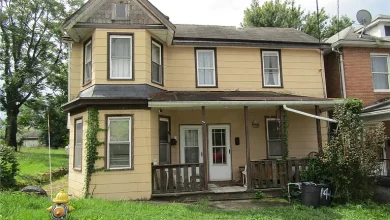
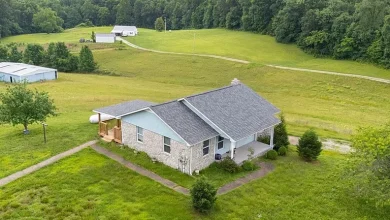
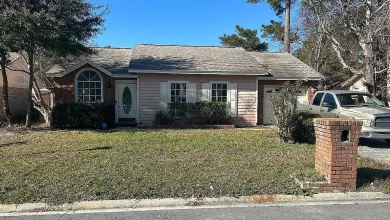
4 beds 2 baths 2,512 sqft
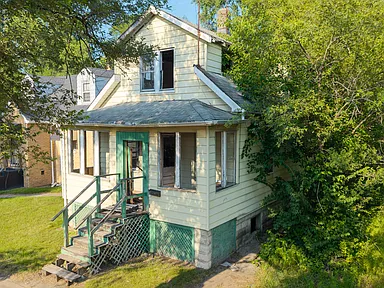
Gary Indiana Investment Opportunity With 4 Bedrooms and 2,512 Square Feet for $20,999
A four-bedroom property with more than 2,500 square feet of reported structure area and a current asking price of just $20,999 is attracting attention in Gary, Indiana. Following a $4,000 price reduction, this single-family residence presents an opportunity for buyers who are interested in renovation, value-added real estate, or an investment project in an established neighborhood.
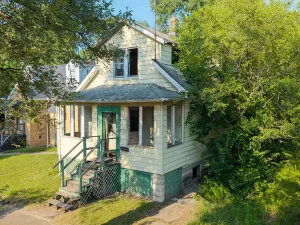
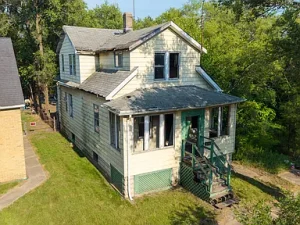
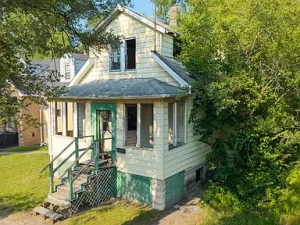
Built in 1919, the property offers four bedrooms and two full bathrooms. The listing describes it specifically as an opportunity for investors, noting that buyers could consider either light updates or a more extensive renovation depending on their strategy.
The property sits on a 6,534-square-foot lot and includes a one-car garage. It also has forced-air heating powered by natural gas, public water, and public sewer. There is no homeowners association, and the property is located near local amenities, schools, and major roadways in the Gary area.
With a listed price of approximately $8 per square foot based on the reported total structure area, this is clearly a property that should be evaluated based on its condition, renovation requirements, location, and potential after improvements rather than simply its current appearance or asking price.
For investors, contractors, experienced renovators, and buyers looking for an affordable property with four bedrooms and substantial reported interior area, this Gary opportunity provides several factors worth examining carefully.
A $20,999 Property After a $4,000 Price Reduction
The current asking price is $20,999 after a $4,000 price cut on July 9.
A price at this level naturally attracts attention, particularly in a market where many four-bedroom properties can cost substantially more. However, the low acquisition price should be viewed as the beginning of the financial analysis rather than the complete investment opportunity.
The listing itself describes the property as a value-add opportunity and states that it could require either light updates or a full renovation depending on the buyer’s strategy.
That distinction is important.
A buyer considering the property should determine whether the home needs primarily cosmetic improvements or whether major systems and structural components also require attention. The difference between those two scenarios can have a significant effect on the total project budget.
The current asking price provides an entry point, but buyers should combine that figure with inspection findings, contractor estimates, closing costs, financing expenses if applicable, taxes, insurance, and the expected cost of improvements.
Four Bedrooms and Two Full Bathrooms
One of the property’s most useful characteristics is its four-bedroom, two-bathroom configuration.
Four bedrooms provide flexibility for a variety of potential uses. A future owner could use the rooms as traditional bedrooms, while an investor could potentially evaluate the layout for rental purposes, subject to local regulations and market conditions.
Two full bathrooms are also valuable for a four-bedroom property because they can make the home more functional for larger households.
The listing identifies the primary bedroom, Bedroom 2, and Bedroom 3 on the main level, along with the kitchen and living room. The available data does not provide detailed dimensions for these rooms, so buyers should inspect the actual floor plan and room sizes before making assumptions about how the interior can be configured.
The property is listed as a one-level home, which can also be appealing to buyers who prefer a layout without multiple floors.
More Than 2,500 Square Feet of Reported Structure Area
The listing reports a total structure area of 2,512 square feet and a total interior livable area of 2,512 square feet, while also reporting 1,756 square feet of finished area above ground.
Because these figures are not identical, prospective buyers should verify the actual measured living area and the property’s official square footage during due diligence.
This is particularly important when calculating renovation budgets or comparing the property with nearby homes.
The reported size nevertheless indicates that the property has a substantial amount of space relative to its asking price.
At $20,999, the listing shows approximately $8 per square foot based on the reported total structure area.
That number can look attractive at first glance, but price-per-square-foot comparisons can be misleading for properties requiring renovation. A lower price per square foot may reflect the home’s condition, age, or investment requirements.
Therefore, the more useful question for an investor is how much the property will cost after acquisition and renovation compared with its potential market value or rental performance.
A 1919 Home With More Than a Century of History
The property was built in 1919, giving it more than 100 years of history.
Older homes can offer architectural character and established neighborhood settings, but they can also contain systems that have been modified or replaced multiple times throughout the property’s history.
For investors, an older property should be evaluated carefully for structural condition, electrical wiring, plumbing, roofing, windows, insulation, heating, foundation, and other major components.
The listing identifies the home as a single-family residence and does not indicate that it has a basement or fireplace.
The absence of a basement can simplify certain maintenance concerns while also meaning there is no lower-level storage or additional finished area available.
Because the home dates from the early twentieth century, a professional inspection can provide valuable information about its current condition.
Investor-Focused Value-Add Opportunity
The listing directly states that investors should consider the property as their next project.
This makes the property particularly relevant to buyers who are comfortable evaluating renovation opportunities.
A value-add strategy could potentially involve making targeted improvements designed to increase the property’s functionality and market appeal.
For example, depending on the actual condition, a buyer might consider improvements to the kitchen, bathrooms, flooring, paint, lighting, exterior appearance, mechanical systems, or other areas.
However, the appropriate strategy depends entirely on inspection results.
A property that needs only cosmetic improvements can have a very different financial profile from one requiring a new roof, electrical work, plumbing replacement, structural repairs, or other major renovations.
Investors should therefore avoid assuming that the listing’s low price automatically means a low total project cost.
Light Updates Versus Full Renovation
One of the most important decisions for a prospective buyer is determining the scope of work.
The listing specifically says the property offers a strong value-add opportunity with light updates or full renovation depending on the buyer’s strategy.
A light-update strategy might focus on relatively straightforward improvements that make the property cleaner, more functional, and more attractive.
A full renovation could involve a much larger scope of work, potentially affecting kitchens, bathrooms, flooring, electrical systems, plumbing, heating, windows, roofing, exterior materials, and other components.
The buyer’s strategy may also depend on whether the intended goal is to occupy the property, rent it, renovate and resell it, or hold it as a long-term investment.
Each strategy requires a different financial analysis.
One-Car Garage
The property includes a garage with one parking space.
A detached or attached garage can provide useful value to a homeowner or future tenant, particularly in an area where secure parking and storage are important.
The listing does not provide extensive information about the garage’s condition, so buyers should inspect the structure during the due-diligence period.
Questions about the garage door, roof, electrical service, foundation, drainage, and structural condition should be addressed before purchase.
If renovation work is planned, the garage may also provide useful storage for tools and materials, subject to its condition and permitted use.
6,534-Square-Foot Lot
The home sits on approximately 6,534 square feet of land.
The lot is described as rectangular and includes both front and back yard areas. The paved lot and neighborhood setting provide a conventional residential environment rather than a large rural parcel.
The yard could potentially offer room for landscaping, outdoor seating, gardening, or other improvements, depending on local regulations and the buyer’s plans.
For an investor renovating the home for resale, exterior appearance can play an important role in attracting prospective buyers. Simple improvements to landscaping, exterior maintenance, entrances, and outdoor areas can sometimes make a meaningful difference in presentation.
However, all improvements should be evaluated according to the property’s expected return and the surrounding market.
Forced-Air Natural Gas Heating
The property uses forced-air heating with natural gas.
Heating is a major consideration for any Midwest property, particularly during colder months.
Prospective buyers should determine the age and condition of the heating system and confirm that it is functioning properly.
An inspection can also identify potential ductwork issues, ventilation concerns, thermostat problems, or other maintenance needs.
If the property requires renovation, HVAC expenses should be included in the overall project budget.
The listing does not indicate central air conditioning, so buyers should confirm the current cooling setup during inspection.
Public Water and Sewer
The property is connected to public water and public sewer.
For investors, municipal utilities can simplify property management compared with homes dependent on private wells or septic systems.
Public sewer and water also provide established utility infrastructure for the residence.
Buyers should nevertheless confirm that the connections are active and functioning and should investigate whether there are any outstanding utility balances or municipal charges associated with the property.
No Homeowners Association
The property does not have a homeowners association.
For some investors and homeowners, the absence of an HOA can provide greater flexibility when planning exterior improvements, landscaping, or other permitted changes.
However, the lack of an HOA does not remove local zoning regulations, building codes, occupancy requirements, or other municipal rules.
Anyone considering a substantial renovation should verify what permits are required and whether proposed improvements are allowed.
Gary Location and Neighborhood Setting
The property is located in Gary, Indiana, in an established residential area.
The listing highlights convenient access to local amenities, schools, and major roadways in the Gary area.
Location is especially important for an investment property because the quality and availability of nearby services can affect both resale demand and rental demand.
Investors should research the immediate neighborhood rather than relying only on citywide statistics. Factors such as nearby housing conditions, property maintenance, transportation access, schools, employment centers, retail, parks, and future development can all influence a property’s performance.
A local market analysis can also help determine the appropriate renovation standard. An investor generally wants to avoid spending significantly more on improvements than the surrounding market can support.
Potential Rental Property
The four-bedroom, two-bathroom configuration could potentially make this property interesting as a rental.
Larger households often look for homes with multiple bedrooms and more than one bathroom, and the property’s one-level layout may provide practical functionality.
However, prospective landlords should independently research local rental rates and demand before purchasing.
A rental analysis should include estimated monthly rent, vacancy, property management, insurance, taxes, maintenance, utilities paid by the owner, repairs, capital expenditures, and financing costs.
The property should also be brought into compliance with all applicable rental and occupancy requirements before being offered to tenants.
Potential Fix-and-Hold Strategy
An investor could potentially consider a long-term hold strategy.
Under this approach, the property would be acquired, improved, and maintained as a rental asset rather than immediately sold.
The advantage of such a strategy can be long-term ownership of an income-producing property, but the success of the approach depends on actual rental income and ongoing expenses.
A detailed cash-flow projection should be prepared before purchase.
The investor should also consider how much capital will be tied up in the renovation and whether the resulting property condition will support the desired rental rate.
Potential Fix-and-Resell Strategy
Another possible strategy is renovating the property and selling it after improvements.
A four-bedroom home with more than 2,500 square feet of reported structure area could potentially provide substantial space for a future buyer, but the resale value must be supported by comparable properties in the immediate market.
An investor considering a resale should study recently sold properties rather than relying solely on active listings.
Comparable homes should be similar in location, size, bedroom count, lot characteristics, age, and renovation level.
The investor should also calculate transaction costs, including acquisition expenses, renovation costs, financing, holding costs, insurance, taxes, utilities, real estate commissions, and closing costs.
Cash Purchase Terms
The listing identifies cash as a listing term.
This is an important consideration for prospective buyers because the financing options may be more limited than for a conventional move-in-ready property.
Cash buyers should still conduct inspections, title research, and other due diligence.
Investors using cash should also consider the opportunity cost of the funds required for the acquisition and renovation.
If a buyer intends to use financing, the buyer should confirm directly with lenders whether the property’s condition qualifies for the desired loan product.
Understanding the Tax Information
The listing reports a tax-assessed value of $7,200 and an annual tax amount of approximately $181.
The reported annual property tax is relatively modest, but buyers should independently confirm the current tax bill with the appropriate local authority.
Tax assessments and tax obligations can change, particularly following changes in ownership or improvements.
Investors should also include property taxes in long-term projections rather than assuming that the current amount will remain unchanged.
Due Diligence Is Especially Important
A property listed for $20,999 should not be purchased solely because the price appears low.
The appropriate question is whether the property can be acquired, renovated, maintained, and potentially operated or resold within a financially reasonable budget.
A thorough due-diligence process may include:
- Professional home inspection
- Roof inspection
- HVAC inspection
- Electrical evaluation
- Plumbing inspection
- Structural and foundation review
- Sewer and water verification
- Title search
- Property tax verification
- Permit and code research
- Zoning confirmation
- Insurance quote
- Contractor renovation estimates
- Comparable sales analysis
- Rental market research if intended as an investment
These steps can help reveal expenses that may not be obvious from an online listing.
Renovation Budget Considerations
For an older property, renovation budgeting should be divided into immediate repairs and optional improvements.
Immediate repairs are those necessary for safety, habitability, structural stability, or basic functionality.
Optional improvements may include cosmetic upgrades that improve appearance but are not necessarily required.
A buyer could potentially create several renovation scenarios.
A basic scenario might address safety and functionality. A moderate renovation could improve kitchens, bathrooms, flooring, paint, lighting, and exterior presentation. A full renovation could involve major systems and substantial reconstruction.
Comparing these scenarios can help an investor determine whether the project fits their available capital.
Why the Four-Bedroom Layout Matters
The four-bedroom configuration provides flexibility that could be valuable after renovation.
For an owner-occupant, the rooms could accommodate family members, guests, offices, or hobbies.
For a landlord, four bedrooms may broaden the potential tenant pool.
For a resale investor, four bedrooms can provide a useful marketing feature if comparable homes in the area support that configuration.
However, the actual bedroom sizes, closet space, windows, egress, and overall condition should be verified before relying on the bedroom count for an investment calculation.
No Basement Means Different Storage Needs
The listing states that the home does not have a basement.
This means buyers should consider where storage will be located.
The one-car garage and backyard may provide some storage possibilities, but the exact options will depend on the property’s condition and local regulations.
For a family, the lack of basement space may be less important if the home has sufficient closets and garage storage.
For an investor, the absence of a basement may simplify some maintenance concerns but also means there is no additional lower-level area that could potentially be finished.
A Property With Multiple Possible Strategies
One of the interesting aspects of this Gary listing is that the property does not appear to be targeted exclusively toward one type of buyer.
An experienced investor may see an opportunity for renovation.
A contractor may see a manageable project.
A homeowner with renovation experience may be interested in creating an affordable residence.
A landlord may evaluate the four-bedroom configuration for rental potential.
A buyer looking for a long-term property may consider holding it after improvements.
Each strategy requires different assumptions, and none should be pursued without independent financial analysis.
Final Thoughts on This Gary, Indiana Property
This Gary, Indiana property stands out because of the combination of price, size, bedroom count, and renovation potential.
The current asking price is $20,999 following a $4,000 price reduction. The home contains four bedrooms and two full bathrooms and is reported to have 2,512 square feet of total structure area, with 1,756 square feet of finished area above ground listed in the property details.
Built in 1919, the home offers more than a century of history and sits on a 6,534-square-foot rectangular residential lot with front and back yard areas.
The property also includes a one-car garage, forced-air natural gas heating, public water, public sewer, and no HOA.
The listing specifically describes the home as an investor opportunity and states that buyers can consider either light updates or a full renovation depending on their strategy. That makes the property’s condition and renovation requirements especially important.
The $20,999 asking price may provide a relatively low entry point, but the ultimate financial outcome will depend on the total cost of acquisition and improvements. Buyers should carefully evaluate the roof, structure, electrical, plumbing, HVAC, windows, exterior, interior finishes, and other major components before committing.
For an investor, the key question is not simply how inexpensive the property is today. It is whether the property can be transformed into a financially viable asset after accounting for every cost involved.
For an owner-occupant, the opportunity may be the ability to purchase a four-bedroom home at a comparatively low initial price and customize it over time, assuming the property condition and financing arrangements are suitable.
For a landlord, the four-bedroom, two-bathroom configuration could potentially provide an interesting rental profile, but local rental demand and operating expenses should be researched independently.
Ultimately, this is a property for buyers who are prepared to look beyond the listing price and evaluate the complete project. Its age, size, location, lot, garage, utility connections, and value-add potential create several possible paths, but each one requires careful due diligence.
With the current price reduced to $20,999, the property may be worth a closer look for buyers searching for an affordable Gary real estate project. The combination of four bedrooms, two bathrooms, substantial reported structure area, and an established residential lot gives the property a foundation that could potentially be improved substantially, depending on its actual condition.
As with any older property offered at a low price, a professional inspection, accurate renovation estimates, title review, market research, and realistic financial projections are essential before moving forward.
Listed on Zillow.