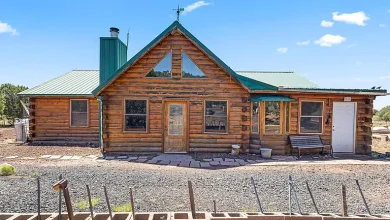
4.24 Acres With Scenic Views and Rocky Mountain Retreat Potential
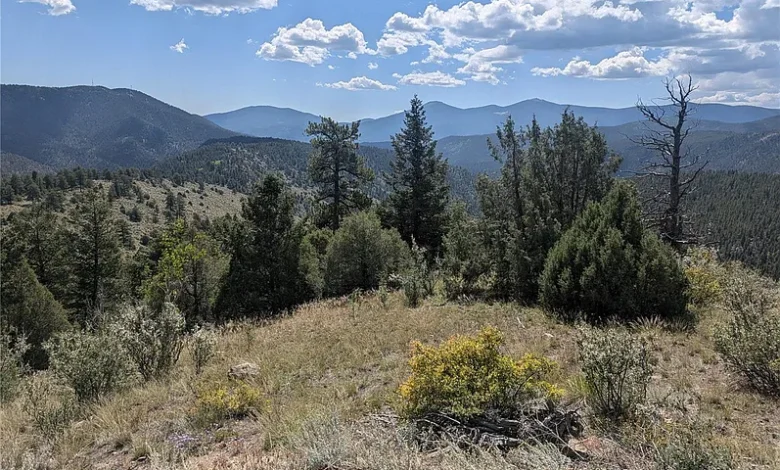
$16,900 Mountain Land in Dumont, Colorado: 4.24 Acres With Scenic Views and Rocky Mountain Retreat Potential
For buyers searching for affordable Colorado mountain land, vacant acreage near Denver, a future mountain homesite, recreational property, or land near Interstate 70, the approximately 4.24-acre parcel at 00 Maud L, Dumont, CO 80436 presents an intriguing opportunity at an asking price of just $16,900.
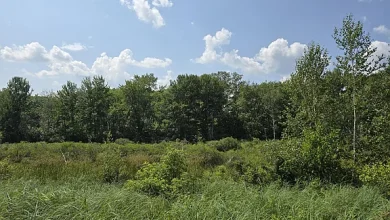
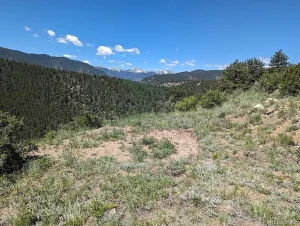
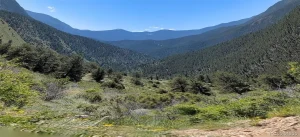
Located in Clear Creek County, this unimproved parcel is surrounded by the rugged landscape that defines Colorado’s mountain communities. The listing highlights expansive mountain views, natural beauty, outdoor recreation, and convenient access to destinations such as Idaho Springs and Georgetown, while Denver is described as being less than an hour away under favorable travel conditions.
At approximately $3,986 per acre, based simply on the $16,900 asking price divided by 4.24 acres, the property offers a relatively low initial entry price for Colorado mountain acreage. However, buyers should understand an important distinction: purchasing inexpensive mountain land and developing a buildable residential property are two very different financial commitments.
The parcel is described as mountainous, the road surface is listed as dirt, and no existing house, utilities, water source, sewer system, driveway, or other improvements are identified in the supplied listing information. In addition, the property carries an M-1 zoning designation, which should be independently researched before assuming that a conventional residence, cabin, manufactured home, recreational structure, or any other specific use can be developed.
For the right buyer, Lot 00 Maud L may offer an opportunity to secure a piece of Colorado’s mountain landscape at an accessible acquisition price. The key is understanding the property itself—and the potential development costs—before making plans.
Property Overview: 00 Maud L, Dumont, CO 80436
The property consists of approximately 4.24 acres of unimproved land in Dumont, Colorado.
The current asking price is $16,900.
The parcel is described as mountainous and offers mountain views. It is located within the Dumont subdivision or community designation and carries parcel number 183520200612.
The zoning is identified as M-1.
No HOA is reported.
There is no fencing identified.
The road surface is listed as dirt.
Annual property taxes are reported at approximately $556.
The listing indicates potential transaction terms including cash, conventional, jumbo, and USDA loan options, although actual financing eligibility depends on the buyer, lender, parcel, and intended use.
Understanding the $16,900 Asking Price
The most attention-grabbing number is clearly the $16,900 asking price.
Colorado real estate is often associated with much higher prices, particularly near mountain recreation destinations and the Interstate 70 corridor.
That makes a four-plus-acre parcel below $20,000 stand out.
But vacant mountain land should never be evaluated based solely on its purchase price.
A $16,900 parcel can remain an inexpensive recreational holding, or it can become the starting point for a development project costing many times the original land price.
The difference depends on access, zoning, slope, geology, utilities, water, wastewater, driveway requirements, building regulations, and construction plans.
Approximately $3,986 Per Acre
Dividing the $16,900 asking price by 4.24 acres produces a simple asking price of approximately $3,986 per acre.
That figure is useful for an initial comparison, but price per acre has limitations.
One four-acre parcel may already have a driveway, power, well, septic approval, survey, and gently sloping building area.
Another four-acre parcel may be steep, remote, difficult to access, and expensive to develop.
Therefore, buyers should compare this property with land that has similar terrain, access, zoning, utility availability, and development characteristics.
4.24 Acres of Colorado Mountain Property
At approximately 4.24 acres, the parcel offers considerably more land than a standard residential lot.
That acreage can potentially provide privacy and separation from neighboring properties while preserving the natural mountain environment.
For buyers primarily interested in owning land rather than immediately constructing a residence, this may be particularly appealing.
A future owner might value the property simply for its location, views, natural surroundings, and potential long-term use.
For construction-oriented buyers, however, total acreage is less important than the amount of practically usable land.
Mountain Views
The listing identifies mountain views as a major feature.
For many Colorado land buyers, views are one of the most important reasons to purchase mountain property.
A well-positioned future structure could potentially take advantage of the surrounding scenery, subject to legal development rights and physical site feasibility.
Buyers should personally visit the parcel because mountain views can change dramatically from one portion of a property to another.
Trees, ridges, slope direction, neighboring land, and elevation all affect the actual view.
Mountainous Terrain
The property is specifically classified as mountainous.
That description deserves careful attention.
Mountain terrain can create spectacular scenery, but it can also substantially increase development costs.
Excavation, grading, driveway construction, retaining walls, drainage systems, foundations, utility installation, and snow access may all become more complicated on sloping ground.
Before planning a house or cabin, buyers should understand exactly how steep the property is and whether practical building areas exist.
Why Buildable Area Matters More Than Total Acreage
A parcel can contain 4.24 acres while having a much smaller area suitable for construction.
Steep slopes, rock, drainage areas, access limitations, setbacks, zoning requirements, and septic considerations can reduce the amount of usable ground.
This is why a physical site inspection is essential.
A topographic survey may also be useful for someone seriously considering development.
It can help identify elevation changes and provide information for architects, engineers, driveway contractors, and builders.
M-1 Zoning Requires Verification
One of the most important facts in the listing is the M-1 zoning designation.
Buyers should not assume that the property’s marketing description as a possible mountain retreat automatically means a conventional residential home can be built exactly as envisioned.
The specific meaning of M-1 zoning should be confirmed directly with the appropriate Clear Creek County authorities using the parcel number.
Permitted uses, setbacks, minimum lot requirements, building limitations, access standards, and other regulations can change the practical development potential of land.
Verify Residential Use Before Buying
The seller’s description discusses the possibility of a full-time residence or weekend getaway.
That provides useful context about how the property is being marketed, but a buyer should independently confirm that the desired structure and use are legally permitted.
For example, someone considering a traditional house, small cabin, manufactured home, modular home, tiny home, RV use, accessory structure, or short-term rental should investigate the applicable rules before purchase.
Zoning verification is inexpensive compared with discovering a major restriction after closing.
No HOA Listed
The property has no HOA according to the supplied listing information.
For some buyers, this is a significant advantage.
There is no homeowners association fee shown, and there may be fewer private community rules than in an HOA-controlled mountain development.
However, no HOA does not mean no restrictions.
County zoning, building codes, environmental rules, access requirements, fire regulations, well and septic rules, and recorded easements can still apply.
Dirt Road Access
The road surface is identified as dirt.
This is an important practical consideration for mountain ownership.
A dirt road can be perfectly functional, but buyers should determine its current condition and who is responsible for maintenance.
Questions include whether the road is publicly or privately maintained, whether there are recorded access rights, and how it performs during winter weather.
Colorado mountain roads can behave very differently in July than they do after heavy snowfall.
Winter Access Considerations
Anyone planning year-round use should investigate winter access carefully.
Snow accumulation, ice, road grade, drainage, vehicle requirements, and snow removal can all affect accessibility.
A road that is easy to travel in summer may become much more challenging during winter.
A prospective buyer should ask who plows the road, whether snow removal is guaranteed, and whether a four-wheel-drive or high-clearance vehicle may be advisable under certain conditions.
Legal Access and Easements
Physical access and legal access are not always the same thing.
A visible dirt road does not automatically prove that every property owner has unrestricted legal rights to use it.
Title documents should identify recorded access easements and other rights affecting the parcel.
A title company or real-estate attorney can help buyers understand access before closing.
This is particularly important with undeveloped mountain land.
No Existing Residence
This is unimproved land.
There are no bedrooms, bathrooms, or existing residential square footage.
That gives buyers a blank canvas, but it also means essentially every residential improvement would need to be created from the beginning.
There is no existing structure to renovate.
For someone who wants complete control over design, that may be attractive.
For someone seeking an inexpensive move-in-ready mountain property, this is a fundamentally different proposition.
Utility Availability Should Be Investigated
The supplied facts do not identify existing electric, gas, water, or sewer service.
That makes utility research one of the first priorities for a construction-oriented buyer.
The distance to electrical infrastructure can significantly affect connection costs.
Mountain excavation can also make underground utility installation more expensive.
Buyers should contact relevant service providers rather than estimating utility availability based on nearby buildings.
Water Supply
No water source is identified in the supplied information.
A future residence may require a private well or another approved water solution, depending on local regulations and service availability.
Mountain wells can vary substantially in depth, drilling conditions, production, and cost.
A local well contractor can provide more relevant information than a generic national estimate.
Water rights and permitting should also be investigated where applicable.
Wastewater and Septic Planning
No public sewer service is identified.
A future home may therefore require an approved septic or other wastewater system if municipal service is unavailable.
Mountain terrain can complicate septic design.
Slope, soil depth, geology, groundwater, lot configuration, and setbacks can all affect feasibility.
A buyer intending to build should investigate wastewater options before finalizing a house design.
Site Preparation Costs
Site preparation can become one of the largest differences between inexpensive raw land and a finished mountain homesite.
Potential expenses can include clearing, grading, excavation, rock removal, erosion control, drainage, driveway construction, retaining walls, utility trenches, foundation preparation, and construction access.
Heavy equipment must also be able to reach the site.
A local excavation contractor can help determine whether the terrain creates unusual costs.
Complete Development Cost
A realistic development equation might look like:
$16,900 Land + Closing Costs + Survey + Engineering + Zoning/Permit Research + Driveway + Excavation + Water + Septic + Electricity + Site Preparation + Foundation + Construction + Insurance + Taxes + Financing + Contingency = Total Project Cost
This calculation provides a much more accurate picture than looking at the $16,900 purchase price alone.
For challenging mountain property, infrastructure can become a substantial percentage of the total budget.
Survey and Boundary Verification
The supplied information does not state whether a recent physical survey is available.
Before building, buyers should understand the exact boundaries of the 4.24-acre parcel.
A survey can help identify corners, easements, access, encroachments, and the relationship between potential building areas and legal property lines.
Survey information can also help with planning setbacks and driveway locations.
Geotechnical Considerations
Mountain construction can sometimes require additional geological or geotechnical investigation.
Slope stability, rock conditions, soil bearing capacity, drainage, and foundation requirements may affect construction.
Whether specialized engineering is necessary depends on the actual site and local requirements.
Buyers should avoid assuming that a standard flat-lot foundation design will automatically work.
Wildfire Considerations
Colorado mountain ownership also means thinking about wildfire risk.
Wooded or rugged environments may require vegetation management, defensible space, emergency access, and fire-resistant construction strategies.
Insurance companies may also consider wildfire exposure when determining availability and premiums.
A buyer planning a future home should investigate both county requirements and insurance options before construction.
Homeowners Insurance Planning
Insurance is best investigated early rather than after a house has been designed.
Mountain location, road access, fire protection, roof materials, construction type, heating systems, and distance from emergency services can influence premiums and availability.
For a vacant parcel, coverage needs are different from those for a completed residence.
Once improvements are added, insurance expenses become part of the long-term ownership budget.
Hiking and Outdoor Recreation
The seller emphasizes access to hiking and outdoor recreation.
This is one of the major lifestyle attractions of the Clear Creek County region.
Colorado’s mountain environment provides opportunities for hiking, biking, wildlife viewing, scenic drives, and other outdoor activities.
A buyer seeking a weekend escape may value regional recreation as much as the land itself.
Fishing and Clear Creek
The listing also highlights fishing along Clear Creek.
Proximity to recreational water can enhance the appeal of a mountain property even when the parcel itself is not waterfront.
Prospective owners should distinguish between nearby public recreational opportunities and any private access rights.
Nothing in the supplied property facts indicates that this parcel itself includes direct water frontage.
Rafting Opportunities
Clear Creek is also associated with rafting and other river recreation.
For an owner using the property as a seasonal retreat, proximity to multiple outdoor activities can make the location more versatile.
Summer recreation may include rafting, hiking, biking, and fishing, while winter opens access to snow-oriented activities throughout the broader mountain region.
Year-Round Recreation
One advantage of Colorado mountain property is that recreation is not limited to one season.
Warmer months provide hiking, cycling, fishing, scenic exploration, and outdoor gatherings.
Winter can provide access to snow sports and mountain destinations.
This year-round appeal may be relevant to someone considering a second home or recreational base.
Interstate 70 Access
The seller highlights the property’s proximity to Interstate 70.
I-70 is one of Colorado’s most important mountain transportation corridors.
Access to the interstate can make a rural mountain property considerably more practical than a parcel located many miles from a major road.
However, buyers should personally test the route between the parcel and I-70.
The final dirt-road portion may be more important to daily usability than the straight-line distance suggests.
Access to Idaho Springs
Nearby Idaho Springs provides access to services, restaurants, shopping, and recreation.
For someone considering full-time mountain living, proximity to an established town can be valuable.
It allows the owner to enjoy a quieter setting without being completely disconnected from everyday necessities.
Actual travel time should be tested in different weather conditions.
Georgetown and the Surrounding Region
The listing also mentions Georgetown as an accessible nearby mountain town.
The broader Clear Creek County area includes historic communities, scenic roads, mountain recreation, and public lands.
This regional character contributes to the property’s lifestyle appeal.
A buyer should explore the area personally to determine whether the location matches expectations for full-time or seasonal living.
Denver in Under an Hour
According to the marketing description, Denver can be reached in under an hour.
That potential proximity is one of the more compelling aspects of Dumont.
It could allow someone to own mountain acreage while remaining within reach of a major metropolitan area.
However, Colorado mountain traffic can vary significantly with weather, accidents, construction, weekends, and ski-season travel.
The seller’s stated travel time should therefore be viewed as an estimate rather than a guarantee.
Potential Weekend Retreat
One possible strategy is to hold the property for a future weekend mountain retreat.
A smaller cabin or residence could potentially provide a place to escape from urban life while maintaining access to Denver and nearby mountain towns.
Before developing such a plan, buyers should confirm zoning, building requirements, water, wastewater, electricity, road access, and winter maintenance.
A weekend home still needs dependable infrastructure.
Potential Full-Time Residence
The seller also markets the parcel as a possible location for a full-time residence.
A permanent home would require more detailed infrastructure planning.
Reliable year-round access, heating, electricity, water, wastewater, internet, emergency access, snow removal, and insurance all become essential.
The quiet mountain setting may be attractive, but practical daily living requirements should be investigated before construction.
Internet and Remote Work
Anyone considering working remotely from a future mountain residence should research internet service.
The listing does not identify broadband availability.
Mountain properties can rely on a range of technologies, including cable or fiber where available, fixed wireless, cellular service, or satellite internet.
Coverage should be verified specifically at the parcel because mountain terrain can affect signals dramatically over short distances.
Financing Vacant Mountain Land
Financing raw land can differ substantially from obtaining a mortgage for a completed house.
Some lenders require larger down payments or offer shorter terms for vacant parcels.
The listing indicates potential terms including cash, conventional, jumbo, and USDA loan options, but those categories should not be interpreted as a guarantee that every buyer or development plan will qualify.
A lender should review the specific parcel and intended use.
Construction Financing
A buyer who plans to build may eventually need construction financing.
Construction loans can consider the land, plans, contractor, budget, appraisal, permits, and completed value.
Some borrowers purchase land first and build later, while others pursue financing that incorporates both land and construction.
Understanding the financing strategy before buying can prevent a situation where the land is affordable but development financing is not.
Annual Property Taxes of Approximately $556
The current annual property tax is reported at approximately $556.
For someone holding the parcel without immediate development, this represents one of the primary recurring ownership expenses.
Buyers should verify the latest tax bill before closing.
If a residence or other substantial improvement is eventually constructed, the property’s assessment and future taxes could change.
No Zestimate
Zillow does not display a Zestimate for the property.
That is not unusual for undeveloped mountain land.
Automated valuation models can have difficulty with vacant parcels because relatively small differences in access, slope, utilities, views, zoning, and buildability can produce substantial differences in market value.
Comparable vacant-land sales are more useful than comparing this property with finished houses.
Market Exposure
According to the supplied listing information, the property has been on Zillow for approximately 93 days.
Vacant mountain land frequently takes longer to sell than move-in-ready residential property because the buyer pool is more specialized.
Prospective buyers often need additional time to research access, utilities, zoning, surveys, construction feasibility, and financing.
Time on market should therefore be considered alongside these property-specific factors.
2,821 Zillow Views and 307 Saves
The listing has reportedly accumulated approximately 2,821 views and 307 saves.
That represents considerable online attention for a vacant parcel.
The combination of a sub-$20,000 price, more than four acres, Colorado mountain views, and proximity to the I-70 corridor may help explain that interest.
However, views and saves do not establish market value and do not guarantee that development is feasible.
Long-Term Land Investment
Some buyers may consider purchasing the property without immediate plans to build.
The relatively modest acquisition price can make a long-term hold more accessible than purchasing an improved mountain home.
However, future appreciation should never be assumed.
Land values can rise or fall based on demand, infrastructure, zoning, development costs, financing conditions, and the broader real-estate market.
A buyer should be comfortable owning the property based on today’s characteristics rather than relying on a specific future resale price.
Recreational Land Ownership
Another possibility is purchasing the land primarily for its mountain setting.
Whether recreational use such as camping or other temporary activities is permitted should be confirmed with local authorities.
Vacant land ownership does not automatically provide unrestricted camping or RV rights.
For buyers seeking this type of use, zoning verification should occur before closing rather than afterward.
Building a Realistic Mountain Development Budget
The most important financial exercise is to estimate the complete project, not merely the land purchase.
A buyer should account for acquisition costs, survey work, engineering, permits, driveway construction, excavation, utility connections, water, wastewater, foundation work, construction, snow management, insurance, taxes, financing costs, and landscaping.
A substantial contingency should then be added.
Mountain projects can reveal conditions that are difficult to identify before excavation begins.
Why a Contingency Reserve Matters
Unexpected costs are common in land development.
Excavation can encounter more rock than anticipated.
A driveway can require retaining walls or additional drainage.
A well may need to be deeper than expected.
A septic design may require a more expensive solution.
Electrical service may be farther away than assumed.
Engineering requirements can also change the project.
A contingency reserve protects the buyer from depending on an unrealistically precise initial budget.
Questions to Answer Before Purchasing
Before committing to Lot 00 Maud L, a serious buyer should establish the exact permitted uses under M-1 zoning, confirm legal and physical access, understand dirt-road maintenance and winter snow removal, investigate electricity availability, determine water and wastewater options, review the parcel boundaries, study slope and geology, obtain realistic site-development estimates, and research insurance.
These answers will provide much more useful information than the asking price alone.
Final Thoughts on 00 Maud L, Dumont, Colorado
00 Maud L, Dumont, CO 80436 offers a distinctive opportunity to purchase approximately 4.24 acres of Colorado mountain land for $16,900.
The property combines acreage, mountain views, a peaceful setting, and access to the outdoor lifestyle associated with Clear Creek County.
Its location near the Interstate 70 corridor could also provide an important balance between mountain privacy and regional accessibility. Idaho Springs and Georgetown are nearby, while the listing describes Denver as being reachable in under an hour under suitable conditions.
Outdoor recreation is another major attraction. The surrounding region provides opportunities for hiking, fishing, rafting, biking, scenic exploration, and winter activities.
For someone dreaming of a future Colorado mountain retreat, those characteristics are understandably appealing.
However, the low asking price should be evaluated alongside the realities of developing unimproved mountain acreage.
The parcel is described as mountainous, the road is dirt, and the supplied listing information does not identify existing water, sewer, electricity, or residential improvements.
The M-1 zoning designation is particularly important and should be verified directly before assuming a particular residential or recreational use is permitted.
A buyer planning construction needs to understand the property’s slope, legal access, driveway requirements, water solution, wastewater feasibility, electrical availability, geological conditions, wildfire considerations, winter accessibility, and insurance options.
Those factors could have a much greater financial impact than the $16,900 acquisition price.
For someone interested primarily in holding mountain acreage, the property may present a simpler proposition. The current annual tax of approximately $556 provides a measurable holding cost, while there is no HOA fee reported.
For someone planning a home, the correct analysis is more comprehensive.
The land price is only the first step toward a finished mountain residence.
A realistic budget should incorporate every stage from survey and site engineering through driveway construction, utilities, foundation work, permitting, building construction, insurance, and contingency reserves.
The property’s online activity—approximately 2,821 Zillow views and 307 saves over 93 days—suggests that other buyers have also noticed the combination of acreage, mountain setting, and accessible price. But online popularity cannot substitute for professional due diligence.
The strongest potential buyer for this parcel is someone who appreciates the location and scenery while also being prepared to investigate the practical details carefully.
With appropriate zoning verification, site evaluation, utility research, access confirmation, professional estimates, and a realistic development budget, 00 Maud L could provide a foundation for a future mountain project or an opportunity to own a sizable piece of Colorado’s rugged landscape at a relatively low initial cost.
Listed on Zillow