3 beds 3 baths 1,624 sqft
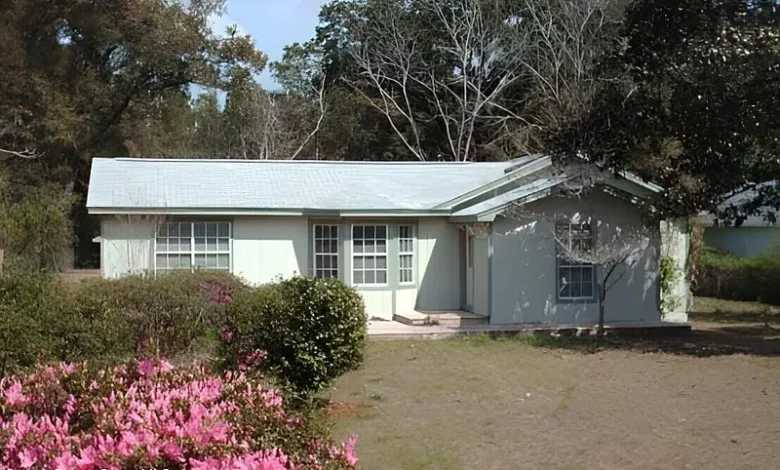
Pensacola Foreclosure Auction: 3-Bedroom Home on 1.25 Acres With an Estimated $5,000 Opening Bid
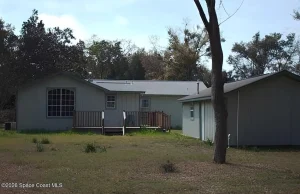
A foreclosure property in Pensacola, Florida, is attracting attention with an estimated $5,000 auction opening bid. Located at 6700 Lillian Hwy, Pensacola, FL 32506, this single-family residence offers three bedrooms, three full bathrooms, approximately 1,624 square feet of living space, a detached garage, and a substantial 1.25-acre lot.
The headline number is certainly eye-catching. However, prospective buyers should understand an important distinction immediately: $5,000 is associated with the opening bid for the online foreclosure auction, not necessarily the property’s final purchase price. Competitive bidding could result in a substantially higher final price.
According to the listing information, the foreclosure auction is scheduled to end on October 2, 2026, at 12:00 PM EST, and the property is being offered as-is.
Built in 1949, the house presents an unusual combination of a low auction starting point, considerable land, three full bathrooms, a detached garage, and a Pensacola location. At the same time, foreclosure auctions involve considerations that are very different from ordinary residential transactions.
Anyone interested in this property should investigate the auction rules, title, liens, property condition, occupancy status, taxes, insurance, financing requirements, and potential repair expenses before bidding.
Here is a detailed look at what makes 6700 Lillian Hwy noteworthy and what potential buyers should consider.
Property Overview: 6700 Lillian Hwy, Pensacola, Florida
The property is located at:
6700 Lillian Hwy, Pensacola, FL 32506
Based on the supplied listing information, the principal details include:
Auction Estimate / Opening Bid: Approximately $5,000
Sale Type: Foreclosure Auction
Auction End: October 2, 2026 at 12:00 PM EST
Property Type: Single-Family Residence
Bedrooms: 3
Bathrooms: 3 full bathrooms
Interior Living Area: Approximately 1,624 square feet
Lot Size: Approximately 1.25 acres
Year Built: 1949
Stories: One
Garage: Detached, one space
Water: Public
Sewer: Septic tank
HOA: None listed
Subdivision: None listed
Reported Tax Assessed Value: $158,390
Reported Annual Property Tax: $2,513
Special Condition: Auction
Sale Condition: As-is
The listing also provides a Zestimate of $222,200, but neither a Zestimate nor a tax assessment guarantees what the property is currently worth, particularly when a house is being sold through a foreclosure auction and its exact physical condition may require further investigation.
Why the Estimated $5,000 Price Requires Context
The most dramatic number associated with this listing is undoubtedly $5,000.
Seeing a three-bedroom house on 1.25 acres advertised alongside such a figure can make the property appear to be an extraordinary bargain. However, auction pricing works differently from the traditional asking price of a normal home listing.
The supplied listing states that the list price represents the opening bid for the online auction.
In other words, $5,000 should not be interpreted as a guaranteed purchase price.
If multiple bidders participate, the bidding may rise significantly. There may also be auction-related costs, deposits, buyer requirements, closing expenses, taxes, or other charges depending on the terms of the sale.
The most important question is therefore not simply, “Can this house really be purchased for $5,000?”
A more useful question is:
What would the total acquisition and renovation cost be if a buyer successfully wins the auction?
That distinction is essential when evaluating foreclosure opportunities.
A 3-Bedroom, 3-Bathroom Single-Family Home
The property contains three bedrooms and three full bathrooms, which is a notable configuration for a house measuring approximately 1,624 square feet.
Three full bathrooms can provide significant flexibility for future occupants.
For a household, multiple bathrooms can reduce congestion and provide greater privacy. For someone working from home, one of the bedrooms might potentially function as an office, guest room, or multipurpose space.
Investors may also find a three-bedroom configuration relevant when analyzing potential resale or rental demand.
However, bedroom and bathroom counts tell only part of the story.
With an auction property being sold as-is, prospective buyers should investigate the actual condition and functionality of every room and major system before assigning value to the layout.
Approximately 1,624 Square Feet of Living Space
At 1,624 square feet, the home provides a moderate amount of interior space.
It is large enough to offer separate living areas while remaining smaller than many modern suburban houses, which could potentially help keep certain renovation and maintenance expenses more manageable.
The home’s one-story configuration is another practical characteristic.
A single-level layout can appeal to buyers who prefer to avoid stairs and may also simplify access to various parts of the structure during renovation.
However, the age of the property means the interior configuration may differ from contemporary open-plan homes.
A future renovation could potentially update the layout, subject to structural limitations, building codes, permits, and budget.
Built in 1949: An Older Home Requiring Careful Evaluation
The house was constructed in 1949, making it more than 75 years old.
Older houses can offer character, established surroundings, and construction details that distinguish them from newer developments. They can also present maintenance and renovation challenges.
Before purchasing a house of this age, buyers may want qualified professionals to evaluate the foundation, framing, roof, electrical system, plumbing, windows, insulation, drainage, mechanical equipment, and other major components.
Previous renovations are another important consideration.
A home built in 1949 may have undergone multiple repairs or alterations over the decades. Determining whether those modifications were performed properly can be an important part of due diligence.
With an as-is foreclosure property, understanding the current condition becomes particularly important because buyers should not assume repairs will be completed before closing.
The 1.25-Acre Lot Is One of the Property’s Biggest Features
Beyond the opening bid, perhaps the most notable feature of 6700 Lillian Hwy is its land.
The property includes approximately 1.25 acres.
For buyers who value outdoor space, this can substantially differentiate the property from homes sitting on smaller residential lots.
The acreage could potentially provide room for landscaping, gardening, recreation, outdoor entertaining, additional storage, or other uses.
However, buyers should not assume that acreage automatically permits additional construction or subdivision.
Local zoning, setbacks, easements, septic requirements, drainage conditions, flood-related considerations, access rules, and other restrictions can affect what may legally be done with the land.
Anyone considering an accessory building, addition, second residence, lot division, or other significant development should verify feasibility with the relevant authorities.
An Additional Parcel Is Referenced
The supplied property details state that an additional parcel is included, identified as 1123161, while the primary parcel number is listed as 112s316107000000.
This is an important detail to investigate before bidding.
Prospective buyers should confirm exactly which land is included in the auction, how the parcels are legally described, whether they are contiguous, and whether any separate taxes, restrictions, easements, or obligations apply.
The legal auction documents should take precedence over assumptions based on a consumer-facing property listing.
Understanding exactly what is being purchased is particularly important when multiple parcels are involved.
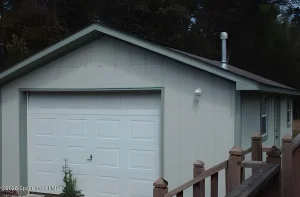
Detached One-Car Garage
The property includes a detached garage with one parking space.
Even a single-car garage can add useful functionality to an older residential property.
Depending on its condition, the structure could provide protected vehicle parking, storage space, a workshop area, or room for lawn and maintenance equipment.
Because it is detached from the main house, its condition should be evaluated independently.
The roof, framing, foundation, electrical service, garage door, exterior materials, and structural integrity may all require inspection.
A garage adds value only to the extent that it remains safe and usable, so its existence should not automatically be treated as proof that no additional work is necessary.
Public Water and Septic Sewer System
According to the listing information, the property uses public water and a septic tank for wastewater.
The septic system deserves particular attention during due diligence.
Unlike a home connected to municipal sewer service, a property with a septic system depends on privately maintained wastewater infrastructure.
Prospective buyers should investigate the septic system’s age, location, capacity, maintenance history, and current condition.
A septic inspection may help identify potential problems before purchase.
Repairing or replacing a failing septic system can become a significant expense, so this is an important component of any renovation budget.
The 1.25-acre lot may provide considerable land, but buyers should still verify how septic infrastructure affects future plans for the property.
Heating and Cooling Are Listed as “Other”
The supplied listing information identifies both heating and cooling as “Other.”
That leaves an important question unanswered.
Potential buyers should determine what heating and air-conditioning equipment actually exists at the property, whether it is currently operational, and whether replacement or upgrades will be required.
This is particularly relevant in Florida, where effective air conditioning can be an important component of everyday comfort.
An older home may have mechanical equipment that no longer meets a buyer’s expectations for efficiency or reliability.
Depending on existing infrastructure, renovation possibilities could include repairing current equipment, replacing an older HVAC system, or installing an alternative system.
Those decisions should be made after inspecting the house and obtaining appropriate estimates.
No HOA Listed
The property has no homeowners association listed.
For some buyers, this can be attractive because there is no listed HOA fee to add to recurring ownership expenses.
The absence of an HOA does not eliminate other restrictions.
City or county zoning requirements, building codes, permitting rules, deed restrictions, easements, environmental regulations, and other legal requirements can still affect the property.
Buyers interested in significant renovation or land development should investigate those requirements independently.
Understanding the Reported $3 Per Square Foot Figure
The listing reports approximately $3 per square foot, which results from comparing the estimated $5,000 opening bid with the home’s approximately 1,624 square feet.
That number is visually striking, but it has limited usefulness when evaluating an auction.
If bidding rises, the effective acquisition price per square foot rises as well.
Furthermore, price per square foot does not account for repair requirements, title issues, auction fees, taxes, insurance, or other expenses.
A better calculation after the auction might be:
Winning Bid + Auction Costs + Closing Expenses + Immediate Repairs + Renovation + Holding Costs = Effective Total Investment
Dividing that figure by the home’s square footage would provide a much more meaningful project-cost comparison.
Tax Assessed Value of $158,390
The property information reports a tax assessed value of $158,390.
That number is dramatically higher than the $5,000 opening bid, but the difference should not be interpreted as guaranteed equity.
A tax assessment exists primarily for property-tax purposes.
It may not reflect the price that an informed buyer would currently pay for an as-is foreclosure property.
Property condition, title considerations, occupancy, market conditions, repair requirements, and auction terms can all influence value.
The tax assessment is therefore useful context, but it should not replace an independent market analysis.
Zillow Zestimate of $222,200
The listing also displays a Zestimate of $222,200.
Automated valuation estimates can provide a reference point, but they should be interpreted cautiously when evaluating distressed or auction properties.
An automated model may not fully capture the home’s present physical condition, deferred maintenance, interior damage, title circumstances, or repairs required after acquisition.
For an investor, recent comparable sales combined with an actual inspection and realistic renovation estimates can provide more useful information.
The potential difference between a $5,000 opening bid and a $222,200 automated estimate may look enormous, but those numbers represent fundamentally different concepts.
Reported Annual Property Taxes of $2,513
Annual property taxes are reported at approximately $2,513.
This is another figure prospective buyers should incorporate into their calculations.
The opening bid may be only $5,000, but property ownership creates recurring expenses regardless of acquisition price.
Those expenses can include taxes, insurance, utilities, maintenance, lawn care, septic maintenance, repairs, and potentially financing costs.
Buyers should also verify whether any unpaid taxes or other obligations exist and determine how the auction terms address them.
What “Sold As-Is” Means for Buyers
The listing states that the property will be sold as-is.
An as-is sale generally means buyers should evaluate the home based on its current condition rather than expecting the seller to perform repairs.
For a foreclosure auction, this can be especially important.
Depending on the auction structure, inspection opportunities may be different from a normal residential transaction.
Buyers should read the actual auction terms carefully and determine what access, inspections, contingencies, or cancellation rights are available.
The less information a buyer has before bidding, the greater the importance of maintaining an appropriate financial margin for unexpected problems.
Foreclosure Auctions Are Different From Traditional Home Sales
Buying at a foreclosure auction is not identical to purchasing a traditional owner-listed house.
A conventional home purchase often involves an offer, negotiation, inspection period, financing contingency, appraisal, and a standard closing timeline.
An auction may operate differently.
There may be registration requirements, deposits, proof-of-funds requirements, specific payment deadlines, bidding increments, buyer premiums, or other rules.
The winning bidder may also have limited opportunities to renegotiate after bidding.
Because rules vary between auctions, interested buyers should rely on the official auction terms rather than assuming that normal real estate procedures apply.
Title Research Is Particularly Important
Title due diligence can be especially important in foreclosure transactions.
Prospective buyers should understand exactly what interest in the property is being sold and investigate any liens, judgments, taxes, easements, restrictions, or other matters affecting title.
A title company or qualified real estate attorney can provide guidance appropriate to the specific transaction.
The existence of an attractive opening bid should not encourage buyers to skip this step.
A property is not truly inexpensive if unexpected legal or financial obligations accompany ownership.
Florida Insurance Costs Should Be Part of the Budget
Insurance is another important consideration for a Pensacola property.
Buyers should investigate whether the home is currently insurable and obtain realistic insurance estimates before committing to a project whenever possible.
The property’s age, roof condition, electrical system, plumbing, wind exposure, and other characteristics may influence insurance availability and premiums.
A renovation could potentially require certain upgrades before an insurer is willing to provide desired coverage.
For an investment property, insurance costs directly affect profitability.
For an owner-occupant, they influence the true monthly cost of ownership.
Flood Risk Should Be Independently Verified
For any property in Florida, and particularly one in a coastal region such as the Pensacola area, buyers may want to investigate flood risk carefully.
The supplied listing details do not establish whether this specific parcel is in a particular flood zone.
Rather than making assumptions, buyers should consult current official flood maps, property-specific records, and insurance professionals.
Flood-zone status can affect insurance requirements, development plans, renovation decisions, and ongoing ownership costs.
Drainage across a 1.25-acre parcel should also be considered during a physical inspection.
Renovation Costs Could Change the Entire Financial Picture
A $5,000 opening bid can make renovation costs seem secondary, but they may ultimately represent the largest part of the investment.
Possible expenses could include roofing, structural repairs, electrical upgrades, plumbing, HVAC, septic work, windows, doors, flooring, drywall, insulation, kitchen improvements, bathroom renovations, painting, appliances, garage repairs, landscaping, permits, debris removal, and other work.
Older houses can also reveal hidden problems after construction begins.
A contingency fund is therefore especially important.
The correct question is not whether someone can afford a $5,000 opening bid.
It is whether they can afford the complete project.
Potential Fix-and-Flip Opportunity
Real estate investors may naturally evaluate the property as a potential fix-and-flip.
The basic strategy would involve acquiring the home, completing necessary repairs and improvements, and eventually reselling it.
Whether that strategy works financially depends on several variables.
Investors need a realistic estimate of the winning auction price, total renovation costs, carrying expenses, insurance, taxes, utilities, financing, closing costs, selling expenses, and eventual market value.
A potential after-repair value should be based on appropriate recently sold comparable homes rather than an automated estimate alone.
Even a very low acquisition cost cannot rescue a project if renovation expenses significantly exceed expectations.
Potential Long-Term Rental Strategy
Another possibility is renovating the property and holding it as a long-term rental.
A three-bedroom, three-bathroom house with more than an acre of land could offer characteristics that distinguish it from smaller rental properties.
However, investors need actual Pensacola rental data before estimating income.
Monthly rent should be compared against property taxes, insurance, maintenance, vacancy, property management, septic expenses, capital expenditures, and financing costs.
Rental properties also need to satisfy applicable housing and safety requirements.
Could It Work as an Owner-Occupied Renovation?
Some buyers may see 6700 Lillian Hwy not as a flip or rental, but as an opportunity to create a personal residence.
The combination of 1,624 square feet and 1.25 acres provides room for both indoor and outdoor living.
A renovation could potentially modernize the kitchen, bathrooms, flooring, lighting, mechanical systems, and exterior while preserving some of the home’s original character.
For someone who wants land and does not mind managing a substantial renovation, the property could be interesting to investigate.
Again, the final decision depends on condition and total project cost.
Questions to Answer Before Placing a Bid
Before participating in the auction, potential buyers should understand several critical details.
They should verify the auction registration process, required deposit, acceptable payment methods, payment deadline, buyer fees, closing requirements, and whether financing is permitted.
They should investigate the title and confirm exactly which parcels are included.
They should determine whether the property is vacant or occupied and understand the legal implications of its occupancy status.
The condition of the house, garage, roof, septic system, utilities, electrical equipment, plumbing, foundation, and HVAC system should be investigated to the extent permitted.
Insurance costs and flood-related considerations should also be researched.
The more information a bidder gathers before the auction, the better equipped they are to establish a maximum bid based on their own financial analysis.
Setting a Maximum Auction Budget
One of the biggest risks in any auction is allowing competitive bidding to replace financial discipline.
A potential buyer can establish a maximum bid before the auction begins.
That calculation might start with a conservative estimate of the property’s value after necessary repairs and then subtract renovation costs, transaction expenses, holding costs, financing, insurance, taxes, and an appropriate margin for risk.
The resulting number will be different for every buyer.
A contractor capable of completing some work internally may have different economics from a buyer who must hire professionals for every repair.
The important principle is that the maximum bid should be based on numbers rather than excitement generated by the unusually low opening price.
Final Thoughts on the $5,000 Pensacola Foreclosure Auction
6700 Lillian Hwy, Pensacola, FL 32506 is the type of real estate listing that immediately attracts attention.
An estimated $5,000 opening bid for a three-bedroom, three-bathroom detached house on approximately 1.25 acres sounds extraordinary at first glance.
The property also provides approximately 1,624 square feet of living space, a detached one-car garage, public water, a septic system, and no listed HOA. Built in 1949, it offers a substantial existing structure and a sizable parcel of land.
But the $5,000 figure needs to be understood correctly.
It represents the opening bid for an online foreclosure auction, not a guaranteed final selling price. The auction is scheduled to end October 2, 2026 at 12:00 PM EST, according to the supplied listing information.
Competitive bidding could increase the final acquisition price considerably.
Furthermore, the property is being sold as-is. Buyers need to account for physical condition, renovation costs, title matters, auction requirements, insurance, taxes, septic condition, utilities, possible flood considerations, and other expenses.
The reported $158,390 tax assessment and $222,200 Zestimate provide additional context but should not be interpreted as guarantees of current market value or future resale value.
For buyers who understand foreclosure auctions and are prepared to perform thorough due diligence, the property may be worth investigating. For inexperienced bidders, the unusually low opening bid makes careful research even more important—not less.
Ultimately, the opportunity at 6700 Lillian Hwy is about much more than the headline $5,000 figure. The winning bid, condition of the property, legal status, renovation requirements, insurance costs, and eventual use of the 1.25-acre site will determine the real economics of the purchase.
Anyone considering bidding should independently verify the official auction terms and current property information before committing funds.
Listed on Zillow