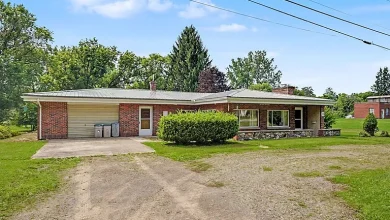
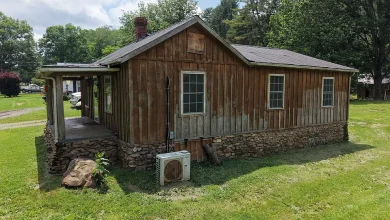
3 beds 1 baths 1,072 sqft
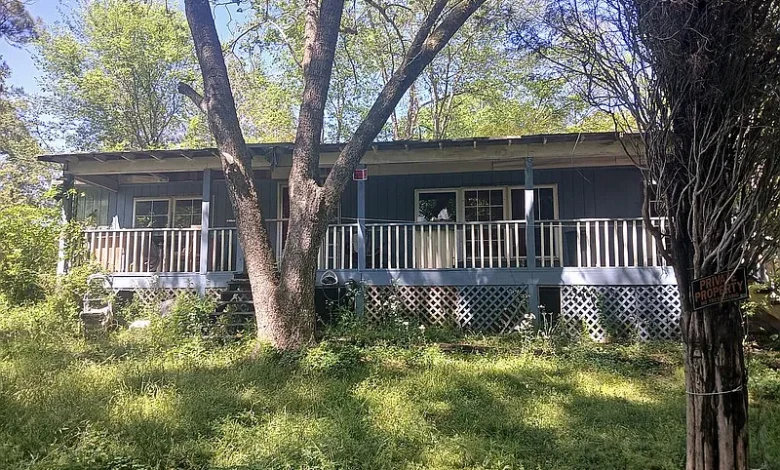
$35,000 Fixer-Upper in Bessemer, Alabama: 3-Bedroom Home With a Fenced Yard and Renovation Potential
Affordable real estate continues to attract attention from first-time buyers, investors, contractors, and renovation enthusiasts searching for properties with a low entry price. One listing that stands out is 1013 Barnes Dr, Bessemer, AL 35020, a three-bedroom, one-bathroom home currently offered for $35,000.
Located in Jefferson County, Alabama, the property provides approximately 1,072 square feet of living space on a 0.26-acre lot. The owner states that the house needs repairs and is being sold in its current condition, making it more appropriate for someone prepared to take on a renovation project than for a buyer looking for a turnkey home.
The property’s history is particularly unusual. According to the owner’s description, the residence was originally a trailer and was remodeled in 1986. The owner states that the work was completed with permits, inspected, and reflected accordingly on the deed. Zillow’s property information lists the home’s year built as 1963.
At an asking price of $35,000, the home works out to approximately $33 per square foot based on its listed 1,072 square feet. The property also includes a fenced yard, carport, fireplace, gas heating, refrigerator, washer, and dryer.
The price was reduced by $20,000 on September 9, adding another interesting element for buyers monitoring inexpensive Alabama real estate.
However, the low asking price should be viewed as the beginning of the financial analysis rather than the entire story. Repairs, inspections, insurance, financing, utilities, and possible mechanical or structural improvements can significantly affect the true cost of owning this property.
Here is a detailed look at 1013 Barnes Dr and the factors prospective buyers may want to consider.
Property Overview: 1013 Barnes Dr, Bessemer, AL 35020
The property is located at 1013 Barnes Dr in Bessemer, Alabama 35020, within Jefferson County.
According to the supplied listing information, the major property details include:
Current Asking Price: $35,000
Recent Price Reduction: $20,000 on September 9
Property Type: Single-Family Home
Bedrooms: 3
Bathrooms: 1 full bathroom
Interior Living Area: Approximately 1,072 square feet
Lot Size: Approximately 0.26 acres
Year Built: 1963 according to the property facts
Remodeling History: Owner states the original trailer was remodeled in 1986
Price Per Square Foot: Approximately $33
Parking: Carport
Heating: Gas / other
Cooling: None listed
Flooring: Linoleum / vinyl
Fireplace: Yes
Basement: None
Foundation: Wood
Roof: Asphalt
Appliances Included: Refrigerator, washer and dryer
Yard: Fenced
Tax Assessed Value: $60,600
Reported Annual Property Tax: $251
Parcel Number: 3800211013017000
Date on Market: May 16, 2026
Sale Type: For Sale by Owner
These characteristics make the home an unusual option for someone searching for a lower-priced property with renovation potential.
A $20,000 Price Cut Brings the Asking Price to $35,000
One of the most noteworthy developments associated with this listing is the $20,000 price reduction recorded on September 9.
The current asking price is $35,000.
Price reductions can happen for many reasons and should not automatically be interpreted as evidence of a particular problem or as proof that the property is undervalued. The owner may simply be adjusting the price in response to market conditions, buyer interest, the property’s condition, or personal circumstances.
For a potential buyer, however, the reduced price provides a new basis for evaluating the property.
Rather than focusing on how much the price has fallen, buyers should determine whether $35,000 plus the required renovation budget makes financial sense.
Approximately $33 Per Square Foot
With 1,072 square feet of interior living area and a $35,000 asking price, the property is listed at approximately $33 per square foot.
That figure may look extremely inexpensive compared with many move-in-ready homes.
However, price-per-square-foot comparisons are most useful when properties are similar in condition, construction, location, and quality.
A house requiring significant repairs should not be directly compared with a fully renovated residence simply because both contain around 1,000 square feet.
The more useful calculation is the effective cost after repairs.
For example:
Purchase Price + Closing Costs + Inspections + Repairs + Renovation + Insurance + Financing + Permits + Contingency = Total Project Cost
That total can then be compared with appropriate local property values.
Three Bedrooms Provide Useful Flexibility
The home includes three bedrooms, which provides more flexibility than many smaller properties at this price level.
For an owner-occupant, the rooms could serve as traditional bedrooms for household members.
A buyer who does not need all three bedrooms could potentially use one as a home office, guest room, hobby room, children’s playroom, study, or additional storage area.
For a future landlord, three bedrooms may also be relevant when evaluating rental demand.
However, prospective investors should research actual comparable rents in the Bessemer area rather than assuming that a three-bedroom property will automatically generate a particular amount of income.
One Full Bathroom
The home has one full bathroom.
For a 1,072-square-foot house, this is a fairly straightforward configuration.
If the bathroom requires renovation, potential work could include flooring, fixtures, vanity, lighting, ventilation, plumbing, wall finishes, bathtub or shower improvements, and water-resistant materials.
Older or distressed homes can sometimes have hidden bathroom issues caused by leaks or long-term moisture exposure.
The condition of the subfloor and surrounding framing should therefore be considered if visible water damage exists.
Plumbing should also be inspected before cosmetic renovation begins.
1,072 Square Feet Can Be Easier to Manage
The property’s approximately 1,072 square feet of living area could make the renovation more manageable than a much larger home.
A smaller house means fewer square feet of flooring, fewer walls to paint, less interior volume to heat or cool, and generally fewer surfaces to maintain.
This does not guarantee an inexpensive renovation.
Major repairs involving the foundation, roof, electrical system, plumbing, HVAC, or structural framing can still be costly even in a relatively small house.
Nevertheless, a compact footprint can allow renovation dollars to be concentrated on essential areas.
Unusual History: Originally a Trailer
One of the most important aspects of this property is its reported construction history.
According to the owner’s description, the residence was originally a trailer and was remodeled in 1986.
The owner further states that the work was completed with permits, inspected, and is reflected on the deed.
Meanwhile, the property facts list the home as a single-family residence with a year built of 1963.
This unusual history deserves careful verification.
Potential buyers may want to review county records, permits, deed information, property classification, and any documentation related to the 1986 work.
This information could be particularly important when investigating financing and insurance.
Why the 1986 Remodeling History Matters
A significant remodel can fundamentally change a property, but buyers should understand exactly what work was performed.
Was the original structure expanded?
Were permanent foundations or additions installed?
Were electrical and plumbing systems replaced?
Was the roof structure modified?
What parts of the current residence date from the original structure, and what portions were added later?
These questions cannot be answered from the basic listing alone.
Because the owner specifically states that permits and inspections were involved, prospective buyers may be able to obtain useful historical information through appropriate public records.
Wood Foundation Deserves Careful Inspection
The listing identifies the foundation material as wood.
Foundation condition is an important consideration in any home purchase, and it deserves particular attention when evaluating a property with an unusual construction history.
A professional inspector or appropriately qualified structural specialist can examine visible components for moisture exposure, deterioration, movement, pest damage, inadequate support, or other concerns.
Foundation problems can range from relatively manageable repairs to major structural work.
Because the home is priced at $35,000, even a moderate structural expense could significantly change the total investment.
Asphalt Roof
The property is listed as having an asphalt roof.
The age of the roof is not specified in the information provided.
Roof condition is especially important in a fixer-upper because water intrusion can affect many other parts of a building.
A leaking roof can damage ceilings, walls, insulation, flooring, framing, and electrical components.
Prospective buyers should determine the approximate roof age and inspect for damaged or missing shingles, leaks, flashing issues, soft decking, drainage problems, and other signs of deterioration.
If replacement is required, that cost should be included in the renovation budget before making an offer.
Gas Heating Is Listed
The property information identifies gas and “other” heating.
Prospective buyers should verify exactly what heating equipment is installed and whether it currently functions safely.
Heating systems can become an important expense in older or distressed properties.
An inspection should determine the type, age, condition, and safety of the equipment.
If major repairs or replacement are required, buyers can compare available options based on installation cost, efficiency, reliability, and the existing infrastructure.
No Cooling System Is Listed
One major property detail is that no cooling system is listed.
In Alabama’s warm climate, air conditioning can be an important consideration for comfortable year-round occupancy.
If the property truly lacks functional cooling, a buyer may need to budget for a new system.
Possible solutions might include central air conditioning, a heat pump, ductless mini-split systems, or another appropriate configuration.
The best option would depend on the home’s construction, electrical service, existing ductwork, insulation, layout, and renovation budget.
Installation costs should be investigated before purchasing rather than treated as a minor future expense.
Fireplace Adds an Interesting Feature
The home is listed as having a fireplace.
A fireplace can add character to a living space, but its condition should be evaluated before use.
Older or poorly maintained fireplaces may require inspection of the chimney, flue, firebox, masonry, venting, or surrounding materials.
Until its safety has been confirmed, buyers should not assume that the fireplace is operational.
If it can be restored economically, it could become an appealing feature of the renovated home.
Refrigerator, Washer, and Dryer Included
The listing states that the refrigerator, washer, and dryer are included.
Included appliances can reduce some immediate move-in expenses.
However, their condition and age are not specified.
A buyer should verify whether they function properly and decide whether they fit the planned renovation.
For a low-cost renovation, retaining usable appliances can help control the budget.
For a comprehensive remodel, a buyer may eventually decide to replace them.
Linoleum and Vinyl Flooring
The property is described as having linoleum or vinyl flooring.
These materials are often practical and relatively inexpensive to maintain or replace.
If a full renovation is planned, new flooring can have a significant visual impact without necessarily becoming the most expensive component of the project.
Before replacing flooring, however, buyers should investigate what lies underneath.
Subfloor damage caused by moisture, leaks, structural movement, or age can add significantly to costs.
It is generally better to address those underlying problems before installing new finished flooring.
A Fenced Yard
One of the features specifically mentioned by the owner is the fenced yard.
A fenced outdoor area can be useful for households with pets, children, gardening interests, or a preference for additional privacy.
For a future rental property, fencing may also be attractive to certain tenants.
Buyers should inspect the fence’s condition and verify property boundaries.
A fence that appears to define a yard does not necessarily represent the precise legal boundary of the parcel.
If boundaries are important to future plans, a survey may provide more reliable information.
0.26 Acres of Land
The home sits on approximately 0.26 acres.
That equals a little more than one-quarter acre and provides more outdoor space than many compact urban residential lots.
The yard could potentially accommodate landscaping, gardening, outdoor seating, recreational space, or other improvements.
Any plans involving new structures, additions, sheds, fencing, or significant changes should be checked against local zoning and permitting requirements.
The lot size can add flexibility, but legal use depends on applicable rules.
Carport Parking
The property includes a carport.
A carport provides covered vehicle parking without the expense or footprint of a fully enclosed garage.
In Alabama, covered parking can be useful for protecting a vehicle from intense sunlight, rain, and other weather.
The structure should be inspected along with the house.
Posts, roofing, connections, and structural stability may require attention, particularly if the home itself needs substantial repairs.
No Basement
The listing states that the property has no basement.
This means buyers will not need to renovate or maintain a basement space, but it also means there is no basement storage area.
Because the foundation is listed as wood, buyers should pay particular attention to how the underside of the structure is protected from moisture and pests.
Drainage around the property can also be important.
Water should ideally move away from the structure rather than accumulating around support components.
Annual Property Taxes of Approximately $251
One of the most striking recurring-cost figures in the listing is the reported annual property tax of approximately $251.
That is relatively modest compared with property taxes associated with many more expensive homes.
However, buyers should independently verify the current tax amount with the appropriate local authority.
Taxes can change following a sale, reassessment, improvements, or changes in property classification.
Investors should use verified future estimates when calculating potential returns.
Tax Assessed Value of $60,600
The listing reports a tax assessed value of $60,600.
That is higher than the current $35,000 asking price.
However, the difference between assessed value and asking price should not automatically be interpreted as instant equity.
Tax assessments are designed for taxation purposes and may not reflect the home’s present physical condition or current open-market value.
The property’s need for repairs and unusual construction history could materially affect what buyers are willing to pay.
Recent comparable sales and property-specific condition are more useful for estimating market value.
For Sale by Owner
Another important characteristic is that 1013 Barnes Dr is being offered for sale by owner, commonly known as FSBO.
The listing states that Zillow is displaying the property at the owner’s request and that it is not subject to a Zillow listing agreement.
A for-sale-by-owner transaction can differ from a conventional agent-listed purchase.
Buyers should still perform normal due diligence, obtain appropriate inspections, review title information, understand the contract, and seek professional assistance where needed.
The absence of a traditional listing agent does not reduce the importance of documentation.
133 Days on Zillow
The property has reportedly spent 133 days on Zillow, accumulating approximately 916 views and 65 saves based on the supplied listing information.
Those figures indicate that people have been viewing and saving the property, although online engagement does not guarantee an eventual sale.
Time on market can result from many factors, including condition, pricing, financing challenges, location, buyer expectations, or the characteristics of the property itself.
The recent $20,000 price reduction may be intended to attract a broader group of prospective buyers.
Potential as a Fix-and-Flip
Investors may naturally look at a $35,000 three-bedroom property as a potential fix-and-flip project.
The strategy sounds simple: purchase the home inexpensively, renovate it, and resell it.
In reality, successful flipping depends on detailed financial analysis.
An investor should first estimate the property’s potential after-repair value, or ARV, using recent comparable sales of renovated properties in the surrounding area.
Then all expenses must be deducted.
These can include acquisition costs, inspections, construction, financing, insurance, property taxes, utilities, permits, holding expenses, closing costs, real estate commissions where applicable, and unexpected repairs.
Only after those calculations can the project’s potential profitability be meaningfully evaluated.
Could It Work as a Rental Property?
Another possibility is renovating the property for long-term rental use.
A three-bedroom home with a fenced yard and carport could potentially appeal to renters, but actual demand and achievable rent need to be researched locally.
Investors should compare realistic monthly rental income with all operating expenses.
These could include property taxes, insurance, maintenance, vacancy, property management, repairs, capital expenditures, and any owner-paid utilities.
A low purchase price can help investment economics, but only when renovation and ongoing expenses remain manageable.
Potential for an Owner-Occupant Renovation
The property may also appeal to a buyer looking for an inexpensive home to renovate for personal use.
Someone with construction experience or access to affordable contractors may see an opportunity to customize the interior gradually.
Potential improvements could include new flooring, paint, lighting, kitchen updates, bathroom renovation, HVAC installation, exterior repairs, landscaping, and other upgrades.
However, the property should first be made structurally sound, weather-resistant, safe, and mechanically functional.
Cosmetic improvements should generally come after essential repairs are understood.
Financing Could Require Extra Research
Financing may be an important consideration because of the property’s condition and unusual history.
The owner’s statement that the home was originally a trailer before being remodeled could affect how certain lenders classify the property.
Traditional mortgage lenders often have requirements concerning property condition, foundation type, legal classification, insurance, and habitability.
A buyer who needs financing should discuss the exact property with potential lenders before assuming conventional mortgage approval will be available.
Some renovation properties attract cash buyers for precisely this reason.
Insurance Should Be Investigated Early
Insurance is another issue worth researching before closing.
Insurers may consider the home’s age, roof, foundation, electrical system, plumbing, heating and cooling equipment, construction type, and remodeling history.
A buyer should obtain property-specific insurance information rather than assuming that coverage will be inexpensive because the purchase price is only $35,000.
The cost of insurance becomes part of the true annual ownership expense.
Renovation Budget: Look Beyond Cosmetic Improvements
Because the owner states that the home needs repairs, prospective buyers should build a realistic renovation budget.
Potential expenses could involve structural repairs, foundation work, roofing, electrical improvements, plumbing, heating, cooling, flooring, kitchen updates, bathroom work, windows, doors, insulation, drywall, painting, appliances, exterior improvements, fencing, and landscaping.
Not every item will necessarily require replacement.
The purpose of an inspection is to separate usable components from those requiring immediate attention.
A contingency reserve is also important because renovation projects frequently reveal problems that were not visible during the initial walkthrough.
Professional Inspection Could Be Particularly Valuable
A professional inspection may be especially useful for this property because of its construction history.
The inspector can evaluate accessible areas of the roof, foundation, framing, electrical system, plumbing, heating, interior surfaces, exterior, and other major components.
Additional specialists may be appropriate if concerns are identified.
For example, a structural professional may be needed for foundation issues, while an electrician can evaluate questionable wiring and an HVAC contractor can estimate cooling-system installation.
Obtaining this information before committing substantial money can significantly improve budgeting accuracy.
Questions Prospective Buyers Should Ask
Potential buyers should verify the home’s legal classification, 1986 remodeling permits, inspection history, deed information, and foundation details.
They should determine the age and condition of the roof, heating equipment, plumbing, electrical system, fireplace, appliances, and carport.
The absence of a listed cooling system should be investigated, along with the approximate cost of adding one.
Buyers should also review title information, property boundaries, taxes, insurance availability, and any outstanding code or permit issues.
For investors, realistic local resale and rental comparisons are equally important.
Why the $35,000 Price Is Only the Starting Point
One of the biggest mistakes buyers can make with inexpensive fixer-uppers is assuming that the purchase price represents most of the investment.
For 1013 Barnes Dr, a more complete calculation would be:
$35,000 Purchase Price + Closing Costs + Inspection + Essential Repairs + HVAC + Renovation + Insurance + Taxes + Financing + Contingency = Real Total Cost
Suppose a buyer discovers that major structural and mechanical work is necessary. The renovation could potentially cost as much as or more than the original purchase price.
Alternatively, if major systems prove serviceable and the required repairs are manageable, the economics could look very different.
That uncertainty is why due diligence matters.
Is This $35,000 Bessemer Home Worth Investigating?
For buyers specifically searching for a renovation project, several characteristics make the property interesting.
It offers three bedrooms, a fenced yard, a carport, fireplace, appliances, approximately 1,072 square feet of living space, and roughly a quarter-acre of land.
The $35,000 asking price also creates a relatively low initial entry point.
At the same time, the owner explicitly states that repairs are needed.
The property’s history as an original trailer that was reportedly remodeled with permits in 1986 creates another layer of due diligence concerning construction, financing, insurance, and legal classification.
These factors do not automatically make the property a good or bad purchase. They simply mean buyers should investigate carefully before committing money.
Final Thoughts on 1013 Barnes Dr, Bessemer, Alabama
1013 Barnes Dr, Bessemer, AL 35020 is an unusual affordable property that may attract investors, contractors, DIY renovators, and buyers searching for a low-priced home in Jefferson County.
Currently listed for $35,000 after a $20,000 price reduction, the property provides approximately 1,072 square feet of living space, three bedrooms, one full bathroom, a fenced yard, carport, fireplace, and approximately 0.26 acres of land.
The home includes a refrigerator, washer, and dryer. Gas heating is listed, while no cooling system is identified. The roof is asphalt, the foundation is described as wood, and the interior flooring is listed as linoleum or vinyl.
Its history deserves particular attention. According to the owner’s description, the structure was originally a trailer and underwent remodeling in 1986. The owner states that the remodeling was completed with permits, inspected, and reflected on the deed. Buyers should independently verify those details through the appropriate records.
The reported annual property tax of approximately $251 may help keep recurring costs relatively low, although future taxes should be independently confirmed. The reported tax assessed value is $60,600, but that figure should not be treated as a guarantee of market value.
Ultimately, the property’s appeal depends on what inspections reveal.
If the structure, roof, utilities, and major systems are in reasonably manageable condition, a buyer may see significant renovation possibilities. If extensive foundation, electrical, plumbing, roofing, HVAC, or structural work is required, the total project cost could rise quickly.
For an investor, the key numbers are the total acquisition and renovation cost compared with realistic after-repair value or rental income.
For an owner-occupant, the important question is whether purchasing and restoring this property provides a practical alternative to buying a more expensive move-in-ready home.
Either way, the $35,000 asking price should be treated as the beginning of the calculation—not the end.
Anyone seriously considering the property should verify the remodeling history, permits, deed status, title, structural condition, utilities, insurance, financing options, taxes, property boundaries, and repair estimates before making a final decision.
For buyers comfortable with fixer-uppers, 1013 Barnes Dr offers a combination that can be difficult to find at this price point: three bedrooms, a fenced yard, covered parking, more than 1,000 square feet of interior space, and a quarter-acre lot.
The opportunity comes with significant questions, but for someone prepared to answer those questions through careful due diligence, this Bessemer property could be an interesting renovation project to explore.
Listed on Zillow