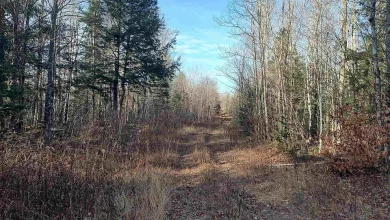
20.33 Acres
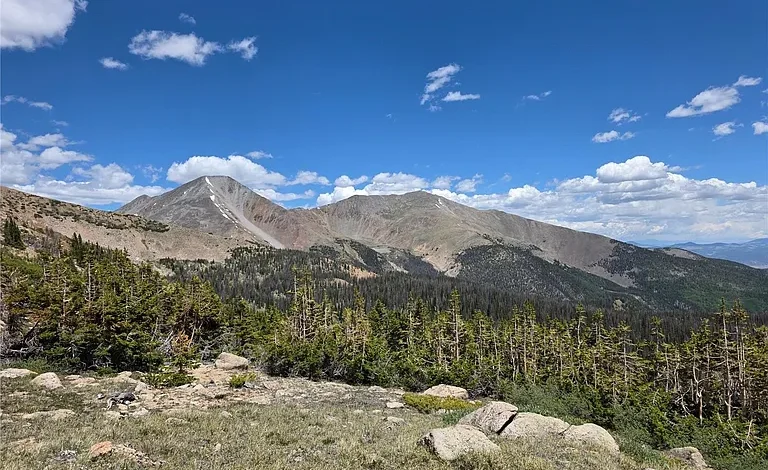
20.33 Acres Near San Isabel National Forest in Colorado Listed for $19,000
For buyers searching for an affordable piece of Colorado mountain land, a 20.33-acre parcel near Salida offers an unusual opportunity to own a secluded tract surrounded by dramatic alpine scenery and public land. Listed for $19,000, this unimproved property is not a conventional residential lot. Instead, it is a remote mountain parcel described as a historic mining claim, with seasonal access by foot and a setting close to Boss Lake and the San Isabel National Forest.
The property offers a very different type of real estate experience from a typical Colorado home or suburban building lot. There are no bedrooms, bathrooms, or finished structures listed with the property. Instead, the primary attractions are the acreage, mountain views, surrounding forest, wildlife, outdoor recreation, and privacy.
The parcel contains approximately 20.33 acres and borders national forest and public land. The listing describes the surrounding area as rich in elk, deer, and other wildlife, making the location potentially attractive to people interested in hunting, camping, hiking, photography, wildlife observation, and other outdoor activities.
Access is one of the most important considerations. According to the listing, the property is accessed seasonally by foot from County Road 230, with approximately a 1.3-mile hike from the Boss Lake Trailhead. That means buyers should view this property as a remote recreational land opportunity rather than assuming it functions like an easily accessible residential building site.
For someone seeking a secluded mountain getaway and who understands the practical realities of owning remote land, this Colorado parcel could be an intriguing opportunity.
A $19,000 Colorado Mountain Land Opportunity
The current asking price is $19,000 for approximately 20.33 acres.
That represents a relatively low entry price when measured against the amount of land being offered, but the property’s remote characteristics are an essential part of understanding the listing.
The property is unimproved land, meaning the listing does not identify an existing home, cabin, utility-connected residence, or other finished living structure.
This is important for prospective buyers who are accustomed to residential real estate. Purchasing the parcel does not automatically provide a ready-to-use mountain home.
Instead, the value proposition centers on the land itself and its location near public lands, alpine recreation areas, mountain scenery, and wildlife habitat.
The property may appeal to buyers who are looking for recreational acreage rather than conventional residential real estate.
More Than 20 Acres of Mountain Land
The property contains 20.33 acres.
Twenty acres can provide a meaningful amount of privacy and open space, particularly when the property borders national forest and public land.
The listing specifically identifies the parcel as bordering the San Isabel National Forest and public land. This surrounding public-land setting can make the property especially interesting to outdoor enthusiasts because it places the parcel within a larger landscape of mountain and forest recreation.
For a buyer who wants to escape urban development, the acreage provides an opportunity to own a private tract in a remote environment.
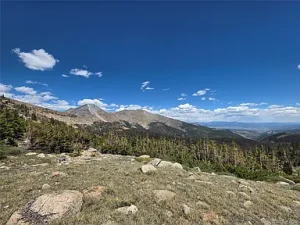
The property is also described as having mountain views.
Rather than focusing on the interior square footage of a house, this type of land purchase is primarily about the outdoor environment.
Surrounded by the San Isabel National Forest
One of the defining characteristics of the property is its relationship with the San Isabel National Forest.
The listing describes the parcel as surrounded by the national forest and specifically identifies that it borders national forest and public land.
For outdoor enthusiasts, this surrounding landscape can be a major attraction.
National forest areas are associated with a wide variety of recreational opportunities, although the exact activities permitted in any particular location depend on federal regulations, seasonal rules, access points, and applicable land-management restrictions.
The presence of public land near the parcel can also create a stronger sense of isolation than a typical privately owned tract surrounded entirely by other private properties.
For buyers interested in mountain recreation, this setting is likely to be one of the primary reasons to consider the property.
Near Boss Lake
The parcel is located near Boss Lake, another important feature highlighted in the listing.
Boss Lake and the surrounding mountain environment contribute to the recreational character of the area.
For people who enjoy hiking, fishing, photography, wildlife observation, camping, or simply spending time in a high-country environment, proximity to a mountain lake can add considerable appeal.
However, prospective buyers should independently verify the exact distance and routes to recreational destinations and should understand seasonal access conditions before planning regular visits.
The listing’s reference to the Boss Lake Trailhead provides a useful indication of how the property is accessed, but buyers should not assume that a standard vehicle can reach the parcel directly.
Seasonal Access by Foot
Access is one of the most important facts associated with this property.
According to the listing, access is seasonal and by foot from County Road 230. The parcel is approximately a 1.3-mile hike from the Boss Lake Trailhead.
This means the property should be approached differently from a conventional parcel located along a paved or maintained residential road.
For some buyers, the walking access is part of the appeal. It creates a level of seclusion that can be difficult to find in more accessible mountain communities.
For others, however, the access requirements may be a significant limitation.
Anyone considering purchasing the property should carefully investigate the access route, legal access rights, seasonal conditions, snow conditions, trail conditions, and any applicable restrictions.
It is also important to determine whether the entire route crosses public land, private property, easements, or other areas with specific access rules.
A Historic Mining Claim
The property is described as a historic mining claim.
This adds an important layer of history and complexity to the land.
Historic mining claims can have characteristics that differ from ordinary residential or recreational parcels, and buyers should conduct appropriate title and legal research to understand exactly what rights and restrictions apply.
The presence of a historic mining claim does not automatically mean that mining activity is currently permitted or economically practical. Buyers should not assume that mineral rights, extraction rights, water rights, surface rights, or other interests are included in the same way they might be with a conventional residential parcel.
A title professional, land-use attorney, surveyor, or other qualified professional may be appropriate for buyers who want to understand the property’s ownership history and associated rights.
Wildlife and Outdoor Recreation
The listing highlights the presence of elk, deer, and other wildlife.
For outdoor enthusiasts, this can be a significant attraction.
Wildlife-rich mountain environments can provide opportunities for observation, photography, hiking, nature study, and other recreational activities.
The listing also identifies hunting and camping as potential uses.
However, recreational activities on and around the property should always be evaluated under applicable laws and regulations.
Hunting seasons, licensing requirements, firearm restrictions, public-land rules, camping regulations, fire restrictions, and wildlife-management policies can vary.
A buyer should verify the rules that apply to the exact property and surrounding public lands before planning activities.
Mountain Views and Scenic Surroundings
The property has a listed mountain view.
For many buyers, scenery is one of the primary reasons to purchase Colorado mountain land.
A property with mountain surroundings can provide a dramatically different experience from land in a developed subdivision.
The landscape may change significantly throughout the year, with different conditions during summer, autumn, winter, and spring.
This seasonal variation can be part of the appeal for people who want a recreational retreat.
At the same time, mountain terrain comes with practical considerations such as snow, steep slopes, limited road access, changing weather, wildfire risk, and potential difficulty transporting equipment.
These factors should be evaluated before purchasing.
A Potential Camping Retreat
The listing describes the property as suitable for camping and outdoor recreation.
For someone who wants a place to escape for weekends or extended outdoor trips, 20.33 acres could provide a substantial private base within a larger mountain environment.
However, camping on private land is not necessarily unrestricted.
Buyers should verify whether overnight camping is allowed under the property’s zoning, county regulations, land-use rules, and any applicable restrictions associated with the parcel.
The listing identifies the zoning as PCR, but buyers should obtain official zoning information and determine what activities are permitted under that designation.
It is also important to verify whether temporary structures, tents, recreational vehicles, cabins, or other improvements are allowed.
Understanding the PCR Zoning
The property is listed with a zoning designation of PCR.
Because zoning classifications can have specific meanings that vary by jurisdiction, buyers should not assume that the designation permits a particular use simply based on the abbreviation.
Before purchasing, prospective owners should contact the relevant local planning or zoning authority and request current information about the property.
Questions may include:
- Is residential development permitted?
- Are cabins allowed?
- Is seasonal occupancy allowed?
- Is camping permitted?
- Are accessory structures allowed?
- Are wells permitted?
- Is a septic system possible?
- Are solar systems permitted?
- Are driveways or roads allowed?
- Are there minimum setbacks?
- Are there environmental restrictions?
- Are there limitations associated with the property’s location or access?
These questions can determine whether the parcel matches a buyer’s intended use.
No HOA
The property does not have a homeowners association.
For a remote land buyer, the absence of an HOA can be attractive because there are no listed HOA dues or association rules governing the property.
However, no HOA does not mean there are no regulations.
County zoning, state laws, federal public-land rules, environmental regulations, access agreements, building codes, and other requirements can still apply.
A buyer should evaluate all of those factors independently.
No Existing Home or Utilities Listed
The parcel is classified as unimproved land.
There is no residence listed, and the property information does not identify connected water, sewer, electricity, natural gas, or other residential utility infrastructure.
That is a major consideration for anyone thinking about building.
A remote mountain parcel may require significant work to establish access, water, wastewater, power, and other services.
If a buyer hopes to construct a cabin, they should investigate whether a building permit can be obtained and whether the property can support a legal water and wastewater system.
The cost of installing infrastructure can easily become a significant portion of the total project budget.
Water and Septic Considerations
Because the property is unimproved, prospective buyers should pay particular attention to water availability.
A future owner may need to investigate whether a well is feasible, whether groundwater is available at an acceptable depth, and what permits are required.
Septic feasibility is another important consideration.
Mountain terrain can create challenges for conventional septic systems, and soil conditions, slope, setbacks, and environmental regulations can affect whether a system can be installed.
Buyers should not purchase the property assuming that water and septic installation will automatically be approved.
Professional evaluation and official county requirements should be reviewed before making development plans.
Electricity and Off-Grid Possibilities
The listing does not identify electricity service at the property.
For recreational land buyers, this may raise the possibility of an off-grid approach, but such a strategy also requires careful planning.
Depending on local regulations, a buyer might investigate solar power, battery storage, propane systems, or other off-grid technologies.
However, off-grid living in a remote alpine environment can be considerably more complicated than installing a standard utility connection.
Solar performance, winter weather, battery storage, heating requirements, water systems, and transportation all need to be considered.
A buyer interested in an off-grid cabin should first determine whether such a structure is legally permitted.
The Importance of Legal Access
Access deserves particular attention because the property is described as being reached seasonally by foot.
Legal access and physical access are not necessarily the same thing.
A buyer should verify the legal right to reach the parcel from the nearest public road or trailhead.
If an easement is involved, the buyer should understand its exact terms, including whether it permits pedestrian access, vehicle access, emergency access, utilities, or future improvements.
If the property is accessed across public land, additional rules may apply.
A title company or real estate attorney can help clarify these issues before closing.
Mountain Weather and Seasonal Conditions
Colorado’s mountain environment can experience rapidly changing weather and difficult winter conditions.
The seasonal access described in the listing means buyers should be prepared for the possibility that reaching the property could become significantly more difficult during certain times of the year.
Snow, ice, freezing temperatures, and changing trail conditions can affect transportation and outdoor activities.
For a recreational owner, seasonal access may simply mean planning trips around weather conditions.
For someone hoping to use the property year-round, however, the access issue could be considerably more significant.
Potential Recreational Investment
The property could appeal to buyers who view recreational land as a long-term asset.
A 20.33-acre parcel in a scenic mountain environment can have appeal beyond its immediate use.
Some buyers may value the land primarily as a private outdoor retreat, while others may be interested in holding the property for future use.
However, land investment should not be evaluated solely on the expectation that prices will rise.
Buyers should research comparable land sales, local market conditions, accessibility, zoning, title, development restrictions, and carrying costs.
The annual tax amount listed for the property is approximately $77, which is a relatively modest carrying cost based on the current listing information. Even so, buyers should independently verify the current tax obligation.
A Private Mountain Escape
The listing’s description of a secluded mountain getaway captures the primary lifestyle appeal of this parcel.
There is no conventional house to maintain, no neighborhood HOA, and no busy residential subdivision surrounding the property.
Instead, the land is positioned within a mountain landscape near public forest and recreational areas.
For someone who enjoys solitude, this can be a meaningful advantage.
The property could potentially serve as a place to disconnect from daily routines, explore the outdoors, and spend time in a natural environment.
The trade-off is that solitude also means fewer conveniences.
Buyers should be prepared for limited infrastructure and the possibility of long distances to services.
What Buyers Should Investigate
Before purchasing this Colorado parcel, prospective buyers should consider a comprehensive due-diligence checklist.
Important questions include:
- Is the access legally recorded?
- Is year-round access possible?
- Who maintains the access route?
- Can vehicles reach the property?
- Is camping legally permitted?
- Is a cabin legally permitted?
- What does PCR zoning allow?
- Can a well be installed?
- Is a septic system feasible?
- Are there water rights associated with the property?
- What mineral rights are included?
- What restrictions apply to the historic mining claim?
- Does the parcel have surveyed boundaries?
- Are there environmental restrictions?
- Are there wildfire considerations?
- Are there easements or encumbrances?
- Are any federal or state land-use rules applicable?
- What activities are permitted on the surrounding public land?
Answering these questions before closing can help a buyer understand the property far better than the listing description alone.
Cash or Conventional Purchase
The listing identifies both cash and conventional financing as possible listing terms.
Financing vacant recreational land can differ from financing a conventional home.
Some lenders have specific requirements for land loans, while others may not finance remote or unimproved parcels.
Prospective buyers should speak with lenders before assuming that conventional financing will be available under standard residential terms.
A cash buyer may have more flexibility, but should still perform thorough due diligence.
Low Annual Property Taxes
The listing reports annual property taxes of approximately $77.
For a 20.33-acre parcel, the relatively low listed tax amount may make the property inexpensive to carry compared with many developed properties.
However, the annual tax figure should be verified before purchase.
Tax assessments can change, and the buyer should understand whether any special assessments or other obligations apply.
The total cost of ownership can also include insurance, professional services, access maintenance, equipment, travel expenses, and future improvements.
Why This Property Is Different
Many inexpensive land listings are small rural lots far from recreational destinations.
This parcel is different because it offers more than 20 acres and borders public land in a scenic Colorado mountain setting.
The combination of acreage, national forest proximity, mountain views, wildlife, and access to outdoor recreation gives the property a distinctive identity.
The property is not necessarily suited to every buyer, but that is part of what makes it interesting.
Someone looking for a conventional building lot with paved road access and utilities at the property may find the limitations significant.
Someone specifically searching for secluded mountain land may view the same characteristics as part of the attraction.
A Property for Buyers Who Value Land Over Buildings
At $19,000, the buyer is primarily purchasing land rather than a finished home.
There is no listed dwelling, no finished living space, and no existing residential infrastructure described.
The value is therefore tied heavily to the location, acreage, access, surrounding environment, zoning, and potential uses.
This makes the property fundamentally different from buying a $19,000 house.
The low price should not create an expectation that a buyer can immediately move onto the property.
Instead, this is an opportunity for someone who understands undeveloped land and is prepared to investigate exactly what can legally and practically be done with it.
Final Thoughts on This 20.33-Acre Colorado Parcel
This 20.33-acre property near Salida, Colorado, offers a rare combination of affordability, acreage, mountain scenery, wildlife, and proximity to the San Isabel National Forest.
Listed at $19,000, the parcel is described as a historic mining claim and an opportunity for a secluded mountain getaway. It is located near Boss Lake and approximately 1.3 miles by foot from the Boss Lake Trailhead, with seasonal access from County Road 230.
The property borders national forest and public land and has mountain views. The listing highlights elk, deer, camping, hunting, and outdoor recreation as part of the surrounding experience.
At the same time, the property’s remote nature must be taken seriously.
There is no listed home, no finished living space, and no residential utility infrastructure identified in the listing. Access is seasonal and by foot, which may significantly affect how the land can be used.
Anyone considering the property should investigate zoning, legal access, water rights, mineral rights, the historic mining claim, development possibilities, camping rules, utility options, septic feasibility, and all applicable local, state, and federal regulations.
The PCR zoning designation should be verified with the appropriate local authority rather than interpreted solely from the listing. Buyers interested in building a cabin or creating an off-grid retreat should confirm development feasibility before purchasing.
For the right buyer, however, the lack of conventional development may be precisely what makes the property appealing. Instead of buying another suburban lot or a home surrounded by neighbors, a buyer could own more than 20 acres in a remote mountain environment near public land and outdoor recreation.
The $19,000 asking price makes the parcel accessible to buyers who may not be prepared to purchase a developed Colorado mountain property, while the annual property tax listed at approximately $77 keeps the reported ongoing tax burden relatively low.
Ultimately, this property is best understood as a recreational and undeveloped-land opportunity rather than a conventional residential purchase. Its greatest attractions are the acreage, setting, privacy, wildlife, mountain views, and relationship with the surrounding national forest.
For anyone dreaming of a secluded Rocky Mountain retreat, this Salida-area parcel offers plenty to investigate. The most important step is determining what the land can legally and practically support before making a commitment.
Listed on Zillow.