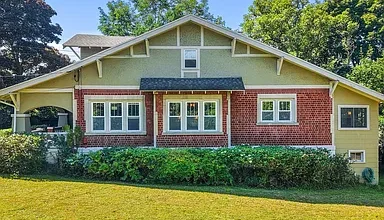
2 beds 1 baths 840 sqft
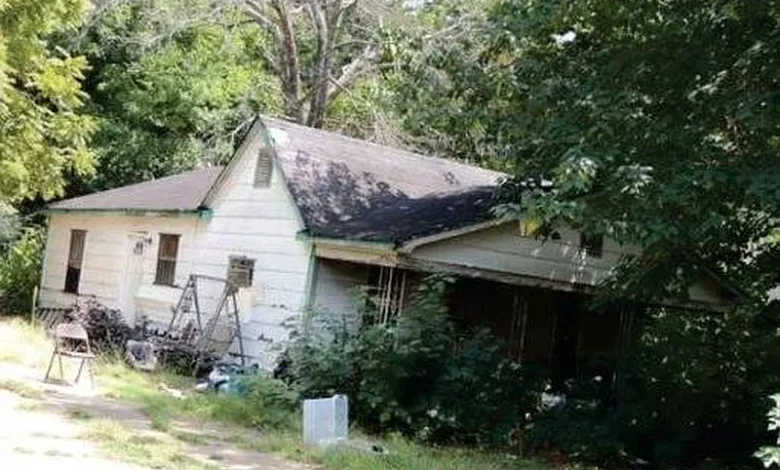
Estimated $19,000 Memphis Auction Property: 2-Bedroom Cottage With 840 Sq Ft and Fixer-Upper Investment Potential
For buyers searching for an affordable Memphis fixer-upper, foreclosure auction property, investment home under $25,000, rental renovation project, or low-cost Tennessee real estate, the property at 3446 Cook Rd, Memphis, TN 38109 presents a distinctive opportunity—but one that comes with important auction conditions and significant uncertainty.
The property is being offered through an auction with an estimated amount of $19,000. It is described as a two-bedroom, one-bathroom single-family residence containing approximately 840 square feet of living space. The cottage-style home was reportedly built in 1940 and sits on a 9,583-square-foot lot, equivalent to approximately 0.22 acres.
At the displayed estimated figure, the listing calculates approximately $23 per square foot. However, buyers should not treat the $19,000 amount as a guaranteed purchase price. Auction bidding can result in a different final price, and additional auction-related costs may apply depending on the sale contract.
More importantly, this property is being offered as-is and where-is, with the seller specifically stating that its condition is unknown. The disclosure warns that the property may contain defects, debris, health or safety hazards, or may potentially be located within a Special Flood Hazard Area.
Utilities are currently turned off and will not be activated before closing, even for inspections. The property is believed to be vacant, but buyers need to conduct their own due diligence.
The transaction also contains unusual legal and title considerations. The buyer may be responsible for UCC liens of record, and because this is described as a “Second Chance” property, the foreclosure deed may not yet have been recorded.
For experienced investors, contractors, cash buyers, or buyers comfortable navigating distressed-property auctions, these factors do not necessarily eliminate the opportunity. They do, however, mean that the property should be evaluated much more carefully than an ordinary $19,000 home listing.
Property Overview: 3446 Cook Rd, Memphis, TN 38109
The property is located at 3446 Cook Rd in Memphis, Tennessee, and is being marketed through an auction.
The displayed estimated auction amount is approximately $19,000.
According to the available property information, the residence includes two bedrooms, one full bathroom, and approximately 840 square feet of finished above-ground living space.
The house is classified as a single-family residence with a cottage architectural style.
It was reportedly constructed in 1940.
The property sits on approximately 9,583 square feet of land, has no basement, and no fireplace is listed.
Heating is reported as present, although the exact heating type is unspecified.
There is no HOA.
Annual property taxes are reported at approximately $393, while the tax assessed value is listed at approximately $29,800.
Understanding the Estimated $19,000 Auction Amount
The first thing buyers need to understand is that $19,000 should not automatically be interpreted as a normal fixed asking price.
This is an auction property.
Depending on the auction structure, competing bids may cause the final contract price to increase.
The buyer should obtain and read the complete auction terms before bidding, including information about deposits, buyer premiums if any, closing costs, payment deadlines, financing requirements, title provisions, and consequences for failing to close.
A low displayed auction amount can generate attention, but the final acquisition cost is what matters.
Approximately $23 Per Square Foot
Using the estimated $19,000 amount and reported 840-square-foot living area results in approximately $23 per square foot.
That is a very low headline number for residential real estate.
However, price per square foot is particularly unreliable when evaluating a distressed auction property with an unknown physical condition.
If the home requires substantial structural, roofing, electrical, plumbing, HVAC, or interior repairs, the total project cost can increase rapidly.
Investors should therefore calculate the property’s renovated all-in cost per square foot, not simply the auction estimate.
Total Investment Matters More Than the Auction Figure
A more useful investment equation is:
Final Auction Price + Auction Fees + Closing Costs + Title Expenses + UCC Lien Costs if Applicable + Insurance + Taxes + Utility Restoration + Cleanup + Renovation + Financing + Holding Costs + Selling Costs + Contingency = Total Project Investment
That figure can then be compared with realistic after-repair value or potential rental economics.
The $19,000 estimate is only the beginning of the calculation.
Two-Bedroom Configuration
The property is reported to contain two bedrooms.
A two-bedroom home can appeal to individuals, couples, small households, retirees, or tenants seeking an affordable residence.
For an investor, two-bedroom properties can occupy a useful segment of the rental market.
However, the auction disclosure specifically warns buyers that bedroom and bathroom counts may be based on assessor information or appraisal records and may contain inaccuracies.
Therefore, the reported two-bedroom configuration should be independently verified.
One Full Bathroom
The house is listed with one full bathroom.
For an 840-square-foot, two-bedroom cottage, one bathroom is a logical configuration.
Its actual condition is unknown.
An inspection should look for leaking plumbing, damaged fixtures, subfloor deterioration, water intrusion, ventilation problems, and possible mold or moisture issues.
Because utilities will not be turned on before closing, evaluating plumbing functionality may be more difficult than during a conventional home inspection.
Approximately 840 Square Feet
The home is reported to contain 840 square feet of finished living space, all above ground.
For renovation investors, a smaller house can offer some advantages.
There is less flooring, fewer walls to paint, a smaller roof footprint, and generally less interior area to renovate than in a 2,000-square-foot house.
However, many major expenses are not directly proportional to square footage.
Electrical service, HVAC equipment, sewer repairs, utility reconnection, kitchen renovation, and certain structural repairs can remain expensive even in a small residence.
Square Footage Is Not Guaranteed
The auction disclosure specifically warns that square footage and other property measurements may originate from an appraisal or county assessor information.
It further states that these sources can contain errors.
That is important.
Buyers should not make a financial decision based on exactly 840 square feet without independently confirming the home’s dimensions if the precise area materially affects their investment analysis.
The same caution applies to lot size and bedroom or bathroom counts.
Cottage-Style Architecture
The property is described as having a cottage architectural style.
Small cottage homes can be attractive renovation candidates because a straightforward floor plan may allow investors to concentrate improvements within a manageable footprint.
A successful renovation could potentially emphasize simplicity, functionality, natural light, durable finishes, and efficient use of the 840-square-foot interior.
The actual architecture and exterior condition should be personally inspected before any renovation plan is finalized.
Built in 1940
The residence was reportedly constructed in 1940.
That makes it approximately 86 years old in 2026.
Age does not automatically mean poor condition, but it does increase the importance of investigating previous renovations and major building systems.
The roof, foundation, framing, electrical system, plumbing, windows, insulation, heating equipment, and sewer connection may have been replaced or modified at different points during the home’s history.
Without records or functioning utilities, buyers should maintain conservative assumptions.
Property Condition Is Unknown
The seller explicitly states that the property’s condition is unknown.
This is one of the most important disclosures in the entire listing.
The home should not be approached as a typical fixer-upper where known repairs can easily be estimated from a standard listing description.
The disclosure warns of possible defects, health and safety hazards, debris, and other unknown conditions.
An investor should therefore expect uncertainty and price that uncertainty into the maximum bid.
Sold As-Is, Where-Is
The buyer accepts the property in as-is, where-is condition.
This means the purchaser should not bid based on an expectation that the seller will repair defects before closing.
The auction language also makes clear that buyers should investigate property characteristics before placing a bid or offer.
Once a binding bid has been made, a later discrepancy in measurements or property information may not provide an easy exit.
Understanding the contract before bidding is therefore critical.
Utilities Are Turned Off
The listing states that utilities are not currently turned on.
The property may also be winterized.
Most importantly, the seller states that utilities will not be turned on before closing regardless of inspections.
This creates an important due-diligence limitation.
A home inspector may be able to visually examine plumbing, electrical components, heating equipment, and fixtures, but some systems may not be fully tested under normal operating conditions.
Utility Risk After Closing
Because the utilities cannot be activated before closing, the buyer assumes additional uncertainty.
Water lines could leak when service is restored.
A water heater could fail.
Electrical circuits could have problems.
Heating equipment could be nonfunctional.
Drain lines might be blocked.
The investor should therefore maintain a larger repair contingency than would be appropriate for a fully tested property.
Heating Exists, but Type Is Unspecified
The property facts indicate that the home has heating, but no specific system type is provided.
A buyer should identify the equipment during inspection.
If the system is old, damaged, missing components, or nonfunctional, replacement could become a significant renovation expense.
Heating and cooling also influence future rental appeal, financing, insurance, and habitability.
Electrical Information Needs Verification
The listing displays an electrical field of “Amps(0).”
This should not be interpreted literally as proof that the house has zero-amp electrical service.
Database fields sometimes contain placeholders or incomplete information.
The electrical service, panel, wiring, grounding, outlets, and utility connection should be evaluated independently.
Given the home’s 1940 construction date, an electrical inspection is especially important.
No Basement
The house is listed as having no basement.
That can simplify some aspects of maintenance because there is no basement space requiring waterproofing or finishing.
However, buyers still need to identify the foundation type and inspect its condition.
Settlement, moisture, termite damage, deteriorated supports, and drainage issues can affect homes without basements just as they can affect houses with them.
No Fireplace
No fireplace is listed.
For an investment renovation, this simplifies one area of inspection because there is no reported fireplace or chimney requiring restoration.
The focus can remain on more essential systems such as the roof, foundation, electrical service, plumbing, HVAC, kitchen, and bathroom.
9,583-Square-Foot Lot
The residence sits on approximately 9,583 square feet of land.
That is roughly 0.22 acres.
For an 840-square-foot home, this provides a relatively generous amount of land compared with the building footprint.
Depending on the actual lot configuration and local rules, there may be space for parking, a yard, landscaping, outdoor recreation, or other residential uses.
Property boundaries should be independently verified.
Potential Outdoor Improvements
For a future resale or rental renovation, exterior presentation can be important.
Cleaning debris, controlling vegetation, repairing fencing if any exists, improving the driveway or parking area, trimming trees, and creating simple landscaping can dramatically change the appearance of a distressed property.
Exterior work should come after safety and structural issues are understood.
A beautiful yard cannot compensate financially for an unresolved roof or foundation problem.
Possible Special Flood Hazard Area
The auction disclosure warns that the property may be located in a Special Flood Hazard Area.
This does not confirm that it is in one.
It tells buyers that flood status needs to be investigated independently.
Current FEMA flood mapping and other authoritative information should be checked before bidding.
Flood designation can affect insurance requirements, financing, renovation rules, and long-term ownership costs.
Why Flood Insurance Matters
If a property falls within certain flood-risk zones and the buyer uses financing, the lender may require flood insurance.
Even when insurance is not mandatory, buyers may decide that coverage is appropriate based on actual risk.
An investor should obtain insurance estimates before determining a maximum bid whenever possible.
Insurance expenses can materially affect rental cash flow and holding costs.
Tax Assessed Value of $29,800
The listing reports a tax assessed value of approximately $29,800.
That is above the displayed $19,000 auction estimate.
It might be tempting to view the difference as evidence of immediate equity, but assessed value and market value are different concepts.
A tax assessment is primarily used for taxation and does not guarantee what the property can sell for.
Physical condition can also significantly influence market value.
Annual Taxes of Approximately $393
Annual property taxes are reported at approximately $393.
For an investor, taxes become part of both renovation holding costs and long-term rental expenses.
Buyers should verify the latest tax information before bidding and determine whether any delinquent amounts or other obligations exist.
The auction contract should also be reviewed to understand how taxes are handled at closing.
No HOA
No homeowners association is reported.
This eliminates a listed HOA fee from the property’s recurring expenses.
However, city and county regulations still apply.
Any future rental strategy, expansion, accessory building, major exterior modification, or alternative use should comply with applicable rules.
Proof of Funds Is Required
The auction contains an important financial requirement.
According to the seller, the high bidder must demonstrate proof of funds or financing pre-qualification within 24 hours of the auction.
Buyers should have these documents prepared before bidding rather than trying to arrange them afterward.
A financed buyer needs a pre-qualification letter from a lender of their choice.
Requirements for Cash Buyers
A buyer intending to pay cash must reportedly provide a bank letter or other financial account statement showing sufficient funds to cover 100% of the purchase price.
The seller advises that account numbers should be removed or redacted.
The documentation must be submitted to the auctioneer within the required period.
This makes financial preparation an essential part of participating in the auction.
Financing an Auction Property
Financing auction real estate can be more challenging than financing a conventional home purchase.
The closing timeline may be strict, and the property’s condition may prevent some mortgage programs from approving the home.
A buyer relying on financing should confirm that the lender understands the auction terms and can meet the required deadlines.
Pre-qualification alone does not necessarily guarantee final loan approval.
Closing Within 30 Days
The listing states that closing must occur on or before 30 days from the seller’s acceptance of the offer, provided title is clear.
This is a relatively defined timeline.
Investors should have financing, title review, insurance research, and closing funds organized accordingly.
Delays can become problematic when auction contracts contain strict deadlines.
Important Title Disclosure
The title provisions deserve particular attention.
If a valid objection or title problem is identified by the closer, the seller may have up to 120 days from the original closing date to cure the issue, subject to the contract and any written extensions.
Alternatively, the seller may choose to terminate the transaction and return the buyer’s down payment under the described terms.
Buyers should read the complete sample contract rather than relying only on the listing summary.
UCC Liens Can Become the Buyer’s Responsibility
One of the most unusual disclosures states that the buyer will be responsible for payment of all UCC liens of record on the property and for clearing those liens from the title commitment if required.
This could potentially create additional cost.
A buyer should therefore conduct a professional title review before establishing a maximum bid whenever the auction process allows.
Legal advice may also be appropriate for understanding these obligations.
Second Chance Foreclosure Property
The property is described as a Second Chance property, and the foreclosure deed may not yet be recorded.
The seller states that reasonable efforts will be made to ensure the deed is recorded as soon as possible.
This is another reason the transaction should not be treated like a routine retail home purchase.
Title timing and documentation need to be understood before funds are committed.
Vacant Property Status
To the seller’s knowledge, the property is vacant.
Vacancy can simplify possession after closing, but vacant houses also have specific risks.
Water leaks may go unnoticed.
Vandalism or theft can occur.
Pests may enter.
Humidity and weather exposure can cause deterioration.
Mechanical systems may not have operated for an extended period.
An inspection should look for signs of these issues.
Cleanup and Debris Budget
The auction disclosure warns that debris may be present.
Investors should therefore include cleanup in their budget.
Dumpsters, hauling, labor, yard cleanup, abandoned personal property, damaged materials, and disposal fees can add hundreds or thousands of dollars depending on condition.
Cleanup should be treated as a legitimate renovation expense rather than an afterthought.
Possible Health and Safety Hazards
The seller also warns of potential health or safety hazards.
Because the home dates to 1940, buyers undertaking major demolition may consider testing suspect older materials before disturbing them.
Potential environmental or hazardous materials should never be assumed to exist simply because a property is old, but professional testing can identify issues when appropriate.
Unsafe areas should not be entered without proper precautions.
Roof Inspection
No roof type or age is supplied.
The roof should be one of the first physical components evaluated.
Leaks can damage ceilings, walls, insulation, electrical systems, flooring, and framing.
A complete replacement can materially change the renovation budget.
Until the roof condition is known, buyers should maintain conservative financial assumptions.
Foundation and Structural Condition
Foundation information is also absent.
Inspectors should look for settlement, cracking, uneven floors, damaged framing, moisture, and evidence of termite or other pest activity.
A structural problem can transform a modest renovation into a much larger project.
This is why experienced investors typically prioritize structure before cosmetic improvements.
Plumbing Inspection Challenges
Because water will not be turned on before closing, plumbing inspection may be limited.
Visible pipes can still be examined, but leaks and pressure-related problems may remain hidden.
Once the buyer takes ownership and restores water service, the system should be activated carefully.
A plumber may be useful during that process.
The renovation contingency should account for possible supply and drain repairs.
Kitchen Renovation
No detailed kitchen information is supplied.
If the house requires a full renovation, the kitchen may need cabinetry, countertops, sink and plumbing work, appliances, flooring, electrical outlets, lighting, and wall repairs.
For an 840-square-foot investment property, expensive luxury finishes may not produce an equivalent financial return.
Durable, functional, attractive materials can often be more appropriate.
Bathroom Renovation
The single bathroom may also require substantial work.
Because it is the home’s only bathroom, functionality is essential.
Plumbing, subflooring, shower or tub surfaces, toilet, vanity, electrical safety, ventilation, and waterproofing should be addressed before cosmetic design.
A clean and reliable bathroom can significantly improve a small home’s appeal after renovation.
Potential Fix-and-Flip Strategy
A renovation investor might consider buying the property at auction, completing necessary repairs, and reselling it.
The financial equation should be conservative:
Realistic After-Repair Value – Final Auction Price – Auction Costs – Closing/Title Costs – Renovation – Insurance – Taxes – Utilities – Financing – Holding Costs – Selling Expenses – Contingency = Potential Project Result
A realistic after-repair value should be based on comparable renovated two-bedroom homes in the relevant Memphis area.
Long-Term Rental Potential
Another possible strategy is renovation followed by long-term rental.
An 840-square-foot two-bedroom cottage may appeal to tenants seeking a smaller, affordable single-family residence.
But rent should be determined from current comparable properties rather than guessed from the low purchase price.
Rental investors should budget for vacancy, taxes, insurance, repairs, property management where applicable, and capital reserves.
Insurance Before and During Renovation
Insurance availability should be researched early.
A vacant distressed home may require different coverage from an occupied residence.
After renovation, the insurance requirements may change again.
Flood status, roof condition, electrical systems, vacancy, and general property condition can all influence insurance options and premiums.
Creating a Renovation Budget
A complete budget may need to include the final auction price, buyer or auction fees if applicable, title costs, possible UCC lien obligations, cleanup, roof, foundation, electrical, plumbing, HVAC, kitchen, bathroom, flooring, windows, walls, paint, appliances, exterior repairs, landscaping, permits, insurance, taxes, utilities, financing and holding costs.
A contingency reserve should then be added.
The unknown condition makes that reserve particularly important.
Avoid Overbidding
Auction excitement can cause buyers to focus on winning rather than on investment economics.
A disciplined buyer should establish a maximum bid before the auction.
That maximum should reflect realistic renovation costs, title risks, comparable values, desired return, and a contingency for unknown problems.
If bidding moves beyond that number, walking away can be more financially responsible than winning at an unsustainable price.
Early Zillow Activity
According to the supplied information, the listing received approximately 65 Zillow views during its first day, with no saves reported at that snapshot.
Because the listing is extremely new, these numbers provide very limited information about eventual buyer demand.
Auction activity and final bidding are more relevant than early Zillow engagement.
Final Thoughts on 3446 Cook Rd, Memphis, Tennessee
3446 Cook Rd, Memphis, TN 38109 represents the type of distressed auction property that can attract attention because of its low displayed estimated price.
At approximately $19,000, buyers are looking at a reported two-bedroom, one-bathroom cottage with 840 square feet of living space on a 9,583-square-foot lot.
The home dates to 1940 and is being offered as-is and where-is.
The potential opportunity is easy to understand.
A relatively small home purchased at a low acquisition cost could potentially become a renovation-and-resale project, long-term rental, or affordable residence after appropriate repairs.
However, this listing contains substantially more uncertainty than a conventional home sale.
The physical condition is unknown.
Utilities are off and will not be activated before closing.
The property may contain defects, debris, or health and safety hazards.
Flood status requires verification.
Square footage and bedroom or bathroom counts are not guaranteed.
The buyer must satisfy strict proof-of-funds or financing requirements.
The closing timeline is approximately 30 days after seller acceptance if title is clear.
There are also important title provisions, including the potential 120-day cure period, possible UCC lien responsibilities, and the disclosure that the foreclosure deed for this Second Chance property may not yet be recorded.
Those factors make professional due diligence especially important.
The approximately $29,800 tax assessed value should not be interpreted as proof that purchasing near the $19,000 estimate automatically creates equity.
Similarly, the approximately $23-per-square-foot figure says little about the ultimate economics until the property’s actual condition is understood.
For a renovation investor, the most important numbers will be the final auction price, total repair budget, title-related expenses, carrying costs, and realistic after-repair value.
For a rental investor, the calculation must also include achievable rent, vacancy, insurance, taxes, maintenance, management, and long-term capital reserves.
The strongest approach is to treat the $19,000 estimate as merely the starting point of the analysis.
A buyer who reviews the auction contract, investigates title, prepares proof of funds, researches flood and insurance issues, inspects the property as thoroughly as permitted, obtains conservative repair estimates, and establishes a firm maximum bid will be better positioned to evaluate the opportunity.
For an experienced buyer comfortable with distressed-property risk, 3446 Cook Rd could potentially provide a low-cost entry into the Memphis residential market—but the value of the opportunity will depend on the final auction price, actual property condition, title situation, and total renovation cost rather than the headline estimate alone.

Listed on Zillow