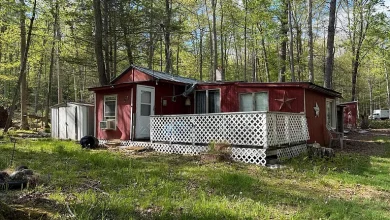
2 beds 1 baths 1,086 sqft
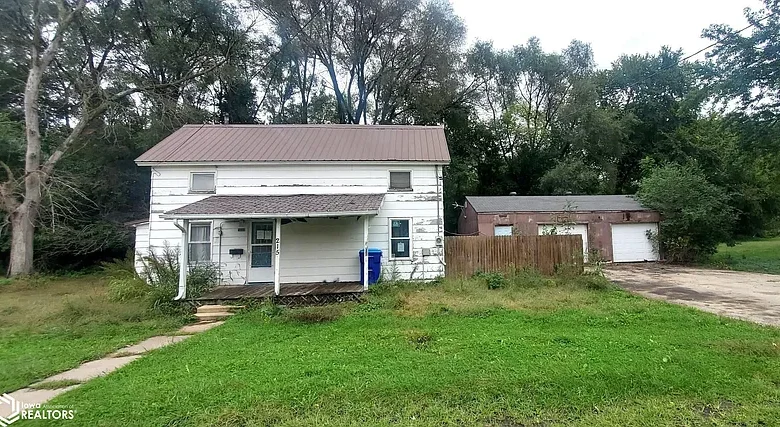
$8,900 Fixer-Upper in Oelwein, Iowa: 2-Bedroom Home With 1,086 Sq Ft, Public Utilities and Investment Potential
Finding a single-family home priced below $10,000 is unusual, which makes the property at 215 6th St SW, Oelwein, IA 50662 immediately stand out to real estate investors, contractors, landlords, first-time renovation buyers, and people searching for an affordable home they can improve over time.
Listed for just $8,900, this Iowa property offers two bedrooms, one full bathroom, approximately 1,086 square feet of living space, a 6,969-square-foot lot, public water, public sewer, a fireplace, and off-street parking. The home was built in 1920 and is described as needing repairs and updates, making it more appropriate for buyers prepared to take on a renovation project than someone searching for a completely turnkey residence.
The listing specifically presents the property as an opportunity for a fix-and-flip project, rental investment, or personal residence. At approximately $8 per square foot, the acquisition price is exceptionally low.
However, inexpensive real estate does not automatically mean inexpensive homeownership.
The condition of the roof, foundation, electrical system, plumbing, heating, windows, kitchen, bathroom, and other components can have a much greater impact on the final investment than the original $8,900 purchase price.
One of the most important details is that the property currently has no heating system listed, while cooling is provided by window units. For a home in Iowa, establishing safe and reliable heating would be an essential part of any renovation plan if the listing information accurately reflects the current condition.
For a buyer prepared to conduct professional inspections, obtain contractor estimates, research comparable sales or rents, and maintain a realistic renovation budget, 215 6th St SW offers an interesting opportunity at an unusually low entry price.
Property Overview: 215 6th St SW, Oelwein, IA 50662
The property is a single-family residence located in Oelwein, Iowa.
Its principal listing details include an asking price of $8,900, two bedrooms, one full bathroom, approximately 1,086 square feet of finished above-ground living area, and a lot measuring approximately 6,969 square feet.
The home was built in 1920 and is configured as a one-and-one-half-level residence.
The property has public water and public sewer service, window-unit cooling, no heating system listed, one fireplace, no basement, gravel parking, two total parking spaces, and two garage spaces shown in the listing data.
Exterior material is identified as HardiPlank Type.
The lot dimensions are reported at approximately 150 feet by 70 feet, and the property is located in the FENNERS subdivision.
There is no HOA listed.
The reported annual property tax is approximately $680, while the tax assessed value is listed at $37,310.
An $8,900 Asking Price Is Only the Beginning
The headline price is what makes this property remarkable.
At $8,900, the house costs less than many new vehicles and significantly less than a typical down payment on a conventional home in many markets.
But the asking price should be considered the beginning of the financial analysis rather than the conclusion.
For a renovation property, a better equation is:
Purchase Price + Closing Costs + Inspections + Structural Repairs + Roof + Heating + Electrical + Plumbing + Kitchen + Bathroom + Flooring + Windows + Insurance + Taxes + Utilities + Permits + Holding Costs + Contingency = Total Project Investment
That total is what ultimately determines whether the property works financially.
An investor who purchases for $8,900 but spends heavily on unexpected structural and mechanical repairs could have a very different result from a buyer who discovers that most major components are serviceable.
Approximately $8 Per Square Foot
The property is offered at approximately $8 per square foot.
That is an exceptionally low acquisition figure for an existing single-family residence.
However, comparing the $8-per-square-foot asking price directly with the price per square foot of renovated houses can be misleading.
A completed property includes the economic value of functioning mechanical systems, finished flooring, a usable kitchen, bathroom facilities, heating, electrical infrastructure, weather protection, and other improvements.
A fixer-upper requires the buyer to restore or create some of that value.
For investors, the more useful figure will eventually be the all-in renovated cost per square foot.
Built in 1920: More Than a Century of History
The house was constructed in 1920, making it more than 100 years old.
That does not automatically mean the property is in poor structural condition.
Older houses can have durable framing and construction, especially when maintained over time.
At the same time, a century-old property may contain components from several different generations of renovation.
Electrical wiring may have been replaced at one point, plumbing at another, windows later, and exterior materials at yet another time.
Therefore, buyers should not assume that every component is original simply because the house dates to 1920.
A professional inspection can help determine what is old, what has been updated, and what still requires attention.
The “Solid Bones” Claim Should Be Verified
The seller’s description refers to the property as having solid bones and significant potential.
For an investor, that is encouraging language, but it should be independently verified.
Structural condition is one of the most important variables in a renovation project.
Buyers should examine floors, framing, foundation components, exterior walls, roof structure, settlement, drainage, moisture, and any visible evidence of previous structural repair.
If serious concerns appear during a general inspection, a structural specialist may be appropriate.
The lower the purchase price, the more important it becomes to avoid assuming that expensive structural repairs are already reflected accurately in the budget.
Two Bedrooms Provide a Practical Layout
The home contains two bedrooms.
A two-bedroom configuration can appeal to several categories of future occupants.
An owner-occupant could use the second bedroom for children, guests, a home office, or a hobby space.
For a landlord, a two-bedroom detached house may appeal to tenants seeking more privacy than an apartment can provide.
For a flipper, the bedroom count should be considered alongside comparable renovated homes in the surrounding market.
Adding bedrooms simply to increase a marketing number is not necessarily beneficial if it compromises the floor plan or requires expensive structural changes.
One Full Bathroom
The property contains one full bathroom.
Because this is a renovation opportunity, buyers should determine whether the existing bathroom is functional and what level of work it requires.
The inspection should include plumbing supply lines, drainage, toilet, sink, bathtub or shower, flooring, subflooring, ventilation, electrical outlets, lighting, and evidence of previous leaks.
A bathroom that only needs cosmetic updates can be relatively manageable.
A bathroom requiring new plumbing, structural flooring, electrical work, and complete reconstruction can become a substantial portion of the renovation budget.
1,086 Square Feet Can Help Control Renovation Costs
The house contains approximately 1,086 square feet of finished living area, all of it above ground.
A relatively compact footprint can be advantageous for a renovation project.
There is less flooring to replace, less interior wall area to paint, fewer rooms to furnish, and less overall space to maintain.
That can help control material and labor expenses.
However, major mechanical costs do not always decrease proportionally with house size.
An electrical panel, furnace, roof replacement, water heater, or sewer repair can still represent a major expense on a small home.
No Heating System Listed
Perhaps the single most important fact for a prospective buyer is that the property is listed with no heating system.
That deserves immediate investigation.
Iowa winters can be cold, and a reliable heating system is fundamental to year-round occupancy and protection of plumbing.
The buyer should determine whether heating equipment has been removed, whether an old system exists but is nonfunctional, or whether the listing simply lacks complete information.
If the house truly has no usable heating system, installing one should be treated as an essential renovation expense rather than an optional upgrade.
Choosing an Appropriate Heating System
The best heating solution will depend on the property’s infrastructure.
A qualified HVAC contractor can investigate whether natural gas is available, whether existing ductwork can be reused, whether electrical service is adequate, and which heating system is appropriate for the building.
Energy efficiency should also be considered.
A modern heating system will perform better when the building has appropriate insulation, air sealing, and reasonably efficient windows.
For an investor, the goal should be to create a heating solution that is safe, reliable, serviceable, and appropriate for the property’s eventual value.
Window-Unit Cooling
The listing identifies window units as the home’s cooling system.
This means buyers should not assume central air conditioning is installed.
For a small 1,086-square-foot house, window air conditioners may remain a practical and inexpensive cooling solution.
Alternatively, a buyer already installing a new heating system may investigate whether another HVAC configuration makes financial sense.
The appropriate choice depends on installation cost, expected utility expenses, local buyer or tenant expectations, and the overall renovation budget.
The Fireplace Could Become a Character Feature
The property includes one fireplace.
In a 1920 home, a fireplace can provide architectural character and potentially become a focal point of the renovated interior.
However, an old fireplace should never be assumed safe for immediate use.
The chimney, masonry, firebox, flue, and surrounding structure should be inspected.
If restoring it to operational condition is expensive, a buyer could potentially preserve it as a decorative feature rather than relying on it as a source of heat.
No Basement
The listing reports no basement.
That eliminates some of the moisture and foundation concerns associated with old unfinished basements, but it does not eliminate the need for structural inspection.
Buyers should determine what foundation system supports the house and inspect accessible areas for moisture, settlement, pests, damaged supports, and floor movement.
Exterior drainage is also important.
Water should move away from the structure rather than collecting around the foundation.
Public Water Is a Useful Feature
The property has public water service.
This can simplify ownership compared with a rural property using a private well.
However, municipal water does not guarantee that the house’s internal plumbing is in good condition.
A buyer should evaluate water pressure, pipes, valves, fixtures, water heater, and signs of leakage.
If the house has been vacant without functioning heat, plumbing deserves additional attention because freezing conditions can damage water lines.
Public Sewer Eliminates Septic Maintenance
The home is also connected to public sewer.
That eliminates the need for a private septic system, which can be a meaningful advantage for an inexpensive investment property.
Nevertheless, the private sewer lateral between the house and municipal connection can still require maintenance.
Because the home dates to 1920, buyers may want to determine the condition and material of the sewer line.
A sewer scope can sometimes identify root intrusion, deterioration, blockage, or damaged sections before they become expensive surprises.
Electrical Inspection Is Important
The supplied property facts do not describe the electrical system.
For a house built in 1920, electrical due diligence should be taken seriously.
A qualified electrician can inspect the service capacity, panel, breakers or fuses, wiring, outlets, grounding, and safety devices.
If a new heating system or other major equipment will be installed, the electrical service may need to support additional demand.
Mechanical and electrical upgrades should generally occur before walls are refinished and cosmetic work is completed.
Plumbing Should Be Evaluated Before Cosmetic Work
The same principle applies to plumbing.
A buyer should understand the condition of supply lines, drain lines, fixtures, water heater, and sewer connection before installing expensive flooring, cabinets, or wall finishes.
Older homes sometimes contain plumbing materials from multiple renovation periods.
Some sections may have been updated while others remain much older.
A plumber can help identify which components can remain and which should be replaced.
Roof Condition Could Change the Entire Investment
The supplied listing does not specify the roof age or condition.
For any fixer-upper, the roof is a priority.
There is little value in installing new drywall, flooring, cabinets, and paint if rainwater can still enter the building.
A professional inspection should evaluate roofing material, flashing, penetrations, gutters, decking where accessible, and signs of past leaks.
If replacement is necessary, obtaining a contractor estimate before purchase can significantly improve the accuracy of the overall investment analysis.
HardiPlank-Type Exterior Material
The exterior is described as HardiPlank Type.
Fiber-cement-style siding can be durable when correctly installed and maintained.
Buyers should inspect for damaged boards, cracking, loose sections, moisture problems, deteriorated trim, and areas requiring paint.
If the siding is fundamentally serviceable, cleaning, selective repair, and painting could potentially create a significant improvement in curb appeal without complete exterior replacement.
6,969-Square-Foot Lot
The house sits on approximately 6,969 square feet of land.
Reported dimensions are around 150 feet by 70 feet.
That provides a useful residential yard around a relatively compact house.
A future owner could potentially use outdoor space for landscaping, gardening, recreation, or other improvements permitted by local regulations.
Anyone considering a fence, shed, addition, garage, or other permanent improvement should confirm boundaries, setbacks, zoning, and permit requirements first.
Parking and Garage Information Should Be Confirmed
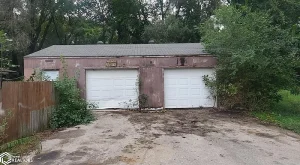
The listing reports two total parking spaces, gravel parking, and also identifies two garage spaces.
Because those details are not completely clear when read together, a prospective buyer should verify the actual parking arrangement during an inspection or showing.
If a garage is present, it should be evaluated separately.
Roof condition, foundation, framing, doors, electrical service, and structural stability can all affect its usefulness and renovation cost.
A functional garage could potentially be a valuable feature for a two-bedroom house.
No HOA Fees
The property is listed with no HOA.
For an investor or owner-occupant, the absence of homeowners-association dues can reduce recurring fixed expenses.
It can also eliminate certain private association restrictions.
However, municipal zoning, property-maintenance rules, building codes, and permit requirements still apply.
A lack of HOA should never be interpreted as permission to make unrestricted modifications.
Tax Assessed Value of $37,310
The listing reports a tax assessed value of $37,310.
Compared with the $8,900 asking price, that number is eye-catching.
The assessed value is more than four times the current listing price.
However, buyers should not automatically interpret the difference as instant equity.
Tax assessments and market values serve different purposes.
The physical condition of the house, local comparable sales, required repairs, buyer demand, financing availability, and other factors determine what the property is actually worth in its current condition.
Approximately $680 in Annual Property Taxes
The listing reports annual property taxes of approximately $680.
For a house priced at $8,900, $680 is meaningful when viewed as a percentage of the acquisition cost.
A landlord should include taxes in annual operating expenses.
A flipper should include them in holding costs.
An owner-occupant should consider them alongside insurance, utilities, maintenance, and financing.
Buyers should verify the current tax bill and whether there are any outstanding taxes or assessments before closing.
Zillow’s Estimated $18 Monthly Payment
The supplied listing displays an estimated monthly payment of approximately $18.
That number should not be interpreted as the complete cost of owning this house.
It is a listing estimate based on financing assumptions.
Actual financing depends on the loan amount, down payment, interest rate, credit profile, term, lender requirements, and property condition.
Taxes, insurance, utilities, repairs, and renovation costs are additional.
In this particular case, financing the rehabilitation could matter much more than financing the $8,900 purchase itself.
Why Very Cheap Homes Can Be Difficult to Finance
Extremely low-priced houses sometimes present an unexpected mortgage problem.
Some lenders have minimum loan amounts.
Traditional financing may also require the property to satisfy certain condition and appraisal standards.
A home with no heating system listed may create additional questions.
Buyers should therefore discuss the specific property with potential lenders rather than assuming a conventional mortgage will be available.
Cash buyers should ensure they retain sufficient capital after closing to complete the renovation.
Fix-and-Flip Potential
The seller specifically markets the property as a potential fix-and-flip project.
The extremely low purchase price creates an attractive starting point, but a successful flip depends on disciplined budgeting.
An investor needs to estimate the complete rehabilitation cost and research realistic comparable sales.
No reliable after-repair value can be determined from the listing facts alone.
The investor should look for recently sold renovated houses with similar size, bedroom count, location, lot characteristics, and overall appeal.
Calculating a Realistic After-Repair Value
After-repair value, commonly called ARV, should come from actual market evidence.
The most useful comparisons are completed sales rather than optimistic asking prices.
An investor should investigate renovated two-bedroom homes in Oelwein and consider differences in square footage, garage, lot size, location, condition, age, and finishes.
If the project only works financially under an unusually optimistic resale assumption, that is a warning sign.
Conservative analysis provides more protection against unexpected construction costs or changing market conditions.
A Better Fix-and-Flip Formula
A disciplined investor might calculate:
Expected After-Repair Value – $8,900 Purchase Price – Closing Costs – Renovation – Financing – Insurance – Taxes – Utilities – Holding Costs – Selling Costs – Contingency = Potential Project Result
This formula illustrates why the difference between purchase price and resale price is not the same as profit.
Contractors, materials, transaction costs, taxes, insurance, and selling expenses all matter.
Long-Term Rental Potential
The property can also be evaluated as a long-term rental.
A detached two-bedroom house may appeal to tenants who want more privacy than an apartment.
The presence of public water and sewer can simplify infrastructure responsibilities.
However, there is no reliable rental figure included in the supplied information.
An investor should research comparable Oelwein rentals and consider property condition, bedroom count, parking, utilities, and neighborhood when estimating achievable rent.
Rental Income Is Not the Same as Cash Flow
A landlord should calculate the property’s actual operating economics.
A useful formula is:
Gross Rental Income – Vacancy – Property Taxes – Insurance – Maintenance – Management – Owner-Paid Utilities – Capital Reserves = Net Operating Income
If financing is involved, debt service can then be considered.
Even when the purchase price is extremely low, the owner needs reserves for future repairs.
A century-old house can require ongoing maintenance even after a major renovation.
Owner-Occupant Opportunity
The property could also appeal to someone interested in creating a home rather than an investment.
For a skilled DIY buyer or someone with access to affordable contractors, an $8,900 acquisition may provide an opportunity to customize a detached house.
Two bedrooms, one bathroom, more than 1,000 square feet, a residential lot, public utilities, and off-street parking provide a basic framework.
The crucial issue is whether the total rehabilitation cost remains reasonable for the buyer’s financial situation.
Kitchen Renovation Considerations
Detailed kitchen information is not provided.
A buyer should inspect cabinets, countertops, sink, plumbing, electrical outlets, lighting, appliances, flooring, ventilation, and overall layout.
For a budget renovation, retaining a functional kitchen layout can help control costs because relocating plumbing and electrical infrastructure can become expensive.
Durable, clean, functional finishes may make more financial sense than luxury materials, particularly for a rental or entry-level resale.
Bathroom Renovation Considerations
The single full bathroom should also be evaluated carefully.
Before spending money on decorative finishes, buyers should verify the plumbing, drainage, subflooring, ventilation, electrical safety, and waterproof areas.
If those components are sound, cosmetic renovation may be relatively straightforward.
If they are not, a complete bathroom reconstruction could become necessary.
Because the house has only one bathroom, keeping that space functional is particularly important for eventual occupancy.
Potential Older Building Materials
A house built in 1920 may contain older building materials depending on what has or has not been replaced over the years.
Lead-based paint or asbestos-containing materials are possibilities in older homes, but their presence should not be assumed without appropriate evaluation or testing.
For a buyer planning extensive demolition, this issue is worth considering before construction begins.
Unexpected environmental remediation can affect both the project budget and schedule.
Insurance Should Be Researched Before Closing
Insurance is another important consideration.
An insurance company may evaluate the home’s age, roof, electrical system, plumbing, heating, vacancy status, and general condition.
A property undergoing extensive renovation may require different coverage from a completed owner-occupied house.
Because no heating system is listed, buyers should specifically ask potential insurers whether that affects coverage.
Obtaining insurance quotes before closing can prevent unpleasant surprises.
Renovation Should Follow the Correct Order
The most visible improvements should not necessarily be completed first.
A sensible renovation generally starts with structure and weather protection.
Foundation issues, structural problems, roofing, exterior water intrusion, drainage, heating, electrical systems, plumbing, and sewer problems should be addressed before expensive cosmetic finishes.
Kitchen and bathroom work can follow once major systems are secure.
Flooring, paint, lighting, trim, exterior appearance, and landscaping typically come later.
Following this sequence can reduce duplicated work.
Creating a Complete Renovation Budget
A comprehensive budget for this property might consider:
$8,900 Purchase Price + Closing Costs + Inspections + Structural Repairs + Roof + Heating System + Electrical Work + Plumbing + Sewer + Water Heater + Windows + Insulation + Kitchen + Bathroom + Flooring + Walls/Ceilings + Paint + Appliances + Exterior Repairs + Garage/Parking + Landscaping + Permits + Insurance + Taxes + Utilities + Financing + Holding Costs + Contingency
Not every category will necessarily require significant work.
The objective is to investigate each category rather than assuming it is fine because the listing does not mention a problem.
Why a Renovation Contingency Is Essential
Unexpected expenses are common in older houses.
Removing flooring may reveal damaged subflooring.
Opening walls may expose outdated wiring or plumbing.
Roof leaks may have damaged framing.
Heating installation may require electrical or ductwork modifications.
A contingency reserve gives the project financial flexibility when those discoveries occur.
An $8,900 purchase price does not mean building materials or professional labor will also be unusually inexpensive.
Online Interest in the Property
According to the supplied listing data, the house received approximately 474 views and 41 saves within its first several days on Zillow.
That is meaningful online attention for a small property.
The unusually low asking price likely contributes to buyer interest.
However, views and saves do not determine market value, property condition, or investment profitability.
They should be treated as engagement statistics rather than financial indicators.
What Buyers Should Verify Before Making a Decision
The most important questions involve the property’s actual condition.
Buyers should determine whether the structure is sound, whether the roof needs replacement, why no heating system is listed, what electrical service is installed, what plumbing repairs are required, and whether the public sewer connection is in good condition.
The fireplace should be evaluated before use.
Parking and garage information should be clarified.
Current taxes, title status, insurance availability, local permit requirements, and contractor pricing should also be researched.
For an investor, realistic comparable sales or rents should be established before committing to a renovation budget.
Final Thoughts on 215 6th St SW, Oelwein, Iowa
215 6th St SW, Oelwein, IA 50662 is a property that stands out primarily because of its remarkable $8,900 asking price.
For that amount, the listing offers a two-bedroom, one-bath single-family home with approximately 1,086 square feet of living space, a 6,969-square-foot lot, public water, public sewer, one fireplace, off-street parking, and no HOA.
The property is more than a century old, having been built in 1920, and it requires repairs and updates.
Its approximately $8-per-square-foot asking price creates an unusually low acquisition basis.
The reported $37,310 tax assessed value is also significantly higher than the asking price, although buyers should remember that a tax assessment is not proof of market value or guaranteed equity.
The most significant issue requiring immediate investigation is the absence of a listed heating system.
A functional heating solution is essential for an Iowa home and could represent a meaningful portion of the renovation budget.
Roof condition, structural integrity, electrical wiring, plumbing, sewer infrastructure, windows, insulation, kitchen, bathroom, and insurance availability should also be evaluated.
For a fix-and-flip investor, the property could potentially offer room to create value, but only if renovation costs remain consistent with realistic comparable sales.
For a landlord, a renovated two-bedroom detached home could be evaluated for long-term rental use, but market rent, vacancy, maintenance, insurance, taxes, and capital reserves must all be considered.
For an owner-occupant, the property may offer an extremely inexpensive starting point for creating a personalized home, particularly for someone capable of completing some repairs independently.
Ultimately, the smartest way to evaluate this property is not to ask whether $8,900 is cheap for a house. Clearly, it is an unusually low acquisition price.
The more important question is:
How much will the property cost after it is safe, weather-tight, heated, functional, insurable, and fully renovated for its intended use?
If inspections reveal a serviceable structure and manageable major systems, the low purchase price could leave substantial room within the overall project budget.
If the property simultaneously requires major structural repairs, a new roof, complete heating installation, electrical upgrades, plumbing replacement, and extensive interior reconstruction, the final investment could be many times the purchase price.
That is why careful due diligence matters.
With professional inspections, accurate contractor estimates, realistic local sales or rental comparisons, insurance research, title review, and a healthy contingency reserve, buyers can determine whether 215 6th St SW is truly a promising $8,900 investment opportunity or simply a low-priced property with a larger renovation bill waiting behind the purchase price.
For investors and renovation buyers willing to investigate those details, this Oelwein home offers something increasingly difficult to find: a detached single-family property with more than 1,000 square feet of living space, public utilities, a residential lot, and an asking price under $10,000.
Listed on Zillow