160-Acre Oklahoma Land Auction Near Chickasha: Lake Views, Timber, Pasture, Ponds and Hunting Potential
160-Acre Oklahoma Land Auction Near Chickasha: Lake Views, Timber, Pasture, Ponds and Hunting Potential
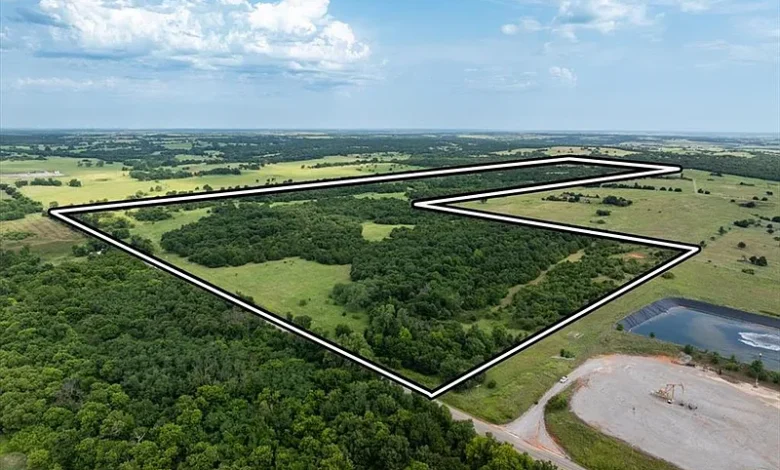
For buyers searching for Oklahoma land for sale, recreational acreage, hunting property, cattle land, ranch property, or a future rural homesite, this 160-acre tract identified as N E1410 Rd, Chickasha, OK 73017 presents a distinctive opportunity. The property combines rolling grassland, mature timber, ponds, water views, paved county-road frontage, agricultural zoning, and proximity to the Lake Louis Burtschi area.
The property is being marketed through an online-only auction, and the displayed $1,000 amount should not be interpreted as a conventional asking price or expected sale price. According to the supplied listing information, bidding was scheduled to end September 24 at 7:00 PM, with a 3% buyer’s premium applying to the transaction. Because that date has passed, anyone viewing the property now should confirm the auction result or current availability directly with the listing or auction representative before relying on the original auction terms.
The listing describes approximately 160 acres of unimproved land located outside Cement, Oklahoma, with the Chickasha mailing/market area identified in the property data. The tract reportedly adjoins the north side of the Lake Louis Burtschi area, providing scenic water and countryside views.
Unlike a residential property, there is no house, bedroom count, bathroom count, or interior square footage to analyze. The value proposition centers on the land itself: its acreage, terrain, access, timber, pasture, ponds, wildlife habitat, agricultural potential, recreational possibilities, future building potential, and long-term ownership characteristics.
An especially important ownership detail is that the auction offered surface rights only, with no mineral rights conveying. Anyone evaluating Oklahoma acreage should understand that distinction before determining value.
Property Overview: N E1410 Rd, Chickasha, Oklahoma 73017
The offering consists of approximately 160 acres of unimproved Oklahoma land.
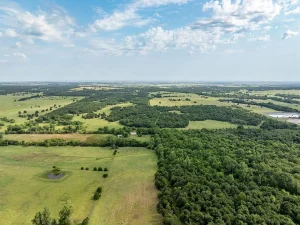
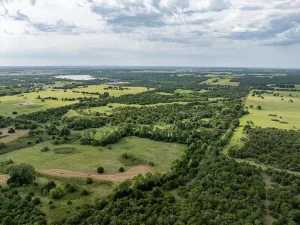
The tract is described as a combination of mature timber and rolling grassland, providing a mixture of wooded and open terrain.
According to the marketing description, the property includes ponds and seasonal drainages, along with areas potentially suitable for cattle, hay production, wildlife food plots, recreation, and future homesites.
The parcel is also described as fenced.
The southern boundary reportedly has blacktop county-road frontage, while the structured listing information identifies the road surface as asphalt.
The property is listed with agricultural zoning.
Annual property taxes are reported at approximately $203, although prospective buyers should verify the current tax status and determine whether future improvements or changes in land use could affect taxation.
Understanding the $1,000 Auction Figure
The first financial detail requiring clarification is the $1,000 displayed price.
This property should not be analyzed as though 160 acres were being conventionally offered for sale at $1,000.
It was marketed as an online auction property.
Auction listings often use a starting bid or another placeholder amount to initiate competitive bidding. The eventual sale price is determined through the auction process rather than the displayed opening figure.
For that reason, calculating a land value of only $6.25 per acre by dividing $1,000 by 160 acres would be misleading.
The meaningful figure is the final accepted auction price plus applicable fees and closing expenses.
Auction Date and Current Availability
The supplied listing states that online bidding ended September 24 at 7:00 PM.
Because the current date is after that deadline, prospective buyers should verify whether the property sold, whether the transaction closed, or whether the land remains available through another sales arrangement.
An expired auction advertisement does not necessarily indicate current availability.
Likewise, the original auction price should not be treated as a current asking price unless the seller or listing representative has specifically confirmed it.
3% Buyer’s Premium
The auction terms identify a 3% buyer’s premium.
This is important because the winning bid and the effective acquisition price are not necessarily identical.
For example, if a winning bid were hypothetically $300,000, a 3% buyer’s premium would equal another $9,000 before considering other transaction costs.
That example is only an illustration of the mathematics, not an estimate of this property’s value or auction result.
Any buyer should obtain the complete auction contract to determine precisely how the premium is calculated and what additional fees apply.
160 Acres of Oklahoma Land
The defining characteristic of the property is its scale.
At 160 acres, this is a substantial tract rather than a small recreational parcel.
One hundred sixty acres is equivalent to approximately 6,969,600 square feet of land.
A tract of this size can potentially accommodate several compatible rural uses, subject to zoning, access, soils, water availability, utility availability, environmental restrictions, and other applicable requirements.
The acreage can also provide a degree of privacy that is difficult to obtain on conventional residential lots.
Mature Timber
The listing highlights mature timber as one of the property’s primary characteristics.
Wooded acreage can contribute to privacy, shade, wildlife habitat, recreational opportunities, and the visual character of a rural property.
For hunting-oriented buyers, timber can provide cover and travel corridors for wildlife.
For someone considering a future residence, wooded areas may create opportunities for secluded building locations.
Timber should still be evaluated for species, condition, density, accessibility, and management requirements.
The presence of mature trees should not automatically be interpreted as commercial timber value without professional evaluation.
Rolling Grassland
The tract also includes rolling grassland.
This creates a useful contrast with the wooded areas.
Open pasture may provide opportunities for livestock grazing, hay production, wildlife food plots, recreational use, or simply maintaining open views across the property.
The listing specifically identifies cattle and hay as possible uses.
Actual agricultural productivity depends on soil quality, forage condition, water availability, fencing, stocking rates, weather, and management.
Anyone purchasing primarily for agricultural production should evaluate those factors independently.
Combination of Timber and Pasture
Properties containing both timber and open ground can offer more flexibility than land dominated entirely by one terrain type.
The pasture can support livestock or open recreation, while wooded sections can provide shade, privacy, wildlife habitat, and hunting cover.
For a future homesite, the combination could allow a buyer to position a residence with an open view while retaining trees around other portions of the property.
For recreational ownership, varied terrain can make the acreage feel larger and provide multiple types of outdoor environments.
Lake Louis Burtschi Area
The marketing description states that the property directly adjoins the north side of the Lake Louis Burtschi area.
This proximity is a major component of the property’s recreational appeal.
The listing highlights nearby opportunities for fishing, boating, and other lake-oriented activities.
However, prospective buyers should distinguish between being near or adjoining a lake area and having specific legal rights to use or access water from the property.
Any access rights, shoreline boundaries, easements, or restrictions should be verified through surveys, title documents, and relevant authorities.
Lake and Water Views
The structured listing information identifies water views and also uses a lake-front designation.
The marketing description emphasizes sweeping lake views.
Scenic water views can influence the appeal of a future rural residence or recreational retreat.
A potential buyer should personally inspect the property from multiple locations because views can vary significantly across 160 acres.
Seasonal vegetation can also affect visibility.
A view that is open in winter may become partially screened by foliage during warmer months.
Multiple Potential Homesites
The listing advertises multiple scenic homesites with country and lake-area views.
This can be an attractive feature for someone hoping to build a custom home, cabin, or rural retreat.
However, a visually attractive location is not automatically a buildable site.
Before purchasing land specifically for construction, buyers should investigate zoning, setbacks, road access, utility availability, soil conditions, drainage, septic feasibility, flood considerations, building permits, and other local requirements.
A professional site evaluation can help identify the most practical construction location.
Barndominium Potential
The marketing material specifically mentions the possibility of a barndominium site.
Barndominiums have become popular among rural buyers because they can combine residential living space with workshops, garages, storage, or agricultural functions.
Nevertheless, buyers should not assume that any location on the tract can automatically support this type of construction.
Building codes, permits, septic requirements, utilities, insurance, driveway standards, and zoning rules should all be verified before developing a construction budget.
Hunting Property Potential
The listing strongly emphasizes the property’s hunting and wildlife potential.
Mature timber, open pasture, ponds, seasonal drainage areas, and a large 160-acre footprint can create diverse wildlife habitat.
The marketing material references whitetail deer, turkey, and pigs, among other wildlife.
Actual wildlife populations can vary over time, so buyers should investigate the property personally rather than treating marketing descriptions as guaranteed hunting results.
Trail-camera history, neighboring land uses, food sources, water, pressure from nearby hunters, and habitat management can all influence hunting quality.
Whitetail Deer Habitat
A mixture of timber, edge habitat, water, and open land can provide conditions used by whitetail deer.
Wooded sections may offer bedding and security cover, while grassland or planted food plots can potentially provide feeding areas.
For a buyer primarily interested in deer management, the shape of the tract and surrounding properties can be as important as total acreage.
Access routes should also be considered because frequent disturbance can influence wildlife behavior.
Turkey and Other Wildlife
The listing also references turkey and other wildlife.
Mature timber can provide roosting opportunities, while open areas may support feeding and nesting habitat depending on vegetation.
Ponds and drainage features can further diversify the ecosystem.
Wildlife-focused owners may consider habitat management practices rather than simply leaving the entire tract unmanaged.
The appropriate strategy depends on the species and landowner’s objectives.
Ponds on the Property
The presence of ponds adds another dimension to the acreage.
Ponds can provide livestock water, wildlife habitat, visual appeal, and recreational opportunities.
Their condition should be evaluated individually.
Buyers may want to understand water retention, dam condition if applicable, erosion, depth, watershed, vegetation, and seasonal fluctuations.
A pond shown during a wet period may behave differently during drought.
Seasonal Drainages
The listing also mentions seasonal drainages.
These can influence both wildlife habitat and property development.
Drainage corridors may carry substantial water during heavy rainfall even if they appear dry at other times.
Future roads, structures, fences, and other improvements should account for natural water movement.
A survey and appropriate site analysis can help a buyer understand how drainage affects the tract.
Potential Cattle Operation
The open pasture makes the property worth evaluating for cattle use.
A 160-acre tract can represent a meaningful agricultural holding, but livestock capacity should never be determined from acreage alone.
Stocking rates vary based on forage quality, rainfall, pasture management, soil, water availability, and supplemental feeding.
Existing fencing condition also matters.
A cattle buyer should inspect gates, perimeter fences, cross-fencing, ponds, handling areas, and access before developing an operating plan.
Fenced Property
The structured listing data identifies the property as fenced.
That can be particularly useful for agricultural ownership.
However, “fenced” does not necessarily mean every boundary fence is currently livestock-ready.
Fence type, condition, ownership, location relative to legal boundaries, and repair requirements should be inspected.
Replacing or repairing fencing across a large tract can represent a significant expense.
Hay Production Possibilities
The listing identifies open areas as potentially suitable for hay production.
Hay can provide agricultural income or support livestock operations.
Actual production potential depends on acreage available for cutting, forage species, soil fertility, weather, equipment access, and management.
Anyone purchasing specifically for hay production should review soil information and inspect the fields with someone experienced in local agriculture.
Food Plot Opportunities
For recreational buyers, some open acreage could potentially be used for wildlife food plots.
Food plots can complement existing timber and water resources.
However, their effectiveness depends on soil preparation, seed selection, rainfall, sunlight, and ongoing maintenance.
The property already contains varied terrain, so a wildlife-management plan could potentially use different areas for bedding cover, travel corridors, food, and water.
Blacktop County-Road Frontage
One of the property’s most practical features is blacktop county-road frontage along the south boundary.
Paved access can be a significant advantage over rural properties reached only by long private or gravel roads.
It may simplify construction access, livestock transportation, equipment movement, and everyday travel.
Road frontage should still be verified through a survey and title review.
Buyers should also understand driveway permitting requirements if a new entrance is planned.
Accessibility to Cement
The marketing information places the property approximately five miles from Cement, Oklahoma.
That provides access to a nearby community while preserving a rural setting.
For a full-time resident, distance to fuel, groceries, schools, healthcare, and other daily services should be evaluated personally.
Rural living can provide privacy and space, but transportation becomes a larger component of everyday life.
Approximately 13 Miles to Chickasha
The property is advertised as approximately 13 miles from Chickasha.
Chickasha can provide access to additional shopping, employment, dining, services, and other amenities.
For buyers who want rural acreage without being extremely isolated, proximity to a larger community may increase practicality.
Actual travel time should be tested from the property’s entrance rather than relying solely on approximate mileage.
Access to Lawton and Oklahoma City
The listing also estimates approximately 38 miles to Lawton and 54 miles to Oklahoma City.
These distances can matter for buyers who need access to larger employment centers, airports, healthcare, shopping, or entertainment.
A rural property can therefore function as a private retreat while remaining within driving distance of larger Oklahoma cities.
Actual travel times depend on route, traffic, weather, and destination.
Agricultural Zoning
The property is identified as having an Agriculture zoning description.
This is consistent with the land’s rural character.
Nevertheless, prospective buyers should verify current zoning directly with the appropriate local authority.
Someone planning a home, barndominium, commercial agricultural operation, multiple residences, short-term rental, event venue, or another specialized use should confirm that the intended project is permitted.
Unimproved Land Means Infrastructure Matters
Because the property is classified as unimproved land, buyers need to think about infrastructure differently than they would with a house.
A future residence may require electricity extension, water supply, septic installation, driveway construction, site grading, and possibly other improvements.
The supplied listing does not provide detailed information about existing utility connections.
Those costs can become significant across a large rural tract.
Before choosing a building site, buyers should obtain realistic infrastructure estimates.
Water Supply for a Future Home
The listing does not identify an existing residential water system.
A future owner may need to investigate a private well, rural water availability, or another permitted source.
Water availability can affect both residential construction and livestock operations.
Well depth, drilling cost, water quality, and production can vary significantly by location.
A local well contractor or utility provider can offer more property-specific information.
Septic System Considerations
An unimproved rural homesite may also require a private septic system unless another approved wastewater solution is available.
Soil suitability and local health requirements can influence system type and cost.
A buyer planning construction should investigate septic feasibility before selecting a final building location.
A beautiful hilltop view may not necessarily correspond with the easiest or least expensive septic installation.
Electricity and Utility Extension Costs
Bringing electricity to a remote building site can range from relatively straightforward to expensive depending on the location of existing infrastructure.
The distance from available power to the desired homesite matters.
If the buyer wants a residence deep within the property for privacy or views, utility extension costs could be considerably higher than building closer to the road.
Those expenses belong in the land-development budget.
Surface Rights Only
One of the most important legal details is that the auction offered surface rights only.
The listing explicitly states that no minerals convey.
This means buyers should not assume ownership of oil, gas, or other mineral interests beneath the land.
Mineral ownership and surface ownership can be separate in Oklahoma.
Anyone concerned about mineral rights, existing leases, access rights, or future mineral activity should obtain appropriate title and legal advice.
Why Mineral Rights Matter
For some land buyers, mineral ownership is an important part of long-term investment value.
For others, the main objectives are agriculture, recreation, hunting, or residential construction, making surface ownership the priority.
Either way, the buyer should understand exactly what is being purchased.
A title examination can help identify recorded interests and exceptions.
The phrase “surface rights only” should be treated as a material ownership term rather than a minor listing detail.
Annual Taxes of Approximately $203
The listing reports annual property taxes of only about $203.
That is a relatively modest holding expense for 160 acres based on the supplied information.
However, future taxes can change.
Agricultural classification, ownership changes, construction of a residence, or other improvements may influence future assessments.
Buyers should verify the latest tax information with the appropriate authority rather than assuming the current amount will remain unchanged indefinitely.
No Zestimate
There is no Zillow Zestimate displayed for the property.
That is not unusual for large unimproved rural acreage.
Automated residential valuation tools can struggle with unique land parcels because value depends heavily on characteristics such as location, road frontage, soil, topography, water, timber, improvements, mineral rights, development potential, and comparable land sales.
For a property like this, local land-sale comparisons can be more informative than automated estimates.
Determining a Realistic Price Per Acre
The correct way to evaluate this property is not to divide the $1,000 auction figure by 160 acres.
Instead, buyers should research recent sales of comparable Oklahoma acreage.
Comparable properties should ideally have similar location, road quality, pasture/timber balance, ponds, views, recreational appeal, agricultural capacity, utility availability, and mineral-right arrangements.
Even neighboring tracts can sell at very different prices if one has better access or improvements.
Land Financing
Financing 160 acres of unimproved land can differ from obtaining a standard residential mortgage.
Land loans may require larger down payments, shorter repayment periods, or different underwriting.
Agricultural lenders and local banks may have products designed for rural acreage.
Buyers should investigate financing before committing to a transaction, particularly when auction deadlines require fast payment.
Insurance and Liability
Vacant or recreational land can still create insurance considerations.
Owners may want liability coverage for hunting, ponds, livestock, guests, fences, or other activities.
If a residence, barn, or other structure is later constructed, insurance needs will change.
Buyers planning agricultural or recreational activities should discuss intended uses accurately with an insurance professional.
Long-Term Land Investment
Some buyers may view the property primarily as a long-term land investment.
Land has characteristics that differ from residential rental property.
There may be no monthly rental income unless the owner leases grazing, hunting, farming, or another use.
At the same time, unimproved land generally has fewer building systems to maintain.
Investment performance will depend on purchase price, taxes, management expenses, any lease income, and future market demand.
No appreciation rate should be assumed.
Recreational Retreat Potential
For a buyer interested primarily in recreation, the tract offers a compelling combination of scale and terrain.
A future owner could potentially spend mornings hunting wooded areas, afternoons near the lake, and evenings overlooking open pasture.
The ponds and seasonal drainages provide additional landscape variety.
A small cabin, full residence, or barndominium might eventually transform the acreage into a more developed retreat, subject to all necessary approvals and infrastructure.
Building a Complete Acquisition Budget
The purchase budget should extend beyond the winning bid.
A complete calculation could include:
Winning Bid + 3% Buyer’s Premium + Closing Costs + Title Work + Survey + Financing Costs + Insurance + Taxes + Fencing Repairs + Road/Driveway Work + Land Management + Utility Extension + Well/Water System + Septic System + Site Preparation + Future Construction + Contingency = Total Investment
Not every category will apply immediately, but considering them prevents the initial land price from becoming the only financial focus.
Survey and Boundary Verification
For a 160-acre tract, a survey can be particularly important.
Buyers should understand exact boundaries, road frontage, easements, access, neighboring ownership, and any encroachments.
Existing fences do not always perfectly follow legal property lines.
A survey can also help with planning homesites, driveways, future fencing, ponds, and agricultural improvements.
Title Review and Easements
Title work should identify recorded easements and other interests affecting the land.
Utility easements, road rights, pipeline interests, access arrangements, and mineral-related matters can influence how portions of the property may be used.
Because mineral rights do not convey, understanding recorded subsurface interests may be particularly important.
Qualified legal and title professionals can provide property-specific guidance.
Early Zillow Attention
According to the supplied listing information, the property accumulated approximately 1,577 Zillow views and 77 saves over nine days.
That indicates meaningful online interest in the acreage.
However, views and saves do not establish market value or reveal the auction result.
The unusual $1,000 display price may itself attract substantial online attention.
Comparable land sales and actual auction bidding provide more useful valuation evidence.
Final Thoughts on This 160-Acre Oklahoma Property
The 160-acre tract identified as N E1410 Rd, Chickasha, OK 73017 offers a combination of features that can appeal to several types of rural land buyers.
The property reportedly includes rolling grassland, mature timber, ponds, seasonal drainage areas, fencing, paved county-road frontage, water views, and proximity to the Lake Louis Burtschi area.
For a hunter, the combination of timber, open areas, water, and a large contiguous tract may provide a foundation for wildlife and habitat management.
For a cattle operator, open pasture and ponds could make the land worth evaluating for grazing, although forage quality, fencing condition, water reliability, and realistic stocking capacity should be independently assessed.
For a recreational buyer, the property’s lake-area setting, privacy, trees, ponds, and views can create the environment for a weekend retreat.
For someone planning a future home or barndominium, the acreage offers multiple locations that the seller describes as scenic potential homesites. But actual construction feasibility depends on utilities, water, septic suitability, access, drainage, zoning, permits, and site preparation.
For a long-term investor, 160 acres represents a substantial tangible asset, but future appreciation should never be assumed. Purchase price and comparable land values remain critical.
Two auction details deserve particular attention.
First, the $1,000 figure was an auction starting amount rather than a conventional asking price. It should not be used to calculate the property’s actual per-acre value.
Second, the transaction included a 3% buyer’s premium, meaning the winning bid would not necessarily represent the complete acquisition cost.
There is also a major ownership limitation: surface rights only were offered, and mineral rights do not convey. Oklahoma land buyers should understand exactly what that means before evaluating the tract against properties where some or all mineral interests are included.
The listing reported approximately $203 in annual property taxes, which appears modest for the acreage, although future tax treatment should be independently verified.
The location provides another practical advantage. According to the marketing information, the land is approximately five miles from Cement, 13 miles from Chickasha, 38 miles from Lawton, and 54 miles from Oklahoma City. This creates a rural setting without placing the property completely beyond reach of larger communities and services.
Perhaps the property’s greatest appeal is flexibility.
It is not limited to one obvious use. A buyer could evaluate it for cattle, hunting, recreation, a private rural residence, a barndominium, habitat management, hay production, or long-term land ownership. Some of those uses could potentially coexist.
At the same time, unimproved land requires a different kind of due diligence from a finished home.
There is no kitchen or HVAC system to inspect, but there are boundaries, easements, soils, drainage, fencing, roads, water, utility access, mineral rights, zoning, ponds, taxes, and title matters to investigate.
Anyone considering development also needs to understand what it would cost to transform raw acreage into a functional residential property.
For a well-prepared buyer who values large acreage, Oklahoma countryside, mature timber, pasture, water features, wildlife habitat, paved access, and lake-area views, this 160-acre tract represents an interesting rural land opportunity deserving careful investigation.
Because the advertised auction deadline of September 24, 2026 has already passed, the first step for anyone discovering the listing now would be to verify the auction outcome and determine whether the property remains available before making further plans.
Listed on Zillow